Advertising disclosure: This page includes affiliate product links that may earn us a commission, as well as products from our own store.
Power Cleans: Build the Pull, Meet the Bar and Own the Catch
A good power clean looks fast, but it is not one frantic tug from the floor. The lifter first puts the bar in a powerful position, then accelerates it, then moves underneath to receive it on the shoulders. Each part has a distinct job. The exercise punishes a rushed setup because a few centimeters of forward bar drift can turn the catch into a scramble.
Power cleans can belong in strength-and-conditioning programs, Olympic-lifting practice and general athletic training. They are a technical skill, not an obligatory ingredient for muscle growth. A beginner who has not learned a front rack or a safe lifting space should build those first, ideally with qualified in-person coaching. This guide explains the repeatable positions and a conservative way to organize practice.
What a power clean trains—and what makes the catch different
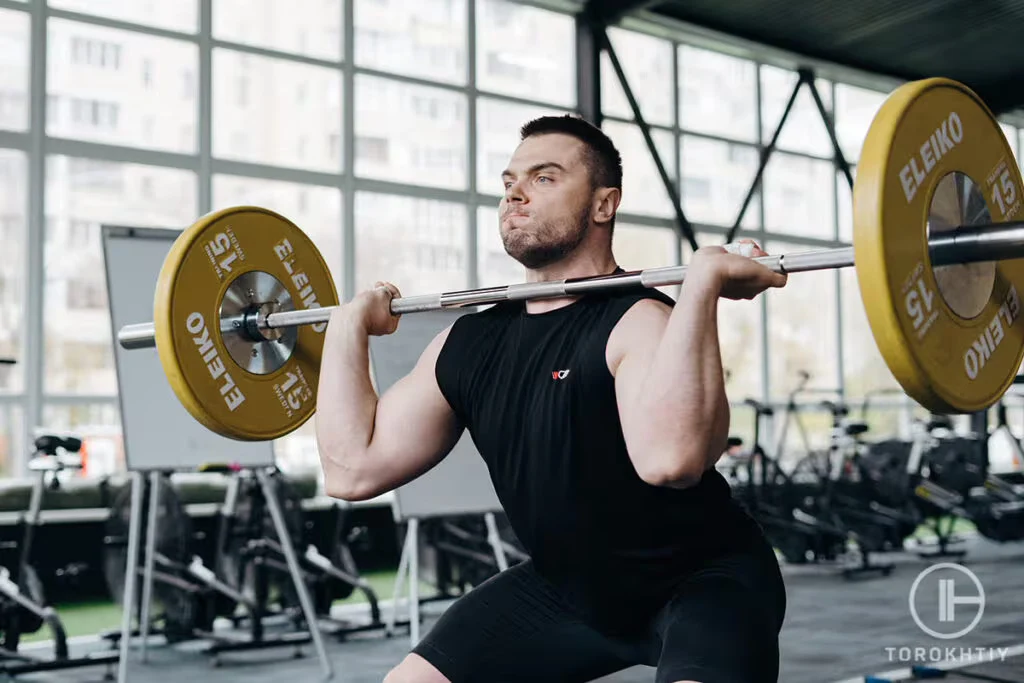
In a power clean, the bar starts on the floor and finishes supported on the front of the shoulders, with the lifter receiving it above a full squat. A full or squat clean uses the same broad pull-and-turnover pattern but permits a much deeper receiving squat. The word power describes the higher receiving position; it does not mean the arms should pull the bar upward like a curl.
The legs drive the initial lift, the hips and knees extend rapidly near the top of the pull, and the body then moves under the moving bar. Your traps, trunk and upper back help transmit force and hold position, while the rack demands shoulder, wrist and upper-back mobility. There is no single muscle that makes this a clean: coordinated timing is the skill.
A hang power clean starts from a position above the floor, often around the knee, and omits the first pull from the ground. It is a useful teaching tool but not interchangeable with the full floor start. Likewise, a clean pull trains the pull without the receiving phase. Match the variation to the quality you are practicing rather than assuming that every variation deserves the same load.
Before loading, ask a practical question: can you receive an empty bar—or a suitable light training bar—on the shoulders without wrist pain, falling forward or catching it in the hands? If not, improve the rack position and get coaching before attempting fast catches.
Start from the floor with a position you can repeat
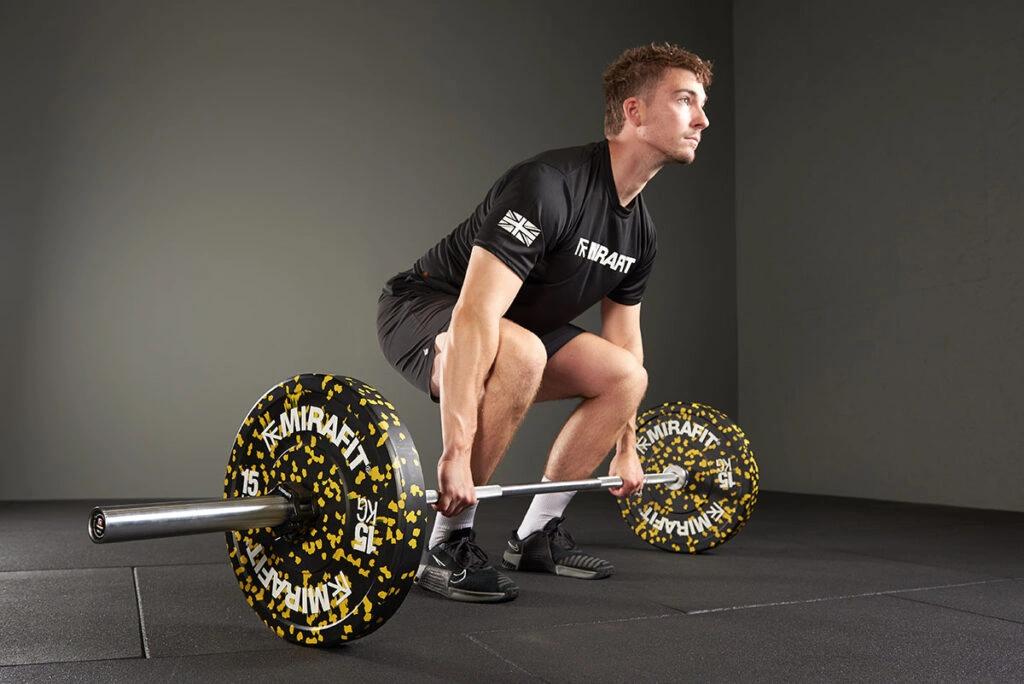
Use a stable, level lifting area with enough space around you and bumper plates appropriate for the training surface. Stand roughly hip-width with the bar over the midfoot. Place hands just outside the legs, usually a little wider than a deadlift grip. A secure overhand grip works for learning, while a hook grip is common as load and speed increase; do not force painful hand positions.
Bend the knees and hips until you can reach the bar with straight arms, a braced trunk and the shoulders over or slightly in front of it. The back should keep its natural, controlled shape rather than being deliberately rounded or hyperarched. Keep the whole foot connected to the ground. The starting hips need not match another lifter’s exact height because limb proportions differ.
Before the plates leave the ground, create tension through the torso and shoulders. Imagine the bar traveling close enough that you could trace a vertical line past the shins. Do not begin by yanking the arms or throwing your head back. The clean is easier to troubleshoot when the first centimeter of each repetition begins the same way.
If you are using small practice plates that put the bar unusually low, elevate the start to a consistent training height or use suitable technique plates. That is different from increasing range simply to make an exercise look harder. When practicing without coach supervision, choose loads you can control and learn the safe procedures for letting a missed lift go on the available floor.
Keep the first pull controlled through the knees
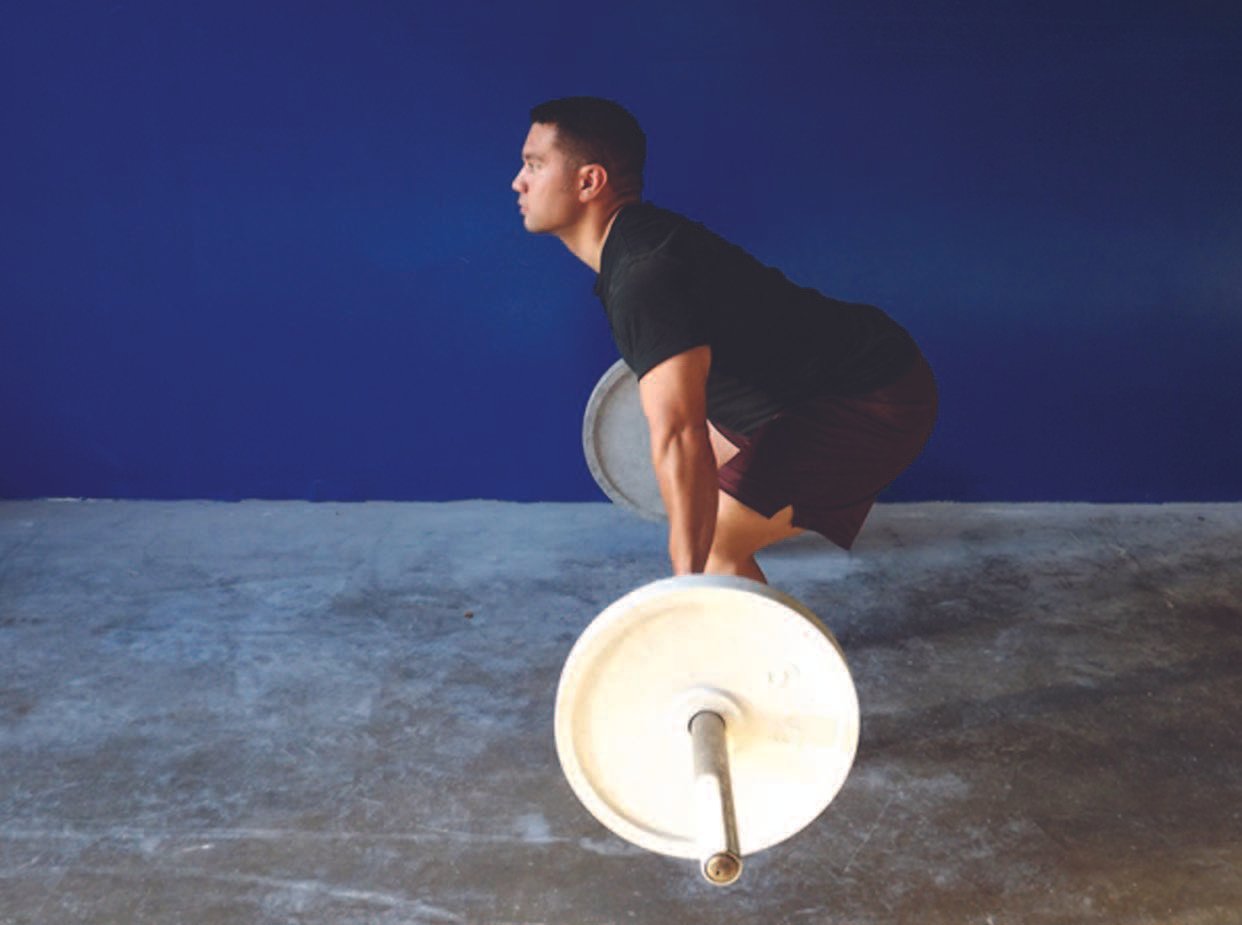
The first pull runs from the floor to around the knee. Think push the ground away rather than rip the bar upward. The hips and shoulders should rise together enough to maintain a useful torso angle. Straightening the legs far ahead of the chest can strand the bar in front of you and force the lower back to rescue the lift.
Keep the elbows straight, the bar close and pressure through the midfoot as it passes the shins and knees. The knees move back to give the bar a path, but the lifter should not rock dramatically onto the heels. Past the knees, the knees can come slightly forward again as the torso becomes more upright: this is the transition into the strongest acceleration position.
A common misconception is that a successful clean must be fast from the instant the bar breaks the floor. The first pull can be patient and positional; acceleration builds as the bar reaches the thighs. If every repetition swings forward just above the knee, film from the side with the camera safely clear of the lifting area. Check whether the knees, shoulders or bar are moving out of sequence before adding weight.
A straightforward drill is a clean deadlift to the knee followed by a controlled return. Use a load you can hold in position, pause briefly at knee height and confirm that the bar remains close. That drill is for positions, not for turning a dynamic clean session into a maximal deadlift workout.
Accelerate upward without swinging the bar away
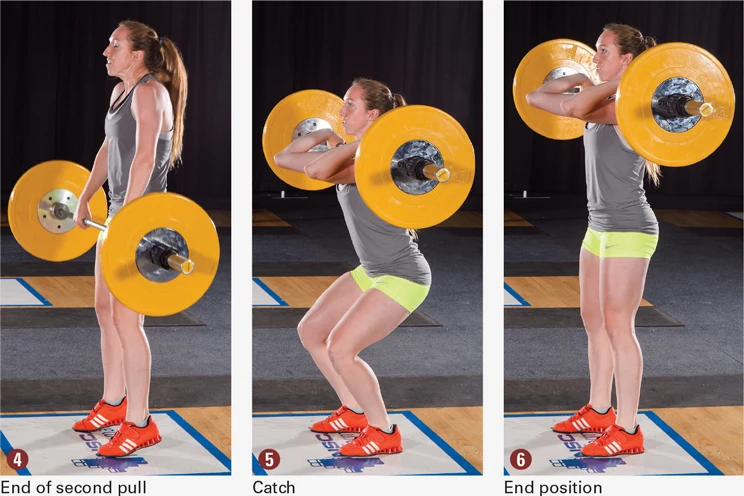
After the bar clears the knees, continue pushing through the legs while bringing the torso toward upright. Near the upper thigh, extend the hips and knees powerfully and let the ankles finish the upward drive. The idea is to accelerate the bar vertically while keeping it close—not to shove it forward with a violent hip bump.
Your arms act like connectors through the main extension. Bending the elbows early turns the lift into an inefficient upright row and steals force from the legs. After extension, use the arms actively to guide yourself under the bar. This sequence is why the clean is more than a jump with a bar attached.
A little foot movement is normal when you transition from a pulling stance to a receiving stance. A huge sideways jump is not evidence of more power; it can make the catch unstable. Aim for a quiet, repeatable landing with feet only as wide as needed to receive the weight comfortably. Avoid throwing the feet forward after the bar instead of keeping the system balanced over the floor.
For a lifter who repeatedly loops the bar away, use light high-hang power cleans or clean pulls with a deliberate close bar path. For someone who cuts extension short, practice finishing tall before pulling under. These are coaching cues, not rules to freeze the entire lift: the objective is a smooth, connected movement rather than isolated poses at competition speed.

Equipment Worth Exploring
Explore equipment, accessories and gear from our carefully selected range.


Competition Plates
Competition-style bumper plates for Olympic lifts and loaded strength training.


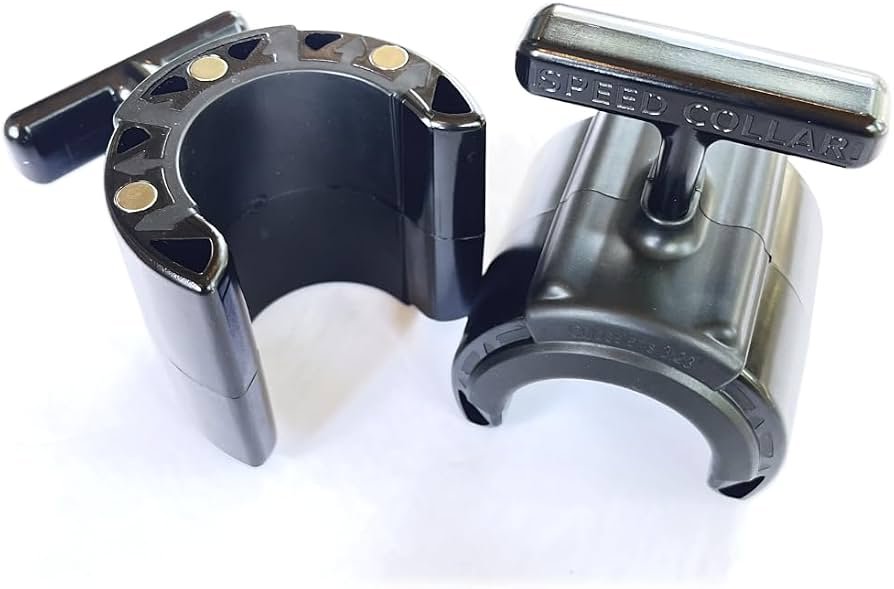
Speed Collar
Quick-release collars designed to secure weight plates on standard two-inch Olympic bars.
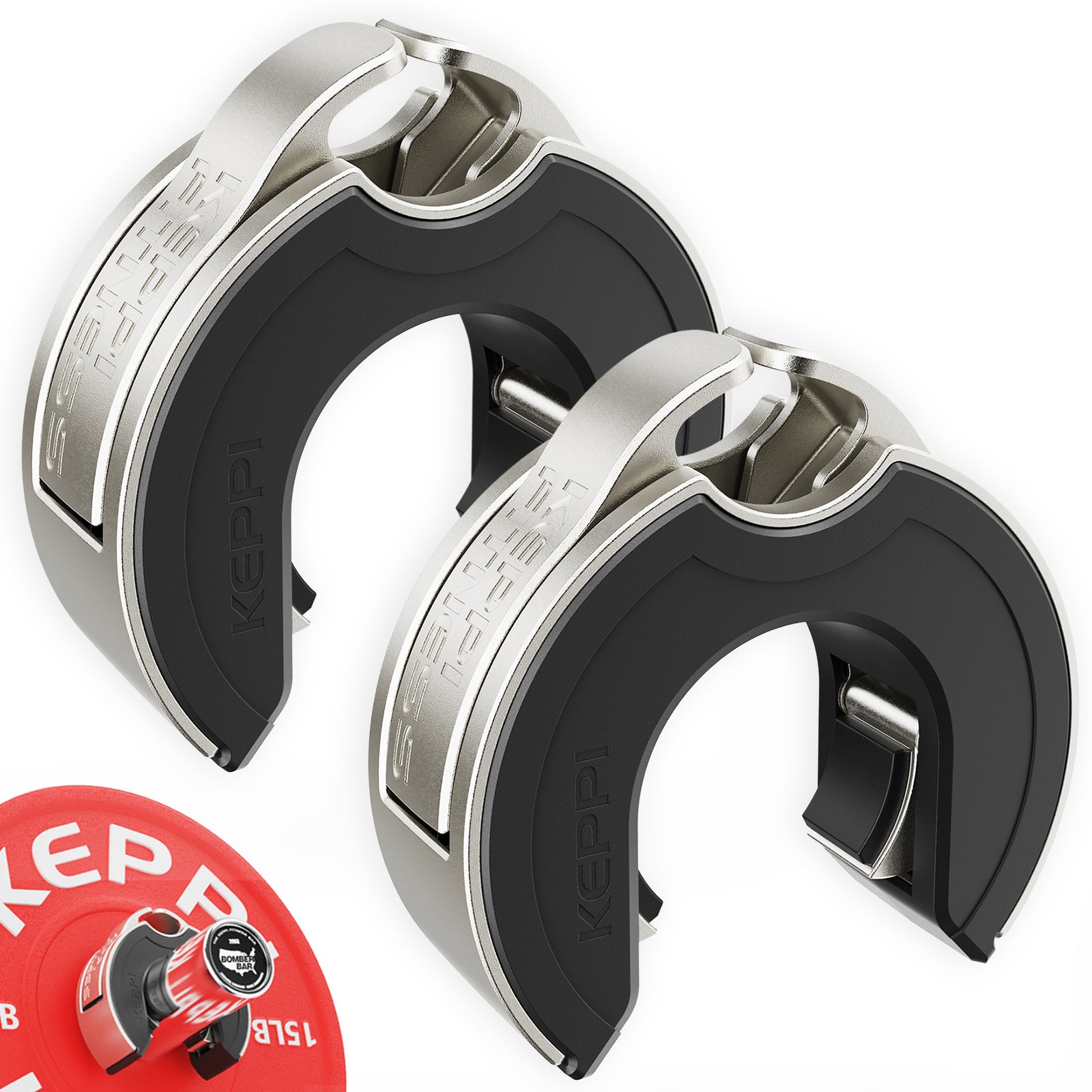
Keppi Open Collars
C-shaped magnetic Olympic barbell collars with a quick-lock mechanism and grippy lining.


Foldable Wall Rack
Wall-mounted folding squat rack designed to save floor space between workouts.
Meet the bar in a stable front rack—not on your wrists
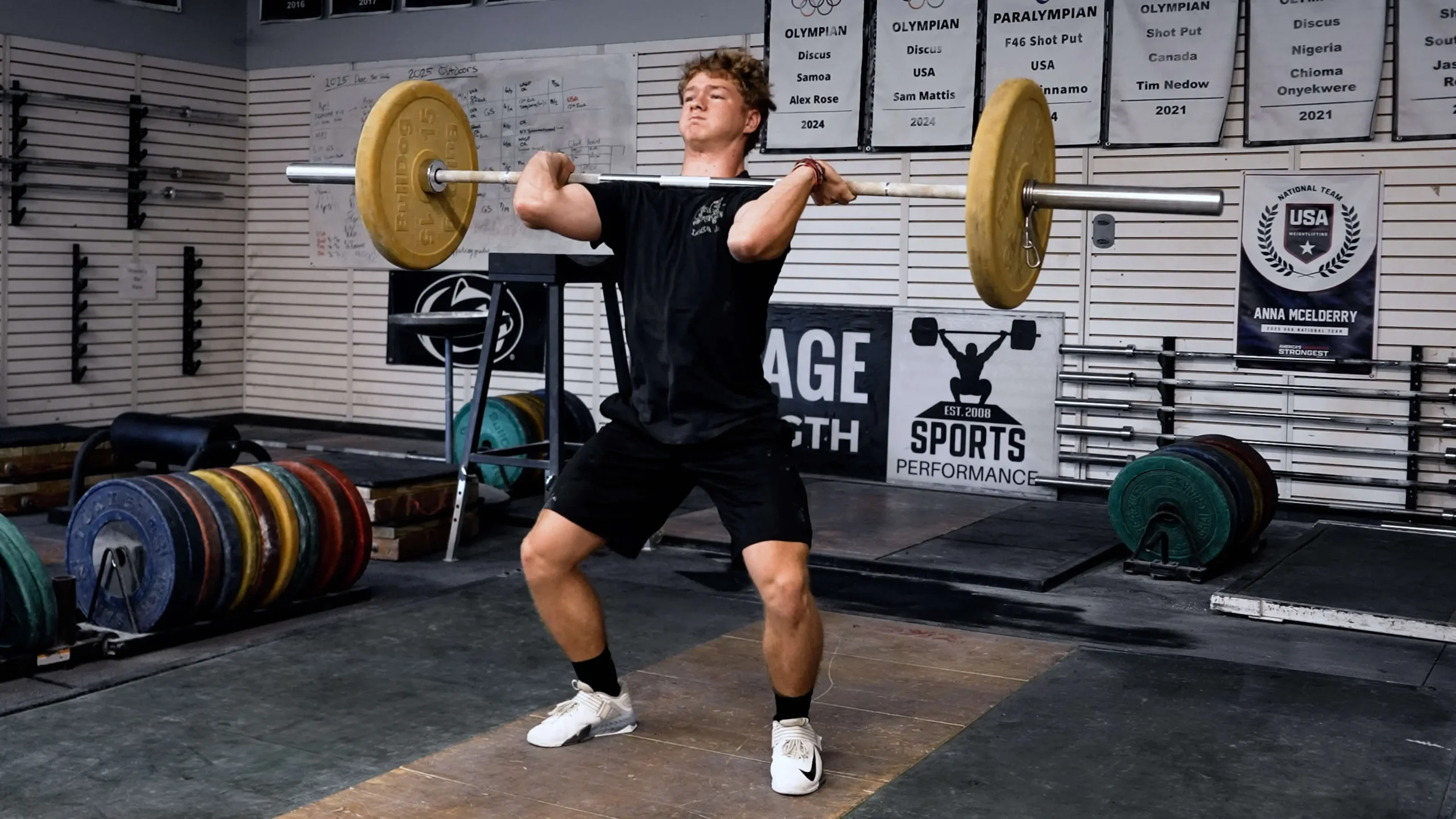
The bar should land across the shelf created by the front deltoids and upper chest, with the elbows rotating through quickly. The hands guide the bar; they should not carry its whole weight in a bent-wrist curl position. A proper receiving rack may let some fingers relax under the bar, depending on your mobility and grip, without losing shoulder support.
Receive above parallel with the feet planted, torso braced and knees flexed. Absorb the bar by meeting it rather than letting it crash from a large height onto the shoulders. Then stand fully upright before lowering or returning the bar safely. The most useful successful rep is one you could repeat immediately with the same balance and foot placement.
Three errors are worth separating. If the bar slams the wrists, the elbows may be late or the athlete may be trying to catch too high without moving underneath. If the lifter jumps forward, the bar may have drifted forward during extension. If the elbows collapse and the chest folds, front-rack mobility, upper-back control or an excessive load may be involved. Each has a different fix, so simply shouting “pull harder” will not solve all three.
Wrist or shoulder pain is a reason to stop fast receiving work, not to push through. Front-squat rack holds with appropriate light loads can expose mobility limitations, but they are not treatment. If your elbows cannot move into a safe rack, use pulls or other power-training options until the issue is assessed and the position is comfortable.
Practice in stages, then progress without chasing ugly reps
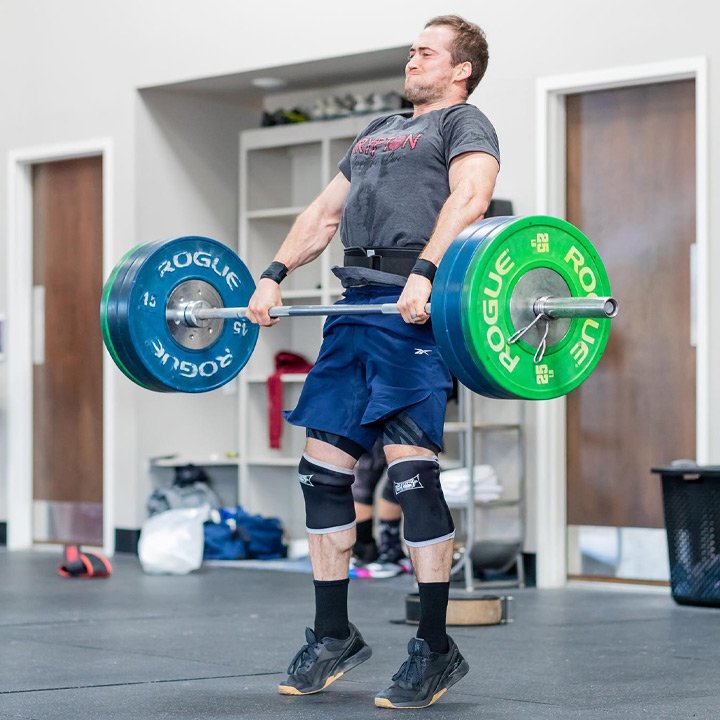
A useful teaching order is front-rack holds, tall cleans or light muscle-clean turnover drills, high-hang power cleans, hang power cleans from around the knee, and finally power cleans from the floor. Move forward only when the previous stage stays balanced. A hang rep can isolate extension and turnover, while the floor rep adds the first pull and transition.
For an illustrative four-week beginner block, practice once or twice per week while fresh, after a general warm-up and before exhausting accessory work. In week one, emphasize the rack and high-hang movement for three to five sets of two or three light, technically sound reps. In week two, use similar low-rep sets from the hang near the knee. In week three, include floor starts with a light enough bar that every pull stays close. In week four, combine floor power cleans with a brief lighter technical back-off set, adding load only when speed and receiving position remain consistent.
Rest generously between sets—often around two minutes or longer for technically demanding loads—so each attempt is practice rather than a fatigue test. A missed catch, painful wrist, widening feet or repeated forward hop should prompt a reduction in load or a simpler variation. No percentage progression is mandatory; an athlete learning the bar path may improve more from crisp, repeatable singles than from heavier triples.
Power cleans can complement squats, pulls and jumps, but they do not replace the basic strength work that supports them. If you cannot safely catch a barbell or lack suitable equipment, trap-bar jumps, appropriately coached jumps or medicine-ball throws can train aspects of explosive intent without pretending they teach an Olympic-lift front rack. Finish each session by noting one useful cue and the heaviest load that still looked clean on video. Technical consistency—not the number on the plates—is the sensible marker for the next increase.

Funny Gym Shirts & Workout Gear
Funny gym shirts, tanks, hoodies and workout gear for lifters who like training hard.

Patriotic – Clean & Jerk Statue Of Liberty Olympic T-Shirt
Rep “Patriotic” humor in and out of the gym.

Bar Breaker Barbell Breaker Ballbreaker Album Parody He T-Shirt
For laid-back days and metalhead humor: “Bar Breaker Barbell Breaker”.

Barbell Buddies for Gym Buddies, Workout Partners, and Hoodie
Keep it laid-back with a little “Barbell Buddies” attitude.

Tough Cookie Gingerbread Weightlifting Jumper & Bros T-Shirt
Show some gym-day personality with “Tough Cookie”.

Funny Uncle Sam Gym | I Want You To Lift Heavy Patrioti Tank Top
Your gym-day look, with a playful “Uncle Sam” twist.

Barbell Flag Patriotic Gym | Funny USA Workout | Gymbro T-Shirt
Show some powerlifting attitude with a playful “Barbell Flag Patriotic” tee.

Bending Bars Meme Breaking Bad Barbell Hoodie
Keep it laid-back with a little “Bending Bars Gym Meme” attitude.

Thin Line Lifter Flag Patriotic Gym | Red Barbell Fire Tank Top
Add some lifting attitude to training with “Thin Line Lifter Flag Patriotic”.

Flowers & Weights 45LB Plate Floral Fitness Barbell Wor Tank Top
Add some gym-girl attitude to training with “Flowers & Weights 45LB Plate”.

Since I've Been Lifting You Tee
Show some rock-and-lifting attitude with a playful “Since I've Been Lifting You” tee.