Advertising disclosure: This page includes affiliate product links that may earn us a commission, as well as products from our own store.
Slow Pull-Up Negatives: What a 30-Man Training Trial Really Shows
Slowing the lowering phase of a pull-up sounds almost too simple to matter. Yet the hardest part of improving pull-ups is rarely knowing which bar to grab. It is accumulating enough clean practice to build the pulling strength, grip endurance, upper-body control and confidence needed for repeated full-range repetitions. A 2026 controlled training trial involving 30 male university students reported notably better pull-up performance after a structured program that emphasized eccentric tempo.
The headline is promising: the intervention group averaged 2.1 pull-ups at baseline and 7.8 after 12 weeks. That result deserves attention, but not the simplistic conclusion that a slow negative alone triples everyone’s reps. The intervention combined tempo instructions with coaching feedback and supervision. Here is what the experiment measured, where its interpretation stops, and how a lifter can test the principle without wasting elbow and shoulder recovery.
1. What the 12-week pull-up experiment actually tested
The trial enrolled 30 male university students, splitting them evenly into a structured experimental training group and a conventional-training comparison group. The experimental program lasted 12 weeks and emphasized controlled eccentric movement during a broader upper-body training routine. Both groups were assessed on pull-up repetitions, straight-arm hanging endurance, bent-arm hanging endurance and loaded pulling strength. Those are related but different abilities: producing one strong repetition does not guarantee enough stamina for a long set.
At the outset, the experimental group averaged only 2.1 successful pull-ups, a beginner-friendly starting point that matters when comparing the result with experienced lifters. After the intervention, that mean had risen to 7.8 repetitions. The mean improvement was 5.7 reps, and the reported between-group difference in change favored the intervention. The study also reported significant improvements in both hanging tests and its weighted pulling measure.
One qualification changes how the result should be used. The participants were not simply told to lower themselves slowly and left alone. The training also involved auditory cues, closer supervision and movement-quality feedback. Any of those components might have improved effort consistency, adherence, range of motion or the quality of repeat tests. Because the components were bundled together, the study cannot tell us the isolated effect of extending the eccentric phase by a particular number of seconds.
That does not make the result useless. It makes it a comparison of complete training approaches rather than a stopwatch experiment. The practical question is whether a controlled descent plus repeatable coaching cues makes your own practice more productive, not whether there is a magic three-second count.
2. What improved: reps, hanging time and pulling strength
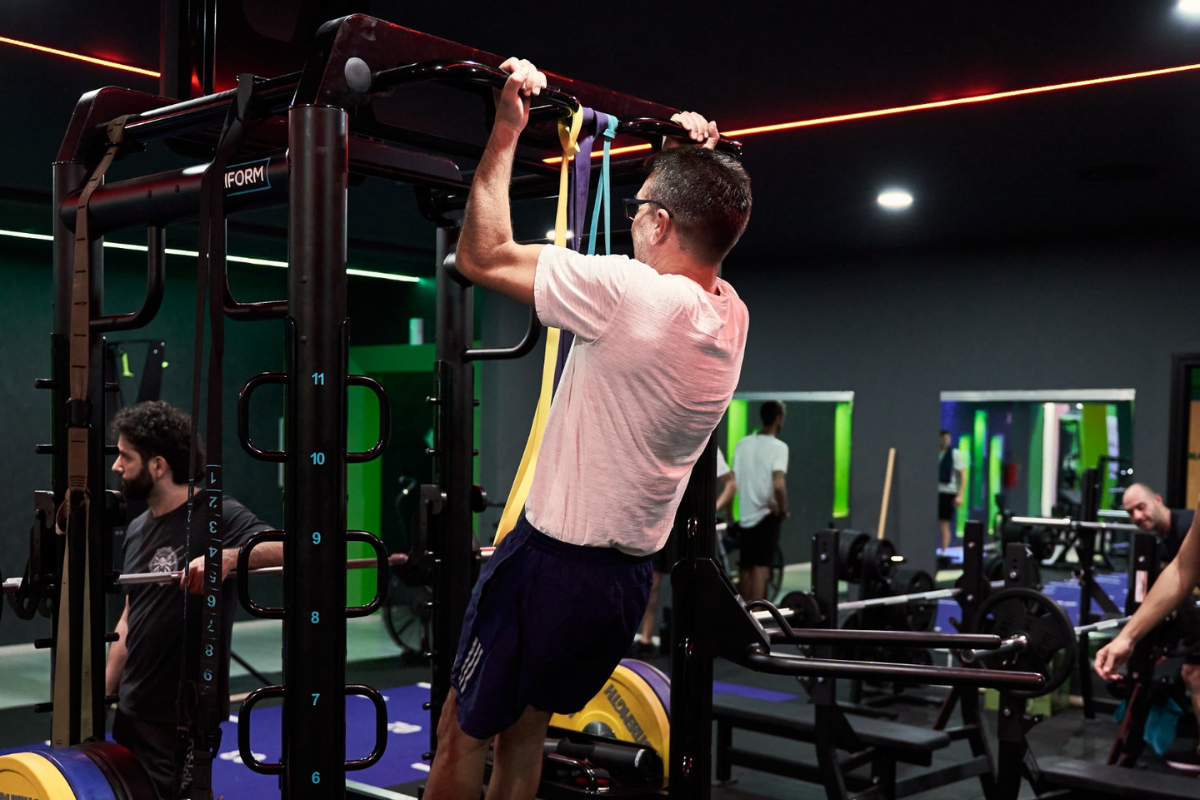
Pull-up repetitions are the clearest outcome for most gym-goers because they are easy to count. Moving from roughly two to roughly eight reps is a large relative change, particularly for novices. The experimental participants also increased straight-arm hang time from a reported 12.5 seconds to 25.8 seconds and bent-arm hang time from 8.2 seconds to 18.5 seconds. Those tests suggest improvement in tolerating grip and upper-body loading in positions required by the pull-up.
The study reported that its pull-up one-repetition maximum measure rose from 5.2 kg to 12.6 kg. That is an increase in the reported test load; it should not be confused with gaining seven kilograms of muscle, nor interpreted as proof that every subject could perform a strict rep with that weight added on top of their body mass. Testing conventions, starting ability and body mass change the meaning of loaded performance.
Improvements in multiple tests are more informative than a single maximum-repetition score. A trainee could learn to sway less, find a better body position or reduce wasted energy and improve repetition counts without a proportional increase in muscle size. Longer hangs also may reflect stronger grip, better scapular control, improved tolerance to the positions or greater familiarity with the tests. The trial did not establish muscle hypertrophy as the cause of its findings.
Earlier experiments using lat-pulldown variations also found that targeted upper-body pulling practice improved pull-up performance, even when the participants were not doing only strict pull-ups. This supports a useful general point: the final skill is specific, but assisted repetitions, pulldowns, holds and controlled negatives can all help a beginner accumulate pulling work. None is automatically superior for every person.
3. Why a controlled negative can be worth practicing
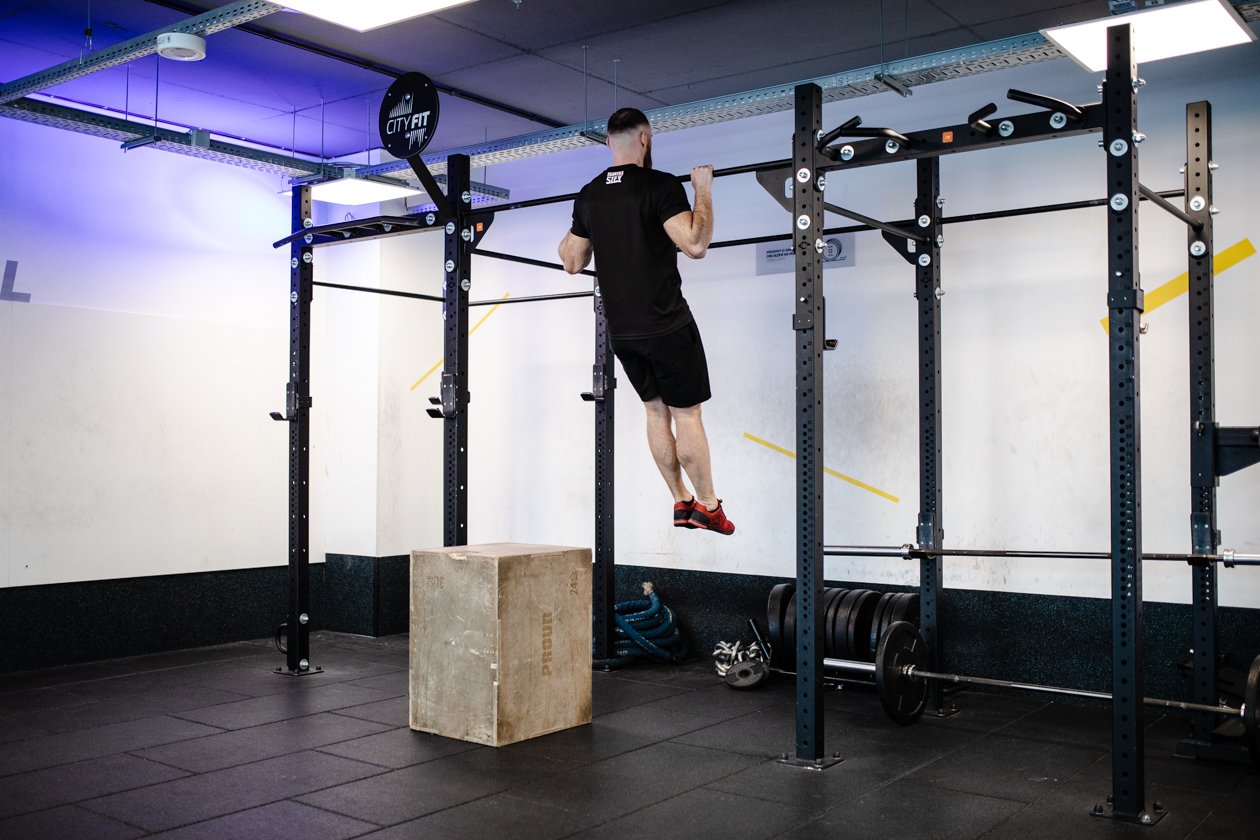
A pull-up has an upward, concentric phase and a downward, eccentric phase. During the descent, the lats, elbow flexors and other contributors resist gravity while the elbows extend and the shoulders move overhead. The objective is to control the movement rather than drop from the top. That gives a novice another way to rehearse the full path even if the upward pull is currently too difficult without assistance.
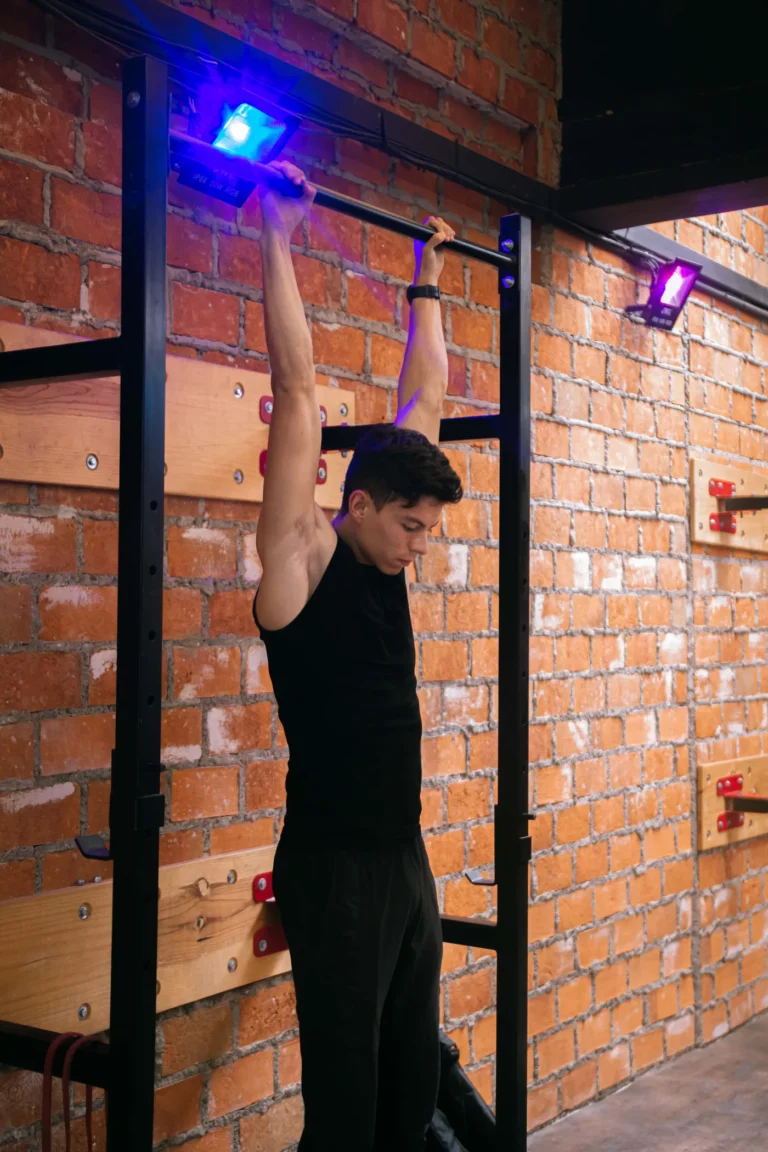
Start in the top position using a sturdy step or platform, not a dangerous jump into an unstable bar. Place your chin above the bar, keep the rib cage reasonably stacked over the pelvis and distribute the load between both arms. Lower smoothly until the elbows extend to a comfortable bottom position. A two- to four-second descent is a practical coaching range, not a duration proven optimal by this trial. Use the tempo you can repeat without kicking, twisting or suddenly dropping through the bottom.
The goal is quality rather than stretching the eccentric for as long as physically possible. Extremely slow, high-effort negatives produce fatigue and can leave the elbows or upper back sore enough to disrupt the next session. Eccentric exercise can cause noticeable muscle damage when loading is introduced aggressively; the sensible response is a gradual exposure, not a belief that soreness proves effectiveness. Two or three technically clean negatives may be a better first dose than ten failing ones.
Other pull-up research involving climbers indicates that eccentric-focused, explosive and isometric training can emphasize different performance qualities. That reinforces why one tempo strategy should not replace a balanced pulling program. If your end goal is more full pull-ups, periodically practice the exact strict repetition and progressively reduce assistance instead of living forever on top-position negatives.

Equipment Worth Exploring
Explore equipment, accessories and gear from our carefully selected range.

Power Tower
Freestanding pull-up and dip station with adjustable handles for bodyweight training.

Multi Pull Smith Rack MPHR-780
All-in-one rack with a Smith machine, functional trainer, lat pulldown and low row.


Angles 90 Grips
Flexible grip attachments that allow natural wrist movement during pulling exercises.


Foldable Wall Rack
Wall-mounted folding squat rack designed to save floor space between workouts.

Leather Wrist Grips
Padded leather lifting grips help support the hands and wrists on heavy pulling exercises.
4. Build your technique around the rep you want to own
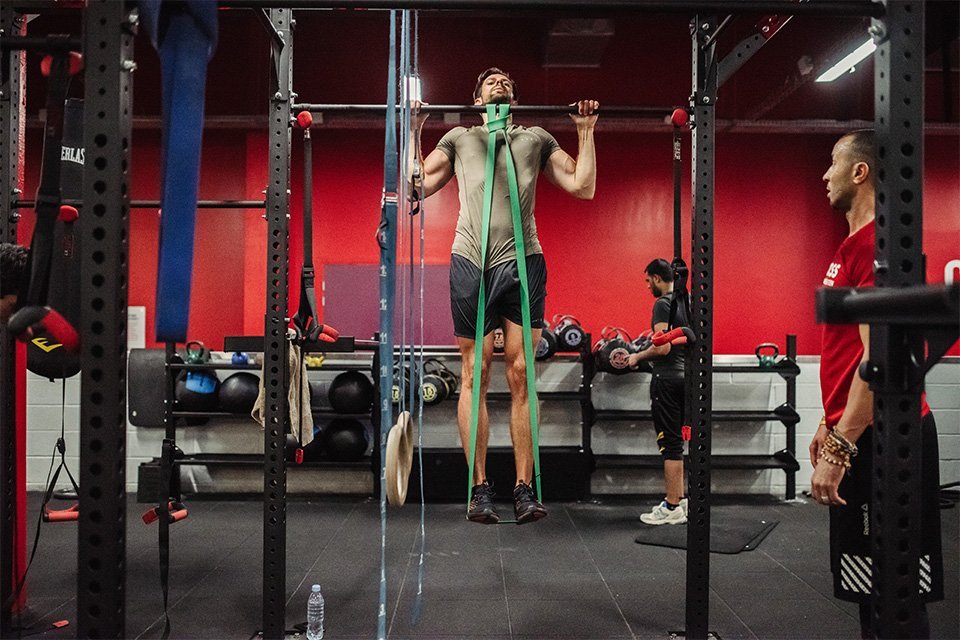
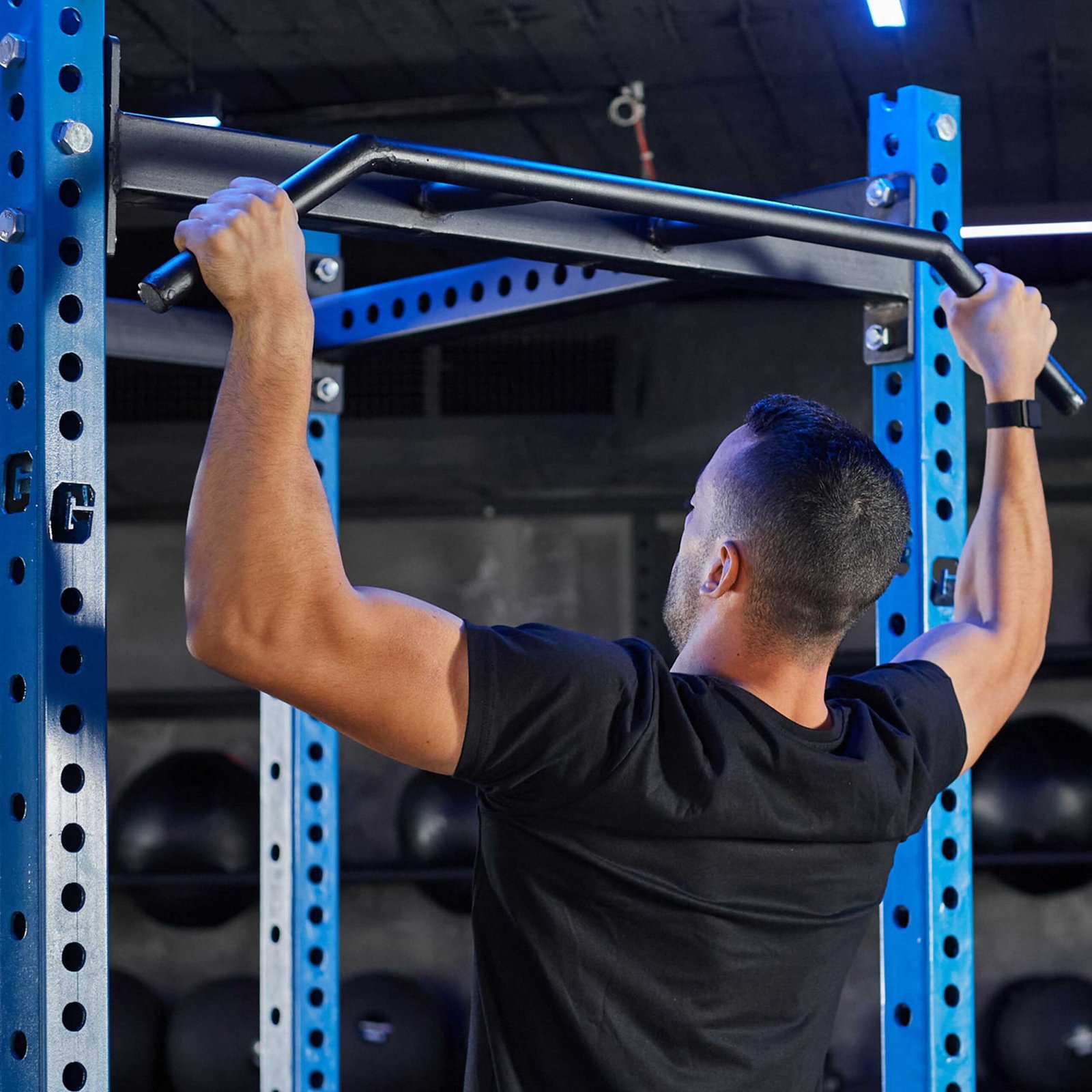
Choose a secure bar high enough for your feet to clear the floor. Wrap the thumbs around the handle, use a grip width that lets the wrists and shoulders move comfortably, and avoid swinging to start the repetition. A shoulder-width or slightly wider overhand grip is a reasonable baseline. Neutral-grip handles or rings may feel better to some lifters, but the grip itself does not guarantee more growth or safety. The useful standard is a repeatable pain-free motion.
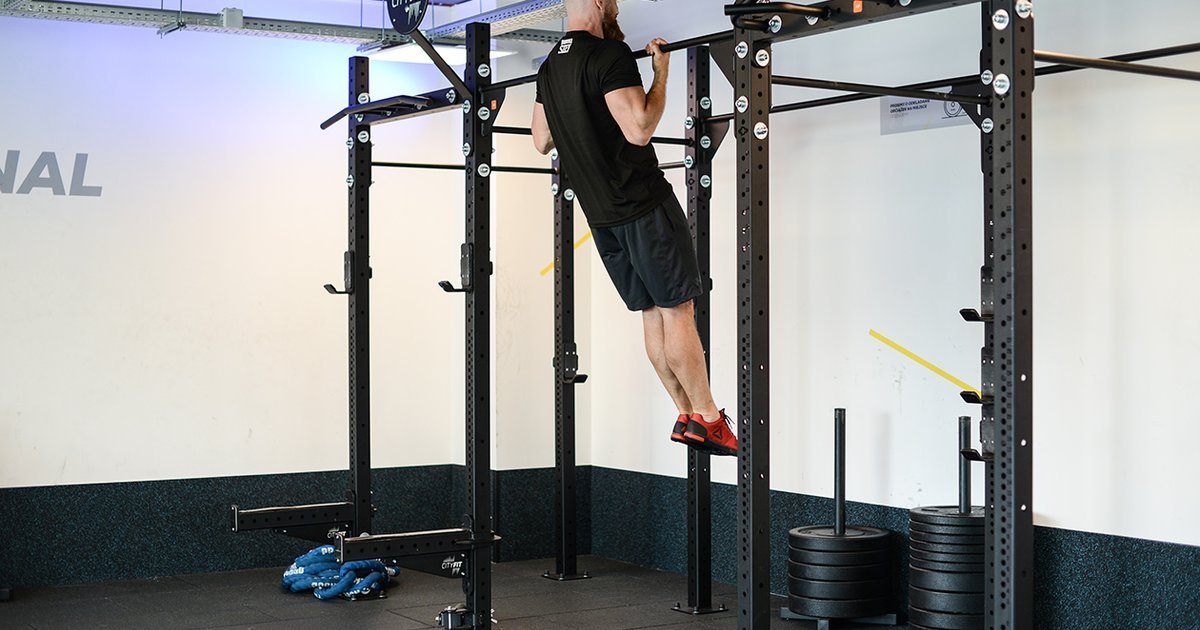
Initiate the ascent by pulling the upper arms toward the torso and bending the elbows while keeping the legs relatively quiet. The chest and shoulders can move naturally, but do not turn every rep into a high-knee kick or exaggerated back arch. At the top, aim for a consistent range rather than craning the neck at the bar. On the way down, avoid deliberately pinning the shoulder blades in an unnatural position; allow the shoulders to move through a controlled overhead range.
If you cannot perform three clean unassisted reps, use a band, an assisted-pull-up station or a foot-supported variation to complete the upward phase. Then practice a modest controlled descent. Assistance is not cheating: it is a way to get more relevant repetitions without turning a weak set into repeated failures. The crucial detail with a band is that it helps more at the bottom than at the top, so the challenge changes through the motion.
For more advanced lifters, body-weight pull-ups with normal rhythm should remain the main progression unless tempo is deliberately being used for a short technique block. When several sessions of clean sets become easy, add one rep, reduce assistance or introduce a small amount of external load. Do not simultaneously increase added weight, total reps and eccentric duration. The aim is a stronger pull-up, not a more complicated logbook.
5. A four-week pull-up practice plan with honest checkpoints
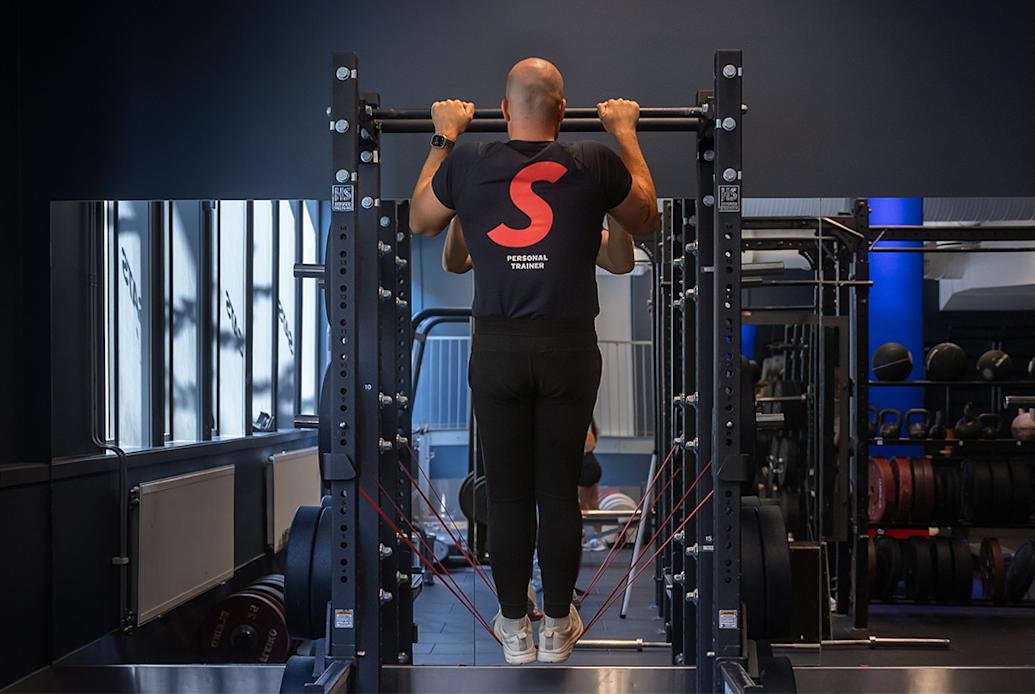
Use the following as an illustrative template, not as the exact protocol used by the 30 students. Train the movement twice weekly with at least one full day between challenging pulling sessions. Warm up with easy hangs, a few assisted repetitions and a light row. Stop the set when range of motion or control deteriorates, rather than grinding out a technically different final repetition.
Week 1: On each day, do three sets of three to five assisted pull-ups followed by two sets of two controlled negatives at roughly two seconds down. Rest about two minutes between sets. For a lifter already capable of multiple strict reps, substitute three sets stopping one or two reps short of failure, with normal controlled lowering.
Week 2: Keep the same number of sets, make the assisted reps slightly less assisted or extend only the negative to roughly three seconds if the previous week’s sessions were comfortable. Do not change both variables at once. Record the bar, grip, assistance, rep quality and whether any pain appeared; those are more useful than rep totals alone.
Week 3: Add a fourth assisted set if recovery is good, or swap its first set for a small number of strict body-weight reps. Keep the dedicated negative work small. A light lat-pulldown or horizontal row can supply extra upper-back volume without demanding a second all-out pull-up session.
Week 4: After one easier opening session, repeat your baseline test under the same conditions: same bar, grip, starting position, bottom range and reasonable rest from other pulling workouts. Compare both maximum clean reps and the number of high-quality reps you can accumulate across sets. A steady improvement with no aggravated joints counts; a modest gain does not mean the method failed.
The larger lesson is not that every lifter needs twelve weeks of slow repetitions. Controlled eccentrics are one tool for creating dependable practice when the ascent is the bottleneck. Pair them with suitable assistance, progressive strength work and honest tracking. Pain, persistent tendon irritation or sharp discomfort during the hang is a reason to modify the motion and seek appropriate assessment, not to force a longer negative.

Calisthenics Shirts & Street Workout Gear
Calisthenics and bodyweight-training gear for pull-ups, dips, handstands and street-workout athletes.

Calisthenics Pullups Heartbeat Hoodie
Bring “Calisthenics Pullups Heartbeat” gym humor to lazy days and post-workout plans.

Always Pull Yourself Up Tank
Show some personality between sets with “Always Pull Yourself Up”.

Pull Up or Shut Up Crewneck Pullover Sweater for Calist T-Shirt
For laid-back days and bodybuilding humor: “Pull Up or Shut Up”.

Calisthenics Evolution Sticker
Stick a little “Calisthenics Evolution” humor on your favorite gear.

Calisthenics Hanging Out Hoodie
Make your off-duty look more fun with “Calisthenics Hanging Out”.


Funny Calisthenics Gym Muscle Shirt Athletic Vest for B Tank Top
Train hard, laugh a little, and rep “Calisthenics”.

Calisthenics Workout Sweatshirt
Add a playful “Calisthenics” touch to your casual rotation.