Advertising disclosure: This page includes affiliate product links that may earn us a commission, as well as products from our own store.
Donkey calf raises let you work your calves with the torso supported and the knees relatively straight. Their old-school appearance can distract from the useful details: a stable foot platform, appropriate load near the hips, and a heel that genuinely travels through a controlled range.
You do not need a specialist machine to learn the exercise. Below is a practical setup, a guide to the muscle action and a six-week approach that values repeatable reps over intimidating plate totals.
Build a stable bench-and-step station before adding resistance
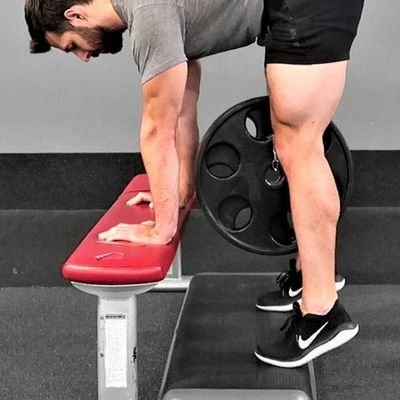
Donkey calf raises need only a solid foot platform and a steady place to lean forward, but those two pieces must stay fixed under repeated loading. Position a firm plate or low step on nonslip flooring, with a bench or padded box far enough ahead to let you hinge comfortably. Put the balls of both feet on the platform and leave your heels free. A thin bumper plate may provide enough heel clearance to learn the pattern. Do not force a deep stretch just because a taller step is available.
Bend forward at the hips and place your hands or forearms against the support. Keep the knees relatively straight, but avoid locking them aggressively, and find a neutral back posture you can maintain. The upper body should stay quiet as the ankles move. If your shoulders tire more than your calves, move the bench closer or adjust its height. If the platform slides, stop immediately: a secure foot contact is more important than adding weight.
Do three very slow bodyweight repetitions as a station test. Check that your toes remain planted, your heels can travel down and back up without rubbing the floor, and your pelvis does not rock. Test the floor and shoes for traction. Then make a note of the platform height, support location and shoes. This simple consistency makes the next workout meaningful: otherwise a bigger range or a more favorable setup can masquerade as strength progress.
Treat an ankle pinch, sharp tendon pain or sudden calf pain as a reason to stop rather than push for more depth. If the bottom position is uncomfortable, begin with a shorter range or a flat-ground calf raise. Donkey raises are an optional tool for calf training, not a compulsory movement worth forcing through symptoms.

Equipment Worth Exploring
Explore equipment, accessories and gear from our carefully selected range.



FID Bench MAX
Adjustable bench offering flat, incline, and decline positions + adjustable headrest.

Multi Bench MBX-650 2.0
Adjustable multi-bench with roller adjustment, 15 backrest positions and accessory mounts.

Grip Plates
Rubber-coated weight plates with handholds for loading barbells and machines.


Foldable Wall Rack
Wall-mounted folding squat rack designed to save floor space between workouts.

Multi Pull Smith Rack MPHR-780
All-in-one rack with a Smith machine, functional trainer, lat pulldown and low row.
Fit a dedicated donkey calf machine to your hips and feet
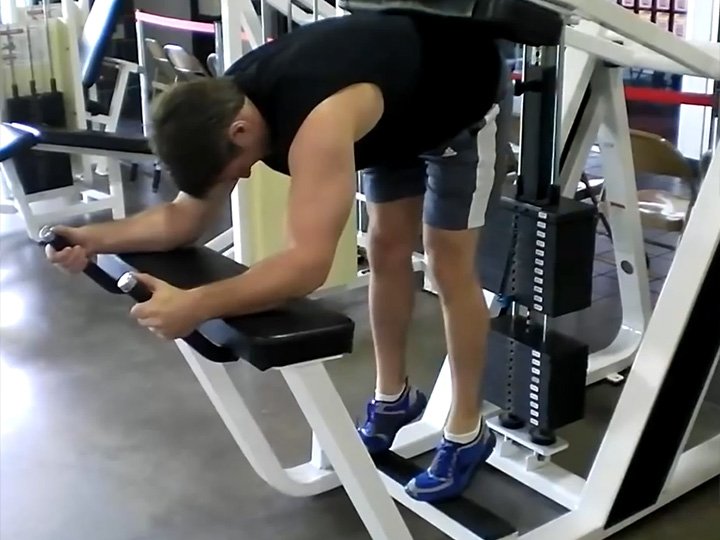
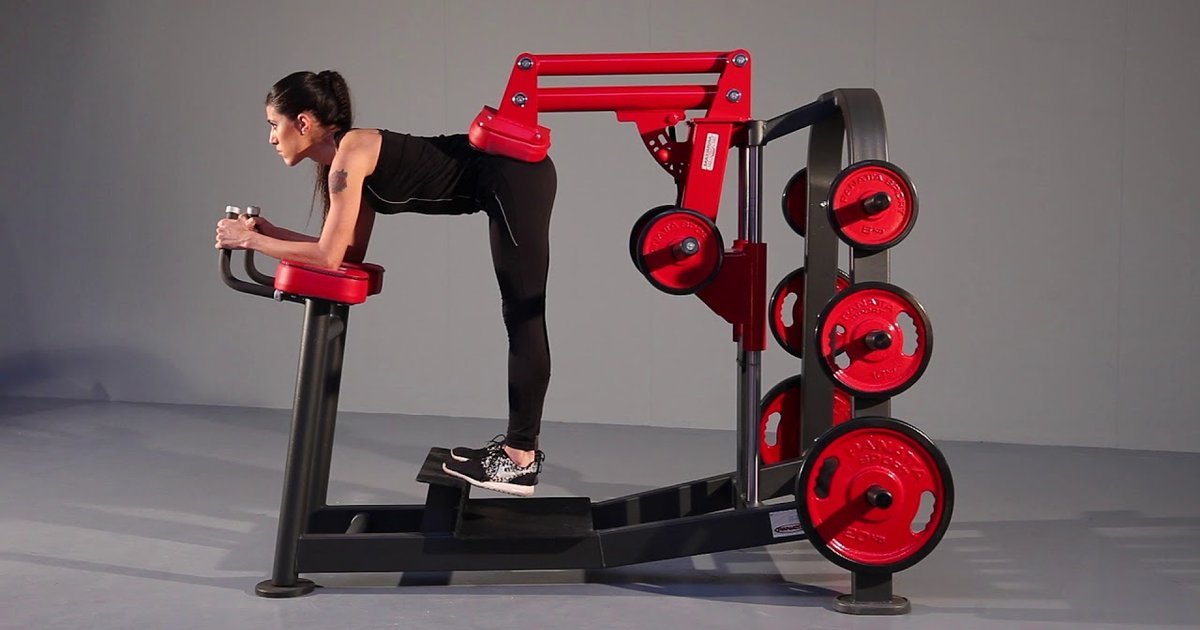
A donkey calf machine can make loading straightforward because a padded lever delivers resistance near the hips while the forearms rest on a front support. The precise adjustments vary by model. Begin with the unloaded or lightest useful setting, position your forearms securely, then adjust the rear pad according to the manufacturer’s intended contact point. You want comfortable pressure around the pelvic or hip area, not a hard edge digging into the middle of your spine.
Place the balls of the feet on the non-slip surface with enough room behind them for the heels to descend. A hip-width stance is a sensible starting point unless the machine directs otherwise. Look slightly down, brace the midsection and keep your knees nearly straight without trying to hyperextend them. Make sure the machine can be entered and exited without a heavy pad trapping you. A machine that does not fit is not a better choice than a well-built bench setup.
Try five easy repetitions before calculating a working load. At the bottom, let the heels lower to a comfortable controlled position without bouncing. At the top, rise through the forefoot. The machine pad should move because your ankles are extending, not because you have straightened your back and pushed your hips upward. If you have to bob your torso to move the stack, the weight is too heavy for the exercise you meant to perform.
Machines differ in lever ratios, start resistance and footplate angles. Ten kilograms on one apparatus cannot automatically be compared with ten kilograms on another. Record the model, resistance setting, rep count and top-to-bottom range when tracking your progress. Consistency of the individual machine setup is a better benchmark than a dramatic total plate number.
Move at the ankle, control the bottom and earn every heel rise
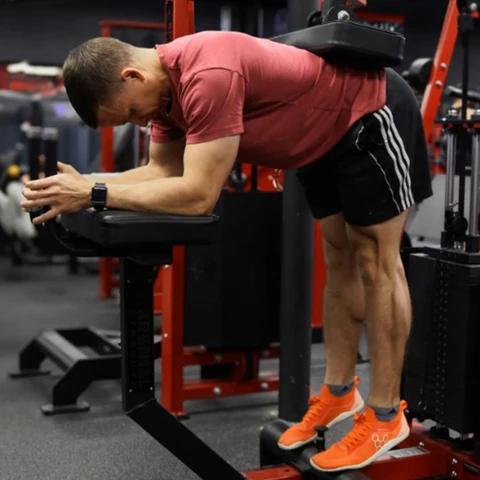
The lifting action is plantar flexion: the heels rise as the calves contract. Lower deliberately for roughly two to three seconds, settle briefly where you can still control the ankle, then push through the forefoot until the heels reach a clear high point. Pause momentarily before repeating. You do not need a complicated tempo count, but a visible top and an unhurried bottom make it harder to hide an increasingly short range as fatigue builds.
Keep pressure through the ball of the big toe and nearby forefoot rather than letting the ankles roll outward. Avoid clawing the step with your toes. The knee angle should stay roughly constant; bending into a miniature squat between each heel raise changes the movement and reduces the consistency of calf loading. If your heel rise becomes smaller after six repetitions, stop there or reduce the resistance. A long set of half-movements is not equivalent to a shorter set of honest full repetitions.
The gastrocnemius crosses the knee and ankle, while the deeper soleus acts at the ankle. Both muscles contribute to a donkey raise. Keeping the knees relatively straight gives the gastrocnemius a substantial role, but it does not switch the soleus off. Importantly, hinging forward at the hip does not itself lengthen the gastrocnemius: that muscle does not cross the hip joint. Ankle position and knee angle matter more than an exaggerated torso bend.
An external load can make a smooth rep surprisingly difficult. Make adjustments in the following order: maintain firm foot contact, preserve a controlled heel drop, reach an observable top position and then increase resistance. The same exercise performed with less weight and a much better range may be a more productive stimulus. If your arches cramp or your Achilles becomes irritated, back off and reassess rather than speeding up the bounce.
Compare donkey, standing and seated calf raises without myths
Donkey raises, standing raises and seated raises all challenge the calves, but their supports and knee angles differ. Standing calf raises keep the torso upright and can be simple to perform on one leg while holding a rack. Donkey raises put the torso in a hip hinge with the hands or forearms supported, which some trainees prefer because they are not balancing a bar on the shoulders. Their distinctive convenience is the loading position, not proof that they outgrow every other calf movement.
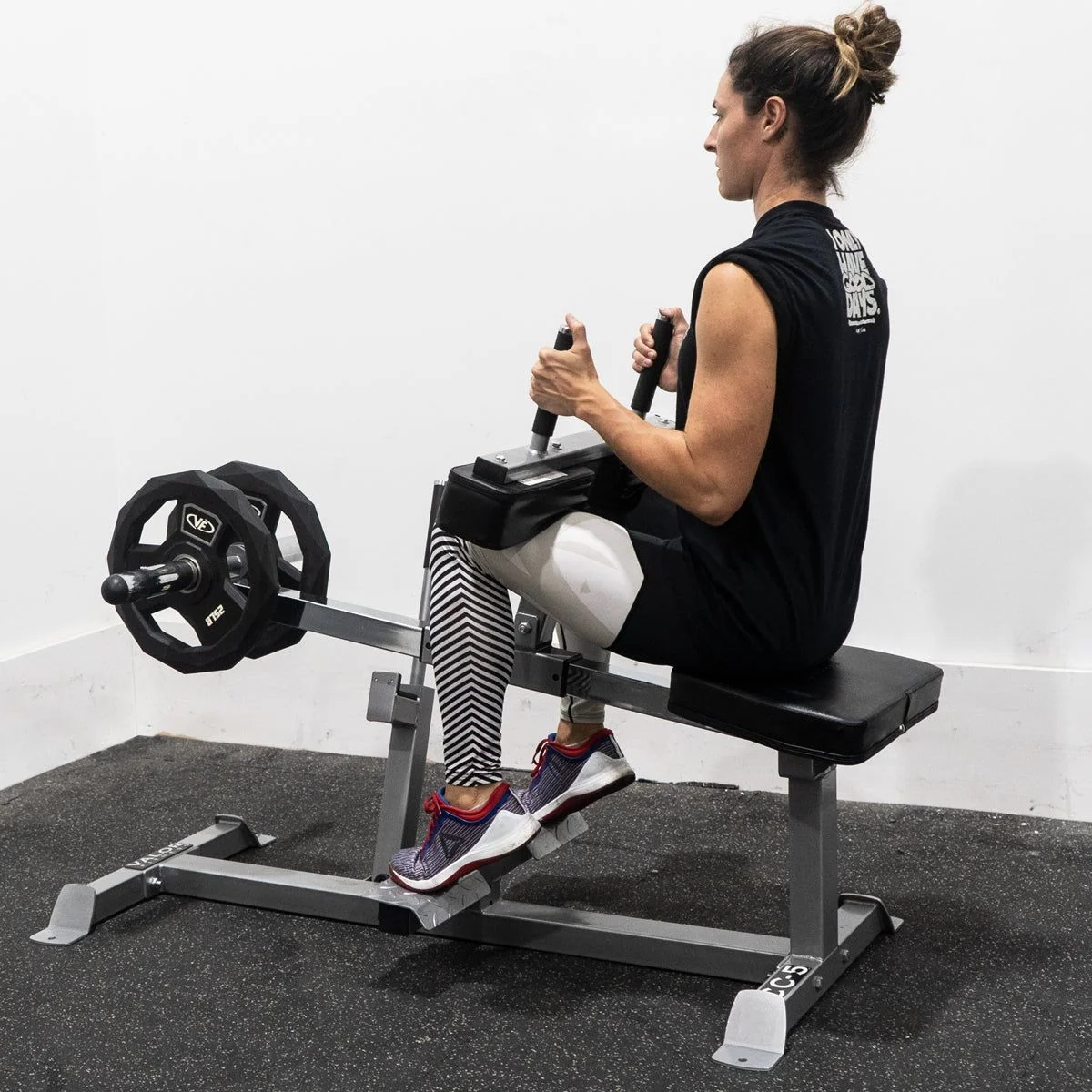
A seated calf raise bends the knee while a pad rests over the thighs. This shortens the gastrocnemius at the knee relative to straight-knee variations, which shifts the relative contribution toward the soleus. Both muscles still work; no standard calf exercise isolates one completely. For a rounded approach, consider one straight-knee movement and one bent-knee movement over the training week rather than replacing your whole program with one fashionable variation.
Compare exercises by repeatable reps, not equal kilograms. A loaded donkey machine may have a different lever arm from a seated machine, and a single-leg raise uses balance as another limiting factor. A useful test is whether your chosen version allows controlled heel travel and a predictable progression without aggravating the ankle or lower back. If a seated machine fits better or feels more comfortable, using it is not a compromise.
Donkey raises may be convenient after squats or deadlifts because they require little upper-body gripping. Nevertheless the calves still recover from running, jumping, stairs and sports. Account for those demands when adding sets. For busy lifters, a few well-controlled sets twice a week can be a better starting point than trying to match someone else’s high-volume routine.

Bodybuilding Shirts & Workout Gear
Bodybuilding shirts, tanks and gym gear for lifters chasing muscle, size, symmetry and the pump.

Body Under Construction | LEGO Bodybuilding Meme Muscle Tank Top
Add some lifting attitude to training with “Body Under Construction”.

Brozilla | Godzilla Gym Meme Workout Sweater | Monster T-Shirt
For laid-back days and lifting humor: “Brozilla”.

Mass Monster Bane Inspired Decal for Water Bottles Lapt Sticker
Give your everyday gear a playful “Mass Monster Bane Inspired” twist.

Gains O'Clock | Muscle Shirt & Gym Bros | Workout Vest Tank Top
Show some personality between sets with “Gains O'Clock”.

Mike Mentzer Heavy Duty Old School Bodybuilding Muscle Tank Top
Show some personality between sets with “Tank Top Mike Mentzer Heavy Duty Old”.

Funny Bodybuilder LEGO Gym | Workout Sweater & Gym Bros T-Shirt
Add a playful “Bodybuilder LEGO” touch to your casual rotation.

Let the Gainz Begin Bane Inspired Workout Decal for Gym Sticker
Stick a little “Let the Gainz Begin” humor on your favorite gear.

Bodybuilder – Meme & Gymbros – Top Gains & Humor T-Shirt
Rep “Bodybuilder” humor in and out of the gym.

Big Ass Energy & Meme Fans Athletic Shirt Tank Top
Your gym-day look, with a playful “Big Ass Energy” twist.

Swoledemort He Who Must Not Skip Leg Day | Swolecraft T-Shirt
Rep “Swoledemort He Who Must Not Skip Leg Day” humor in and out of the gym.
Load safely and progress donkey calf raises for six weeks
Start with two sessions per week, separated by at least one day. At each session, perform two or three working sets of roughly 10–15 donkey raises, with a couple of technically sound repetitions left in reserve. Rest around one to two minutes, or longer if you cannot repeat the same heel travel. Write down the load, clean rep count and where the movement stopped feeling controlled. A consistent station matters: keep shoe choice, step height and support position similar.
Weeks 1–2: Learn the movement with bodyweight or a light machine setting. Use a deliberate lowering phase and pause briefly at the bottom and top. If you hit ten clean reps and then begin bouncing, log ten. This is a calibration phase, not a contest to use the heaviest machine in the gym. Look at a quick side-view video to check whether your hip hinge stays fixed as the heels rise and fall.
Weeks 3–4: Add repetitions before weight. When every set reaches the upper end of the chosen range at the same tempo and range, make a small resistance increase and return toward the low end. A weighted vest may help in the bench-and-step variation if it can be worn securely. Improvised loose plates placed on your back and a partner perched on the lumbar spine introduce avoidable instability; do not use them as the default progression.
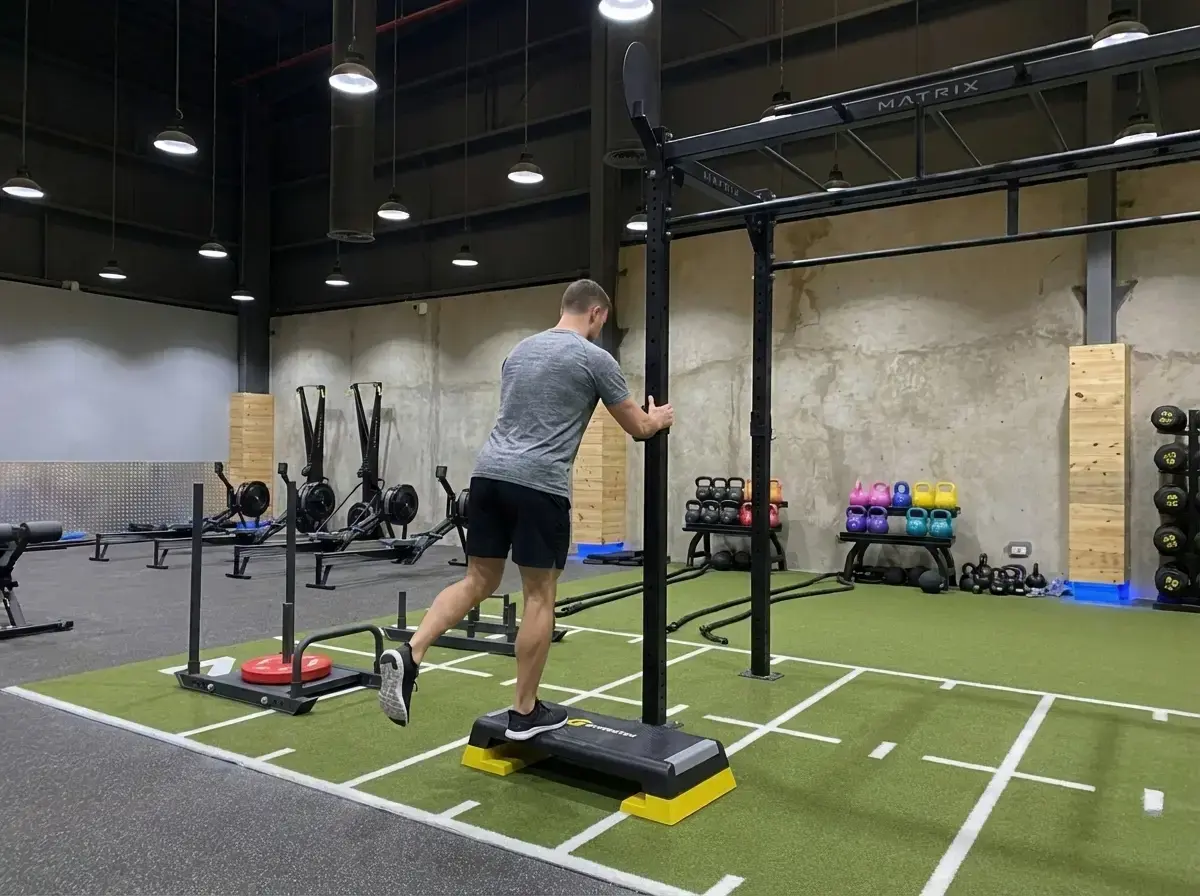
Weeks 5–6: Continue the same double-progression method. If bodyweight bilateral sets have become easy, practice a supported single-leg calf raise separately, not with the entire heavy machine load transferred to one leg. Keep one hand on a secure support and start with modest range. If calf soreness lingers or your heel range shrinks from session to session, cut a set or take a lighter workout rather than forcing another load increase.
At the end of six weeks, assess three things together: more clean repetitions, a repeatable full range and greater resistance under similar conditions. The machine number alone misses too much. A good donkey raise routine trains the ankle hard while the rest of the body stays stable, and that principle remains useful whether your equipment is an elaborate calf machine or a bench and step.
Equipment Worth Exploring
Explore equipment, accessories and gear from our carefully selected range.


Rubber Hex Dumbbells
Rubber-coated hex dumbbell pairs with a stable shape for home and commercial strength training.


Cast Iron Kettlebells
Textured cast-iron kettlebells for swings, squats, carries, and full-body training.