Advertising disclosure: This page includes affiliate product links that may earn us a commission, as well as products from our own store.
Biceps Curl EMG Rankings: Four Variations and What Counts for Growth
Concentration curls, regular dumbbell curls, hammer curls and incline curls all bend the elbow, but they do not put the arm, wrist or shoulder in the same position. That difference explains why they can feel so unlike one another even when the weight seems comparable. A 2026 experiment compared the electrical signals recorded from the biceps during all four movements over multiple test days. The result was a surprisingly consistent group ranking, with an important catch: the ranking did not tell us which exercise would grow the most muscle.
If your goal is bigger arms, the useful question is not simply which curl tops an activation chart. It is which exercises you can load progressively, perform through a controlled range, recover from and keep consistent enough to judge over months. Below is what the experiment actually measured, how to use the four curl variations, what longer training comparisons add and how to arrange a practical six-week biceps block.
1. What the four-curl experiment actually measured
Fifteen adults, eight with resistance-training experience and seven without, performed concentration curls, conventional dumbbell curls, hammer curls and incline curls across four separate testing sessions. Each exercise involved seven repetitions, with loading around one-third of peak isometric force. Sensors placed on the skin recorded surface electromyography, or sEMG, from the biceps brachii. The investigators compared normalized signal amplitudes rather than measuring changes in muscle size.
At the group level, concentration curls ranked highest and hammer curls lowest; ordinary dumbbell curls and incline curls occupied similar middle positions. The overall ranking across days showed strong agreement, with a reported Kendall’s W of 0.90. Yet the closest exercise comparisons were much less dependable. About one-third of participants had only fair-to-moderate agreement between sessions, meaning individual responses did not always match the tidy group picture.
Those conditions matter. Seven repetitions at a standardized relatively light load are not the same as multiple hard bodybuilding sets taken near failure. Electrodes also capture electrical activity at the skin surface, not a direct measure of total tension, muscle damage or future growth. The reliable conclusion is narrow: under the tested conditions, certain curls consistently produced different measured biceps signals. It is not a validated muscle-building leaderboard.
2. Concentration curls: high signal, useful control, no magic
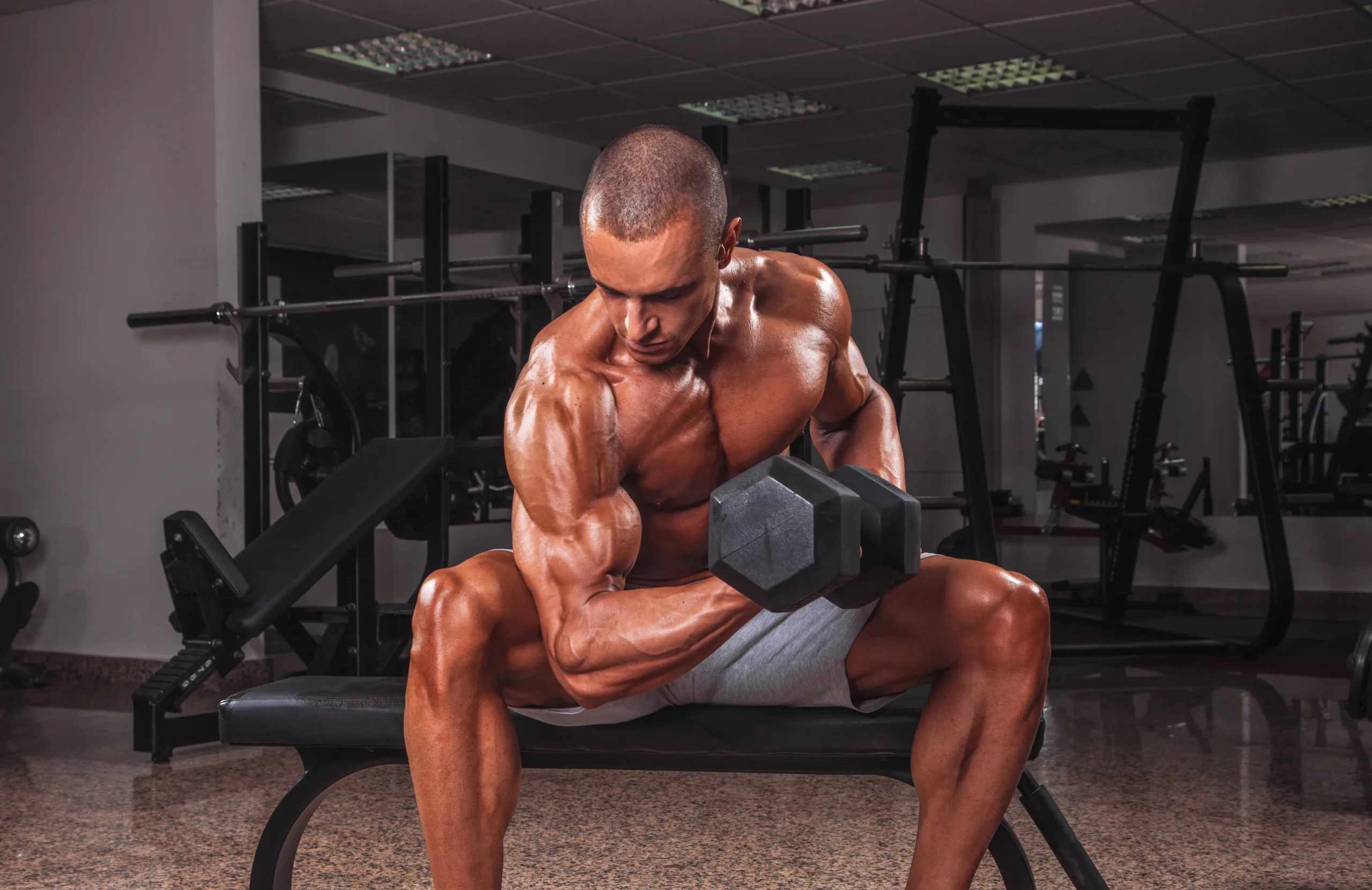
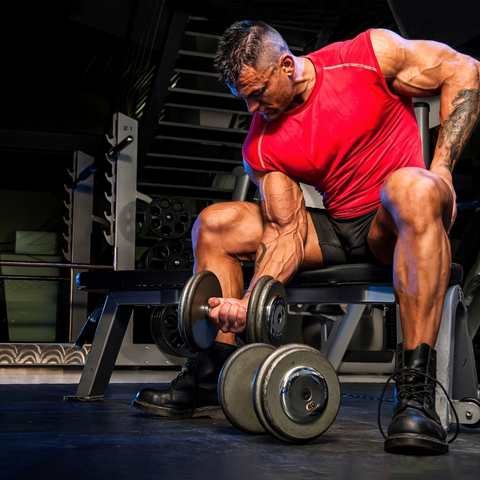
A concentration curl puts the upper arm against the inner thigh while you sit, keeping the movement relatively isolated. The braced position may reduce opportunities to move the shoulder or swing the torso, making it easier to focus on elbow flexion. For the setup, sit with your feet planted, allow the working arm to hang comfortably and keep the upper arm supported without grinding the elbow into the leg. Curl until you reach a controllable top position, then lower without dropping the dumbbell.
In the recent experiment this variation produced the greatest normalized biceps electrical signal. That observation can be useful when selecting an exercise that offers a clear sense of the target muscle working. It does not establish that concentration curls are automatically superior for hypertrophy, especially when training load, number of hard sets, rep range and fatigue are not held equal over weeks.
There are practical tradeoffs, too. Because each arm works individually, a three-set concentration-curl block can take more time than bilateral curls. Heavy weights may become awkward to position, and a thigh-supported elbow can be uncomfortable for some lifters. If you enjoy the exercise, use it as a controlled accessory after your heavier arm work: two or three sets of roughly 10–15 clean repetitions per side are a reasonable starting point. If it makes your wrist, elbow or shoulder hurt, choose another comfortable curl rather than forcing the highest-EMG option.

Equipment Worth Exploring
Explore equipment, accessories and gear from our carefully selected range.


Rubber Hex Dumbbells
Rubber-coated hex dumbbell pairs with a stable shape for home and commercial strength training.



FID Bench MAX
Adjustable bench offering flat, incline, and decline positions + adjustable headrest.


Multi Bench MBX-650 2.0
Adjustable multi-bench with roller adjustment, 15 backrest positions and accessory mounts.


EZ Curl Barbell
Olympic EZ curl bar with angled grips for curls and triceps exercises.
3. Standing dumbbell versus hammer curls: grip changes the task
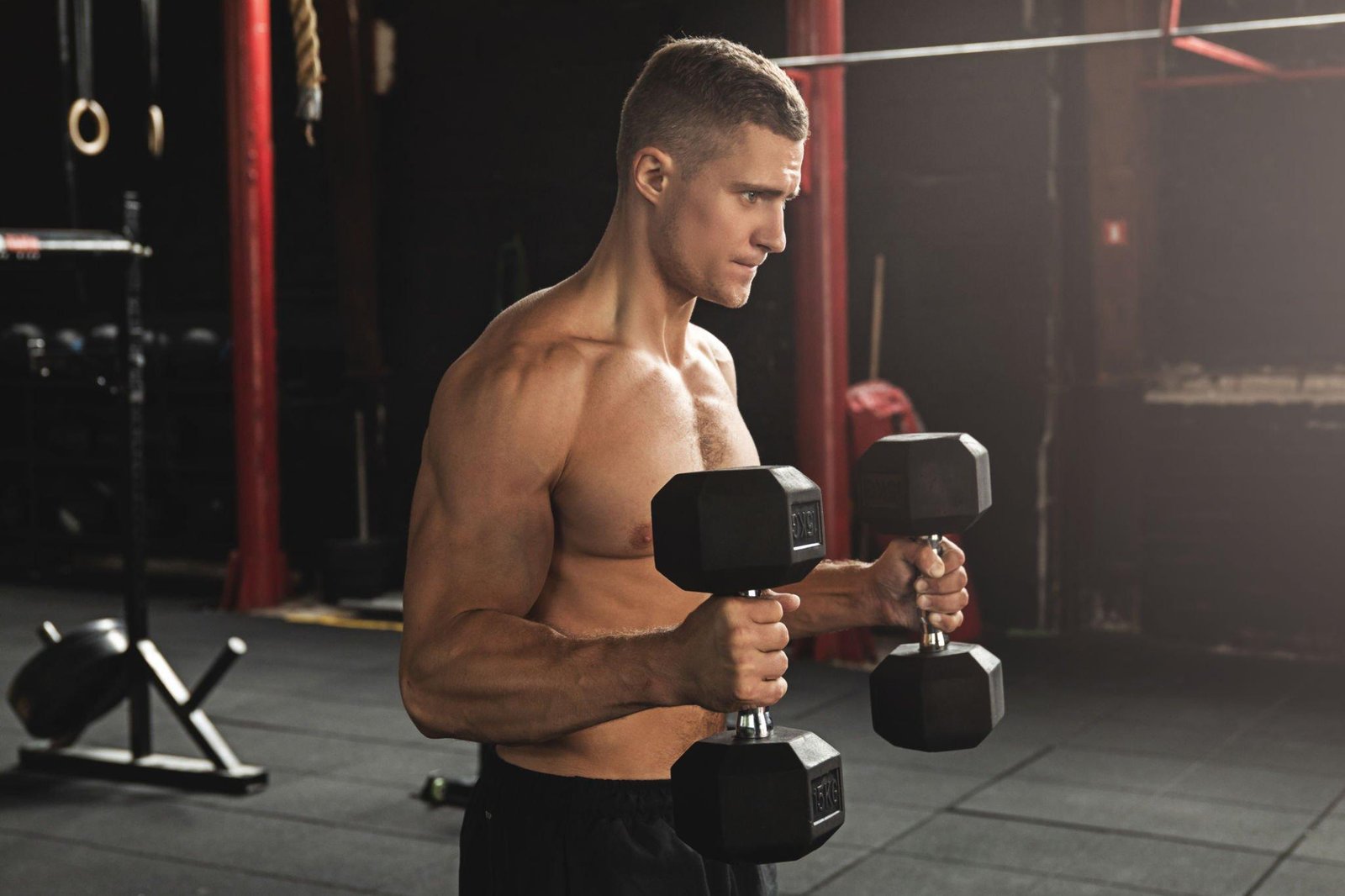
In a typical standing dumbbell curl, you turn the palm toward the shoulder as the weight rises. This supinated position allows the biceps to contribute to elbow flexion and forearm supination. Begin with arms near your sides, control the forearms through the arc and keep your elbows from drifting far forward on every repetition. A small amount of natural shoulder motion is not a failure; launching the dumbbells with your hips and back makes the exercise difficult to compare from one session to the next.
A hammer curl keeps the palms facing inward with a neutral grip. It still uses the biceps, but the brachialis and brachioradialis also contribute to bending the elbow. The recent electrical-signal study recorded the lowest biceps brachii amplitude for hammer curls among the four tested lifts. That does not mean hammer curls are useless for arm size. The measurement concerned one muscle’s surface signal under a specific load, not the growth of every elbow flexor after a training cycle.
For many lifters, the neutral grip feels easier on the wrist than a fully supinated grip. It also lets you use a different movement pattern without requiring a new machine. Try regular dumbbell curls when you want a familiar palms-up movement you can log consistently; try hammer curls when you want a neutral-grip alternative or extra elbow-flexor variety. Use whichever wrist and elbow paths remain pain-free, and avoid calling a heavier hammer-curl number evidence that the biceps have suddenly become stronger than they are in a supinated curl.
4. Incline curls: shoulder position can matter beyond activation
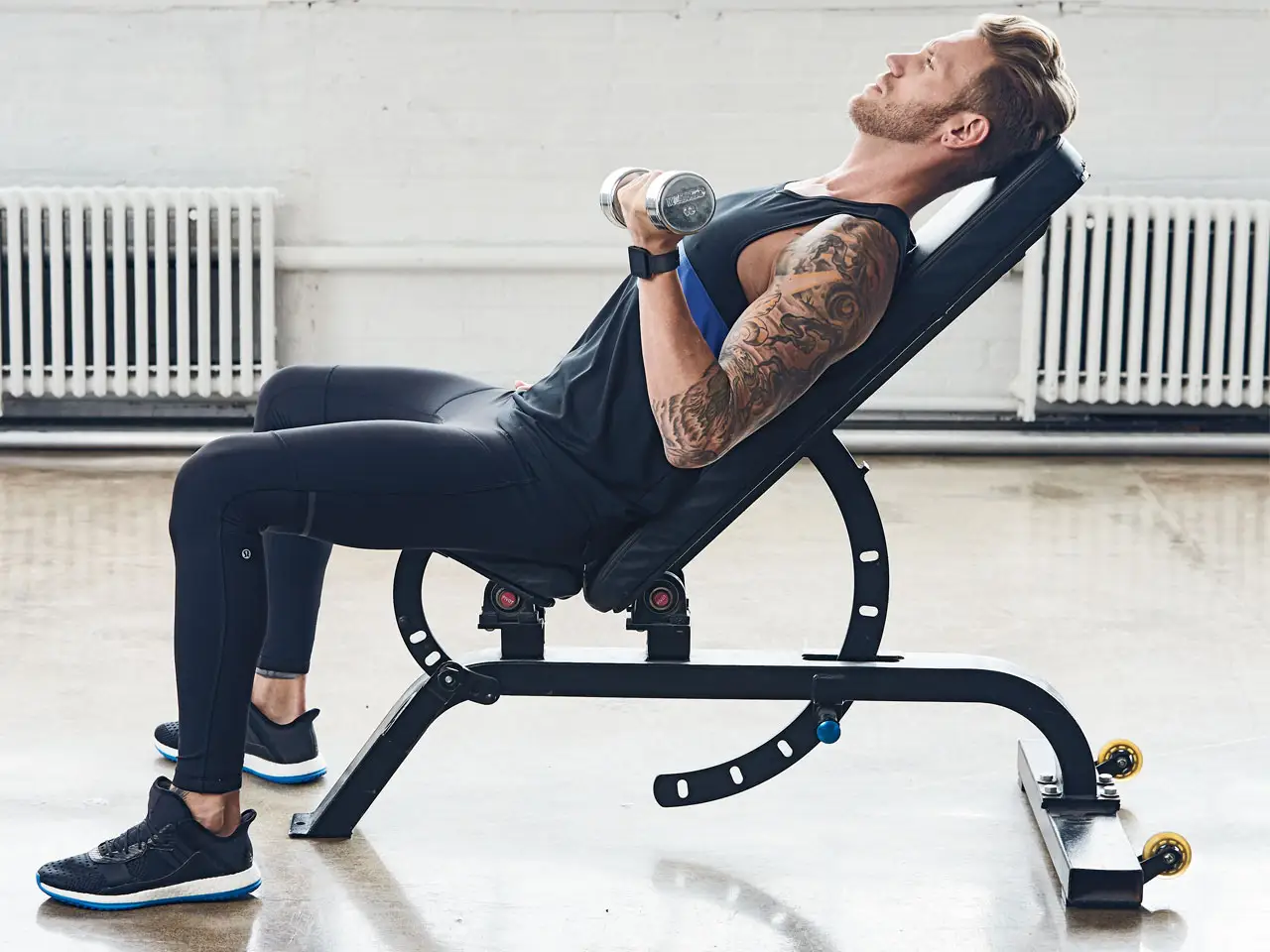
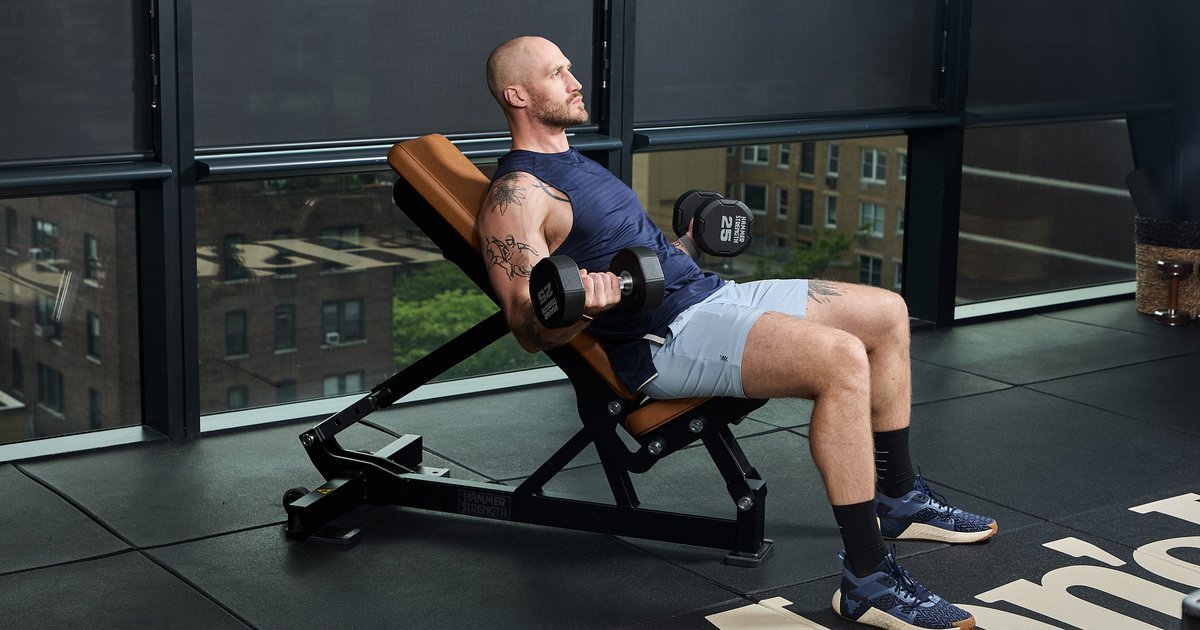
An incline dumbbell curl places your torso against a reclined bench and allows the arms to start behind the body’s side line. That changes the position of the shoulder while the elbow bends. Set the bench at a modest incline, keep your upper back supported and begin with a weight you can lower without wrenching the shoulder backward. Your arms should hang naturally; do not force an exaggerated stretch or bounce out of the bottom.
In the four-exercise sEMG comparison, incline curls and ordinary dumbbell curls sat close to each other in the group ranking. More importantly, muscle-growth experiments ask a different question. A separate 12-week training comparison in 21 previously untrained adults found some exercise-specific differences when one arm performed incline curls and the other performed preacher curls. The incline condition showed greater growth of the biceps brachii itself, while the preacher condition favored other elbow-flexor muscles. Total elbow-flexor growth was not clearly different. That is a better example of why a single muscle’s instantaneous signal should not be used to forecast the development of an entire upper arm.
The two experiments should not be merged into one absolute exercise ranking. Their exercises, participants, methods and outcomes differed. What you can take into training is a useful selection principle: shoulder position can change what a curl emphasizes, so it is sensible to include a well-controlled curl with the upper arm near your side and, if comfortable, a second pattern with the shoulder in another position. A preacher, cable or incline variation can fill that role without claiming every lifter needs all three.

Bodybuilding Shirts & Workout Gear
Bodybuilding shirts, tanks and gym gear for lifters chasing muscle, size, symmetry and the pump.

Curls The Girls Shirt – Bicep Curls Top & Gymbros T-Shirt
Rep “Curls For The Girls” humor in and out of the gym.

OnlyGains Big Biceps Tee
Rep “OnlyGains Only Gains Big Biceps” humor in and out of the gym.


Thor Hammer Curls Meme Hero Top Shirt T-Shirt
Show some superhero attitude with a playful “Thor Hammer Curls Meme” tee.

Every Day Is Arm Day
Make gym days more fun with “Every Day is Arm Day Octopus Gym Meme” style.


For Whom The Bell Curls Dumbbell Metallica Workout Heav T-Shirt
Rep “For Whom The Bell Curls” humor in and out of the gym.

Micro Biceps Club President Gym | Funny Workout Sweater T-Shirt
Keep things casual with a little “Micro Biceps Club President” attitude.

I Love Gym Bicep Heart | Swole Heart Decal For Water Bo Sticker
Stick a little “I Love Gym Bicep Heart” humor on your favorite gear.
5. How to judge a curl when the EMG chart cannot decide
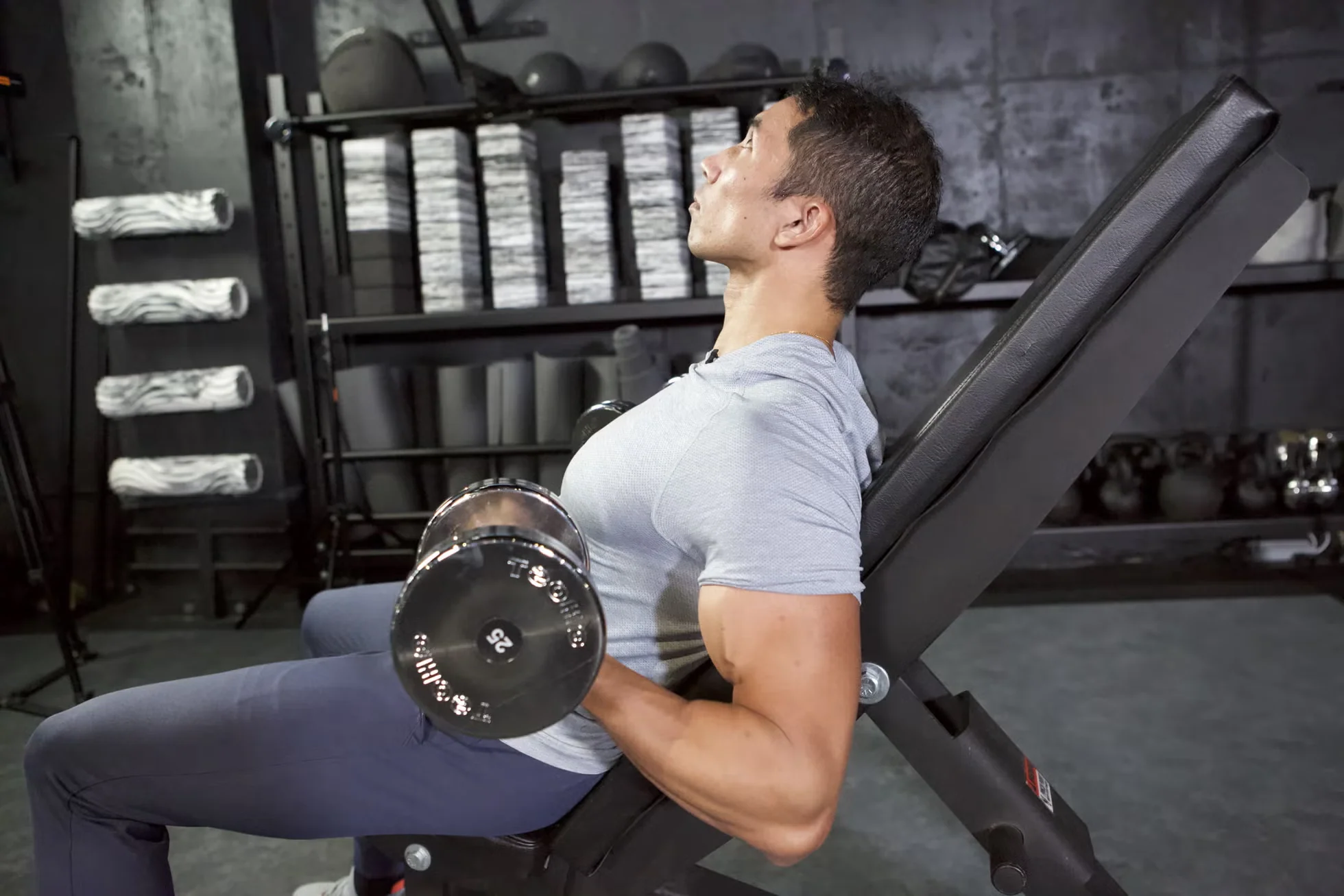
Think about five practical questions before choosing an arm exercise. Can you keep the same setup every week? Can you train the muscle through a useful, repeatable range? Does the movement agree with your wrists, elbows and shoulders? Can you add repetitions or resistance gradually? And can you finish the planned work without compromising the training that matters more to your overall program? These answers are more actionable than a single signal ranking measured on someone else’s arms.
Cable curls can help when changing a dumbbell’s leverage through the motion feels awkward. The cable’s direction is set by the pulley and your stance, so a small setup change alters the force profile. A straight bar, separate D-handles or rope may each be comfortable for different people; none should be marketed as a guaranteed growth shortcut. If you use a cable stack, record the pulley height, attachment and stance along with the load. A 20-kilogram entry on one machine is not necessarily interchangeable with 20 kilograms on a different cable system.
For direct biceps work, keep most sets controlled and finish reasonably close to muscular failure while preserving technique. A beginner might progress well with four to six challenging direct sets per week; a trained lifter may need more, depending on pulling volume and recovery. Treat those numbers as examples rather than biological limits. If rows and pulldowns already fatigue your elbow flexors, add direct curls conservatively. Persistent elbow pain, shoulder pinching or reduced grip strength is a reason to modify exercise choice or volume, not to chase a favored activation score harder.
Equipment Worth Exploring
Explore equipment, accessories and gear from our carefully selected range.
VOLTRA
Compact digital cable trainer with smooth, adjustable resistance.

Go-Tone Pro
Portable digital cable trainer with up to 66 lb (30 kg) of adjustable resistance.

VForce Wall Trainer
Space-saving wall-mounted functional trainer with pivoting cable arms and variable resistance ratios.

VForce 2IN1
Half rack and pivot-arm functional trainer with switchable 1:1 and 2:1 pulley ratios.

VForce Lat Tower
Wall-mounted cable tower with pivot arms and adjustable 1:1 or 2:1 pulley ratios.

GymPin D Handle Bar
Multi-use steel D-handle bar for cable rows, pulldowns and other cable exercises.

GymPin Ergo Handles
Pair of ergonomic cable handles shaped for comfortable triceps and pulling exercises.



Dual Hook EZ Curl Bar
Angled aluminum dual-hook cable bar for biceps curls and pulldown variations.
6. A six-week curl plan that rewards repeatable progress
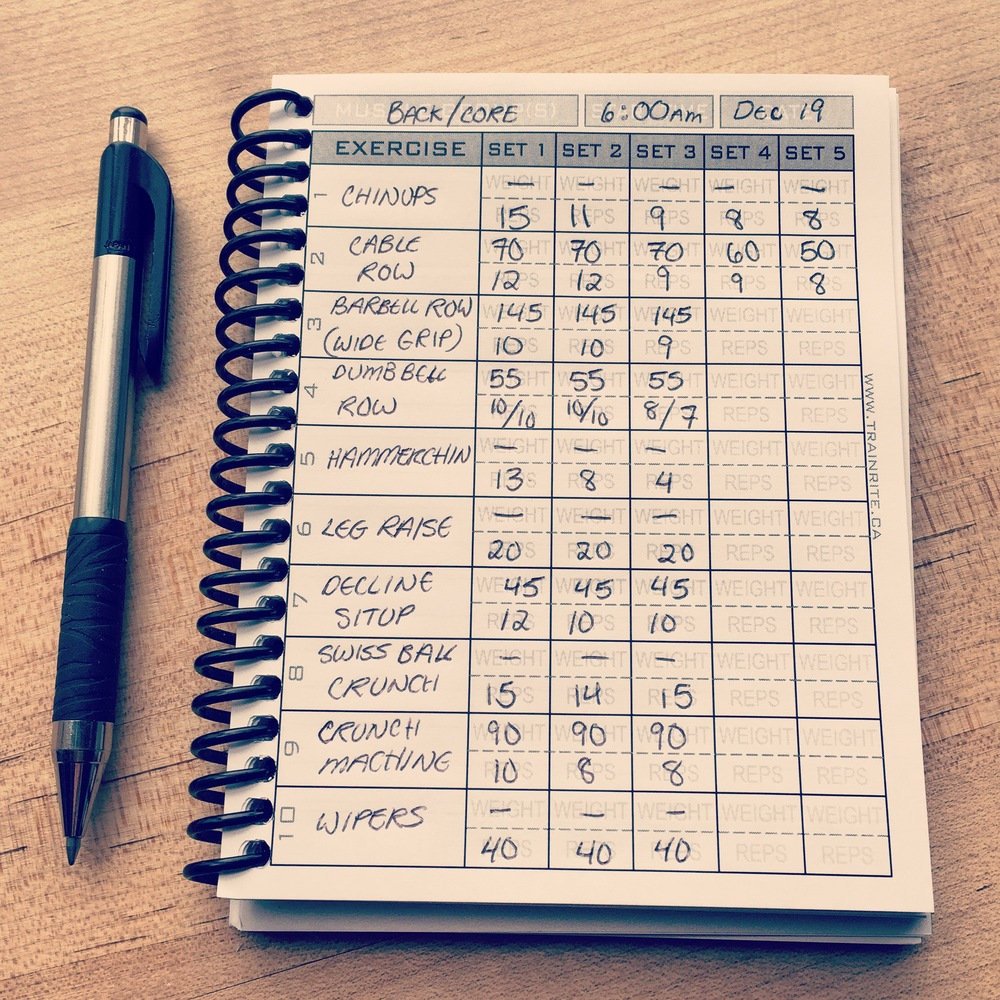
Train direct curls on two nonconsecutive days each week, with at least a day between hard arm sessions. Begin with two movements that serve different purposes: a standing supinated dumbbell curl you can progressively load and either an incline or concentration curl for careful lighter work. A neutral-grip hammer curl can rotate into the second slot if you prefer it. You do not have to perform every variation on every day.
Weeks 1–2: On day A, do two sets of 8–12 standing dumbbell curls and two sets of 10–15 concentration curls. On day B, do two sets of 8–12 standing curls and two sets of 10–15 incline curls. Rest around 90–150 seconds between sets, longer if needed to keep performance steady. Finish most sets with roughly two or three good reps left. Use a weight you can lower under control; write down the actual reps for every set.
Weeks 3–4: Keep the same movement choices and add repetitions within the prescribed ranges before increasing the weight. When all sets reach the upper end with consistent form, make the smallest available load increase and return toward the lower end. If recovery and elbow comfort are good, a trained lifter can add one set to the first curl on one of the two days, rather than adding volume everywhere at once. If gripping a supinated dumbbell hurts, replace one slot with hammer curls and record it as a new exercise baseline.
Weeks 5–6: Continue progression, but do not make every set an all-out failure test. A useful target is to complete more clean total reps with the same weight, or the same reps with a modestly heavier weight. If performance, sleep or joint comfort deteriorates, drop one set from each session for a week before building back. Keep your main pulls and presses in the program; direct arm work should support, not displace, the rest of your training.
After six weeks, compare exercise-specific records: load, reps, range, control, discomfort and, if you care about size, consistent arm measurements taken under similar conditions. Do not compare a concentration curl’s dumbbell weight to the load on a hammer curl or cable stack as though the numbers were interchangeable. The best curl for growth is the one that contributes meaningful, tolerable work you can repeat and progress. The electrical-signal ranking gives you a research clue, not a substitute for training outcomes.
Bodybuilding Shirts & Workout Gear
Bodybuilding shirts, tanks and gym gear for lifters chasing muscle, size, symmetry and the pump.

Claws Out Guns Out Wolverine Muscle Shirt Athletic Vest Tank Top
Your gym-day look, with a playful “Claws Out Guns Out Wolverine” twist.

Gym Dost Thou Even Curl Medieval Knight Bicep Hoodie
Show off your medieval humor in a laid-back “Dost Thou Even Curl Medieval Knight Bicep” hoodie.

Gym If You're Reading This It's Arm Day Drake Parody & Tank Top
Train hard, laugh a little, and rep “If You're Reading This It's Arm Day Drake”.

Biceps of the Caribbean Gym | Funny Pirate Workout Swea T-Shirt
Bring “Biceps of the Caribbean” humor to your everyday gym style.

Muscle Mountain – Bicep Mountain Meme Decal for Water B Sticker
Put “Muscle Mountain” gym humor on your laptop, bottle, or gym gear.

Shirt – Guns N Poses – Rock Music & Huge Arms Meme T-Shirt
Rep “Guns N Poses” humor in and out of the gym.

Pumpeye Forearm Gains Grip Training Popeye Meme Vest Tank Top
Add some lifting attitude to training with “Pumpeye”.

Welcome To The Gun Show Dwight Schrute Meme The T-Shirt
Rep “Welcome To The Gun Show” humor in and out of the gym.

The Real Rocky Mountains Bicep Mountain Meme & T-Shirt
Heavy lifts, good laughs, and a little “The Real Rocky Mountains Bicep Mountain” energy.

Lightning Curls Pikachu Meme – Pokemon Shirt & T-Shirt
Make gym days more fun with “Lightning Curls Pikachu Gym Meme” style.