Advertising disclosure: This page includes affiliate product links that may earn us a commission, as well as products from our own store.
Does Lifting Chalk Improve Grip? What the Pull-Up Research Actually Shows
Chalk can make a slipping grip feel dramatically more secure. That does not mean it adds muscle strength, guarantees extra deadlift kilos or works equally well on every surface. The useful question is whether your hands are losing contact before the muscles doing the exercise have finished their job.
A small experiment with assisted pull-ups offers a concrete example of improved performance with chalk. Its unusual climbing grips also explain why the result should not become a blanket promise for every lifter. Understanding the test is more useful than choosing between “chalk is magic” and “chalk does nothing.”
Here is how to interpret the evidence, distinguish chalk from other grip tools and run a sensible comparison in your own training without confusing a better contact surface with a stronger hand.
1. A small assisted pull-up experiment found more repetitions
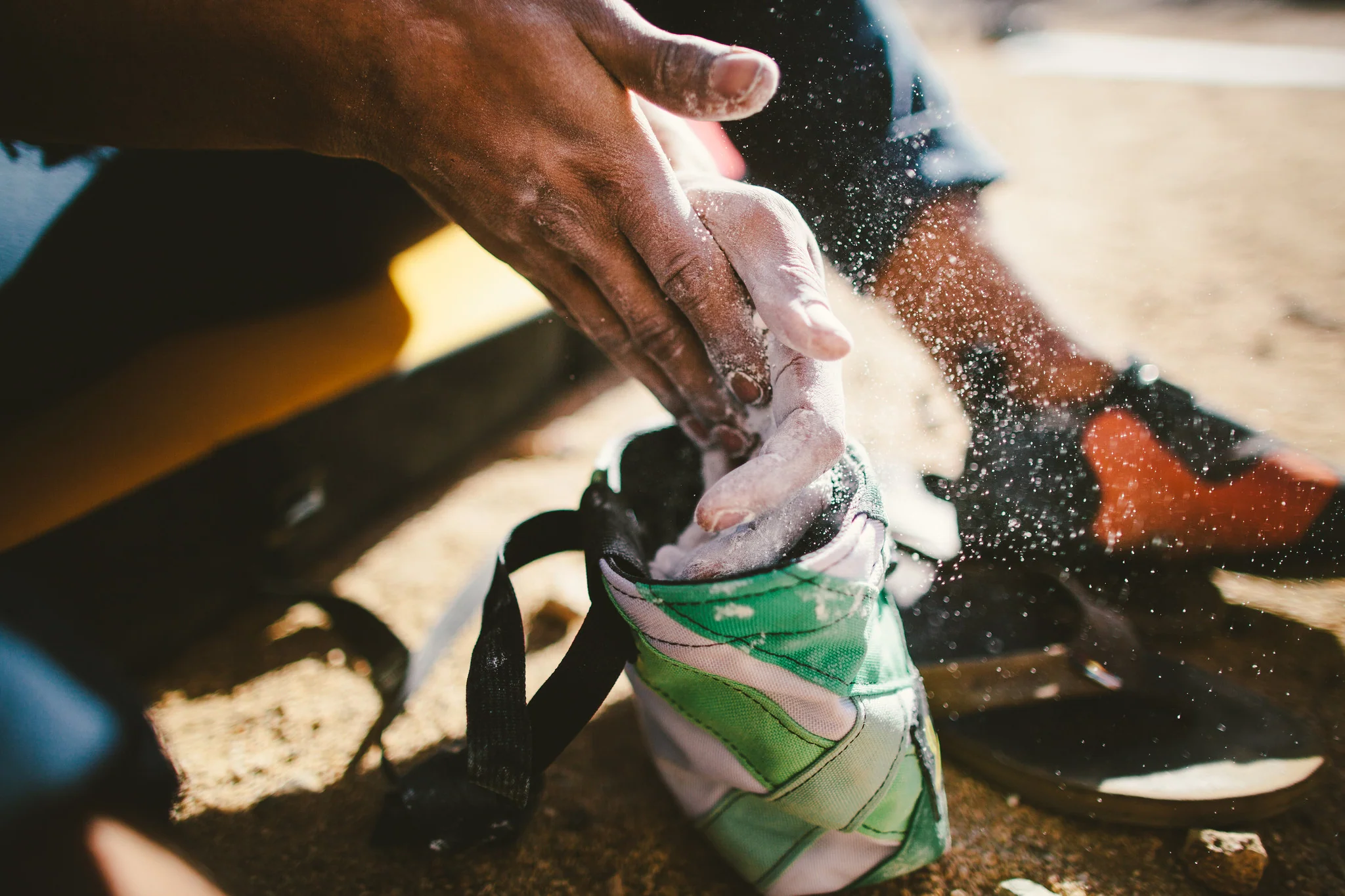
In a 2018 study, nine recreational male climbers completed counterbalanced trials using open-handed and pinch grips on an assisted pull-up setup. Assistance reduced the effective bodyweight demand by 50%, and sets continued to failure. The chalk was 100% magnesium carbonate.
Average open-handed performance was about 22.8 repetitions with chalk versus 19.7 without it. Pinch-grip performance was about 14.4 versus 9.1 repetitions. Both comparisons favoured chalk. Heart rate and perceived exertion did not differ significantly across trials.
Those results concern repeated assisted pulling with specific climbing-style holds. They do not establish a percentage increase in ordinary pull-ups, a deadlift maximum or long-term forearm growth. Nine participants also leave substantial uncertainty about how broadly the finding applies.
The distinction matters because changing the task can change the limiting factor. A climber supporting an open hand on a hold is not making the same contact as someone closing a fist around a knurled bar. A pinch hold adds another set of constraints involving the thumb, fingers and wrist position. Treat the experiment as evidence that chalk can improve a particular performance task, not as a conversion table for your next lifting session.
For practical training, start by asking what actually ends your set. Do the fingers visibly slide, does the hand begin opening, or does the pulling movement fail while the grip remains secure? Those experiences can overlap, but they are not identical problems and do not necessarily need the same solution.
2. Powder and liquid chalk are not interchangeable research conditions
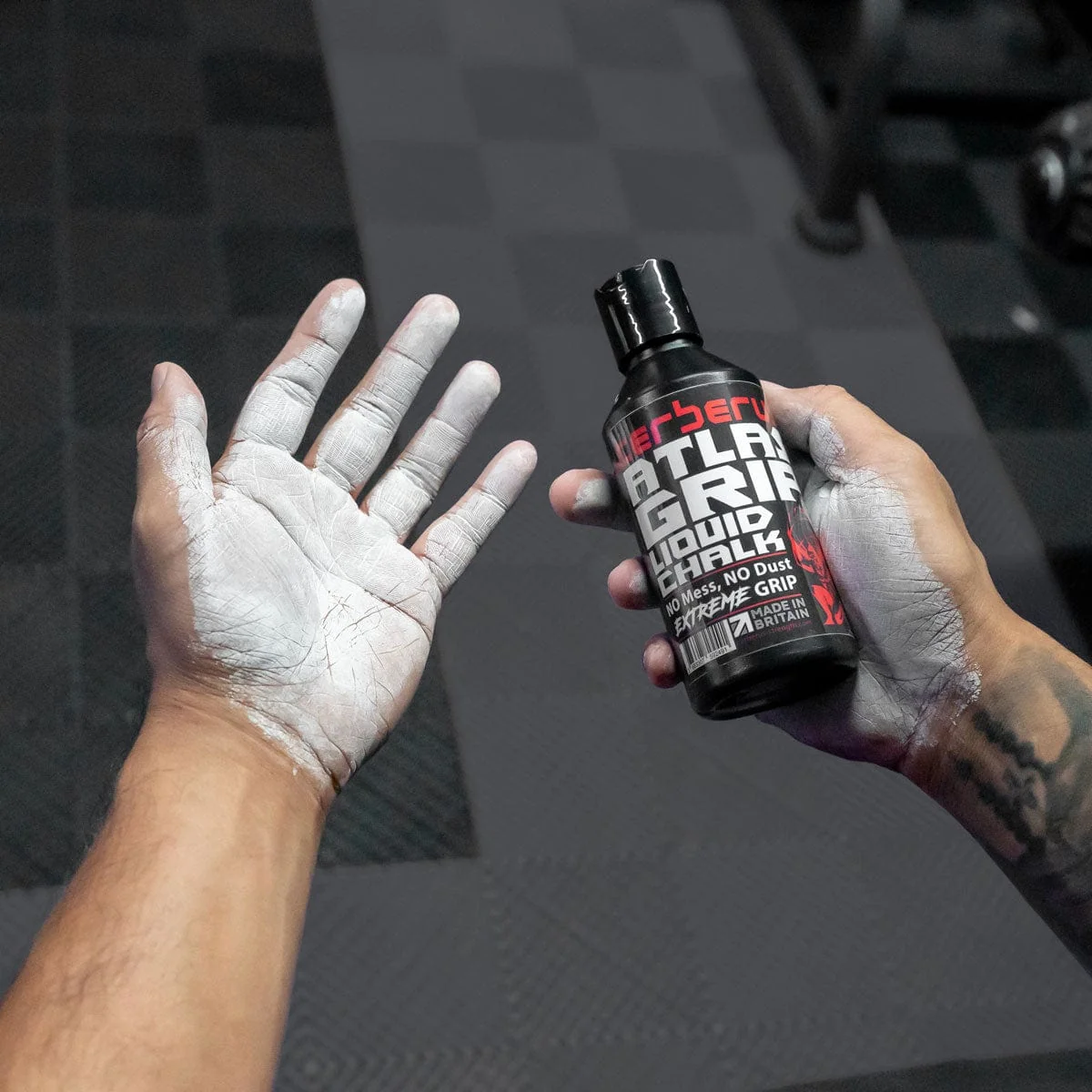
The product on your hands is part of the setup. A block of magnesium carbonate, loose powder and a formulated liquid chalk are different ways of preparing contact. A finding obtained with one does not automatically establish the same result for every commercial mixture.
Liquid chalk also introduces a preparation step: follow the product instructions and allow it to dry before gripping. Smearing a wet coating onto the handle and comparing that with dry powder is not a clean test of which format works better. The amount applied, the condition of the hands and residue already on the equipment all matter to a fair comparison.
Choose a format your gym permits. A chalk rule is an equipment-use constraint, not a scientific argument about whether your preferred format should be allowed. Avoid creating a dust cloud around other people and leave shared handles ready for the next user. You do not need theatrical application to make the test meaningful.
Use a small, consistent application rather than adding more after every disappointing repetition. If the product irritates your skin, stop using it and reassess rather than treating discomfort as proof of a powerful formula. A dramatic sensation or unusually thick coating does not demonstrate a better training outcome.
For your own notes, record what you used. “Chalk” can hide several changes between sessions: a different product, freshly washed hands, a still-damp application or a handle covered by previous users. Keeping those details recognizable helps you decide whether the intervention improved contact or merely coincided with an unusually good day.
3. The surface can change the answer
Friction research does not support one simple claim that more chalk always creates more grip. An older experiment with fifteen participants found reduced friction when chalk was applied during tests against flattened rock surfaces. Another investigation across four rock types found that the effect depended on moisture and surface characteristics, with more favourable effects generally seen on dry fingertips than in simulated sweaty conditions.
These are contact-mechanics experiments, not demonstrations that chalk universally helps or harms a loaded exercise. Different rock, different hand conditions and a different measurement task can produce different answers. That is a reason to define the conditions carefully, rather than discard every result that conflicts with your favourite gym habit.
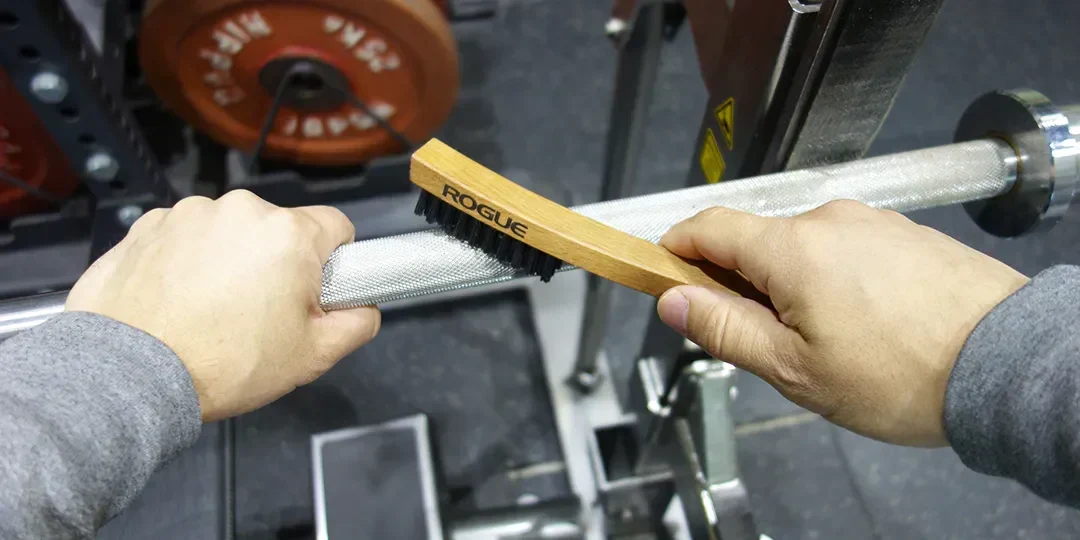
For a lifter, begin with the actual handle. Check for visible residue and follow the equipment maker’s cleaning guidance. A bar covered by accumulated chalk is not the same test surface as a clean bar with a fresh application on the hands. Do not mistake a neglected contact surface for a need to apply still more product.
Knurling, diameter and handle shape also change the task. A thick sleeve challenges how far the fingers can close; a rotating attachment changes the way you manage its movement. Comparing a smooth, thick handle on Monday with a sharply knurled bar on Friday tells you little about chalk alone.
Use the same equipment for a meaningful comparison. If you must change stations, record it. The point is not to measure friction coefficients during an ordinary workout, but to avoid attributing every difference in grip to one substance while the thing you are holding changes underneath it.

Equipment Worth Exploring
Explore equipment, accessories and gear from our carefully selected range.


Power Tower
Freestanding pull-up and dip station with adjustable handles for bodyweight training.
Horizon Grip
Ergonomic V-style cable grip for rows and back training.

Angles 90 Grips
Flexible grip attachments that allow natural wrist movement during pulling exercises.

Leather Lifting Straps
Padded leather straps support grip during heavy rows, deadlifts and pulling exercises.

Leather Wrist Grips
Padded leather lifting grips help support the hands and wrists on heavy pulling exercises.

Grip Plates
Rubber-coated weight plates with handholds for loading barbells and machines.
4. Better contact is different from stronger fingers
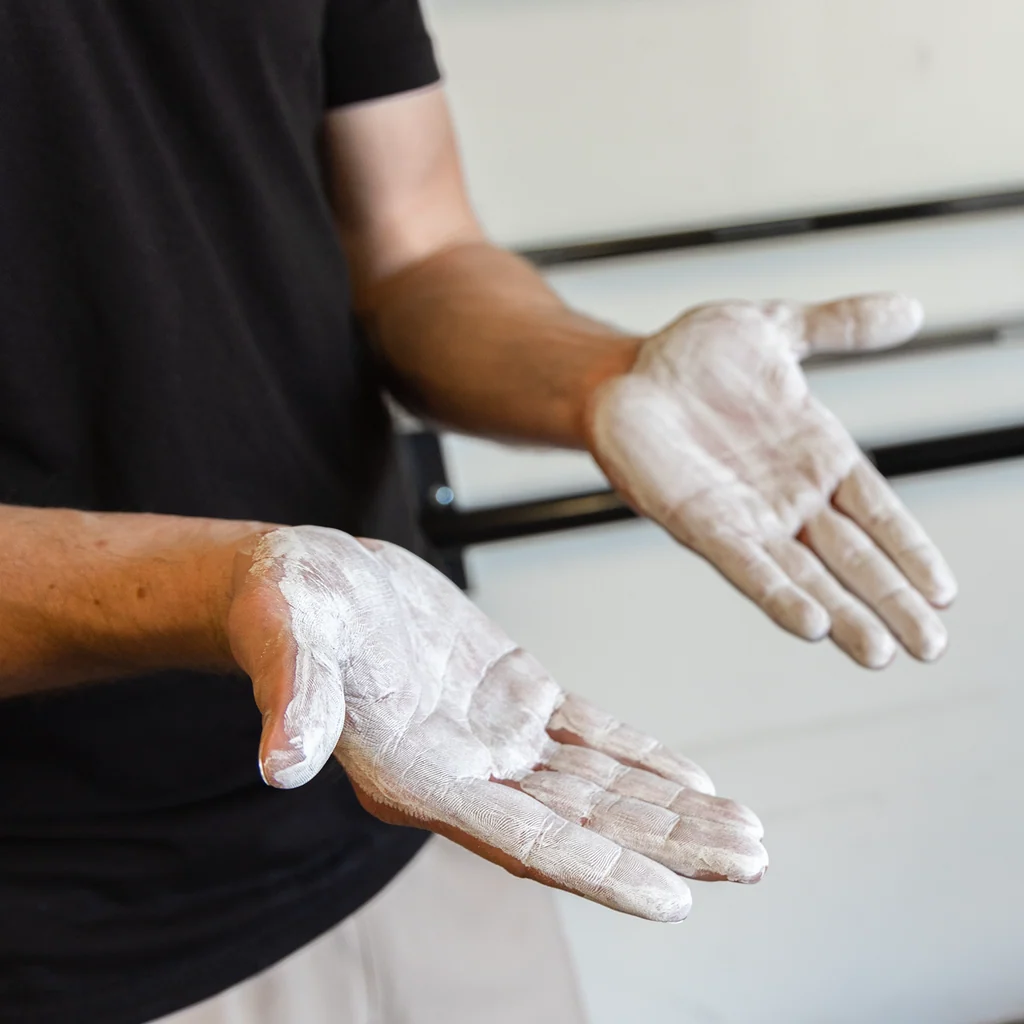
Chalk changes the hand-to-surface interaction. Grip training is intended to develop the capacity to produce or sustain force. A temporary improvement in contact does not by itself demonstrate a training adaptation, even if you complete more repetitions that day.
A review of climbing finger-strength assessments highlighted substantial differences in grip types, edge depths, devices and testing conditions. Many tests could be reliable under their own protocols, but that did not make the results interchangeable. The broader lesson is that a grip score only makes sense alongside the task that produced it.
For a lifter, distinguish holding a bar through a set from a pinch, a thick-handle challenge or a forearm exercise. Improvement in one can be useful without proving equal improvement in every other form of gripping. If you want to track progress, repeat a recognizable test rather than changing the implement whenever a number stops increasing.
Straps and lifting grips add another distinction. They change how the load connects to your hands and wrists; they are not just chalk in a different package. They can be useful when your objective is training the back or another target area without the same grip limitation. If the objective is testing your unsupported hold, adding an aid changes the test.
Keep those choices deliberate. You can use an aid for one exercise and train grip separately without pretending the two sessions measure the same thing. What matters is that the training goal, the recorded result and the equipment choice describe the same task. An impressive number with an undisclosed change is less useful than a modest number you can reproduce.
5. Test usefulness without turning every set into a max attempt
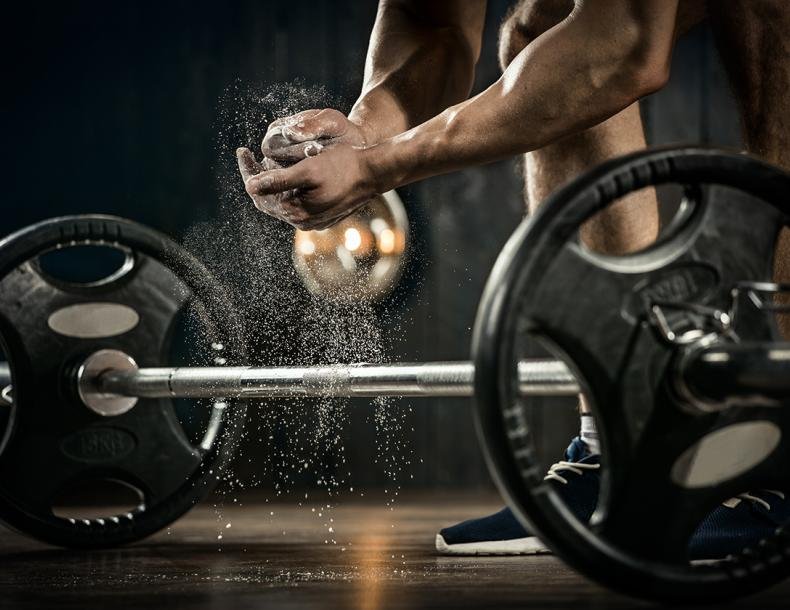
Choose a familiar pulling exercise at a manageable load. Keep the handle, range, repetition standard, rest and place in the workout as consistent as practical. Record whether the set ended because the hands slipped, the grip opened, technique changed or the main movement became too difficult.
Compare similar sessions rather than doing an exhausting no-chalk test and immediately repeating it with chalk. The second attempt would inherit fatigue from the first. You do not need a formal experiment to learn something useful, but you should recognize the obvious reasons two sets might differ.
Look for a pattern across several normal exposures. Does the handle stay secure without repeated repositioning? Can you complete the planned work with the same technique? Does the practical benefit justify the application and cleanup? A useful outcome can be more confidence in contact rather than a new personal record.
Keep skin comfort and control part of the decision. Chalk is not permission to ignore pain, torn skin or an uncontrolled hold. If you are experimenting with an unfamiliar pinch or open-handed setup, make the task easier first rather than copying a climbing study’s failure test at full bodyweight.
Finally, judge progress over time using consistent conditions. Better grip today may reflect improved contact; stronger grip over repeated sessions requires a more stable comparison. Chalk can be a helpful tool when slipping limits the work, but its usefulness is specific to the hands, surface and exercise in front of you. Use it to support the training you intended, not to manufacture a universal strength claim.

Funny Gym Shirts & Workout Gear
Funny gym shirts, tanks, hoodies and workout gear for lifters who like training hard.

Grip Training Essential Gymbro Jumper & T-Shirt
For laid-back days and lifting humor: “Grip Training Essential”.

Bending Bars Meme – Barbell Squat Bench Deadlift, & T-Shirt
Heavy lifts, good laughs, and a little “Bending Bars Gym Meme” energy.


Deadlift Lovers Grim Reaper Decal Water Bottles & Sticker
Bring “Deadlift Lovers Grim Reaper” attitude to your water bottle or laptop.

Praise The Deadlift Holy Lifting Meme & Fans Hoodie
Keep it laid-back with a little “Praise The Deadlift” attitude.

Deadlift Electric Skull Graphic , Hardcore Gym Pullover T-Shirt
Show some gym-day personality with “Deadlift”.

Trap Bar Deadlift Behold Thee Trap Bar Medieval Knight Tank Top
Bring “Trap Bar Deadlift” humor to your next lifting session.

Deadlift And Chill – & Top T-Shirt
Heavy lifts, good laughs, and a little “Deadlift and Chill” energy.

Deadlift Addict & Barbell Cigarettes Can'T Quit T-Shirt
Show some deadlift attitude with a playful “Deadlift Addict & Barbell Cigarettes” tee.