Advertising disclosure: This page includes affiliate product links that may earn us a commission, as well as products from our own store.
Overhead Cable Triceps Extensions: Rope Setup, Elbow Path and a Six-Week Plan
Overhead cable triceps extensions are easy to mistake for a simple finishing exercise: face away from a pulley, bring a rope behind your head and straighten your elbows. But the details decide whether your triceps do the work or the cable ends up dragging your shoulders, lower back and balance around. A good set feels controlled from the first stretched repetition to the last lockout, not like a contest to move the entire weight stack.
The overhead arm position is also useful for a reason beyond getting a pump. One part of the triceps crosses the shoulder as well as the elbow, so arm angle changes how long that muscle is during the exercise. Here is how to make that advantage practical without assuming that one rope attachment or one magic elbow angle suits every lifter.
1. Why the overhead position changes triceps training
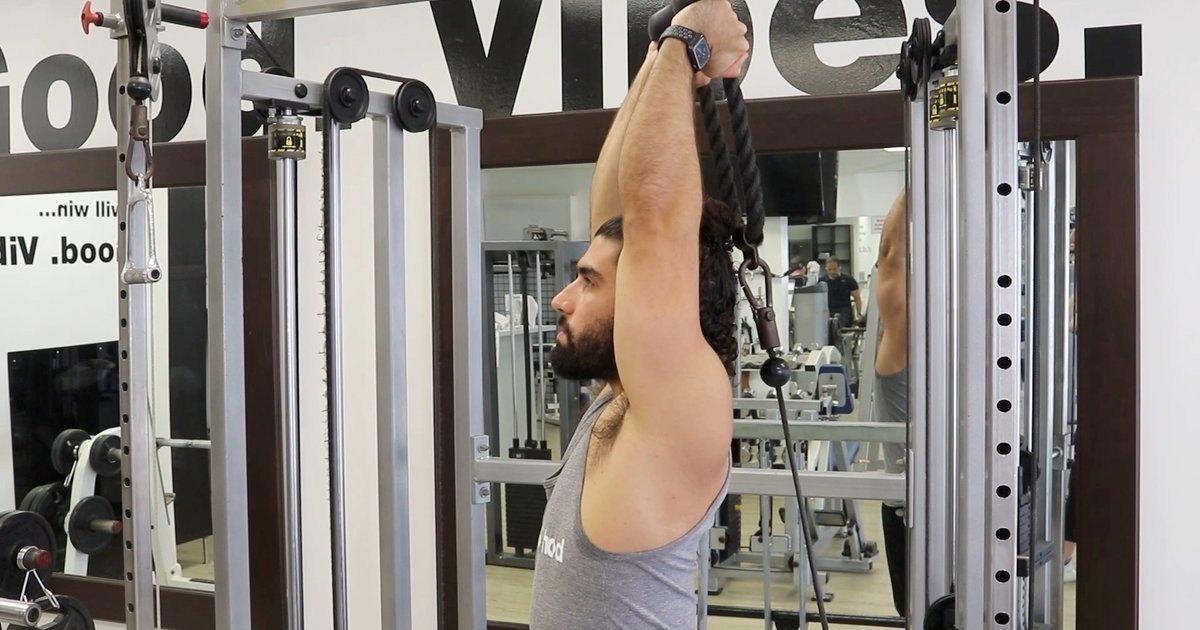
The triceps has three heads that contribute to elbow extension: long, lateral and medial. The long head also crosses the shoulder joint. When the upper arm moves overhead, the long head is placed in a relatively lengthened position compared with a pushdown performed with the elbows alongside the torso. A cable can maintain resistance as you bend and straighten your arms while that shoulder position stays broadly consistent.
There is research behind treating overhead work as more than an interchangeable variation. In one 12-week comparison, 21 adults trained cable elbow extensions with one arm overhead and the other held by the side. Both conditions became stronger, yet measured whole-triceps muscle-volume growth was larger in the overhead-trained arms: about 19.9% versus 13.9% in that particular protocol. The researchers also reported a larger change for the long head, while the overhead arm used less absolute weight.
Those numbers are not a promise that an overhead extension will deliver a particular percentage of growth for you. The trial used a defined frequency, volume, arm position and participant sample; it was not a comparison of every modern rope, handle, pulley height or rep range. It supports including lengthened-position elbow extensions, not discarding presses and pushdowns. A close-grip press loads the triceps while also involving the chest and shoulders; a pushdown is usually easier to stabilize and can be more comfortable for some elbows. A balanced program can benefit from both.
During the overhead cable movement, focus on bending and straightening at the elbow while keeping the upper arm reasonably quiet. The objective is repeated elbow-extension effort at a shoulder angle you tolerate, not forcing the upper arms perfectly vertical when your shoulder mobility does not allow it.
2. Set the rope, pulley and stance before your first rep
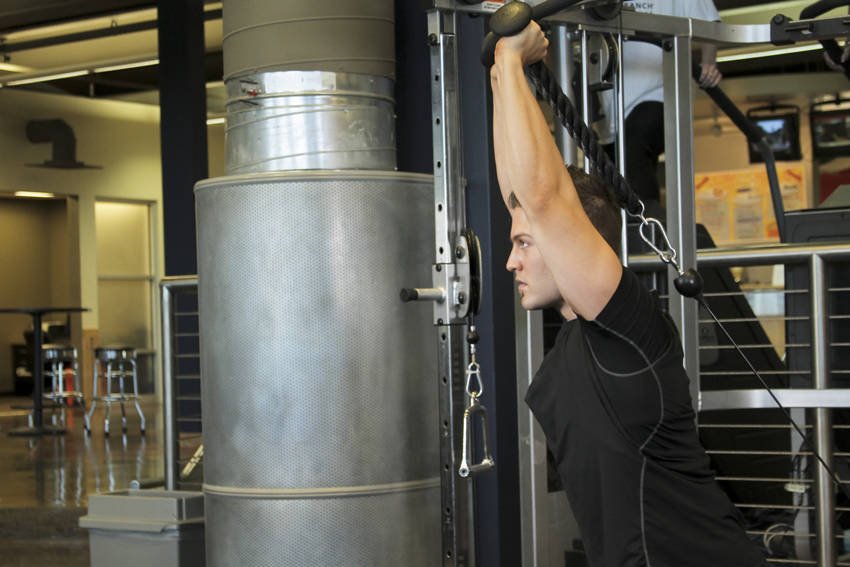
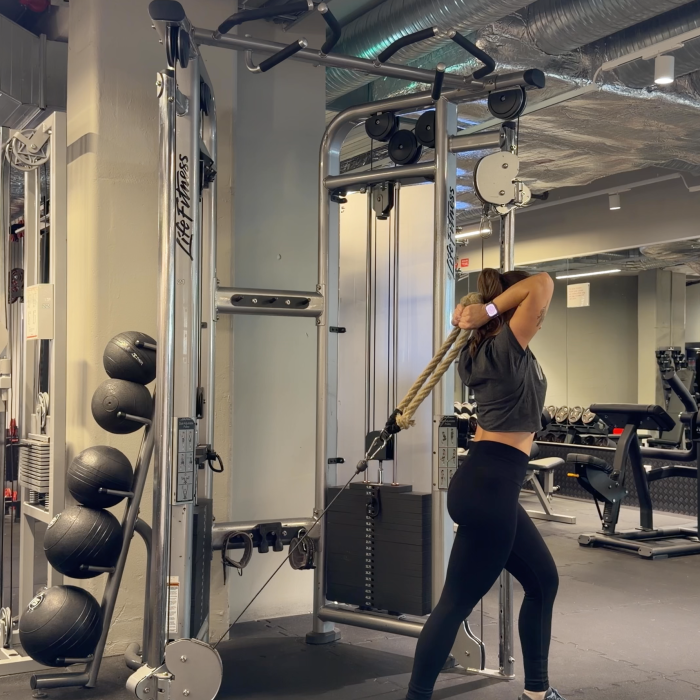
Clip a rope to a low pulley, then check that the carabiner gate is closed and the cable runs without rubbing against the frame. Stand facing away from the stack. Start light enough to bring the rope over your head without twisting abruptly against resistance. Take one or two careful steps forward until the cable stays under tension at the bottom of the movement. A staggered stance with soft knees often feels more stable than standing feet together.
Bring your hands behind or just above the back of your head, with the rope ends separated only as far as your wrists naturally allow. Your elbows will point somewhat upward and forward. They do not have to be pinned against your ears, and pushing them into an uncomfortable position gains you nothing. Keep your ribs stacked over your pelvis and brace lightly rather than leaning your lower back into a big arch. If the weight makes you sway, shorten the step and reduce the pin selection.
Check the cable path from the side before beginning the working set. The rope should not scrape your scalp or require you to duck away from the attachment on every repetition. If the machine has a freely height-adjustable pulley, experiment with a low-to-mid setting that lets the resistance line up naturally behind you. The exact notch depends on your height, cable angle and machine. A fixed low pulley is workable, provided the rope has enough travel and the angle does not drag your elbows into an awkward trajectory.
If the floor is slick, your footwear has poor traction or the machine is unsecured, change the setup before loading. For a compact digital trainer, the same principle applies: use a properly rated, stable anchor and check whether the cable maintains clearance over its full movement. It is better to lose a few kilograms of load than to spend half the set catching your balance.

Equipment Worth Exploring
Explore equipment, accessories and gear from our carefully selected range.

Long Tricep ERGO Ropes
Extended triceps ropes with ergonomic grips for cable pressdowns and overhead extensions.
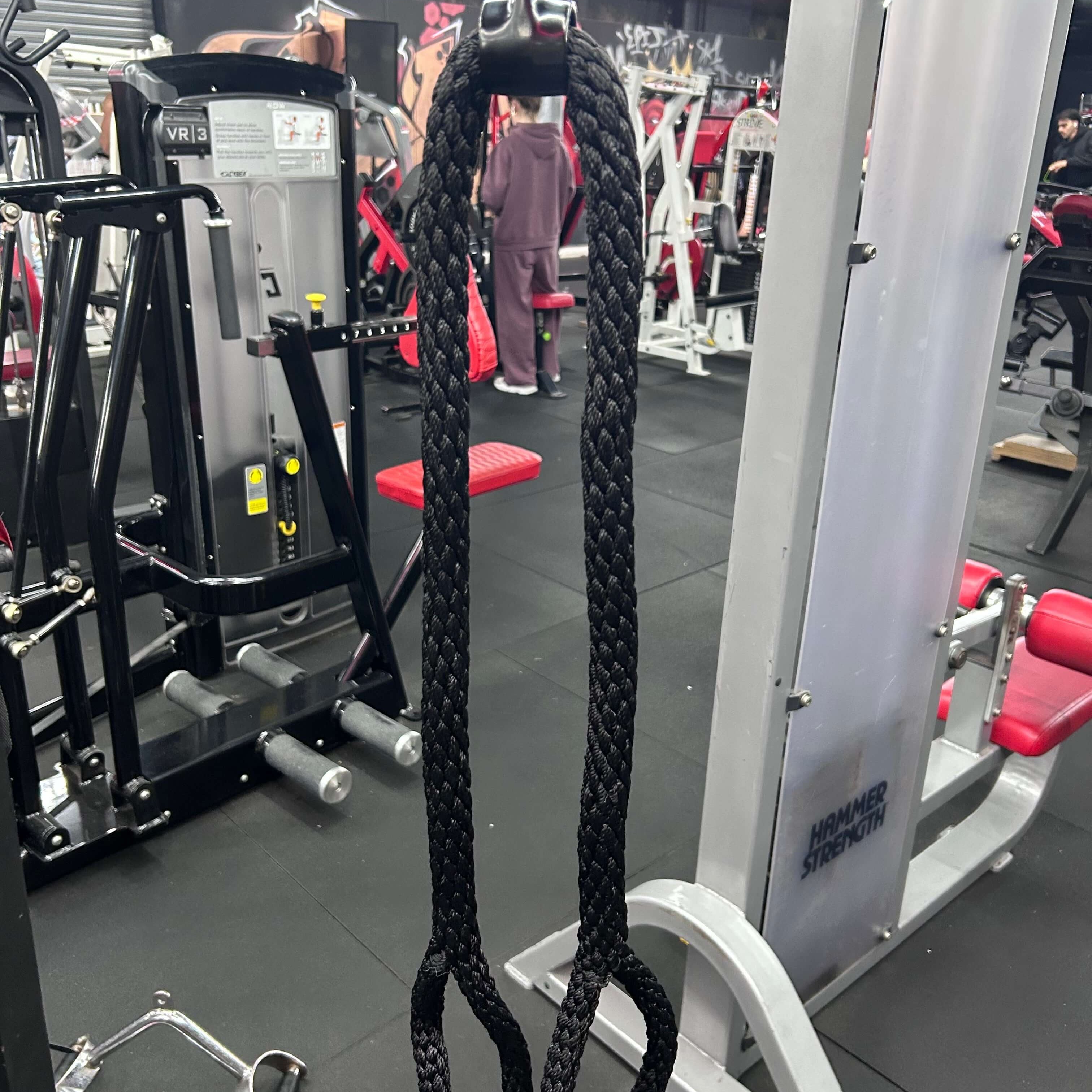
Super Long Tricep Rope
Extra-long looped cable rope for triceps pressdowns and overhead extensions.
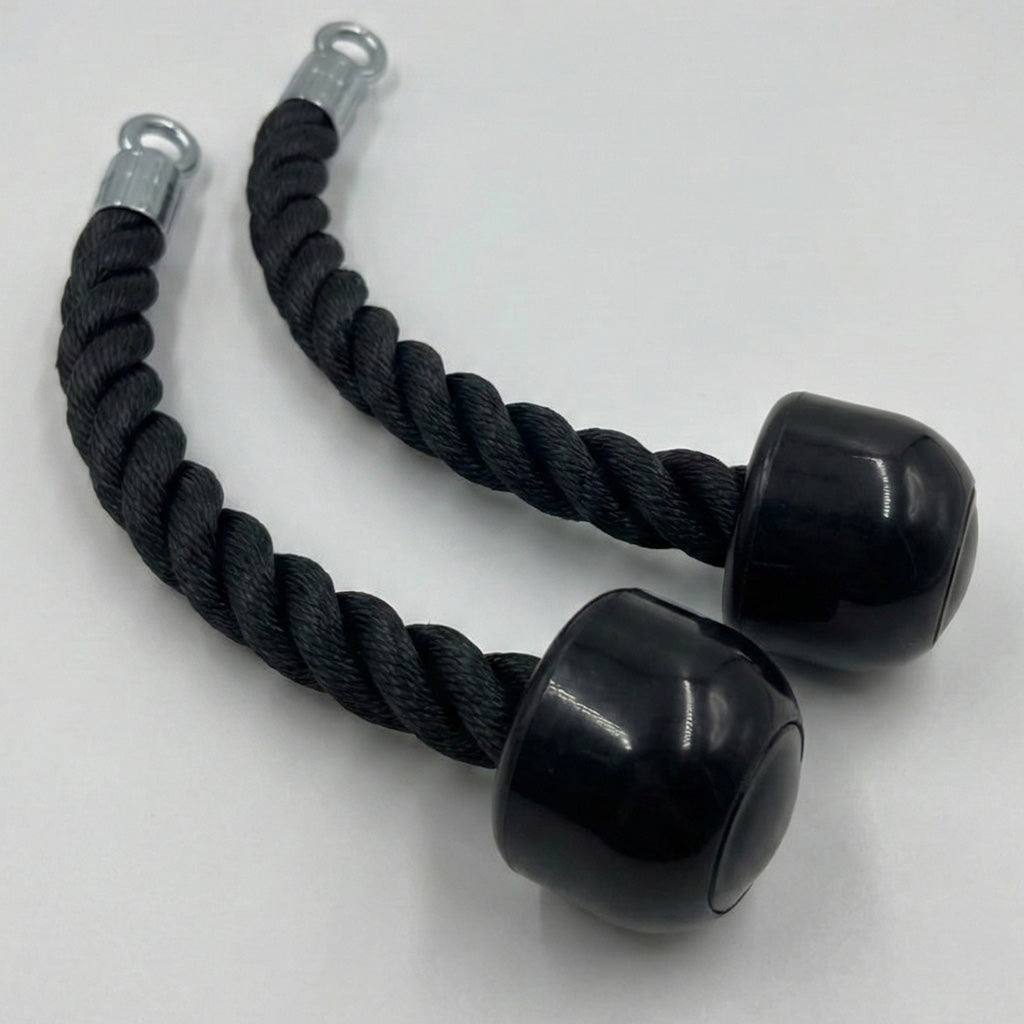
Individual Tricep Ropes
Pair of individual cable ropes for triceps pressdowns and cable hammer curls.

Multi-Length Tricep Strap
Adjustable-length cable strap for triceps, biceps and upper-body cable exercises.
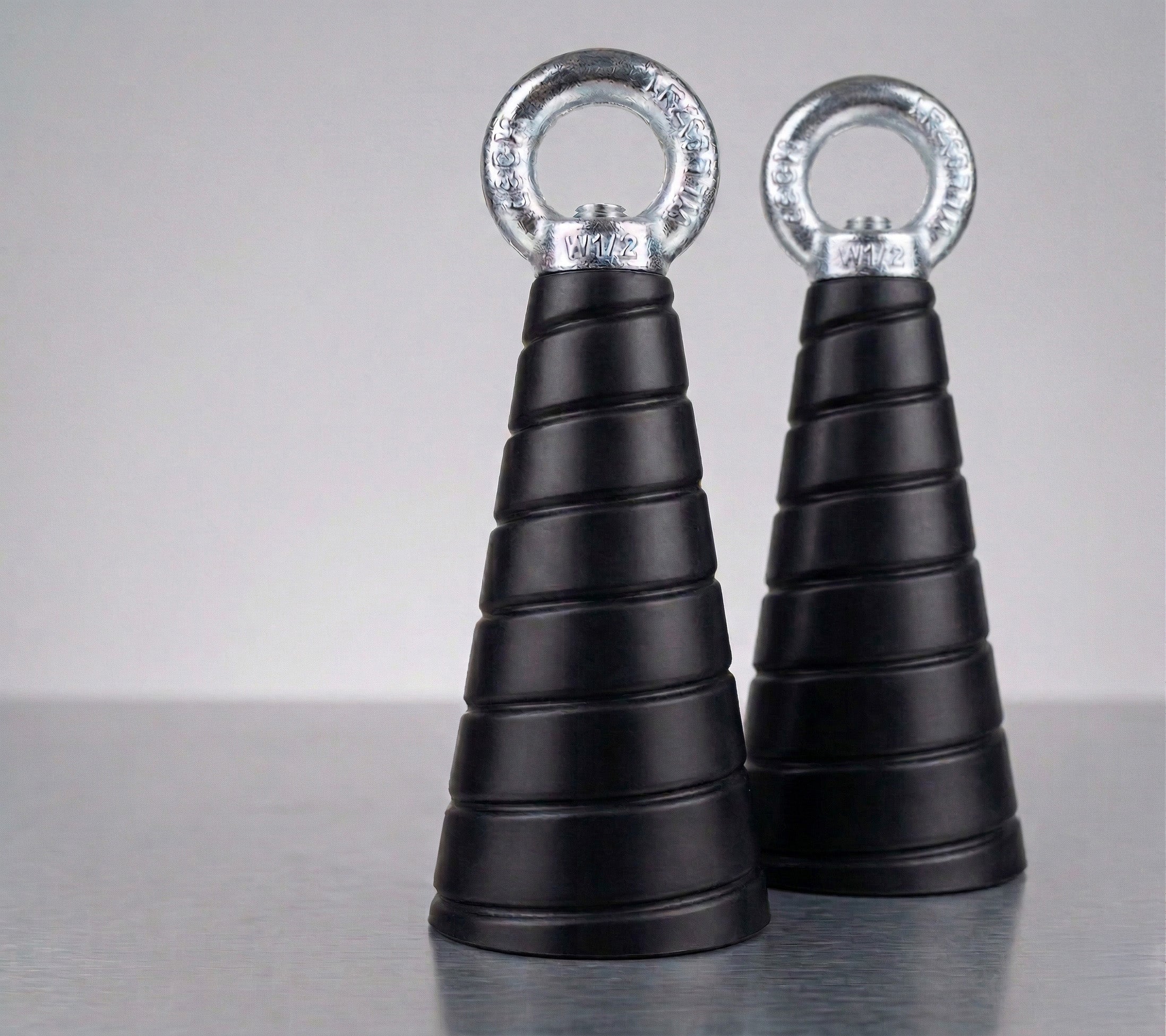
Tapered Tricep Cone
Tapered rubber cable grip for triceps extensions, face pulls and hammer curls.

GymPin Ergo Handles
Pair of ergonomic cable handles shaped for comfortable triceps and pulling exercises.
VOLTRA
Compact digital cable trainer with smooth, adjustable resistance.

Go-Tone Pro
Portable digital cable trainer with up to 66 lb (30 kg) of adjustable resistance.

VForce Wall Trainer
Space-saving wall-mounted functional trainer with pivoting cable arms and variable resistance ratios.

VForce 2IN1
Half rack and pivot-arm functional trainer with switchable 1:1 and 2:1 pulley ratios.
3. Make the elbow the moving joint, not your whole body
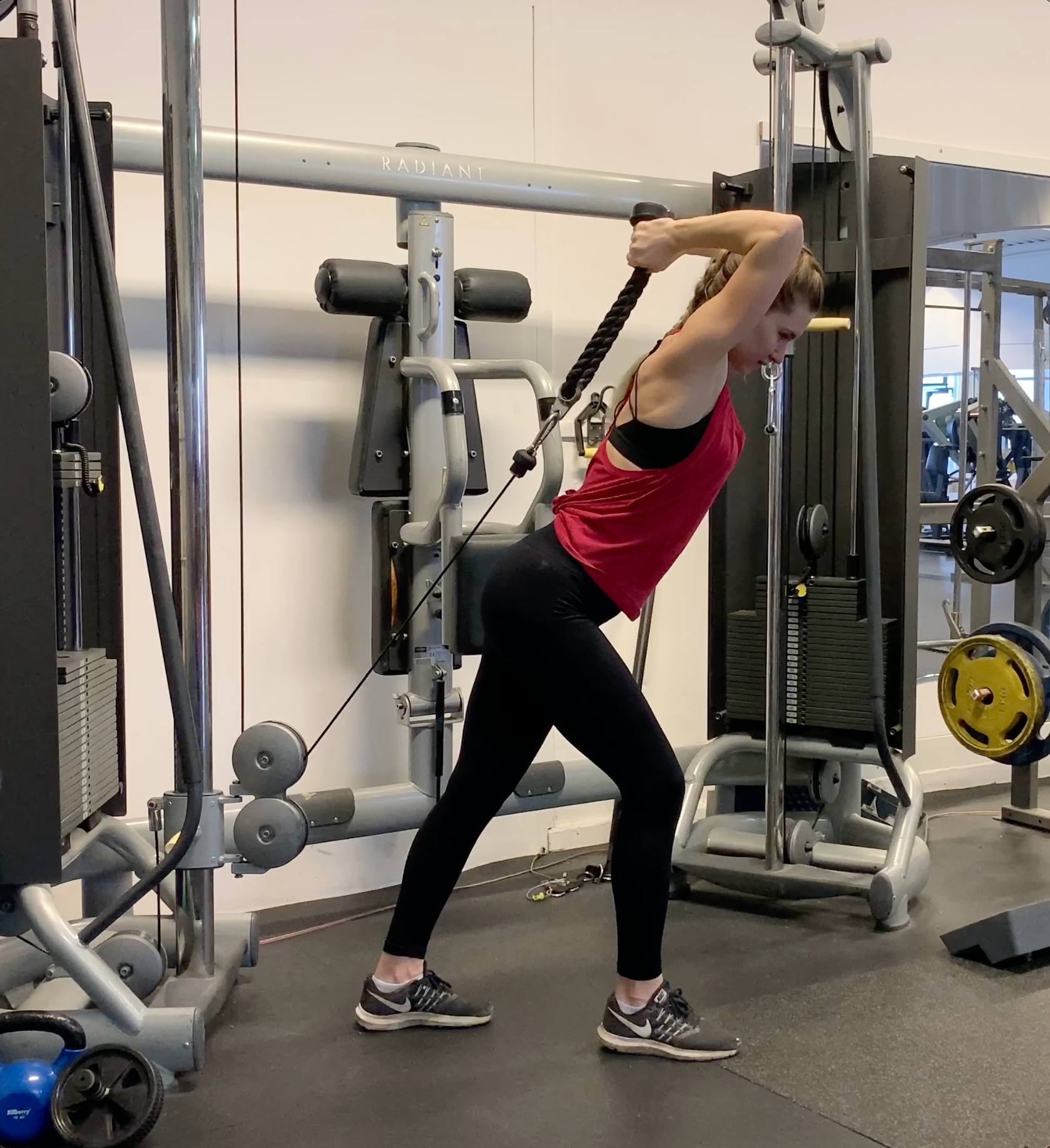
Begin the rep with your elbows flexed to a depth that feels like a strong but manageable stretch across the back of the upper arms. Extend your elbows smoothly until the arms are nearly straight, without snapping into lockout. At the top you can allow the rope ends to drift apart slightly if that follows your natural wrist path, but exaggerated flaring is not necessary. Let your forearms fold back under control while your upper arms remain approximately in place.
A simple rhythm is one or two seconds to extend and roughly two seconds to lower. The exact tempo matters less than owning both halves of the repetition and keeping the stretched position consistent. Count a rep only when the rope returns to the same comfortable depth, not when fatigue gradually shortens the movement into tiny pulses near lockout. A slightly smaller pain-free range is better than forcing a deeper position that causes a sharp elbow or shoulder pinch.
Three common errors are easy to spot. First, the torso rocks forward on each extension, which turns the exercise into a full-body movement and hides how much the triceps can actually control. Second, the elbows drift widely or change height every rep, making the loading less repeatable. Third, the shoulders rotate or elevate excessively at the bottom as the lifter tries to chase a stretch beyond their mobility. The correction for all three is usually to lower the resistance, reset the stance and slow the return.
Film one light set from the side if your cable machine has an awkward angle. Look for a stable torso, a manageable elbow path and an attachment that clears the head. You do not need a perfectly motionless upper arm, but a large, repeated shoulder swing is a sign that the load is dictating the technique instead of the other way around.

Bodybuilding Shirts & Workout Gear
Bodybuilding shirts, tanks and gym gear for lifters chasing muscle, size, symmetry and the pump.

Shirt – Pumped & Furious Meme – Muscles And Cars & T-Shirt
Rep “Pumped & Furious Gym Meme” humor in and out of the gym.


Natty Bro Natural Hooded Meme Hoodie
Bring “Natty Gym Bro” gym humor to lazy days and post-workout plans.

Get Ripped Rap Parody Hoodie
Show off your bodybuilding humor in a laid-back “Get Ripped Or Die Tryin' 50 Cent Parody” hoodie.

Lift With Me Renaissance Michelangelo Sistine Chapel T-Shirt
Add a playful “Lift With Me Gym Renaissance” touch to your casual rotation.

P.U.M.P. Rap Gym Sweatshirt
Show some gym-day personality with “P.U.M.P. Get Ripped Or Die Tryin' Gym Meme”.


Biceps of the Caribbean Gym | Funny Pirate Muscle Shirt Tank Top
Show some personality between sets with “Biceps of the Caribbean”.

Mona Lifta Mona Lisa Decal Artistic Meme Gear Sticker
Put “Mona Lifta” gym humor on your laptop, bottle, or gym gear.

Science Based Lifting Rick And Morty Decal Water Sticker
Stick a little “Science Based Lifting” humor on your favorite gear.
4. Choose load and variations that match your joints
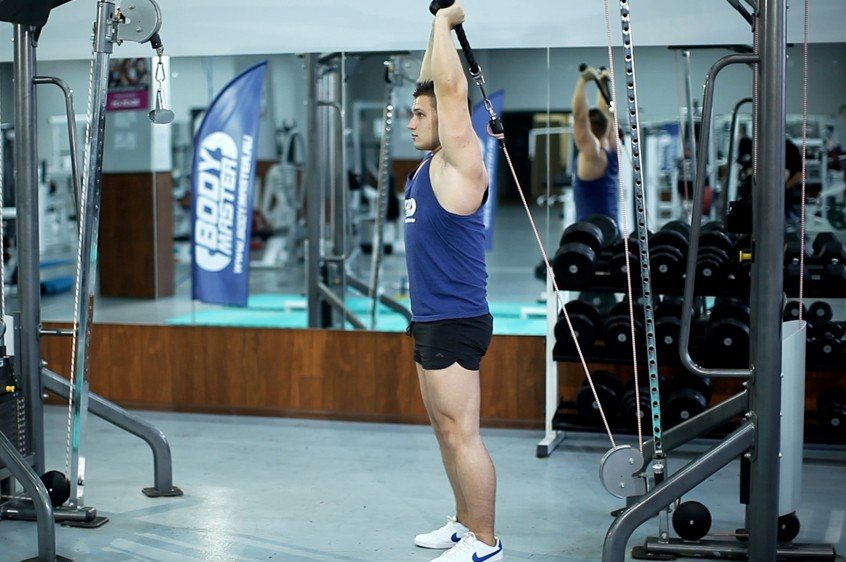
A rope has two independent ends, letting the hands find slightly different paths. This often makes it convenient, but it is not automatically superior to a straight bar, angled grip or individual handles. A fixed bar keeps the hands together and can feel secure, though the required wrist position may bother some lifters. Individual handles allow one arm at a time and can reveal side-to-side differences; they also demand more control because the cable can pull the arm out of alignment.
Start with a load that permits about 10–15 deliberate repetitions while leaving two or three clean repetitions in reserve. In an overhead variation the stack number may be noticeably lower than your pushdown load; that difference is expected and not evidence that the exercise is ineffective. Pulley ratios, friction and the cable’s approach angle also change the meaning of the machine’s displayed number. Track progress on the same machine and setting whenever possible.
If your shoulders feel compressed overhead, try a slightly forward arm angle, less depth, a modest torso lean or an individually held cable handle. If your elbows feel irritated, avoid hard lockouts, reduce total pressing and extension volume for a few sessions, or use pushdowns temporarily. Sharp pain, persistent swelling or symptoms that worsen outside training deserve professional assessment rather than another technique experiment.
The bench-supported or single-arm version is useful when balance is the limiting factor rather than triceps effort. For unilateral sets, keep both sides at a comparable range and rep speed; do not turn the weaker arm into a different exercise with a different body position. If the cable’s starting length is adjustable, set it so the first repetition begins without an uncontrolled yank, then reproduce that position on the next set.
5. Build overhead extensions into a six-week arm plan
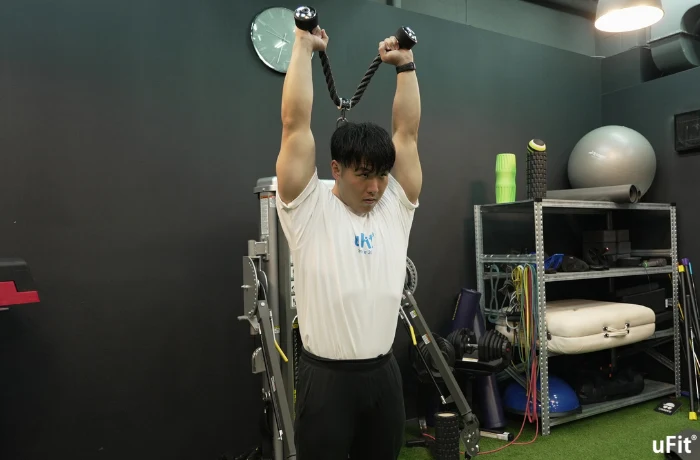
Use overhead extensions as direct triceps work after the main compound lifts, or on an upper-body day where the shoulders are already warm. Two sessions per week are a reasonable starting point for many lifters. The goal is enough hard sets to progress without burying the elbows under excessive overlap from bench pressing, dips, skull crushers and other extension work.
Weeks 1–2: Perform two sets of 12–15 controlled repetitions twice weekly. Leave about three repetitions in reserve, and note the pulley height, stance, rope and comfortable bottom position. Treat these sessions as a technique baseline. A stable, repeatable rep matters more than chasing stack plates.
Weeks 3–4: Move to three sets twice weekly if your elbows and recovery tolerate the additional work. Use an 10–15-rep window and finish most sets with roughly two repetitions left. When all sets reach the top of the range with the same depth and control, add the smallest practical load increment next time. If the stack jump is too large, add repetitions before adding weight.
Weeks 5–6: Keep three sets twice weekly and aim to improve one measurable variable: one extra clean rep, a small load increase or more consistent range at a given load. Do not progress all variables at once. If you already perform a large amount of hard chest and triceps work, stay with two sets per session and allocate the remaining recovery to your presses.
For a simple arm-focused session, combine an overhead cable extension with a pushdown or another extension pattern that feels different enough to remain comfortable. Two to three sets of each may be plenty once compound pressing is counted. Separate challenging elbow-extension sessions by a day or two when practical, particularly if you are new to training the triceps in a stretched overhead position.
At the end of six weeks, compare the first and final weeks using your written setup and honest reps. If the stack load went up but the body started lunging forward, you have not necessarily gained useful triceps strength. If you can use more load with the same stable torso, full controlled depth and comfortable elbows, the progression is meaningful. The best version is one that you can reproduce for months without a battle against the cable.
Equipment Worth Exploring
Explore equipment, accessories and gear from our carefully selected range.

VForce 3IN1
All-in-one rack combining an adjustable Smith machine, functional trainer, and free-weight station.

VForce 3IN1 Max
Six-post all-in-one rack with Smith machine, functional trainer, and variable-force cables.

VForce Lat Tower
Wall-mounted cable tower with pivot arms and adjustable 1:1 or 2:1 pulley ratios.

Trinity Lat Machine LSW-850
Weight-stack pulldown tower offering three cable directions and adjustable seated support.

GymPin D Cuffs
Adjustable wrist cuffs with textured grips for supported cable-machine exercises.

Premium Carabiner
Durable carabiner for connecting cable attachments and training accessories.

Lat Pulldown Set
Multi-grip cable attachment set for pulldowns, rows, and varied upper-body training.

Original GymPin
Adds Olympic plates to compatible cable-machine weight stacks for extra resistance.

GymPin MiniPin
Compact Olympic-plate loading pin for compatible cable stacks with limited clearance.
Funny Gym Shirts & Workout Gear
Funny gym shirts, tanks, hoodies and workout gear for lifters who like training hard.

Optimus Pump – Robot , & Gymbro Gains – Meme Shirt & T-Shirt
Rep “Optimus Pump” humor in and out of the gym.

Master of Pumps Master of Puppets Album Cover Parody Me T-Shirt
Make gym days more fun with “Master of Pumps” style.

I Am The One Who Lifts Breaking Bad Powerlifters & Hoodie
Stay casual and show some lifting attitude with “I Am The One Who Lifts”.

The Last Barbender Avatar Bending Bars Hoodie
Bring “The Last Barbender” gym humor to lazy days and post-workout plans.

OnlyGains Sweater & Meme Fans Only Fans Parody T-Shirt
For laid-back days and lifting humor: “OnlyGains”.


Beast Beast Mode & Meme Fans Vest Tank Top
Show some personality between sets with “Gym Beast”.

Bro Science Breaking Bad Decal Sticker
Give your everyday gear a playful “Bro Science Breaking Bad” twist.

Anti Social Lifting Club Decal Water Bottles & Sticker
Bring “Anti Social Lifting Club” attitude to your water bottle or laptop.