Advertising disclosure: This page includes affiliate product links that may earn us a commission, as well as products from our own store.
Kneeling Cable Crunches: Rope Setup, Rib Curl and a Six-Week Plan
The kneeling cable crunch looks simple: grab a rope, kneel beneath a high pulley and bend forward. But loading the movement heavily does not guarantee that the abdominal muscles are doing the part you want. If your hips travel backward or your arms yank the rope, you can move a large weight with surprisingly little useful spinal curl.
The better goal is a repeatable, measurable crunch. Fix your kneeling position, keep the rope near your head, bring the lower ribs toward the pelvis, and control the return. This guide explains how cable angle changes the resistance, how to spot common compensations and how to progress the exercise without turning every set into a contest with the weight stack.
1. What kneeling cable crunches actually train
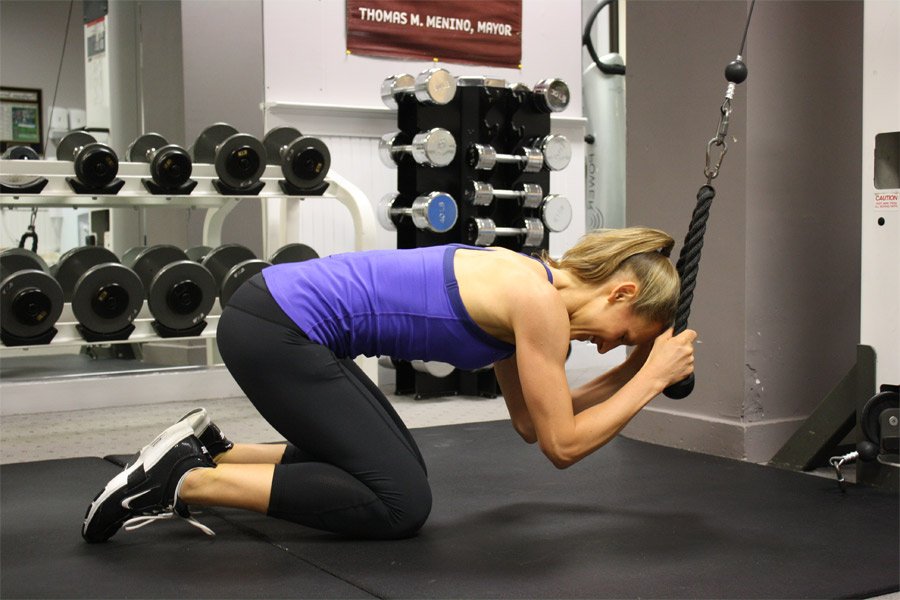
The rectus abdominis is the long muscle running down the front of the abdomen. Its obvious job here is to flex the spine: the rib cage approaches the pelvis while the trunk rounds. The obliques assist trunk flexion and help keep the movement from twisting. Other muscles contribute to posture and gripping, but a strict cable crunch should not look like a lat pulldown performed from the knees.
Think about the difference between folding at the waist and curling the torso. In a hip hinge, the back can remain fairly straight while the pelvis moves toward the heels. The cable may travel and the plates may rise, yet much of the visible movement comes from the hips. In the intended crunch, the pelvis remains comparatively stable and the trunk progressively rounds, so the abdominal wall has to shorten against the cable.
This does not mean that every vertebra needs to flex to its limit. Use a comfortable, deliberate arc and stop before the load jerks your torso. A small amount of hip movement can happen naturally, particularly as fatigue builds. The useful distinction is which action is driving the repetition, not whether the exercise resembles a perfectly frozen anatomy diagram.
Training the abdominal muscles can increase their strength and size, just as resistance exercises do for other muscles. It does not selectively remove fat from the waist. If visible abdominal definition is a goal, overall body composition matters alongside training. Cable crunches are one tool for developing the muscle rather than a shortcut to revealing it.
2. Set the high pulley, rope and kneeling distance
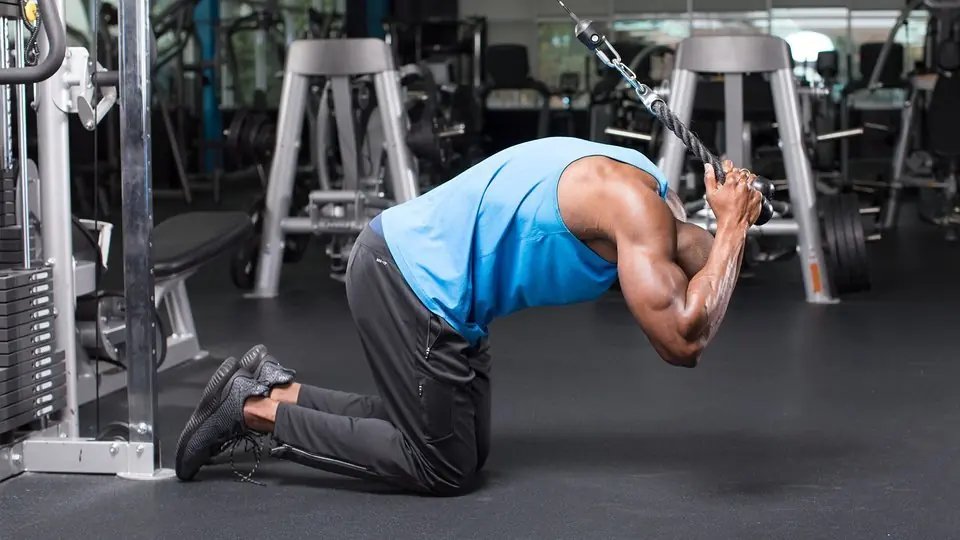
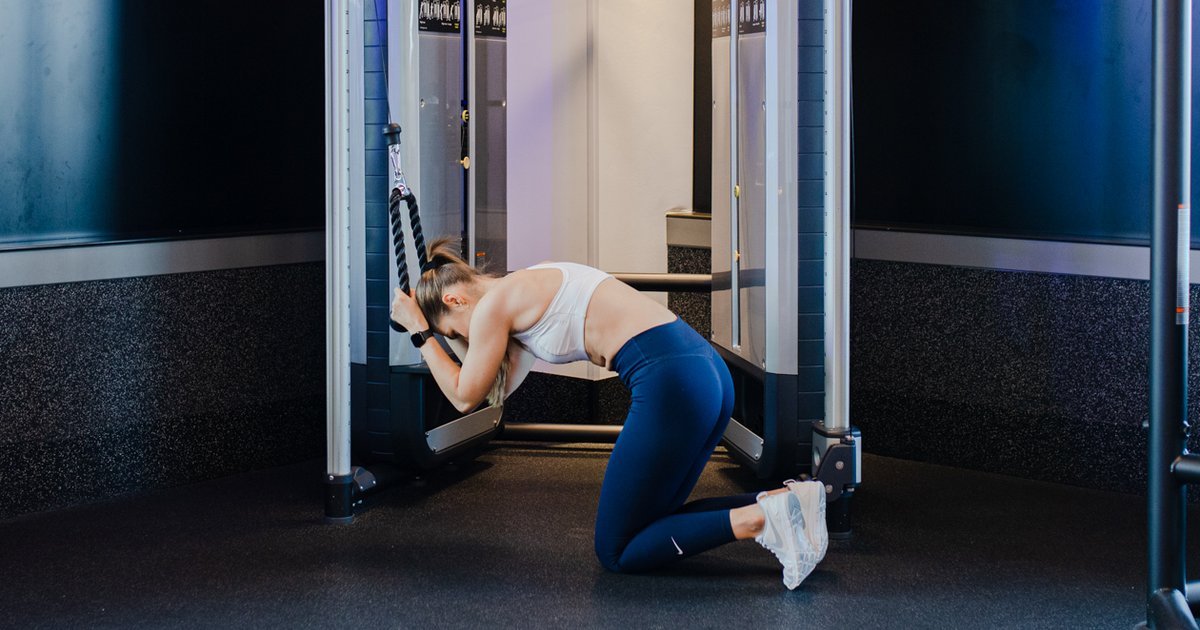
Start with a securely clipped rope attachment on a high pulley. Kneel on a mat or other stable padding facing the machine, with enough room that the stack cannot collide with its housing during your repetitions. Place your knees roughly hip-width apart and take a rope end in each hand. Keep the hands close to the temples or beside the head rather than pulling them down toward the chest.
Move close enough that the cable runs mostly downward when you are in the starting position. Kneeling far from the stack can make it pull your upper body forward before your abs even begin to curl. The same pin setting may feel very different as the cable angle changes. Treat position as part of the setup you record and reproduce, not an arbitrary place on the gym floor.
Take up the slack gently and find a starting position with the hips stacked approximately above the knees. The torso may lean slightly forward; you do not have to force a rigidly upright chest. Keep your eyes neutral and shoulders comfortable, without shrugging aggressively around your ears. If the rope rubs the face or neck, adjust its length or hand position before loading harder.
Choose an easy first set to rehearse the path. Watch whether your upper back rounds while the hips stay reasonably still. If the cable pulls you sideways, center your knees and grip evenly. If a partner is helping, have them watch from the side rather than judging only by how far your elbows travel. Good positioning makes the next set easier to interpret.

Equipment Worth Exploring
Explore equipment, accessories and gear from our carefully selected range.
VOLTRA
Compact digital cable trainer with smooth, adjustable resistance.

Go-Tone Pro
Portable digital cable trainer with up to 66 lb (30 kg) of adjustable resistance.

VForce Wall Trainer
Space-saving wall-mounted functional trainer with pivoting cable arms and variable resistance ratios.

VForce 2IN1
Half rack and pivot-arm functional trainer with switchable 1:1 and 2:1 pulley ratios.

VForce 3IN1
All-in-one rack combining an adjustable Smith machine, functional trainer, and free-weight station.

Multi Pull Smith Rack MPHR-780
All-in-one rack with a Smith machine, functional trainer, lat pulldown and low row.

Trinity Lat Machine LSW-850
Weight-stack pulldown tower offering three cable directions and adjustable seated support.

VForce Lat Tower
Wall-mounted cable tower with pivot arms and adjustable 1:1 or 2:1 pulley ratios.

VForce 3IN1 Max
Six-post all-in-one rack with Smith machine, functional trainer, and variable-force cables.
3. Perform the curl: ribs down, arms quiet, slow return
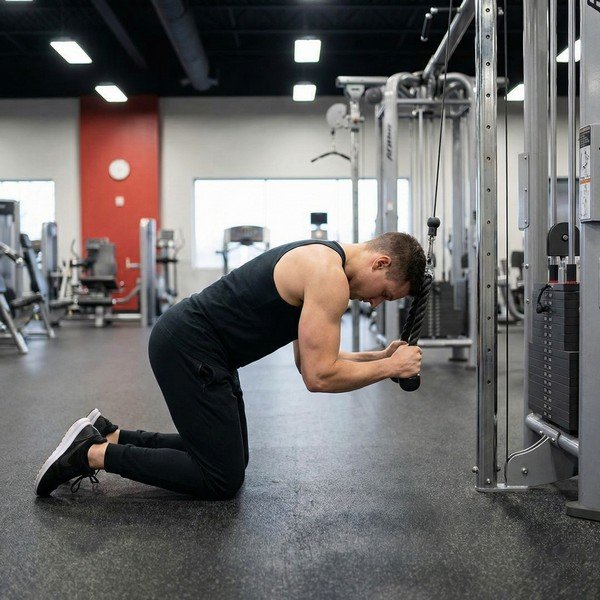
Begin with the rope held near your head and a gentle brace. Exhale as you bring the front of the rib cage toward the pelvis, allowing the torso to round from the upper trunk down. Keep the hands where they started so the rope travels because your torso curls, not because your arms pull. The elbows may move toward the thighs, but they are a by-product rather than the destination.
At the bottom, briefly finish the contraction without throwing the head toward the floor. Your chin can tuck naturally, but nodding the neck alone is not a rep. Pause only if you can maintain control and steady pressure through both knees. A shortened yet clear rib-to-pelvis curl is preferable to forcing additional range by sitting backward onto your heels.
Return over roughly two to three seconds, letting the spine uncurl without bouncing upright. Do not let the stack slam down between repetitions. You may feel the upper abdomen lengthen as you come back, but avoid chasing an exaggerated backward arch. The next repetition should begin from the same posture and cable angle as the previous one.
For a technique check, try five light reps and count only those where the hips stay quiet, the rope remains by the head and the torso visibly changes shape. Then film a side view if available. A rep that moves the pin farther but loses the spinal curl is not necessarily better. Repeatability is what eventually makes load increases meaningful.

Funny Gym Shirts & Workout Gear
Funny gym shirts, tanks, hoodies and workout gear for lifters who like training hard.

Shirt – Check Out My Six Pack Beer – & Meme Lovers T-Shirt
Bring “Check Out My Six Pack Beer” humor to your next gym day.

6Pack Panther Hero – Meme , & Comic Book Superhero T-Shirt
Rep “6Pack Panther Gym Hero” humor in and out of the gym.

I Have Abs-Olutely No Idea Meme Hooded Newbies & Hoodie
Keep it laid-back with a little “I Have Abs-olutely No Idea” attitude.

6Pac Shakur Gym | Funny Workout Decal & Six Pack Abs Me Sticker
Stick a little “6Pac Shakur” humor on your favorite gear.

Shirt – Shredded Cheese Muscle Gymbros & – Cheese T-Shirt
Show some lifting attitude with a playful “Shredded Cheese” tee.

Shredded Stoic Sigma – Meme & Top T-Shirt
Heavy lifts, good laughs, and a little “Shredded Stoic Sigma T” energy.

Gains Stoic Gymbro Shirt: Sigma Bodybuilder Greek T-Shirt
Make gym days more fun with “Gains Stoic Gymbro” style.

Commitment To Gains Stoic Greek God Marble Sculpture T-Shirt
Make gym days more fun with “Commitment to Gains Stoic Greek God Marble” style.

Perseverance Stoic Sigma Bodybuilder Greek God T-Shirt
Bring “Perseverance Stoic Sigma Bodybuilder Greek” humor to your next gym day.

Resilience Stoic Sigma Greek God Statue Meme T-Shirt
Show some bodybuilding attitude with a playful “Resilience Stoic Sigma Greek God Statue” tee.
4. Why heavy sets fail and how cable stacks change the feel
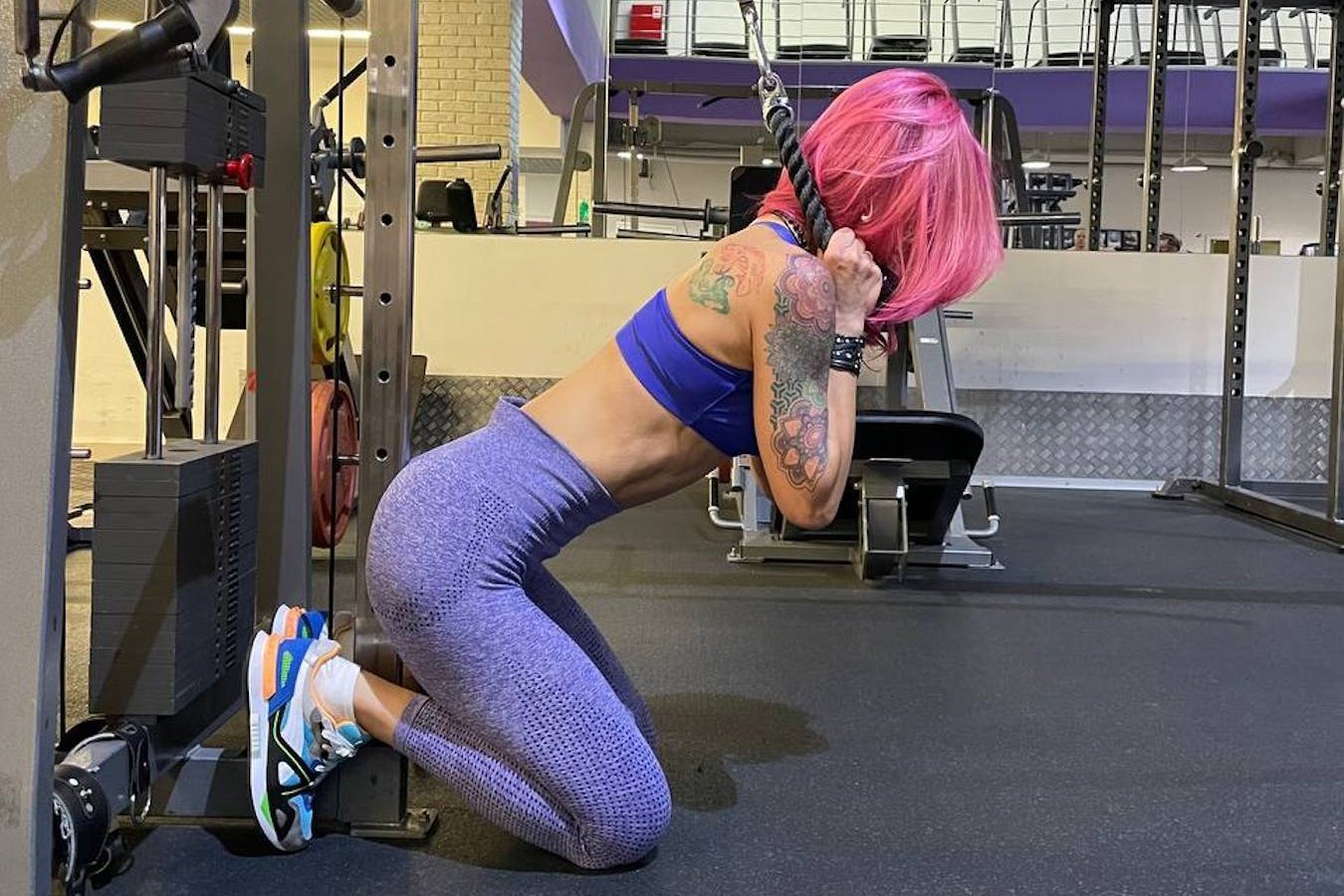
If you mostly feel your arms or lats, the hands are probably pulling the rope downward. Reduce the pin setting, move the hands beside the temples and imagine the breastbone folding toward the navel. If the hips travel far backward, you are borrowing motion from a hinge. Move closer to the machine, kneel taller and lower the load until the torso performs the obvious movement.
If the crunch feels strangely easy at the top and hard near the bottom, that is not automatically faulty equipment. Cable resistance is directional: the line of pull and the leverage on the spine change through the arc. Moving your knees alters that relationship, even at the same pin number. Neither a weight stack nor a cable guarantees identical muscular tension at every point.
Do not compare pin numbers across different machines as if they were free weights. Some functional trainers use a pulley ratio that changes the felt cable force; friction, cable routing and the angle of pull also affect resistance. Record the machine or station, kneeling distance and repetition standard. An honest 12 reps on one station may not correspond to 12 at the same displayed load elsewhere.
Other warning signs are a rope that slips against the neck, a pad that slides, and shoulders that become cramped before the abs fatigue. Fix the attachment, adjust the mat or grip, and reduce the load. If loaded spinal flexion provokes pain, stop and choose an alternative you can perform comfortably rather than trying to train through sharp symptoms.
5. A practical six-week progression and useful alternatives
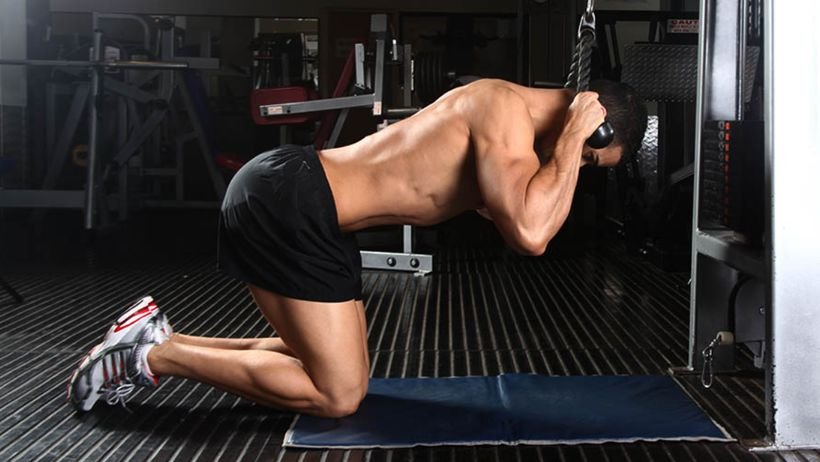
Start with two cable-crunch sessions per week after the main lifting work. Use two or three sets of eight to twelve controlled repetitions, with a minute or two of rest if needed to preserve your form. Leave a few good reps available during the first week. Your baseline is the heaviest setting that lets you repeat the same kneeling distance, rib curl and return on every repetition.
In weeks one and two, keep the load light enough to make the movement unmistakable. In weeks three and four, work toward twelve to fifteen reps per set while keeping the hands quiet and the hips steady. In weeks five and six, increase the pin by the smallest sensible amount only after your sets reach the top of the range without shortening the curl. Return toward eight to ten repetitions when load rises.
Progress is not merely a higher stack number. Log the pin, station, knee position, sets, reps and whether the final repetition resembled the first. You can also progress by reducing momentum, adding a brief controlled pause or restoring a range of motion that had become shorter. If your lower back or neck starts doing more work, back the load off and rebuild the clean standard.
Pair loaded crunches with a different trunk challenge rather than adding endless versions of the same movement. A dead bug or plank emphasizes control while resisting extension; a hanging knee raise also introduces hip flexion and pelvic movement. If the cable station is unavailable, a comfortable weighted floor crunch or dedicated abdominal machine may fit the same general slot. Consistent, pain-free repetitions matter more than loyalty to one tool.
Equipment Worth Exploring
Explore equipment, accessories and gear from our carefully selected range.

Long Tricep ERGO Ropes
Extended triceps ropes with ergonomic grips for cable pressdowns and overhead extensions.
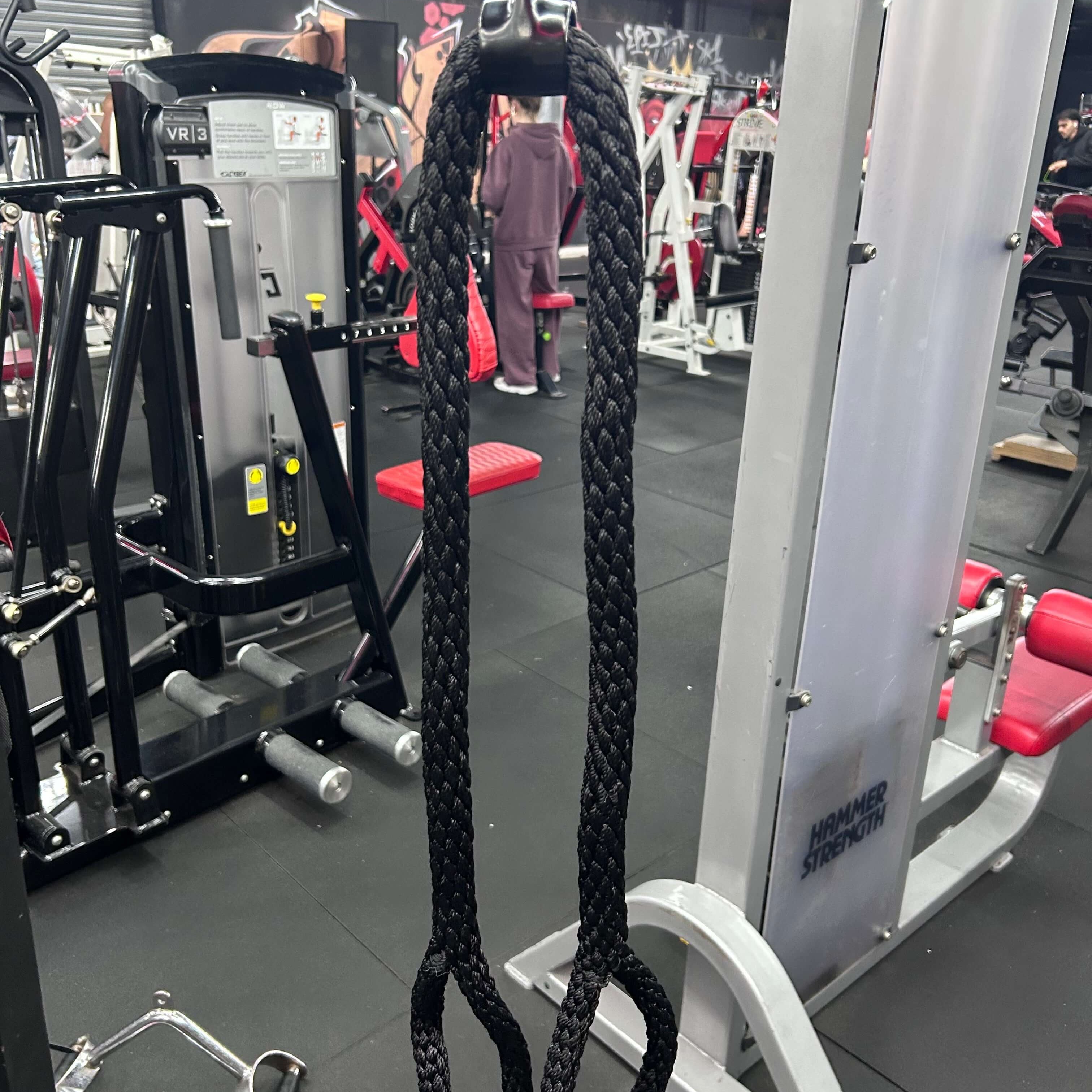
Super Long Tricep Rope
Extra-long looped cable rope for triceps pressdowns and overhead extensions.
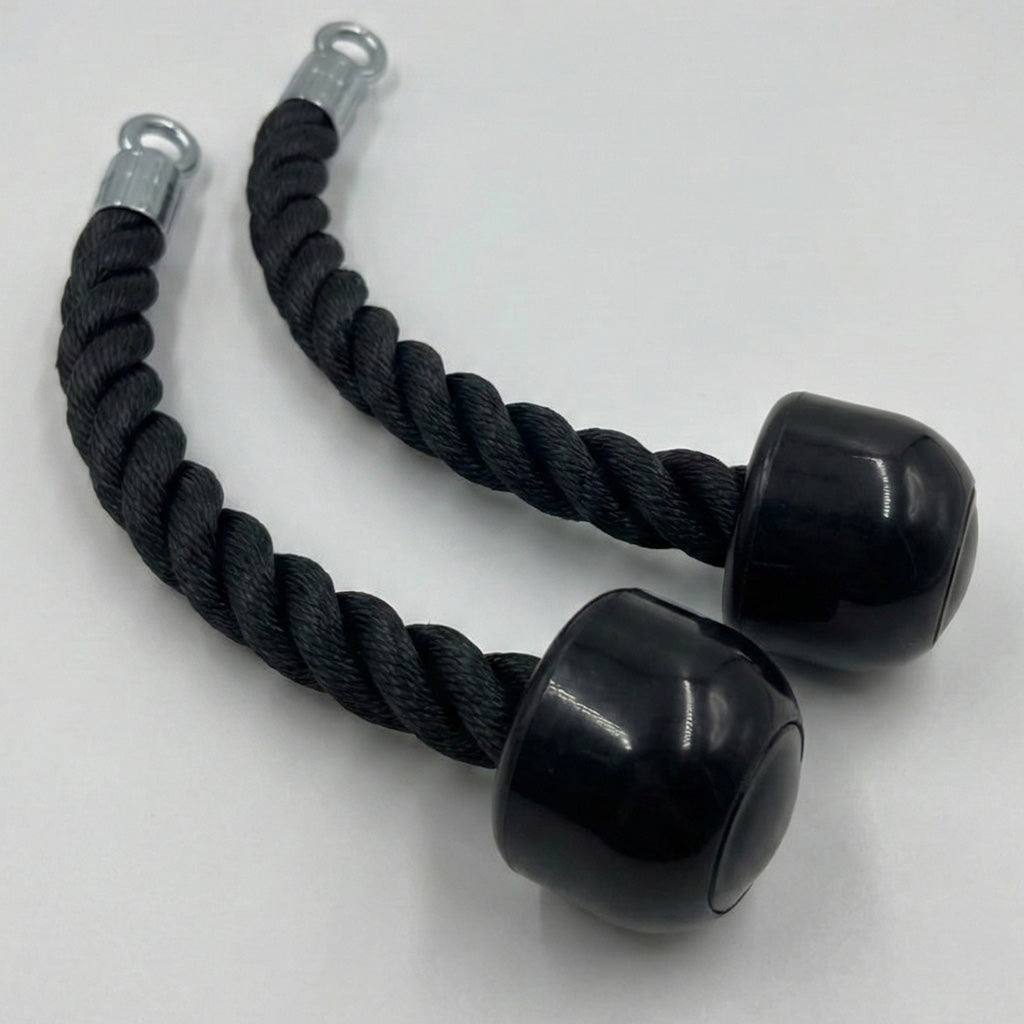
Individual Tricep Ropes
Pair of individual cable ropes for triceps pressdowns and cable hammer curls.

Multi-Length Tricep Strap
Adjustable-length cable strap for triceps, biceps and upper-body cable exercises.

Lat Pulldown Set
Multi-grip cable attachment set for pulldowns, rows, and varied upper-body training.
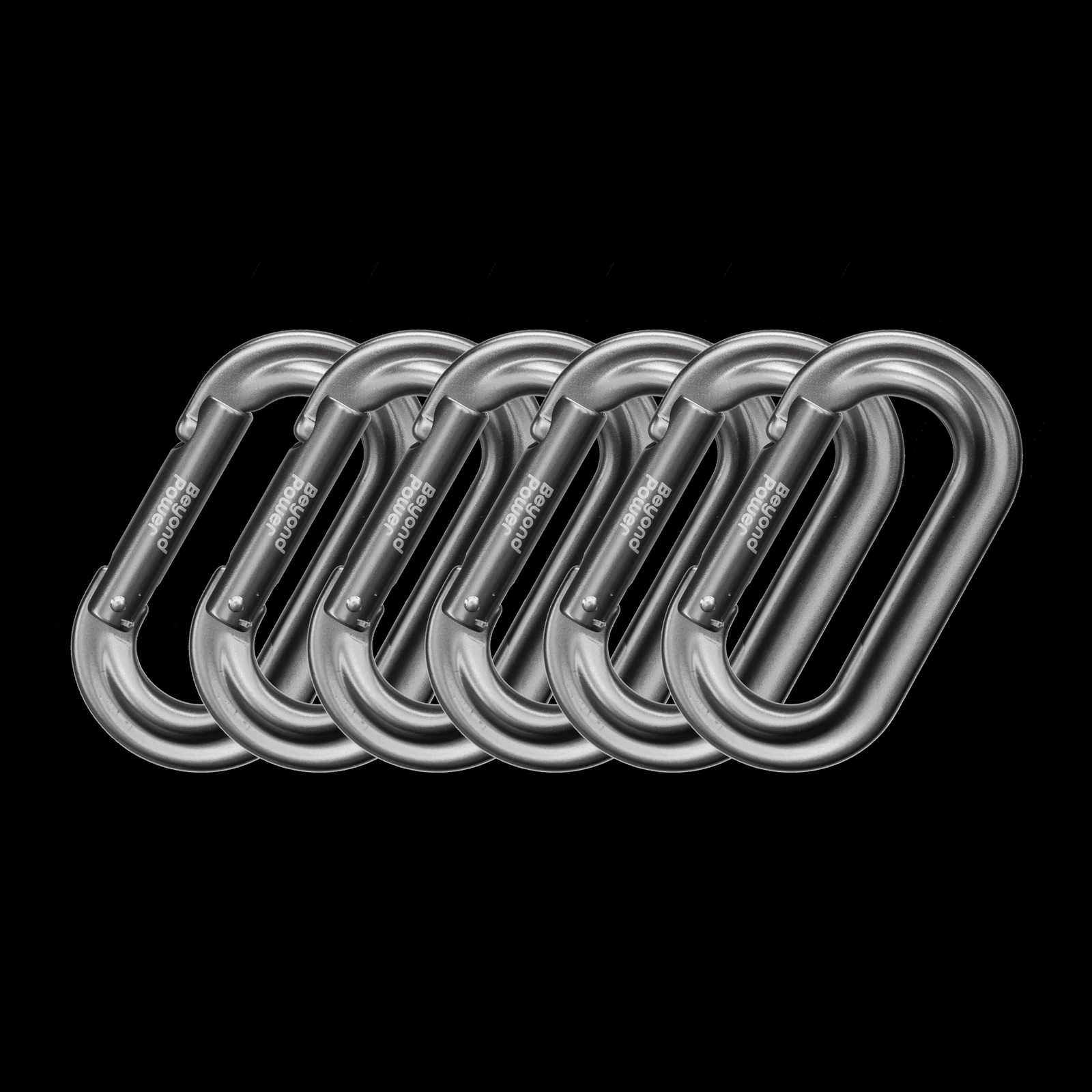
Premium Carabiner
Durable carabiner for connecting cable attachments and training accessories.

Original GymPin
Adds Olympic plates to compatible cable-machine weight stacks for extra resistance.

GymPin MiniPin
Compact Olympic-plate loading pin for compatible cable stacks with limited clearance.
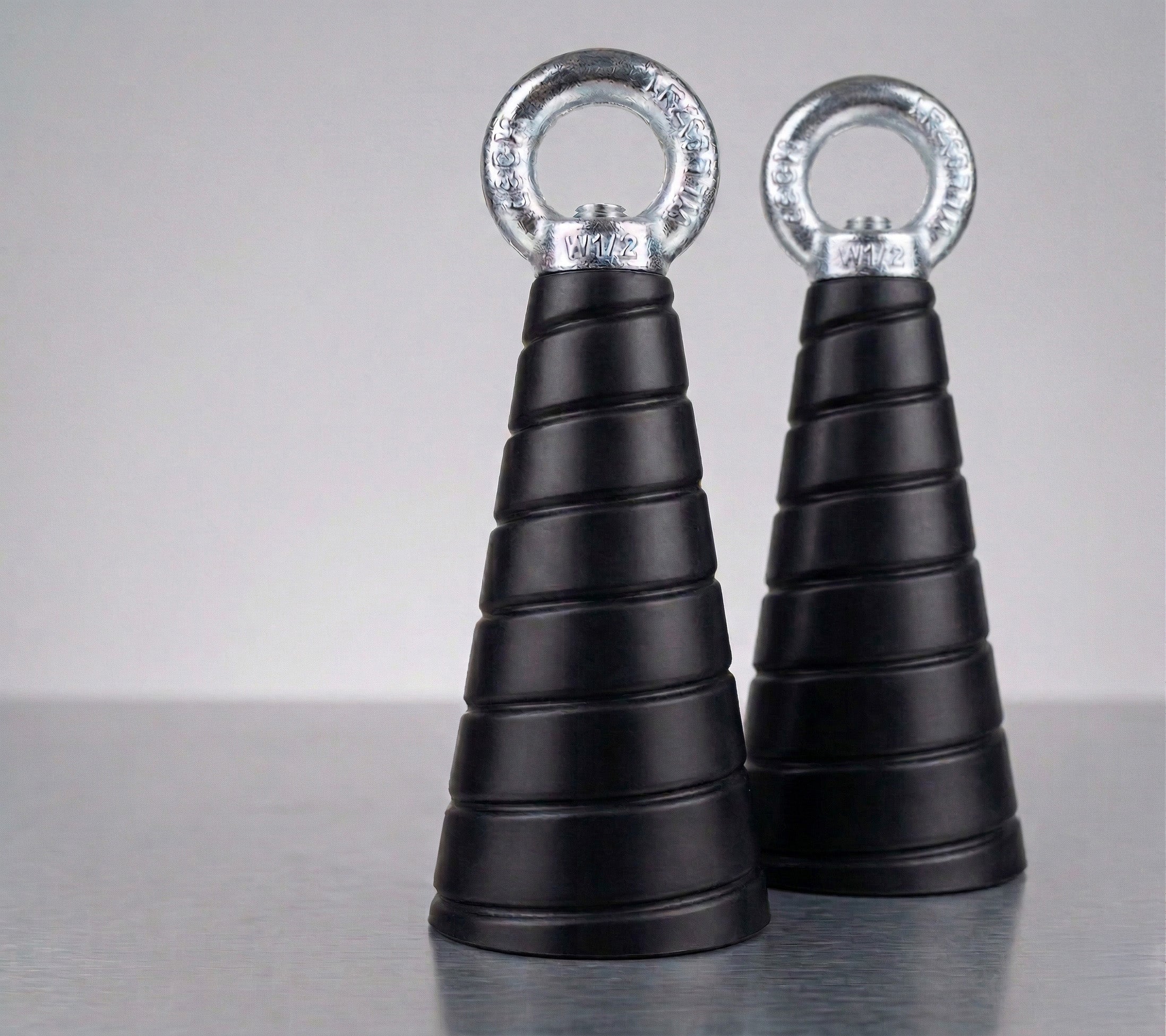
Tapered Tricep Cone
Tapered rubber cable grip for triceps extensions, face pulls and hammer curls.

GymPin Ergo Handles
Pair of ergonomic cable handles shaped for comfortable triceps and pulling exercises.
Some product links may be affiliate links, supporting Mind Muscle Perfection at no additional cost to you.