Advertising disclosure: This page includes affiliate product links that may earn us a commission, as well as products from our own store.
One Leg Day or Three? What an 18-Man Trial Says About Weekly Sets
Moving a few sets to another day can look like a tiny programme change. In practice, it changes how much fatigue you bring to each set, how often you need to warm up and how many appointments your training week requires. Those details deserve more attention than a blanket rule that more frequent leg days must mean more muscle.
A September 2026 experiment provides a useful starting point. Its main lesson is to separate the amount of work completed from the adaptations measured afterwards. Here is how to read the finding, compare schedules fairly and test a different distribution without quietly turning it into a bigger programme.
1. More completed work did not establish more muscle growth
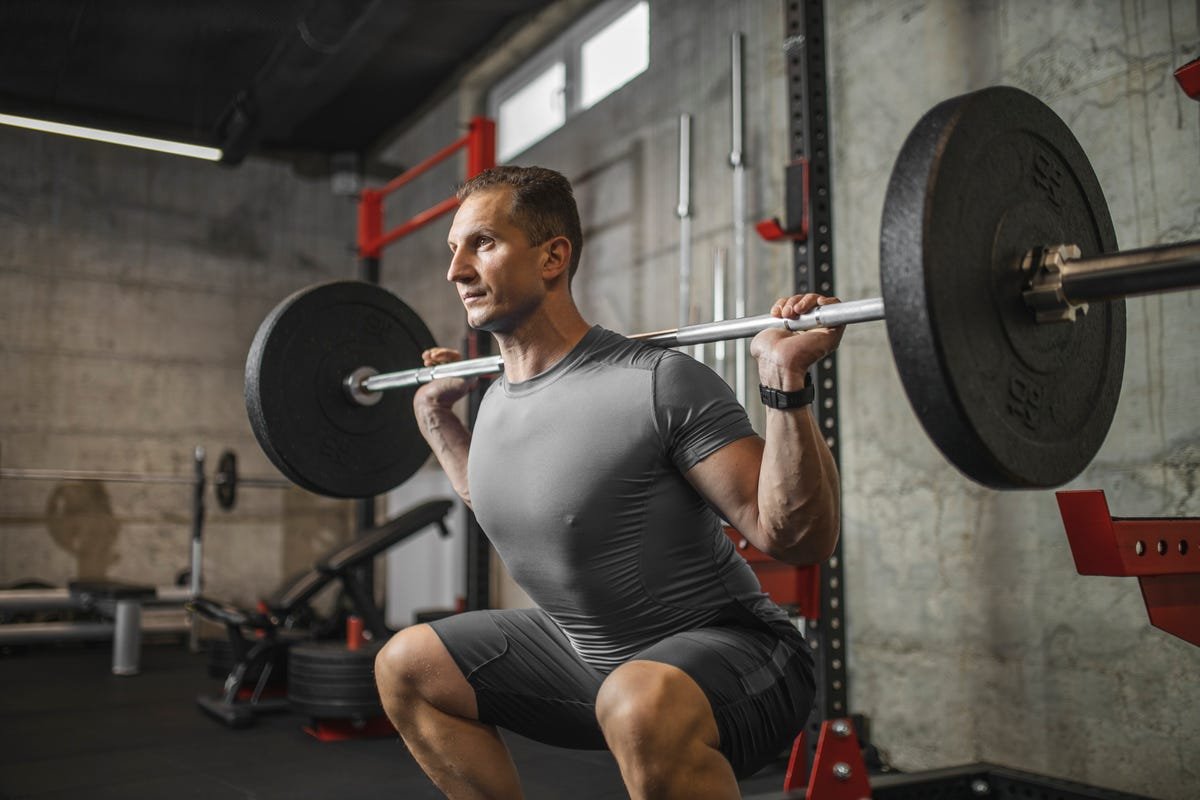
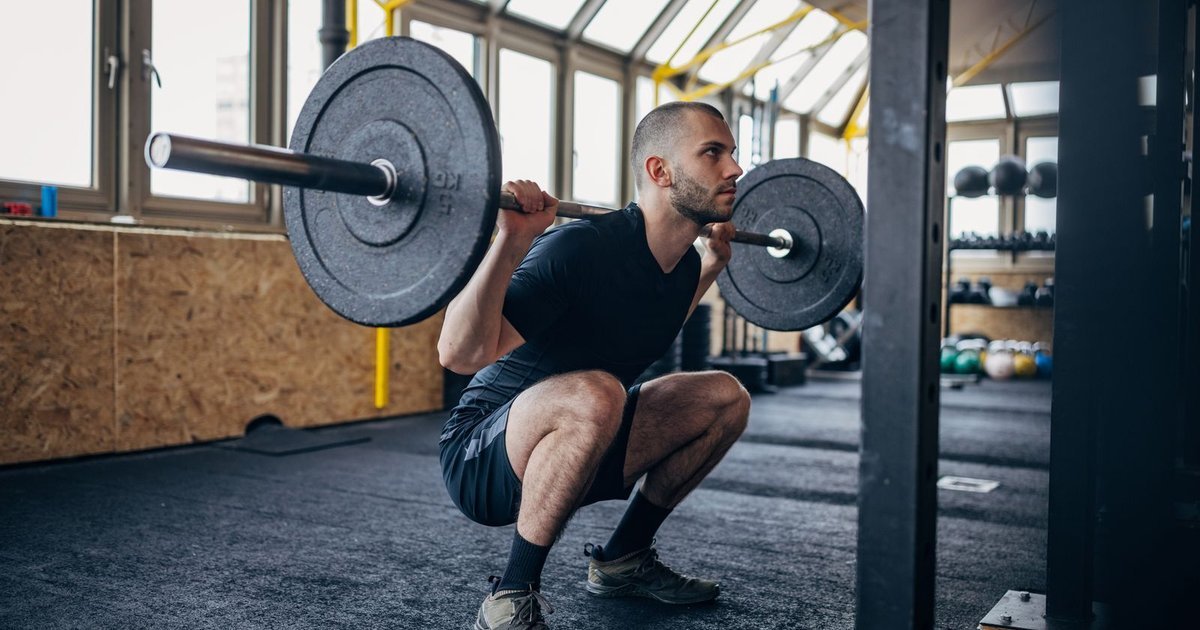
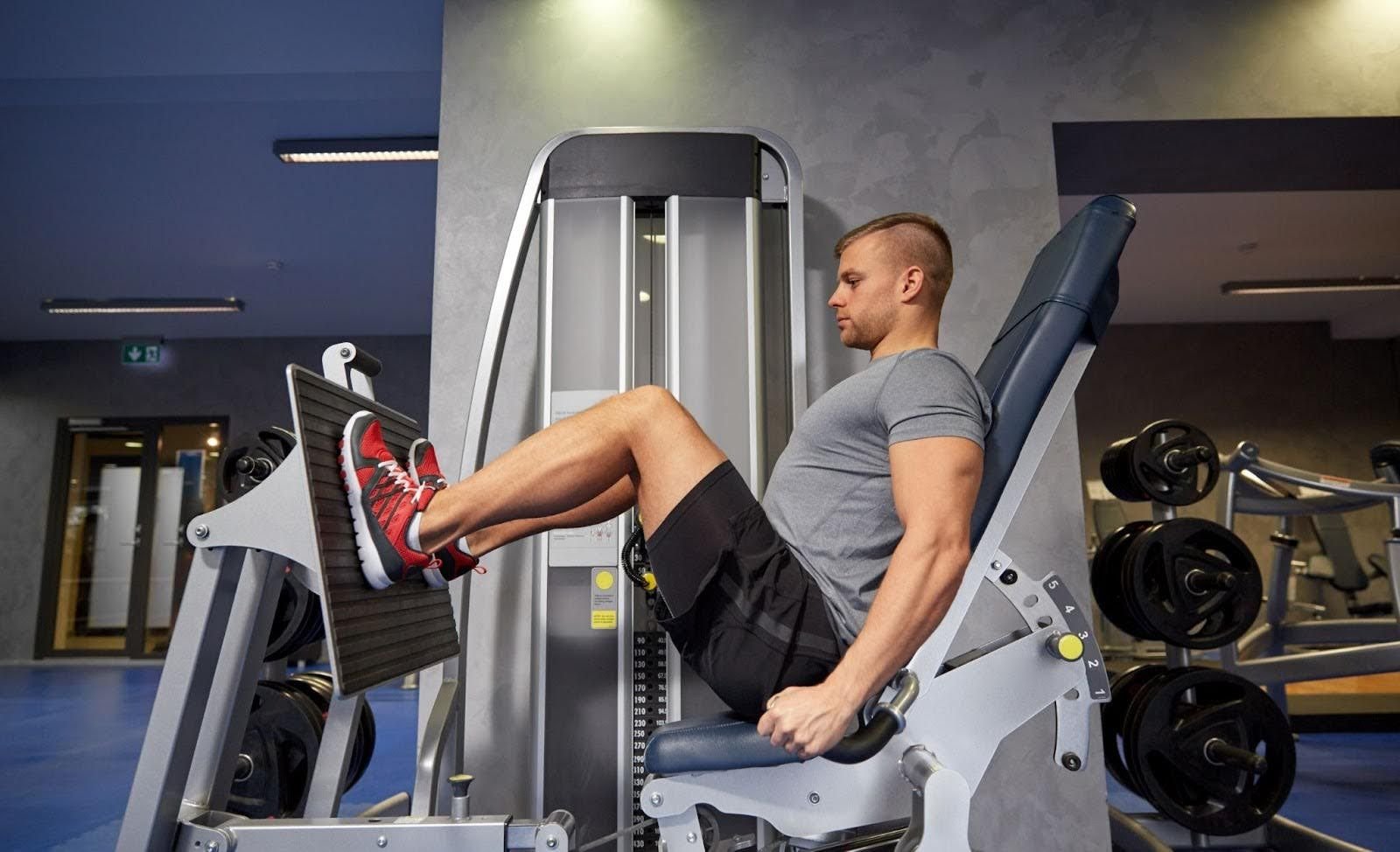
Eighteen trained men completed six weeks of back squats, leg presses and leg extensions. Each exercise had three prescribed weekly sets, performed at 80% of pretest one-repetition maximum to concentric failure. One group completed all sets in one session; the other spread them across three sessions.
The three-session group accumulated 58% more squat volume load and 76% more leg-press volume load. The leg-extension difference did not reach statistical significance. Strength and measured quadriceps thickness increased over time, but the between-group comparisons did not establish superior strength or muscle-thickness gains. The strength findings leaned towards the higher-frequency approach without providing a conclusive advantage.
That distinction matters. An encouraging performance difference is worth investigating; it is not permission to describe one schedule as a proven hypertrophy winner. Eighteen participants and six weeks also leave substantial uncertainty about other trainees, longer programmes and different amounts of weekly work.
For your own training, start with a concrete question: are later sets consistently losing useful repetitions, or is the current schedule already producing repeatable progress? A scheduling change should solve an identifiable problem. Simply replacing a familiar routine because another arrangement sounds more scientific can make the comparison less informative.
2. Count sets and volume load separately
A set count describes the number of work sets prescribed or completed. Volume load usually combines repetitions and external load. These measures can move differently: six sets remain six sets even when spreading them out lets you complete more repetitions with the same weight.
Consider an invented squat example. At 100 kilograms, three sets of eight, seven and six repetitions total 2,100 kilograms of volume load. Three sets of eight repetitions total 2,400 kilograms. The second record contains the same number of sets and a larger repetition total. This arithmetic illustrates the distinction; it is not a result from the experiment.
Neither number captures the whole session. Squat depth, leg-press seat position, assistance, rest intervals and proximity to failure can all change what those repetitions represent. Log them consistently enough that an apparent improvement is not just a shorter movement or a different machine.
Compare a leg press with itself. A stack label, a plate-loaded sled and a squat bar are different loading systems, so adding their displayed kilograms together does not create a precise score for quadriceps stimulation. Keep exercise-specific records alongside your weekly set count.
This also helps with equipment decisions. Choose a rack, barbell or machine that lets you repeat the intended movement comfortably and consistently. The products below are examples of training equipment, not devices used in the experiment or proof of a particular training outcome. Attachments require a suitable compatible base.

Equipment Worth Exploring
Explore equipment, accessories and gear from our carefully selected range.

Leg Press/Hack Squat BPR-790
Convertible 45-degree leg press and hack squat machine with a broad footplate and band pegs.

Compact Leg Press CLP-700
Compact reverse-style leg press with a moving seat carriage and an adjustable footplate.

Leg Extension/Curl BCO-780
Leg extension and lying leg curl combo with plate loading, band pegs and a cable-loading option.

Seated Leg Combo BCO-680
Adjustable seated leg extension and leg curl machine with band pegs for added resistance.


Multi Pull Smith Rack MPHR-780
All-in-one rack with a Smith machine, functional trainer, lat pulldown and low row.


3. Put frequency in the wider evidence
A broader review of resistance-training studies found no meaningful hypertrophy advantage from higher frequency when training volume was equated. That makes frequency useful as a way of arranging work rather than a guaranteed growth multiplier. It does not mean every possible schedule is equally convenient or that individual responses are identical.
A separate six-week experiment involving 27 trained men compared three and six weekly training sessions under volume-equated conditions. Both approaches produced similar overall strength and muscle-size adaptations. Together, these findings argue against treating a larger number of weekly appointments as an automatic upgrade.
There is still room for practical differences. A lifter who dislikes long sessions may prefer spreading exercises across the week. Someone with limited opportunities to visit the gym may prefer fewer, longer visits. These are real programme-design considerations even when the evidence does not identify a universal muscle-growth winner.
Keep uncertainty visible when interpreting your own experience, too. Feeling fresher on the first set is a performance observation. A fuller pump is an immediate sensation. A change in a photograph can reflect lighting, pose or body weight. None should be casually substituted for a reliable measurement of additional muscle tissue.
Current broad resistance-training guidance also emphasises consistency and individualisation rather than elaborate programming for its own sake. Training to failure and choosing a particular equipment type are not universal requirements for improvement. The experimental protocol describes what those participants did; it is not a compulsory template for your next leg session.
4. Change the calendar without accidentally adding a programme
Write down the current weekly work before moving anything. Include the exercises, work sets, usual repetition ranges, approximate effort and rest periods. Warm-up sets belong in a separate column. If you change several of these at once, you will have a new programme rather than a reasonably clear test of distribution.
For an illustrative example, suppose your established plan contains six weekly squat work sets. You could place three on Monday and three on Thursday, or two each on Monday, Wednesday and Friday. Both arrangements retain six. Neither schedule is a claim about an optimal dose, and you should not add six sets simply to copy this example.
Apply the same accounting to leg presses and leg extensions if they are already in your programme. Moving two sets from Friday to Wednesday means removing them from Friday. It does not mean leaving the original session intact and adding a small bonus workout that becomes another hard leg day.
Remember the practical overhead. An extra session involves travel, changing, warm-up and waiting for equipment even if its work-set count is small. A short session that you reliably attend may be valuable. A theoretically elegant split that repeatedly collides with work, sleep or other sport may be a poor fit.
Leave recovery space when scheduling demanding sessions for the same muscles. Nonconsecutive days are a straightforward starting arrangement, then assess how the whole week feels. Do not squeeze additional sessions into every empty calendar square while ignoring football, running or other substantial lower-body work.
Decide in advance what happens when you miss a visit. One sensible administrative choice is to resume the plan rather than cram every missed set into the next session. Record the omission honestly. A timetable that looks ideal only when you silently ignore missed workouts is not giving you a useful comparison with the routine you actually followed before.
Leg-day clothing and accessories are optional extras. The selection below matches the squat, quadriceps and regular-training theme; a slogan does not replace the work or determine its results.

Leg Day Shirts & Workout Gear
Leg-day gym shirts and workout gear for lifters who never skip squats, lunges and lower-body punishment.

Anti Leg Day Leg Day Club & Meme Fans Hoodie
Show off your leg-day humor in a laid-back “Anti Leg Day Leg Day Club” hoodie.

Never Skip Legday – Chicken Legs Meme , , & Leg Day T-Shirt
Heavy lifts, good laughs, and a little “Never Skip Legday” energy.

Negative Leg Day Review 1 Star Not Recommended Decal Sticker
Stick a little “Negative Leg Day Review” humor on your favorite gear.

Coffee Shots & Heavy Squats for Caffeine Fueled Lifting T-Shirt
For laid-back days and leg-day humor: “Coffee Shots & Heavy Squats”.

Leg Press Dost Thou Even Press Medieval Knight Muscle S Tank Top
Bring “Leg Press” humor to your next lifting session.


Leg Day Is Calling You Decal Water Bottles & Sticker
Bring “Leg Day Is Calling You” attitude to your water bottle or laptop.

Shirt – Legendary Leg Day Meme Gymbros, & Fans T-Shirt
Make gym days more fun with “Legendary Leg Day Meme” style.

Leg Day Thou Shalt Not Skip Leg Day Medieval Gym Crewne T-Shirt
Show some gym-day personality with “Leg Day”.
5. Keep a log that can answer the original question
Choose the main thing you want a new distribution to improve before trying it. Useful goals include keeping later sets more consistent, making individual sessions manageable or completing the planned week more often. A single session with extra repetitions is encouraging, but it cannot establish a lasting advantage.
Record exercise, load, repetitions for each work set, approximate repetitions left, rest time and any meaningful setup change. Add a brief note about soreness or unusual fatigue. Avoid turning the log into an administrative project; enough detail to compare like with like is the objective.
Look across several weeks rather than declaring a winner after one unusually good workout. Check whether you actually completed the planned sets, whether comparable lifts progressed and whether the timetable remained workable. If the new arrangement requires skipped sessions or steadily worsening fatigue, adjust it instead of defending the calendar.
Keep physique comparisons separate from session scores. Use consistent conditions if tracking photographs or measurements, and recognise their limitations. A stronger set, a heavier scale reading and a thicker measured muscle are different outcomes; avoid merging them into one claim that the programme is working better.
The useful decision is whether a distribution helps you sustain good training. Keep a schedule that supports repeatable work and recovery. Change it when there is a clear reason, preserve the weekly accounting and judge the result against the problem you meant to solve.