Advertising disclosure: This page includes affiliate product links that may earn us a commission, as well as products from our own store.
Seated Calf Raises: Fit the Pad, Control the Range and Track Real Progress
A seated calf raise looks simple: sit down and lift your heels. The useful details are less obvious. A loose thigh pad can turn the first part of each repetition into a jolt, a narrow foothold can make you grip with your toes, and a heavier plate can disguise a much shorter movement. Getting those details consistent makes the exercise easier to learn and your training log more meaningful.
This guide covers the machine setup, the bent-knee position, controlled repetitions, a dumbbell alternative and a practical progression. It treats seated calf work as one option within lower-leg training, rather than a compulsory replacement for every standing raise.
Fit the Thigh Pad and Learn the Safety Catch
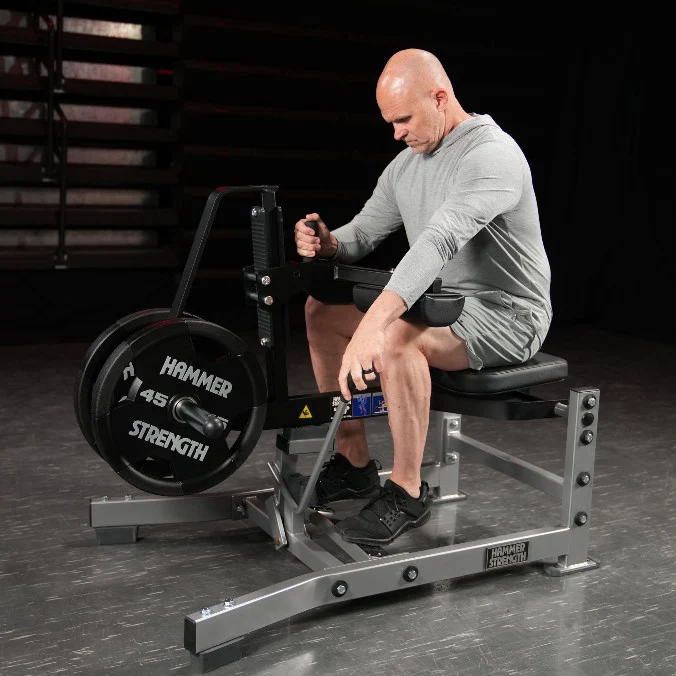
Before loading plates, identify how your machine releases and parks the lever. Some models use a handle near the front; others have a different catch arrangement. Ask a member of staff to demonstrate it if the mechanism is unfamiliar. You should know how to return the load to its support before you begin a working set, rather than discovering the catch while your calves are tiring.
Sit fully on the seat and place the broad forefoot on the platform, with the heels free to move. Avoid balancing only on the ends of the toes. Choose a foot position that gives secure contact without pinching or slipping. Start with a fairly natural stance and toe direction; there is no need to twist the feet aggressively to imitate a photograph.
Bring the thigh restraint down onto the lower thighs, above the kneecaps. It should provide firm contact without painful pressure. If it leaves a large gap, your legs may lift away from the pad and strike it as the heels rise. If it is so tight that you cannot establish the intended position or release the catch, readjust before adding resistance.
Perform an easy rehearsal. Lift enough to unload the catch, release it according to the machine instructions, complete a few controlled repetitions and park the lever again. Check that clothing, hands and shoelaces stay clear of moving parts. A successful rehearsal includes a calm exit, not just a successful first repetition.
Understand What the Bent Knee Changes
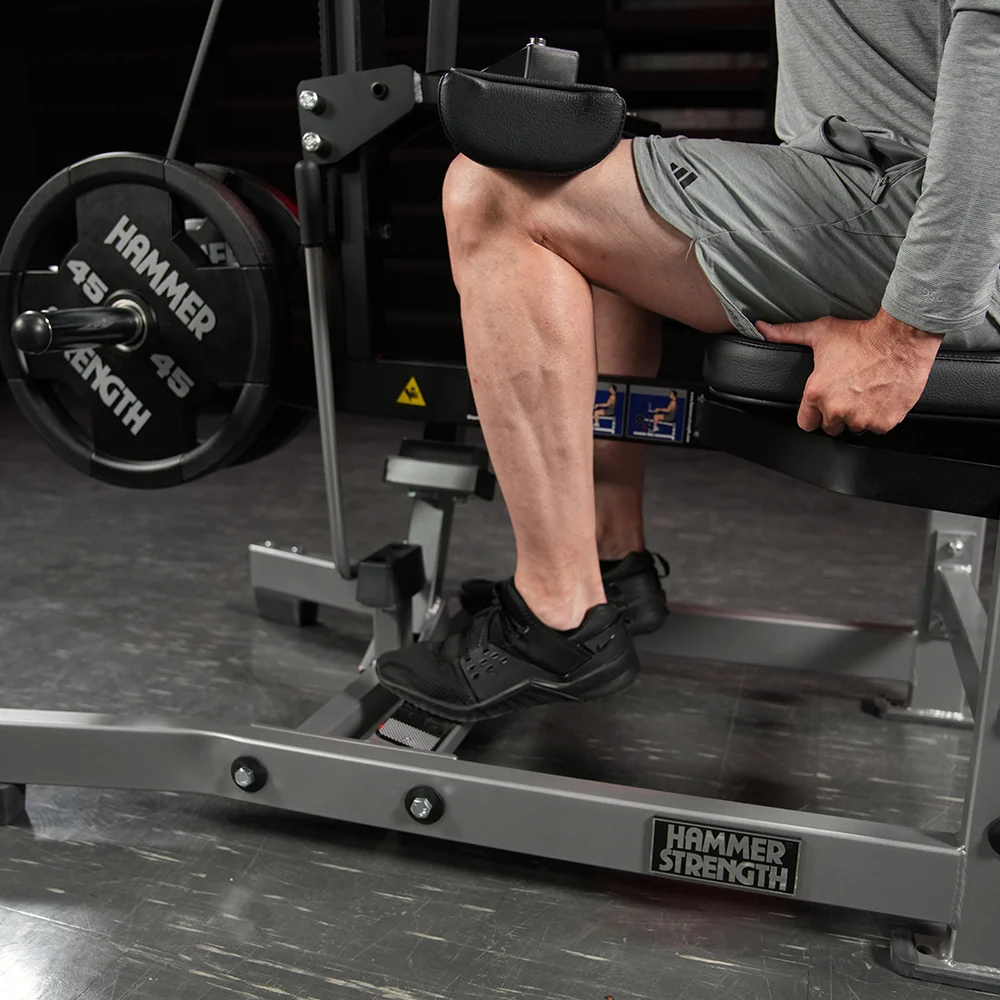
The visible calf includes the gastrocnemius, with the soleus underneath it. Both contribute to pointing the foot away from the shin, but they are not arranged identically. The gastrocnemius crosses the knee as well as the ankle; the soleus does not cross the knee. Bending the knee changes the operating position of the gastrocnemius, which helps explain why seated and standing raises feel different.
That does not mean a seated raise switches one muscle completely off, or that burning in one location proves superior growth. For practical training, think of the seated version as a bent-knee calf exercise that gives the soleus meaningful work. Straight-knee calf work remains a different tool. You do not need to turn that distinction into a contest in which only one exercise can stay in the programme.
Keep the knee angle reasonably consistent through the set. If you repeatedly lift the hips or extend the knees to help the lever move, the exercise is changing as fatigue builds. Hold the handles for stability rather than pulling hard enough with your arms to rescue each repetition. Your torso can lean slightly if that fits the machine, but avoid rocking back and forth for momentum.
Different machines can feel dramatically different with identical plates. Lever lengths, starting resistance, pad position and the movement of the seat all affect the task. Record which machine you used. A plate-loaded seated raise in one gym is not a useful direct strength comparison with a selectorised machine somewhere else.
Use a Repeatable Range Instead of Bouncing
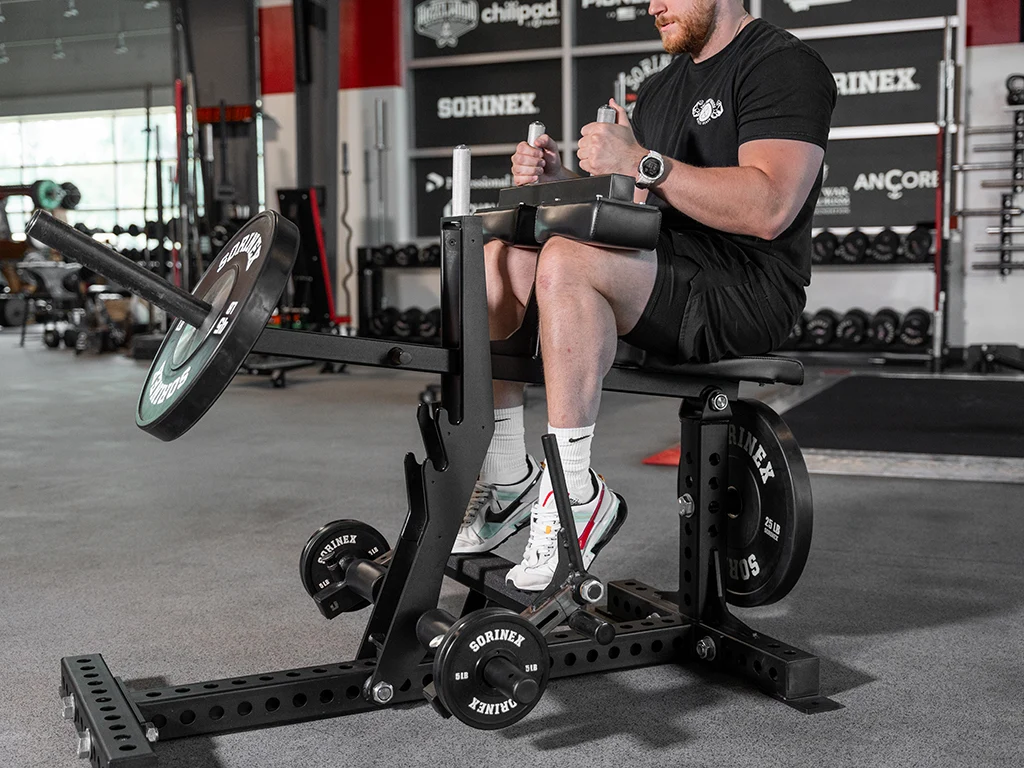
Lower the heels smoothly into a position you can reverse under control. A platform may allow the heels to descend below the forefoot, but the deepest mechanically available position is not an instruction to force every ankle there. Stop before the foot loses contact or the movement becomes uncomfortable. The bottom should be a deliberate endpoint, not a drop followed by a rebound.
Rise through the forefoot without rolling abruptly onto its outer edge. Let the heel travel upward, then return along the same path. A brief controlled change of direction makes it easier to see whether the calf is moving the load or whether you are bouncing the apparatus. There is no special universal number of seconds that every repetition must take.
A useful first check is to compare your first and last repetition from the side. Does the final one reach a similar top position? Does the heel still descend to the same comfortable endpoint? If the set finishes with tiny pulses, record that loss of range rather than counting all repetitions as equivalent. You can stop the set when you cannot maintain the intended version.
For example, ten steady repetitions with a modest load give you a clearer baseline than fifteen repetitions that become progressively shorter. If adding weight causes the bottom half to disappear immediately, return to the previous load. Improve control or add a clean repetition before making another jump. A larger plate is useful only when it advances the exercise you meant to train.
Use Dumbbells When the Machine Is Unavailable

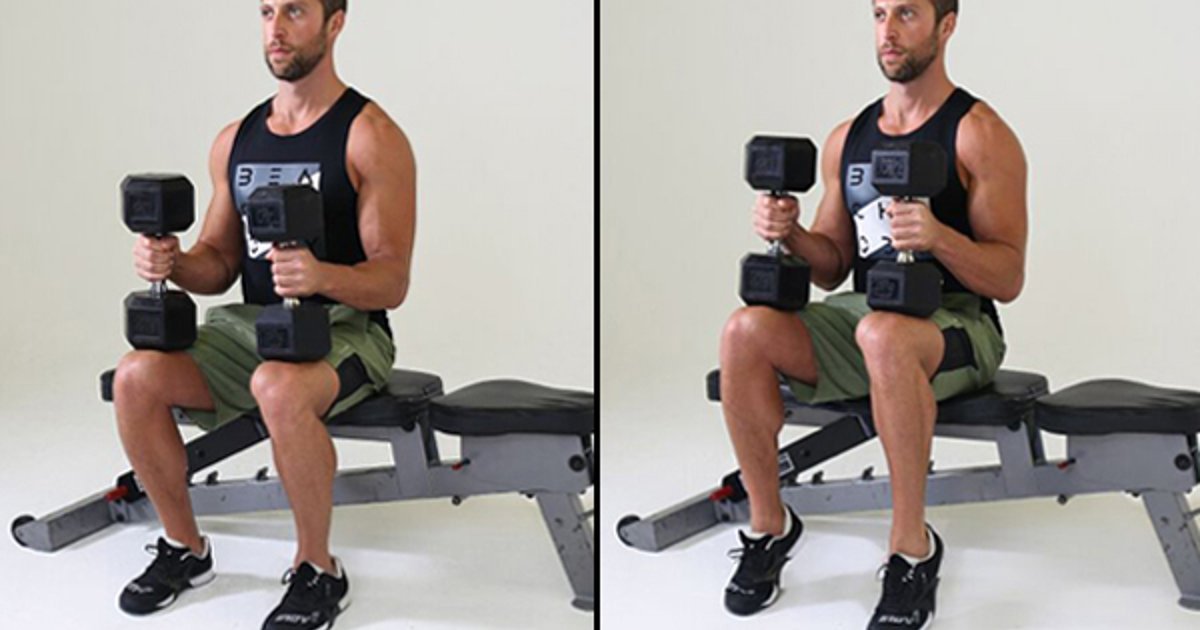
A seated dumbbell raise can provide a simpler loading arrangement. Sit on a sturdy bench, plant the feet securely and place manageable dumbbells on the lower thighs with your hands controlling them. Keep pressure off the kneecaps. A comfortable protective layer may help distribute contact, but it must not make the weights unstable or encourage them to slide.
Begin from the floor if that gives you a secure position. A stable raised platform can allow more heel travel, but adding a platform also introduces another contact surface that must not tip or move. Avoid improvised stacks that shift beneath your feet. Use a light rehearsal to check the entire movement and the return of the dumbbells after the set.
One leg at a time may be easier to organise when a pair of dumbbells is awkward. Match the setup on each side and use a load you can position without assistance from a swinging torso. A bench, adjustable dumbbell or securely assembled plate-loaded handle can be useful equipment here; none is automatically a dedicated calf machine, and its loading limits still apply.
With plate-loaded equipment, small plates can make progression less abrupt. Use collars where the equipment requires them, keep plates clear of your legs and check compatibility rather than assuming every add-on fits. If the available dumbbell becomes too cumbersome to position safely, use the machine or another sensible calf exercise instead of piling unsecured weights onto your thighs.

Equipment Worth Exploring
Explore equipment, accessories and gear from our carefully selected range.


Rubber Hex Dumbbells
Rubber-coated hex dumbbell pairs with a stable shape for home and commercial strength training.




Multi Bench MBX-650 2.0
Adjustable multi-bench with roller adjustment, 15 backrest positions and accessory mounts.


Grip Plates
Rubber-coated weight plates with handholds for loading barbells and machines.
Build a Calf Routine You Can Compare Week to Week
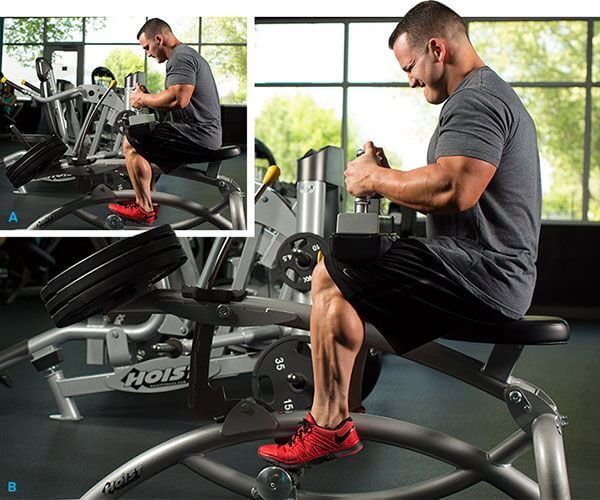
Decide where seated raises fit before simply adding more sets. They might follow your main lower-body lifts, or sit beside a straight-knee calf variation elsewhere in the week. Consider the calf work you already do, including demanding running or jumping sessions. An accessory exercise should have a clear purpose within that workload rather than becoming an exhausting afterthought.
As an adjustable starting example, try two controlled sets in a range such as ten to fifteen repetitions, once or twice per week. Choose a load that leaves a few good repetitions available. This is a practical example, not a uniquely proven dose. Rest long enough to reproduce the movement, and reduce the amount if soreness or fatigue compromises other training.
Keep the load steady while you build clean repetitions. Suppose you complete twelve and eleven repetitions on the first session. Next time, aim to make the second set more consistent rather than automatically increasing the plates. Once both sets reach the upper end of your chosen range with the same setup, use a small increase and accept fewer repetitions again.
Write down the machine, pad setting, load, repetitions and any deliberate pause. Add a short note if you used a different platform or a single-leg version. These details explain apparent changes in performance. Twelve repetitions with a loose pad and shallow range are not the same result as twelve controlled repetitions with firm contact and a repeatable endpoint.
Calf training should challenge the muscles without requiring you to push through sharp pain, unexpected weakness or increasing tendon discomfort. Stop and reassess those symptoms; seek an appropriate assessment if they persist. The goal is not to collect the heaviest seated-calf number in the room. It is to build lower-leg work that is organised, repeatable and compatible with the rest of your training.

Leg Day Shirts & Workout Gear
Leg-day gym shirts and workout gear for lifters who never skip squats, lunges and lower-body punishment.

Never Skip Leg Day Chicken Legs Meme & Bros Hoodie
Show off your leg-day humor in a laid-back “Never Skip Leg Day” hoodie.

Anti Leg Day Leg Day Club Meme Sweater T-Shirt
Show some gym-day personality with “Anti Leg Day Leg Day Club”.

If You're Reading This Its Leg Day | Drake Rap Music Pa Tank Top
Train hard, laugh a little, and rep “If You're Reading This Its Leg Day”.

Shirt – Legendary Leg Day Meme Gymbros, & Fans T-Shirt
Make gym days more fun with “Legendary Leg Day Meme” style.

Shirt Never Skip Leg Day Flamingo Meme – Gymbros, & T-Shirt
Rep “Never Skip Leg Day Flamingo Meme” humor in and out of the gym.

Everyday Is Leg Day Octopus Meme & Top T-Shirt
Show some leg-day attitude with a playful “Everyday Is Leg Day Funny Octopus” tee.

My Leg Hurts Leg Day Decal Water Bottles & Gear Meme Sticker
Stick a little “My Leg Hurts” humor on your favorite gear.

Negative Leg Day Review 1 Star Not Recommended Decal Sticker
Stick a little “Negative Leg Day Review” humor on your favorite gear.

Leg Day The Day That Never Comes Meme Heavy Metal T-Shirt
Make gym days more fun with “Leg Day The Day That Never Comes Meme” style.

Leg Day Is Calling You Decal Water Bottles & Sticker
Bring “Leg Day Is Calling You” attitude to your water bottle or laptop.