Getting down to the floor and standing back up sounds simple. Try doing both without placing a hand or knee on the ground, however, and the movement becomes a compact test of leg strength, hip mobility, balance and coordination. It is not a diagnosis, and it certainly cannot tell anyone how long they will live. But it can reveal an everyday skill worth practicing, especially if most of your training happens on benches and machines.
What the floor sit-to-rise test actually measures
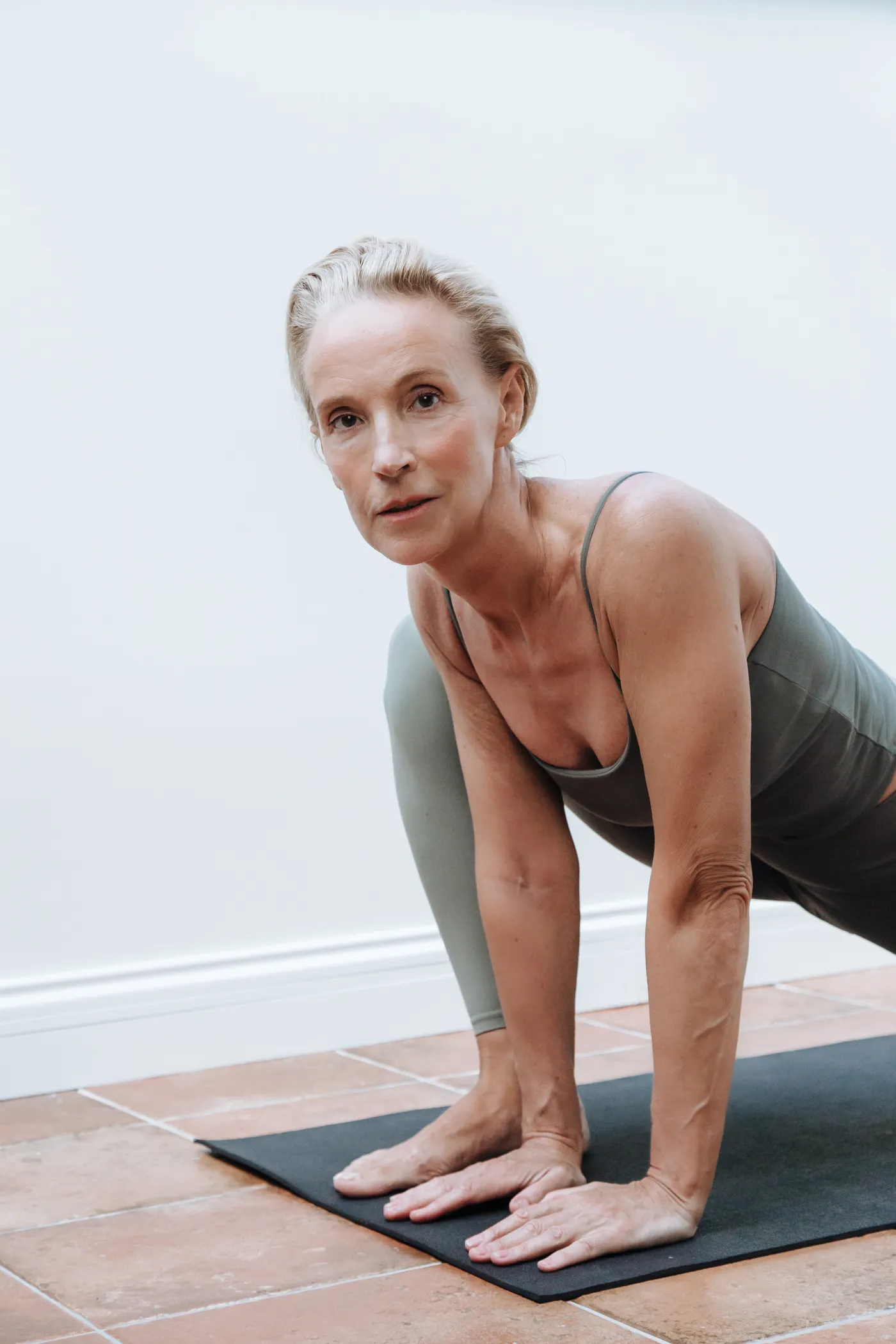
The sitting-rising test starts from standing on a clear, non-slip surface. You lower yourself to a seated position on the floor, then return to standing while using as little external support as possible. There is no stopwatch and no requirement to perform an athletic-looking trick. The question is how much assistance your body needs to control the descent and ascent.
In the research scoring system, sitting and rising are each worth five points. A hand, knee or other support point costs one point for that phase; visible unsteadiness costs half a point. The two phases add up to a score from zero to ten. A perfect ten means a controlled descent and ascent without hand or knee support. A lower score does not automatically mean someone is weak, unhealthy or headed for a fall.
Several capacities are mixed together. Ankle and hip range of motion help you find a usable path toward the floor. The quadriceps and glutes provide force to move your body upward. Trunk control and balance let you shift your center of mass over a smaller base of support. Body proportions, joint comfort and familiarity with floor movements also affect the result.
That makes the test useful as a broad movement screen, not a substitute for a squat strength test, mobility examination or medical assessment. The most productive question is not whether your number beats somebody else’s. It is whether you can improve the movement safely and retain the ability to get up independently.
What the long-term mortality research did and did not show
One prospective cohort followed 4,282 adults aged 46 to 75 who had completed the sitting-rising test. Over a median 12.3 years, 665 participants died. People in the lowest score group, zero to four, had higher rates of death from natural and cardiovascular causes than those scoring ten. After adjustment for several clinical variables, the reported hazard ratios for the lowest versus highest group were approximately 3.84 for natural causes and 6.05 for cardiovascular causes.
Those are associations in an observational cohort. They do not mean that needing a hand to stand up causes heart disease or that practicing floor transfers will directly lower mortality by those percentages. Age, health conditions, physical activity, body composition and unmeasured factors can influence both movement ability and long-term health. The sample also came from an exercise-medicine setting and was predominantly male, which limits broad generalization.
An earlier cohort of 2,002 adults also found an association between lower scores and higher all-cause mortality over a shorter follow-up. The replication is interesting because a simple movement combines several elements of non-aerobic fitness. Yet neither cohort randomized people to improve their floor score and then measured survival. A higher score should therefore be treated as a marker of functional capacity, not a proven life-extending intervention.
For lifters, the useful interpretation is practical. If a movement that used to feel effortless now requires a push from the furniture, that change deserves attention. Strength training, balance practice and mobility work can address parts of the problem. The research supports caring about functional fitness; it does not support turning a ten-point test into a prediction of an individual’s lifespan.

Equipment Worth Exploring
Explore equipment, accessories and gear from our carefully selected range.


GymPin Squat Wedges
Non-slip 15-degree squat wedges help elevate the heels for deeper quad-focused squats.

FID Bench MAX
Adjustable bench offering flat, incline, and decline positions + adjustable headrest.


Power Tower
Freestanding pull-up and dip station with adjustable handles for bodyweight training.
Why strong legs alone may not deliver a perfect score
A person can squat heavy weight and still find floor transfers awkward. Barbell strength is valuable, but the floor asks for joint positions and transitions that a conventional squat may never train. The feet must reposition, the hips may rotate, and the body has to move from a wide, low base toward a narrow standing stance without losing balance.
Hip internal and external rotation can be especially noticeable. If you cannot comfortably move through a seated 90/90 position, a cross-legged floor route may feel blocked. Ankle dorsiflexion can also limit the ability to bring the feet underneath the body. Neither restriction proves an injury, and a stiff-feeling joint should not be forced through pain simply to earn a higher test score.
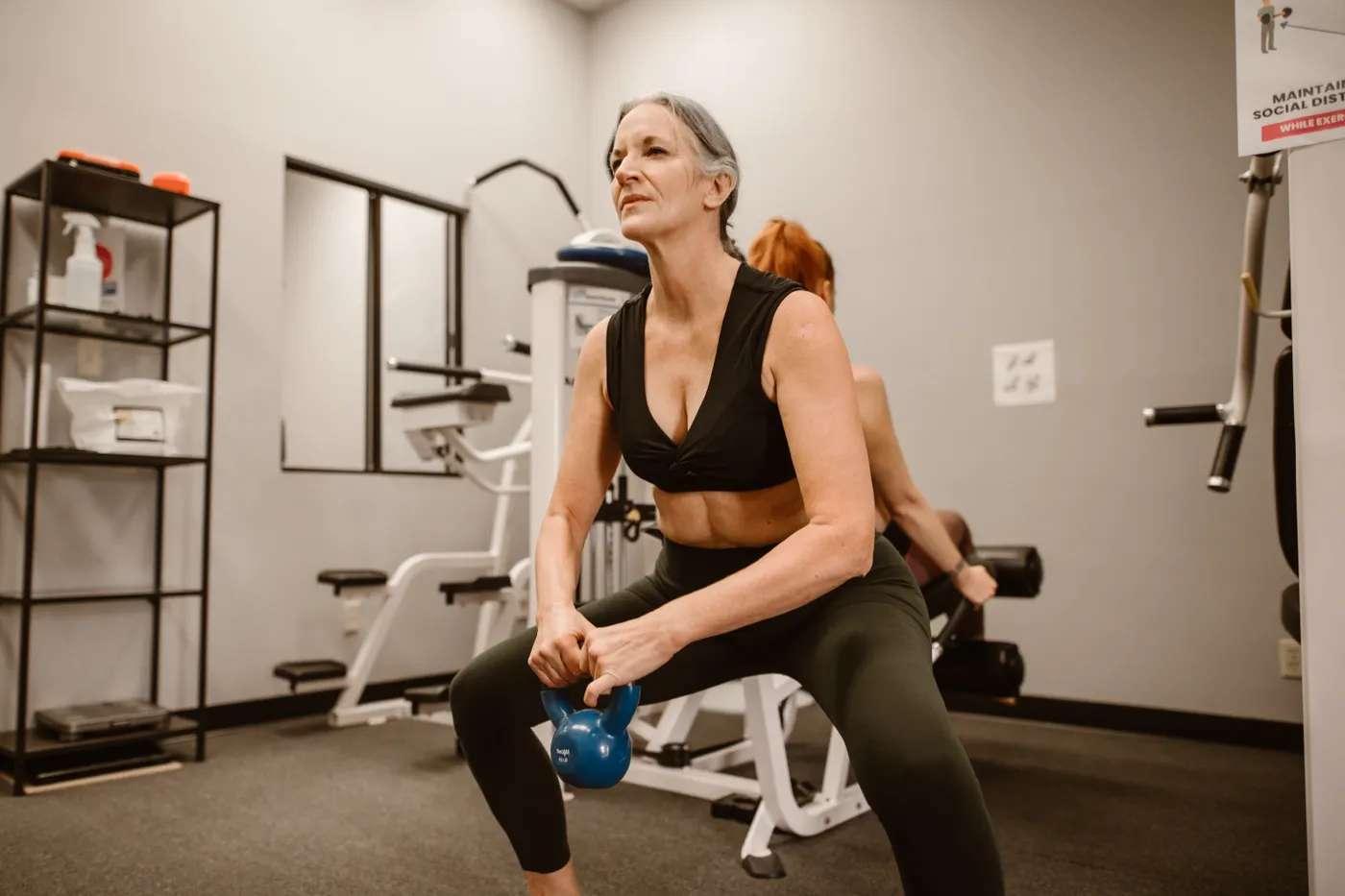
Strength matters at the awkward points. The quads help extend the knees; the glutes extend the hips; the calves help control ankle movement; and the trunk resists tipping as your weight shifts. Unilateral exercises such as split squats and supported lunges challenge these patterns in ways that a seated leg-extension machine cannot fully reproduce. That does not make machines inferior. Research on older adults shows that straightforward machine-based resistance training can improve both strength and functional outcomes.
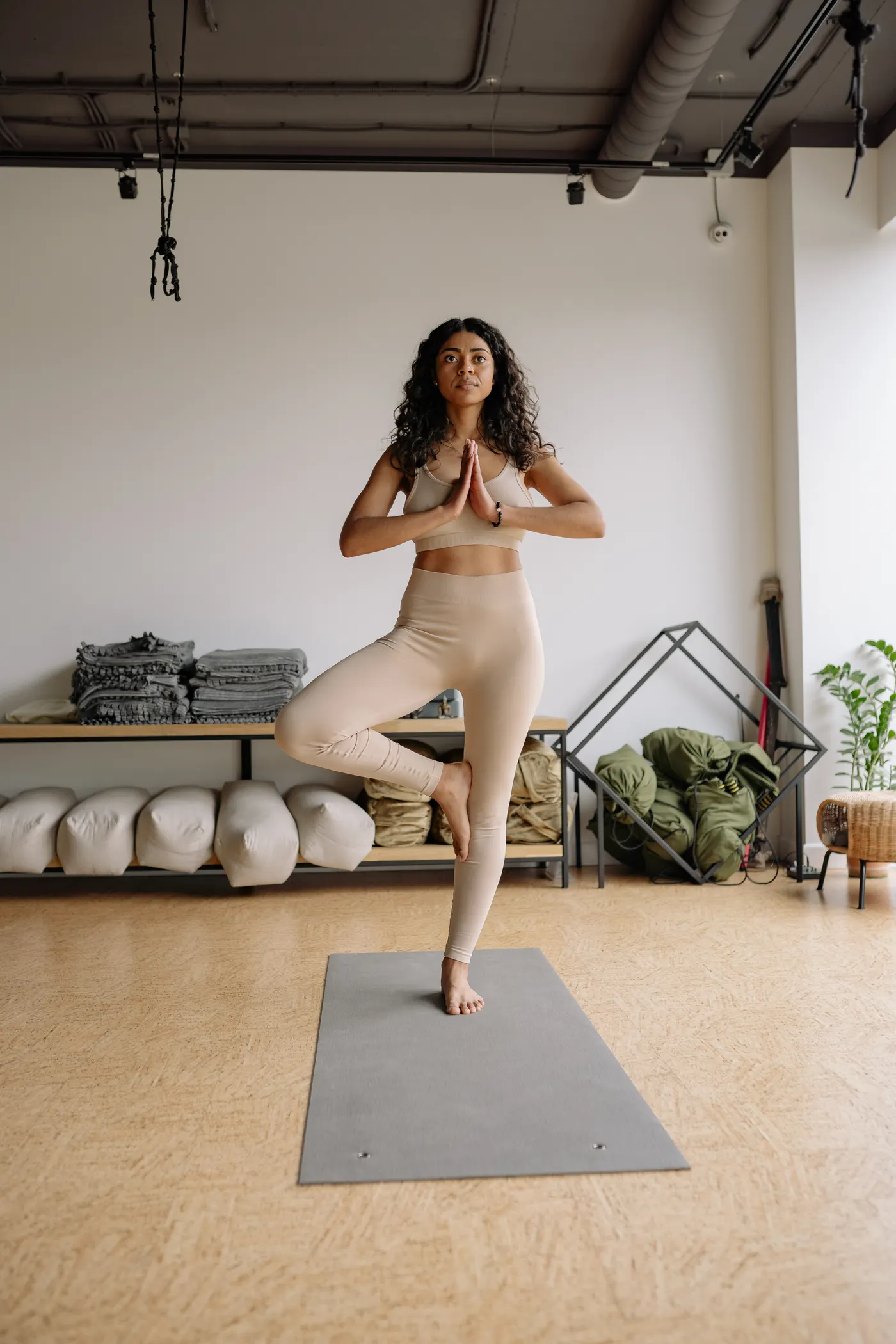
Balance is another ingredient. Standing on one leg, stepping through a half-kneeling position and recovering from small shifts all train control. Practice these at an appropriate level, near a stable support if needed. A floor-transfer drill should feel like skill development, not a contest to see who can avoid using their hands at any cost. Progress should be measured in controlled movement, not dramatic effort.

Funny Gym Shirts & Workout Gear
Funny gym shirts, tanks, hoodies and workout gear for lifters who like training hard.


Calisthenics Muscle Shirt Athletic Vest for Bodyweight Tank Top
Your gym-day look, with a playful “Calisthenics” twist.

Vive La Resistance Bands Painting Meme – Resistance Ban Hoodie
Stay casual and show some lifting attitude with “Vive La Resistance Bands”.

Heavy Squatter Harry Potter Squat Meme Sweater Leg T-Shirt
Show some gym-day personality with “Heavy Squatter”.

Calisthenics Evolution Decal for Water Bottles Laptops Sticker
Put “Calisthenics Evolution” gym humor on your laptop, bottle, or gym gear.

Massquatch Bigfoot – Sasquatch , & Meme T-Shirt
Heavy lifts, good laughs, and a little “Massquatch Bigfoot” energy.

HYROX High Rocks Functional & CrossFit Tank Top
Your gym-day look, with a playful “HYROX High Rocks” twist.

Squat You Must Star Wars Leg Day Meme Hooded Hoodie
Show off your leg-day humor in a laid-back “Squat You Must” hoodie.

6Pac Shakur | Rap Parody Crewneck for Bodybuilding & Co T-Shirt
Keep things casual with a little “6Pac Shakur” attitude.

Superman Squats Decal for Water Bottles Laptops Gym Gea Sticker
Bring “Superman Squats” attitude to your water bottle or laptop.
How to check your baseline without turning it into a stunt
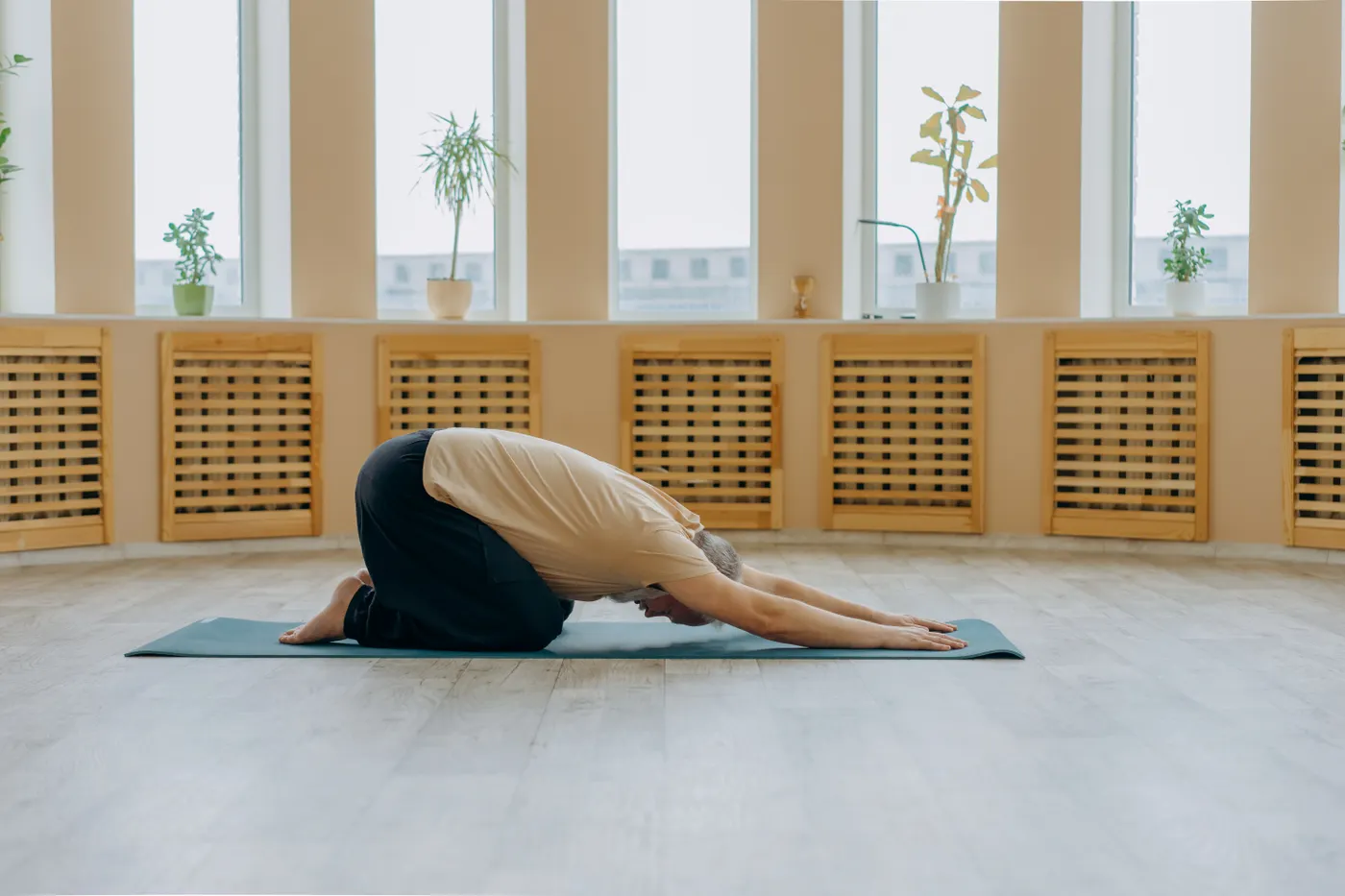
Choose a clear, non-slip area with enough room to move. Place a sturdy chair or fixed support within reach. A thin exercise mat may be more comfortable for the knees, but a very soft or sliding mat can make balance harder. Wear shoes or go barefoot according to what gives you predictable traction. If you have dizziness, recent surgery, significant joint pain, a history of falls or difficulty getting up from the floor, do not attempt an unsupported test without appropriate professional guidance.
Start with an assisted version: lower to a comfortable seated position using a hand or chair, pause, then rise using the same support. Notice which phase is harder. Some people can lower smoothly but struggle to stand; others have plenty of leg strength yet cannot find a comfortable route down. Record the support points you needed rather than treating them as a failure.
If the assisted version is comfortable, try a controlled unassisted attempt only when you are confident you can stop safely. Do not bounce off the floor, hold your breath through a prolonged strain or twist a painful knee to protect the score. One clean attempt is enough for a baseline. Repeating maximal efforts until exhausted adds little information and may make the result worse.
Keep the setup consistent for future checks: same floor, footwear, general warm-up and scoring rules. A useful log includes the score, support points, any discomfort and the route used to stand. Improvement may first appear as a smoother transition or less reliance on the chair before it appears as a whole point on the formal scale.
Equipment Worth Exploring
Explore equipment, accessories and gear from our carefully selected range.
VOLTRA
Compact digital cable trainer with smooth, adjustable resistance.

Go-Tone Pro
Portable digital cable trainer with up to 66 lb (30 kg) of adjustable resistance.


Four drills that build the movement from the ground up
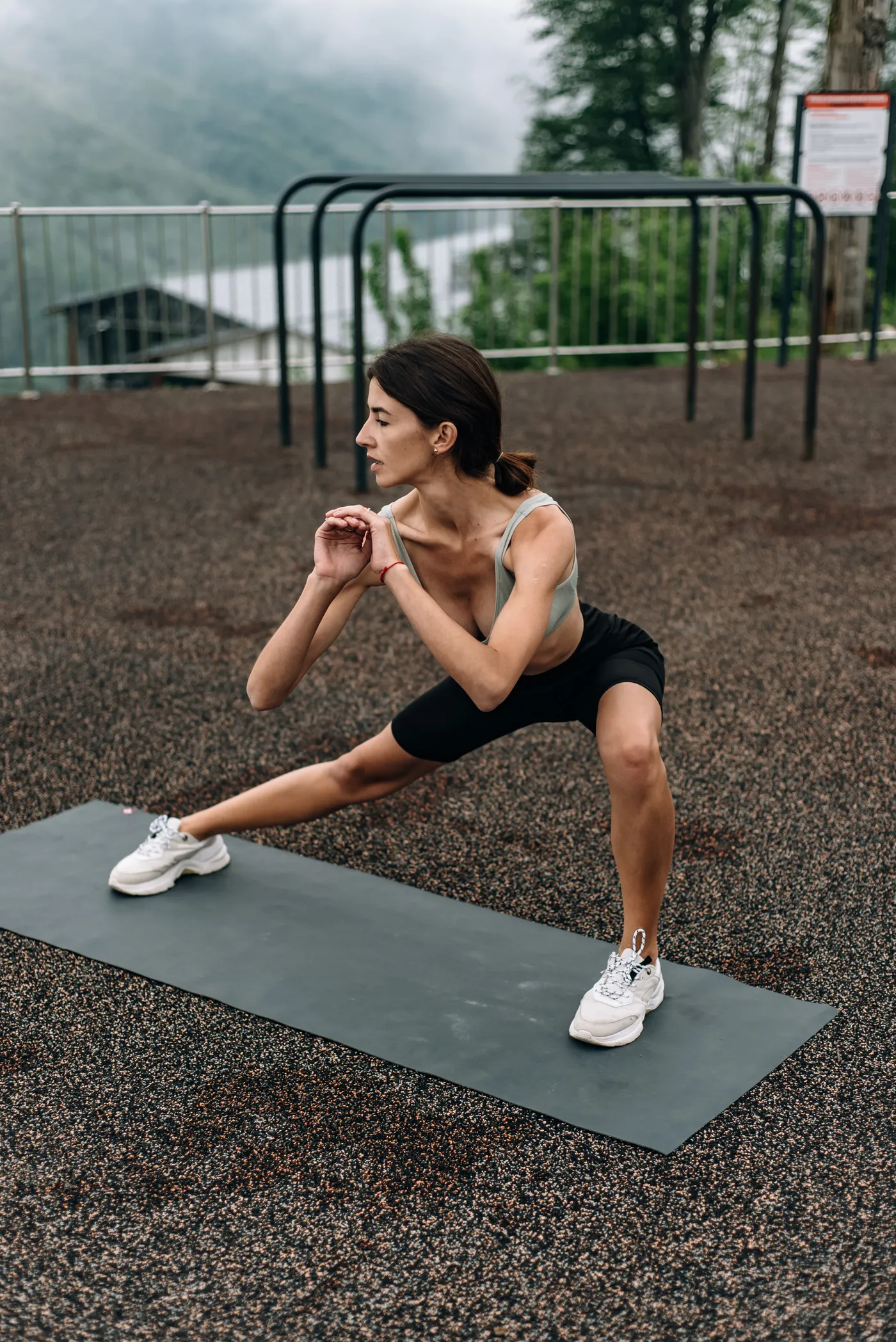
1. Supported 90/90 hip switches. Sit on the floor with both knees bent and the legs resting to one side. Rotate the knees toward the opposite side, using your hands behind you for balance if necessary. Move only through a comfortable range. Try two sets of six to ten slow transitions. This develops familiarity with hip rotation, but it is not a license to force a joint into a position it cannot reach.
2. Chair sit-to-stands. Use a stable chair, feet about hip-width apart. Lean slightly forward, press through the whole foot and stand without dropping the knees inward. Sit back under control. Begin with two or three sets of six to twelve repetitions. Adjust the chair height or use light hand support so each rep stays smooth. This is a practical strength base for people who find the floor too demanding at first.
3. Supported split squats. Hold a rack upright, countertop or rail. Step into a staggered stance, lower a short comfortable distance and rise through the front leg. Perform two sets of six to ten per side. As control improves, deepen the range gradually. A pad beneath the rear knee can make a half-kneeling transition more comfortable, but do not rely on a slippery cushion for balance.
4. Half-kneeling to standing. From a stable half-kneeling position beside a support, bring the front foot underneath you, lean the torso slightly forward and push up. Reverse the path slowly. Start with three to five controlled repetitions per side, using your hand as much as needed. This rehearsal is more directly related to rising from the floor than simply adding another heavy machine set.
These drills can be paired with ordinary resistance training. None requires expensive equipment, and none guarantees a perfect score. The goal is to make getting up a practiced, repeatable movement.
Funny Gym Shirts & Workout Gear
Funny gym shirts, tanks, hoodies and workout gear for lifters who like training hard.

Rack Panther – Squat Rack Superhero , Bros & Meme T-Shirt
Bring “Rack Panther” humor to your next gym day.

Swolebob Squatpants Gym | Funny SpongeBob Meme Muscle S Tank Top
Your gym-day look, with a playful “Swolebob Squatpants” twist.

Funny Squatbucks Gym | Starbucks Parody Workout | Leg D Hoodie
Bring “Squatbucks” gym humor to lazy days and post-workout plans.

Barbell Crossed Weights 45LB Plate Hardcore Crewneck T-Shirt
For laid-back days and powerlifting humor: “Classic Barbell Crossed Weights 45LB Plate”.

Pink Macaroon Kettlebell – Girly Strength Meme Decal fo Sticker
Stick a little “Pink Macaroon Kettlebell” humor on your favorite gear.


Funny Squat Game Gym | Squid Game Parody Muscle Shirt F Tank Top
Your gym-day look, with a playful “Squat Game” twist.

Funny Calisthenics Gym Hooded Pullover for Bodyweight L Hoodie
Bring “Calisthenics” gym humor to lazy days and post-workout plans.

Superhero Gym Strength Crewneck Pullover Sweater Gymbro T-Shirt
Show some gym-day personality with “Superhero Gym Strength”.

Hardcore Gains Gym | Funny No Pain No Gain Workout Deca Sticker
Put “Hardcore Gains” gym humor on your laptop, bottle, or gym gear.
A six-week progression for better floor transfers
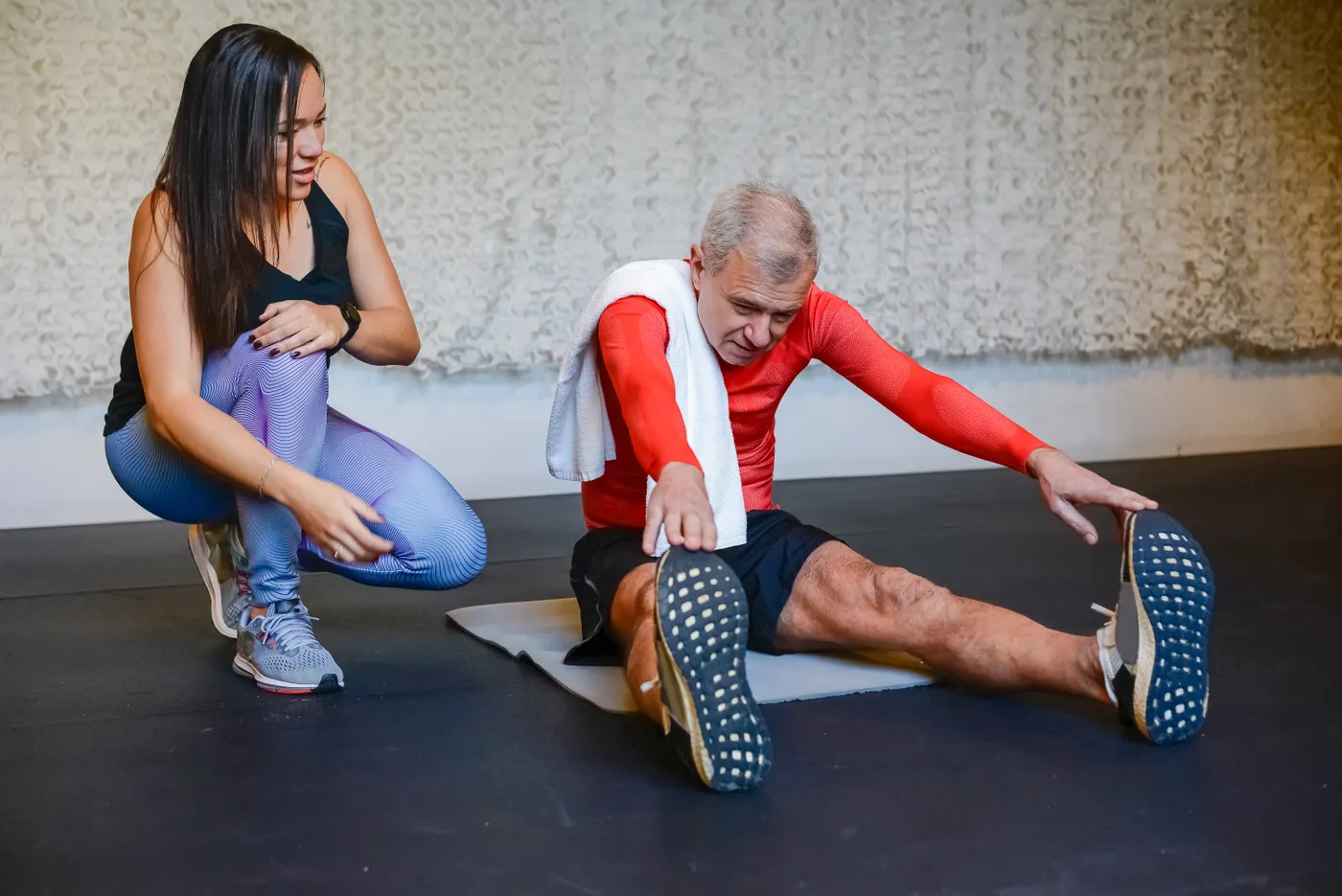
Train the skill two or three times per week, leaving at least a day between demanding leg sessions. Each practice can take fifteen to twenty minutes after a light warm-up. Keep normal strength training in the plan: stronger legs and hips provide useful capacity, while the floor drills teach you to use it in unfamiliar positions. The outline below is a starting point, not a rehabilitation prescription.
Weeks 1-2: make the route comfortable. Perform supported hip switches for two sets of eight, chair sit-to-stands for three sets of eight, supported split squats for two sets of six per leg and assisted half-kneeling rises for two sets of three per leg. Choose an easy enough variation that you could complete two or three more clean repetitions. Note which transition feels least coordinated.
Weeks 3-4: reduce assistance, not control. Add a few centimeters of comfortable split-squat depth, slow the lowering phase of chair stands and practice half-kneeling rises with lighter fingertip support. Keep the movement smooth. If fatigue makes the knees collapse inward or the trunk lurch, restore the previous assistance. Add brief supported single-leg stands for ten to twenty seconds per side if balance is the main limitation.
Weeks 5-6: connect the pieces. Practice moving from standing to half-kneeling to seated, then reversing the sequence. Use a hand or chair wherever needed. Try two or three complete controlled transitions, then finish with ordinary leg work such as squats, step-ups or hip hinges. Increase resistance only when the movement is consistent; an extra kilogram is not progress if the transfer becomes unstable.
At the end of week six, repeat the original baseline under similar conditions. A higher score is welcome, but smoother movement, less pain-free assistance and greater confidence are meaningful outcomes too. If symptoms worsen, stop the progression and seek an individualized assessment.
What a better score means for real-world fitness
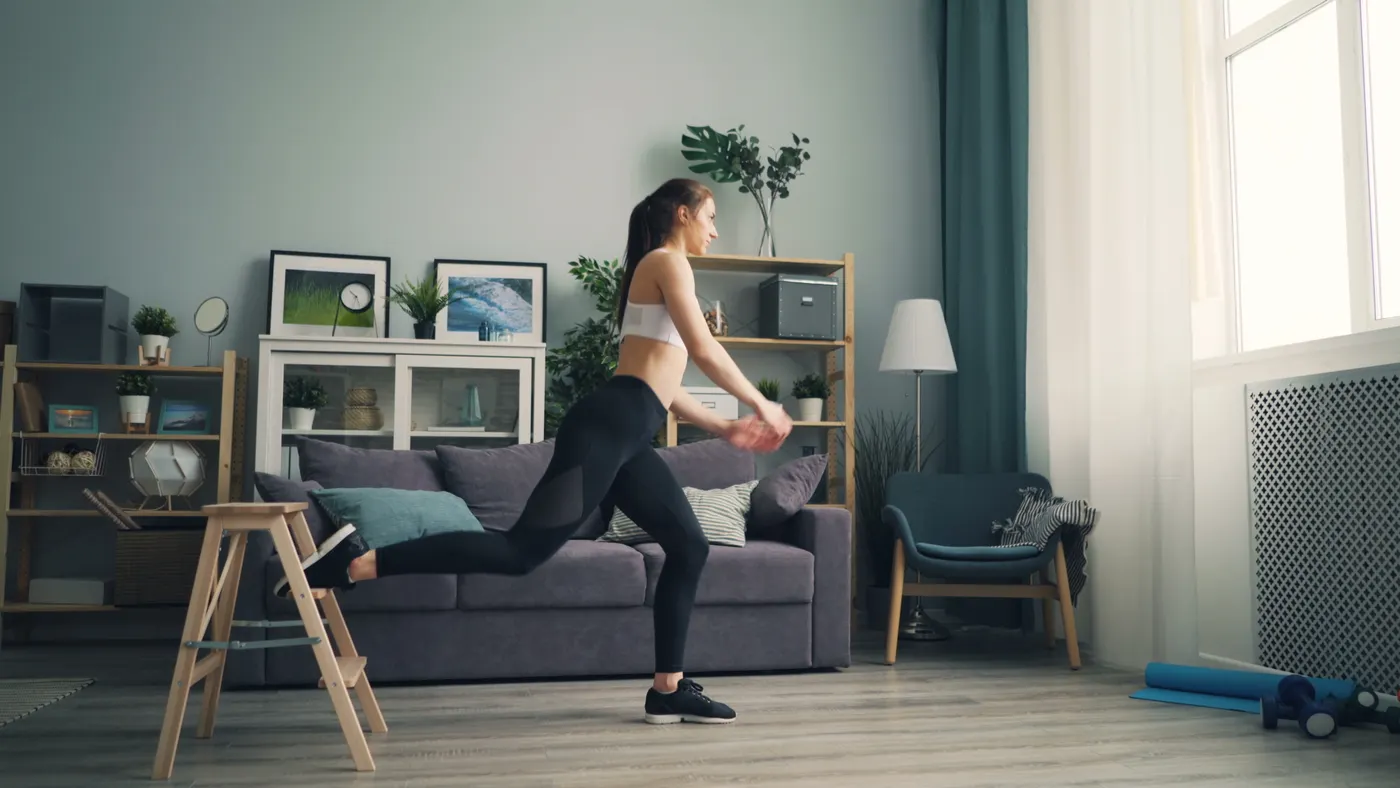
A floor sit-to-rise score captures a combination of strength, balance, flexibility, body control and practice. That is why it is interesting and why it must be interpreted carefully. Someone who improves from needing two support points to one has demonstrated a change in this task. They have not automatically improved every balance measure, eliminated fall risk or altered their long-term health prognosis.
The strongest training plan does not obsess over one number. Resistance exercise helps maintain strength. Controlled single-leg work and changes of position build balance and coordination. Comfortable hip and ankle mobility make the route more accessible. For older adults, established physical-activity guidance recommends muscle-strengthening work at least twice weekly and multicomponent balance and strength activity on three or more days. The exact exercises should match ability, comfort and medical circumstances.
Gym equipment can help but is optional. Dumbbells, a stable bench, a rack upright or a resistance band may make progressions convenient. A clear floor and a reliable support are enough to start. More complicated tools are not automatically better than practicing the movement you want to improve.
Most importantly, do not turn an observational survival association into a personal verdict. People differ in joint history, proportions and movement experience, and the published cohorts were not experiments proving that raising a score extends life. Use the test as a periodic check of practical independence. If you can get down to the floor, move comfortably and rise with confidence, you are training a skill that matters well beyond the gym.