Advertising disclosure: This page includes affiliate product links that may earn us a commission, as well as products from our own store.
Safety Squat Bar vs Straight Bar: What 15 Lifters Reveal About Hip and Knee Loading
A safety squat bar often feels easier on the shoulders but surprisingly demanding on the upper back. Does that mean it is better for the quadriceps, gentler on the knees or simply a different way of loading a squat? A controlled comparison of 15 trained men offers a useful answer, provided we separate measured joint mechanics from claims about muscle growth or injury. Here is what the numbers show, how to set up each lift and how to introduce both bars without confusing load with progress.
1. What the 15-lifter comparison actually measured
Two squat bars can feel quite different even when the plates look similar. A conventional straight bar sits directly across the upper back and requires a grip behind the body. A safety squat bar uses a padded yoke, forward-facing handles and offset sleeves. Those features change how the load sits relative to the lifter, but they do not automatically make one exercise superior for every goal.
In a controlled crossover comparison, 15 recreationally trained men performed parallel squats with both bars at 85% of the one-repetition maximum established for that particular bar. Researchers tracked joint angles and estimated joint moments during the repetitions. The participants were lifting challenging loads, not performing an eight-week muscle-building program. Consequently, these measurements reveal mechanical differences within a squat session rather than which bar produces more muscle over months.
Average lifted loads were approximately 123.2 kilograms with the traditional bar and 117.2 kilograms with the safety bar. The smaller safety-bar load was not evidence that it is ineffective; it shows why the numbers on the plates should not be compared directly when switching implements. Use a separate training max, check depth and effort, and keep the same squatting standard before deciding how hard a new bar feels.
Both exercises asked the hips, knees and trunk to control an external load through a substantial range of motion. What differed was where the larger motion and joint torque appeared, and that distinction is much more useful than naming a universal winner.
2. Hip torque changed, while measured knee kinetics stayed similar
At the hip, the conventional bar produced a larger peak flexion angle: roughly 129.3 degrees compared with 122.1 degrees using the safety bar. Peak hip extensor torque also favored the straight bar, approximately 2.54 versus 2.40 newton-metres per kilogram of body mass. That combination suggests the traditional setup in this experiment asked somewhat more of the hip-extensor system under the chosen conditions.
The safety bar showed a slightly greater maximum knee flexion angle, about 116.8 versus 115.7 degrees. The difference was statistically detectable in these participants, but numerically it was only around one degree. More importantly, the investigators did not detect a significant difference in their measured knee kinetics. Greater knee bend therefore should not be translated into a guarantee of more quad growth or more knee stress.
The practical takeaway is not that a safety bar magically isolates the quadriceps. Your stance, squat depth, heel elevation, torso proportions and ability to brace still shape the movement. Strong knees are exposed to loading in both variations, and a person with symptoms needs their own tolerable range and advice rather than an injury-prevention promise based on a single acute biomechanics trial.
Earlier comparisons have also reported more upright trunk positioning with the safety bar and a lower maximum lifted weight. One study of 32 men found conventional-bar one-repetition maximums around 11.6% higher while muscle activation and bar velocity were broadly similar at relative intensities. These findings are compatible: bar design changes the mechanics, but neither acute result establishes which one grows the legs faster.

Equipment Worth Exploring
Explore equipment, accessories and gear from our carefully selected range.

Safety Squat Handles
Barbell squat handles that reduce shoulder positioning demands during high-bar squats.

GymPin Squat Wedges
Non-slip 15-degree squat wedges help elevate the heels for deeper quad-focused squats.


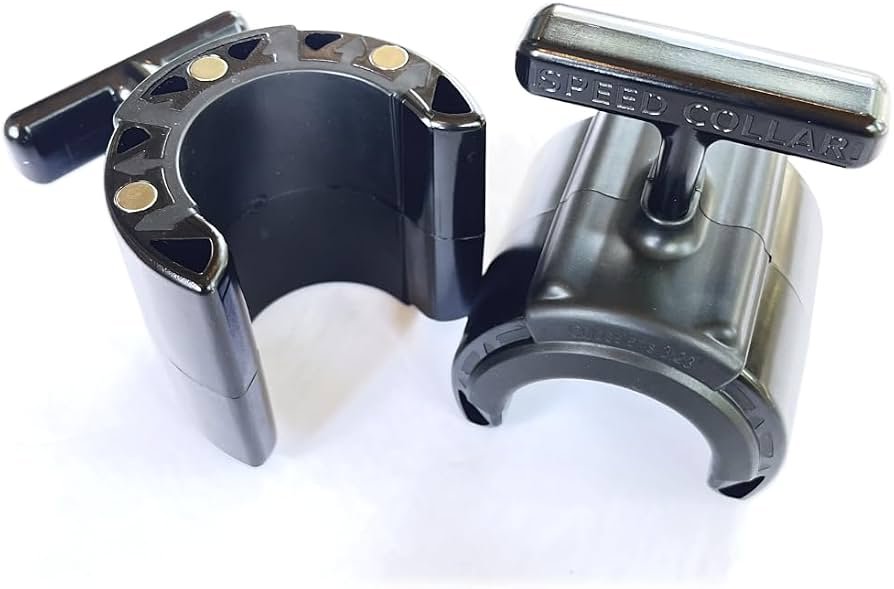
Speed Collar
Quick-release collars designed to secure weight plates on standard two-inch Olympic bars.


Competition Plates
Competition-style bumper plates for Olympic lifts and loaded strength training.

Multi Pull Smith Rack MPHR-780
All-in-one rack with a Smith machine, functional trainer, lat pulldown and low row.

Foldable Wall Rack
Wall-mounted folding squat rack designed to save floor space between workouts.
3. Set up both versions so the comparison is fair
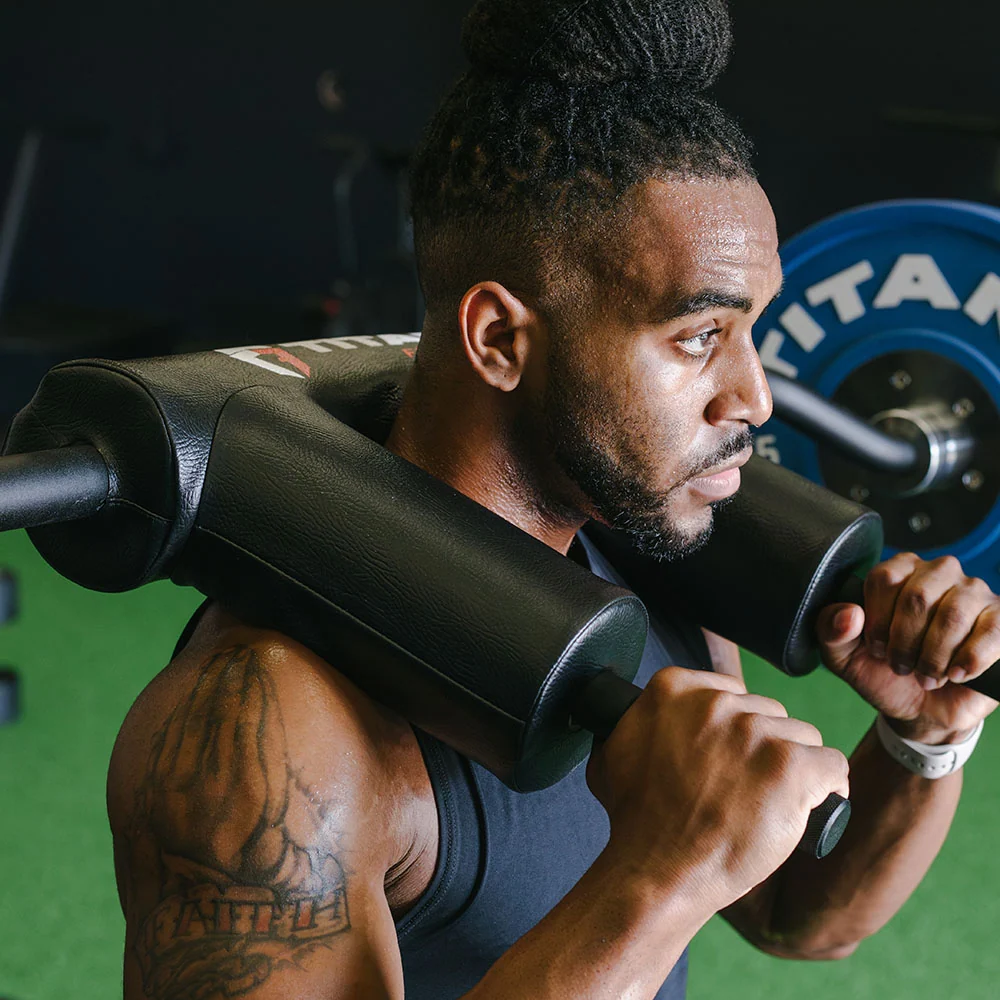
Start with the same rack safety principles for either bar: set J-hooks just below the standing bar position and place spotter arms or straps high enough to catch a failed repetition without interrupting full planned depth. Check the safety bar’s actual unloaded mass rather than assuming it equals a 20-kilogram straight bar. Camber shape, sleeve spacing, shoulder pad thickness and rack clearance vary between products.
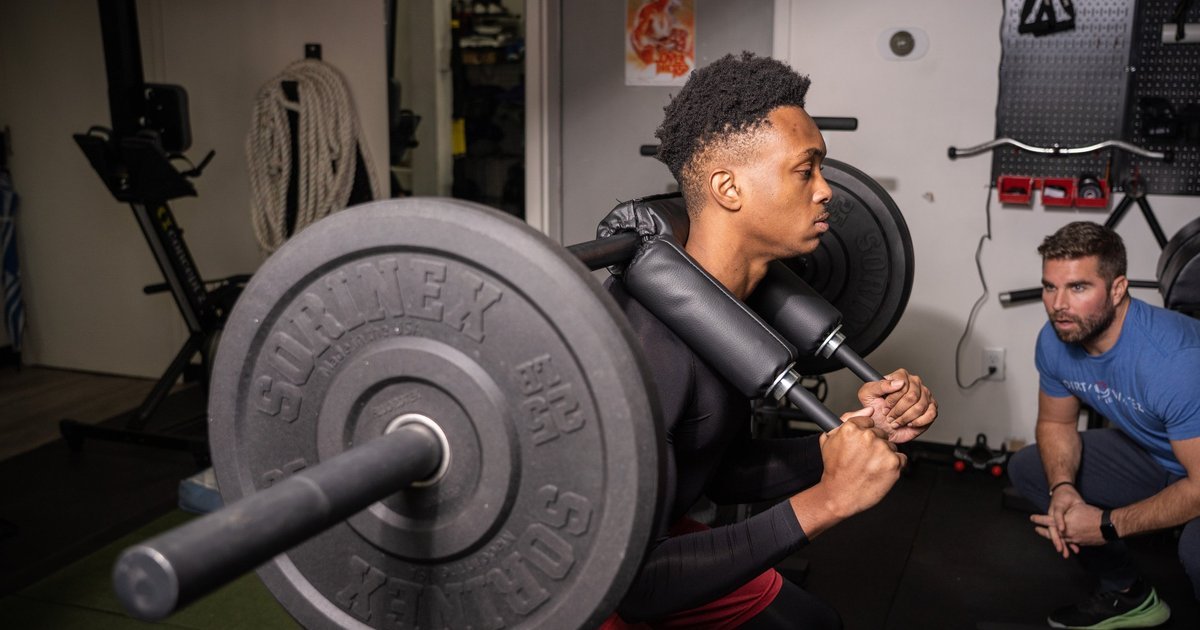
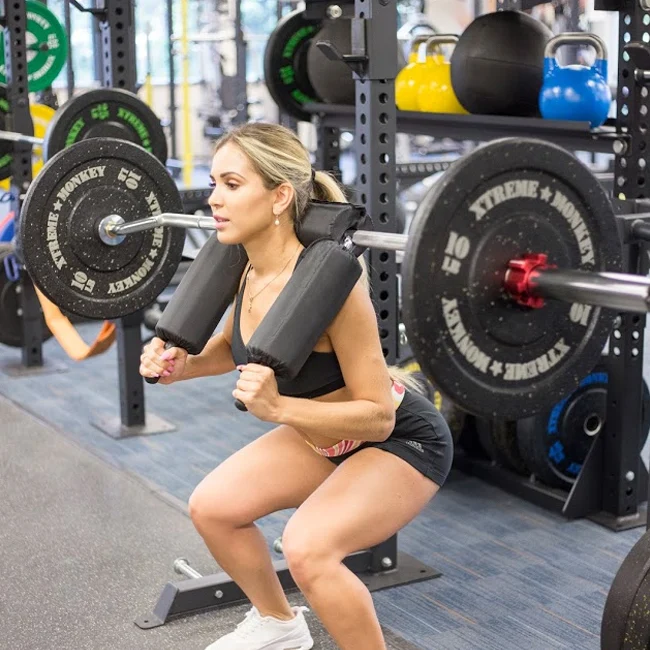
For a safety squat bar, centre the padded yoke across the upper back rather than letting it ride up onto the neck. Hold both forward handles without wrenching them downward to force the torso upright. Step back deliberately, take a stable foot position, inhale to brace around the abdomen and descend between the legs while maintaining pressure through the whole foot. The cambered load may try to pitch the upper body forward, so a controlled upper back matters.
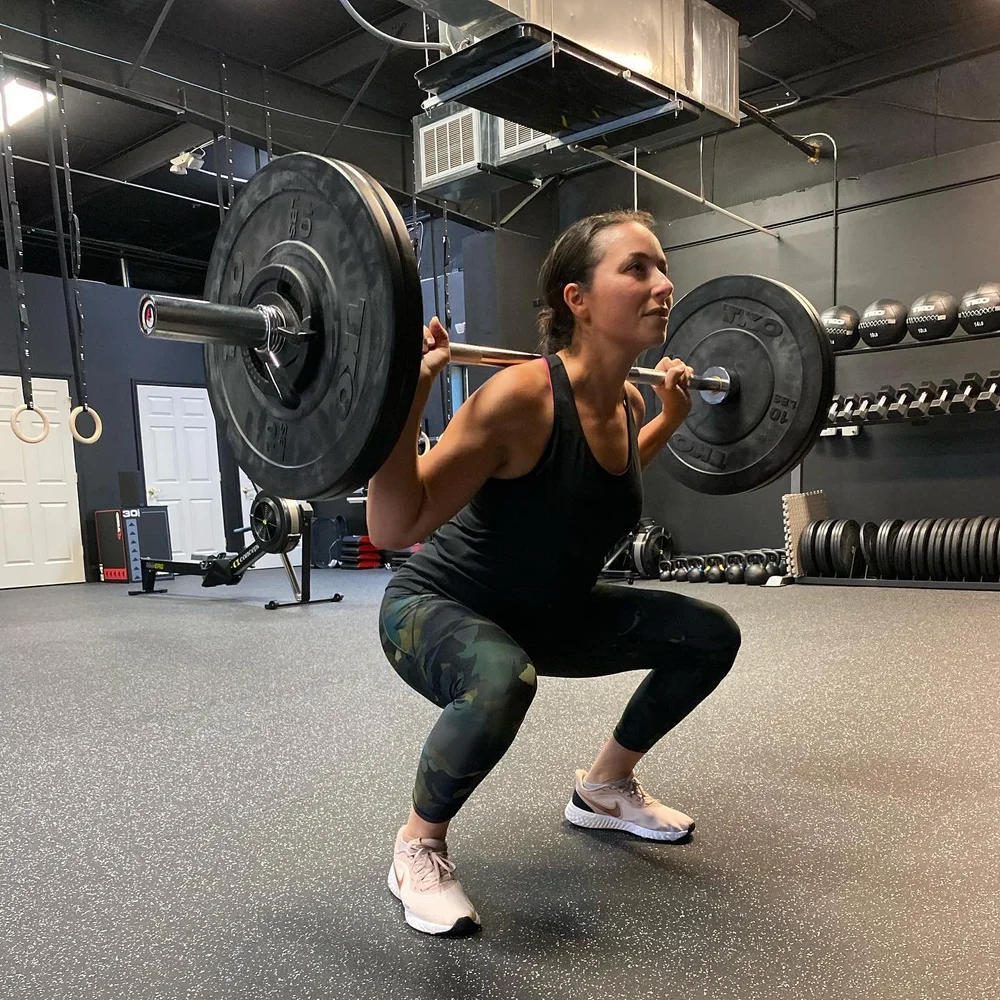
On a straight bar, create a secure muscular shelf on the upper back and take a grip width your shoulders and wrists can tolerate. Do not sacrifice shoulder comfort to imitate another lifter’s grip. Move the bar vertically over the midfoot as consistently as your proportions allow, allow the knees to travel naturally, and keep the torso angle repeatable across repetitions.
Keep the comparison honest by filming two or three warm-up repetitions from a side angle at similar relative effort. Compare depth, foot balance and the path of the bar rather than judging posture from one still photograph. If the new bar changes the range you can use, lower the load and rebuild the pattern before drawing a conclusion about strength.

Leg Day Shirts & Workout Gear
Leg-day gym shirts and workout gear for lifters who never skip squats, lunges and lower-body punishment.


5 Plates Squat Club Meme – Top T-Shirt
Bring “5 Plates Squat Club” humor to your next gym day.

Leg Day Is Calling You Sweater Squats & Deadlifts T-Shirt
Add a playful “Leg Day Is Calling You” touch to your casual rotation.


Squat Here | Edgy Workout Decal for Water Bottles & Gym Sticker
A fun “Squat Here” touch for bottles, laptops, and lockers.

Legendary Leg Day – Squat Meme Hooded Pullover Hoodie
Keep it laid-back with a little “Legendary Leg Day” attitude.

Coffee Shots & Heavy Squats for Caffeine Lovers, Liftin T-Shirt
Show some leg-day attitude with a playful “Coffee Shots & Heavy Squats” tee.

Heavy Metal Skeleton Squat for Powerlifters, Bodybuilde Hoodie
Show off your metalhead humor in a laid-back “Heavy Metal Skeleton Squat” hoodie.

Squat Queen Gym | Funny Burger King Parody Workout Deca Sticker
Bring “Squat Queen” attitude to your water bottle or laptop.

Squatbucks Gym | Funny Starbucks Parody Muscle Shirt | Tank Top
Train hard, laugh a little, and rep “Squatbucks”.
4. When to favor the safety bar, and when the straight bar still wins
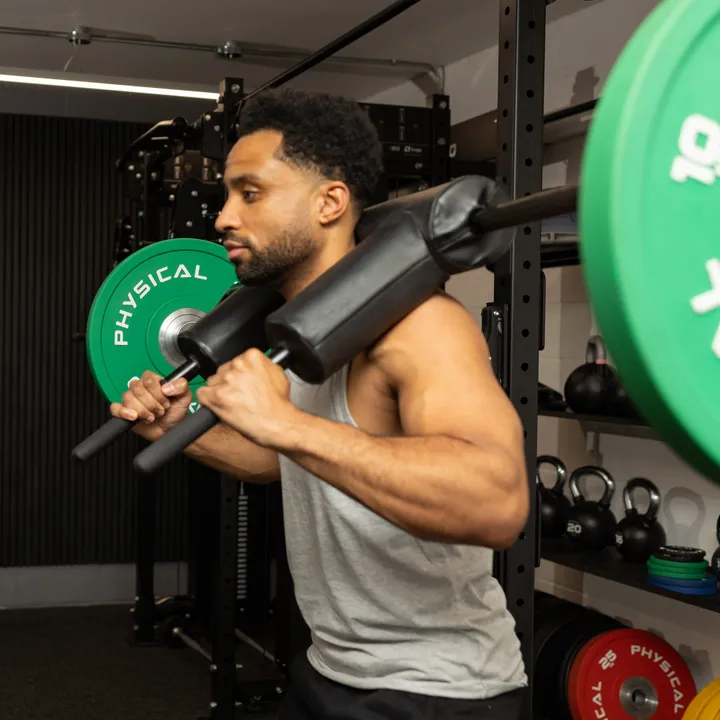
The safety squat bar is a useful option when the forward handles make squatting more comfortable for limited shoulder rotation, or when a lifter wants a different bracing and upper-back challenge without abandoning heavy bilateral leg work. That is a potential practical advantage, not a diagnosis or guaranteed treatment for a painful shoulder. If either variation provokes symptoms, reduce load and range or stop and seek qualified assessment.
A traditional back squat remains highly relevant for lifters tested on that exact movement, including athletes whose competitions require a straight bar. Its higher load in these comparisons does not prove an across-the-board hypertrophy advantage. It mainly means that practice and loading specificity matter: strength tested with a straight bar is best developed with sufficient straight-bar exposure.
For compact home gyms, a safety bar creates another storage and rack-clearance problem. Verify overall length, sleeve compatibility, available collar space and whether the bar clears the uprights throughout the movement. A standard barbell, stable rack, adjustable safety catches, collars and suitable plates form the basic setup. Accessories such as squat wedges or add-on squat handles can change comfort, but an attachment is not necessarily mechanically equivalent to a purpose-built cambered safety bar.
If neither bar is comfortable or practical, a controlled belt-squat variation, split squat, leg press or squat machine can still supply demanding leg work. Select those because they fit the training goal and available space, not because the study found them superior. The equipment selection below emphasizes real racks, bars, plates and lower-body alternatives; check compatibility before ordering.
Equipment Worth Exploring
Explore equipment, accessories and gear from our carefully selected range.


Squat Harness
Wearable harness for hands-free cable squats, sled work, and lower-body training.

Belt Squat Collar
Heavy-duty collar adapter for compatible belt-squat and landmine bar setups.

Studio V-Squat
Plate-loaded V-squat machine for supported lower-body strength training.

Leg Press/Hack Squat BPR-790
Convertible 45-degree leg press and hack squat machine with a broad footplate and band pegs.

Compact Leg Press CLP-700
Compact reverse-style leg press with a moving seat carriage and an adjustable footplate.

Leg Extension/Curl BCO-780
Leg extension and lying leg curl combo with plate loading, band pegs and a cable-loading option.


Rubber Hex Dumbbells
Rubber-coated hex dumbbell pairs with a stable shape for home and commercial strength training.

5. A six-week way to add the safety bar without losing your squat practice
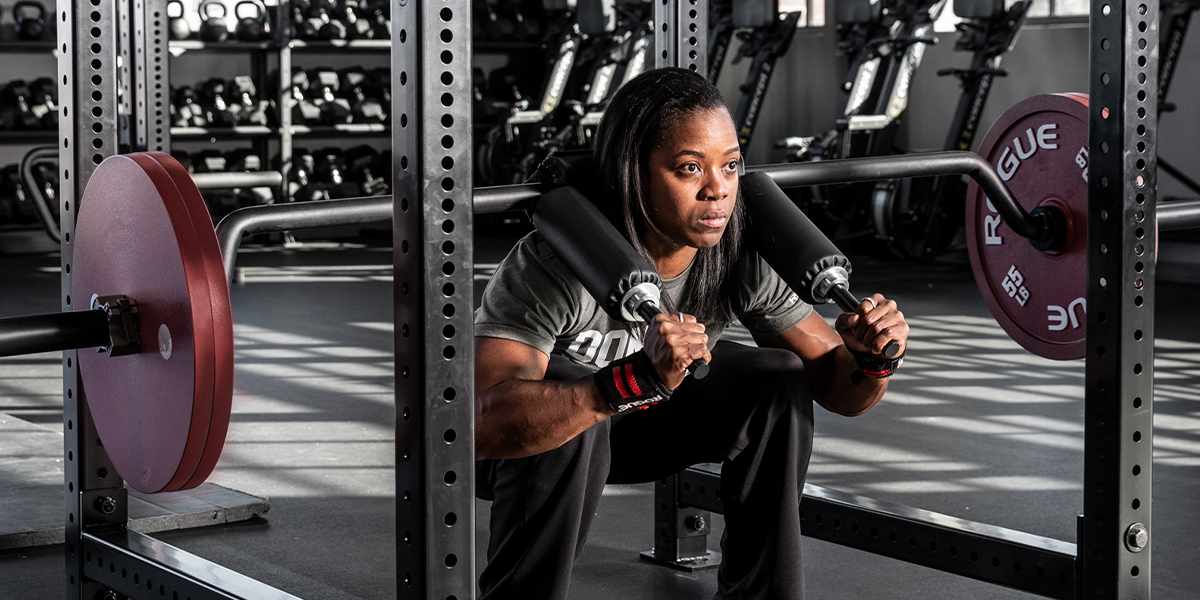
During weeks one and two, treat the safety bar as a new lift. Start with two sessions per week: one conventional squat session at three sets of four to six repetitions and one safety-bar session at two or three sets of six to eight. Keep about three repetitions in reserve on the new bar. Establish repeatable depth and bracing, and avoid matching the weight you use with a straight bar simply for pride.
In weeks three and four, keep the competition-specific or preferred primary squat first. Add one safety-bar set only if the previous week recovered well and technique remains consistent. For example, use three sets of five with your main squat and three sets of six to eight with the safety bar later in the week. Increase load in modest jumps when all reps are smooth, rather than assuming the two bars should progress at identical rates.
In weeks five and six, choose which variable deserves attention. A lifter targeting straight-bar maximum strength can retain the conventional squat as the heavy exposure and use the safety bar for moderate-repetition volume. Someone simply seeking hard leg work may alternate which variation leads each week. Use squats for their training role, then add a limited amount of leg extensions, split squats or hinges according to the muscles that still need work.
Watch for signs of excessive fatigue: a suddenly slower warm-up, shortened depth, trouble keeping the upper back set, or soreness that compromises the next session. Reduce the secondary movement before sacrificing quality on the primary lift. The six-week outline is a coaching template, not a protocol tested in the 15-men study.
The strongest conclusion is modest but actionable: the traditional bar in the experiment allowed slightly heavier weights and greater hip-extensor demand, while the safety bar changed positioning and preserved substantial knee demand. Choose the tool that lets you squat productively, progress safely within your abilities, and measure improvement against the same version of the movement.