Advertising disclosure: This page includes affiliate product links that may earn us a commission, as well as products from our own store.
Bayesian vs Preacher Curls: What 15 Men’s Ten-Week Trial Revealed
Bayesian curls put your working arm slightly behind your torso. Preacher curls put your upper arm in front of you on a pad. Both train elbow flexion, but their very different shoulder positions have inspired one of the more persistent arm-day debates: which one actually grows more biceps?
A controlled ten-week comparison offers a more useful answer than the usual exercise ranking. Fifteen young men trained one arm with a cable preacher curl and the other with a cable Bayesian curl. Both approaches increased muscle thickness and strength. The measured percentages looked a little different, yet the researchers did not detect a statistically significant advantage for either exercise.
That distinction matters if you are choosing a curl for your own program. This guide explains the numbers without declaring a winner, shows how to set up both movements, and gives you a practical six-week progression that works whether your gym has a preacher bench, an adjustable cable station, or both.
What the Fifteen-Man, Ten-Week Comparison Actually Tested
The exercise comparison was unusually direct: each participant trained both conditions, one with each arm. Shoulder position differed while the cable resistance profiles were matched as closely as the protocol allowed. The preacher condition used about fifty degrees of shoulder flexion, placing the upper arm forward; the Bayesian condition placed the shoulder in extension, moving that arm behind the body. That design helps separate the influence of exercise position from the broad differences between unrelated machines.
Participants trained twice weekly for ten weeks, performing three to five sets in an eight-to-twelve-repetition maximum range. The study measured biceps brachii thickness at proximal, middle and distal arm sites and also assessed the brachialis. Maximum strength was tested with each of the trained cable-curl variations. Using ultrasound at multiple points is more informative than measuring only an arm circumference, which can shift with hydration, body fat and pump.
An important detail is that these were cable variations, not a classic free-weight EZ-bar preacher curl versus a dumbbell moved behind the torso. Cable direction and where resistance is hardest can meaningfully change an exercise. If you switch from a cable preacher setup to a plate-loaded preacher machine, you should not expect the loading curve to be identical merely because your elbow rests on a pad.
The group was also small and consisted of young men without an extensive lifting history. Their progress describes what happened under a particular supervised protocol, not an immutable law about the best biceps movement for experienced bodybuilders, women, people with sensitive elbows or everyone training with different equipment.
The Actual Growth and Strength Results
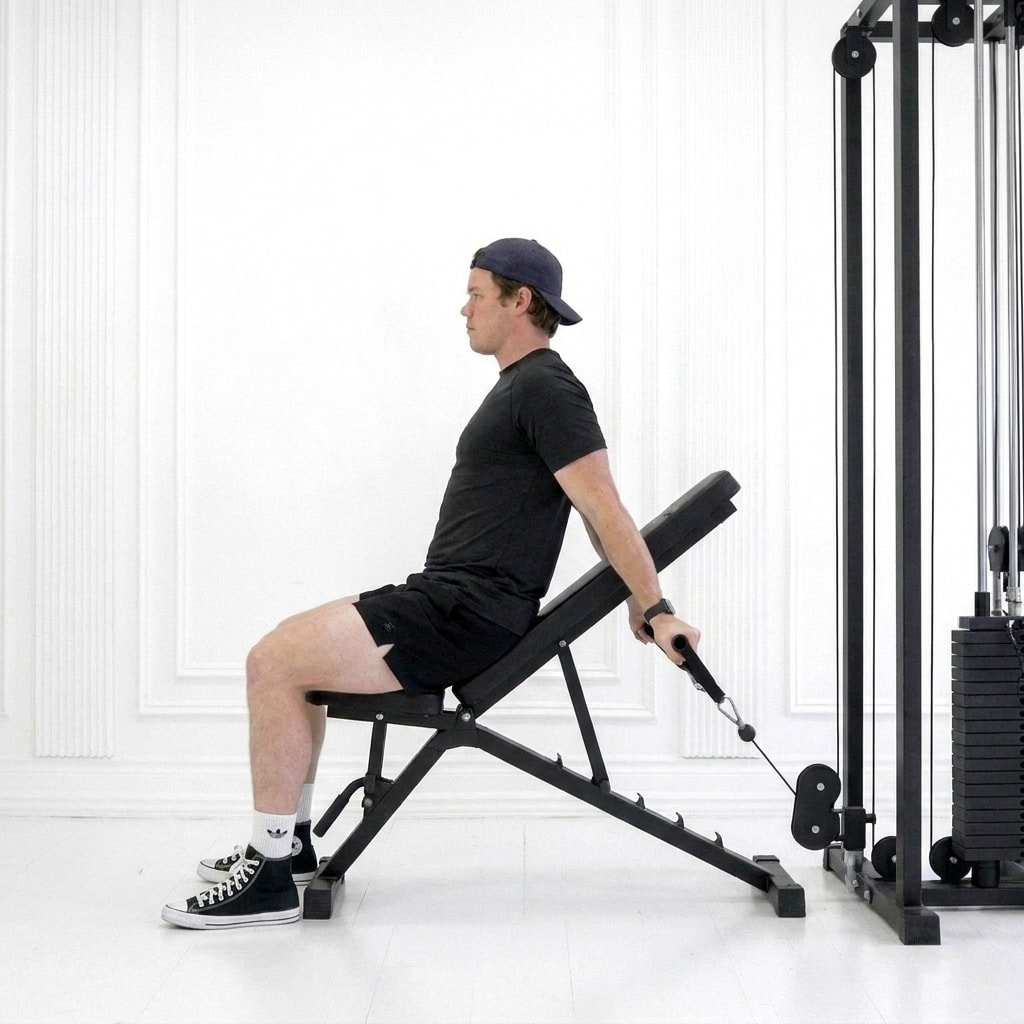
Both exercises produced measurable growth throughout the tested parts of the biceps. The preacher-trained arms increased biceps thickness by roughly six to seven percent at the reported sites. The Bayesian-trained arms increased by around nine percent. Those numbers are tempting to turn into a winner-versus-loser graphic, but the between-exercise differences were not statistically significant. Numerically larger gains do not automatically establish a reliably superior exercise, especially with only fifteen people.
The brachialis, another elbow flexor sitting beneath the biceps, increased by about ten percent in the preacher condition and eight percent in the Bayesian condition. Once again, the differences between conditions did not establish superiority. Nor did the measurements show convincing evidence that one regional area of the biceps was preferentially enlarged over another by changing shoulder angle in this setup.
Maximum strength improved by approximately twenty-eight percent on the trained preacher exercise and thirty-seven percent on the trained Bayesian exercise. Those percentages reflect improvement in each movement’s own test. The results do not prove that Bayesian curls transfer more to heavy barbell curls, chin-ups or other tasks. Strength is partly specific to the exercise, range, familiarity and way it is tested.
A separate later cable-curl experiment with twenty-four participants also compared shoulder-position approaches over ten weeks and did not establish a meaningful growth advantage for the more extended position. That does not prove the exercises are perfectly interchangeable in every circumstance. It does strengthen the practical point that a few extra centimeters of shoulder extension are not a guaranteed shortcut to a larger arm. Consistent hard training and sensible load progression remain the main priorities.

Equipment Worth Exploring
Explore equipment, accessories and gear from our carefully selected range.
VOLTRA
Compact digital cable trainer with smooth, adjustable resistance.

Go-Tone Pro
Portable digital cable trainer with up to 66 lb (30 kg) of adjustable resistance.

VForce Wall Trainer
Space-saving wall-mounted functional trainer with pivoting cable arms and variable resistance ratios.

VForce 2IN1
Half rack and pivot-arm functional trainer with switchable 1:1 and 2:1 pulley ratios.

VForce 3IN1
All-in-one rack combining an adjustable Smith machine, functional trainer, and free-weight station.

GymPin Ergo Handles
Pair of ergonomic cable handles shaped for comfortable triceps and pulling exercises.
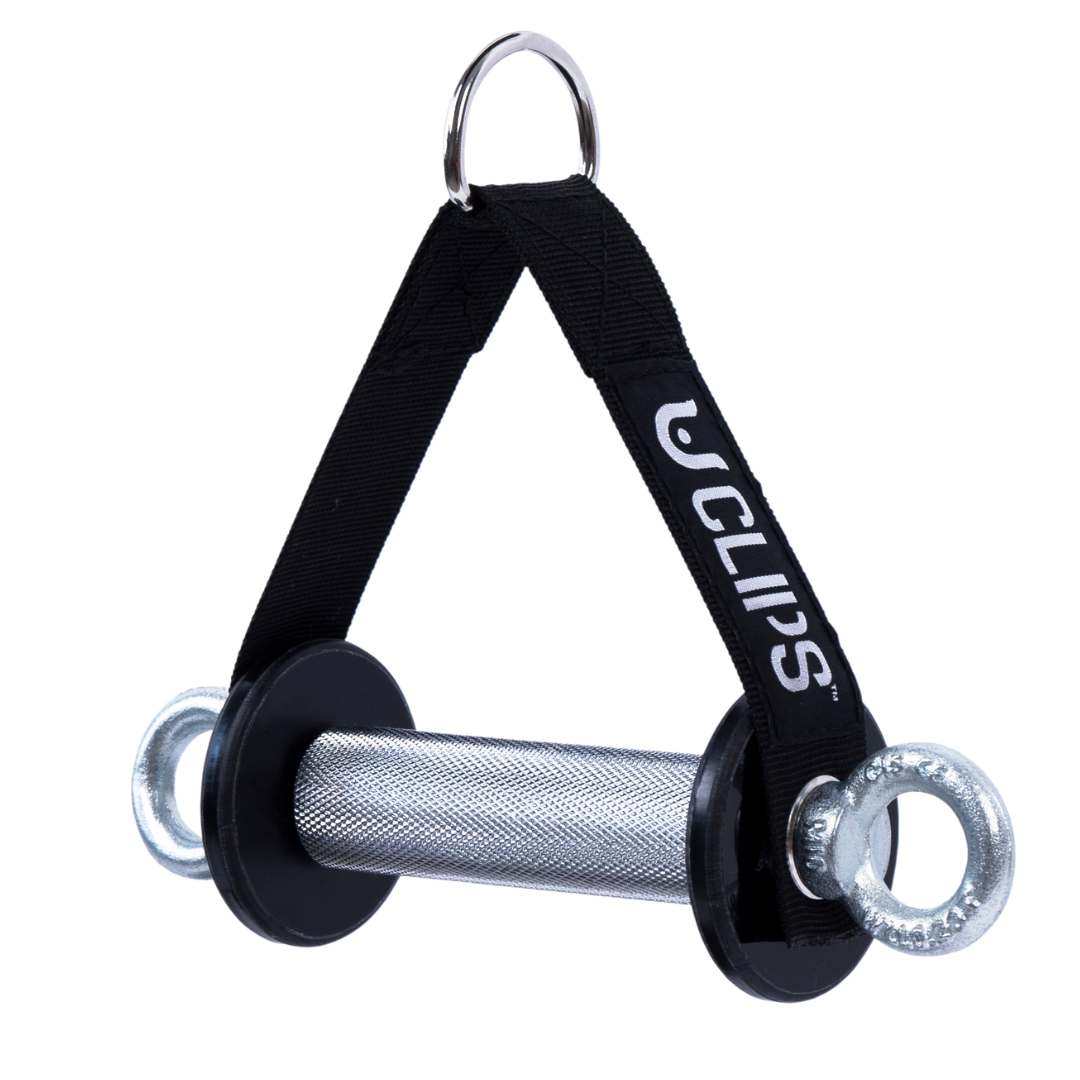


GymPin D Handle Bar
Multi-use steel D-handle bar for cable rows, pulldowns and other cable exercises.

Original GymPin
Adds Olympic plates to compatible cable-machine weight stacks for extra resistance.
Why Shoulder Position Feels Different Without Guaranteeing More Growth
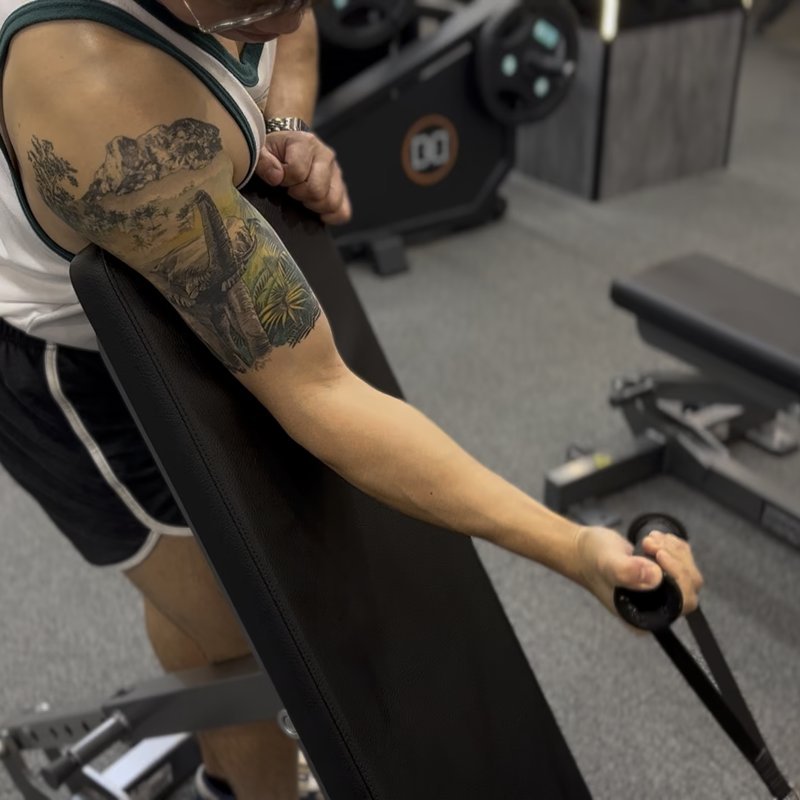
The biceps brachii crosses both the shoulder and the elbow. Bringing your upper arm behind your trunk generally changes its length at a given elbow angle; moving the upper arm forward changes that relationship. You can feel the difference immediately when you attempt a light behind-the-body cable curl versus a curl performed with the arm braced in front. But perceived stretch or tension is not a direct meter of long-term muscle growth.
Other variables travel with the setup. A low cable pulley, the distance you stand from the stack, the angle of the cable against your forearm and the point where you end the rep all alter the torque you must produce. A preacher bench limits body movement, but the pad also changes how comfortably you can reach the bottom. A Bayesian curl may encourage shoulder drift or a rolling torso if you choose more weight than you can control.
That is why the matching of resistance profiles in the ten-week comparison matters. When overall loading, effort and the important movement variables were controlled, altering shoulder position alone was not enough to demonstrate a clear growth advantage. This does not make exercise mechanics irrelevant; it means the simple claim that more shoulder extension must equal more biceps gain is too strong.
Use the variation that lets you repeatedly load the elbow flexors through a comfortable, deliberate range. Record your actual pulley height, bench angle and handle position so sessions are comparable. If one setup allows smoother repetitions, less compensation and fewer irritated joints, those are substantial advantages even if a single study cannot label it the hypertrophy champion.
Set Up Bayesian Cable Curls With a Repeatable Cable Path
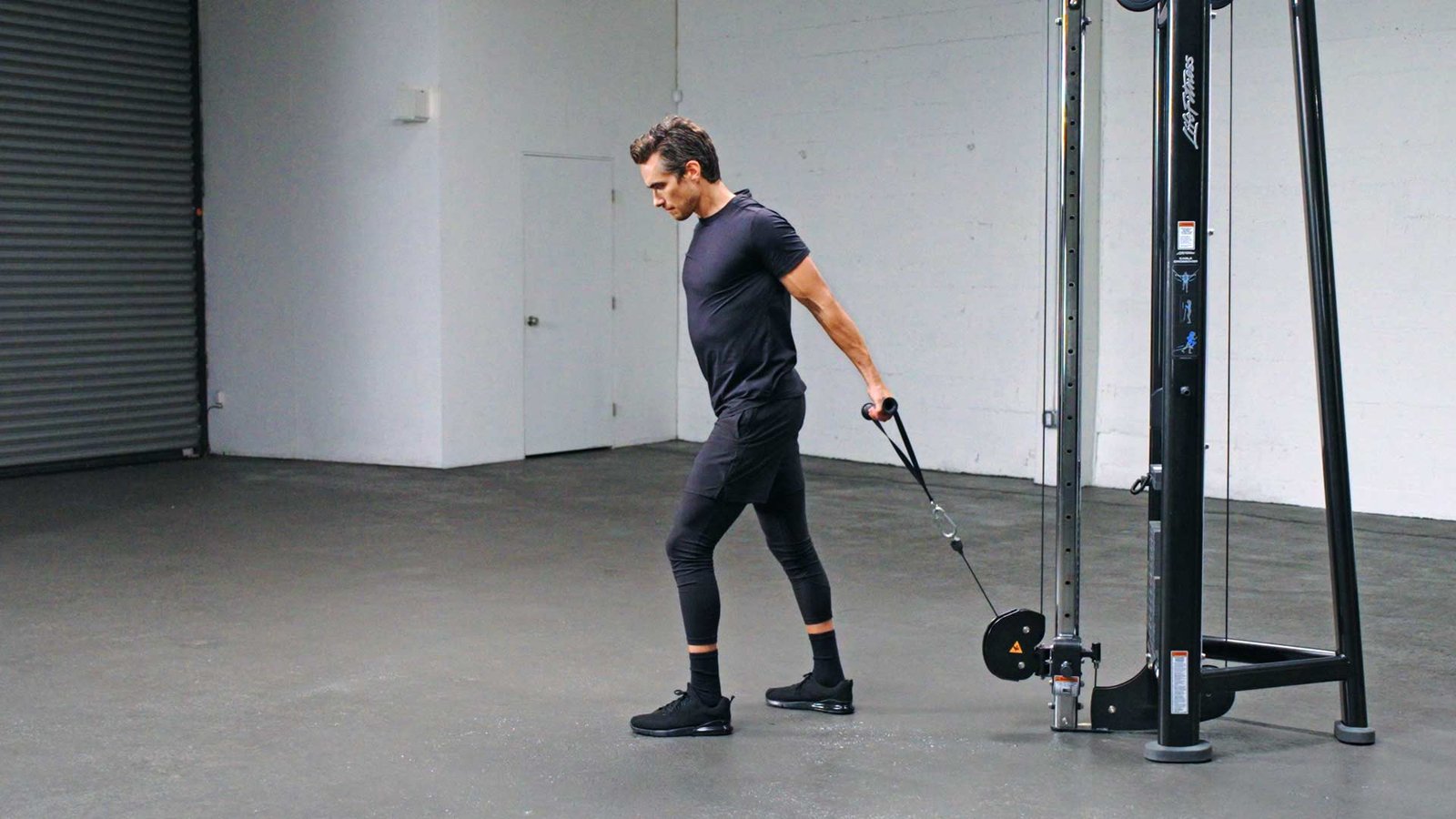
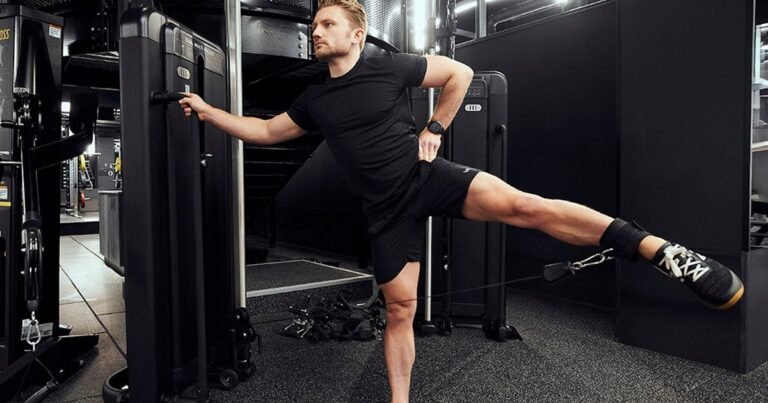
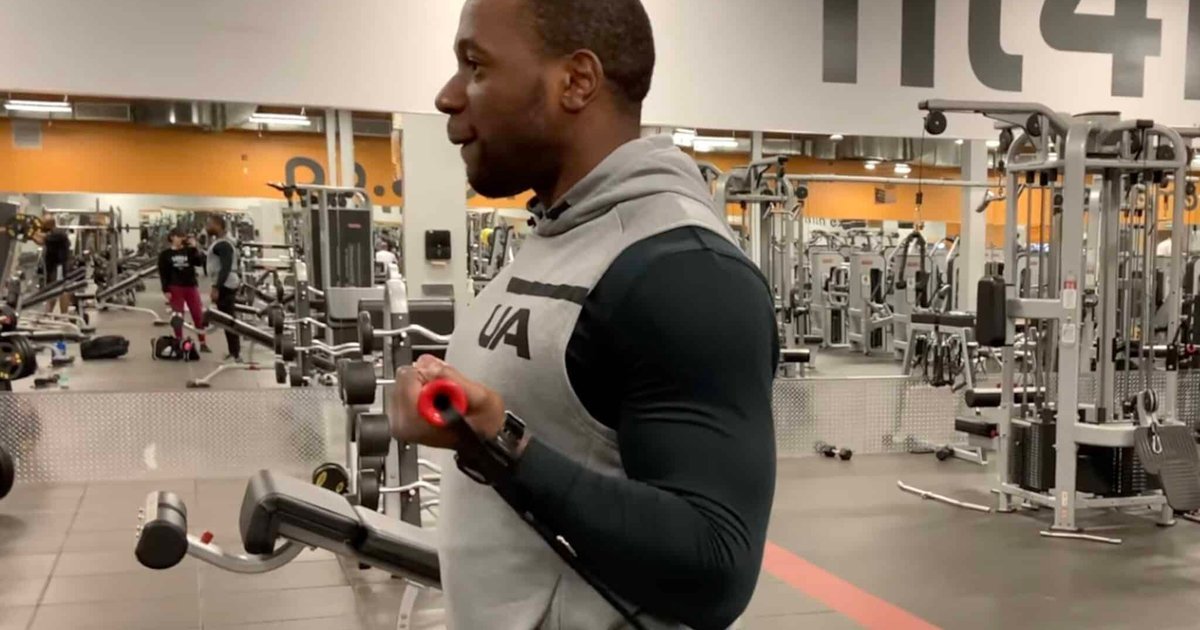
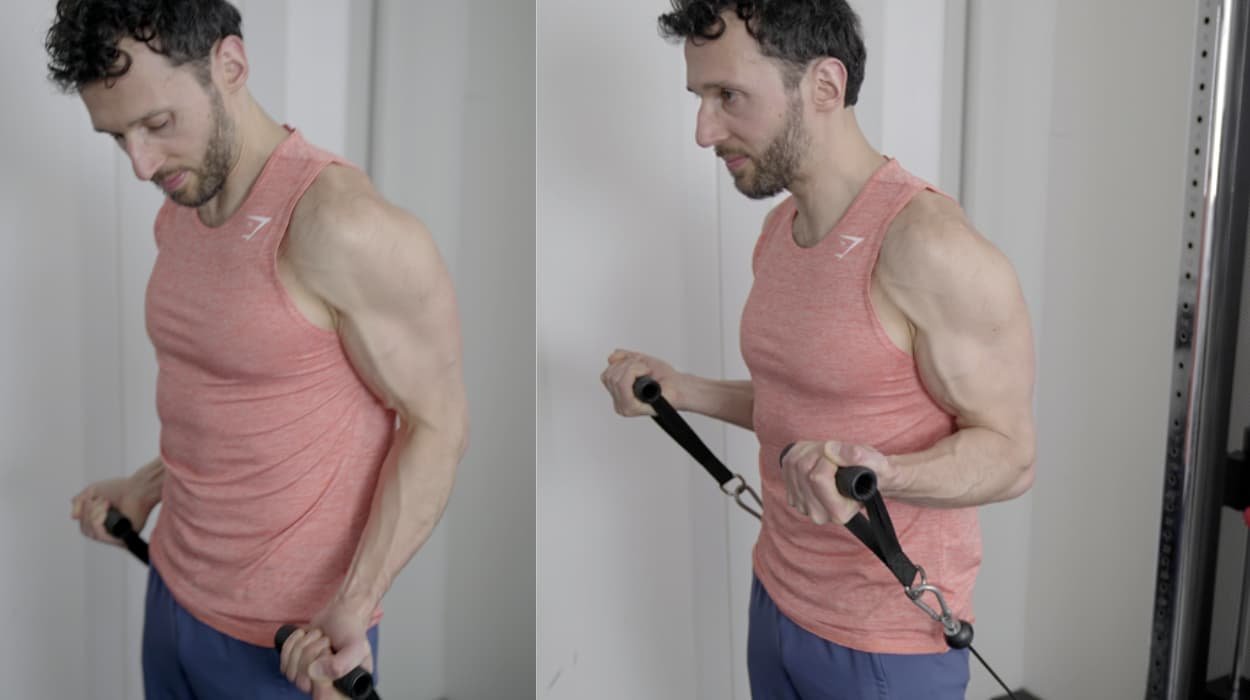
Attach a single handle to a low pulley. Face away from the machine, grasp the handle with your palm turned upward, and step forward until the cable draws your arm gently behind your torso. The shoulder should be slightly extended, not cranked into an extreme stretch. Keep your rib cage stacked over your pelvis and your feet stable. A staggered stance is useful if the cable tries to pull you backward.
Start each repetition with the elbow nearly straight while maintaining a comfortable bend instead of aggressively locking the joint. Curl your hand toward your upper arm without swinging the elbow far forward. At the top, the cable should still have controlled tension and your shoulder should not roll forward to finish a rep that your biceps can no longer complete. Lower over two or three seconds if that helps you retain the same path.
Pay attention to the line of pull. If the handle brushes your hip, step sideways a little rather than twisting your wrist into an awkward path. If the cable rubs the bench, rack or your clothing, change the station geometry. A pulley position that looks identical in a photograph may feel different on a short-tower and a full-height cable machine.
Begin with a load you could curl for two additional strict repetitions. Perform a short practice set on each side, then choose the same quality standard for the working sets. Switch arms in a consistent order, but do not assume the weaker side should use a different movement just to match the stronger arm’s numbers. Keep the load, repetitions and movement quality visible in your log.

Bodybuilding Shirts & Workout Gear
Bodybuilding shirts, tanks and gym gear for lifters chasing muscle, size, symmetry and the pump.


Mind Muscle Perfection Embroidered Brain and Biceps Gym Hat
A playful “Mind Muscle Perfection Embroidered Dad” cap for workouts and weekends.

Dost Thou Even Curl Tank
Bring “Dost Thou Even Curl Medieval Knight Bicep” humor to your next lifting session.

Micro Biceps Club President Gym | Funny Workout Decal | Sticker
Stick a little “Micro Biceps Club President” humor on your favorite gear.


Muscle Mountain – Bicep Mountain Meme Vest Muscle Shirt Tank Top
Add some lifting attitude to training with “Muscle Mountain”.

Make Preacher Curls Strict Without Punishing the Elbows
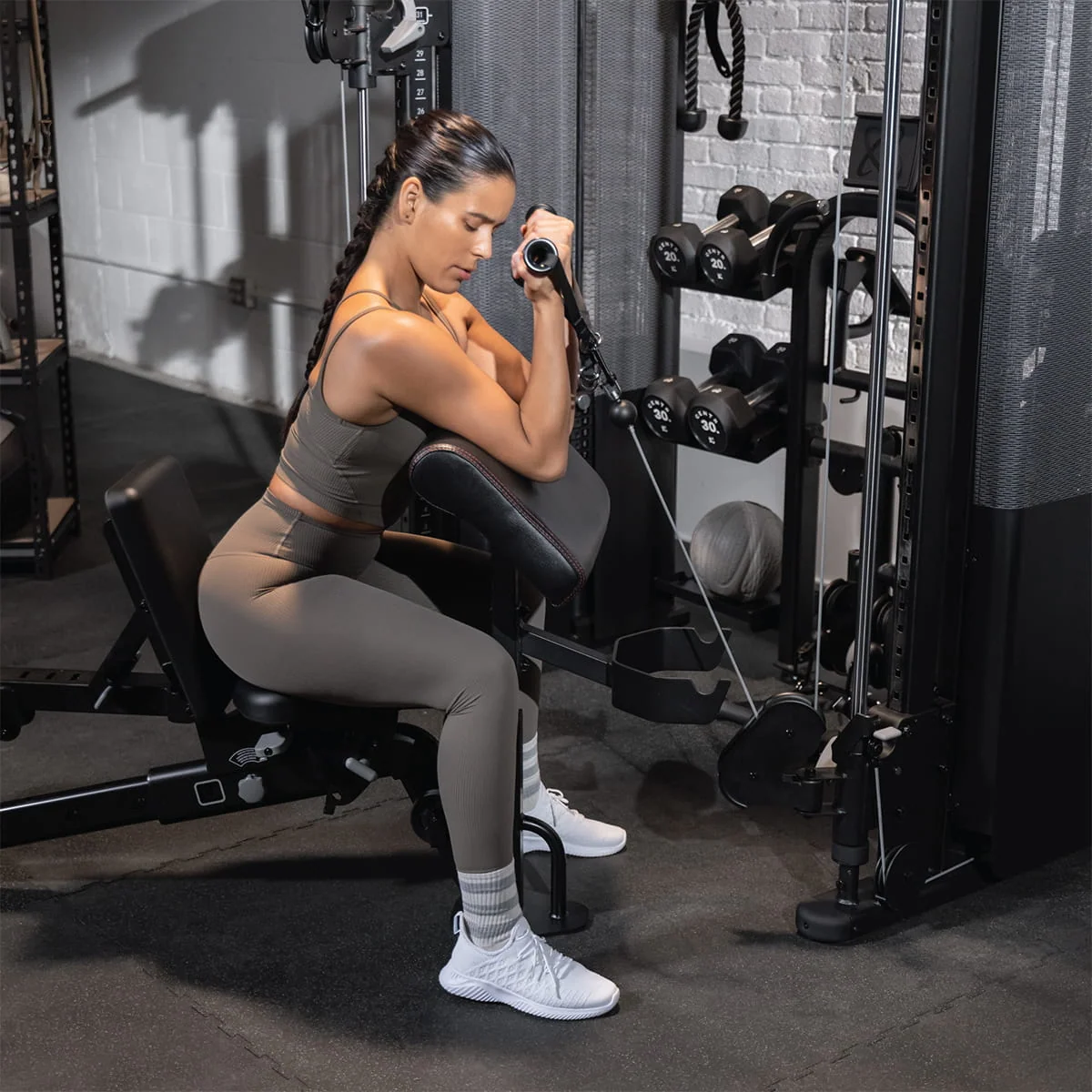
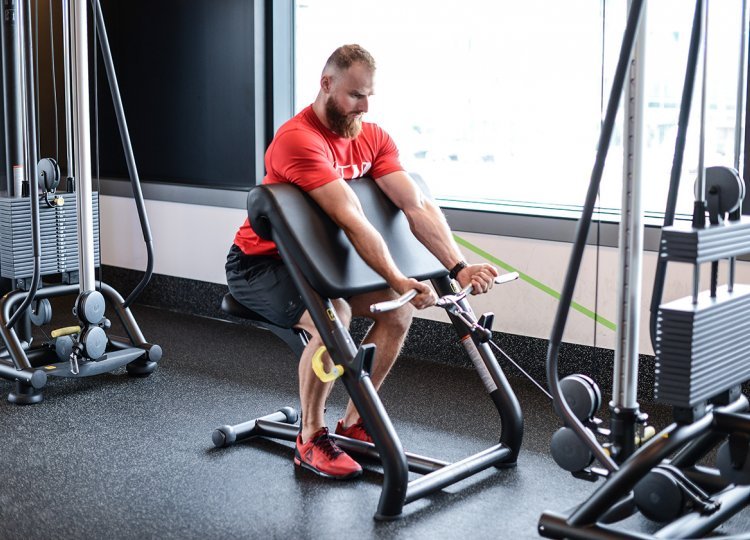
Adjust the preacher pad so your armpits can settle comfortably near the upper edge while the backs of your upper arms stay supported. Your chest should not have to reach forward over an uncomfortable gap. For cable preacher curls, position the bench so the cable clears the pad and travels toward your hands without rubbing an edge. Use a neutral or angled handle if a straight bar makes your wrists complain.
Lower the handle through the elbow’s available range without dropping into a passive, painful straight-arm position. The exact bottom angle depends on your joint tolerance, pad geometry and resistance profile. Move smoothly, maintain pressure against the pad, and avoid trying to generate momentum by lifting your upper arms away from the support. If your shoulders repeatedly pop up, the pad may be set wrong or the working load may be too heavy.
The supported position makes cheating easier to notice, which is why preacher curls are excellent for monitoring technique. It does not make them risk-free. The joint can feel especially exposed near the bottom when the resistance moment is demanding and the muscle is fatigued. Back off the load, shorten an uncomfortable few degrees or use a different handle rather than pushing through sharp elbow pain.
For an EZ-bar version, start with less weight than your standing curl. A barbell’s resistance profile differs from that of a low cable. Keep the wrists stacked, keep the shoulders quiet, and stop the set when your rep speed changes because the torso wants to take over. You want a reproducible elbow-flexion effort, not a contest in how far you can launch a bar off the pad.
Equipment Worth Exploring
Explore equipment, accessories and gear from our carefully selected range.


EZ Curl Barbell
Olympic EZ curl bar with angled grips for curls and triceps exercises.

Dual Hook EZ Curl Bar
Angled aluminum dual-hook cable bar for biceps curls and pulldown variations.


Rubber Hex Dumbbells
Rubber-coated hex dumbbell pairs with a stable shape for home and commercial strength training.


FID Bench MAX
Adjustable bench offering flat, incline, and decline positions + adjustable headrest.


Multi Bench MBX-650 2.0
Adjustable multi-bench with roller adjustment, 15 backrest positions and accessory mounts.
Cable Handles, Benches and Dumbbells: What to Substitute
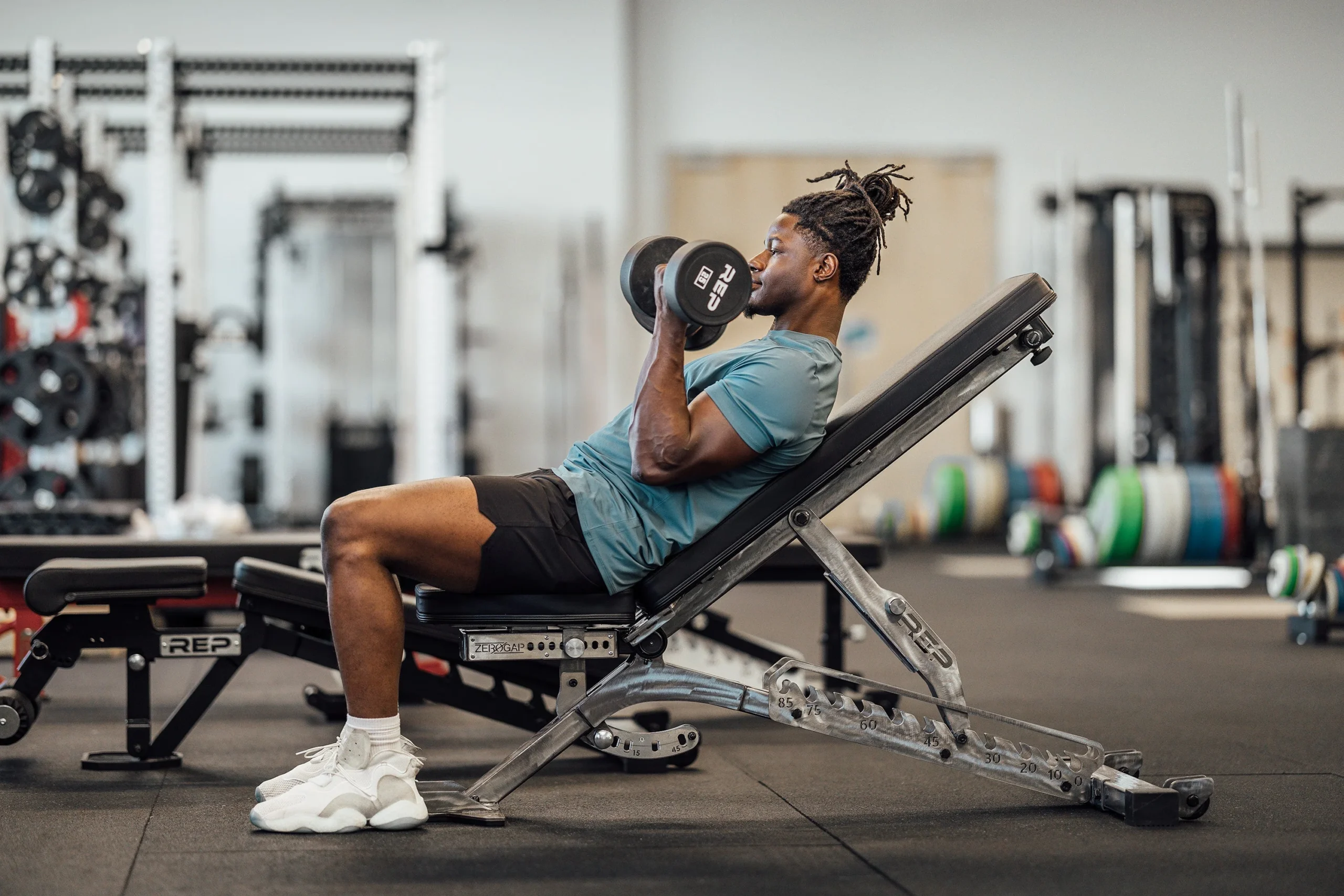
A good adjustable cable station is enough for both variations. One low pulley and a single handle create the Bayesian movement, while the same pulley plus a preacher pad can create the supported alternative. If your gym has no dedicated preacher seat, an incline bench can sometimes brace the upper arm, but check stability and cable clearance before loading it. A loose bench sliding toward the stack is not a usable training setup.
If only dumbbells are available, an incline dumbbell curl places the upper arm somewhat behind the torso when the bench back is reclined. It can deliver a similar shoulder-position idea, but it is not mechanically identical to a Bayesian cable curl. Gravity loads the dumbbell vertically; a cable follows the line from the pulley. Use it as a practical alternative, not an exact scientific stand-in.
A preacher machine or EZ-bar gives you a supported forward-arm curl without needing a cable on that side of the gym. Choose a grip and machine that fit your body. Different pads, lever arms and seat heights can make two machines feel radically different. For any variation, compare repeated performances on the same setup instead of assuming a stack marked fifty pounds equals fifty pounds of effective resistance at your hand.
If you are limited by shoulder range or discomfort, do not force the Bayesian position. Standard standing curls, hammer curls and comfortable supported curls can all contribute to your weekly elbow-flexor volume. Conversely, if pressing your upper arms into a preacher pad irritates the elbow, try a lighter cable curl with a freer path. The study’s near-tie is useful precisely because it removes pressure to tolerate a movement that does not suit you.
A Six-Week Biceps Progression That Uses Both Exercises Wisely
Start with two arm-focused exposures per week, separated by at least a day or two. Treat the plan as direct biceps work layered on top of rows, pulldowns and chin-ups rather than as a demand for endless extra sets. If your pulling program already creates heavy elbow-flexor fatigue, start at the lower end of the set range. The best progression is one you can recover from and repeat.
Weeks 1–2 — establish technique. On the first weekly session, do Bayesian cable curls for two sets of ten to twelve controlled reps. On the second, do preacher curls for two sets of ten to twelve. Use a load that leaves about two clean reps in reserve. Keep the same pulley position, bench setting and range of motion each session. Write down actual reps for each arm, not just the stack pin.
Weeks 3–4 — build the work. Add a third set to one or both exercises if elbows and overall recovery feel good. Keep the ten-to-twelve-rep range, and add the smallest practical load only when all working sets reach twelve clean reps. If the stack jumps are large, progress with one extra rep before adding weight or use an appropriate small increment. A strict final rep with the same elbow path matters more than a heavier number assisted by torso movement.
Weeks 5–6 — make the increase sustainable. Continue with two to three sets per exercise each week, aiming to improve either repetitions or resistance while keeping technique constant. If a set reaches the top of the target range at your chosen effort, add weight next time and work back up from the lower end. If your biceps or tendons remain sore into the next session, hold steady or reduce a set rather than forcing linear progress.
You can run only one variation if equipment or comfort makes that simpler: repeat it twice weekly with comparable weekly sets. Alternating Bayesian and preacher curls is not proven superior by this trial. It simply provides a little setup variety and may help distribute discomfort or boredom. Reassess after six weeks using consistent progress photos if you like, but judge your training primarily by better reps, repeatable loading and recovery—not a pump that lasts twenty minutes.
Funny Gym Shirts & Workout Gear
Funny gym shirts, tanks, hoodies and workout gear for lifters who like training hard.

Welcome to the Gun Show for Big Biceps Gains | Rock Mem Sticker
Put “Welcome to the Gun Show” gym humor on your laptop, bottle, or gym gear.

Biceps And Roses Shirt Guns N' Roses Meme , Top T-Shirt
Rep “Biceps and Roses” humor in and out of the gym.

Shirt Pull Day – Back & Biceps Meme Top T-Shirt
Heavy lifts, good laughs, and a little “Pull Day Graphic” energy.

OnlyGains Big Biceps Sweater & Meme Fans T-Shirt
Bring “OnlyGains Big Biceps” humor to your everyday gym style.

Beauty And The Biceps Sweater Meme T-Shirt
Add a playful “Beauty And The Biceps” touch to your casual rotation.

I Love Gym Bicep Heart Shirt | Swole Heart Graphic For T-Shirt
Bring “I Love Gym Bicep Heart” humor to your next gym day.

For Whom the Bell Curls Tee
Show some metalhead attitude with a playful “For Whom The Bell Curls Kettlebell” tee.

Swole Heart Bicep Love | I Love Gym Decal & Gymbros Sticker
Stick a little “Swole Heart Bicep Love” humor on your favorite gear.

The Real Rocky Mountains – Bicep Mountain Meme Pullover T-Shirt
Keep things casual with a little “The Real Rocky Mountains” attitude.

Curls The Girls Shirt – Bicep Curls Top & Gymbros T-Shirt
Rep “Curls For The Girls” humor in and out of the gym.