Advertising disclosure: This page includes affiliate product links that may earn us a commission, as well as products from our own store.
Reverse Pec Deck: Neutral vs Overhand Grip, Rear-Delt Form and a Six-Week Plan
Rear delts can be difficult to feel when every back session is dominated by heavier rows. The reverse pec deck gives them a more direct job, but seat height, elbow position and grip choice can make the same machine feel like two different exercises. Here is a practical technique guide, the limits of a frequently quoted grip experiment, and a six-week plan that rewards clean repetitions rather than momentum.
What the reverse pec deck actually trains
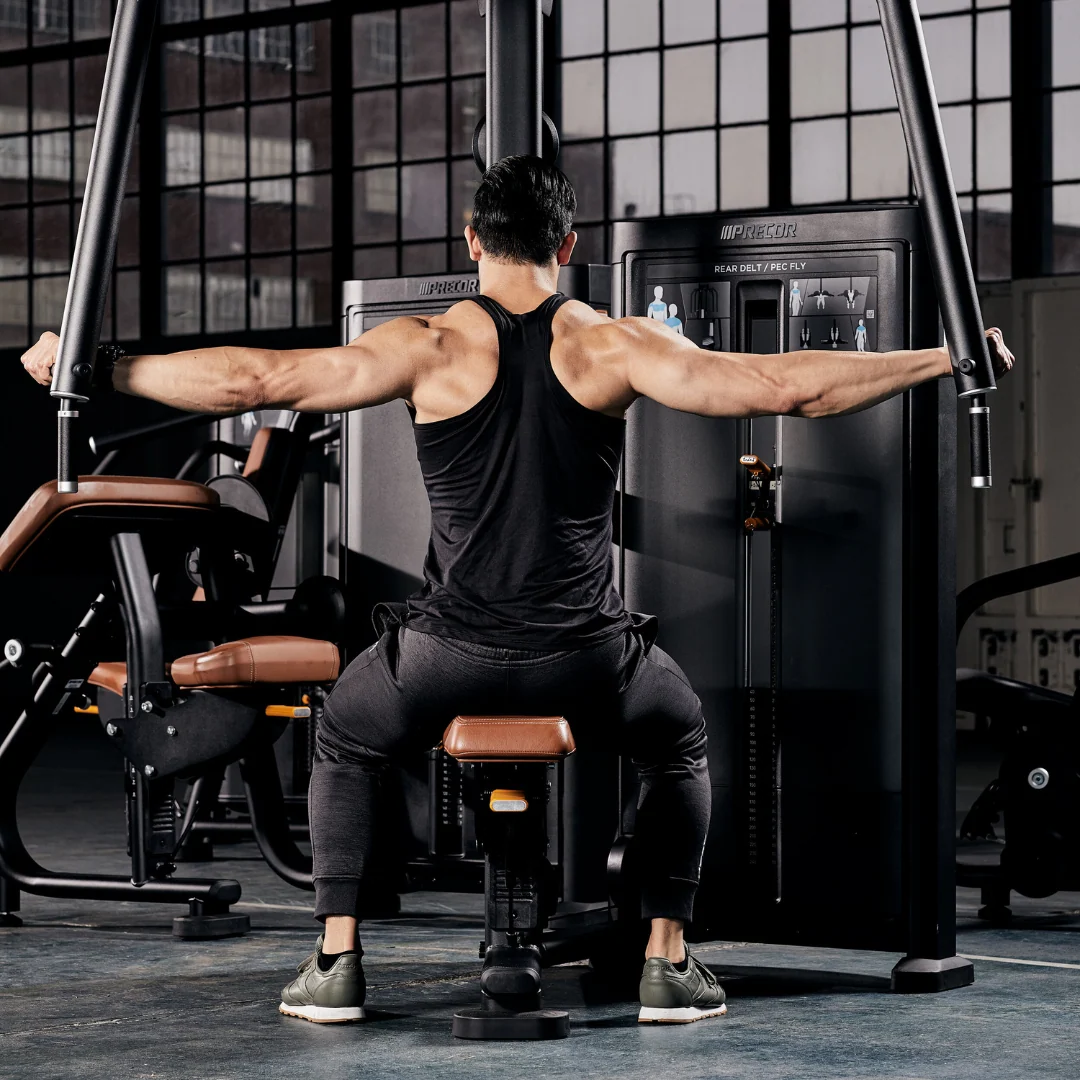
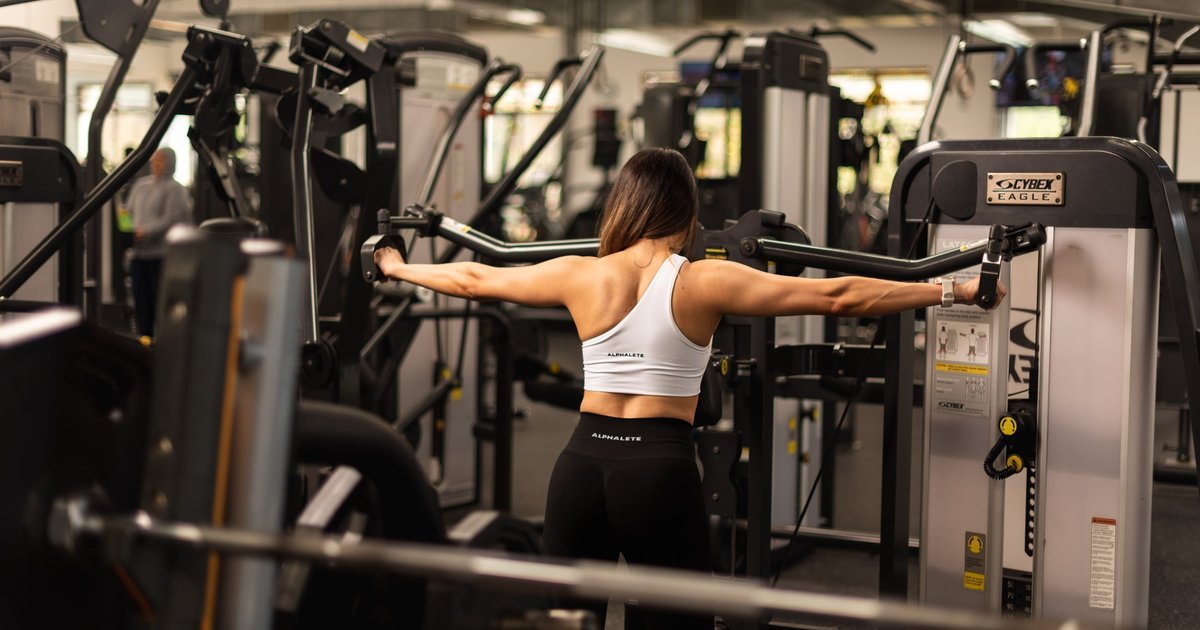
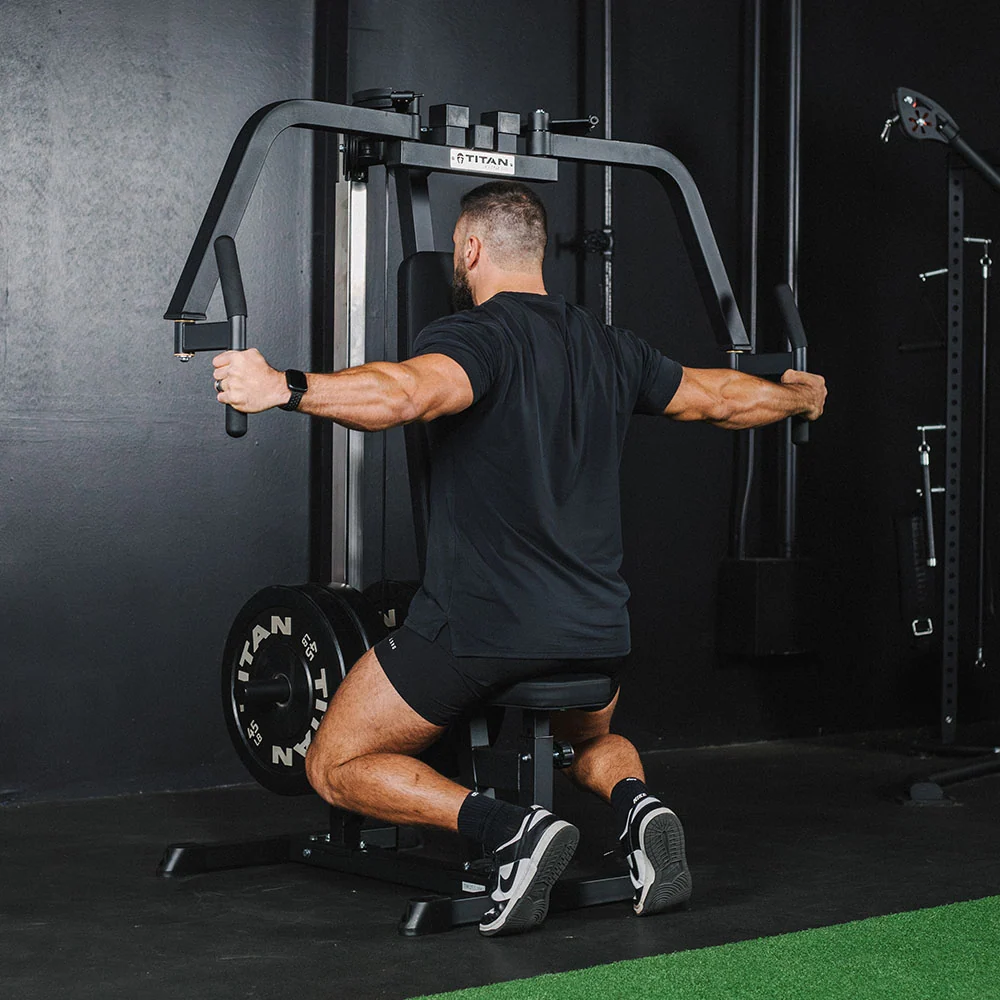
The reverse pec deck looks like a chest-fly station turned around, but the movement is not a chest fly at all. Sitting with your sternum against the pad, you move the upper arms out and back against resistance. That action is horizontal shoulder abduction, and the posterior deltoid is one of its principal movers. The mid-back muscles help control the shoulder blades while the small muscles around the shoulder stabilize the joint.
It is particularly useful when your back day is already full of rows and pulldowns. Those lifts can challenge the rear delts, but the precise share of work varies with the elbow path and how much the shoulder blades retract. The reverse pec deck gives you a relatively repeatable path and removes much of the need to balance your torso. You can focus on the arm moving around the shoulder rather than on holding a bent-over position.
That does not mean the rear delts work in isolation. If you squeeze your shoulder blades together aggressively, the rhomboids and middle traps contribute more. A little natural scapular motion is normal; the goal is to keep the rear shoulder doing meaningful work rather than to turn the station into a short-range row.
For most lifters, consider the reverse pec deck an accessory: after heavy presses or rows, or as a focused shoulder finisher. Think of it as practice in moving the upper arm smoothly through a useful range, not as a contest to lift the biggest number on the stack.
Set the seat, chest pad and handles before touching the weight
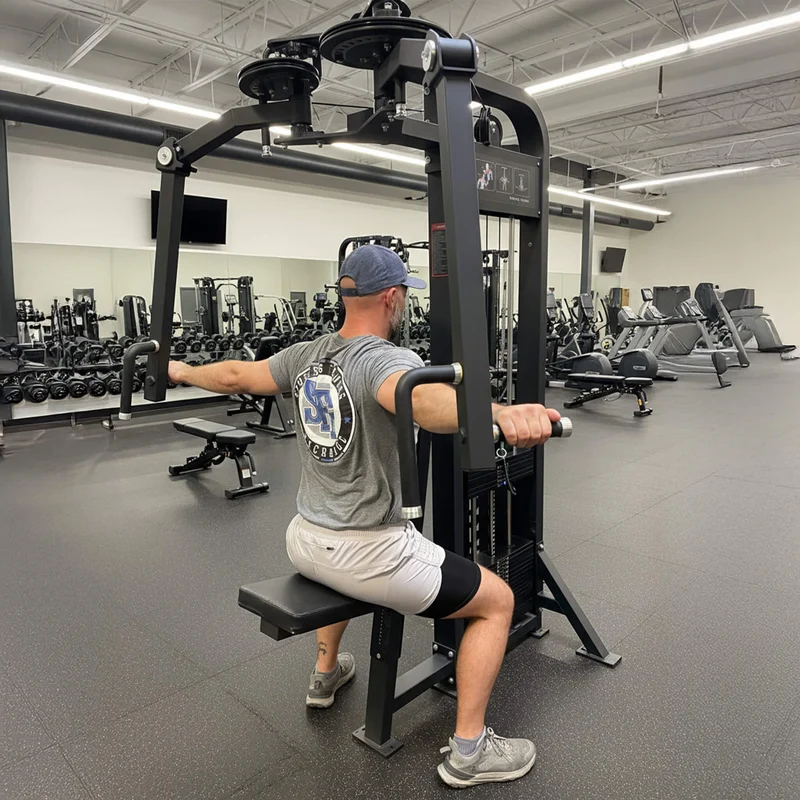
Start by adjusting the seat, not the pin. Sit facing the machine’s chest pad and set the seat so your shoulders and the machine’s moving grips line up comfortably. On many units, the handles will begin roughly at shoulder level, but exact geometry differs; use the version that lets your arms open without reaching high toward your ears or dropping far below the shoulders.
Move the starting arms or handle positions, if the machine allows it, until you can reach forward without cranking your shoulders into an aggressive stretch. Your sternum should remain supported against the pad, hips planted on the seat and feet stable. The machine’s handle design may give you straight bars, horizontal handles or a choice of grip positions. Do not force a wrist angle just because another person uses it.
Begin with a load you could control for about 12–15 even repetitions. Draw the arms outward in a broad arc while keeping a gentle, largely unchanged elbow bend. Pause briefly near the end of the range you can reach without shrugging or yanking. Then bring the handles forward under control rather than letting the weight stack slam.
If one shoulder feels pinched in the far-forward starting position, shorten the stretch slightly and check that the seat is not forcing your upper arms too high. If you cannot find a smooth, comfortable path even with a lighter load, a cable or chest-supported dumbbell fly may fit you better. Sharp pain, tingling or instability is a reason to stop, not a signal to push for one more repetition.

Equipment Worth Exploring
Explore equipment, accessories and gear from our carefully selected range.

Pec Fly/Rear Delt PEC-650
Combination machine with adjustable movement limits for chest fly and rear-delt exercises.
VOLTRA
Compact digital cable trainer with smooth, adjustable resistance.

Go-Tone Pro
Portable digital cable trainer with up to 66 lb (30 kg) of adjustable resistance.

GymPin D Cuffs
Adjustable wrist cuffs with textured grips for supported cable-machine exercises.
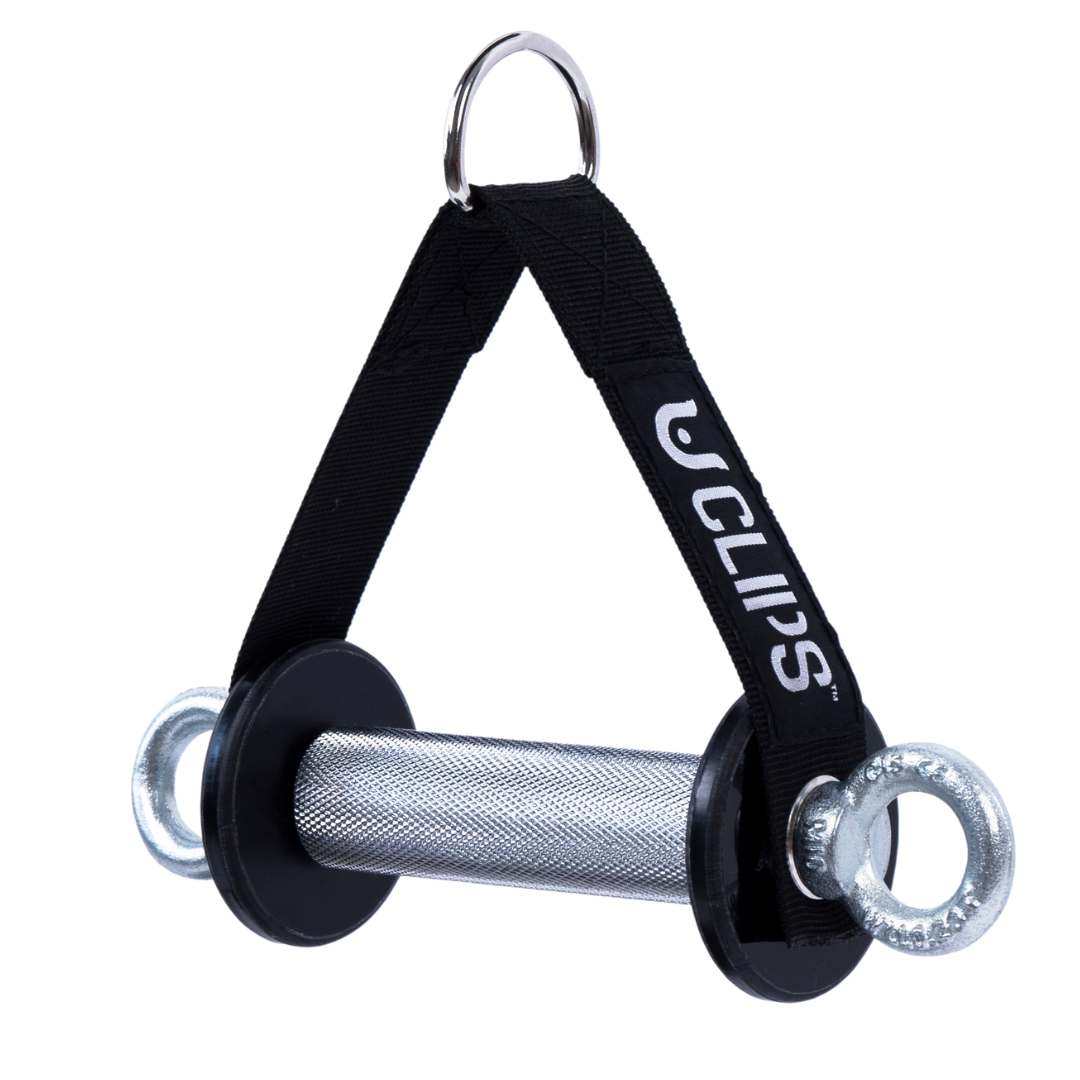


GymPin Ergo Handles
Pair of ergonomic cable handles shaped for comfortable triceps and pulling exercises.
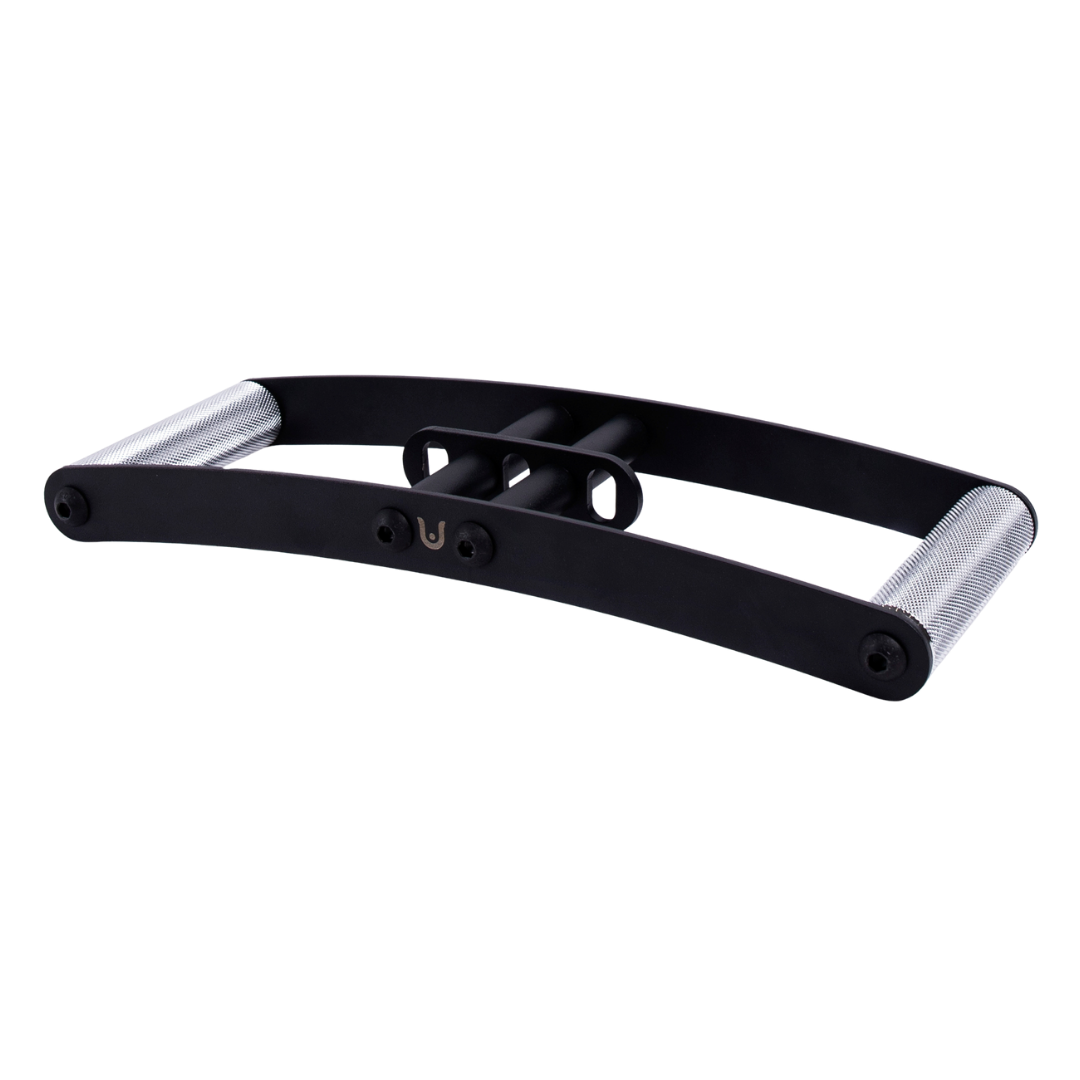
Horizon Grip
Ergonomic V-style cable grip for rows and back training.


Angles 90 Grips
Flexible grip attachments that allow natural wrist movement during pulling exercises.
Neutral vs overhand grip: what a 19-lifter comparison really shows
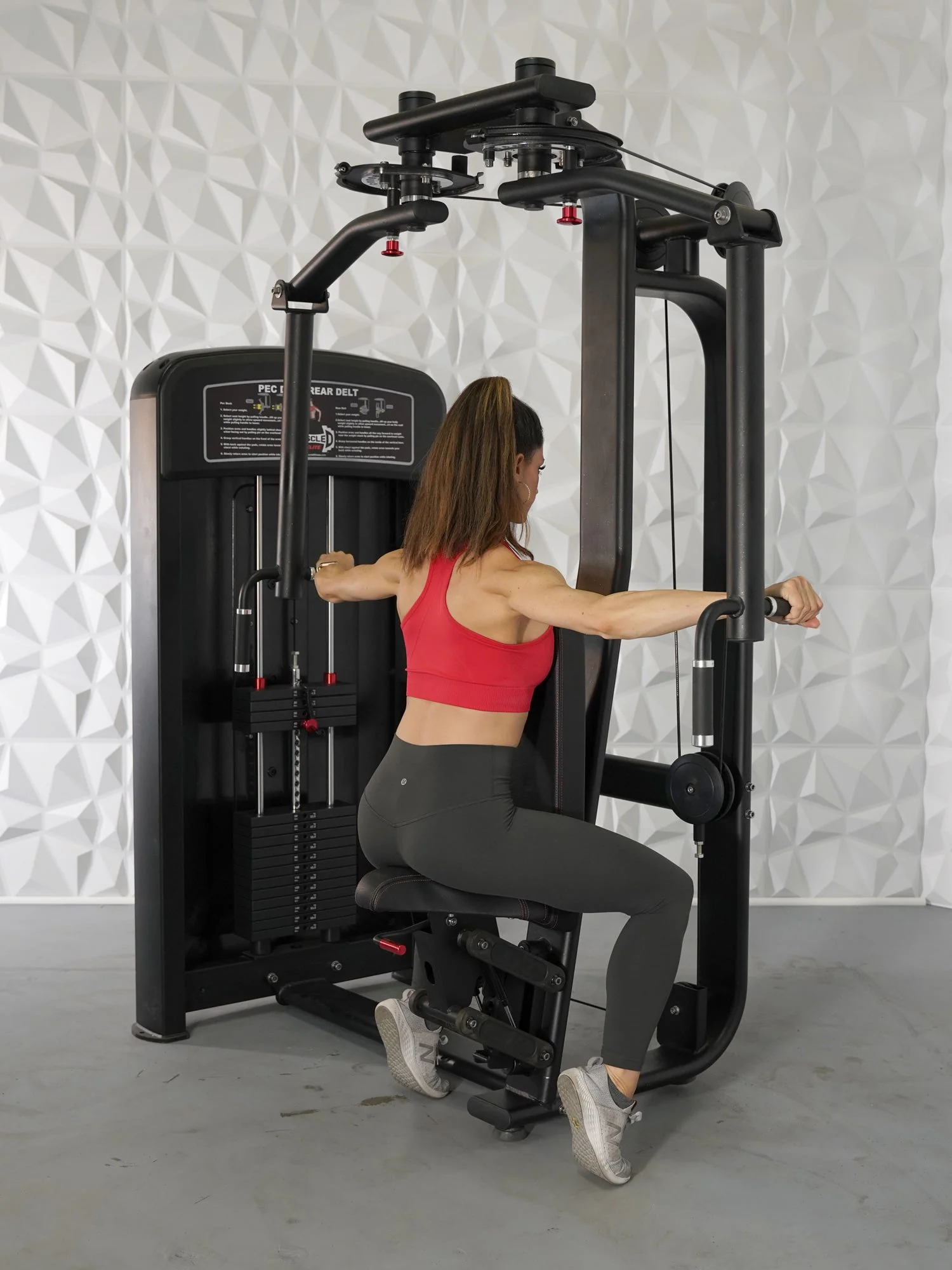
Most rear-delt machines let you take a neutral grip, with palms facing inward, or an overhand/pronated grip, with palms facing down. The temptation is to declare one universally superior. There is a small experiment that makes the comparison more interesting, but it needs careful interpretation.
In a repeated-measures test, 19 resistance-trained men performed reverse-fly machine sets using both hand positions. Researchers measured electrical activity in several shoulder muscles. Mean posterior-deltoid activity was higher with the neutral grip than with the pronated grip (reported p = 0.046); infraspinatus activity was also higher (p = 0.002). That is a result for the measured exercise conditions, not a universal ranking of every machine or grip style.
Most importantly, electromyography does not directly measure muscle growth. This was not a months-long training trial comparing shoulder size, and the sample consisted of young, trained men. A higher reading during a particular set does not demonstrate that neutral-grip training produces larger rear delts over time.
The practical interpretation is modest: try a comfortable neutral grip first if your machine permits it, especially if the goal is to emphasize rear-delt work. Then compare whether you can keep the chest planted, the wrists relaxed and the elbows traveling predictably. An overhand grip may still be a better fit on another machine or for another shoulder. Neither grip excuses jerky repetitions or shoulder pain.

Bodybuilding Shirts & Workout Gear
Bodybuilding shirts, tanks and gym gear for lifters chasing muscle, size, symmetry and the pump.


Jesus Christ Dumbbell Cross Lateral Raises for Easter W Hoodie
Bring “Jesus Christ Dumbbell Cross Lateral Raises” gym humor to lazy days and post-workout plans.


All Natty Natural & Bros Vest Tank Top
Add some lifting attitude to training with “All Natty”.

Potential Unleashed Stoic Bodybuilder Greek God T-Shirt
Show some lifting attitude with a playful “Potential Unleashed Stoic Bodybuilder Greek” tee.

Lift With Me Renaissance Michelangelo & Athletic Tank Top
Bring “Lift With Me Gym Renaissance” humor to your next lifting session.

Bob The Bodybuilder & Meme Fans Athletic Shirt Tank Top
Add some powerlifting attitude to training with “Bob The Bodybuilder”.

Gym Illuminati Secret Society Meme New Gym Order Bodybu Tank Top
Bring “Gym Illuminati” humor to your next lifting session.

Flex Men Superhero Workout Crewneck Pullover Sweater X- T-Shirt
Bring “Flex Men” humor to your everyday gym style.
Make every rep a fly rather than a row
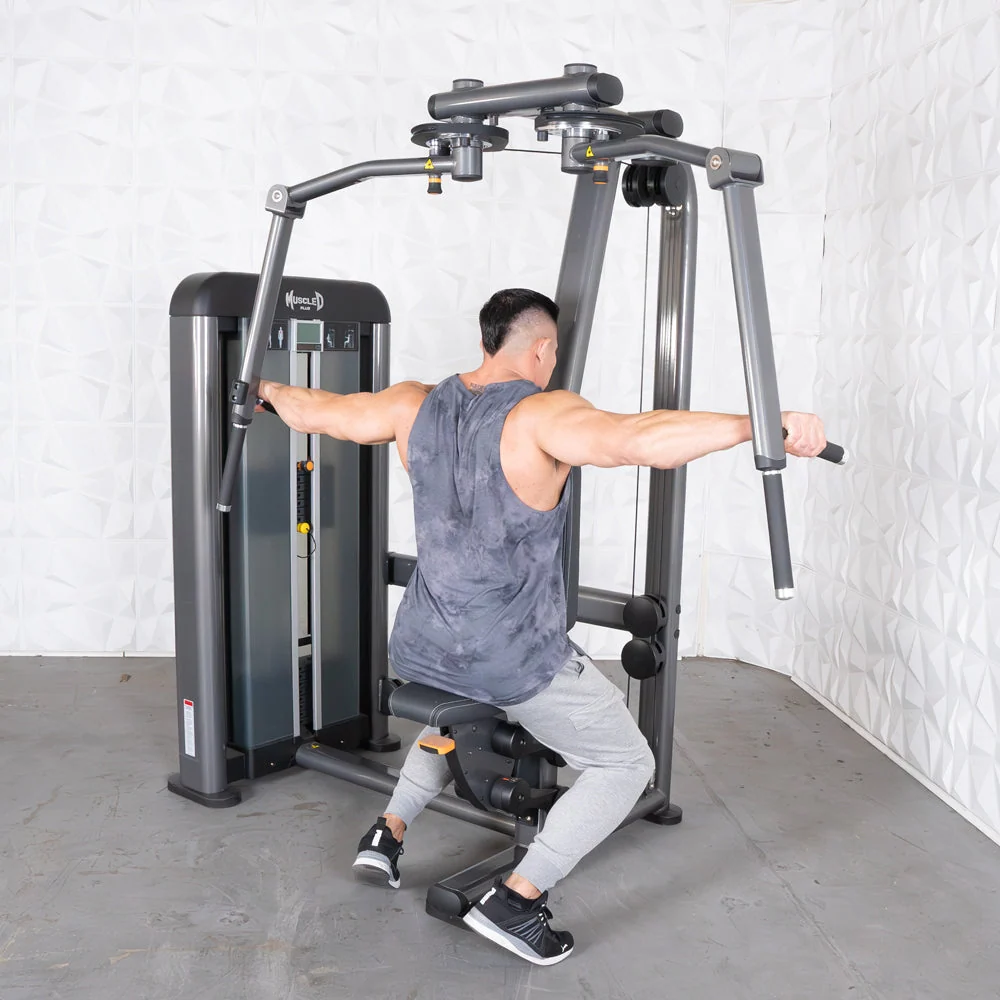
The biggest technique error is mistaking the machine for a row. In a row, you bend your elbows substantially and draw your hands toward your torso. In a reverse fly, your elbows remain softly bent while the upper arms swing outward. If you start with nearly straight elbows and finish with them sharply bent, you have changed the exercise and made the result harder to compare.
Watch three points of contact: your chest remains on the pad, your hips remain on the seat and your feet remain planted. The moment you arch back off the support to finish a rep, you have probably selected more weight than you can move cleanly. You should not need to snap your wrists backward or crane your neck toward the handles.
Do not chase an exaggerated range beyond your natural shoulder motion. An outward arc that ends around the line of your torso is often plenty; different machine arms and individual shoulder anatomy may permit a different comfortable end point. The useful range is where you can keep tension and control, not the furthest possible handle travel.
For a straightforward set, take roughly one second to open the arms, pause just long enough to avoid bouncing, then spend around two seconds returning. These are coaching tempos, not research-derived magic numbers. If the stack hits the stops at the bottom, reduce the load or shorten the range so resistance remains under control. The final two or three reps should be challenging without changing your torso or elbow position.
Reverse pec deck vs dumbbell rear-delt flyes
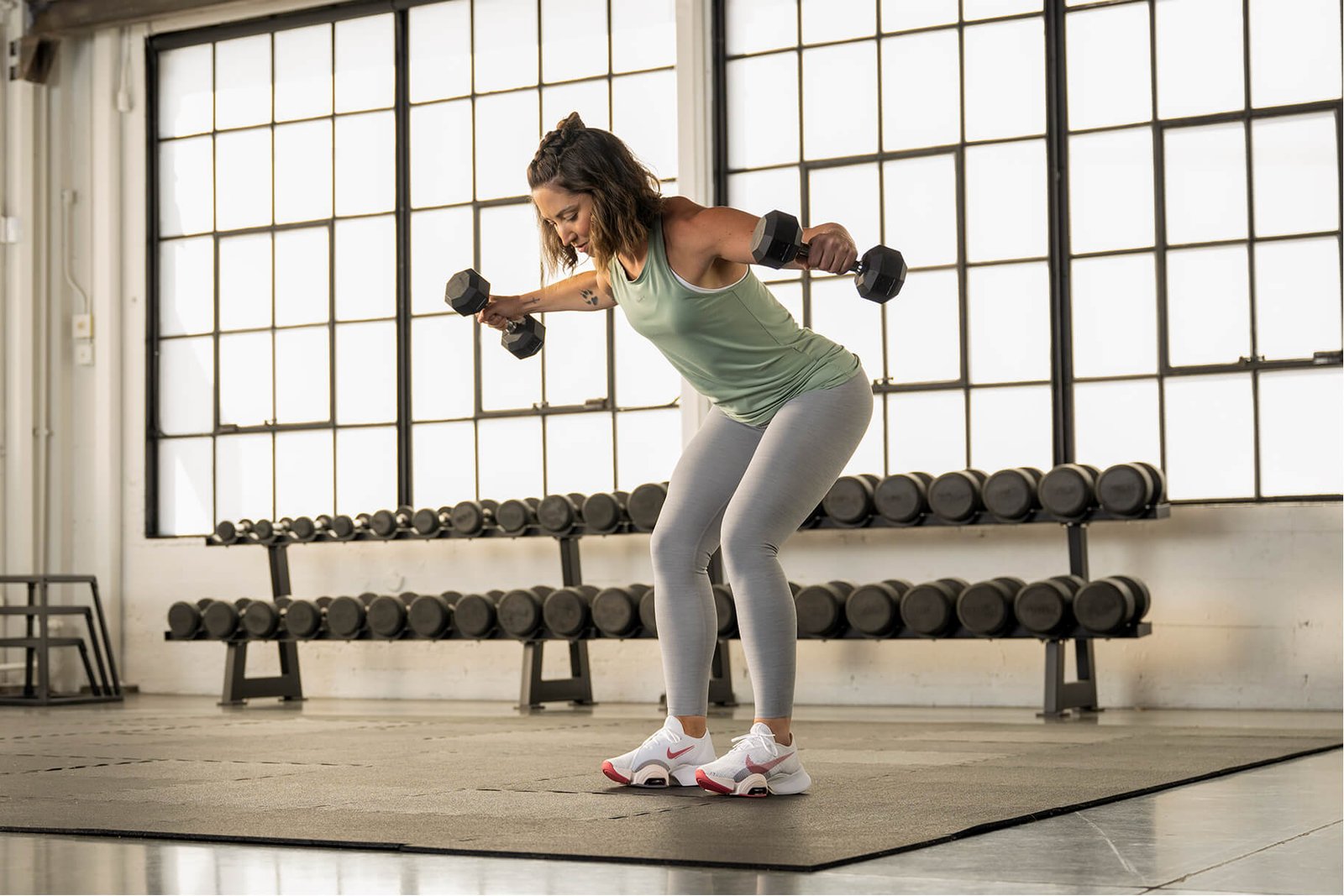
A chest-supported dumbbell reverse fly is the closest easy substitute when the machine is taken. Set an adjustable bench to a moderate incline, lie face-down with your torso supported, hold light dumbbells and lift the arms outward with a soft elbow bend. The bench removes much of the lower-back fatigue that can spoil free-standing bent-over rear-delt raises after a tough session.
The machine and dumbbells do not load the exact same points of the arc. A dumbbell’s resistance is directed by gravity, so the lift often becomes most demanding near the upper part of the movement. A machine uses its own lever and cam geometry, which can alter how resistance feels throughout the travel. Neither setup is automatically better for hypertrophy just because one feels harder at a particular joint angle.
For a free-standing reverse fly, hinge at the hips while keeping your back comfortably neutral and knees softly bent. This version is simple to perform with minimal equipment, but you have to stabilize your body as well as move the weights. People frequently overshoot the weight and compensate by swinging the torso.
Use the variation that lets you repeat a controlled path, feel the rear shoulder working and progress without irritation. For either dumbbell option, start lighter than you might expect. A high-quality set of 12–20 reps can be productive without turning a small shoulder accessory into a full-body effort.
Equipment Worth Exploring
Explore equipment, accessories and gear from our carefully selected range.


Rubber Hex Dumbbells
Rubber-coated hex dumbbell pairs with a stable shape for home and commercial strength training.



FID Bench MAX
Adjustable bench offering flat, incline, and decline positions + adjustable headrest.


Multi Bench MBX-650 2.0
Adjustable multi-bench with roller adjustment, 15 backrest positions and accessory mounts.

VForce Lat Tower
Wall-mounted cable tower with pivot arms and adjustable 1:1 or 2:1 pulley ratios.

Trinity Lat Machine LSW-850
Weight-stack pulldown tower offering three cable directions and adjustable seated support.
Cable rear-delt flyes, face pulls and band alternatives
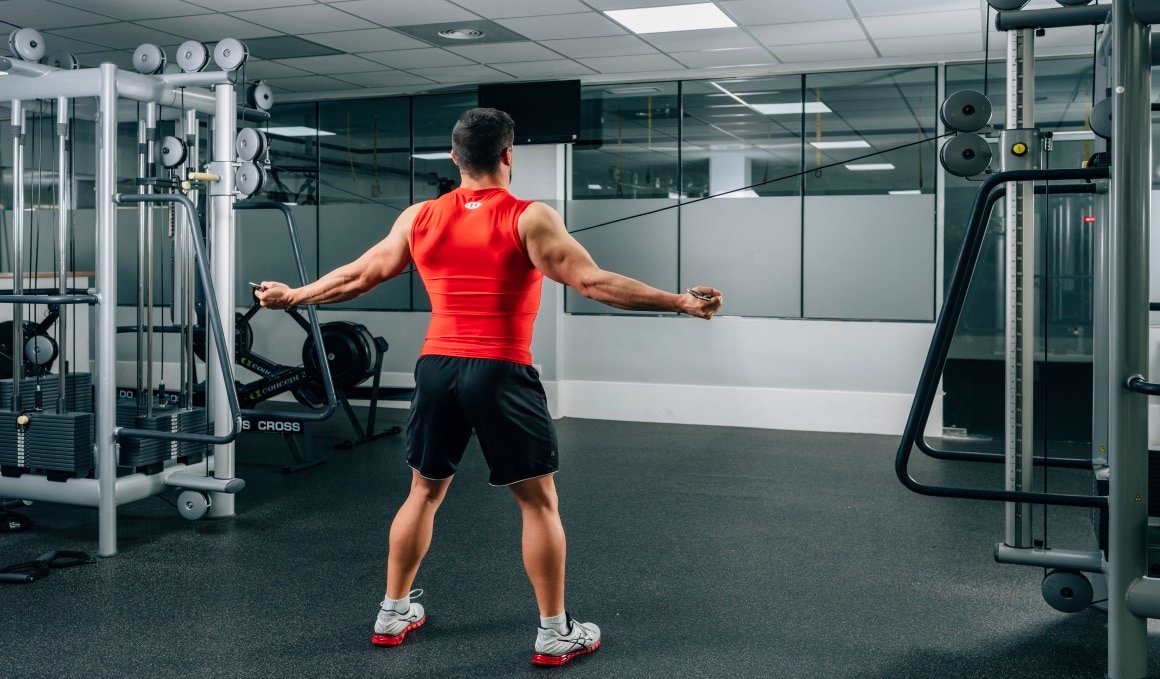
A dual-cable station gives you another rear-delt route. Cross the handles or cables in front of you and open the arms outward while keeping your torso stable. Adjust pulley height so the resistance matches a comfortable upper-arm path. Unlike the fixed machine, cables let you experiment with stance and line of pull; they also ask you to control the cable direction yourself.
Single-arm cable rear-delt flyes can be useful when one side is harder to coordinate or when the station cannot be set symmetrically. Keep your shoulders level, avoid rotating your torso to move the stack and compare the same useful range on both sides. Unilateral training is not automatically corrective, but it makes side-to-side differences easier to notice.
Face pulls are a useful complement, not an identical replacement. Pulling a rope toward the upper face while allowing the elbows to move out can involve the rear delts alongside external rotators and upper-back muscles. It is usually less isolated than the pec deck; use it when you want a broader shoulder-and-scapula accessory rather than insisting it precisely duplicates the machine.
Band pull-aparts are a low-friction option for lighter sessions. Their resistance generally increases as the band stretches, so the strength curve differs from a selectorized machine. Select a band that lets you control the final portion without arching your back. Keep the theme the same across alternatives: manageable resistance, deliberate upper-arm movement and a repeatable endpoint.
Funny Gym Shirts & Workout Gear
Funny gym shirts, tanks, hoodies and workout gear for lifters who like training hard.

Shirt Stack Of Weight Plates Meme & Gymbros Stacking T-Shirt
Rep “Stack Of Weight Plates Meme” humor in and out of the gym.

Meme : I Love Weights Top Valentine'S Day Gains T-Shirt
Bring “: I Love Weights” humor to your next gym day.

Gym O'Clock | Funny Workout Decal for Water Bottles & G Sticker
Put “Gym O'Clock” gym humor on your laptop, bottle, or gym gear.

I Want You To Lift Heavy – Patriotic Uncle Sam 4th of J T-Shirt
Add a playful “I Want You To Lift” touch to your casual rotation.

I Love Gym Funny Valentine's Gym – Gym Lover Meme Hoode Hoodie
Stay casual and show some gym-girl attitude with “I Love Gym Funny Valentine's”.

Meme Shirt: The World Is Flat Earth Weight Plate T-Shirt
Bring “: The World Is Flat Earth Weight Plate” humor to your next gym day.

Spartan Warrior Tee
Bring “Spartan Warrior Bodybuilder White Marble” humor to your next gym day.

Purpose-Driven Stoic Bodybuilder : Sigma Meme Shirt & T-Shirt
Make gym days more fun with “Purpose-Driven Stoic Bodybuilder” style.

Flowers & Weights Pink 45LB Plate Floral Fitness Barbel T-Shirt
For laid-back days and gym-girl humor: “Flowers & Weights Pink 45LB Plate”.

Shirt – Survival Of The Fittest Darwin Meme – Top & T-Shirt
Rep “Survival of the Fittest Darwin Gym Meme” humor in and out of the gym.
A six-week rear-delt progression you can repeat
You do not need a complicated specialty routine to develop the rear delts. Start with two sessions per week, separated by at least a day or two, and add the reverse pec deck after your main pulling or pressing work. Count heavy rows and other rear-delt work in your total shoulder workload; otherwise a sensible accessory can quietly become too much volume.
Weeks 1–2 — find your groove: perform two sets of 12–15 controlled reps per session with about two or three reps left in reserve. Hold the same seat height, handle style and comfortable range. Make notes about the setting and grip so each week is comparable.
Weeks 3–4 — earn more reps: perform two or three sets of 12–18 per session. Keep the weight unchanged until you can reach the top of your planned rep range without torso movement, shrugging or bouncing. If you increase sets, watch how the rest of your shoulder training recovers; more is not necessarily better.
Weeks 5–6 — progress the load carefully: aim for three sets of 10–15 per session if recovery is good. Add the smallest available increment only after several clean top-range performances. Your reps may fall toward the lower end when the weight rises. That is fine; repeat the same quality standard before increasing again.
Rest roughly 60–120 seconds between moderate-rep sets, taking longer when you need it to keep the next set controlled. If your shoulders or upper back are still unusually sore from previous work, reduce sets rather than forcing the calendar. If the machine is unavailable, substitute a chest-supported dumbbell or cable fly and restart with an appropriate load; do not compare kilogram numbers across different machines.
Progress is the combination of better control, more repetitions at the same resistance and eventually more resistance at the same quality. Neutral grip has some short-term muscle-activity evidence in its favor, but that is only one input. Consistency, sensible effort, comfortable joint mechanics and recovery will matter more than searching for a perfect handle angle.