Advertising disclosure: This page includes affiliate product links that may earn us a commission, as well as products from our own store.
A farmer’s carry looks almost too simple to count as a serious strength exercise: pick up two heavy objects and walk. Yet the moment the weights try to drag your shoulders forward, your hands begin to open, or your body sways with each step, the challenge becomes obvious. Carries can train grip endurance, trunk control, and the ability to move efficiently while loaded. The key is choosing the right implements, a clear route, and a progression that rewards good posture rather than reckless weight.
What a farmer’s carry trains—and what it does not
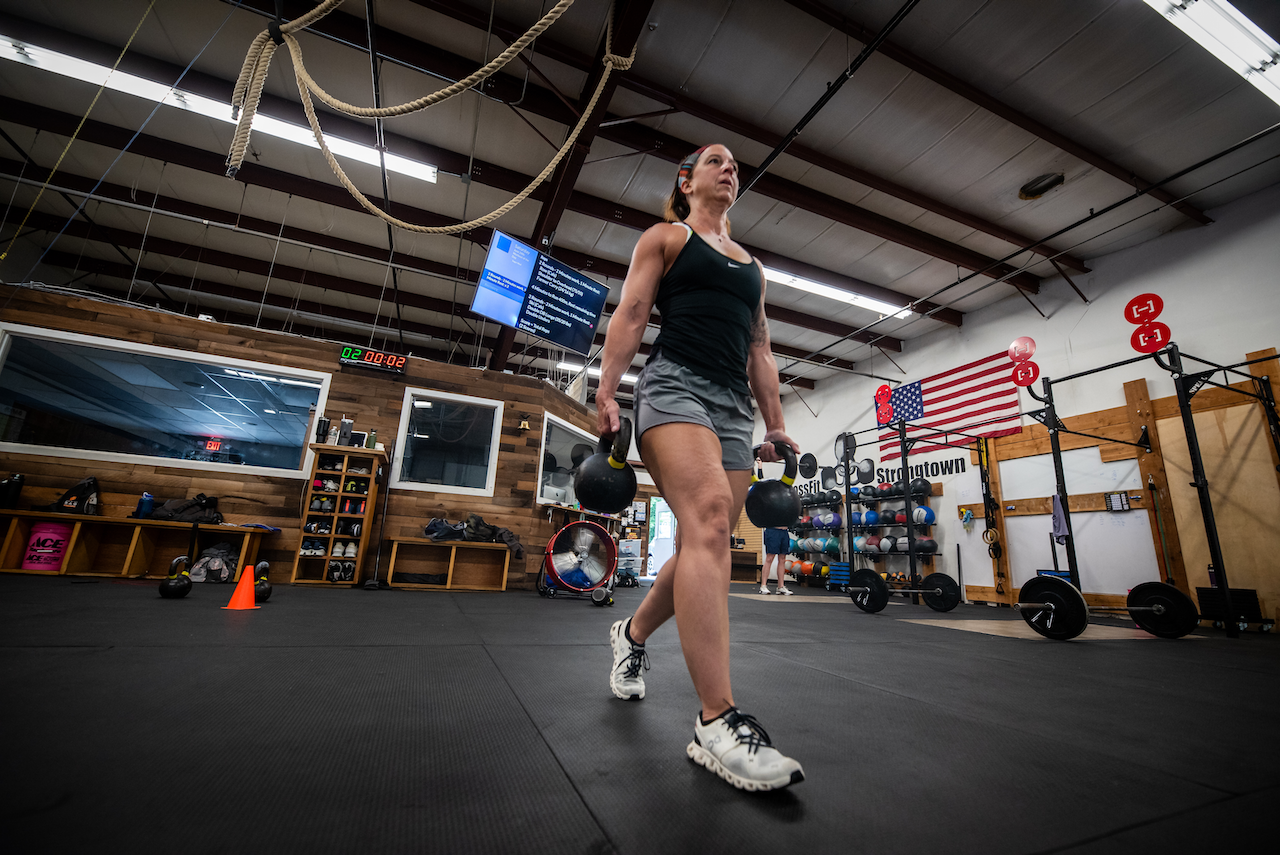
In a conventional farmer’s carry, you hold a similar load in each hand, stand upright, and walk a measured distance. Your finger flexors must keep the handles from slipping. Your forearms and upper back help stabilize the implements, while your trunk counters the sway and rotation of each step. Your hips, thighs, calves, and feet propel you forward and repeatedly absorb the force of landing.
That makes it a useful whole-body loaded movement, not a miracle substitute for squats, rows, or dedicated forearm work. A farmer’s carry challenges many muscles isometrically, meaning they work to maintain position rather than move through a large range. It may improve your tolerance for holding heavy objects and walking under load, but the extent to which it improves muscle size, conditioning, or another lift depends on your overall training, not the exercise’s reputation.
Grip is often the first obvious limiting factor, though posture or breathing can end a set earlier. A useful carry should feel demanding without turning into a hunched, hurried walk. If you can lift a weight off the floor but cannot walk ten stable steps with it, that is not an appropriate starting carry load. Begin where technique survives the entire planned route, not where the first step looks impressive.
Distance and time are both valid measures. A 20-meter walk is easy to repeat when your gym has a marked lane; a 20- to 30-second walk is convenient where distance is difficult to measure. Keep the same measurement method for several weeks so progression is meaningful.
What movement research says about grip and core demand
Walking under load changes more than how tired your hands feel. In a small 2024 laboratory experiment involving 18 healthy college-aged adults, walking with matched loads increased activation in several measured abdominal and spinal muscles compared with standing still and holding the weights. A single-sided suitcase carry produced a somewhat different pattern of trunk activation from a two-sided farmer’s carry.
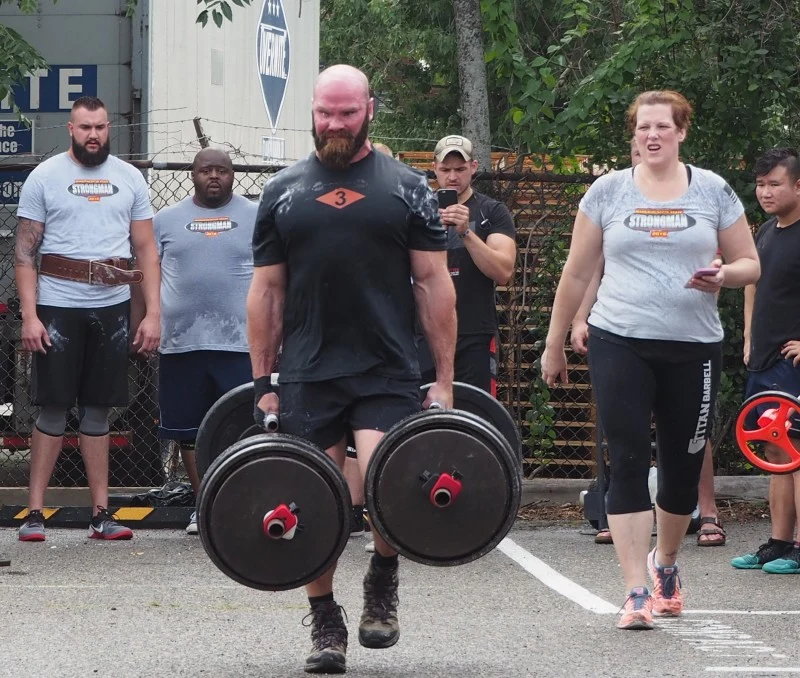
That is interesting evidence about the immediate demands of these movements, not proof that one variation builds larger abs or a stronger back after months of training. Muscle-activation measurements cannot establish long-term hypertrophy, injury prevention, or athletic performance by themselves. Loads and participant experience also matter: the results from a controlled laboratory do not automatically predict what happens during an extremely heavy strongman event.
The practical implication is more modest. When you walk instead of simply holding weight, your trunk repeatedly manages movement and balance. When you load only one side, resisting a sideways lean becomes more prominent. These are useful reasons to include carries alongside conventional lifts, not reasons to throw away established strength work.
For training, define the purpose before adding load. If the aim is grip, shorter heavier carries may fit; if the aim is posture and steady walking, a moderate load you can control for a little longer may be more productive. Neither is automatically better, and training every set to an uncontrolled grip failure is unnecessary.

Equipment Worth Exploring
Explore equipment, accessories and gear from our carefully selected range.

Rubber Hex Dumbbells
Rubber-coated hex dumbbell pairs with a stable shape for home and commercial strength training.


Cast Iron Kettlebells
Textured cast-iron kettlebells for swings, squats, carries, and full-body training.


Grip Plates
Rubber-coated weight plates with handholds for loading barbells and machines.
Set up, pick up, walk and finish without losing position
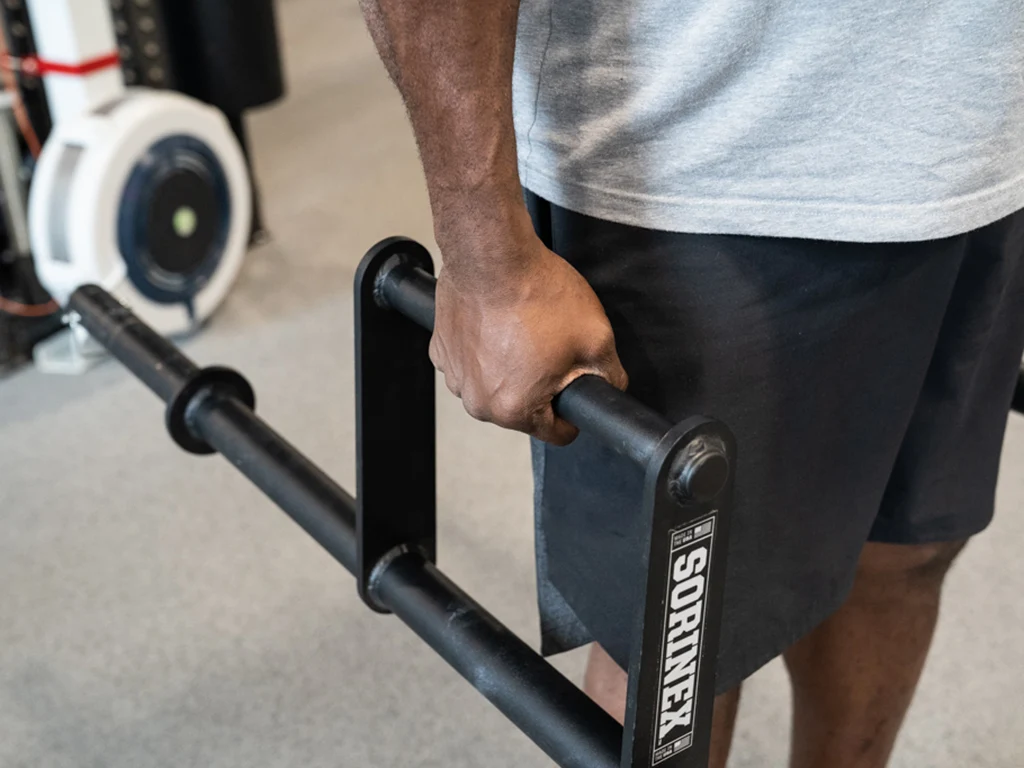
Clear a flat route first. Remove plates, loose cables, or other equipment from your path; check that you have space to turn and somewhere safe to put both implements down. Stand between the weights with feet approximately hip-width apart. Hinge at your hips and bend your knees sufficiently to take hold without twisting. Brace your trunk, stand up in a controlled way, and settle the weights at your sides before stepping.
Keep your head in a neutral position, eyes looking ahead, and ribs roughly stacked above your pelvis. Your arms hang long and the handles remain beside your thighs. Do not deliberately crank your shoulders into a high shrug, but do not let the load wrench your upper body forward either. Use quiet, even steps with enough width for balance and enough clearance that the weights do not knock your legs.
Start with five controlled steps and notice what changes. If one arm swings farther forward, your torso begins to tilt, or you suddenly shorten only one side of the stride, the load may be too high. A steady walking pace is usually more useful for learning than either exaggerated slow motion or a sprint. Breathe throughout the walk; use a controlled brace without holding one giant breath until you feel lightheaded.
To turn, slow down before the end of the lane. A wide, gradual turn is easier to control than a sharp pivot with heavy weights. In a tiny room, simply set the weights down, turn yourself around, and pick them up again. At the end, stop with your feet planted, hinge and bend your knees to lower the weights carefully, then release your grip. Do not swing a heavy dumbbell down or drop it onto an unstable floor.
Technique checkpoint: you should be able to keep your path, shoulder position, and steps broadly consistent from the first meter to the last. That consistency is the standard that allows you to progress.
Dumbbells, kettlebells, trap bars and farmer’s handles
For most people, a pair of dumbbells is the easiest entry point. They are already available in many gyms and can be changed in small increments. Select similar-weight dumbbells with secure, comfortable handles, and make sure the ends are not constantly hitting your legs. Heavy adjustable dumbbells need an extra check: their locking mechanisms and any manufacturer’s restrictions must allow walking and dynamic handling before you use them for carries.
Kettlebells are another practical option. Their mass hangs below the handle, and two matching bells can feel different from dumbbells despite the same total weight. Their handle diameter, finish, and your hand size affect how quickly grip becomes the limiting factor. For a suitcase carry, one kettlebell can be enough. Do not assume that an unfamiliar kettlebell’s wide handle is easier simply because the bell is lighter.
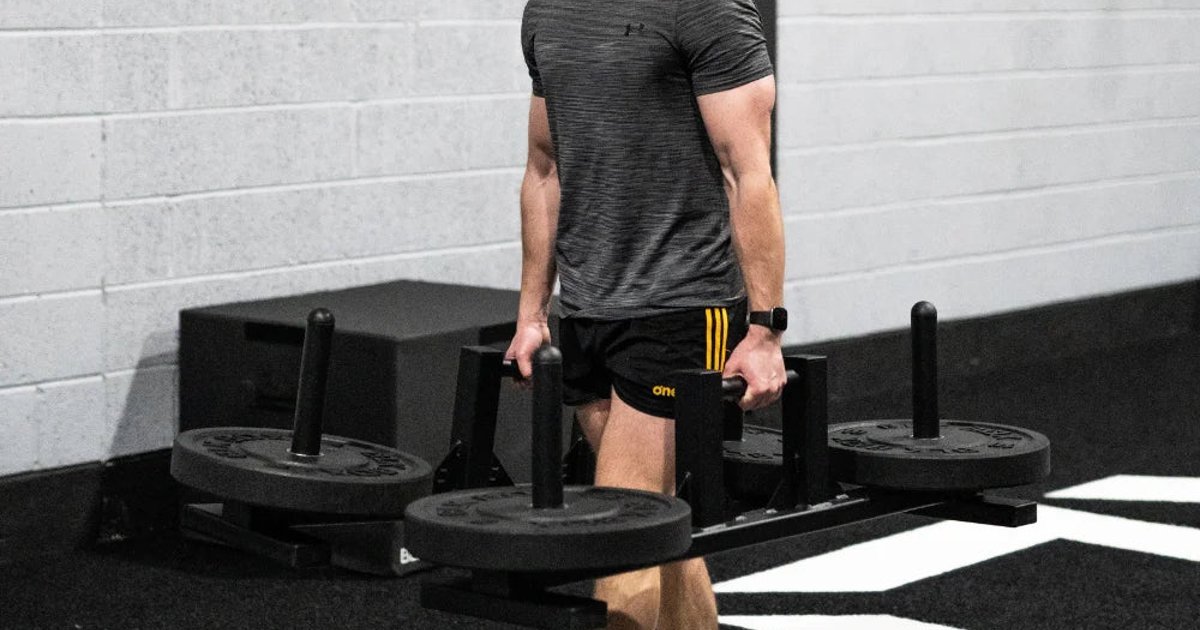
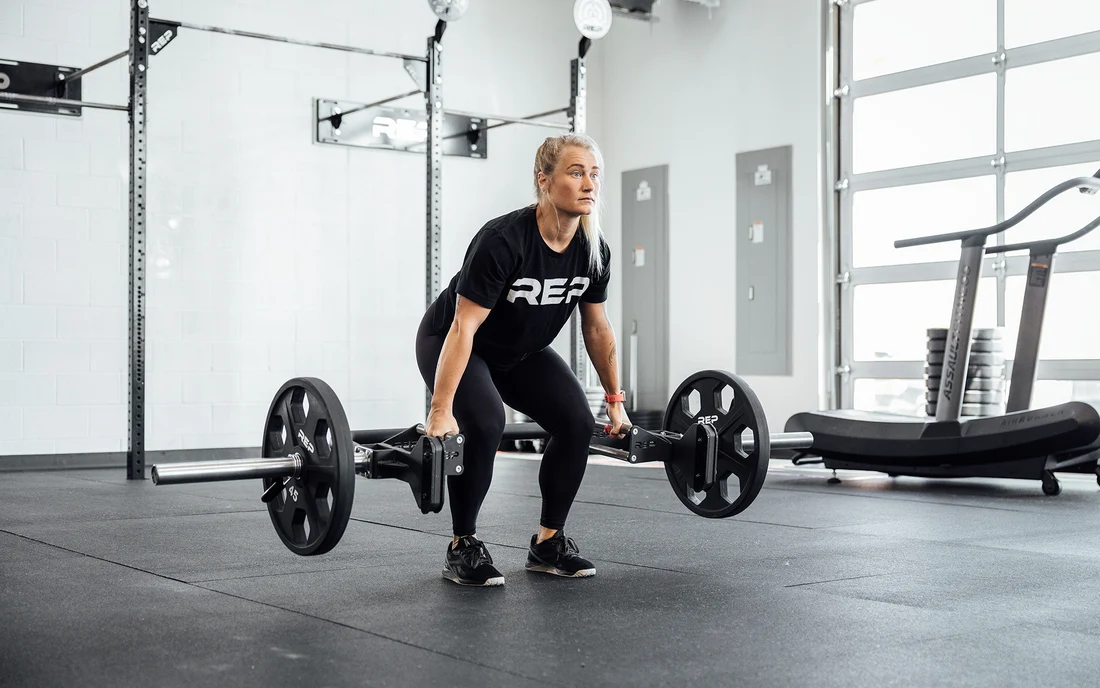
An open trap bar can make carrying larger loads convenient because the weight is shared through one rigid frame with neutral handles. However, not every hex bar is suitable for walking. Inspect the open side, plate clearance, handle location, floor surface, and whether the bar permits an unobstructed stride. Specialty farmer’s handles distribute the load between two separate long implements; they can challenge balance differently and require more space at the sides and during turns.
For a compact training space, floor clearance and safe storage often matter more than how much an implement can theoretically hold. A pair of dumbbells and a short straight walking lane may be the best choice. Avoid improvised straps, unsecured plates, or a cable machine pulled sideways just to simulate a carry. If you lack a suitable route, try a stationary farmer hold or marching lightly in place, understanding that the demands are not identical.

Strongman Shirts & Strength Gear
Strongman gym shirts and strength gear for lifters who train stones, carries, presses and brutally heavy objects.

The Original Atlas Stone Shirt – Greek Mythology T-Shirt
Heavy lifts, good laughs, and a little “The Original Atlas Stone” energy.


Mount Liftmore Strongman Brian Shaw & Eddie Hall T-Shirt
Rep “Mount Liftmore Strongman” humor in and out of the gym.

Atlas Lifting The Earth Meme – Greek God Bodybuilder T-Shirt
Heavy lifts, good laughs, and a little “Atlas Lifting The Earth” energy.

Big Man Batman Tee
Show some superhero attitude with a playful “Big Man Batman Gym Hero” tee.

Shirt – Strongmen Avengers Superhero – Meme Top T-Shirt
Rep “Strongmen Avengers Superhero” humor in and out of the gym.


Enter Strongman Enter Sandman Parody Strongman Atlas St T-Shirt
Add a playful “Enter Strongman” touch to your casual rotation.

Strongman Superman Crewneck Pullover Sweater Gymbros Co T-Shirt
Keep things casual with a little “Strongman Superman” attitude.

Atlas Gains Meme – Marble Sculpture T-Shirt
Make gym days more fun with “Atlas Gym Gains Funny Meme Graphic” style.
Farmer’s carry versus suitcase carry: choose the challenge
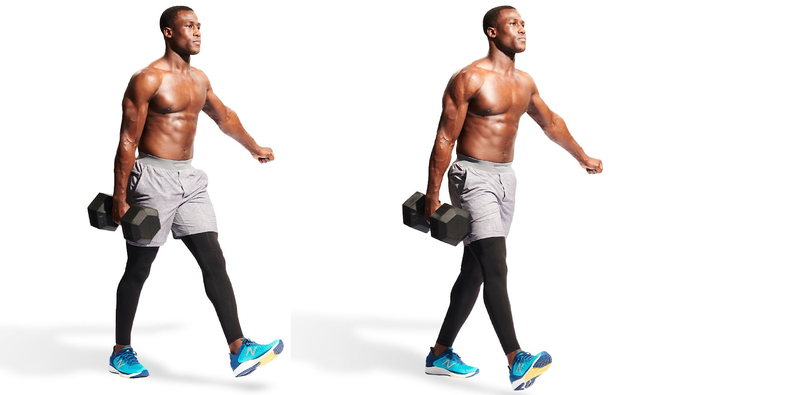
In a two-handed farmer’s carry, approximately matched weights create a fairly symmetrical external load. Both hands work and the trunk stabilizes your walking position. In a suitcase carry, one hand holds one weight, so the trunk must resist tipping toward that side. Both variants can be productive, but they are not interchangeable when comparing distances, total weight, or grip fatigue.
Start your suitcase walks with a lighter dumbbell than you would use for two-handed carries. Watch the top of your shoulders: leaning away from the weight to compensate is still a lean. Keep the loaded shoulder from collapsing and your nonloaded arm relaxed rather than using it to swing dramatically for balance. Walk the same route on both sides, and log them separately if there is a meaningful difference. Some natural asymmetry is common; rushing to force perfect symmetry with more weight is not a good correction.
If you want to progress grip endurance, short farmer’s walks with two implements give you straightforward repetitions of the same hand demand. If your goal is trunk control with a unilateral challenge, suitcase walks can complement them. For conditioning, multiple lighter carries with measured rest may raise breathing and heart rate, but they should not replace dedicated aerobic training by assumption.
Straps change the purpose of the exercise. They may help when training an overload or locomotion variation is the priority and grip is otherwise the bottleneck, but they remove part of the very grip challenge many people want. If you use straps, label those sets clearly in your log and keep at least some unassisted carrying if grip development is an actual goal.
A six-week carry progression for grip and loaded walking
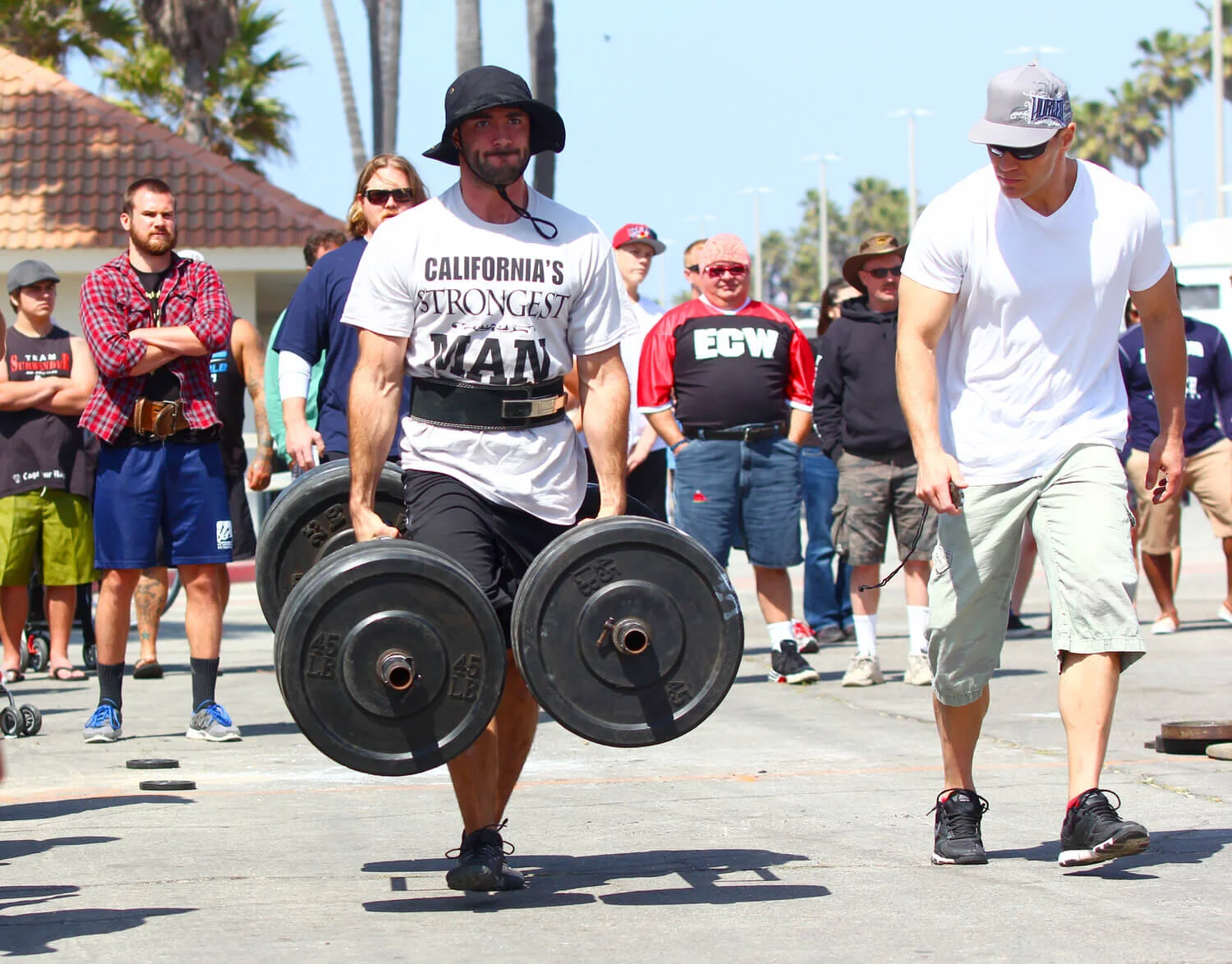
The following is a practical starting framework, not a laboratory-tested guaranteed result. Add carries once or twice a week after your main strength exercises, with at least a day of lighter grip demand between harder sessions. Choose loads that leave you able to set the weights down deliberately. Distances are guidelines: a time equivalent is fine when your space is limited.
| Weeks | Farmer’s carry session | Optional second session | Progression focus |
|---|---|---|---|
| 1–2 | 3 × 15–20 m, 60–90 s rest | 2 × 15 m suitcase carry per side | Learn pickup, posture and clean turns |
| 3–4 | 4 × 20–25 m, 75–120 s rest | 3 × 15–20 m suitcase carry per side | Build repeatable distance and grip time |
| 5–6 | 4 × 25–30 m, 90–150 s rest | 3 × 20 m suitcase carry per side | Add small load increments only when form stays solid |
Start each session with one lighter rehearsal walk. A sensible first working weight is one you could carry slightly farther than the prescribed distance without stumbling or opening your hands. If the final set becomes a fight to avoid dropping the dumbbells, reduce the load next time. The aim is a hard finish with control, not a forced failure at an arbitrary line.
Progress only one variable at a time. First reach the top of your distance range with smooth steps across all sets. On a later session, increase each hand’s weight modestly and return to the lower end of the range. Alternatively, hold the weight constant and add a set when your recovery supports it. Avoid simultaneously adding distance, weight and more sessions, especially if rows, deadlifts or pull-ups already tax your grip.
Track both weights separately, walking distance or seconds, rest time, and the reason a set ended. A simple note such as “30 m, 24 kg per hand, hands slipping but position stable” is more informative than “heavy farmer’s walk.” During week six, compare a repeat of your original week-one route at the original load before declaring progress. Better control can be a real improvement even if you are not yet carrying heavier.
Equipment Worth Exploring
Explore equipment, accessories and gear from our carefully selected range.

Leather Lifting Straps
Padded leather straps support grip during heavy rows, deadlifts and pulling exercises.


Competition Plates
Competition-style bumper plates for Olympic lifts and loaded strength training.

Leather Wrist Grips
Padded leather lifting grips help support the hands and wrists on heavy pulling exercises.

Angles 90 Grips
Flexible grip attachments that allow natural wrist movement during pulling exercises.


Pro Sled System
Heavy-duty push-pull training sled for loaded conditioning, speed, and strength work.
Common mistakes, recovery and when to stop
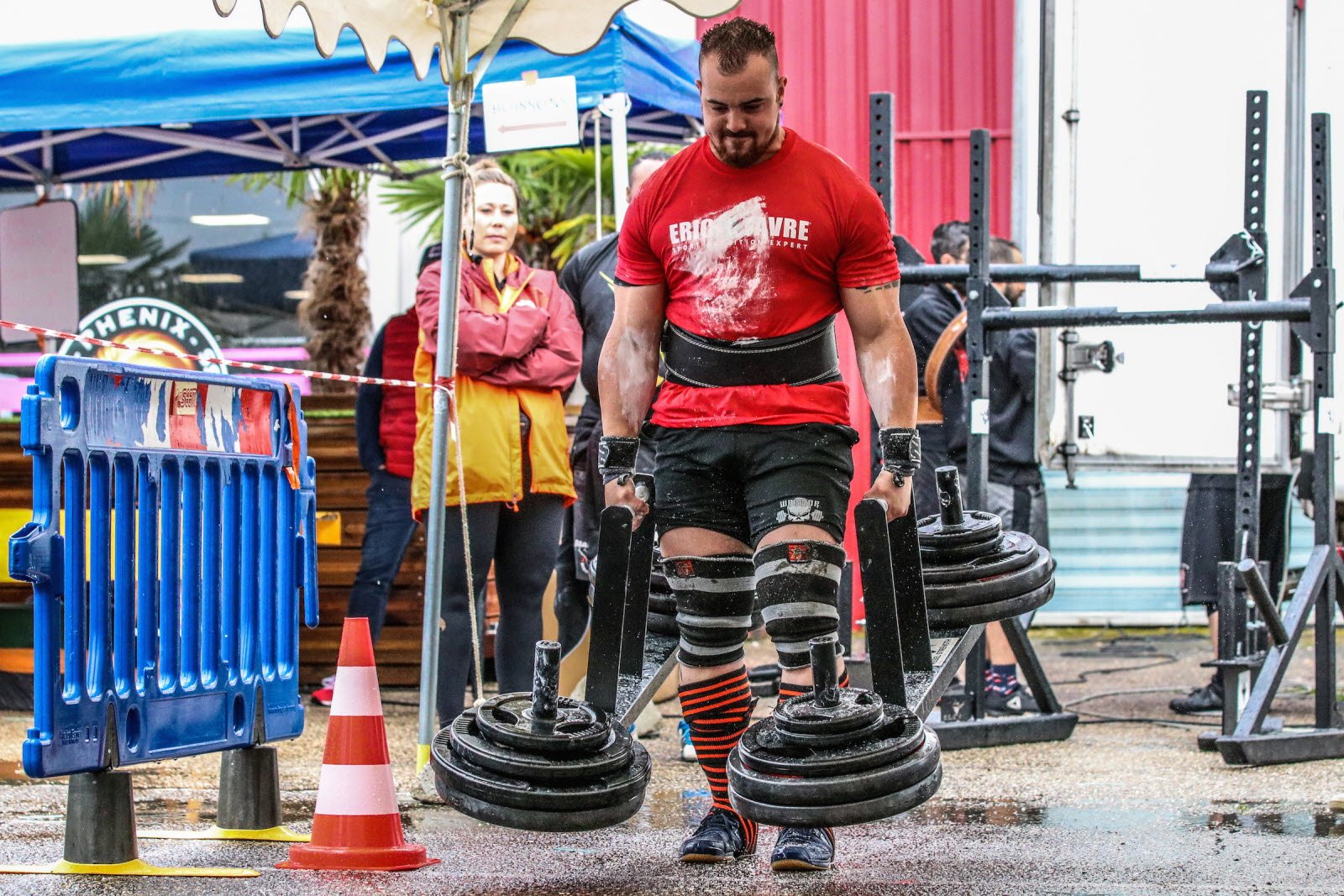
The most common mistake is turning a carry into a contest of pickup strength. A load you can deadlift once may still exceed what your hands, posture, or path can support for a controlled walk. Other recurring problems include shuffling so quickly that the weights swing, leaning to one side, making an abrupt turn on a slippery surface, holding your breath for the entire set, and finishing only after the grip is already giving way.
Think about the entire training week. Carries can create forearm soreness and fatigue in muscles that also support rows, pull-ups and deadlifts. If your next pulling session consistently suffers, move carries later in the week, reduce hard sets, or separate them from your most important grip-limited lifts. Calluses, handle texture and sweat affect grip; chalk may help where allowed, but damaged skin is a reason to modify or stop rather than ignore pain.
Stop the carry and set the weights down if you feel sharp pain, dizziness, sudden loss of hand control, or a position you can no longer correct safely. Keep the walk clear of other gym users and children. Heavy loaded walks are not a place to test unstable adjustable equipment or carry on uneven, icy, or obstructed flooring.
Bottom line: the farmer’s carry earns a place in training because it makes your hands, trunk and walking mechanics cooperate under load. Start with the implement you can control, log distance and weight, and add difficulty only after the full route—not just the pickup—looks and feels solid.
Functional Fitness Shirts & Workout Gear
Functional-fitness shirts, tanks and workout gear for athletes who train strength, conditioning and everything in between.

Happy Kettlebell Emoji Smiley Kettlebell Workout Shirt Tank Top
Bring “Happy Kettlebell Emoji” humor to your next lifting session.

Kettlebell Heartbeat Crewneck Pullover Sweater Workout T-Shirt
For laid-back days and bodybuilding humor: “Kettlebell Heartbeat”.

OnlyGains Kettlebell Meme Hooded Jumper Hoodie
Bring “OnlyGains” gym humor to lazy days and post-workout plans.

Rap God Kettlebell Gym | Funny Bodybuilding Vest Tank Top
Train hard, laugh a little, and rep “Rap God Kettlebell”.

Cheeseburger Kettlebell – Burger Swings Meme Jumper Pul T-Shirt
Keep things casual with a little “Cheeseburger Kettlebell” attitude.

Donut Kettlebell – Bakery Gains Meme Jumper Pullover T-Shirt
Bring “Donut Kettlebell” humor to your everyday gym style.

Super Kettlebell Decal for Water Bottles Laptops Gym Ge Sticker
Bring “Super Kettlebell” attitude to your water bottle or laptop.

Hybrid Athlete Strength Tee
Show some lifting attitude with a playful “Hybrid Athlete” tee.