Advertising disclosure: This page includes affiliate product links that may earn us a commission, as well as products from our own store.
A weighted pull-up can be a brutally effective strength exercise, but a dip belt is useful only when the bodyweight movement under it is solid. Here is how to decide when to add load, rig your belt without swinging plates, choose a grip, and progress over six weeks without trading your range of motion for a heavier number.
What weighted pull-ups actually change
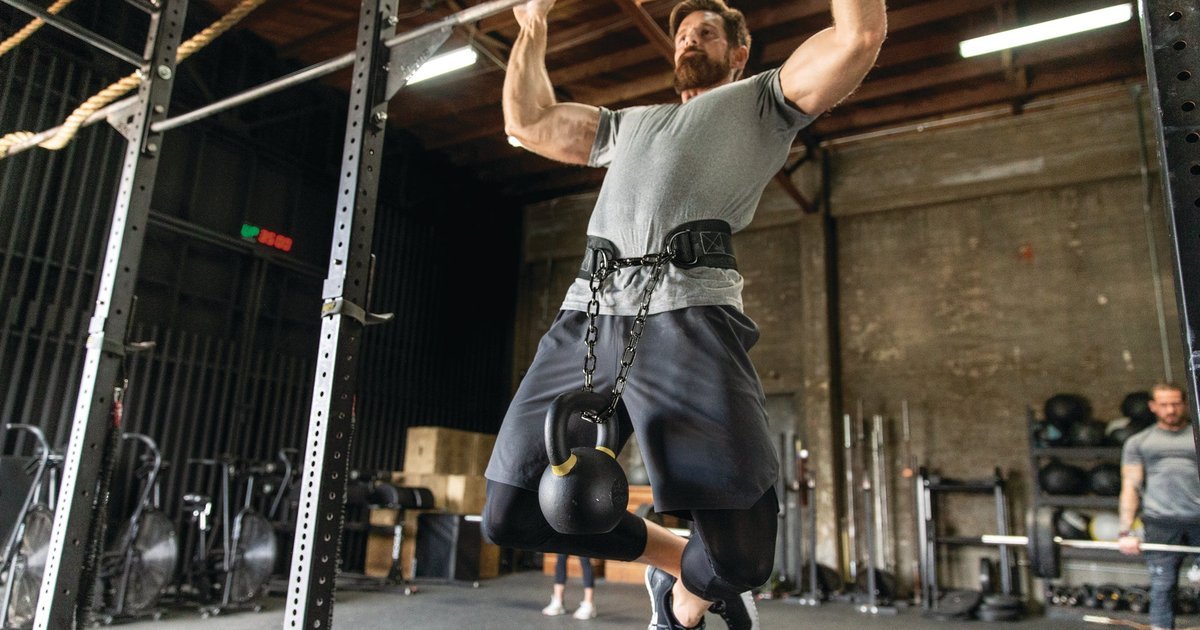
A pull-up is already a demanding vertical pull: the lats drive the upper arms toward the torso, the elbow flexors assist, and the shoulder blades, trunk and grip help control your path. A weighted pull-up keeps that basic pattern while increasing the resistance your body must move. The obvious difference is a plate hanging from your hips or a vest resting on your torso. The less obvious difference is how quickly sloppy movement gets exposed when the load rises.
Adding weight is especially useful when your bodyweight sets have become easy enough that you need many repetitions to approach a challenging effort. A small additional load lets you train lower rep ranges without turning each set into an endurance test. It is not automatically a better hypertrophy exercise than bodyweight pull-ups: sufficiently hard, controlled sets can build muscle across a broad range of repetitions. A heavier pull-up is a specific way to improve loaded pulling strength, not a magic shortcut to bigger lats.
Think in terms of total resistance, not the number printed on the belt. A 90 kg lifter wearing 10 kg is moving a very different combined load from a 60 kg lifter wearing the same plate. Your range of motion, body position and the percentage of the movement you control also influence difficulty. Comparing belt plates alone across athletes is a poor measure of relative strength.
Weighted pull-ups train vertical pulling, not every back function. Horizontal rows still offer valuable scapular movement and upper-back loading, while pulldowns make very small resistance adjustments straightforward. Use the loaded pull-up as one tool within a balanced back program instead of expecting it to replace everything else.
Build the bodyweight base before loading
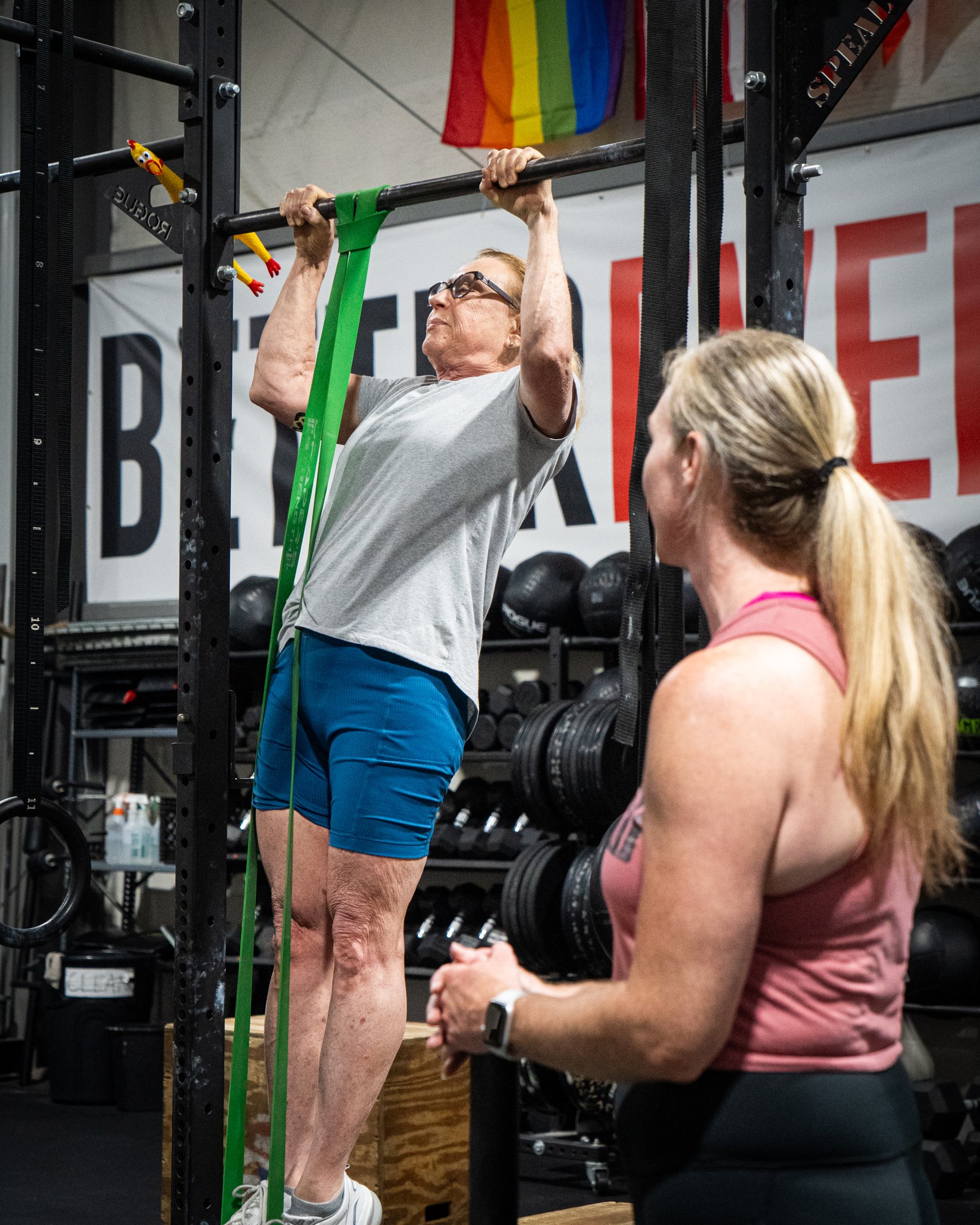
Before attaching a plate, make your bodyweight pull-up repeatable. Start each rep from a controlled extended-arm position that your shoulders tolerate, pull without a deliberate kick, bring the chin above the bar without craning the neck, and lower under control. The finish should look similar on repetition one and repetition eight. A clean set of roughly eight to ten reps is a useful practical milestone, but it is a coaching guideline rather than a scientifically fixed qualification test.
If you can perform only three clean bodyweight reps, loading a dip belt is unlikely to improve your technique. Build capacity first with multiple small sets that stay shy of failure, assisted pull-ups, controlled eccentric repetitions and pulldowns. A band or assistance machine can help you practice the same general movement, but assistance varies across the range; record which method and assistance level you use rather than treating every assisted rep as equivalent.
Try a two-week readiness check: twice weekly, after warm-ups, perform three sets of quality bodyweight pull-ups with two or three reps still in reserve. If you can keep your chosen grip and top-to-bottom travel consistent for all three sets, test a tiny added load on a subsequent session. If the first weighted attempt changes your range substantially, return to bodyweight or try a smaller increment.
Heavy bodyweight is not a sign of failure. Bigger lifters often have a high absolute pulling demand before adding any plate. The point is to progress the same standard of motion, not to race toward an arbitrary belt number. For lifters with persistent shoulder or elbow symptoms, a comfortable neutral-grip pulldown or supported variation may be the better near-term choice.

Calisthenics Shirts & Street Workout Gear
Calisthenics and bodyweight-training gear for pull-ups, dips, handstands and street-workout athletes.


Spider Hero Pullups Hooded Pullover Gymbros Workout Fan Hoodie
Stay casual and show some superhero attitude with “Gym Spider Hero Pullups”.

Calisthenics Hanging Out Crewneck
Bring “Calisthenics Is My Idea of Hanging Out” humor to your everyday gym style.

Pull Up Or Shut Up Decal for Water Bottles Laptops Cali Sticker
Stick a little “Pull Up Or Shut Up” humor on your favorite gear.

Lord of the Calisthenics Rings Gym | Gollum Funny Worko Tank Top
Bring “Lord of the Calisthenics Rings” humor to your next lifting session.

Calisthenics Evolution Decal for Water Bottles Laptops Sticker
Put “Calisthenics Evolution” gym humor on your laptop, bottle, or gym gear.

Big Dip Energy Hooded Pullover for Calisthenics Dips Fa Hoodie
Show off your lifting humor in a laid-back “Big Dip Energy” hoodie.

Turn Off Gravity Funny Calisthenics Gym Crewneck Pullov T-Shirt
Show some gym-day personality with “Turn Off Gravity Funny Calisthenics”.


Always Pull Yourself Up Hoodie
Make your off-duty look more fun with “Always Pull Yourself Up”.
Dip belt setup: attachment, clearance and a safe start
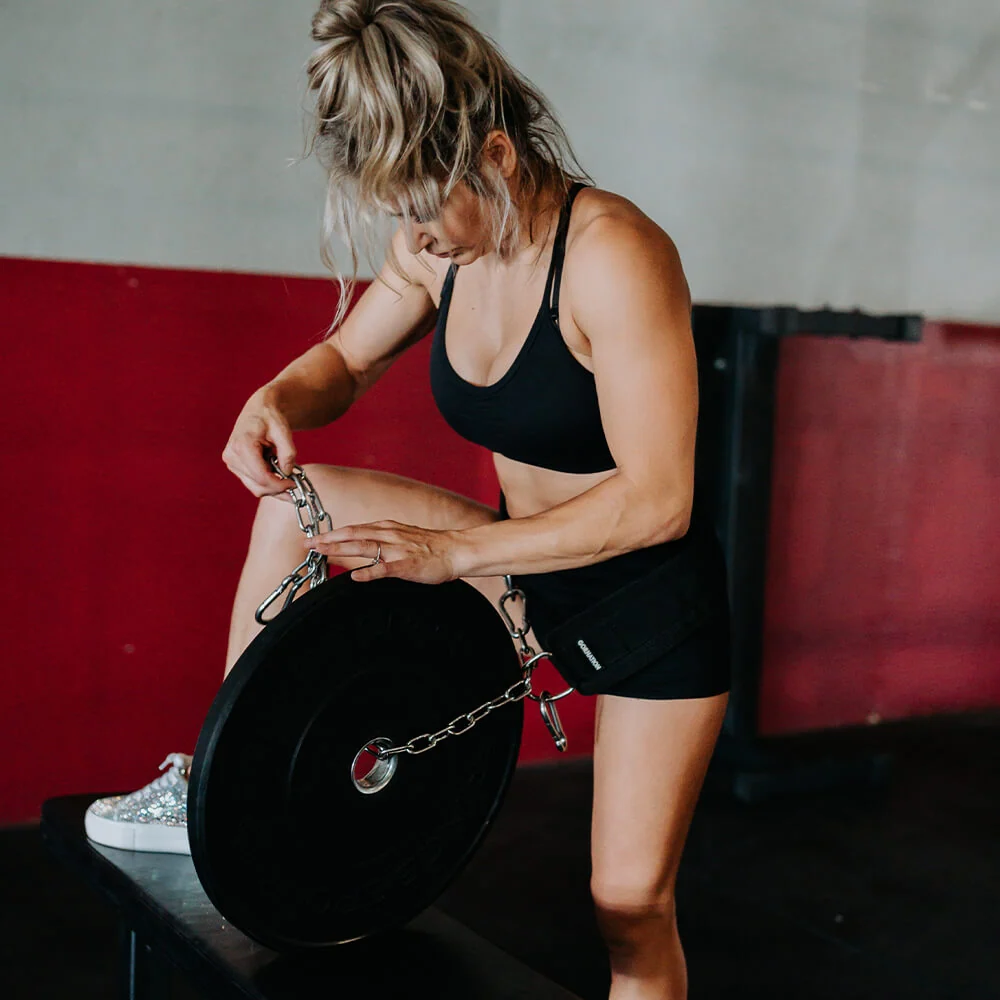
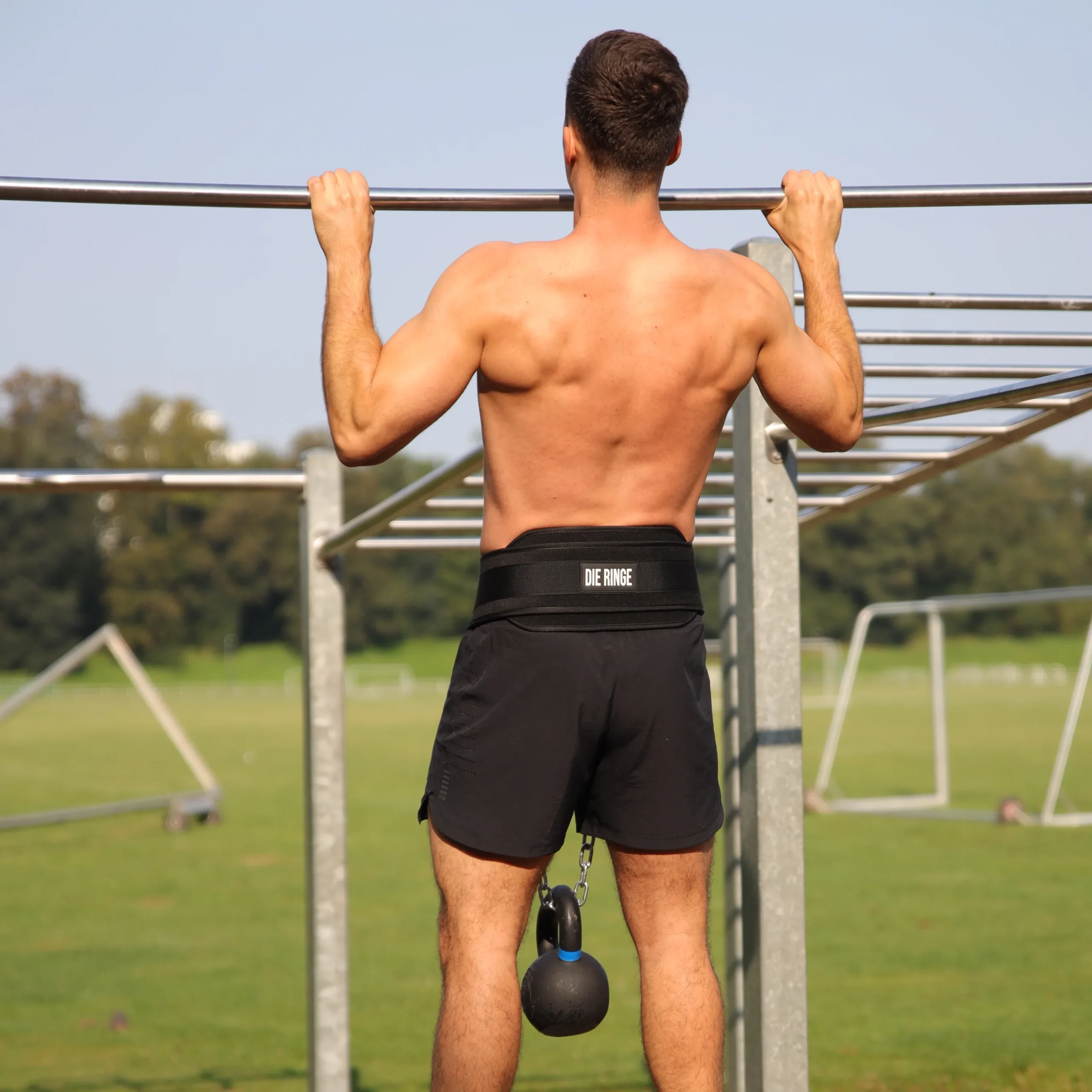
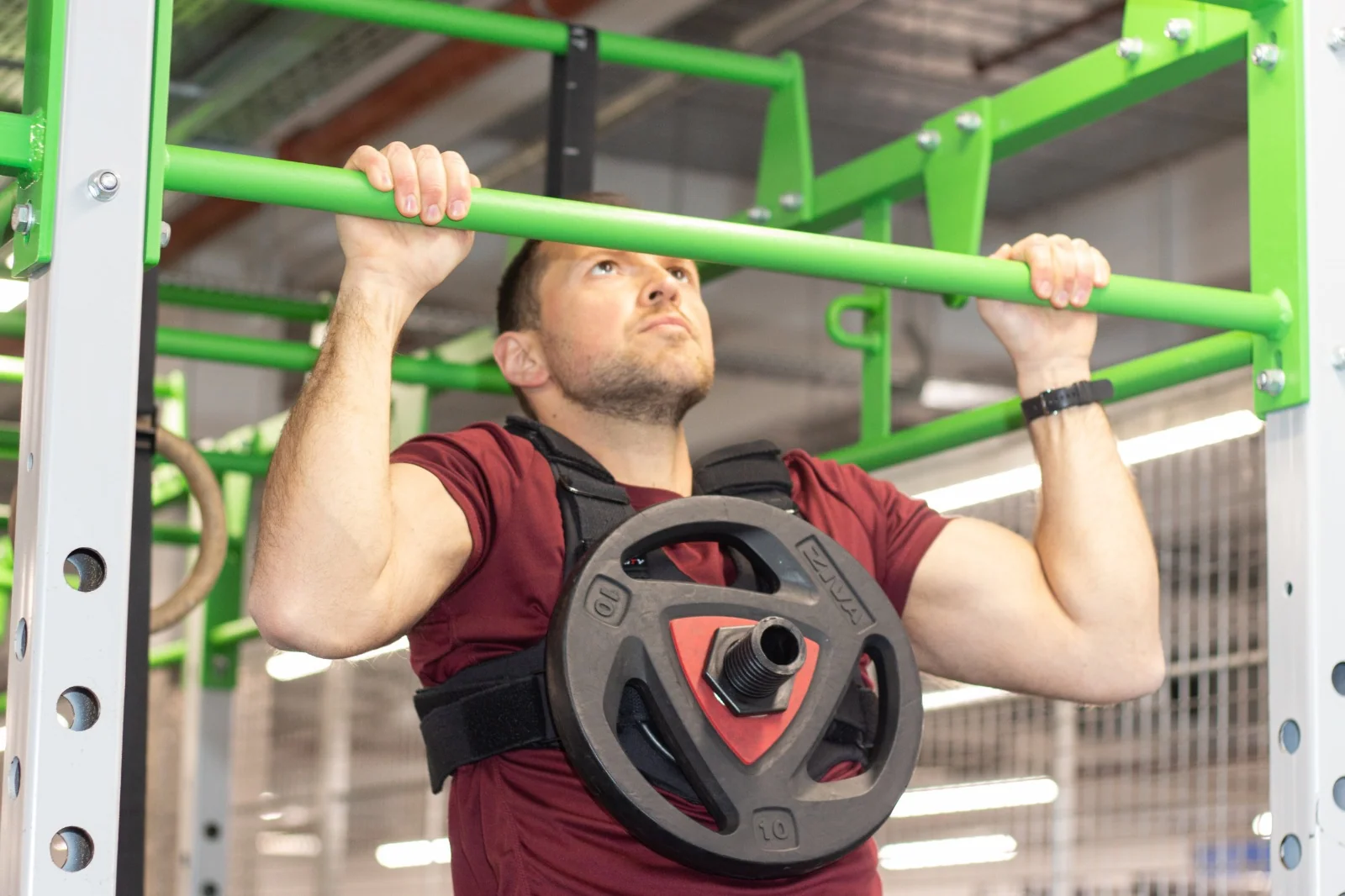
A proper dip belt has a broad supporting section around the back or hips and a load-rated chain or strap connecting its front attachment points. Set the pad low enough that it does not climb toward your ribs, then run the chain through a plate’s center hole or a compatible kettlebell handle. Close the approved carabiners fully. Use the maker’s load rating and connection instructions rather than assuming a small accessory clip is safe for suspended plates.
Before stepping up to the bar, check that the plate clears the floor at the bottom, the chain does not rub your knees, and the weight cannot swing into the station. The precise chain length depends on your height and the rack; a tall athlete and a short athlete do not need identical settings. An excessively long chain may let the plate contact the floor, while one that is too short can interfere with the thighs. Adjust a link at a time and test it with both feet still supported.
Use a stable step or integrated platform that the station permits. Grip the bar first, let the plate settle, then move into the hang with the load centered beneath you. Do not jump for a high bar with a heavy plate dangling, and do not release your hands into an uncontrolled drop at the end. Return your feet to the step, remove tension from the chain and only then unclip the weight.
A loaded vest can distribute resistance across the torso and simplify setup for moderate loads or circuits, but its fit, movement and total capacity matter. Holding a dumbbell between the feet can work for light loads, although it competes with leg and ankle positioning. For frequent incremental strength work, the dip belt is often easier to adjust between sets; none of these options excuses unstable rigging or loose hardware.

Equipment Worth Exploring
Explore equipment, accessories and gear from our carefully selected range.


Power Tower
Freestanding pull-up and dip station with adjustable handles for bodyweight training.


Grip Plates
Rubber-coated weight plates with handholds for loading barbells and machines.

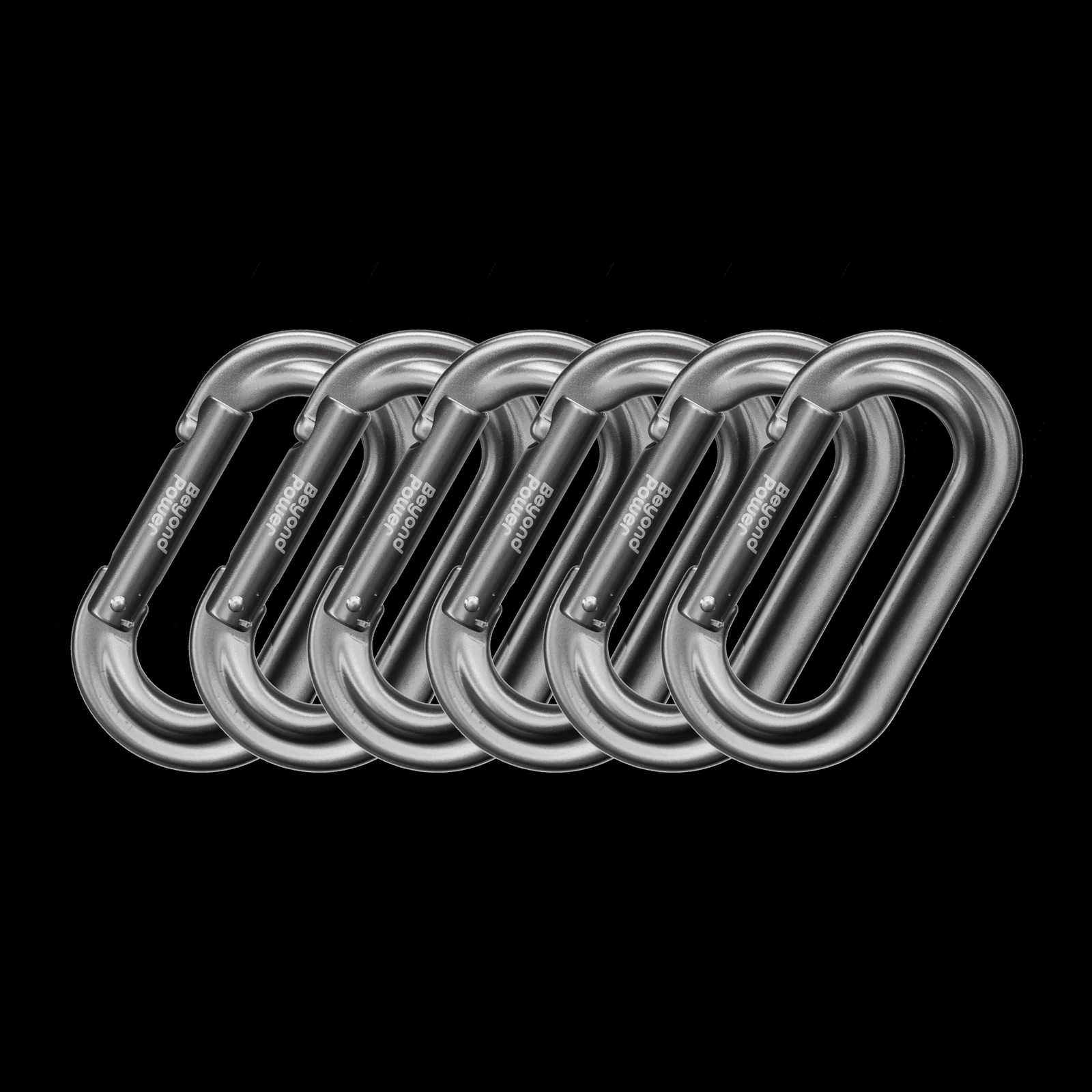
Premium Carabiner
Durable carabiner for connecting cable attachments and training accessories.
How to perform a strict weighted pull-up
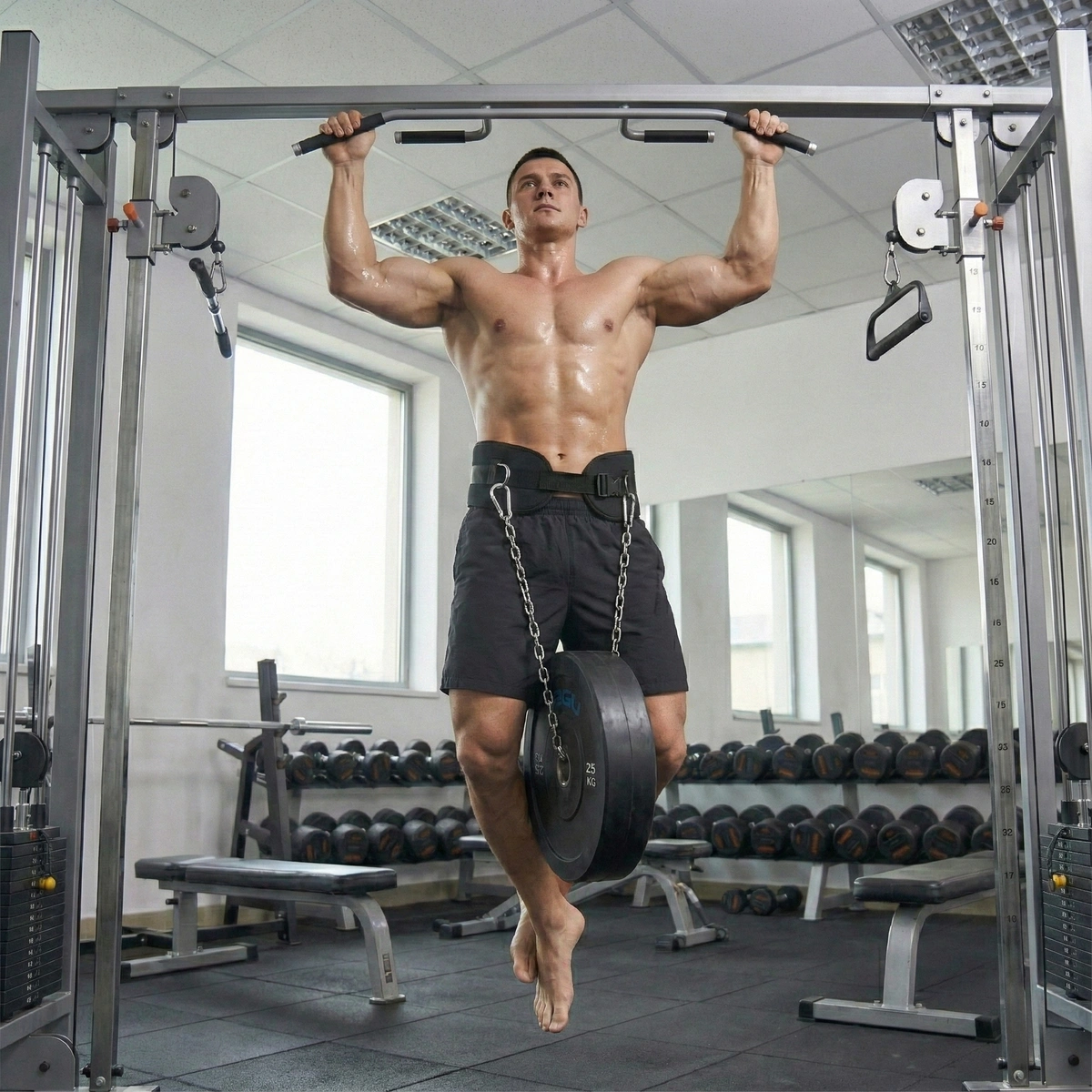
Warm up with easy shoulder and upper-back movement, then a few submaximal pull-ups before adding the plate. Choose a secure grip slightly wider than the shoulders if it feels natural; shoulder-width or parallel handles can be just as useful. Start with your ribs and pelvis reasonably stacked and the load hanging quietly, not drifting forward as a pendulum.
- Enter the hang deliberately. Straighten your arms to your comfortable repeatable bottom position without bouncing from the joints.
- Pull elbows down. Think about bringing the upper arms toward your sides rather than flicking the chin toward the bar.
- Keep the torso organized. A modest natural lean is fine, but repeated hip thrusts and knee drives should not substitute for pulling force.
- Finish the same way every time. Bring your chin clearly over the bar without an exaggerated neck reach; do not count a rep that stops several inches early.
- Lower with control. Return to the established bottom position and allow the hanging plate to settle before the next rep.
Do not confuse a still body with a completely rigid body. Small adjustments in scapular motion and torso angle occur during a normal pull-up. What matters is that your rep standard remains comparable as the set becomes hard. Record a side-view video occasionally; it often reveals shortened reps and a swinging chain that you cannot feel while working.
Set the weight down when technique deteriorates instead of grinding increasingly different reps. If the bar is too high to enter or exit safely while loaded, solve that equipment issue before you train heavy. A strong repetition you can repeat next week is more useful than an improvised max effort that puts your shoulders in an awkward exit position.
Grip, elbows and recovery when the load increases
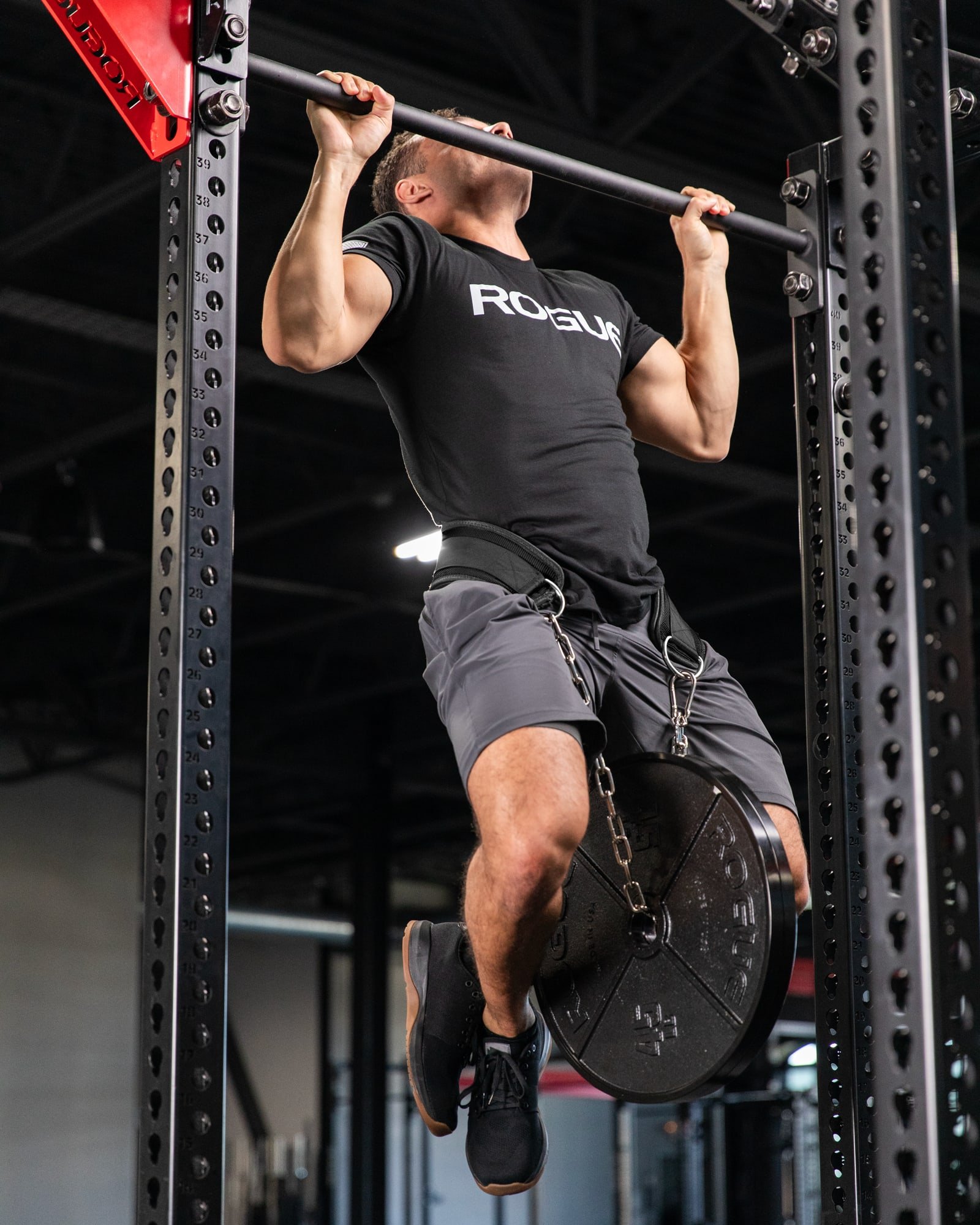
Your preferred grip affects comfort and the contribution of different muscles, but it does not convert the pull-up into an isolated movement for the lats or biceps. A palms-forward pull-up is an excellent standard; a supinated chin-up usually lets the elbow flexors play a prominent role; neutral handles may be a comfortable option when the wrists dislike a fixed bar. Select the grip that provides controlled range and repeatability rather than chasing claims about a universally superior angle.
The first symptom of excessive loading is often not a dramatic failed rep. More commonly, the elbows become sore during the lowering phase, the wrists twist awkwardly, or the next workout feels unexpectedly heavy. This can reflect too much high-intensity volume, a sharp loading jump or repeated near-failure sets. Reduce load and weekly hard sets, adjust the grip, or temporarily switch to cable work if discomfort is building; persistent pain warrants an appropriate professional assessment.
Keep at least one or two days between heavy vertical-pulling sessions when possible. If you also train heavy rows, curls and deadlifts, your grip and elbow flexors may already be accumulating substantial work. Counting only your pull-up sets underestimates the total stress on the hands and elbows. Two excellent weighted sessions are often more productive than four compromised ones.
Use a little margin: most working sets can stop with one to three technically clean repetitions still available. Save true maximum attempts for occasional testing, not routine back day. The goal is progressive strength with healthy training continuity. More loading is helpful only while your body can recover enough to produce the required movement again.
Equipment Worth Exploring
Explore equipment, accessories and gear from our carefully selected range.

Leather Lifting Straps
Padded leather straps support grip during heavy rows, deadlifts and pulling exercises.

Leather Wrist Grips
Padded leather lifting grips help support the hands and wrists on heavy pulling exercises.

Angles 90 Grips
Flexible grip attachments that allow natural wrist movement during pulling exercises.


VForce Lat Tower
Wall-mounted cable tower with pivot arms and adjustable 1:1 or 2:1 pulley ratios.

Trinity Lat Machine LSW-850
Weight-stack pulldown tower offering three cable directions and adjustable seated support.

48in Aluminum Lat Bar
48-inch aluminum lat pulldown bar with knurled grip and rotating center swivel.

Six-week weighted pull-up strength progression
This plan assumes you already perform several strict bodyweight pull-ups, can use a suitable belt or vest, and can train vertical pulling twice a week. Pick an added load that allows four clean reps with about two reps in reserve; for many first-time weighted lifters that means a small change plate, not a large plate. Keep both sessions in the same grip and range so the progression is measurable.
| Week | Session A: strength | Session B: volume and technique | Progression focus |
|---|---|---|---|
| 1 | 4 x 4, light added load | 3 x 6 bodyweight or lightly loaded | Establish consistent form |
| 2 | 4 x 5 at same load | 3 x 7 with controlled lowering | Earn more clean reps |
| 3 | 4 x 4, small load increase if ready | 3 x 6 to 8, manageable load | Increase resistance, not swing |
| 4 | 4 x 5 at stable load | 3 x 7 to 8 | Build repeatable volume |
| 5 | 5 x 3, modestly heavier | 3 x 6 easy to moderate | Practice heavier triples |
| 6 | 3 x 3, then one controlled benchmark set | 2 to 3 easy sets | Assess progress without a forced max |
Rest about two to three minutes for the heavier sets and adjust upward if you need it to keep quality. Do one or two low-fatigue bodyweight warm-up sets, then increase the load gradually. After the main pull-ups, a manageable horizontal row and a small amount of arm work can complete the session; do not pile on multiple exhaustive vertical-pull variations.
Use double progression rather than guaranteed weekly increases. Once all programmed sets reach the top of their rep target at the same depth and with the planned repetitions in reserve, add the smallest usable amount at the next exposure. If the load is too heavy or sleep and recovery are poor, repeat the previous week’s numbers. That is normal training management, not falling behind.
For the week-six benchmark, compare like with like: identical grip, a similar warm-up, the same full-range definition and similar rest. A gain might be one extra clean repetition at the original added load, a small plate increase for the same reps, or visibly smoother repetitions. The outcome is not guaranteed, and this sample plan is a starting framework rather than an individualized prescription.
Bodybuilding Shirts & Workout Gear
Bodybuilding shirts, tanks and gym gear for lifters chasing muscle, size, symmetry and the pump.

Back In Shape Back In Black Album Cover Parody AC/DC He T-Shirt
Add a playful “Back In Shape” touch to your casual rotation.

Back Sabbath Back Day Heavy Metal Back Training Workout T-Shirt
Bring “Back Sabbath Back Day” humor to your next gym day.

Pumpeye – Strongest Sailor Meme – & , Gymbro & T-Shirt
Bring “Pumpeye” humor to your next gym day.

Lightweight Baby Ronnie Tee
Heavy lifts, good laughs, and a little “Lightweight Baby Ronnie Coleman” energy.

Big Gun – AC/DC Rock Music Big Biceps & Gains – Meme T-Shirt
Rep “Big Gun” humor in and out of the gym.

I Love Gym Bicep Heart | Swole Heart Valentine's Day Wo T-Shirt
Bring “I Love Gym Bicep Heart” humor to your next gym day.

Unleash The Beast Shirt Swole Unicorn & Top T-Shirt
Bring “Unleash The Beast” humor to your next gym day.

GymTok – TikTok Parody Bicep Workout Vest for Gymbros a Tank Top
Bring “GymTok” humor to your next lifting session.


I Love Iron Hero Iron Man Meme & Gains T-Shirt
Rep “I Love Iron Gym Hero” humor in and out of the gym.
Common mistakes, smart alternatives and when to pull back
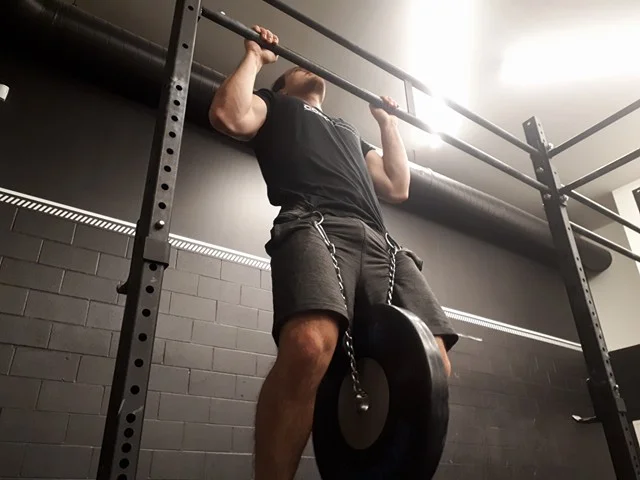
The biggest weighted-pull-up mistake is chasing a plate number while the movement shrinks. A partial rep might be a legitimate targeted variation if programmed as such, but it should not be recorded as a full strict repetition. Other common problems include an insecure carabiner, a chain that repeatedly strikes the floor, throwing the legs forward to start each rep, and dropping off the bar while carrying load.
If you cannot maintain a strict lower position, lower the weight. If your chin reaches the bar only with a big neck stretch, stop counting the high reps. If your grip slips, address bar cleanliness, grip technique or sensible supporting accessories; do not suddenly add more weight to a movement you cannot hold securely. If a belt twists or pulls painfully on your hips, check its fit and loading arrangement before the next set.
For beginners, assisted pull-ups and bodyweight doubles or triples build a base. For experienced lifters whose elbows need a break, neutral-grip pulldowns or a carefully loaded machine allow controlled effort with easier setup. A chest-supported row complements, but does not directly replicate, vertical pulling. A weighted vest can be useful when a dangling plate clashes with the environment; however, do not exceed the vest’s approved loading arrangement.
Think beyond strength numbers. Is the same equipment available every week? Can you safely reach the bar? Is the added load making your other back sessions worse? Can you recover before the next hard set? If any answer is no, choose the variation that lets you train consistently. The winning six-week program is the one that improves measurable pulling performance while preserving the range, setup and comfort you can actually reproduce.
When the technique is stable, small plates and patient progression can make a familiar pull-up challenging again. When it is not, the smartest next step may be an excellent bodyweight rep—not another 10 kg hanging from your belt.