Advertising disclosure: This page includes affiliate product links that may earn us a commission, as well as products from our own store.
Calf raises get almost all the attention in lower-leg training. Yet the muscle on the front of your shin has a different job: lifting the foot toward the leg and controlling how it returns. Tibialis raises train that action with a wall, a band or a loaded device. Here is the useful anatomy, exact form and a six-week progression—without promising a miracle cure for shin pain.
What the tibialis anterior actually does
Look down the outside of your shin, just beside the front edge of the tibia. The fleshy area there is largely the tibialis anterior. When it contracts, it pulls the top of the foot toward the shin. That motion is called ankle dorsiflexion. The muscle also assists with turning the sole inward, but the toe-lifting action is the one you train directly with tibialis raises.
Think about a normal step. As the leg swings forward, the front-of-shin muscles lift the foot so the toes clear the ground. When the heel first contacts the floor, they help control how quickly the forefoot lowers. A tibialis raise gives that function an uncomplicated strength exercise: lift the forefoot, pause, and lower it deliberately.
This is the opposite ankle action to a standing calf raise. Gastrocnemius and soleus help push the forefoot down, known as plantarflexion; tibialis anterior brings it back up. Training one direction does not automatically replace training the other. A balanced lower-leg routine can contain both movements, although not every lifter needs a dedicated shin workout.
Direct work may be useful if your current program is all calf raises, if you want more control during running or jumping drills, or if you simply want a progressive exercise for the neglected front of the lower leg. It is not proof that your squat depth, knee pain or sprint speed will improve. Stronger dorsiflexors are a trainable capacity; improvements in other activities still depend on practice, load management and the rest of your program.
Wall tibialis raises: the simple setup that works
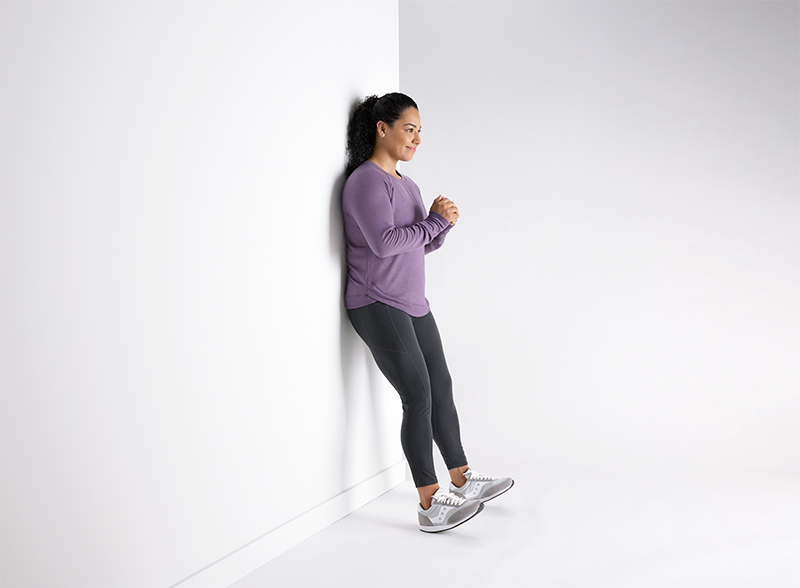
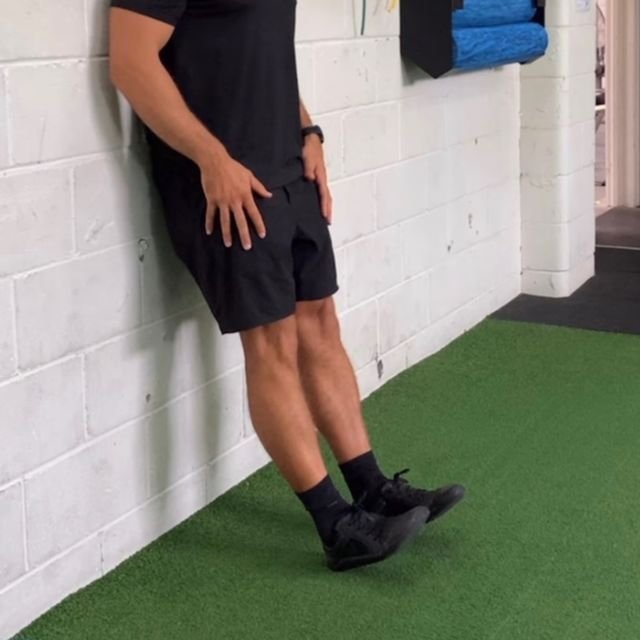
Start with your back and hips resting against a solid wall. Put your heels roughly 20–30 centimeters (8–12 inches) away from it and set your feet around hip width. Keep your heels planted, legs mostly straight, ribs stacked and upper body supported. From there, draw your toes and the balls of your feet upward toward your shins. Lower slowly until the forefoot returns to the floor.
- Choose the distance. Start close enough to finish the set smoothly, then move your feet forward a little only when the exercise becomes easy.
- Lift from the ankle. Think of pulling the tops of the feet toward the lower legs; do not bounce the knees or push your hips away from the wall to cheat.
- Pause briefly. A one-second hold at your highest comfortable point makes a light set more honest.
- Control the return. Take around two seconds to lower. The toes may lightly touch down; avoid repeatedly slamming them into the floor.
- Keep the heels down. Rising onto the toes turns the movement into a different exercise.
Use ten clean repetitions to calibrate the distance before chasing twenty. Most people feel a localized burn along the front of the shins, not a maximal whole-body effort. If you cannot lift the forefeet without rocking, shorten the lever by bringing your heels closer. If ten repetitions feel trivial, step a little farther out and try again.
Unequal left-right control is common. A single-leg version can expose that difference, but there is no need to start there. Progress by making two feet work well before you complicate the exercise. Sharp bony pain, swelling, numbness or pain that worsens with each repetition is a reason to stop, not a cue to push harder.
Progress without turning every rep into a bounce
The obvious way to overload wall raises is to move your feet farther from the wall. That increases the challenge because the body position changes the force you must produce to lift the forefoot. The simplest progression is therefore not more total repetitions forever: it is holding the same technique while making the same repetition range harder.
Use a useful working window such as 12–20 reps. When you complete all planned sets with a controlled top position and about two seconds down, shift the heels forward only a few centimeters for the next session. Return to the low end of the range. That gives you a progression you can write in a training log without pretending that distance equals a specific external weight.
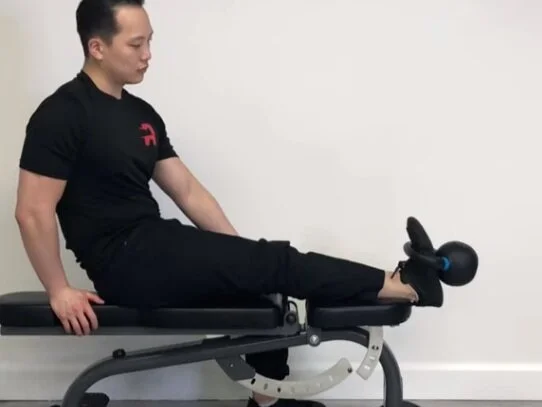
Another option is a seated kettlebell tibialis raise, where the foot raises a securely positioned light weight. It offers external resistance but also adds a balance challenge: if the handle can slip, the setup is not worth the risk. Start with a light load, a stable bench and the foot positioned so a dropped weight cannot land on your toes. A purpose-built tibialis trainer is often easier to load predictably.
For a tougher no-equipment session, try a two-second peak hold or an especially deliberate eccentric before increasing set count. The goal is still ankle movement, not facial expressions or more aggressive leaning. If you feel most of the effort in your hip flexors because you are hauling your whole leg upward, reset the setup.
Keep one variable at a time: foot distance, external load, repetitions or tempo. Changing all four makes it impossible to tell whether your tibialis strength is improving or you have just found new ways to make the movement messy.

Equipment Worth Exploring
Explore equipment, accessories and gear from our carefully selected range.


Cast Iron Kettlebells
Textured cast-iron kettlebells for swings, squats, carries, and full-body training.


Rubber Hex Dumbbells
Rubber-coated hex dumbbell pairs with a stable shape for home and commercial strength training.

Tib bar, plate-loaded machine or a simple bench?
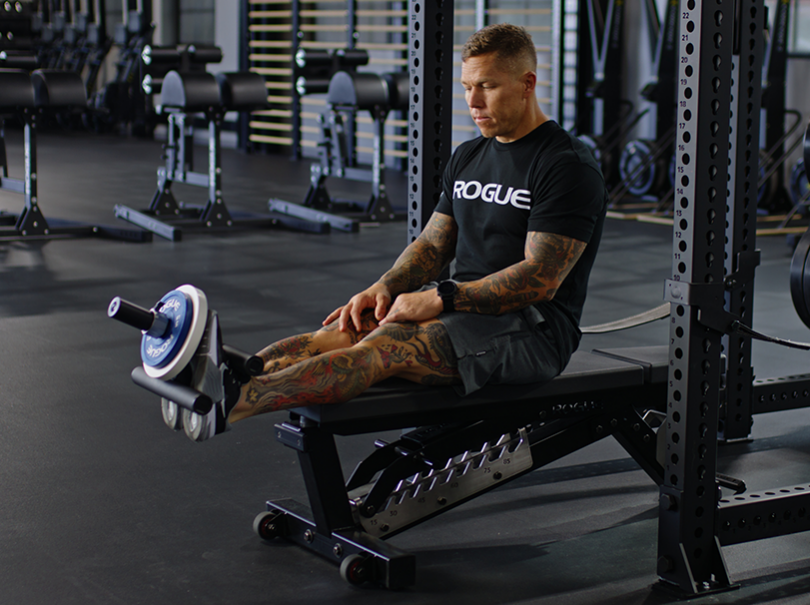
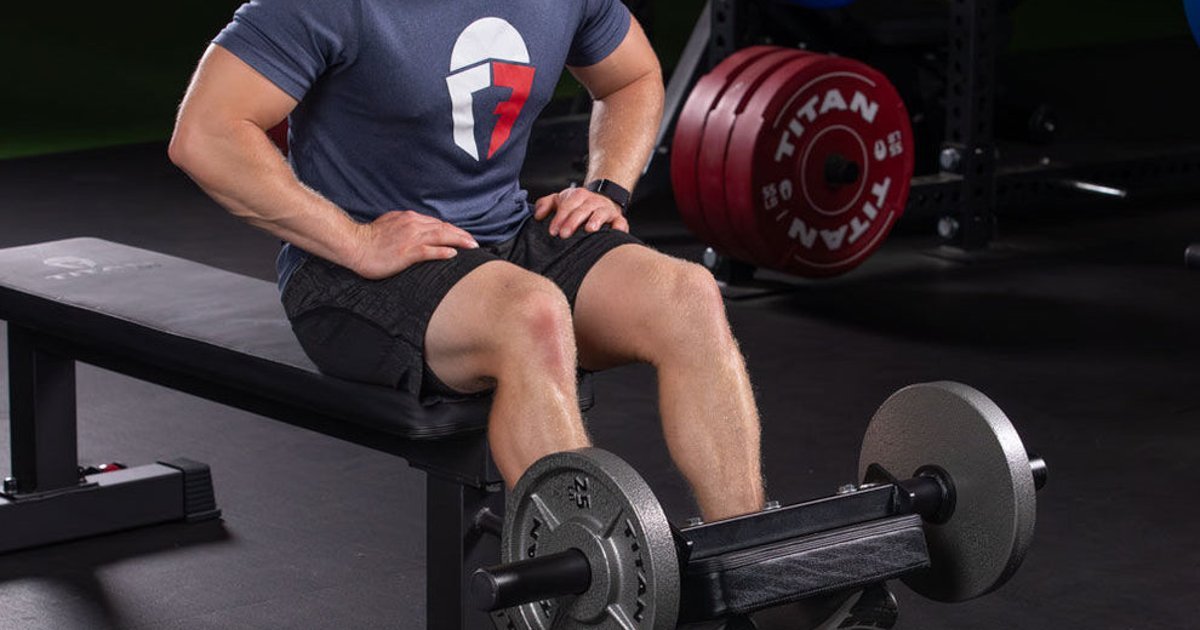
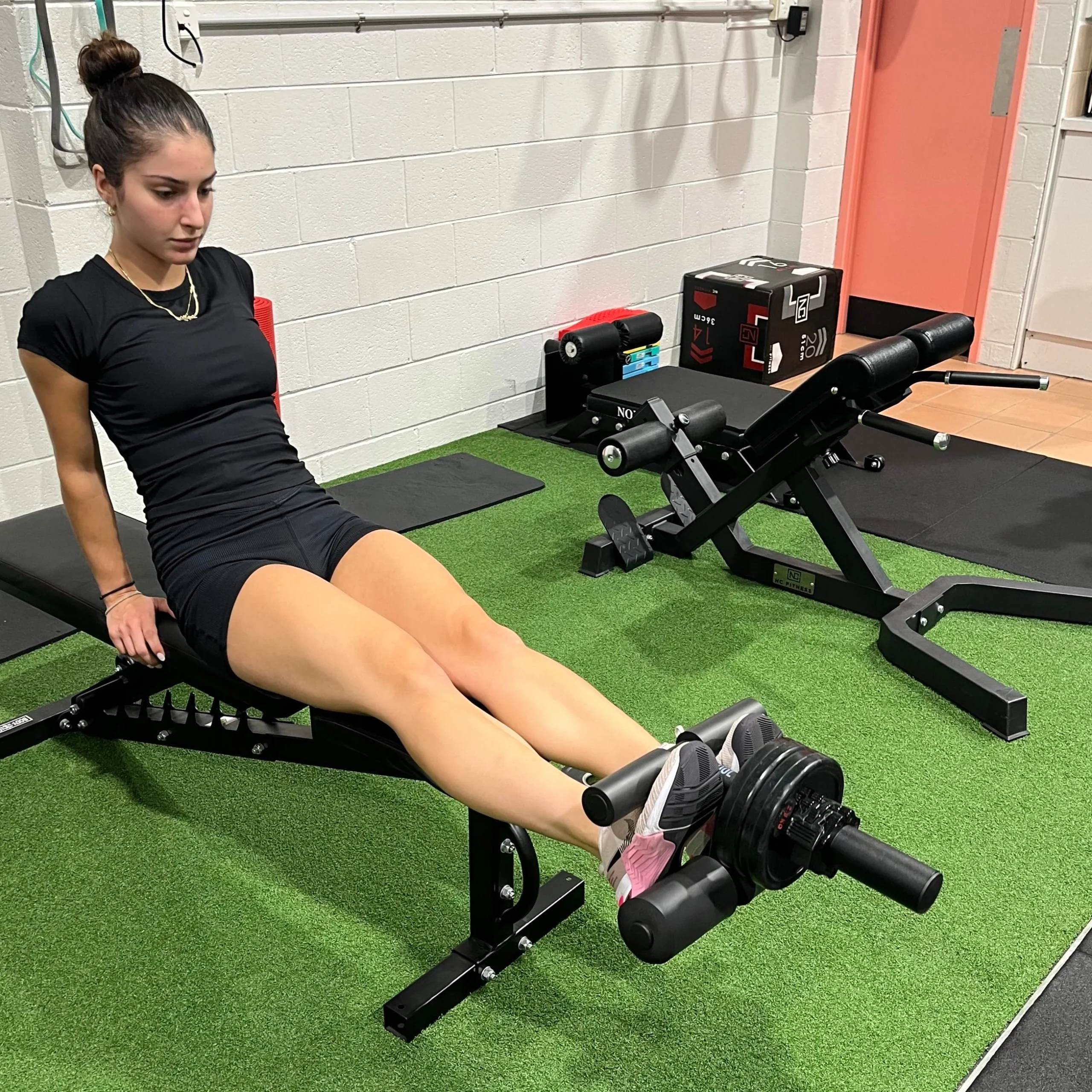
Once wall raises become easy, equipment can make progressive overload more repeatable. A tib bar attaches load to the front of the foot while you sit on a bench with the ankle free to move. Some designs train both legs together; others train one at a time. The useful feature is not the product category but a stable foot connection and a load you can increase in small increments.
A dedicated seated tibialis machine uses a foot platform and pivot, sometimes with Olympic plates. It can be convenient in a commercial gym: you sit in the designed position, align the ankle, raise the forefoot against resistance and lower under control. But the available range and machine geometry vary. Check that the pad does not pinch your ankle and that the apparatus does not push you into an uncomfortable start position.
If your gym has neither device, a firm bench and an elastic band can accomplish the same movement pattern without pretending the resistance is identical. Heavy kettlebells and improvised plates should never be balanced precariously on the toes. The best option is the one you can set up safely, repeat consistently and progressively load in small steps.
Which is best? For a beginner, the wall version wins on simplicity. For regular loaded work, a secure tib bar or machine usually wins on convenience and measurable progression. For travel, a small resistance band is versatile. A more elaborate machine is not automatically more effective when effort, range and progression are matched; there is no reason to buy one solely because someone online has large shins.
Keep equipment descriptions separate from personal evidence: pictures of equipment being used show the setup, but do not establish that a product works better than other options. Choose what fits your joint comfort, training frequency and budget.

Leg Day Shirts & Workout Gear
Leg-day gym shirts and workout gear for lifters who never skip squats, lunges and lower-body punishment.


Never Skip Leg Day Flamingo – Fitness Meme Decal for Wa Sticker
Stick a little “Never Skip Leg Day Flamingo” humor on your favorite gear.

Anti Leg Day Leg Day Club & Meme Fans Hoodie
Show off your leg-day humor in a laid-back “Anti Leg Day Leg Day Club” hoodie.

Never Skip Leg Day Chicken Legs Meme Sweater & Bros T-Shirt
Show some gym-day personality with “Never Skip Leg Day”.

Quadzilla Massive Quads Decal Leg Day Squat Meme Sticker
Stick a little “Quadzilla” humor on your favorite gear.

Legendary Leg Day – Squat Meme Vest Muscle Shirt For At Tank Top
Add some leg-day attitude to training with “Legendary Leg Day”.

Heavy Metal Skeleton Squat for Powerlifters, Bodybuilde Hoodie
Show off your metalhead humor in a laid-back “Heavy Metal Skeleton Squat” hoodie.

Leg Day Squats Deadlifts Meme Hooded Hoodie
Show off your leg-day humor in a laid-back “Leg Day” hoodie.

My Leg Hurts Leg Day Decal Water Bottles & Gear Meme Sticker
Stick a little “My Leg Hurts” humor on your favorite gear.

Coffee Shots & Heavy Squats for Leg Day, Lifting and Fi Tank Top
Add some leg-day attitude to training with “Coffee Shots & Heavy Squats”.
Band dorsiflexion and single-leg ankle control
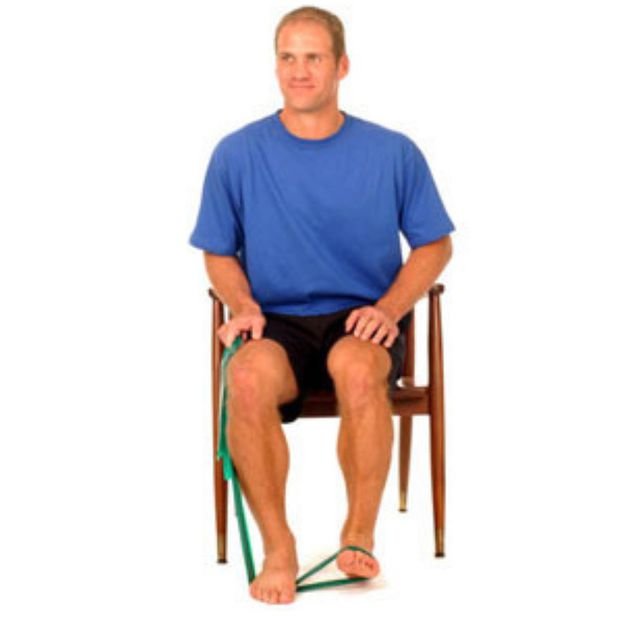
An anchored resistance band provides a useful bridge between wall repetitions and a plate-loaded device. Sit with a leg supported and the ankle free. Anchor the band firmly in front of you, loop it around the top of the foot and draw the forefoot toward the shin. Keep the knee still. Let the band take the foot back gradually rather than snapping it forward.
The key is anchor direction. If the band is pulling your toes upward on its own, it is helping the exercise rather than resisting it. Adjust the attachment until the band clearly opposes the upward movement, then choose a tension that lets the ankle travel smoothly. Avoid wrapping a tight narrow band around painful or sensitive skin.
Single-leg practice can help if the stronger side routinely takes over during bilateral work. Start each side with the same target reps and allow the weaker side to set the maximum. You do not need to force perfect symmetry in one session. A modest, repeatable left-right difference gives you something practical to monitor across several weeks.
Heel walks are another low-equipment option: lift the forefeet, keep the heels on the floor and take short, controlled steps. Because they also demand balance and coordination, start with a few steps next to support rather than turning them into a race. If your foot drops, or maintaining toe clearance becomes unusually difficult, that is different from ordinary exercise fatigue and deserves appropriate clinical assessment.
For people who spend most of their week running or jumping, the question is not whether a band produces an impressive pump. It is whether direct shin work fits alongside activity without adding an unexpected amount of lower-leg soreness. Begin with a small dose and see how your next normal session feels.
A six-week tibialis-raise plan you can actually recover from
This plan is a practical progression, not a claim that six weeks is a proven universal timeframe for growing the front of the shin. Train the movement twice per week on nonconsecutive days, after your main lifting or running work. Leave about two repetitions in reserve on most sets; use full, smooth range rather than racing to a burn.
| Weeks | Session A | Session B | Progression focus |
|---|---|---|---|
| 1–2 | Wall raises: 2 × 12–15 | Wall raises: 2 × 12–15 | Learn a repeatable heel distance and slow lowering. |
| 3–4 | Wall raises: 3 × 12–18 | Band raises: 2 × 12–15 per side | Add one set or slightly greater resistance, not both. |
| 5–6 | Wall or tib-bar raises: 3 × 12–20 | Band or single-leg raises: 3 × 10–15 | Increase difficulty only when all reps stay clean. |
Rest around 45–90 seconds between easy sets, longer when a loaded device makes the work genuinely demanding. The front of the shin is a comparatively small muscle group; excessive volume can create soreness without much extra benefit. If you are starting from zero and also building running mileage, one or two easy sets per session may be enough initially.
Record four items: exercise variation, foot distance or external load, clean reps and how the shins feel the next day. An example entry is: “Wall raises, heels 30 cm out, 3 × 15, two-second lower, no next-day soreness.” In week five, a controlled 3 × 18 at the same distance is a genuine improvement even if you have not added a plate.
If the lower legs remain unusually sore, repeat the previous week instead of forcing progression. You can also reduce sets before changing the main lower-body exercises that matter most to your goals. A couple of small sessions performed consistently beats an aggressive daily challenge that you abandon.
Equipment Worth Exploring
Explore equipment, accessories and gear from our carefully selected range.
VOLTRA
Compact digital cable trainer with smooth, adjustable resistance.


Pro Sled System
Heavy-duty push-pull training sled for loaded conditioning, speed, and strength work.


GymPin Starting Blocks
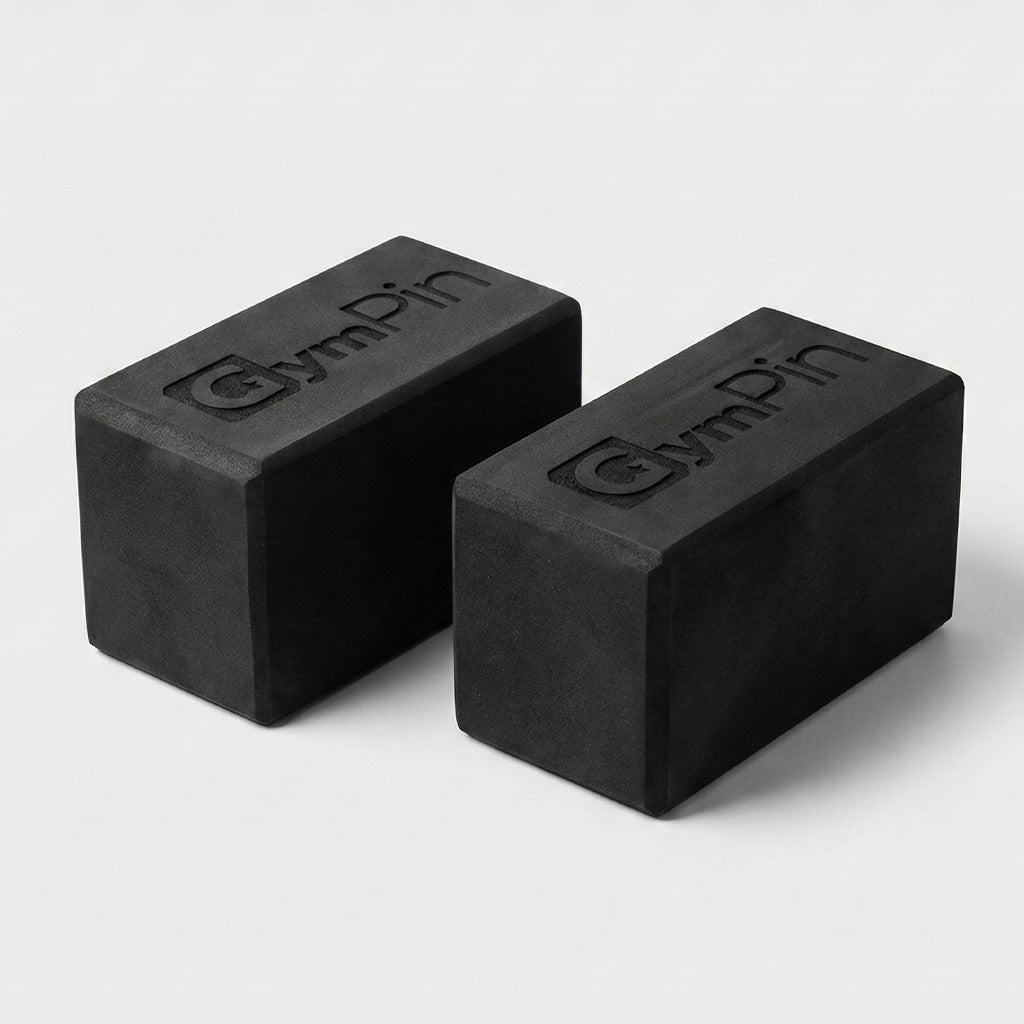
Portable high-density foam blocks for adjusting machine starting positions and range of motion.


Combine tib raises with calf work—and know the limits
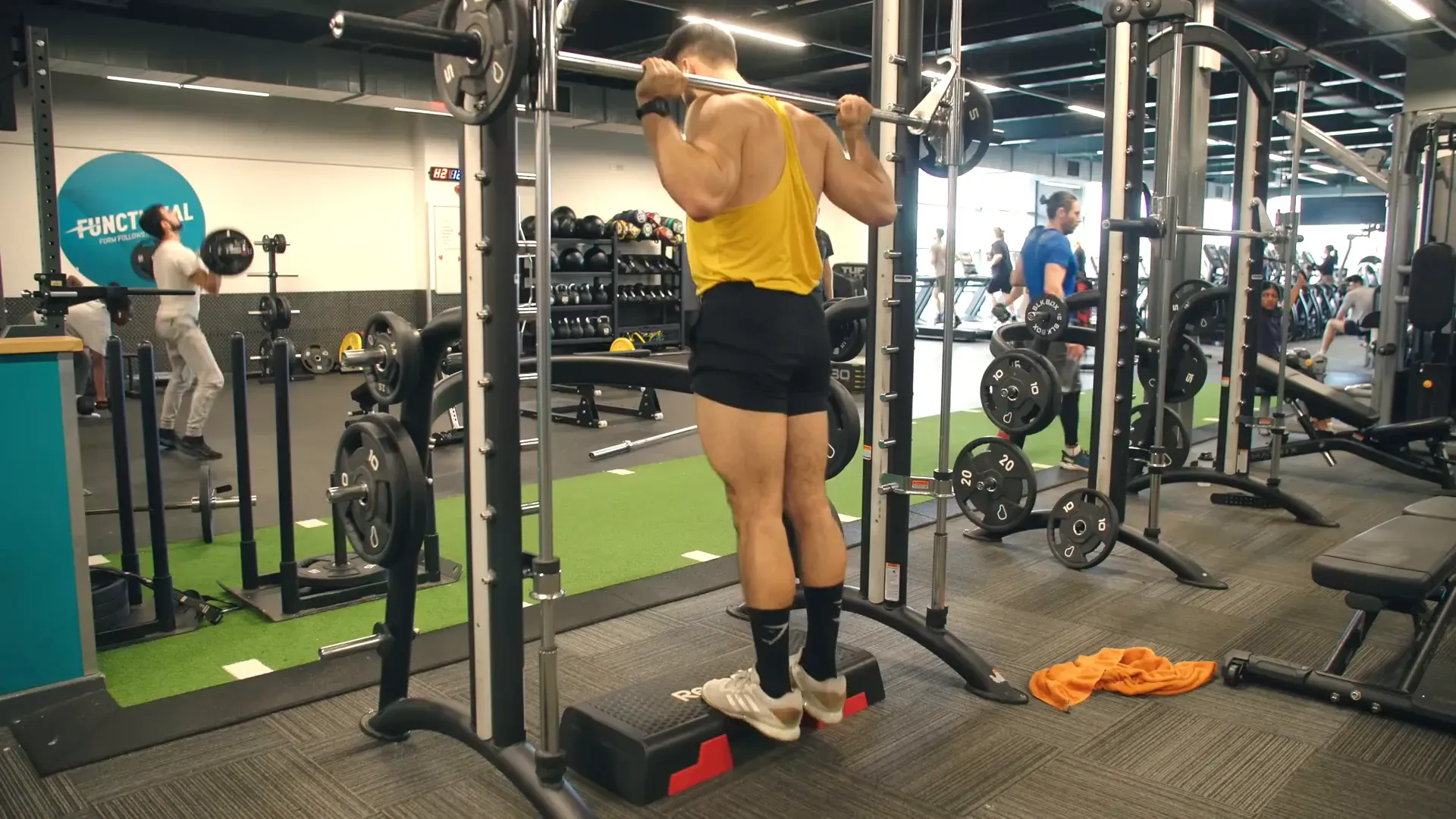
Tibialis raises complement rather than replace calf raises. A straightforward lower-leg finisher is two sets of controlled tibialis raises, two sets of straight-knee calf raises and two sets of bent-knee calf raises on the days those patterns are appropriate. The straight-knee and bent-knee versions distribute demand differently across the calf complex. You do not have to train every exercise to failure.
For a runner, this can fit after an easy run or strength session, not necessarily before speed intervals or a long race. Track the combined stress from hills, sprints, jumping, changes in footwear and added strength volume. A new tibialis routine is another training load, even if it does not look as dramatic as a heavy squat set.
There is a tempting shortcut in fitness advice: “Do tibialis raises and you will prevent shin splints.” That claim goes beyond what a simple exercise guide can establish. Shin discomfort can arise from several structures and training errors, and a strengthening drill alone is not an injury-prevention guarantee. Increase running volume gradually, wear suitable shoes, recover adequately and consider clinical advice when symptoms persist. Focal bone tenderness, progressive pain with impact, swelling or pain at rest deserves evaluation rather than an attempt to train through it.
The same caution applies to ankle mobility. Stronger dorsiflexors improve the ability to produce upward ankle movement against resistance; that is not identical to obtaining more passive ankle range in a deep squat. Calf tightness, joint structure and task-specific movement can still influence the range you use.
The takeaway: establish a clean wall raise, give it two sustainable weekly slots, progress with distance or appropriate resistance and pair it with the calf and leg training you already value. The real win is a measurable increase in controlled shin strength, not a magical fix for every ankle, knee or running complaint.
Cardio Shirts & Workout Gear
Cardio and conditioning gym gear for runners, endurance athletes and anyone who earns the sweat.

Anti Running Club Tee
Heavy lifts, good laughs, and a little “Anti Running Running Club” energy.

Anti Walking Walking Club Shirt Gymbro Meme Lifting T-Shirt
Bring “Anti Walking Walking Club” humor to your next gym day.

Meme Shirt – Two Things I Like Lifting Weights Not T-Shirt
Make gym days more fun with “Two Things I Like Lifting Weights Not” style.

Cardio Is Calling Decline Sweater Meme T-Shirt
Bring “Cardio Is Calling” humor to your everyday gym style.

Negative Cardio Review Cardio Sucks 1 Star Decal Sticker
Give your everyday gear a playful “Negative Cardio Review” twist.

Cardio Is Hardio – Workout Meme Vest Muscle Shirt For S Tank Top
Add some cardio attitude to training with “Cardio Is Hardio”.

Iron Man Triathlon Decal for Water Bottles Laptops Swim Sticker
Bring “Iron Man Triathlon” attitude to your water bottle or laptop.

Track Panther Pullover Hooded for Running Fitness Black Hoodie
Bring “Track Panther” gym humor to lazy days and post-workout plans.

Jump Rope Wonder Woman Gym | Funny Superhero Cardio Wor T-Shirt
For laid-back days and superhero humor: “Jump Rope Wonder Woman”.

with Shark Meme – Motivation Finds You Workout Pullover T-Shirt
Show some gym-day personality with “with Shark Meme”.