Advertising disclosure: This page includes affiliate product links that may earn us a commission, as well as products from our own store.
Do light leg extensions build as much muscle as heavy ones when both sets are taken seriously? A November 2026 trial followed 22 new lifters through six weeks of supervised quad training and found useful gains on both sides. The numbers make a better training lesson than a simple winner-takes-all headline: light sets required more total repetition work, heavy sets provided higher resistance per rep, and both groups improved estimated strength and muscle measurements. Here is what actually changed, why the result does not erase the value of heavy lifting, and how to turn the takeaway into a more balanced leg-day plan.
The six-week leg-extension experiment
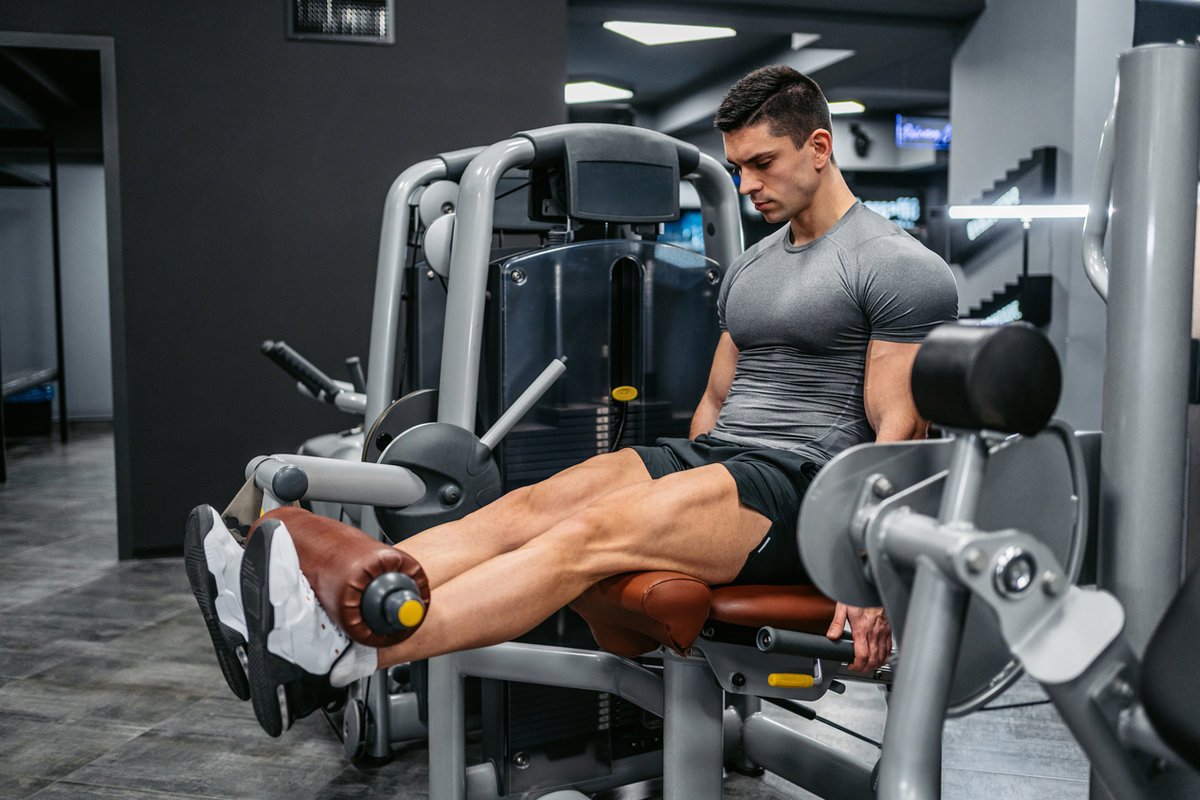
For a beginner who wants bigger quadriceps, the weight stack can become an unnecessary argument. Is the best set a light one that burns for a long time, or a heavy one that ends after a handful of demanding repetitions? A randomized experiment published on November 5, 2026 gives this familiar question a particularly useful test. Twenty-two healthy young men with no resistance-training background, averaging roughly 21 years old, were assigned to two groups of 11. For six weeks they trained the knee-extension movement under supervision three days per week.
One group used a relatively light resistance, about 30% of a one-repetition maximum estimate; the other used a heavier resistance around 75%. Both groups continued their working sets to volitional failure. That final detail matters. The study was not a comparison of casual high-rep warm-ups against hard low-rep work. Both groups were challenged to complete the most repetitions they could with the load assigned to them.
Knee extensions are a useful experiment because they limit the movement mainly to the quadriceps and make it easier to compare a consistent path of resistance. They also narrow the interpretation: improvements on a leg-extension machine cannot automatically tell us what will happen to a full barbell squat, a sprint, or overall athletic performance. The subjects were learning the lift while getting stronger, so early coordination and familiarity likely contributed to the changes alongside any muscle growth.
The immediate practical question is not which weight stack number won. It is whether effective repetitions with very different loads can create meaningful muscular adaptation, and what tradeoffs each option creates for the lifter performing them.
What actually changed in strength and quad size
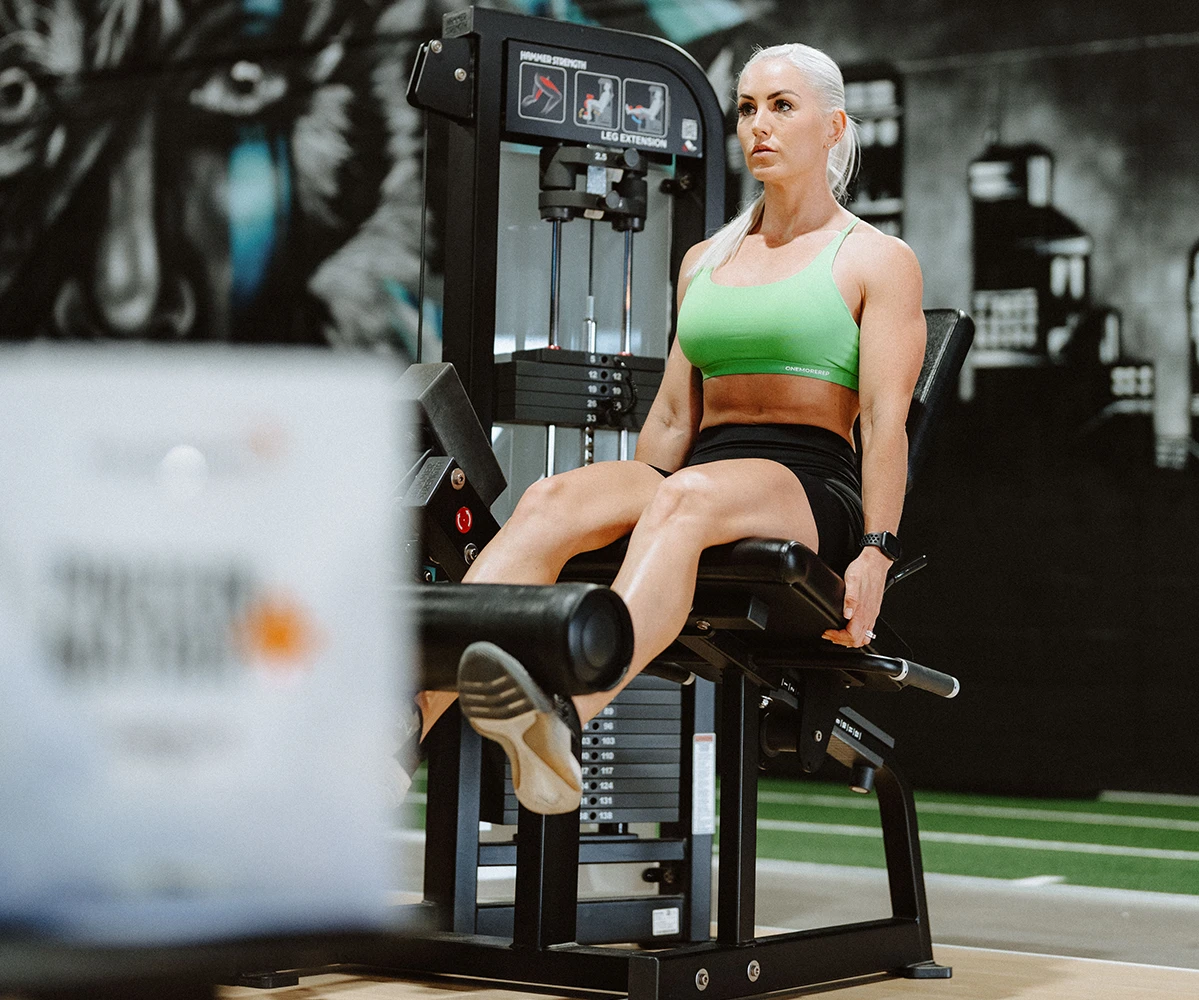
Both approaches produced measurable progress. Estimated one-repetition maximum increased by 35.9 kg in the lighter-load group and 32.5 kg in the heavier-load group. Those are changes in estimated strength, not necessarily gains demonstrated during separately verified, competition-style maximal tests. The trial reported no statistically significant difference between the groups for this outcome.
Imaging provided more direct information about the size of the front thigh. Thickness of the rectus femoris, one of the quadriceps muscles, rose by approximately 0.46 cm with lighter training and 0.34 cm with heavier training. Its measured cross-sectional area increased by about 2.07 cm² and 2.36 cm², respectively. Similar overall patterns were recorded for the vastus intermedius, another quadriceps muscle assessed in the experiment. Again, between-group differences did not reach statistical significance.
The lighter-load group accumulated a larger sum of load multiplied by repetitions across training: around 58,119 kg, compared with around 45,598 kg for the heavier-load group. That figure describes volume load, not the maximum force of each repetition, and it does not mean that one participant lifted 58 metric tonnes in a single session. High-rep sets can produce impressive cumulative totals while each repetition remains relatively light.
There is a crucial distinction between finding no statistically clear difference in a small experiment and proving two methods are interchangeable for every lifter. The first is what this result supports; the second would require broader evidence and an equivalence-focused design. Still, the changes are useful: new lifters did not need to choose the heaviest available load to experience substantial early quadriceps progress.
Why lighter weights still create a demanding stimulus
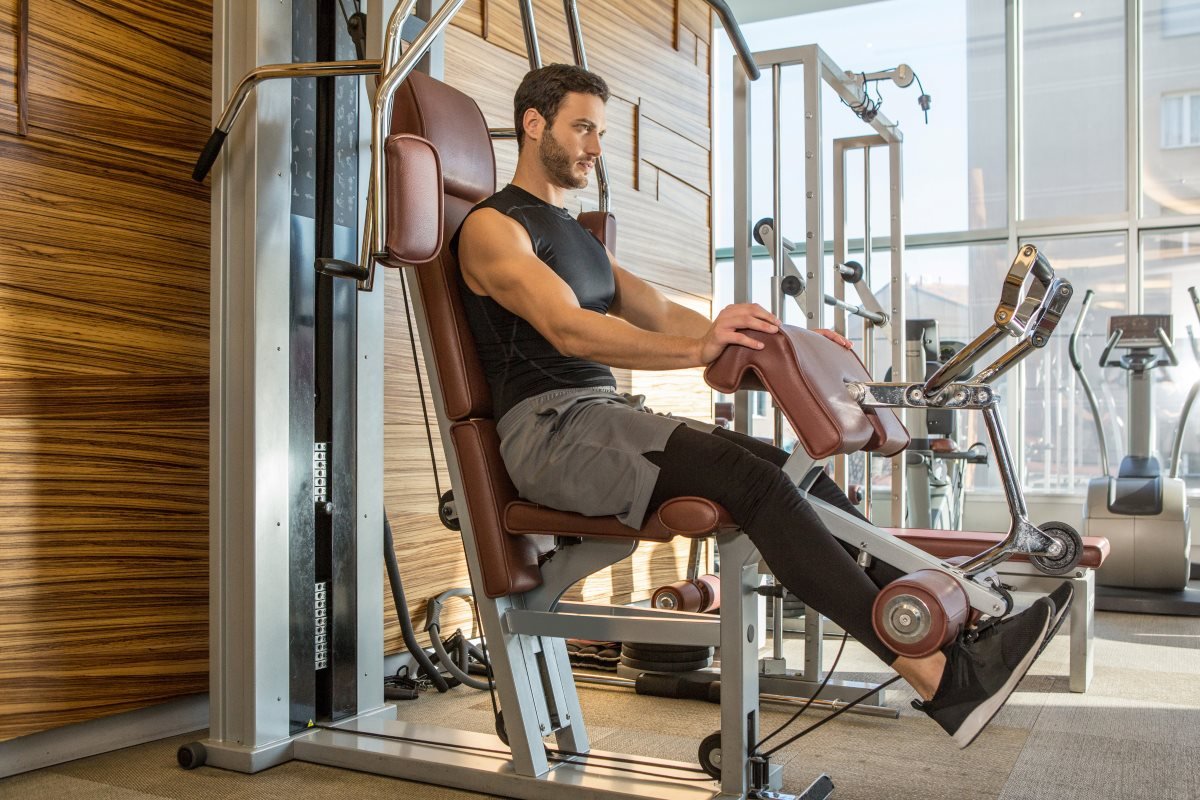
A light leg extension can feel easy on rep one and brutally difficult near the end. As repetitions accumulate, fatigue increases and the muscles have to work harder to continue producing the required movement. The weight has not become heavier, but the relative effort required to move it rises. That is why a challenging light set can recruit enough muscle activity to help stimulate growth even when its first repetitions feel comfortable.
Think of training stimulus as more than the percentage displayed on a workout app. The muscle encounters a combination of mechanical tension, how many hard contractions it performs, range of motion, exercise stability, and how close the set gets to its limit. Very light loads paired with very easy effort may provide too little challenge. Increasing the effort while maintaining controlled technique makes the same load a more legitimate working set.
In the trial, both conditions reached volitional failure. That makes the effort comparison relatively strict but it should not be converted into a blanket instruction to fail every set in every program. Larger training analyses have not consistently shown that momentary failure beats stopping just short for growth, and repeated failure can increase discomfort or fatigue. A practical compromise is to keep most working sets around one to three good repetitions in reserve, then occasionally take a well-controlled single-joint set closer to the end of your available reps.
With a light weight, keep your hips anchored, raise the pad smoothly, briefly control the top position and lower it rather than allowing it to slam down. If you need to kick the weight, shift your torso, or shorten the movement just to keep the set going, the extra repetitions are unlikely to serve the objective. A longer set should look like a longer series of useful quad contractions, not a contest to tolerate progressively worse form.

Equipment Worth Exploring
Explore equipment, accessories and gear from our carefully selected range.


HUSLA Leg Extension Pad
Pad attachment designed to increase usable range of motion on compatible leg-extension machines.

Studio V-Squat
Plate-loaded V-squat machine for supported lower-body strength training.


GymPin Squat Wedges
Non-slip 15-degree squat wedges help elevate the heels for deeper quad-focused squats.

Squat Harness
Wearable harness for hands-free cable squats, sled work, and lower-body training.

Belt Squat Collar
Heavy-duty collar adapter for compatible belt-squat and landmine bar setups.


Why heavier loads still matter for maximal strength
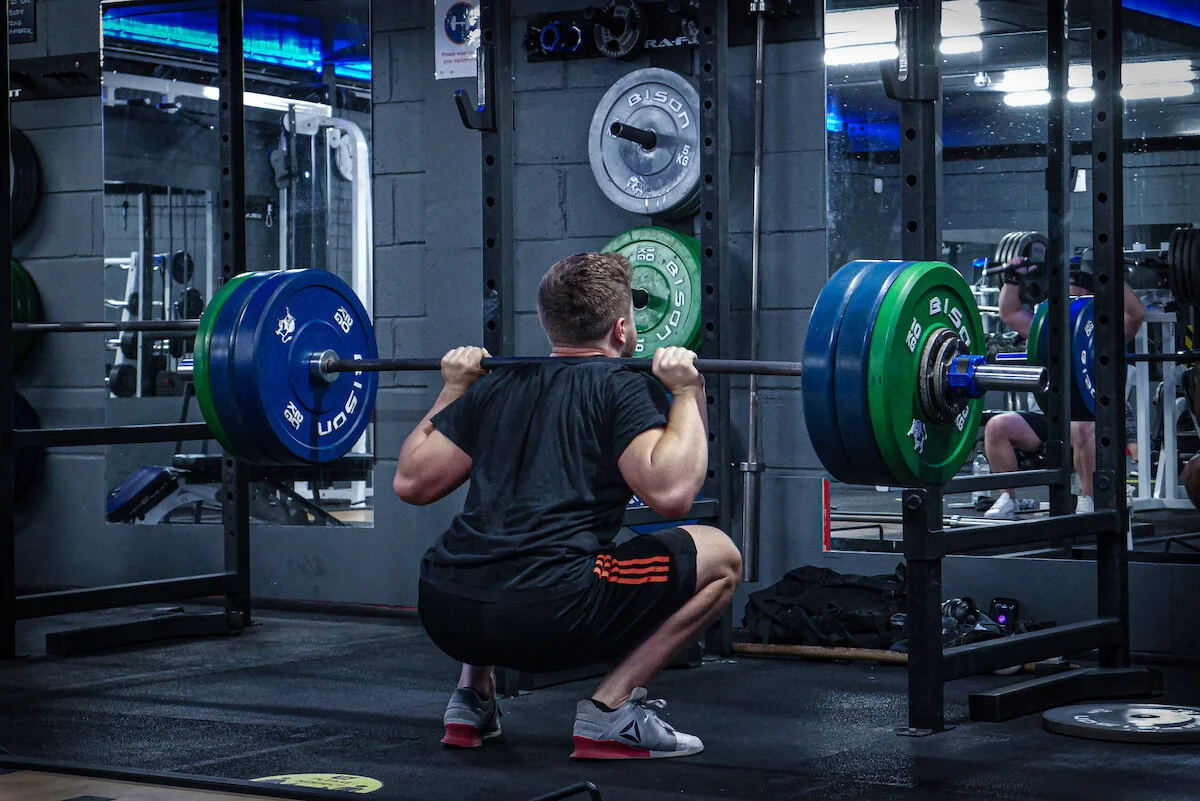
For size alone, research across varied populations and exercises often finds similar hypertrophy with different loading zones when sets are sufficiently challenging. For maximal dynamic strength, the broader pattern is different: practice with heavier loads generally has an advantage. The ability to produce force against a demanding external resistance is a skill, and regularly lifting heavier weights trains that skill more specifically.
That explains why the six-week result should not replace heavy squatting or other strength-focused compound movements in a lifter’s program. The participants were inexperienced, trained one knee-extension task and were assessed on estimated rather than directly tested maximum strength. In a novice, learning to coordinate muscle contractions and perform the exercise efficiently can improve an estimated strength result with either approach. In an experienced squat specialist, the specific demands of the barbell, balance and bracing become much more important.
Heavy leg extensions can be useful, but the machine’s design, seat adjustment, lever resistance profile and the lifter’s knee comfort also influence which loading range is sensible. It is perfectly reasonable to use challenging moderate repetitions when training on a machine, rather than insisting on very low repetitions with the largest possible stack. Heavy compound work and lighter isolation work are not competing religions; they solve different parts of the same training problem.
If your main target is a stronger squat or a heavy triple, keep meaningful practice with demanding loads on the exercise you want to improve. If your main target is quad growth, you have more flexibility about the rep ranges used for supplementary leg extensions. The helpful question is not “heavy or light forever?” but “what is this set supposed to develop, and how much fatigue does it cost?”

Leg Day Shirts & Workout Gear
Leg-day gym shirts and workout gear for lifters who never skip squats, lunges and lower-body punishment.

Thick Thighs Crush Guys Leg Day Meme & Top T-Shirt
Make gym days more fun with “Thick Thighs Crush Guys” style.

Stars Stripes & Squats Patriotic Eagle – 4th Of July T-Shirt
Rep “Stars Stripes & Squats Patriotic Eagle” humor in and out of the gym.

Medieval Gym – Dost Thou Even Hoist Knight & Dragon T-Shirt
Show some gym-day personality with “Medieval”.

Santa Quads Funny Christmas Gym – Festive Workout Pullo T-Shirt
Bring “Santa Quads Funny Christmas” humor to your everyday gym style.


I'M Still Gonna Squat You Monster Gingerbread Meme – Sticker
Give your everyday gear a playful “I'm Still Gonna Squat You Monster” twist.

Dont Skip Leg Day Funny Gym Sweatshirt
Add a playful “Dont Skip Leg Day” touch to your casual rotation.

Yesterday I Skipped Leg Day – Beatles Music Meme Hooded Hoodie
Show off your leg-day humor in a laid-back “Yesterday I Skipped Leg Day” hoodie.

Quadzilla Massive Quads Sweater Leg Day Squatting T-Shirt
Keep things casual with a little “Quadzilla” attitude.

The limitations that matter before copying the protocol
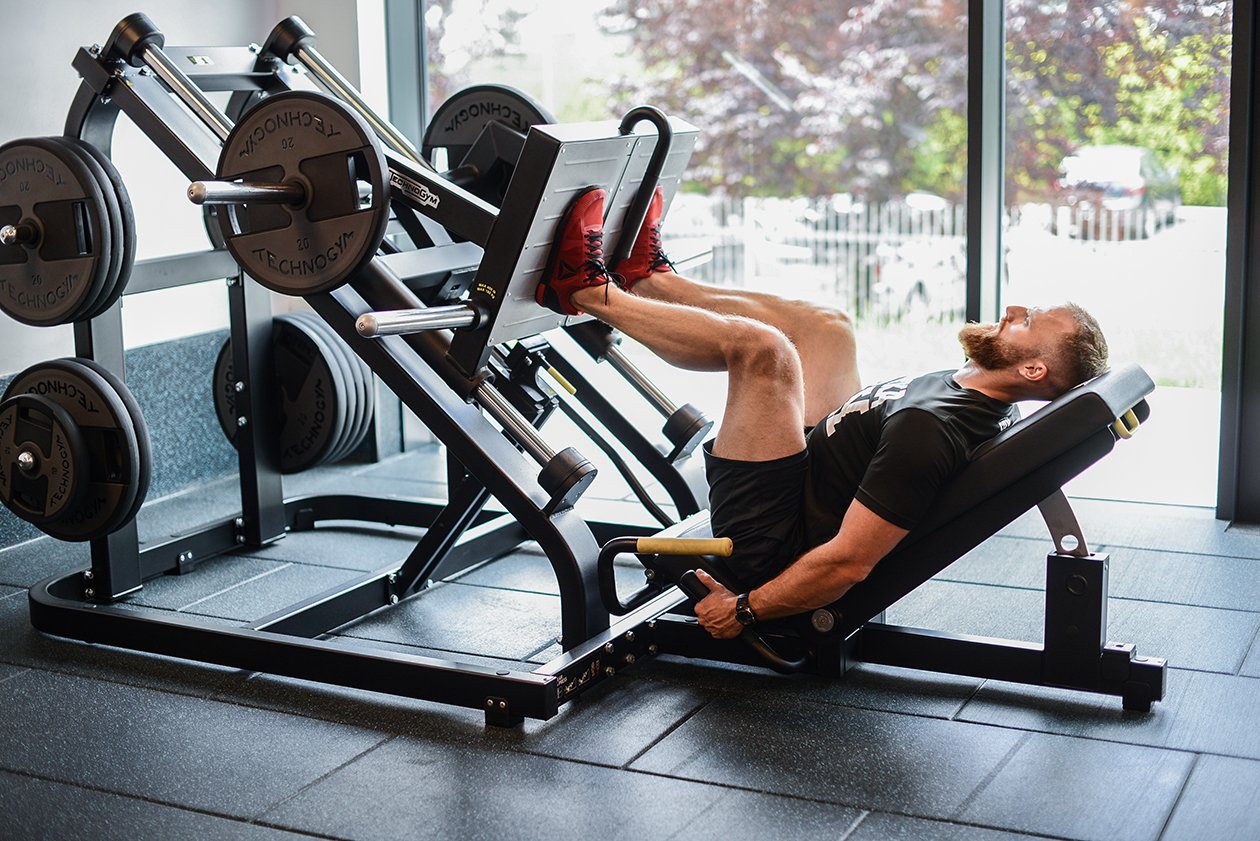
This was a small experiment: 22 participants, 11 per group, and just six weeks of training. A difference that looks interesting on a chart may be difficult to distinguish reliably with such a sample. The absence of a statistically significant between-group difference is therefore not evidence that any lighter load is precisely equal to any heavier load. It is evidence that both conditions produced improvements in this particular experiment.
The participants were young, healthy men who were not already skilled lifters. Training response may look different for an experienced bodybuilder, a powerlifter trying to move a particular barbell load, a person with long-standing knee symptoms or someone recovering from a break. The study did not establish how these outcomes would translate to a complete lower-body workout, a longer training year or a high-volume multijoint program.
The exercise choice matters as well. A seated knee extension isolates the quads with less whole-body coordination than a squat or split squat. Bigger measured quadriceps can support performance, but this study did not directly establish a new squat max, running speed or jumping ability. Its muscular size findings also depend on measurements at selected anatomical sites, not a complete head-to-toe body-composition scan.
Finally, the lighter group performed more cumulative volume load. That cannot be treated as an independent proof that higher volume caused the same result, because effort, number of reps and external load were connected by the research design. What we can say is that hard light sets were a viable way for these beginners to train their quads. For an experienced lifter, combining load ranges and monitoring performance remains a more defensible strategy than chasing a single winning percentage.
A practical two-day quad plan using both load ranges
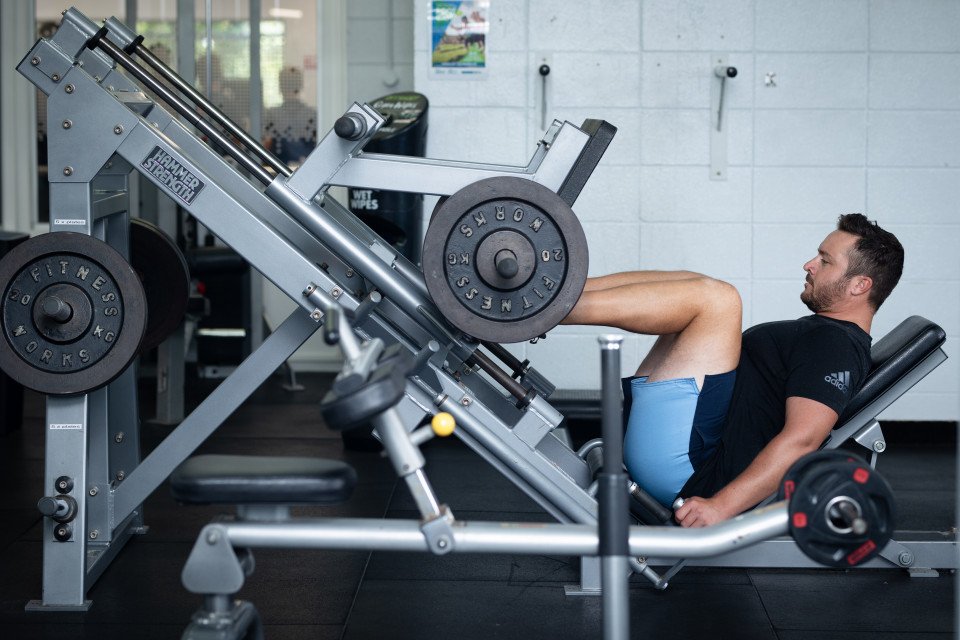
Here is an illustrative two-day weekly template that applies the central idea without pretending to reproduce the study protocol. This is a coaching example, not a six-week routine tested on those 22 participants. Leave at least two days between sessions if soreness or performance suggests it. The first day emphasizes stable heavier practice; the second uses controlled moderate and higher repetitions for supplementary growth work.
| Session | Movement | Working sets | Effort target |
|---|---|---|---|
| Day A | Squat or leg press | 3 × 5–8 | 1–3 reps in reserve |
| Day A | Leg extension | 2 × 8–12 | 1–2 reps in reserve |
| Day A | Hamstring curl | 2 × 10–15 | 1–3 reps in reserve |
| Day B | Split squat or leg press | 3 × 8–12 | 1–3 reps in reserve |
| Day B | Leg extension | 2 × 15–25 | 0–2 reps in reserve |
| Day B | Calf raise | 2 × 10–20 | 1–3 reps in reserve |
Start with a conservative load that permits the full intended motion. Do not change machines, seat settings or rep tempo every week if you want to compare numbers accurately. On the heavier day, progress the primary lift through a stable rep range while preserving technique. On the lighter extension day, add repetitions until you reach the upper end of the range, then increase the stack by the smallest useful increment and rebuild the reps.
Week one can establish repeatable loads and control. Weeks two and three emphasize an additional clean rep or a small weight increase where earned. In week four, maintain or slightly reduce effort if recovery is lagging. Weeks five and six can resume gradual progression. That schedule is not a promise of a particular centimetre gain; its value is that it creates observable, manageable work and an easy way to adjust when performance stalls.
If your knees become painful, change range, loading, machine setup or exercise selection rather than forcing the test protocol. Muscle fatigue and joint pain are not the same signal. Take short rests only when the next set’s quality is intact; two to three minutes for demanding compound sets and a reasonable recovery period for extensions is more productive than turning every lift into rushed conditioning.
Equipment Worth Exploring
Explore equipment, accessories and gear from our carefully selected range.
VOLTRA
Compact digital cable trainer with smooth, adjustable resistance.

Go-Tone Pro
Portable digital cable trainer with up to 66 lb (30 kg) of adjustable resistance.


Rubber Hex Dumbbells
Rubber-coated hex dumbbell pairs with a stable shape for home and commercial strength training.


FID Bench MAX
Adjustable bench offering flat, incline, and decline positions + adjustable headrest.


Choose the load you can progress, not a magic percentage
For an actual training decision, begin with your goal. Building stronger quads? Use a manageable combination of compound work and isolated knee extension, and challenge the muscle consistently. Improving a particular heavy lift? Give that lift regular practice with suitably heavier loads. Training around equipment limitations or a temporary dislike of heavy joint loading? Challenging lighter extensions can still be useful when the movement is comfortable and technique holds together.
Track a small set of variables: the exercise and machine used, seat position, load, repetitions, approximate reps left in reserve, and perhaps a simple note about pain or fatigue. That log tells you more than an isolated personal-best screenshot. If a set moves from 18 to 22 controlled repetitions at the same load over several weeks, something meaningful has improved. If a heavy set rises from six clean reps to eight without form deteriorating, that is progress too.
Resist the temptation to confuse a burning sensation with guaranteed growth. High-repetition work creates plenty of discomfort; discomfort alone is not the outcome. Likewise, a heavy number on the pin does not prove that the quadriceps experienced productive work if you barely move it. Full, repeatable ranges of motion, sensible progression and enough recovery are far more useful than arguing about whether a set falls into a mythical ideal rep bracket.
The bottom line from the 22-man experiment is encouraging, not absolute: beginners improved quad size and estimated machine strength after six weeks of both light and heavy sets taken to failure, without a clear statistical winner between them. Bigger bodies of evidence preserve a place for heavier training when one-rep-max strength is the priority. Your best plan can use both. Match the load to the exercise and goal, make the hard repetitions count, and measure progress over time rather than choosing sides based on a single short study.
Bodybuilding Shirts & Workout Gear
Bodybuilding shirts, tanks and gym gear for lifters chasing muscle, size, symmetry and the pump.


No Reps No Glory Viking Gym – Funny Norse Workout Vest Tank Top
Bring “No Reps No Glory Viking” humor to your next lifting session.

Lord Help Me Lift Sweatshirt
Show some gym-day personality with “Lord Help Me With This Lift”.

Pencilneck Science Based Lifting Gym | Funny Workout De Sticker
Stick a little “Pencilneck Science Based Lifting” humor on your favorite gear.

I Want You To Do One More Rep – Uncle Sam Patriotic Hoo Hoodie
Show off your bodybuilding humor in a laid-back “I Want You To Do One More Rep” hoodie.

Ask What Your Muscles Can Do Tee
Heavy lifts, good laughs, and a little “Ask Not What Your Muscles Can Do For You” energy.

P.U.M.P. Gym Hoodie
Show off your bodybuilding humor in a laid-back “P.U.M.P. Get Ripped Or Die Tryin'” hoodie.


Hallowed Be Thy Gains Tee
Show some metalhead attitude with a playful “Hallowed Be Thy Gains” tee.