Advertising disclosure: This page includes affiliate product links that may earn us a commission, as well as products from our own store.
A conventional Smith machine guides one bar along fixed rails. Bells of Steel has introduced a different option: the Anvil Handles, a pair of independent guided handles designed to let the left and right arms work separately. The October 2026 announcement emphasizes iso-lateral presses, individual hooks and heavy loading. The interesting question is not whether they look different. It is whether the independence makes your pressing safer, more useful or more productive for the money.
Below is a close look at the hardware, compatibility, realistic exercise choices and evidence behind unilateral training. There are also reasons to skip the upgrade, especially if you do not already own the correct Smith system.
What the Anvil Handles actually change in a Smith machine
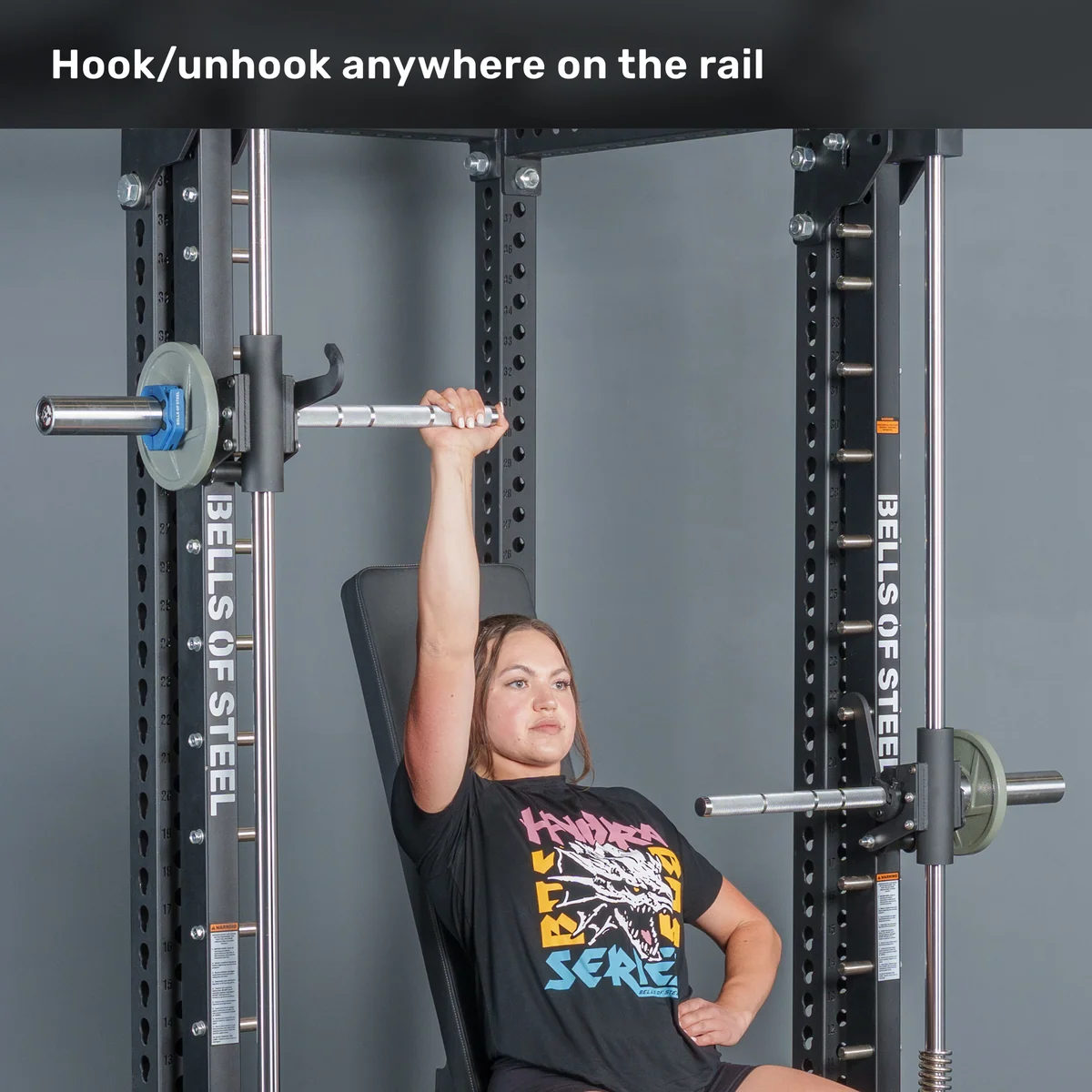
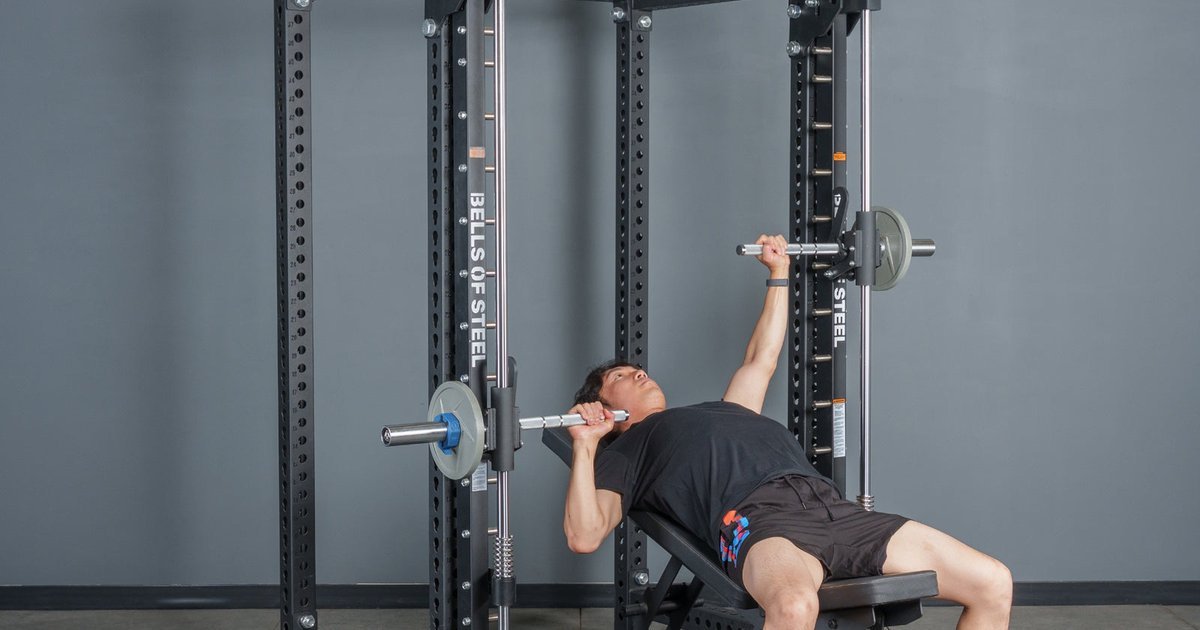
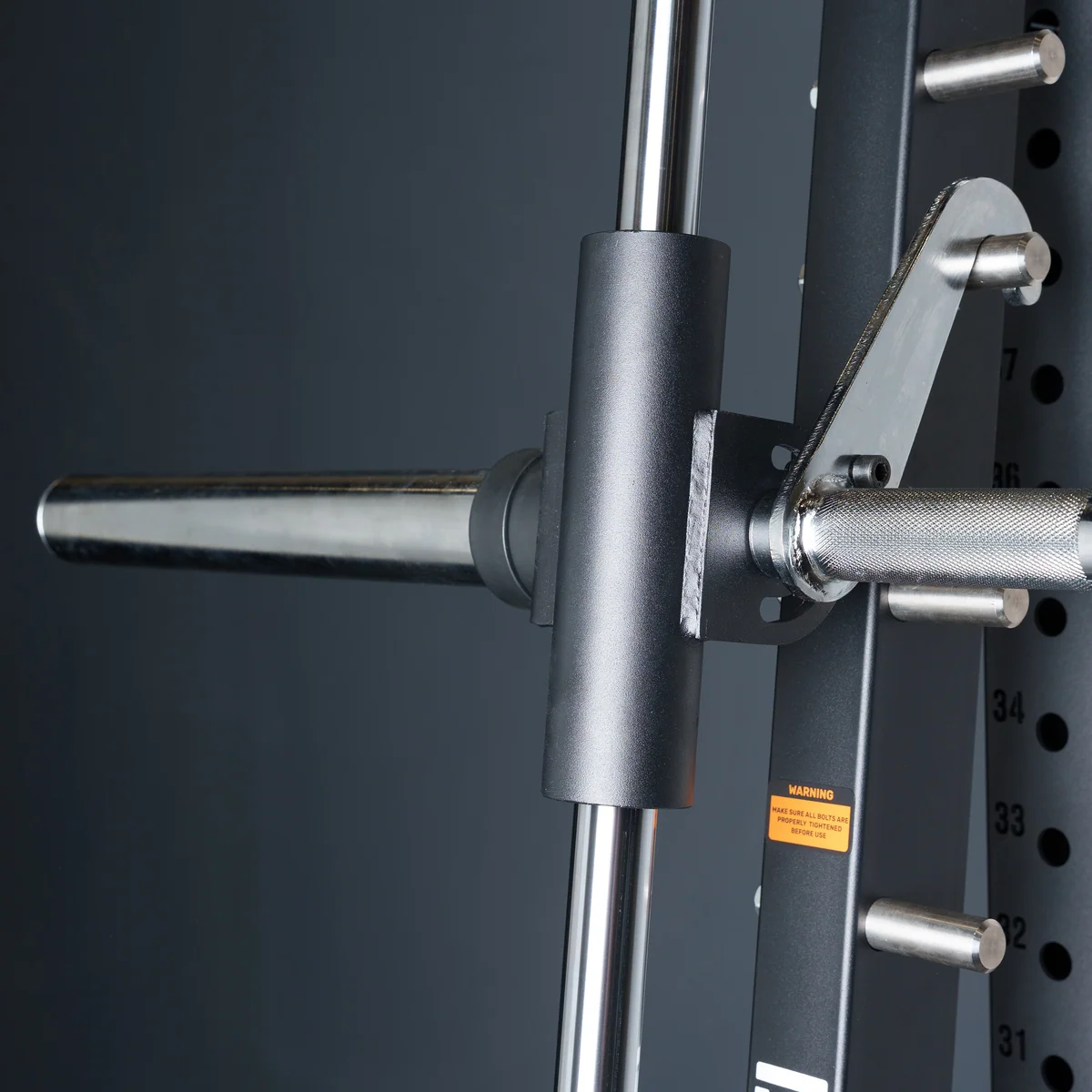
Most Smith machines connect your hands to a single bar. The carriage travels on rails, but your left and right sides share the same piece of steel. Bells of Steel’s new Anvil Handles take a different route: two shorter Olympic-style handles move independently on the existing guided tracks. The equipment is still guided, yet one arm can no longer simply follow the other through a single connected bar.
That distinction matters most in a press. A regular Smith bar travels as a unit even when one arm is producing slightly more force. Separate handles make each side manage its own load and timing. You can perform simultaneous presses, deliberately offset the two arms or concentrate on one side while the other remains parked. None of those options automatically produces extra muscle growth, but they make unilateral and iso-lateral work more practical on a familiar platform.
Each handle has a 29 mm chrome shaft with light knurling and a rotating 50 mm Olympic sleeve. Overall length is approximately 27 inches, and the loading area extends roughly 7 7/8 inches. The pair weighs around 27.3 pounds before plates. These are not independent dumbbells: each handle is still constrained by a fixed vertical guide rail. The difference is the freedom to manage the two sides separately, rather than the freedom to move in any direction.
For buyers, the important first question is not whether independent arms sound exciting. It is whether your rack, Smith rails, training goals and available space actually make the upgrade useful. The handle system expands a Smith machine’s exercise options; it does not turn the guided rack into an unrestricted cable machine or free-weight platform.
Capacity, build, hooks and the details behind the spec sheet
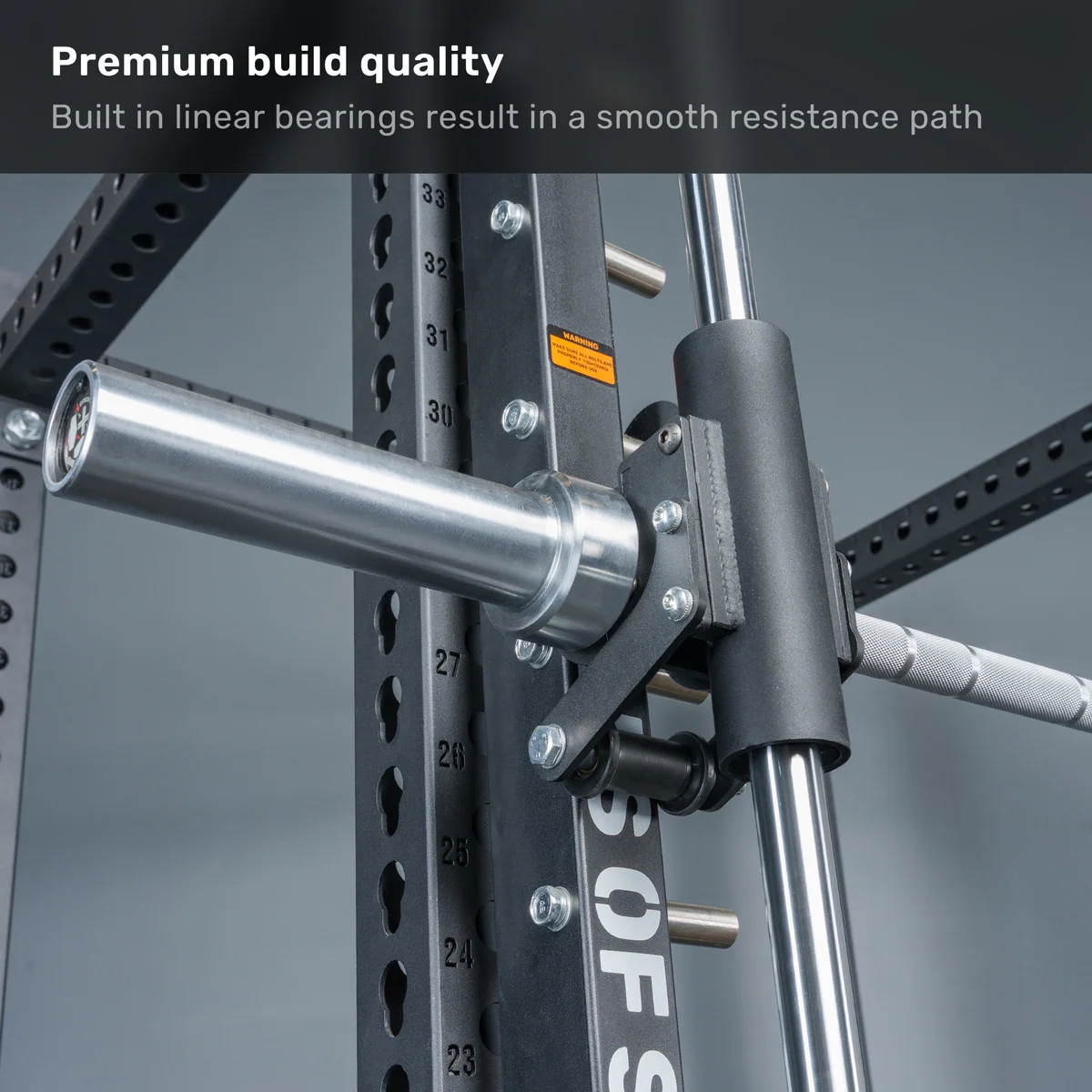
Bells of Steel rates each Anvil Handle for up to 220 pounds, or 100 kilograms, with a combined maximum of 440 pounds when both sides are loaded to capacity. That is a component rating, not a recommendation to bench 440 pounds and not a guarantee that your rack, rails, safeties or plates have the same limit. The lowest relevant load rating in the entire setup still wins. Match the correct collars to the Olympic sleeves and leave enough room for plates to remain secure throughout the travel.
The separate handles ride on dedicated Smith-machine rails through their roller and bearing assemblies. That is different from an independent arm that rolls directly along a rack upright, and different again from pivoting jammer arms. Rail guidance can reduce the balancing demand, but smoothness depends on correct alignment, rail condition, clean installation and regular maintenance. Do not assume the advertised feel will override a rack that is tilted or poorly assembled.
A built-in hook on each handle allows you to rack and unrack without always starting a repetition at the lowest safety position. That convenience is important on presses, where starting beneath a heavy load can be awkward. Before any working set, rehearse both hooks under a light load: confirm they engage positively, determine where the lifter can comfortably reach them, and decide how you will end a set if one arm fatigues before the other.
The extra moving components also create an extra checklist. Inspect mounting hardware, clips, sleeve collars and locking points; check for looseness before training and after any unusual noise or impact. An asymmetrical loading pattern can introduce torque at attachment points. Work within the specified ratings instead of treating two independent rails as a reason to attempt maximal uneven sets.

Equipment Worth Exploring
Explore equipment, accessories and gear from our carefully selected range.

FID Bench MAX
Adjustable bench offering flat, incline, and decline positions + adjustable headrest.



VForce 3IN1
All-in-one rack combining an adjustable Smith machine, functional trainer, and free-weight station.

VForce 2IN1
Half rack and pivot-arm functional trainer with switchable 1:1 and 2:1 pulley ratios.

Foldable Wall Rack
Wall-mounted folding squat rack designed to save floor space between workouts.


Competition Plates
Competition-style bumper plates for Olympic lifts and loaded strength training.

Which racks fit, and why the version you buy matters
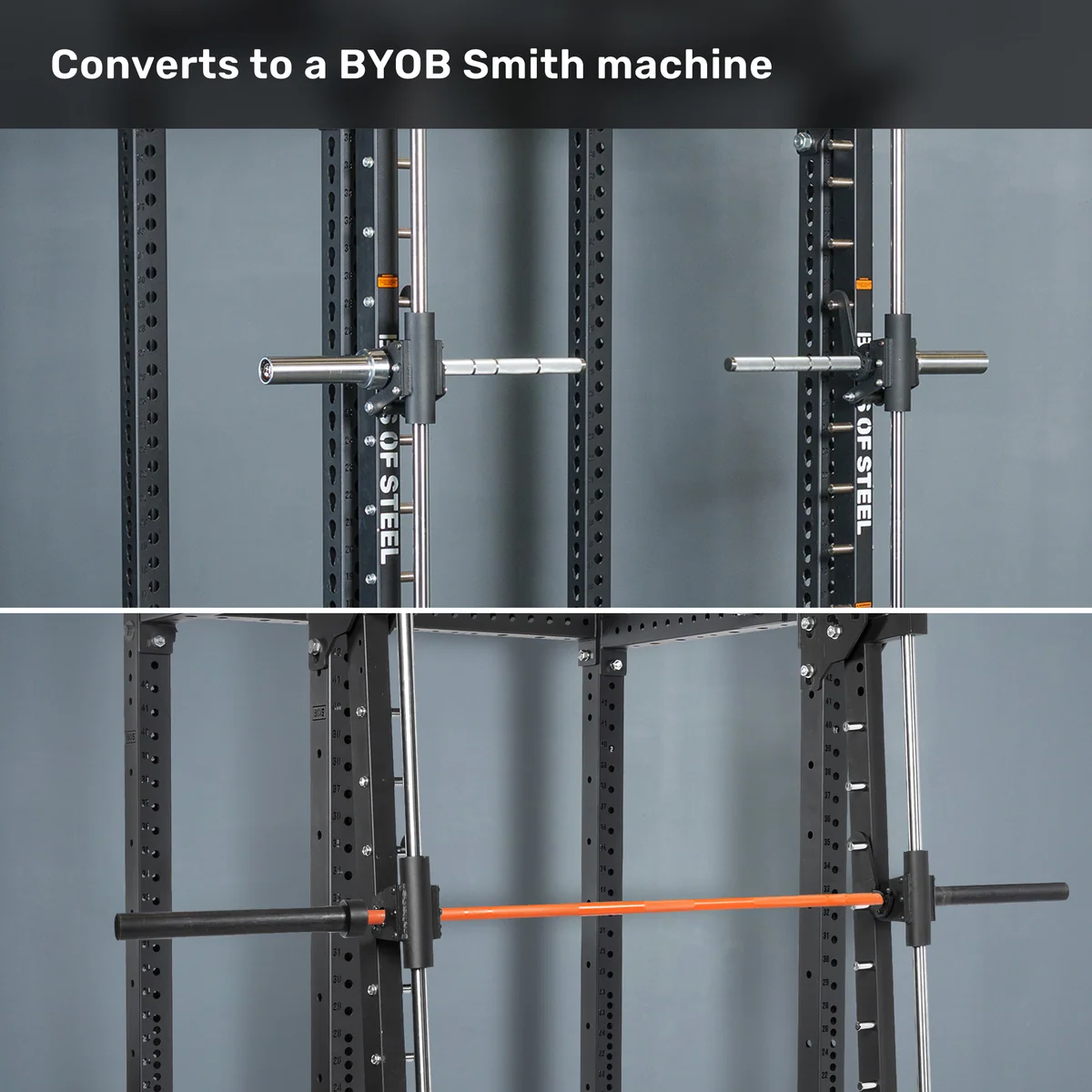
There is no universal one-box answer for every Smith owner. Bells of Steel lists several routes to its Anvil setup. Someone who already uses the company’s BYOB, or Bring Your Own Bar, Smith rack attachment may be able to add the pair of handles directly. A rack owner starting from scratch needs the appropriate Smith rail system as well as the handles. Someone with the company’s built-in-bar configuration may need the separate conversion option before the independent handles can be installed.
Do not mistake an upright’s nominal dimensions for a full compatibility check. Mounting-hole spacing and size, rack width, rail height, crossmember interference, safety placement and the specific Smith attachment version all matter. The manufacturer describes compatibility with many 2.3- to 3-inch uprights for its Smith system, but that language is not a guarantee for your exact rack. If you have another brand of rack, confirm the full configuration and compatible kit with the manufacturer using the rack model and attachment version.
Another practical cost is transition time. Bells of Steel warns that switching between a straight bar and Anvil Handles on its BYOB Smith system takes enough work that it is not realistic between ordinary workout sets. If your program alternates standard Smith squats and split-handle presses every session, those swaps could become the annoyance you notice most. You may prefer to organize an entire workout block around the independent handles or dedicate separate days to the two configurations.
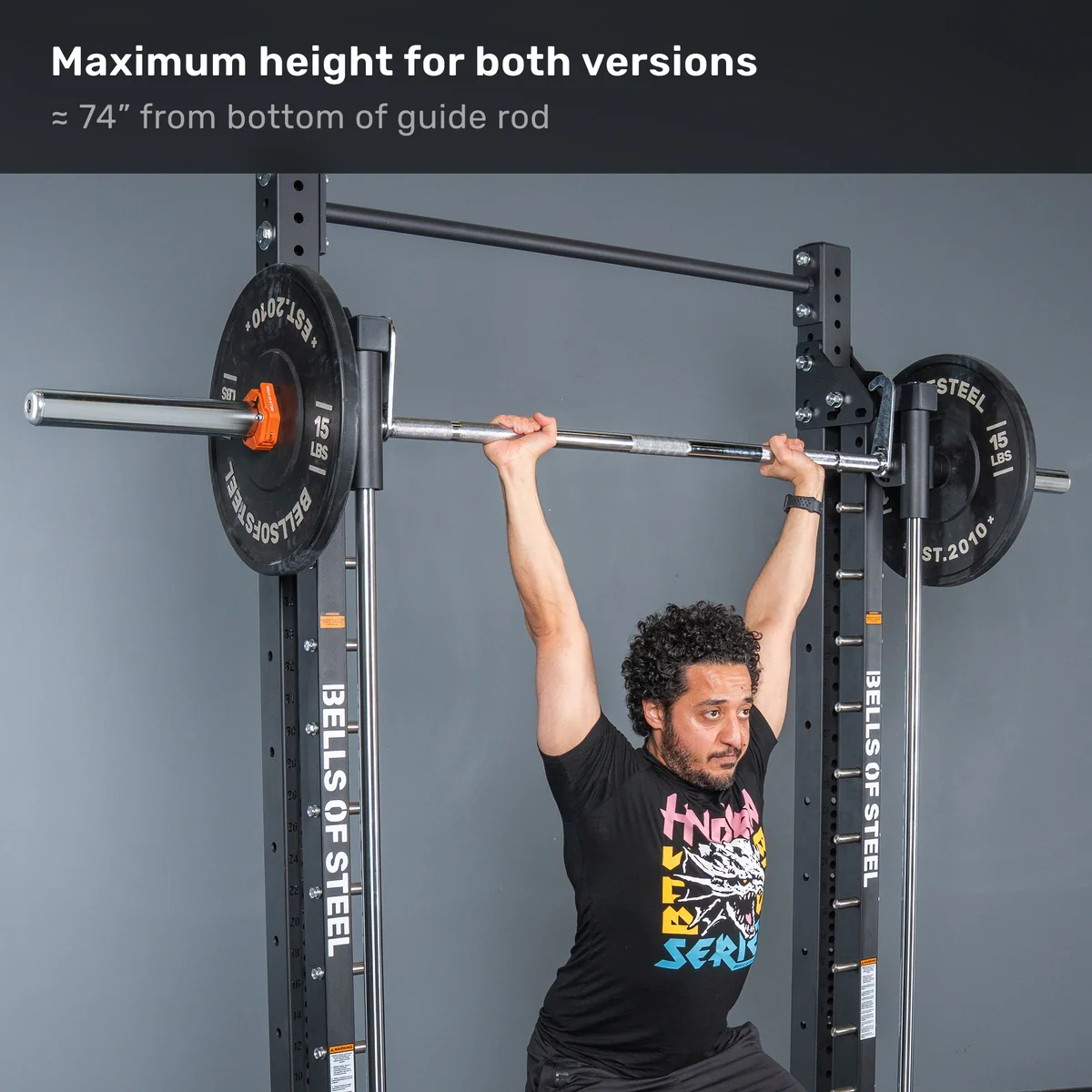
Check overhead clearance with the bench placed inside your rack, not just the listed total rack height. Sit on the bench, follow the rail through the full intended exercise, and ensure hooks, safeties and plate sleeves clear any nearby uprights, pulley stacks or storage pegs. A machine can technically fit into a gym and still feel cramped once a lifter, bench, two plates-loaded handles and a spotter occupy the working area.

Powerlifting Shirts & Lifting Gear
Powerlifting shirts and gym gear for squat, bench and deadlift lifters who live for heavy numbers.


Four Plates Bench Club Tee
Show some powerlifting attitude with a playful “4 Plates Bench Club” tee.

Heavy Barbell – Meme Shirt & Top T-Shirt
Make gym days more fun with “Heavy Barbell Powerlifting Graphic” style.

Barbells and Suffering – Satanic Gym Cult for Heavy Met Hoodie
Show off your metalhead humor in a laid-back “Barbells and Suffering” hoodie.

More Plates More Dates Gym Meme | Funny Workout Pullove T-Shirt
Bring “More Plates More Dates Gym Meme” humor to your everyday gym style.

Barbell Country Club Shirt Meme Top & T-Shirt
Heavy lifts, good laughs, and a little “Barbell Country Club” energy.

Squat Bench Deads Shirt – Gains & Meme Top T-Shirt
Bring “Squat Bench Deads” humor to your next gym day.

Motivation – Barbell Meme Strong , Leg Day Squats & T-Shirt
Make gym days more fun with “Gym Motivation” style.

I’m Strong Barbell Heartbeat Crewneck Pullover for Powe T-Shirt
Bring “I’m Strong Barbell Heartbeat” humor to your everyday gym style.

Vitruvian Man With A Barbell Shirt – Leonardo Da T-Shirt
Show some powerlifting attitude with a playful “Vitruvian Man With A Barbell” tee.
Best exercises: independent presses and controlled rows
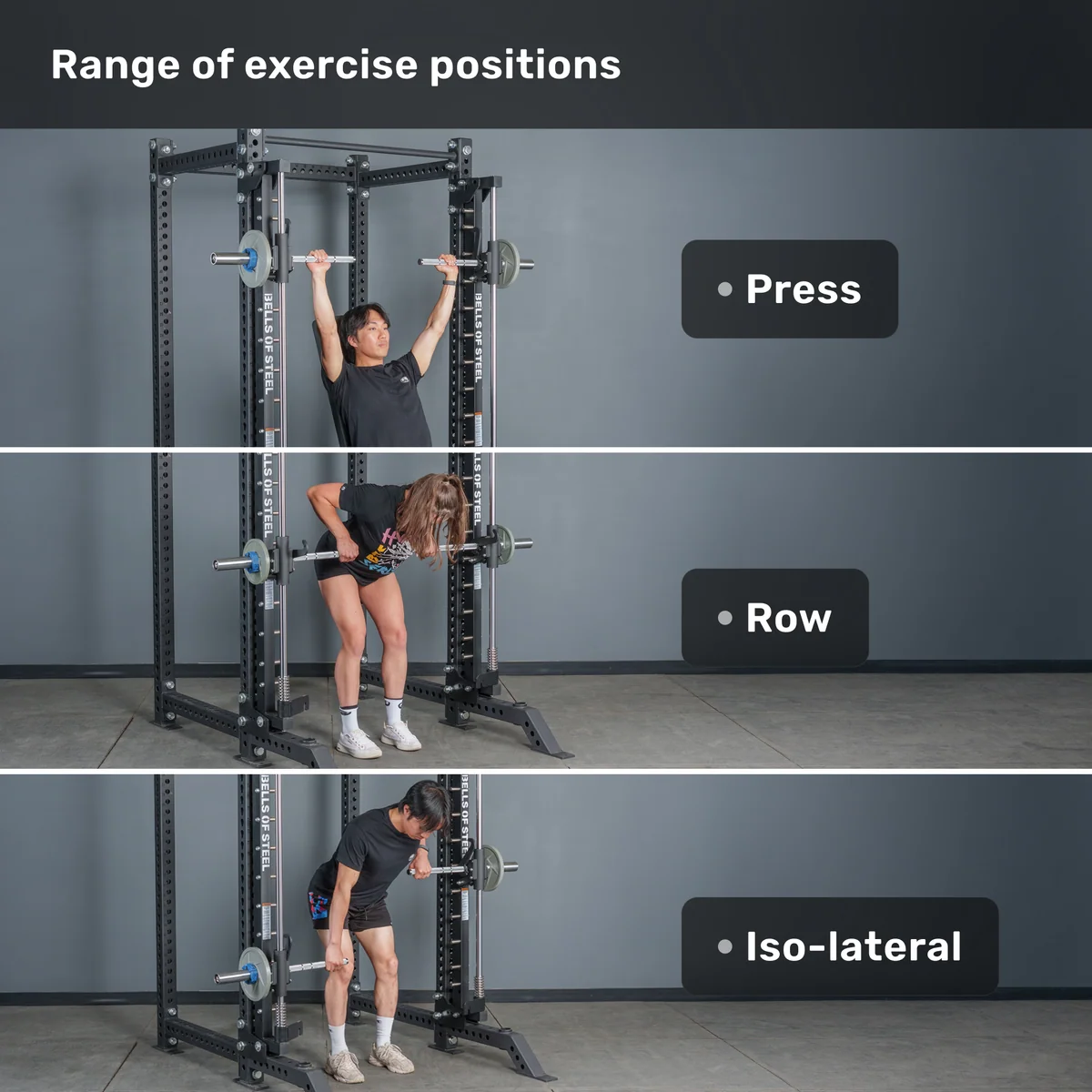
The most convincing use case is an iso-lateral chest press. Set a sturdy adjustable or flat bench between the rails, with each handle tracking over a comfortable pressing line. Start with empty handles or very light plates, keep the wrists stacked over the forearms, and test the bottom position before adding weight. You want a repeatable range that your shoulders tolerate. A deeper stretch is not a bonus if the bench position forces painful shoulder rotation or uncontrolled forward glide.
For a one-arm press, keep the nonworking handle safely racked and place the working-side shoulder in line with the rail. Resist twisting your torso to compensate. The same principle applies to an incline press: raise the bench in small increments, verify the rail meets the hand in a natural path and work up only after both arms feel predictable. With independently loaded handles, you can also start both arms together while deliberately focusing on symmetric tempo and lockout.
For shoulders, a seated or standing guided overhead press can be useful, but check your head clearance and the exact rail path at the top and bottom. Avoid forcing a shoulder position the fixed vertical track does not suit. Single-arm rows are another option on the manufacturer’s exercise list, provided your body position and rail layout actually allow a comfortable pull. This is not a cable row with free-moving horizontal handles: the rails still govern direction.
Use a simple progression for the first two weeks. Select two or three sets of eight to twelve controlled reps per side, leave about two or three good reps in reserve, and keep the same range of motion each session. If one side consistently completes fewer clean repetitions, let that side set the load or rep ceiling. Do not add weight merely because your stronger arm can accelerate its handle higher.
Do independent handles fix muscle imbalance or build more size?
A separate handle exposes a difference in sides more clearly, but it cannot diagnose why that difference exists. Grip position, fatigue, previous injury, limb proportions, sport history and motor coordination all influence how a lift feels. If one side presses more slowly, the observation is a useful coaching clue, not proof of a structural imbalance or a promise that a new attachment will correct it.
Comparisons of unilateral and bilateral resistance training have not established a general muscle-growth advantage for one approach. A nine-study evidence synthesis found no statistically clear overall hypertrophy difference between training one side at a time and training both together, although strength gains tended to favor the specific way that strength was trained. That is sensible: practicing an independent press may help you improve at independent pressing, while practicing a connected bar remains important if your goal is a stronger connected-bar lift.
The Smith-versus-free-weight debate deserves similar caution. Controlled resistance-training comparisons have documented muscle growth with both machines and free weights, while exercise-specific strength changes tend to reflect the movement practiced. The Anvil Handles have their own geometry and have not, on the available evidence, been shown to outgrow dumbbells, a standard Smith bar or conventional plate-loaded iso-lateral machines. Treat claims of superior chest activation or faster correction of asymmetry as possibilities to test for yourself, not established outcomes.
How should you evaluate them? Compare your ability to perform pain-free hard sets, maintain technique near the end of a set, progress loading, and recover between sessions. A tool that makes a high-quality exercise convenient may earn its place even if it is not biologically superior. Conversely, a pair of dumbbells may be the better choice if they let you train a more natural path without adding the cost and complexity of another guided system.
Equipment Worth Exploring
Explore equipment, accessories and gear from our carefully selected range.


Rubber Hex Dumbbells
Rubber-coated hex dumbbell pairs with a stable shape for home and commercial strength training.


Grip Plates
Rubber-coated weight plates with handholds for loading barbells and machines.


Open Hex Bar
Open-frame trap bar with multiple handles for deadlifts, carries, and lower-body training.

Safety Squat Handles
Barbell squat handles that reduce shoulder positioning demands during high-bar squats.

The real-world cost: footprint, loading and workout flow
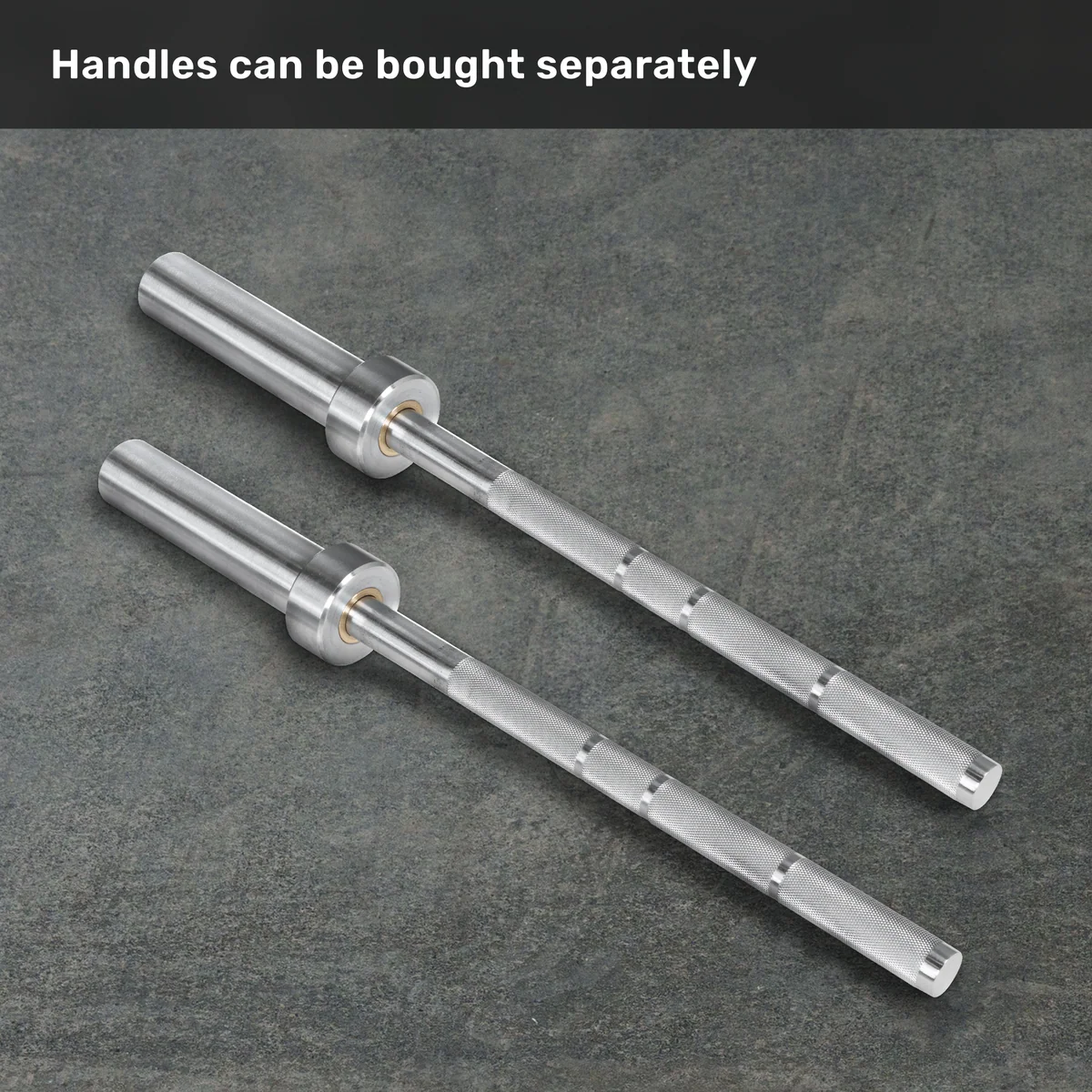
A pair of Smith handles can look compact in product photography because the rack itself already occupies the room. In reality, the upgrade inherits the Smith attachment’s depth, rail travel and rack clearance requirements. You also need storage for the straight bar or converted hardware, plus enough horizontal space for full-width plates on two independent sleeves. If two people share the gym, decide whether one can realistically train while the Anvil configuration is installed.
The handles accept Olympic plates, but the manufacturer notes their loadable sleeve length is only about 200 mm. That makes plate thickness relevant. Thin iron plates can pack differently from wide bumpers, and collars take their own space. A rack-mounted guided press that theoretically supports a very high load may reach practical sleeve capacity earlier than expected. Assemble the exact plates and collars you plan to use before making a purchase decision based solely on the headline capacity.
Current pricing and shipping are region-dependent. The Canadian storefront has displayed a CAD price and a preorder shipping date in December 2026, while other regional storefronts show different dates or pricing. Those details can change; check the actual local product listing rather than treating a snapshot from another market as a guaranteed cost or dispatch promise. Remember to compare the price of the handles with the price of the Smith system or conversion kit you may also need.
Our practical buying rule is straightforward. If you already own a compatible BYOB Smith and regularly train independent pressing, the handles might be a reasonably focused upgrade. If you do not own the rails, the total system price deserves comparison against a pair of adjustable dumbbells, a well-equipped bench and an ordinary rack. Training value comes from how often you will use the equipment, not how many functions appear on the spec sheet.
Bodybuilding Shirts & Workout Gear
Bodybuilding shirts, tanks and gym gear for lifters chasing muscle, size, symmetry and the pump.

| I Love Bench Press Pink Heart Pullover T-Shirt
For laid-back days and gym-girl humor: “I Love Bench Press Pink Heart”.

Ultimate Bench Press Tee
Heavy lifts, good laughs, and a little “Ultimate Bench Press” energy.

Chest Day Sweater Bench Press & Meme T-Shirt
Add a playful “Chest Day” touch to your casual rotation.

Shirt: Good Argument But I Bench More Than You – T-Shirt
Make gym days more fun with “: Good Argument But I Bench More Than You” style.

Heart Weight Plate Valentine's Day – Gym Lover Hooded P Hoodie
Make your off-duty look more fun with “Heart Weight Plate”.

Lifting Cult Meme Bodybuilding Powerlifting Workout Gym Tank Top
Bring “Lifting Cult” humor to your next lifting session.

Anti Social Lifting Club Powerlifters & Bodybuilders Hoodie
Stay casual and show some lifting attitude with “Anti Social Lifting Club”.

Lifting Is My Therapy Meme – Top Gymbros & T-Shirt
Show some powerlifting attitude with a playful “Lifting Is My Therapy Meme” tee.

Raise The Barbell Shirt – Motivational & T-Shirt
Show some powerlifting attitude with a playful “Raise The Barbell” tee.

Bench Press and Chill Funny Gym T
Make gym days more fun with “Bench Press and Chill” style.
Who should buy the Anvil Handles, and who can skip them
These handles make the most sense for someone who likes Smith-machine stability but wants each arm to work independently. They suit a chest- and shoulder-focused training block, a gym that already has the correct BYOB rails, or a coach who wants a repeatable independent pressing option. They are less compelling for a lifter who mostly squats and deadlifts with a straight bar, has limited plate storage or repeatedly changes the same rack between several attachments throughout a session.
Before ordering, run a five-point check. First, identify your precise Smith attachment model and rail variant. Second, confirm physical and hardware compatibility with the company rather than guessing from rack width. Third, calculate the complete purchase including required conversion components. Fourth, verify full movement clearance using the bench and plate setup you own. Fifth, plan where the straight bar and handles will live when they are not in use.
On the first training day, install according to the manual, inspect the fasteners, test rack/unrack positions independently and together, set the safeties and perform several light repetitions. Increase the load gradually after confirming smooth travel and balanced control. Because the two arms can fatigue independently, treat a successful hook engagement as part of every rep’s safety plan rather than an afterthought. Stop a movement if the path feels forced or the equipment makes a new grinding or clicking noise.
The bottom line: the Bells of Steel Anvil Handles are an interesting piece of specialized Smith-machine equipment, not a shortcut to automatic hypertrophy or a universal answer to left-right differences. Their main selling point is exercise choice: independent guided presses and rows without switching to fully free weights. If that fills a gap in your actual program and your rack is compatible, they deserve consideration. If not, basic progressive training with the equipment you already own remains an excellent plan.