Advertising disclosure: This page includes affiliate product links that may earn us a commission, as well as products from our own store.
Some product links may be affiliate links. If you buy through them, Mind Muscle Perfection may earn a commission at no extra cost to you.
Two deadlift setups. One bar travels in front of your shins; the other surrounds your body like a steel frame. Their plates may weigh the same, but do your legs, back and power output experience the same task? That question matters when you have limited training days and want every heavy set to earn its place.
In a controlled comparison, 20 men experienced with deadlifting tested both a conventional straight bar and a hexagonal trap bar. Their peak power, bar speed and some muscle-activation readings differed even though their maximal lifts were remarkably similar. The interesting lesson is not that one bar has defeated the other. It is that changing the handle position changes the job your body is asked to do.
The bar changes where the load sits and how you move
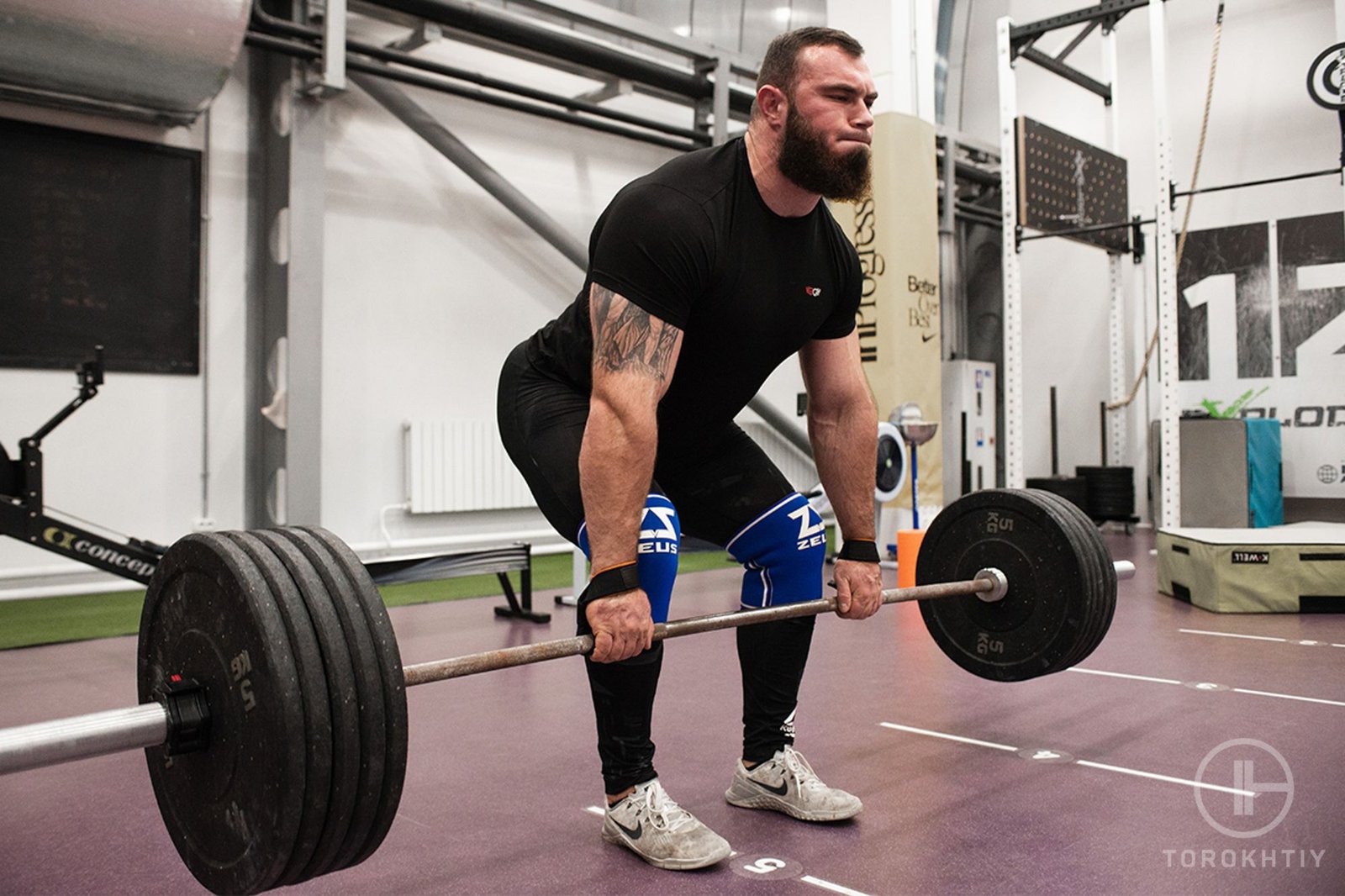
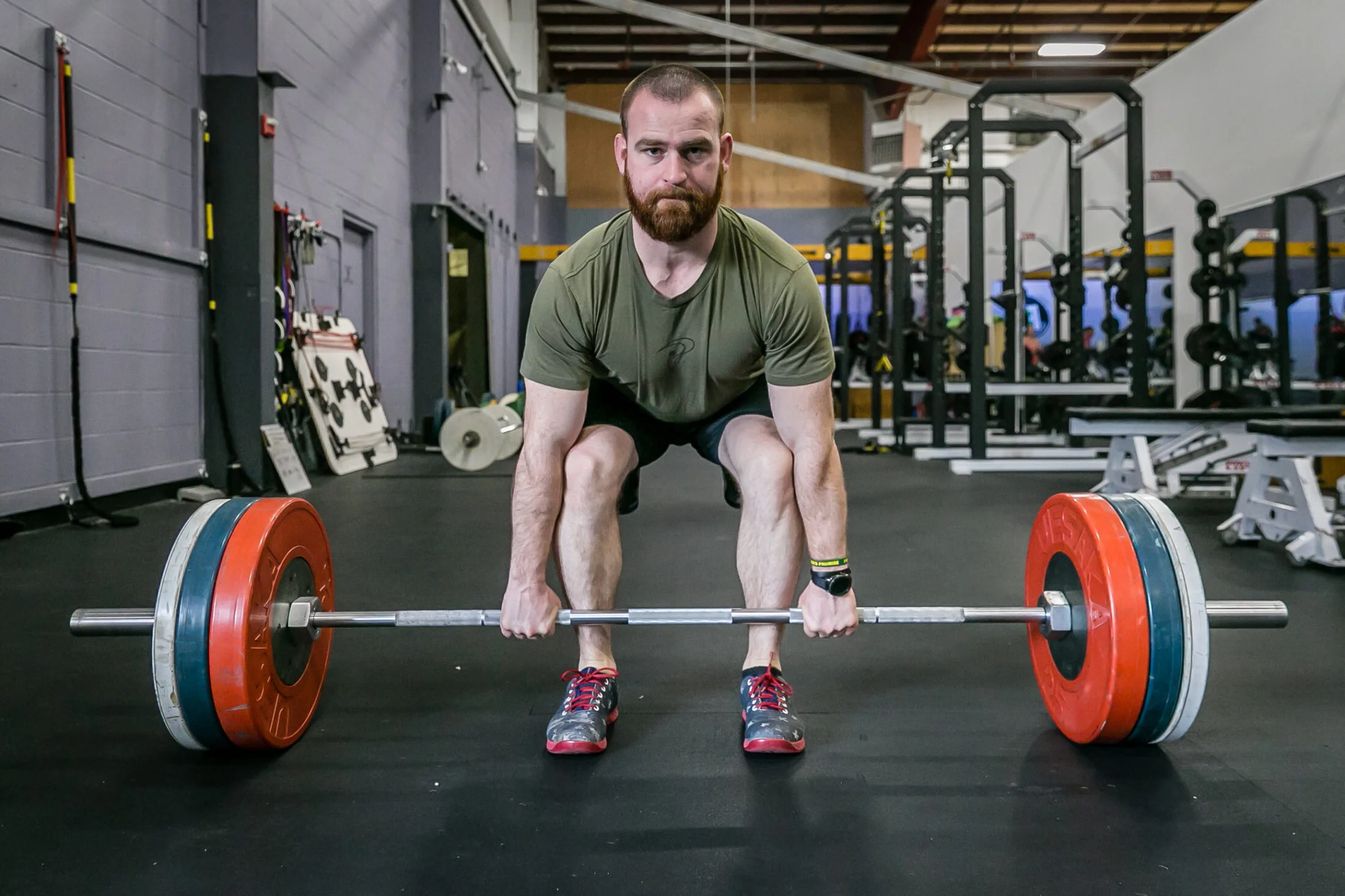
A straight-bar deadlift puts the shaft in front of your body. Keeping it close encourages you to coordinate the knees and hips while maintaining a strong trunk position. For many lifters the hips sit farther back, the torso leans forward more and the bar has to pass the knees without drifting. That familiar movement is the standard when you want a conventional deadlift skill that transfers directly to the same exercise in competition or testing.
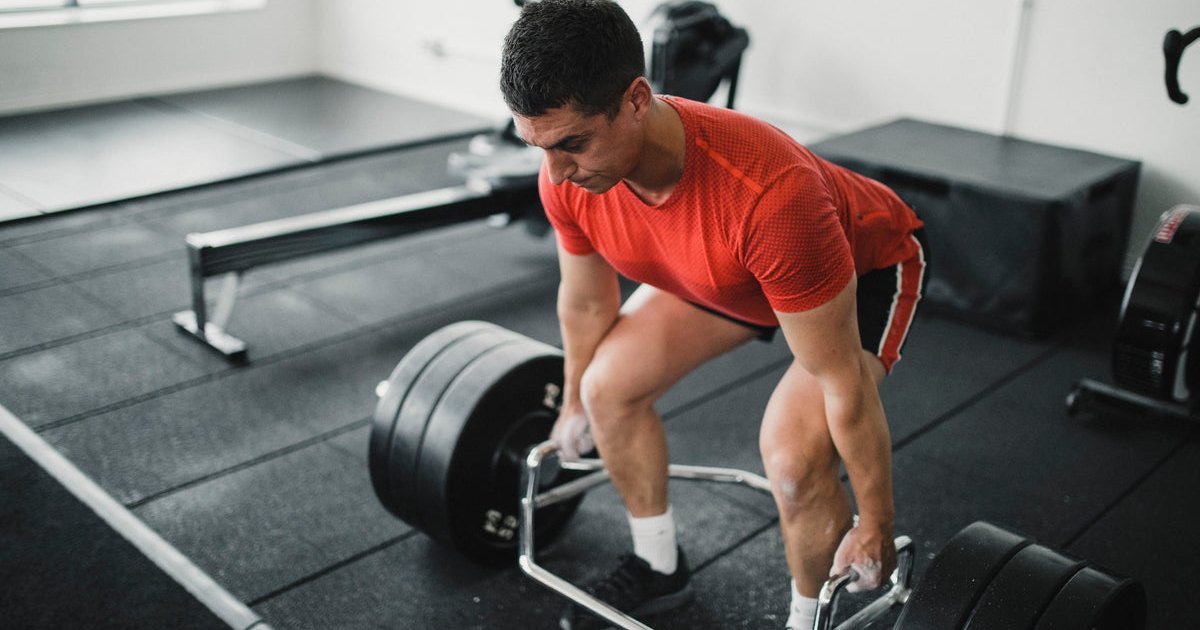
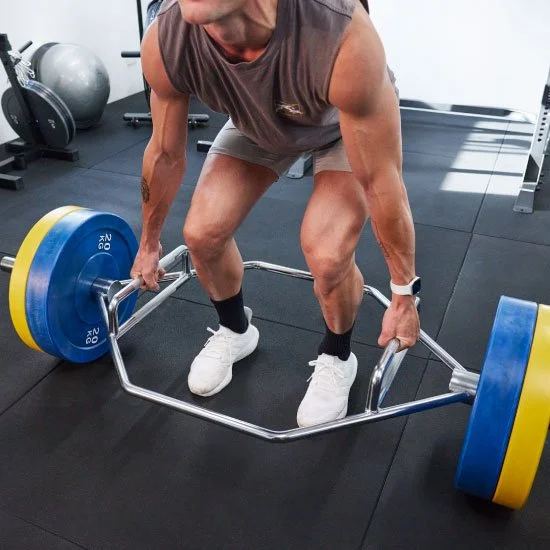
A trap bar changes the starting geometry. You stand inside the frame and grip handles at your sides, often with a neutral hand position. Depending on your proportions and the handle height, you may be able to start with a more upright torso and bend the knees more. The bar does not automatically turn the deadlift into a squat; it simply gives you a different path to find a strong pulling position.
Not all hex bars are identical, either. Closed frames and open-back designs can vary in handle height, width and clearance. High handles reduce the distance the plates travel compared with low handles, and that makes a comparison less fair unless you specify which handles you used. The most useful question is not which piece of steel looks more serious, but which setup matches your movement goal and the range you can control.
What the 20-man deadlift comparison actually measured
The men in the laboratory had prior deadlifting experience. They tested a one-repetition maximum with each bar during separate visits, then returned to perform repetitions using 65% and 85% of the relevant bar’s maximum. Equipment tracked ground reaction forces and movement velocity, while sensors recorded muscle electrical activity from the outer quadriceps, a hamstring muscle and the spinal erectors.
The average straight-bar maximum was 181.4 kilograms; the trap-bar average was 181.1 kilograms. That tiny difference was not statistically significant. In this particular group, switching bars did not magically add tens of kilograms to the maximum lift. The finding is worth noticing because lifters sometimes hear a universal promise that a hex bar will immediately make anyone stronger.
However, the trap-bar lifts produced higher measured peak force, peak power and peak velocity during the researchers’ test conditions. Peak power averaged about 1,871 watts with the hex bar versus 1,640 watts with the straight bar. Peak velocity was approximately 0.805 versus 0.725 meters per second. These are measurements of what happened during particular repetitions, not guaranteed improvements in future sprint speed, jumping or muscle mass.
A separate set of tests involving experienced powerlifters found that participants lifted a heavier maximum with the hex bar than with the conventional one. Another comparison with 11 proficient lifters also found a higher trap-bar maximum. The disagreement in maximal-load findings is a reminder that sample characteristics, familiarization, handles, technique and testing protocol matter. Do not assume somebody else’s average is your personal result.

Equipment Worth Exploring
Explore equipment, accessories and gear from our carefully selected range.

Open Hex Bar
Open-frame trap bar with multiple handles for deadlifts, carries, and lower-body training.


Competition Plates
Competition-style bumper plates for Olympic lifts and loaded strength training.

Grip Plates
Rubber-coated weight plates with handholds for loading barbells and machines.


Leather Lifting Straps
Padded leather straps support grip during heavy rows, deadlifts and pulling exercises.

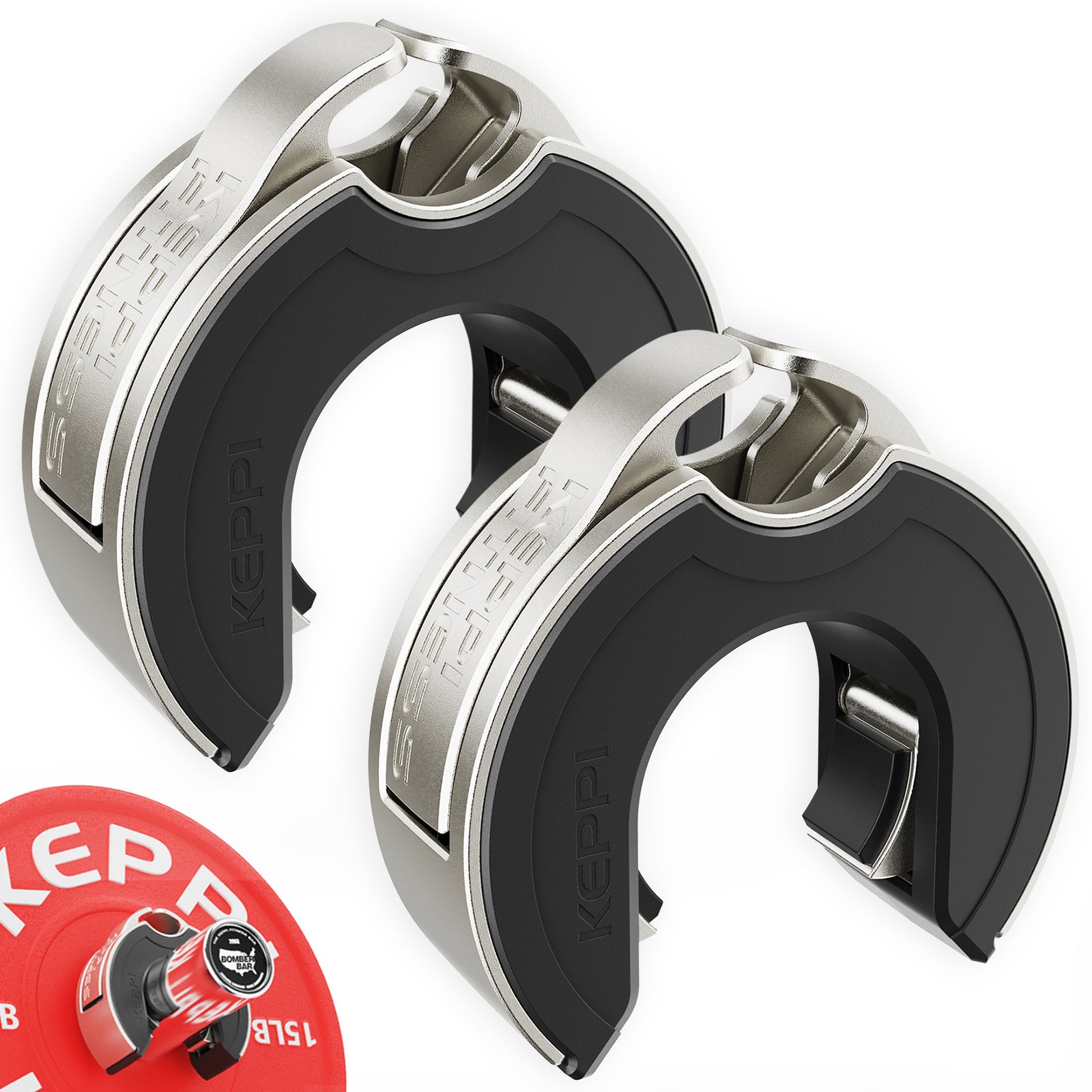
Keppi Open Collars
C-shaped magnetic Olympic barbell collars with a quick-lock mechanism and grippy lining.
Why the trap bar often performs well for powerful pulls
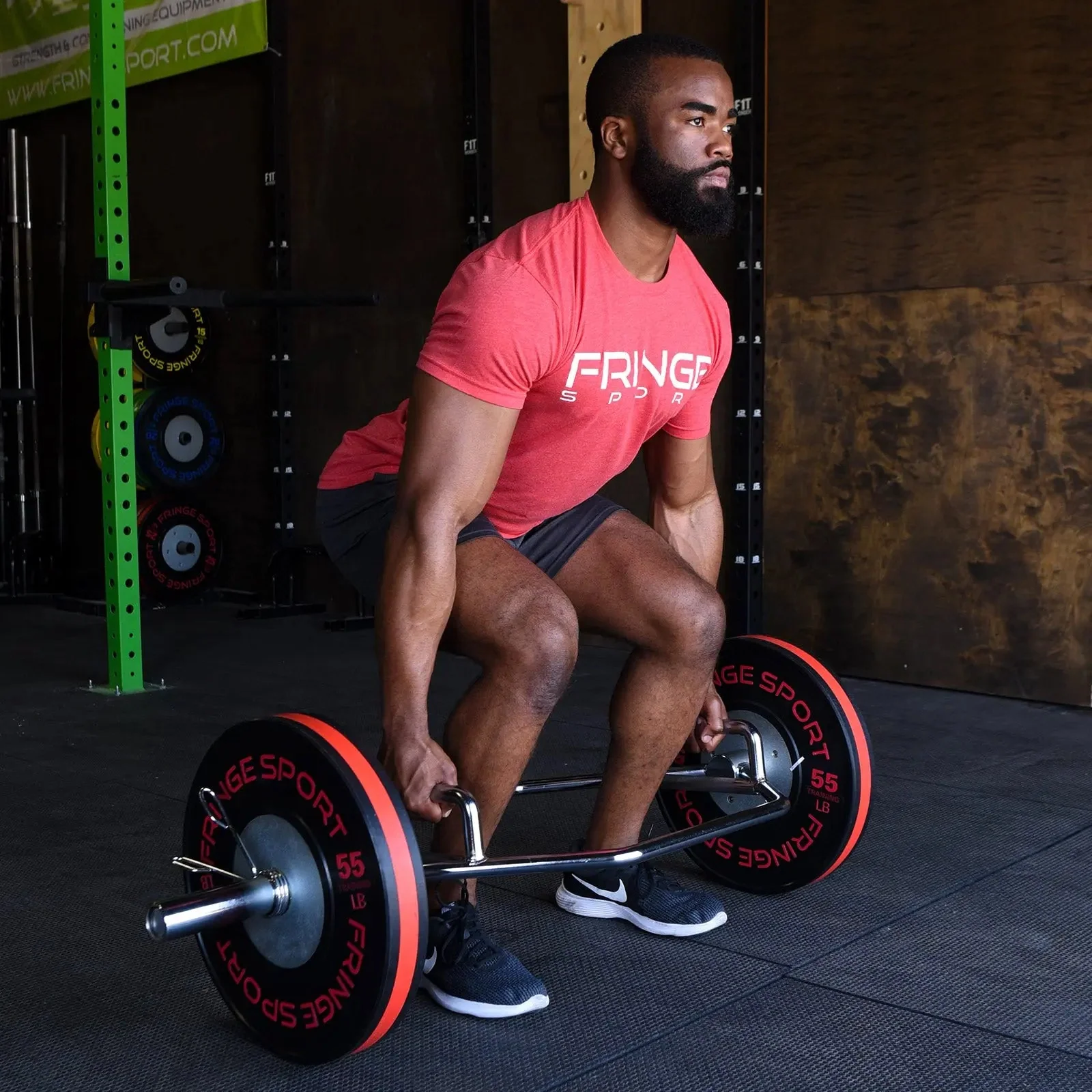
Power combines force and movement speed. Being strong enough to move a load is essential, but how quickly you move it also changes the output. A lifter who can maintain a better pushing position through the floor may produce a faster repetition with a trap bar in a particular loading range. That helps explain the measured advantage in bar speed and power in several short laboratory comparisons.
It is tempting to take the next step and declare the trap bar better for every athlete. The evidence does not support that leap. A faster bar during a laboratory pull is not the same as proving that eight weeks of hex-bar training will make someone jump higher than eight weeks of conventional deadlifts. To answer that, we would need well-controlled training programs, matched volume and meaningful tests before and after.
Still, it gives coaches a reasonable practical option. If your primary objective is to develop a hard, fast lower-body drive, trap-bar pulls may be a useful part of your training menu. If your objective is to improve your conventional deadlift, you must practice a conventional deadlift: the skill of holding the bar in front of your body cannot be fully learned with the bar at your sides.
Use power work when you are fresh. Keep repetitions crisp, take enough recovery to restore intent and end a set when speed drops significantly. Do not turn every explosive pull into a slow, grinding endurance exercise merely because it is possible to complete another repetition. The quality of movement is the training target, not just the total number of plates.

Powerlifting Shirts & Lifting Gear
Powerlifting shirts and gym gear for squat, bench and deadlift lifters who live for heavy numbers.

3 Plates Deadlift Club – Motivational T-Shirt
Make gym days more fun with “3 Plates Deadlift Club” style.

PR or ER – Hardcore Powerlifting for Deadlift PR Chaser Hoodie
Show off your deadlift humor in a laid-back “PR or ER” hoodie.

Deadlift Addict & Barbell Cigarettes Can'T Quit T-Shirt
Show some deadlift attitude with a playful “Deadlift Addict & Barbell Cigarettes” tee.

Grim Reaper Deadlift Gym Tank Top
Your gym-day look, with a playful “Grim Reaper Deadlift” twist.

Zombie Deadlift Lifting Dead Halloween Meme Decal Sticker
Bring “Zombie Deadlift” attitude to your water bottle or laptop.

Deadlift PR or Die Skull Graphic , Hardcore Halloween G T-Shirt
Bring “Deadlift” humor to your everyday gym style.

I Want You To Deadlift – Patriotic Uncle Sam 4th of Jul Sticker
Put “I Want You To Deadlift” gym humor on your laptop, bottle, or gym gear.

Bending Bars Meme – Barbell Squat Bench Deadlift, & T-Shirt
Heavy lifts, good laughs, and a little “Bending Bars Gym Meme” energy.


Leg Day No Thanks Skip Leg Day Meme Squats Deadlifts Tank Top
Bring “Leg Day No Thanks” humor to your next lifting session.
What quadriceps, hamstring and lower-back signals mean
In the 20-man experiment, the trap-bar condition produced higher recorded activity in the vastus lateralis, one of the quadriceps muscles, during both lifting and lowering. The conventional deadlift produced higher activity in the biceps femoris during the lifting phase and higher activity in the erector spinae during the lowering phase. The broader pattern fits the idea that bar geometry redistributes some of the work among joints and muscles.
But an electrical signal is not a growth measurement. Surface electromyography can change with technique, electrode position, muscle length, effort and coordination. Higher activity during a few repetitions does not establish that one bar builds more muscle after months of training. Muscle growth depends on the training stimulus repeated over time, adequate effort, progressive loading and recovery.
Think about exercise selection in terms of coverage rather than a contest between isolated signals. A trap-bar pull can provide a challenging knee-and-hip extension movement. A conventional pull can place more emphasis on the hip-hinge pattern and the demands of keeping a front-loaded bar close. Either can contribute to a well-designed program, and neither completely replaces leg curls, squats or other exercises if you need to train a specific muscle or joint action more directly.
Nor does a lower lumbar moment in a studied hex-bar condition mean the movement makes back injury impossible. Load, fatigue, individual anatomy, prior tolerance and coaching all influence the outcome. If a particular pulling style aggravates symptoms, adjust the exercise and loading rather than assuming a different bar is a medical treatment.
Set up both deadlifts before chasing more weight
For a conventional pull, place the bar over the middle of your foot, take a stance that allows the hands to remain outside the legs, and create tension through the trunk and upper back before the plates leave the ground. Push the floor away and keep the bar close. Let the knees and hips extend together without jerking the bar off the platform or swinging it away from your legs.
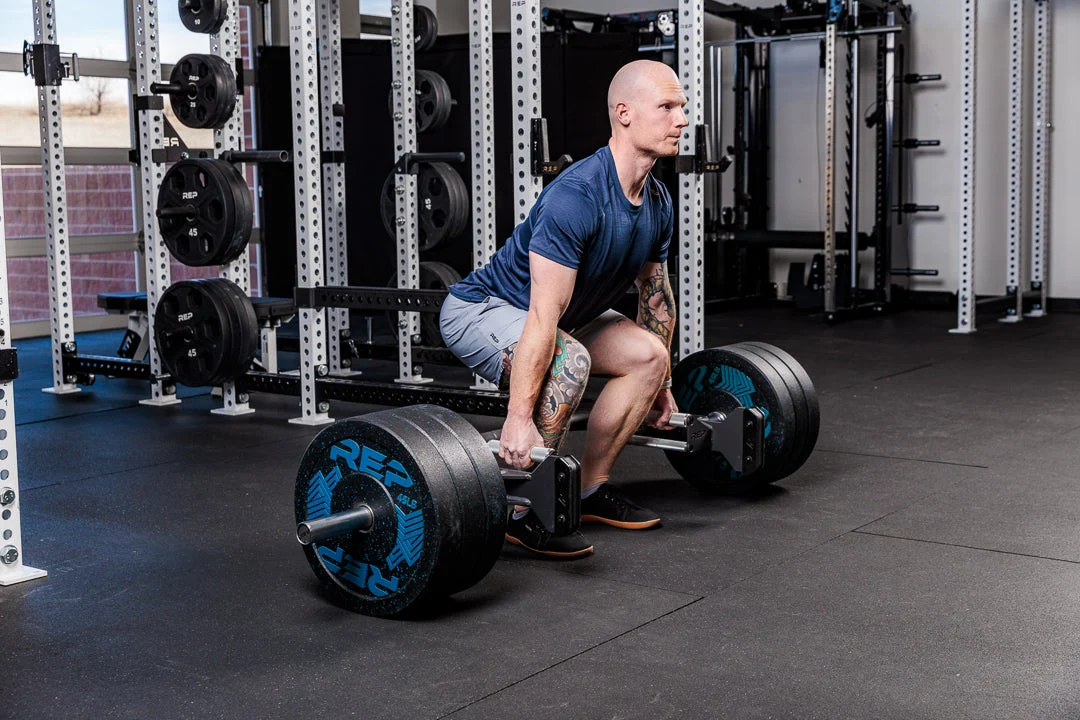
With a trap bar, stand centered between the handles, keep pressure distributed through the whole foot and grip both sides evenly. Start from a height that permits a controlled position. Allow the knees to bend naturally rather than trying to imitate the exact joint angles of your straight-bar deadlift. Push down into the floor, stand tall and bring the bar down with control.
For either variation, choose a load that lets you repeat approximately the same path across the set. Your first repetition should look recognizably like your last. If your grip is the limiting factor, straps can help for some accessory sets, but practice enough unassisted gripping when grip strength is one of your goals. Secure plates with suitable collars and keep your training space clear.
One often-overlooked detail is the handle choice. Low trap-bar handles usually demand more movement range than raised handles. Changing handles between workouts can make progression look better than it really is. Record the bar model and handle setting alongside the weight and repetitions so your log reflects an honest comparison.
Equipment Worth Exploring
Explore equipment, accessories and gear from our carefully selected range.

Foldable Wall Rack
Wall-mounted folding squat rack designed to save floor space between workouts.


Safety Squat Handles
Barbell squat handles that reduce shoulder positioning demands during high-bar squats.

GymPin Squat Wedges
Non-slip 15-degree squat wedges help elevate the heels for deeper quad-focused squats.


Leather Wrist Grips
Padded leather lifting grips help support the hands and wrists on heavy pulling exercises.


Studio V-Squat
Plate-loaded V-squat machine for supported lower-body strength training.
Choose the deadlift that matches your actual goal
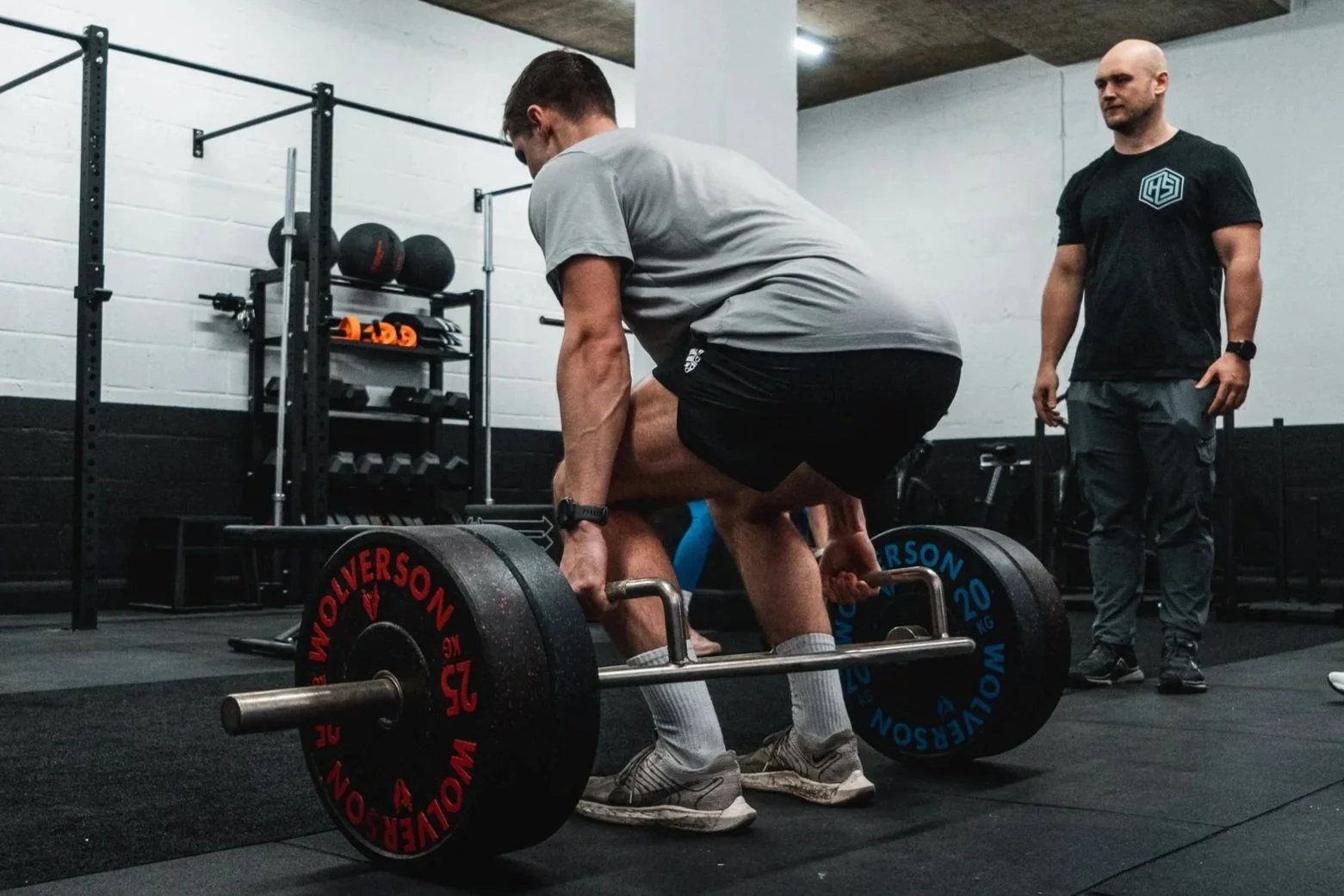
If you compete in conventional powerlifting, the straight bar should remain the anchor of your pulling practice. The setup, balance and sticking points are specific skills. A trap bar can still work as a supplemental lift when you want a different heavy leg stimulus without replacing your competition rehearsal.
For team-sport athletes or general strength trainees, a trap bar may be an accessible way to train loaded lower-body extension. Some athletes find the neutral handles and centered load easier to organize, especially when the straight bar feels awkward around the shins. That is a useful practical advantage, but it is an individual preference rather than a universal safety guarantee.
For muscle building, the answer depends on what is missing from your weekly program. If you already squat heavily and need additional posterior-chain work, conventional deadlifts or Romanian deadlifts may fit better than another knee-dominant pull. If your hinge volume is high and you want additional leg loading with a different balance, a trap-bar variation could be useful. Hip thrusts, hamstring curls and leg extensions can fill gaps that neither deadlift addresses perfectly.
Budget and equipment access matter too. If your gym only has a straight bar, there is no reason to feel under-equipped. If you own a trap bar, you can build serious strength around it. The principle is consistent, progressive training with good technique and recoverable volume, not collecting every possible bar design.
A four-week test to find the better tool for your training
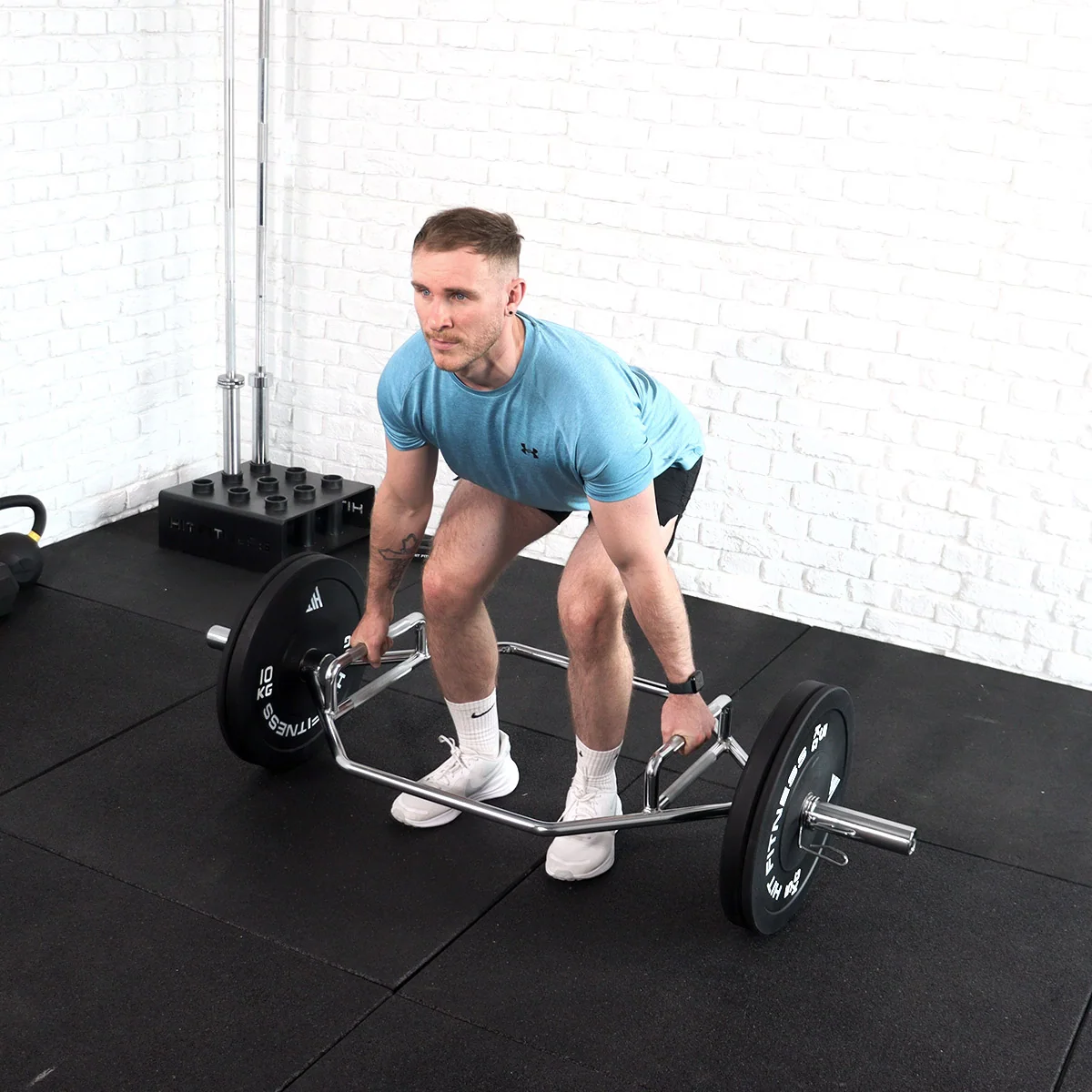
Instead of arguing about which bar is universally superior, run a short structured comparison. Pick one primary deadlift pattern to emphasize for four weeks while keeping your other lower-body work fairly stable. If you want to compare both options, use matched relative effort and a repeatable handle height, stance and warm-up. Do not judge the result by putting on an unfamiliar bar and attempting a new maximum immediately.
Week 1: Work up to three controlled sets of five at a load that leaves roughly two or three repetitions in reserve. Record load, reps, perceived effort and any technique notes. Week 2: Keep the same set count and increase the weight slightly only when all repetitions are smooth. Week 3: Use one moderately heavy set of four followed by two slightly lighter back-off sets of six. Week 4: Repeat a previously tested load and compare rep speed, form and perceived effort rather than forcing an all-out maximum.
Track the things that matter for your goal: bar control and repeatable technique, progression in weight or clean repetitions, tolerable fatigue before the next session and confidence getting into a strong start position. For a power-focused plan, add a small number of fast, low-fatigue repetitions when fresh. For a hypertrophy plan, combine the deadlift with enough targeted work for quads, hamstrings and glutes.
The conclusion is less dramatic than a winner-takes-all headline, but more useful: in the measured 20-man comparison, maximal strength was nearly equal while power, velocity and muscle activity differed. A trap bar gives you another strong option; the straight bar gives you the specific conventional pull. Use the one that trains the quality you need, and keep the other available when your program calls for a change in emphasis.
Leg Day Shirts & Workout Gear
Leg-day gym shirts and workout gear for lifters who never skip squats, lunges and lower-body punishment.

Never Skip Leg Day | LEGO Muscle Shirt For Squats & Dea Tank Top
Train hard, laugh a little, and rep “Never Skip Leg Day”.

Negative Leg Day Review Not Recommended 1 Star T-Shirt
Keep things casual with a little “Negative Leg Day Review” attitude.

Leg Day Is Calling You Sweater Squats & Deadlifts T-Shirt
Add a playful “Leg Day Is Calling You” touch to your casual rotation.

Leg Day Squats Deadlifts Sweater Meme T-Shirt
Show some gym-day personality with “Leg Day”.

I Look Better Bent Over Squats Deadlifts & Booty Hoodie
Keep it laid-back with a little “I Look Better Bent Over” attitude.

Leg Day Squats Deadlifts Decal Meme Vinyl Sticker
Give your everyday gear a playful “Leg Day” twist.

1 Plate Deadlift Club Meme – Motivational Top T-Shirt
Heavy lifts, good laughs, and a little “1 Plate Deadlift Club” energy.

9 Plates Squat Club Meme Shirt – Essential & T-Shirt
Show some leg-day attitude with a playful “9 Plates Squat Club” tee.

I Want You To Squat Uncle Sam Patriotic – Funny 4th of Sticker
A fun “I Want You To Squat Uncle Sam Patriotic” touch for bottles, laptops, and lockers.

Deadlift Flaming Skull Graphic , Hardcore Bodybuilding Tank Top
Add some deadlift attitude to training with “Deadlift”.