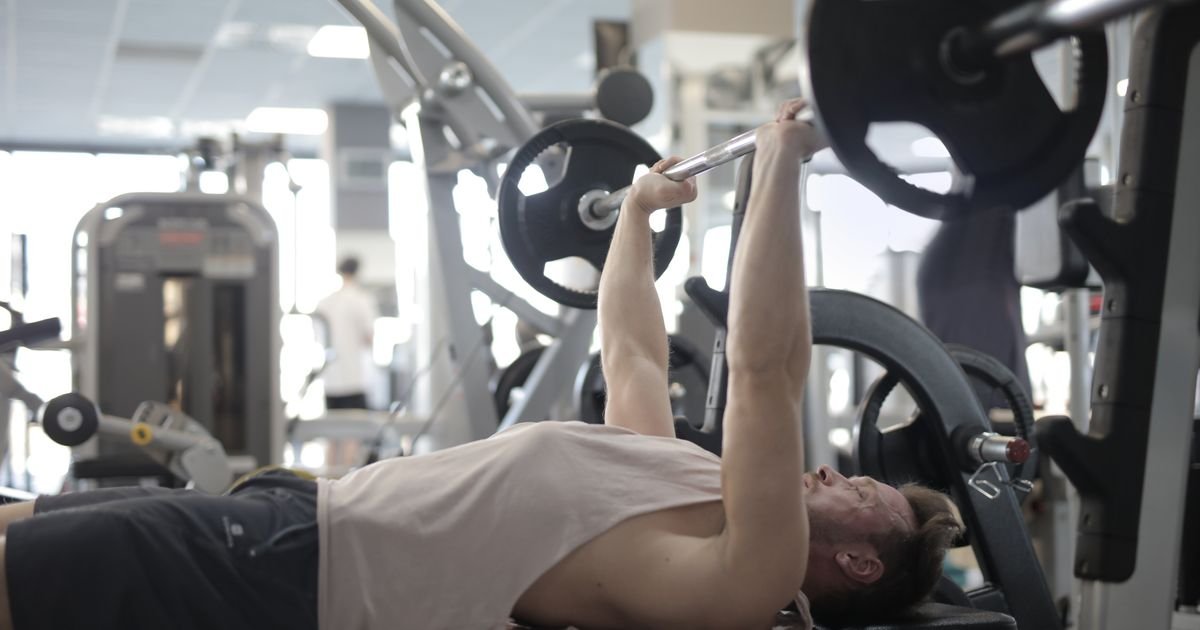
Advertising disclosure: This page includes affiliate product links that may earn us a commission, as well as products from our own store.
Some product links may be affiliate links. If you shop through them, Mind Muscle Perfection may earn a commission at no extra cost to you.
One coach tells you to train each muscle twice a week. Another insists that a brutal chest day and a full week of recovery are all you need. Both can build muscle, but the number of times a muscle appears on your calendar is not the same as the work that muscle receives.
A recent analysis of sixteen training trials involving 380 people compared one, two and three sessions per muscle per week while keeping weekly training volume similar. It did not detect a clear difference in average muscle growth. That is useful evidence for anyone choosing between full-body workouts, an upper-lower routine and a conventional body-part split, although it does not prove that every schedule is equivalent.
The practical question is how to distribute challenging sets so that they remain productive, recoverable and repeatable. Here is what frequency can change, what it cannot automatically fix and how to choose a schedule based on real gym performance.
1. Training frequency is not the same thing as training volume
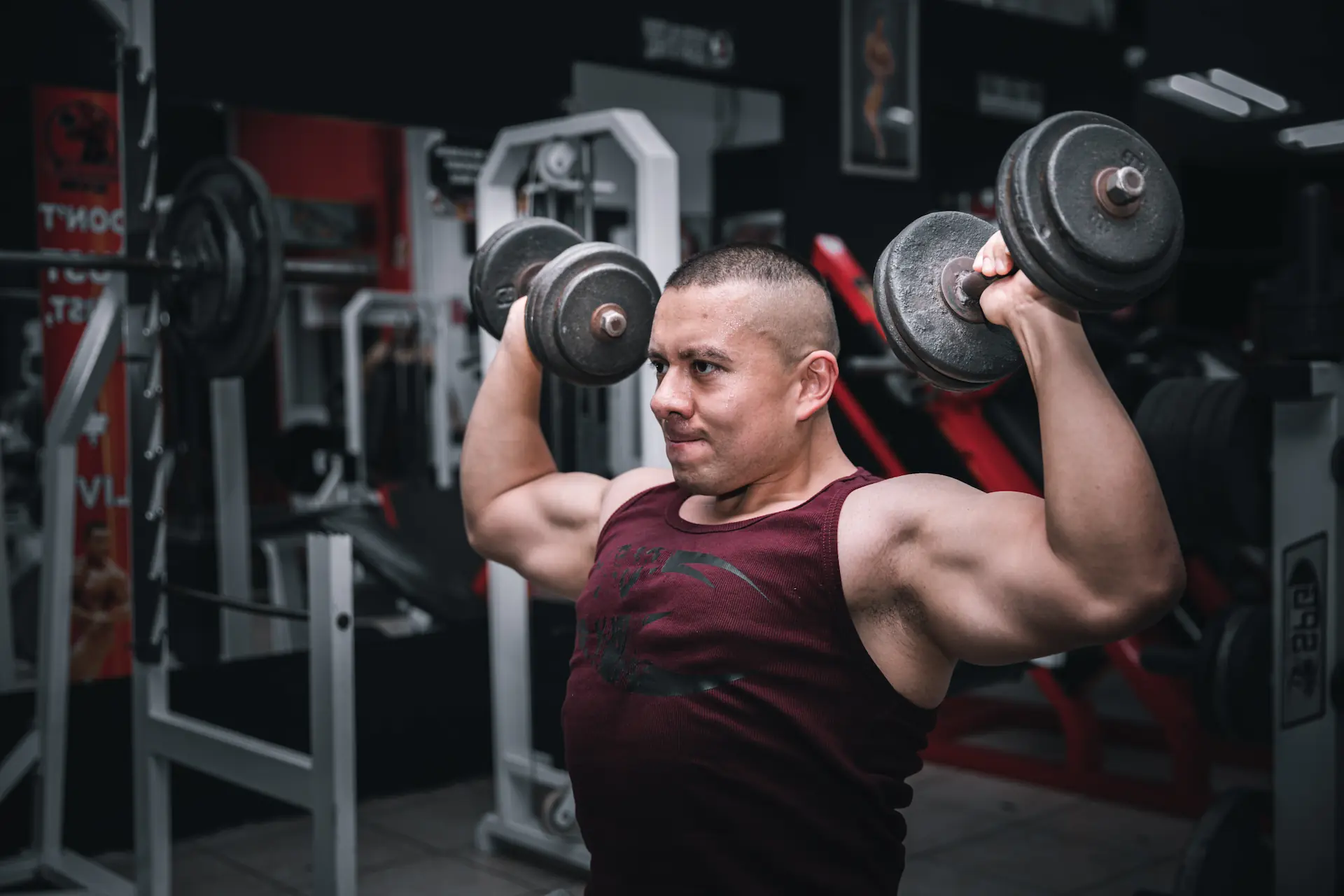
Muscle-training frequency is the number of separate days on which a particular muscle receives meaningful resistance work. A person lifting five days a week could still train quadriceps only once, while someone lifting three days a week might stimulate their quads in every session. Count muscle exposures, not total gym visits, when comparing schedules.
Weekly volume describes how much hard work a muscle gets across all sessions. For a practical starting approximation, lifters count challenging sets of squats, presses, rows, curls and similar exercises. Six demanding chest sets on Monday plus six on Thursday are twelve weekly sets; twelve on Monday is also twelve. Those arrangements differ in how much fatigue accumulates within any one workout.
Neither total sets nor frequency tells the entire story. A heavy bench press contributes to pressing muscles and triceps, while a chest fly emphasizes the chest with fewer elbow-extension demands. A technically poor set terminated by grip or lower-back fatigue may not deliver the intended stimulus to a target muscle. Execution, range of motion, proximity to failure and exercise overlap make simple set counting approximate rather than perfectly precise.
When you spread a fixed volume across extra days, you may arrive at later sets feeling fresher. Yet that change alone does not magically add new weekly work. If your current plan provides ten well-executed sets for a muscle, splitting them into two or three sessions changes distribution rather than automatically doubling the stimulus.
That distinction matters whenever people compare routines online. A five-day plan that trains a muscle three times and includes fifteen challenging weekly sets should not be credited to frequency alone when compared with a once-weekly plan using only six sets. To test frequency independently, the underlying weekly volume must be reasonably matched.
2. What sixteen controlled comparisons actually found
The sixteen-trial synthesis included 380 participants and compared muscles trained one, two or three times weekly. The training groups were designed to perform comparable weekly set volume, which helps isolate scheduling from doing extra exercise. Its combined estimate for muscle-size change was very small and statistically nonsignificant, with the uncertainty range still compatible with a modest benefit from higher frequency.
The pooled effect estimate was approximately minus 0.06 on a standardized scale, with a ninety-five-percent confidence interval from minus 0.24 to 0.13. In plain language, there was no convincing average separation between frequencies in these trials. A nonsignificant result is not proof that schedules produce exactly the same muscle growth for every lifter.
The evidence has important boundaries. Programs generally lasted six to twelve weeks; the included participants varied in training experience, age and sex; and many studies measured muscle thickness at selected sites rather than complete muscle volume. Certainty was rated low to very low. The analysis is also an October 2026 preprint, meaning the synthesis itself had not yet completed peer review at the time of this article.
The one-versus-three-day comparison left somewhat more room for a small higher-frequency benefit than the other contrasts, but the uncertainty was substantial. That is not a reason to tell every beginner to use three full-body workouts or every advanced bodybuilder to abandon one weekly body-part session. It is a reason to choose a workable structure and evaluate actual training quality.
Broader training evidence also suggests that doing more useful weekly sets can help muscle growth up to a point, with diminishing returns and recovery costs. Frequency is often best viewed as a way to make those sets manageable. If you do not perform enough challenging work, more calendar entries alone will not supply it. If your sessions are overcrowded, distributing work may make progress easier to sustain.

Equipment Worth Exploring
Explore equipment, accessories and gear from our carefully selected range.


FID Bench MAX
Adjustable bench offering flat, incline, and decline positions + adjustable headrest.


VOLTRA
Compact digital cable trainer with smooth, adjustable resistance.


3. Why dividing hard sets can improve the quality of a session
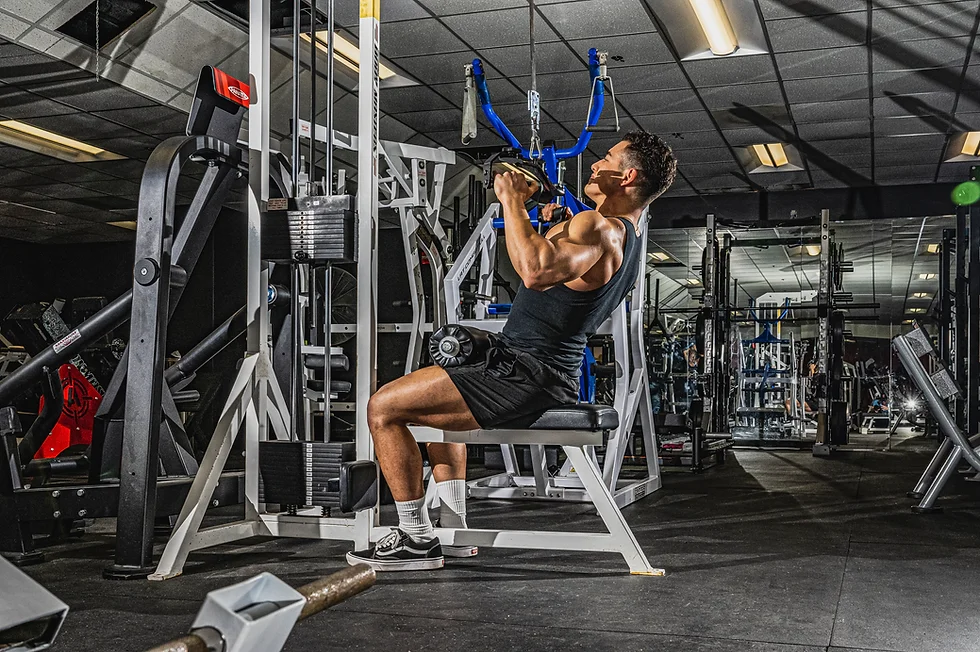
Imagine completing twelve hard back sets after one long workday: rows, pulldowns and more rows. The first exercises might be crisp and well loaded, while your grip, elbow flexors and concentration are tired by the last ones. Splitting the same twelve sets into two sessions of six can make it easier to preserve form and purposeful effort. The advantage is plausible even without a guaranteed extra hypertrophy effect.
Shorter sessions can also make progression more measurable. A bench press set performed after ten other pressing sets may be limited by accumulated local fatigue. Put some pressing work on a second day and the exercise receives a fairer opportunity for high-quality repetitions. This is especially useful if you find that loads or rep counts collapse as a long session goes on.
There is a trade-off. Every extra workout needs a warm-up, some setup and a place in your week. Training a muscle more frequently without reducing sets per session quietly increases total volume and may create soreness that overlaps with your next hard workout. Frequency should be adjusted together with weekly workload, not treated as an independent challenge to train as often as possible.
Recovery also depends on what the exercises demand. Heavy squats and deadlifts can create broad fatigue beyond the target quadriceps or hamstrings. Moderate leg extensions or calf raises may be easier to repeat. If two days of high-effort hip hinges leave your lower back exhausted, alternate demanding and lower-stress movements rather than blaming frequency for what is actually a loading problem.
A sensible default is to retain enough recovery for movement quality while spreading volume when a particular session becomes unproductive. You can experiment with approximately forty-eight to seventy-two hours between demanding exposures as a starting arrangement, not a physiological guarantee. Individual recovery, overall sleep and the size of the training dose matter more than a rigid hourly rule.

Bodybuilding Shirts & Workout Gear
Bodybuilding shirts, tanks and gym gear for lifters chasing muscle, size, symmetry and the pump.

Progressive Overload Milo Tee
Bring “Progressive Overload Milo Bull” humor to your next gym day.

Rest Day Sloth – Essential T-Shirt
Show some bodybuilding attitude with a playful “Rest Day Sloth” tee.


Lift Heavy Be Happy Meme Bros & Gains Top T-Shirt
Show some powerlifting attitude with a playful “Lift Heavy Be Happy” tee.


Gym Dost Thou Even Fly Medieval Knight Pec Fly Decal fo Sticker
Give your everyday gear a playful “Dost Thou Even Fly Medieval Knight Pec Fly” twist.

Gym Dost Thou Even Pull Medieval Knight Back Day Muscle Tank Top
Bring “Dost Thou Even Pull Medieval Knight Back” humor to your next lifting session.

Heavy Metal Lift Heavy – Hardcore Powerlifting for Body Hoodie
Show off your metalhead humor in a laid-back “Heavy Metal Lift” hoodie.


Shirt – Deadlift – Meme Gains & Bros T-Shirt
Heavy lifts, good laughs, and a little “Deadlift” energy.
4. Full body, upper-lower and body-part splits can all work
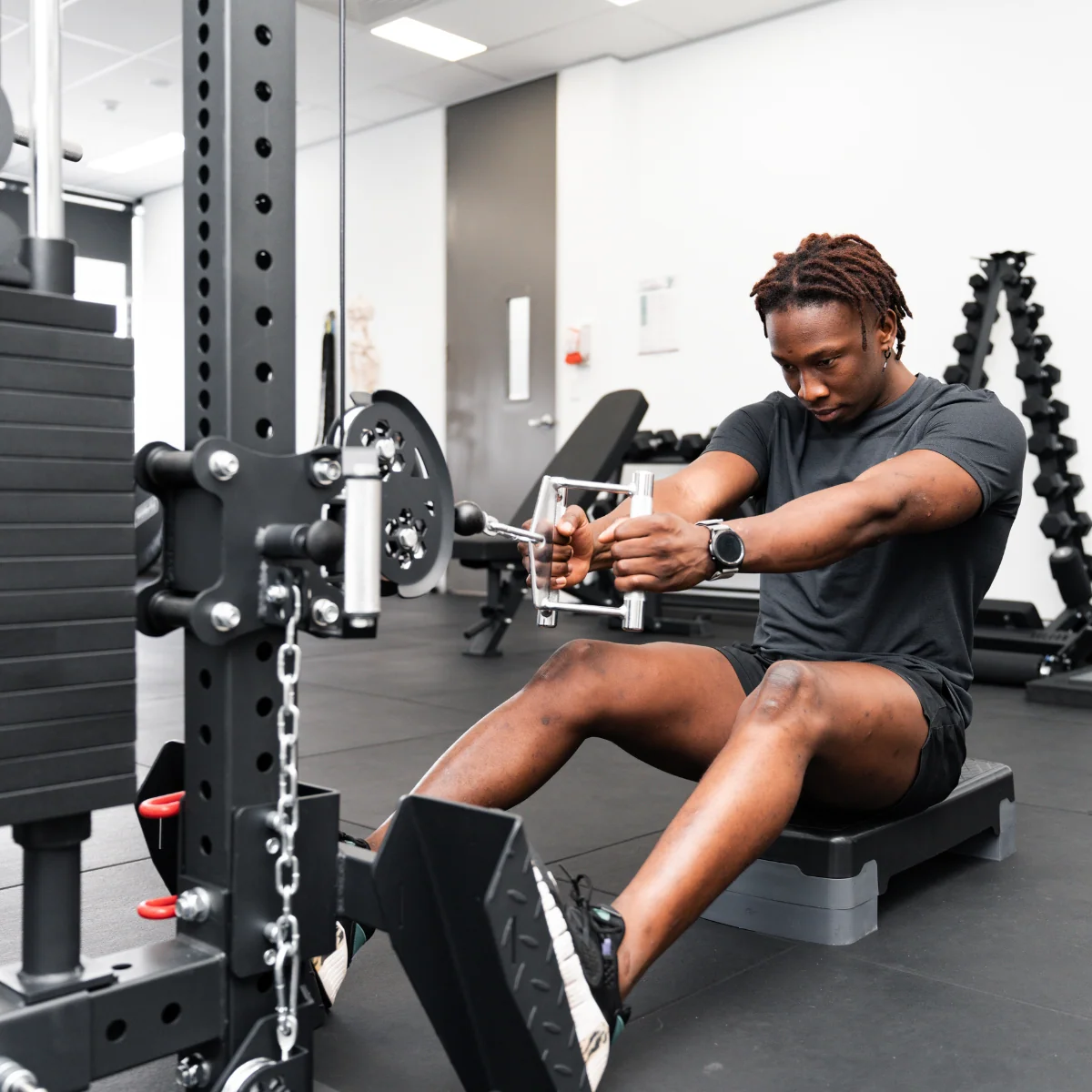
Three full-body sessions per week might train chest, back and legs on Monday, Wednesday and Friday. Each day could include one squat or hinge, one upper-body press, one pull and a small amount of accessory work. Sets are distributed widely, leaving less room for endless same-muscle finishers in one workout. The cost is that every session needs several movement patterns and some whole-body recovery.
An upper-lower routine typically covers the same muscle groups over four days: two upper-body sessions and two lower-body sessions. For example, upper work on Monday and Thursday and lower work on Tuesday and Friday allows the week to be organized around specific lifts. This often suits intermediate trainees who want sufficient exercise variety without a single marathon chest or leg day.
A body-part split can also produce useful results. A Monday chest session, Tuesday back session, Wednesday legs and Thursday shoulders-and-arms session may place more work into each muscle’s weekly exposure. It is not inherently ineffective because the muscle is trained on only one day. The potential limitation is whether later sets become lower-quality work and whether a missed day removes an entire muscle’s weekly opportunity.
Compare the schedules at equal work rather than by their labels. If your chest target is twelve weekly direct sets, you could do twelve on Monday, six on Monday and six on Thursday, or four on three separate days. If the sessions use similarly appropriate exercises, loads and effort, all three arrangements have a reasonable training rationale. Choose the one that keeps those sets productive and that you can follow.
Do not let an impressive six-day timetable trick you into sacrificing consistency. A three-day plan completed for months often beats an elaborate program abandoned after two weeks. If work, family or recovery makes five sessions unrealistic, build a lower-frequency program around the major movements and gradually improve it rather than chasing a perfect split on paper.
5. A practical weekly set and frequency starting plan
Start by listing your main target muscles and the exercises you already perform. For chest, count presses and flyes; for back, rows and pulldowns; for quads, squats, split squats and knee extensions. Select a weekly volume you can recover from. Around eight to twelve challenging direct sets per major muscle can be a useful initial range for many recreational lifters, but it is not a universal prescription or a minimum necessary for progress.
For chest, one weekly workout might use four bench-press sets, four incline-press sets and three fly sets. A twice-weekly version could split those eleven sets into a heavier bench-focused day and a second day built around dumbbells or cables. A three-day version could use three or four chest sets each session. Keep an eye on triceps and shoulder fatigue when placing pressing volume next to other upper-body work.
For back, divide your pulls between a vertical pattern and a horizontal pattern. An example twelve-set week could use three sets of pulldowns and three chest-supported row sets on Monday, with three more row sets and three pull-up or pulldown sets on Thursday. If you strongly prioritize pull-up strength, put the skill you most want to improve early in the appropriate session, before excessive accessory fatigue.
For legs, heavier compounds and easier accessories do not have to receive equal exposure. You might squat for three sets and perform leg extensions for three sets early in the week, then perform another three squatting or split-squat sets and a few hamstring sets later. If joint pain or unusually heavy soreness persists, reduce the workload or choose a movement you can perform comfortably rather than forcing the schedule.
Strength-focused lifters may want more frequent practice in priority lifts even when additional muscle growth is uncertain. Repeated technical exposures can help you refine setup, bar path and confidence. A strength athlete’s reason for benching twice may therefore be partly skill practice, not a promise that the chest muscle must grow faster. Keep technique sessions appropriately submaximal when recovery is limited.
Equipment Worth Exploring
Explore equipment, accessories and gear from our carefully selected range.



GymPin D Cuffs
Adjustable wrist cuffs with textured grips for supported cable-machine exercises.

Squat Harness
Wearable harness for hands-free cable squats, sled work, and lower-body training.

Safety Squat Handles
Barbell squat handles that reduce shoulder positioning demands during high-bar squats.

GymPin Barbell Row Handle
Heavy-duty handle attachment for barbell, landmine and T-bar rows.


HUSLA Leg Extension Pad
Pad attachment designed to increase usable range of motion on compatible leg-extension machines.


6. Use four weeks of logged performance to choose your split
Before moving from one session to three, establish a baseline. Record each exercise, working load, clean repetitions, number of sets and roughly how many reps you had left in reserve. Also note workout duration, soreness and whether the next session feels normal. These observations make it easier to judge a program instead of relying on how sore or pumped you feel afterward.
During week one, keep your present weekly volume and create a reliable baseline. In week two, distribute the same volume differently if that solves a real scheduling problem; for instance, move half your chest work from Monday to Thursday. Do not simultaneously add six more sets, halve every rest period and switch all the exercises. Otherwise, you will not know why performance changed.
Use week three to look at set quality. Are your final working sets retaining more technically sound reps at comparable effort? Are loads stable or improving? Has the split made your sessions less exhausting while leaving recovery intact? If all of those are true, the higher frequency may be a good practical fit regardless of whether a small growth difference can be measured within a month.
In week four, compare the outcomes you can actually observe: performance trends, consistency, weekly minutes spent training and adherence. Muscle growth itself is difficult to measure accurately over such a short period, so avoid judging it from a single tape measure reading or post-workout pump. Keep your food intake, bodyweight trend and other training reasonably consistent during the experiment.
If you repeatedly miss the second workout because of your schedule, simplify. If one enormous leg day leaves later sets unproductive, divide it. If heavy squats remain stalled while lighter accessories progress, change the order or recovery strategy. The correct frequency is the one that lets you accumulate meaningful work without sacrificing progress elsewhere.
The overall verdict is straightforward: training a muscle once, twice or three times a week can all support growth when challenging weekly work is appropriately organized. Sixteen volume-matched trials did not show a clear average hypertrophy difference, but the evidence cannot rule out modest effects for some people. Use frequency to improve consistency, set quality and recovery, then let your training log decide whether the schedule deserves to stay.
Powerlifting Shirts & Lifting Gear
Powerlifting shirts and gym gear for squat, bench and deadlift lifters who live for heavy numbers.

225lb Club : Meme & Gains T-Shirt
Show some powerlifting attitude with a playful “225lb Club” tee.

1500 Pound Club Meme Top & Gymbros T-Shirt
Bring “1500 Pound Club Gym Meme” humor to your next gym day.

Shirt – Squat Bench Deads Gains T-Shirt
Heavy lifts, good laughs, and a little “Squat Bench Deads” energy.

Heavy Enough Tee
Bring “If You're Not Scared It's Not Heavy Enough” humor to your next gym day.

Gym Sir Swole of Benchalot Medieval Knight Chest Day Cr T-Shirt
Show some gym-day personality with “Sir Swole of Benchalot Medieval Knight”.

Praise The Deadlift Holy Lifting Meme , & T-Shirt
Show some deadlift attitude with a playful “Praise The Deadlift” tee.

Heavy Metal Deadlift – Gymbro Leg Day & Gains T-Shirt
Make gym days more fun with “Heavy Metal Deadlift” style.
PR or ER – Hardcore Deadlift Gym Shirt for Powerlifters T-Shirt
A t-shirt featuring the PR or ER – Hardcore Deadlift Gym Shirt for Powerlifters and Bodybuilders artwork, bringing lifting-inspired humor and distinctive gym graphics to your everyday gear.

Leg Day Thou Shalt Not Skip Leg Day Medieval Knight Gym Sticker
Give your everyday gear a playful “Leg Day” twist.

Gym Thou Art Not Yet Ripped Medieval Knight Deadlift Fi Hoodie
Show off your medieval humor in a laid-back “Thou Art Not Yet Ripped Medieval Knight” hoodie.