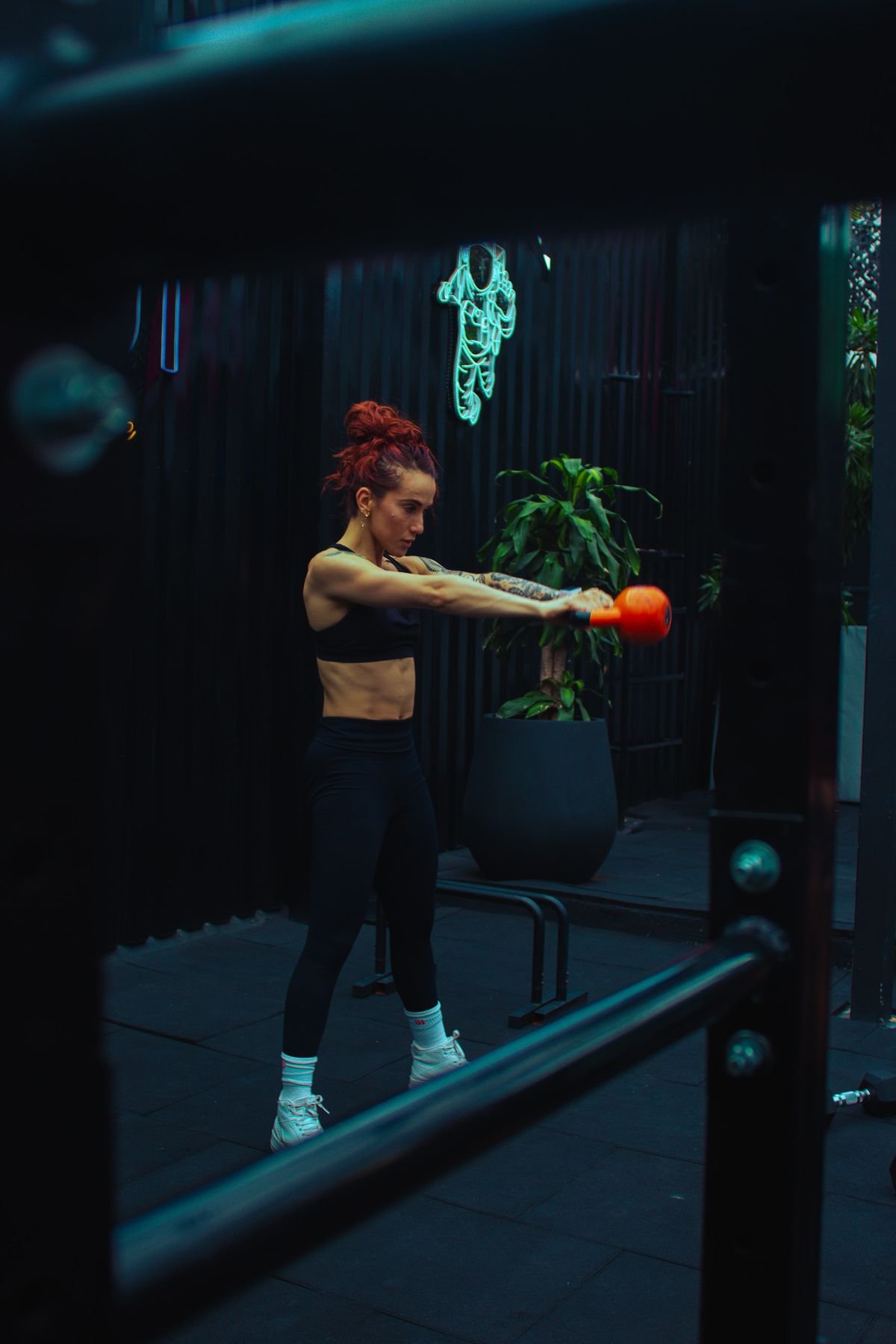
A kettlebell swing looks simple until the bell pulls you forward, your shoulders take over and every repetition becomes a shallow squat. The correction is not to swing higher or faster. It is to make the hips produce the movement while the trunk stays organized and the arms guide the weight.
The two-handed swing is a ballistic hip hinge: load the back of the hips, extend forcefully, then absorb the returning bell without collapsing. Done well, it complements strength training and provides demanding conditioning. Done poorly, it becomes a rushed sequence of arm raises and spinal movement. Here is how to learn it, select a sensible load and decide whether a session should train power or endurance.
1. Why a swing is a hinge, not a squat
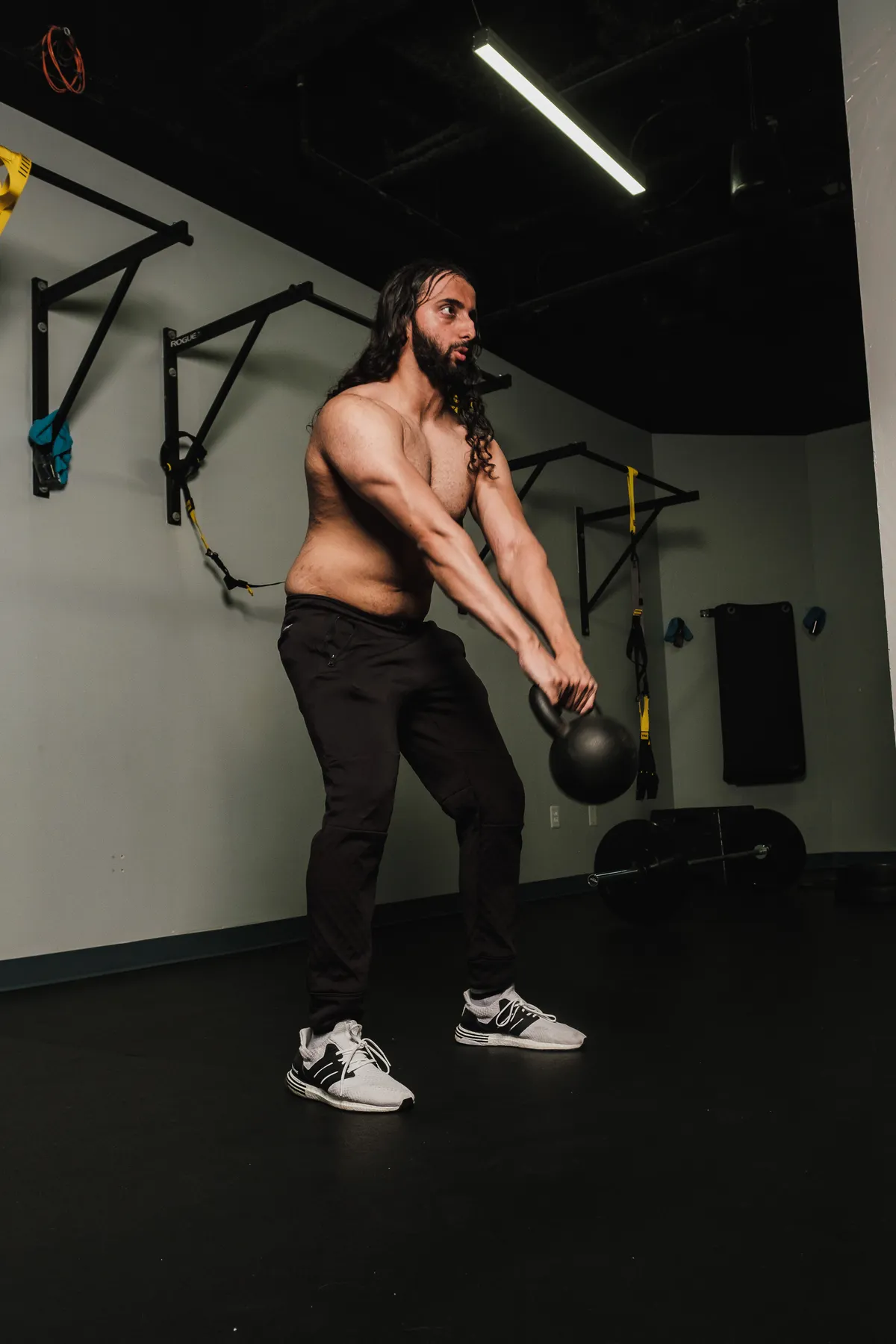
Imagine closing a car door with your hips while carrying shopping bags. Your hips move backward, your torso tips forward as one unit and your knees bend enough to make room. That resembles the swing more than sitting straight down between your heels. The bell travels backward between the upper thighs, then forward because your hips accelerate it. You should not need to lift it with your shoulders.
A squat uses substantial knee flexion and a relatively upright torso. A swing uses a smaller knee bend and a larger hip hinge. Neither is inherently better; they emphasize different demands. A small laboratory comparison found higher hamstring electrical activity in hip-hinge swings than squat-style swings. Activation does not directly prove greater long-term muscle growth or fewer injuries, so treat it as evidence of different muscular emphasis.
At the top, stand tall with ribs over pelvis and glutes firm. Avoid leaning backward to create extra height. At the bottom, keep the bell close enough that its backswing does not pull your shoulders toward the floor. The practical checkpoint is simple: the hips create the bell’s float, and the spine does not need to whip to make that happen.
2. Set up a repeatable two-handed swing
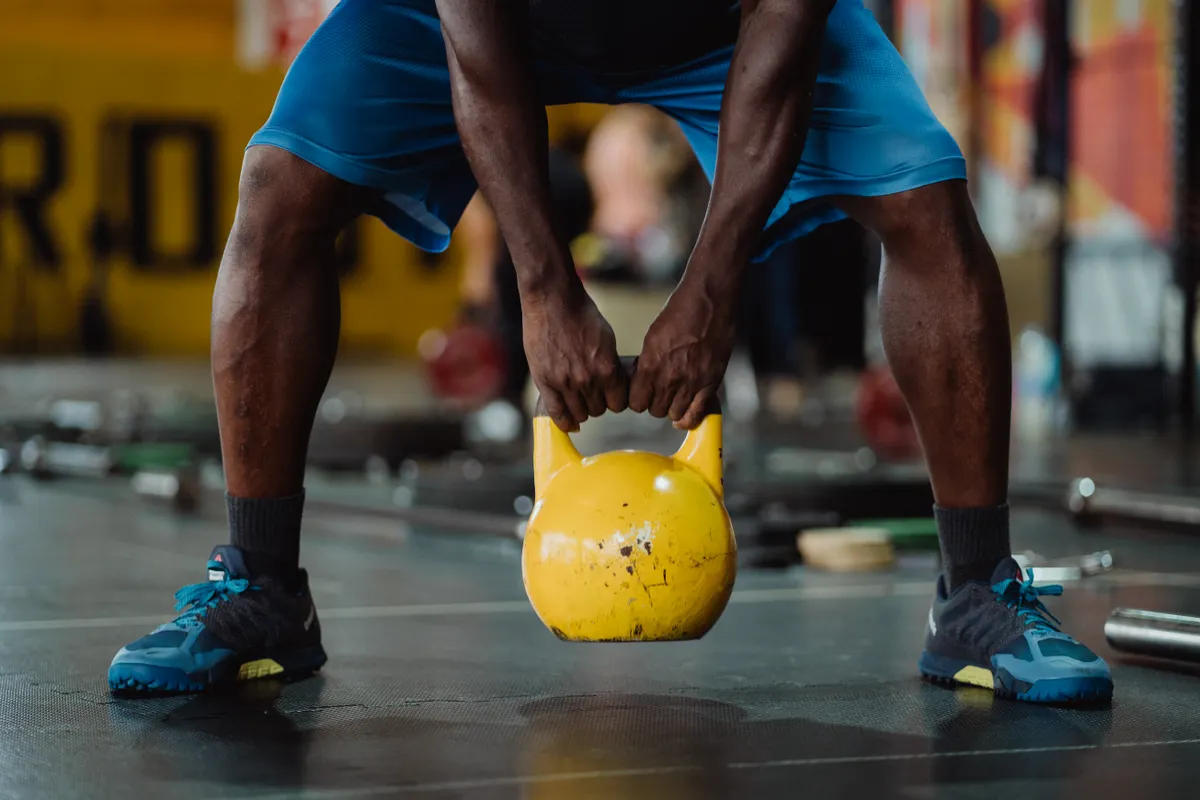
Place the kettlebell on the floor about a foot in front of you, not directly between your ankles. Set your feet roughly hip- to shoulder-width apart, with room for the handle to pass between the legs. Hinge backward to reach it. Keep your whole foot planted and your neck in line with your torso instead of staring upward at a mirror.
Tip the bell toward yourself, close both hands around the handle and settle the shoulders gently into their sockets. Take a short breath and brace as if preparing for a light push. Hike the bell high between the thighs like a football snap. As it reaches the back of the arc, push through the floor and extend the hips quickly. Let the bell float toward chest height with long arms; reaching eye level is unnecessary.
Wait for the bell to return before hinging again. Folding too early makes you chase it with the lower back. As the upper arms approach the torso, push the hips backward and receive the bell close to the body. Repeat while the rhythm remains crisp. To finish, allow the final backswing, guide the bell forward and park it on the floor instead of abruptly releasing it.
First-session drill: Perform five unloaded hinges, five controlled kettlebell deadlifts, then three sets of five swings with generous rest. Film from the side if possible. A stable trunk, consistent backswing and unforced bell height matter more than the number stamped on the handle.

Equipment Worth Exploring
Explore equipment, accessories and gear from our carefully selected range.


Leather Lifting Straps
Padded leather straps support grip during heavy rows, deadlifts and pulling exercises.

3. What the muscles and research actually show
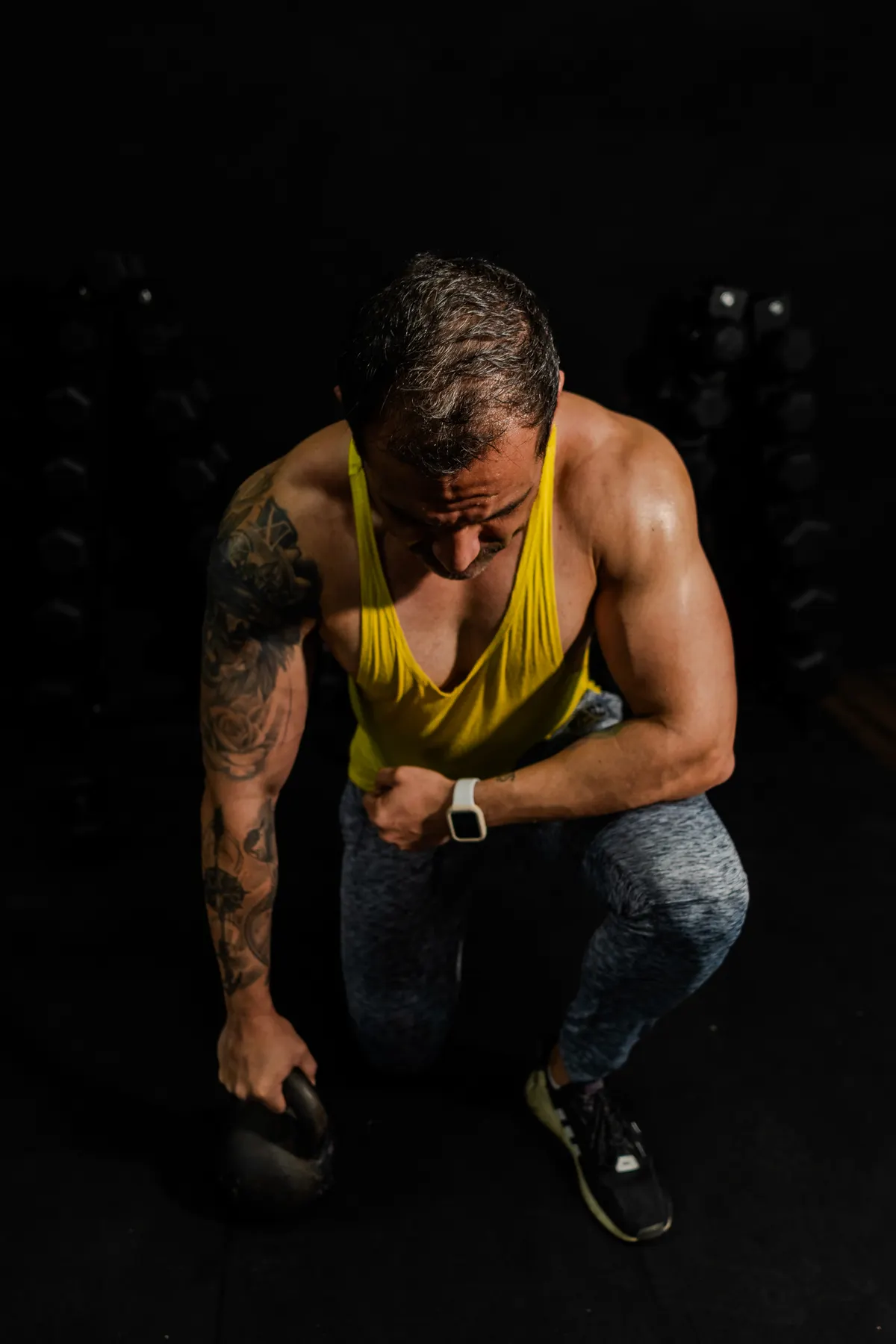
The glutes and hamstrings contribute to rapid hip extension. The abdominal wall and spinal extensors help manage forces. The upper back and grip keep the moving bell connected to the body. The quadriceps contribute too, but a hinge-style swing is not simply a substitute for a heavy squat. It is a repeated, fast hip-extension task with a moving load.
In a small study comparing swing styles, the hip-hinge version produced greater hamstring electrical activity than squat and double-knee-extension variations. Another analysis of 30 recreationally active adults tested bells equivalent to 10%, 15% and 20% of body mass. Heavier bells increased measured moments at the hip, ankle and lower back. That supports progressive loading as a way to change mechanical demand, while reminding us that heavier bells also increase forces the lifter must control.
A separate laboratory analysis of seven men measured substantial lower-back muscle activity and spinal loading during swings. It did not establish that swings cure back pain; some people find the movement irritating. Likewise, a high heart rate during swings does not mean they replace all steady aerobic training. Kettlebells can support several goals, but dosage and execution determine which quality receives the strongest stimulus.
Choose the role before the set: short, rested swings for hip-power practice; longer manageable intervals for conditioning; heavy barbell hinges for a more direct route to maximal deadlift strength. None is a complete program by itself.

Functional Fitness Shirts & Workout Gear
Functional-fitness shirts, tanks and workout gear for athletes who train strength, conditioning and everything in between.


Hell's Bells Kettlebell Tee
Show some rock-and-lifting attitude with a playful “Hell's Bells Kettlebell” tee.


Atlas Kettlebell Earth Meme Greek God Top T-Shirt
Make gym days more fun with “Atlas Kettlebell Earth Lifter” style.

Kettlebell Rap God | Slim Shady Workout Pullover T-Shirt
Keep things casual with a little “Kettlebell Rap God” attitude.

Cheeseburger Kettlebell – Burger Swings Meme Jumper Pul T-Shirt
Keep things casual with a little “Cheeseburger Kettlebell” attitude.

Donut Kettlebell – Bakery Gains Meme Hooded Pullover Hoodie
Make your off-duty look more fun with “Donut Kettlebell”.

Watermelon Kettlebell – Fruit Themed Workout Vest Muscl Tank Top
Train hard, laugh a little, and rep “Watermelon Kettlebell”.

Pineapple Kettlebell – Kettlebell Meme Decal for Water Sticker
A fun “Pineapple Kettlebell” touch for bottles, laptops, and lockers.
4. Five mistakes that steal power
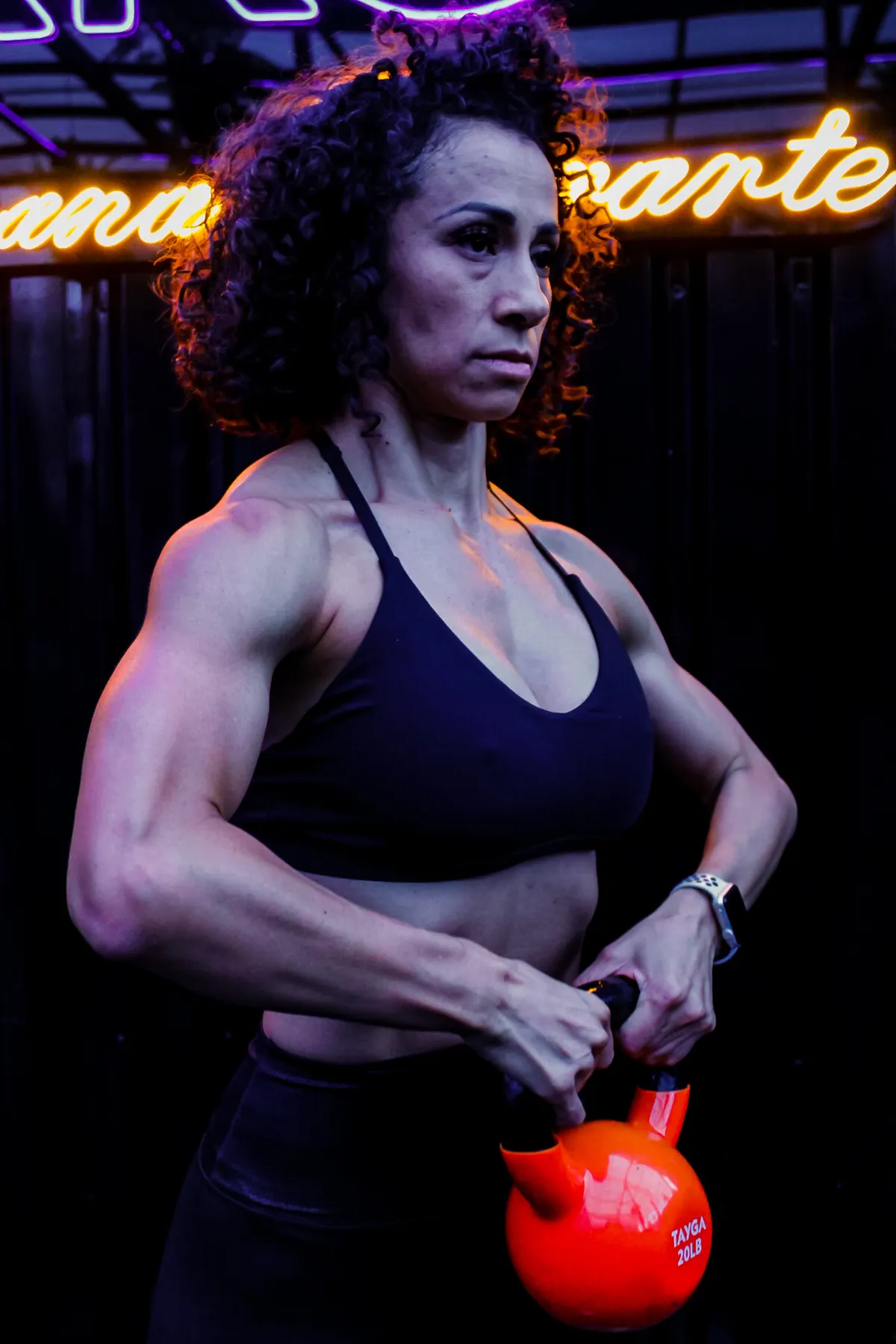
Squatting every repetition: If the knees drive forward and the torso stays upright, rehearse a kettlebell deadlift with the bell close to the legs. Keep the shins comparatively quiet while the hips travel backward. Some knee bend is normal; forcing perfectly vertical shins is not the objective.
Lifting with the arms: If your shoulders burn before your glutes, stop trying to raise the bell. Think of the arms as straps and let the hip snap determine height. A lower, clean float is preferable to a high, forced front raise.
Hinging before the bell returns: Let the bell approach the torso before you fold. Waiting prevents it from pulling you into an exaggerated reach. If timing feels chaotic, practice one repetition at a time and park the bell between attempts.
Leaning backward at lockout: Finish tall, not arched. Exhale gently through the top and keep ribs above pelvis. Overextending the lower back does not add meaningful hip power.
Letting fatigue dictate form: A conditioning timer is not permission to rush. If the bell drifts away, your feet shift or your trunk loses position, end the set. Reduce repetitions or extend rest before increasing load. A slipping grip is another clear reason to stop.
Technique cues are guides, not a contest for one perfect silhouette. Limb lengths, mobility and equipment dimensions differ. The shared priorities are control, a repeatable hinge and a bell path you can safely manage.
5. Choose a load and progress intelligently
There is no universal starting weight for every adult. Body mass alone cannot tell you which bell is appropriate because training history, coordination and grip capacity vary. Choose one you can deadlift easily and swing for five clean repetitions without shrugging, twisting or losing balance. A weight that feels light during a deadlift may feel demanding once it accelerates.
Build in stages. First, learn the unloaded hinge and kettlebell deadlift. Next, use short sets of two-handed swings with a deliberate reset. Once the bell consistently floats from hip drive and returns under control, add repetitions in small steps. Only then consider a heavier bell. When changing load, return to shorter sets until timing is stable again.
A sample progression might be three sets of five swings, then four sets of six, then five sets of eight over several weeks. These are coaching examples, not laboratory-validated thresholds. Rest until breathing and coordination recover. If the goal is power, stop sets while the bell still moves fast; for conditioning, choose a manageable bell and accumulate quality work over time.
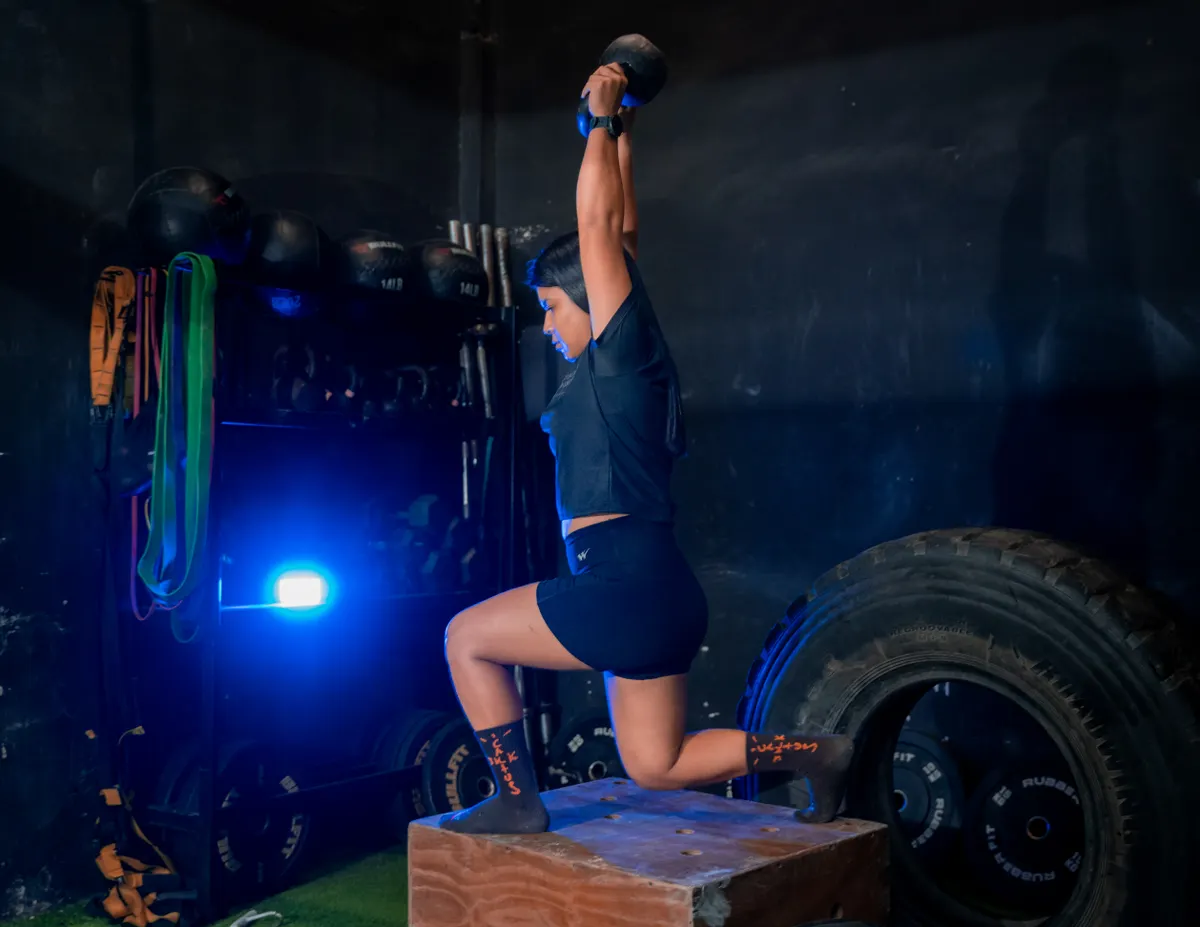
Advanced variations such as single-arm swings, cleans and overhead kettlebell movements introduce additional grip, rotational and shoulder demands. They are not mandatory milestones. Mastering a comfortable two-handed swing and pairing it with squats, rows, carries and presses is already a substantial training option.
Equipment Worth Exploring
Explore equipment, accessories and gear from our carefully selected range.


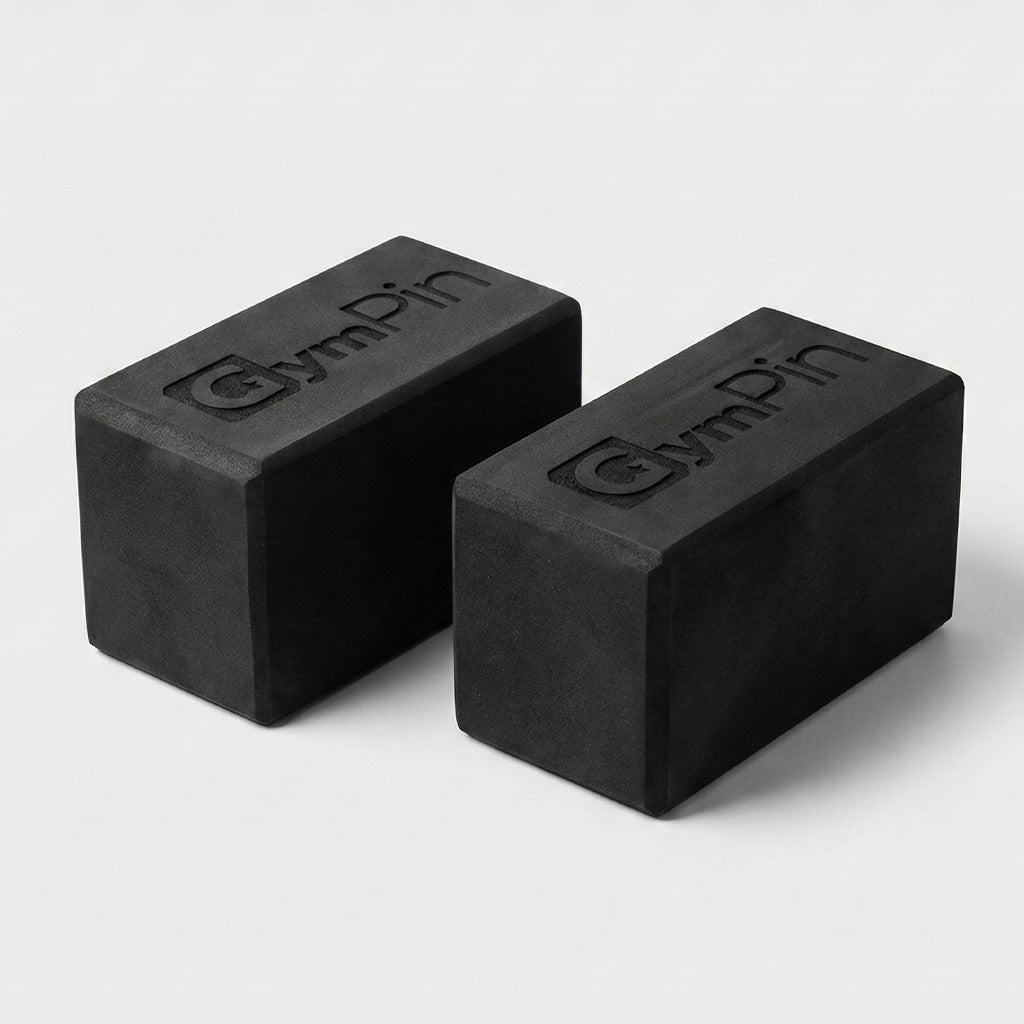
GymPin Starting Blocks
Portable high-density foam blocks for adjusting machine starting positions and range of motion.
VOLTRA
Compact digital cable trainer with smooth, adjustable resistance.

Go-Tone Pro
Portable digital cable trainer with up to 66 lb (30 kg) of adjustable resistance.
6. Program swings for power or conditioning
One exercise can serve different goals, but trying to maximize all of them in the same set compromises something. For power, place swings early in a session after warming up. Use four to six sets of five to eight crisp reps with roughly 60 to 120 seconds of rest, adjusting the break so each set stays explosive. Pair them with heavy strength work later instead of exhausting the hinge muscles first.
For conditioning, select a lighter bell and use repeatable intervals: for example, ten swings at the start of each minute for eight minutes. The remainder of each minute is recovery, not wasted time. If ten reps leave almost no breathing room, use six or eight instead. Gradually increase total minutes only while the swing path and grip remain consistent. An interval timer is a pacing tool, not a test of how long you can ignore fatigue.
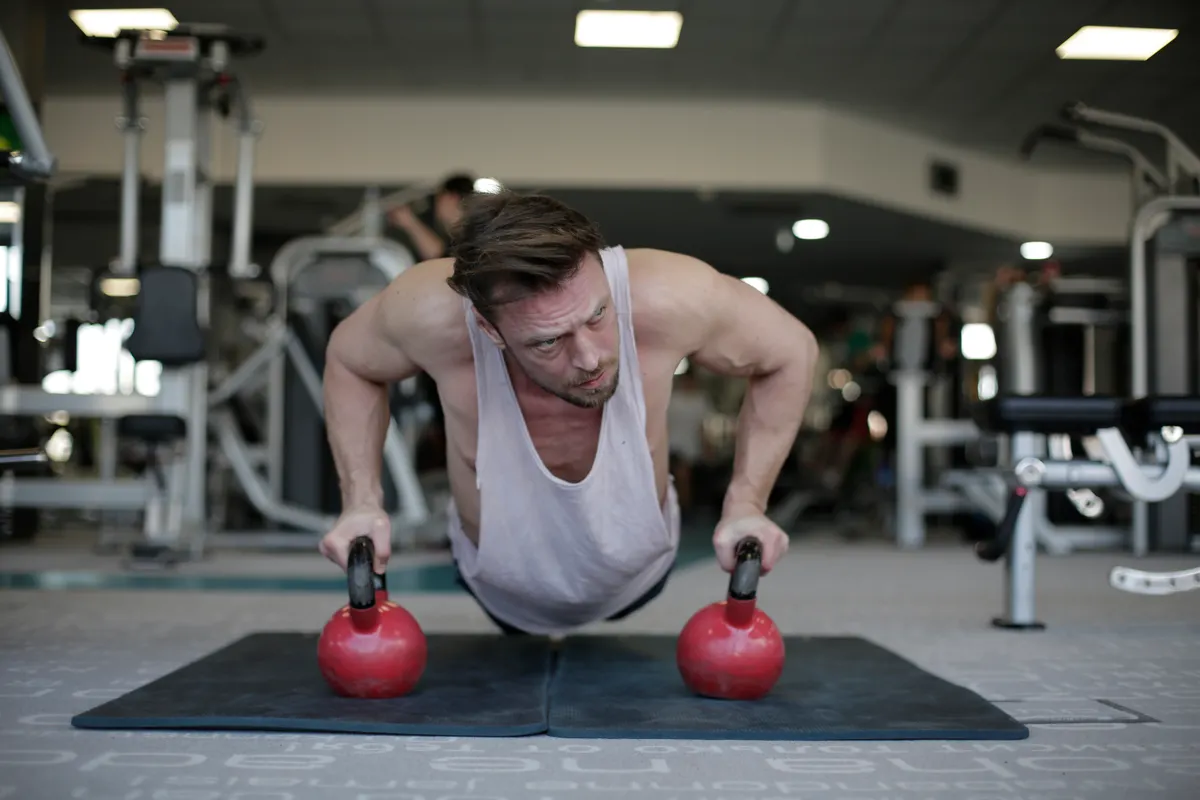
For a mixed circuit, combine swings with movements that do not duplicate the same fatigued hinge pattern. One example round is eight swings, six controlled push-ups and a short walk, followed by enough rest to repeat cleanly. If using kettlebells as push-up handles, ensure they cannot roll; ordinary floor push-ups are simpler. Avoid pairing maximal swings with rushed heavy deadlifts when the lower back is tired.
Keep weekly progression modest. If heavy squats or deadlifts are your priority, swings should support them rather than sabotage recovery. Track load, quality repetitions and perceived effort, not only sweat or heart-rate peaks. Strong conditioning is built from work you can repeat consistently.
Functional Fitness Shirts & Workout Gear
Functional-fitness shirts, tanks and workout gear for athletes who train strength, conditioning and everything in between.

Heavy Metal – Kettlebell Rock Music & Gymbros Meme T-Shirt
Heavy lifts, good laughs, and a little “Heavy Metal” energy.

For Whom the Bell Curls Tee
Show some metalhead attitude with a playful “For Whom The Bell Curls Kettlebell” tee.

Vitruvian Kettlebell Tee
Heavy lifts, good laughs, and a little “Vitruvian Man With Kettlebells” energy.


Punisher Kettlebell Shirt – Meme & T-Shirt
Make gym days more fun with “Punisher Kettlebell” style.

Feminist Gym For Strong Women | Break The Stereotype Fu Hoodie
Keep it laid-back with a little “Feminist” attitude.

Dia De Los Muertos Kettlebell – Day of the Dead Workout Tank Top
Your gym-day look, with a playful “Dia De Los Muertos Kettlebell” twist.

Pink Macaroon Kettlebell – Girly Kettlebell Meme Pullov T-Shirt
Keep things casual with a little “Pink Macaroon Kettlebell” attitude.

Pancake Kettlebell – Breakfast Gains Meme Decal for Wat Sticker
Give your everyday gear a playful “Pancake Kettlebell” twist.

Wonder Woman Battle Ropes | Superhero HIIT Workout Pull Hoodie
Keep it laid-back with a little “Wonder Woman Battle Ropes” attitude.
7. A four-week, two-day plan and safety checkpoints
Train on nonconsecutive days. Begin each session with five minutes of easy movement, unloaded hinges and a few controlled kettlebell deadlifts. Day A emphasizes crisp hip extension: in week one, four sets of five swings with generous rest; in week two, five sets of five; in week three, five sets of six; and in week four, repeat that volume or try a slightly heavier bell only if every repetition remains controlled. Follow with a squat or split squat, a row and a short carry.
Day B builds repeatable work capacity. Start with six minutes of six swings at the top of each minute. Add one minute in week two and another in week three. In week four, repeat eight minutes with better technique or slightly shorter recovery instead of chasing a personal record. Add an easy push movement and walking afterward. If you are new to ballistic training, even this schedule may be too much: halve the sets and increase gradually.
Keep a log: bell weight, repetitions, total minutes, whether the last rep looked like the first and how your back and grip felt the following day. Muscle fatigue is expected; sharp pain, tingling, radiating symptoms or repeated loss of control are reasons to stop and seek qualified assessment rather than push through. People with existing back or shoulder problems may need different exercises or individualized guidance.
The goal is not exhaustion from a cannonball-shaped weight. It is a strong hinge, deliberate repetitions and a clear job for the swing within a balanced training plan. When that job changes, adjust load, repetitions and rest accordingly.