A Pool Workout Changed One Hip Bone Measure — Not Every Bone
Can training against water protect bone as people age? A randomized trial released in October 2026 offers an intriguing but carefully limited answer. Among 98 older women, a supervised water-based resistance program produced larger improvements in bone density at a particular region of the hip than an elastic-band program on land or a nontraining control. That is encouraging for people who find conventional exercise difficult, but it is not proof that swimming reverses osteoporosis or prevents fractures.
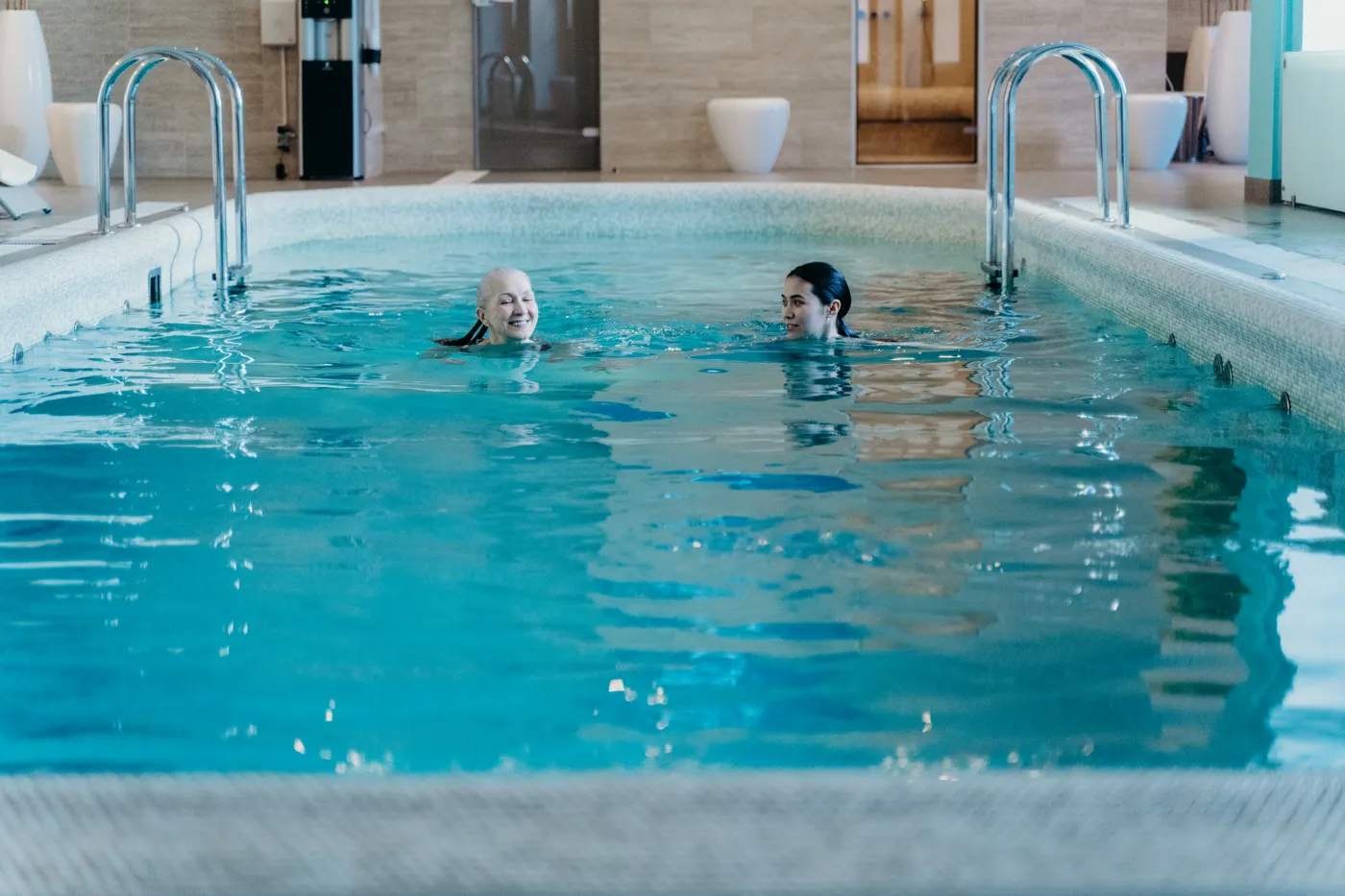
The women were about 68 years old on average and had a mean body mass index near 28. The experiment lasted 32 weeks, long enough to observe changes that a four-week fitness challenge would be unlikely to detect. Both exercise groups trained twice weekly under supervision, while the comparison group did not follow either structured program. Crucially, the water sessions were resistance workouts, not simply leisurely swimming.
The most important detail is where the improvement appeared. Researchers found a statistically detectable advantage in the hip region called Ward’s triangle. They did not find the same clear between-group advantage across all the other bone measurements. Bone tissue is site-specific: a change in one small region does not automatically translate to a stronger entire skeleton, much less fewer broken hips.
That nuance makes the trial useful. It challenges the simplistic claim that water exercise cannot influence bone at all, while leaving intact the broader reason that progressive land-based resistance and weight-bearing activity remain important. The practical question is not whether pools have replaced gyms. It is how to use water, land or both to build a sustainable strength program that an older adult can actually perform.
What the 98-Woman Trial Actually Compared
The investigation was a secondary analysis of three groups drawn from a larger six-arm randomized trial. Thirty-three women were assigned to water resistance training, 32 to land-based elastic-tube training and 33 to the control condition. The exercise groups completed two supervised sessions each week for eight months. The comparison matters: the land group used elastic resistance rather than a high-load barbell or machine program, so the study does not establish that water beats every possible gym routine.
Both exercise approaches attempted to make muscles work against resistance. In water, participants used resistance devices and deliberately quick movement intentions, progressively challenging the effort. On land, elastic tubing supplied the external resistance. A qualified instructor supervised the programs. This is different from comparing casual swimming with heavy squats; changing the exercises, equipment, loading environment and movement speed simultaneously makes it difficult to isolate a single winning ingredient.
Bone mineral density, bone mineral content and T-scores were measured using dual-energy X-ray absorptiometry, or DXA, at the hip and lumbar spine. Bone density estimates mineral quantity within a defined area, whereas bone mineral content measures total mineral mass in the measured region. A T-score compares bone density with a young-adult reference distribution; it is a clinical descriptor, not a direct measurement of the force required to break a bone.
There are strengths here: random allocation, a relatively long supervised intervention and objective imaging. But 98 participants across three groups is still a modest sample for detecting small skeletal differences. The findings apply most directly to women with similar age and body-composition characteristics, not automatically to younger lifters, men or people with established severe osteoporosis. The publication also describes the analysis as secondary, which matters when interpreting several measured outcomes.
Why Ward’s Triangle Improved — and What Did Not
The clearest advantage for the water group was at Ward’s triangle, a small region within the proximal femur. Relative to both land training and control, the water group showed greater improvement in local bone mineral density, with a reported effect size of about 0.45, and in its corresponding T-score, with an effect size of about 0.41. Those are standardized differences, not claims that participants gained 45% more bone.
Researchers also identified a significant group-by-time interaction for total hip bone mineral content. That statistical result indicates that the groups’ changes over time differed, but it should not be rewritten as a demonstrated water-training victory for every hip measure. The remaining DXA outcomes did not show significant group-by-time interactions. In particular, this trial did not establish broad improvements throughout the lumbar spine or the entire hip.
Ward’s triangle can be a sensitive region for detecting change, but regional measurements have limitations. Bone geometry, positioning and measurement precision matter, and small local shifts may not correspond to meaningful changes in whole-bone strength. Clinical fracture outcomes were not the trial’s endpoint. No responsible reading can turn these data into a claim that the pool program reduced fracture risk by a particular percentage.
The comparison also does not mean elastic resistance training is ineffective. Muscle strength, balance, mobility and confidence may improve even when a specific DXA measurement does not move significantly. Conversely, a small change in DXA does not guarantee that participants can climb stairs, catch themselves during a fall or carry groceries more easily. Those outcomes need their own measurements. The right conclusion is narrower and more interesting: a deliberately progressive water-resistance protocol may produce some site-specific skeletal adaptations in older women, and larger studies should test how reliable and clinically important those adaptations are.

Equipment Worth Exploring
Explore equipment, accessories and gear from our carefully selected range.

Go-Tone Pro
Portable digital cable trainer with up to 66 lb (30 kg) of adjustable resistance.
VOLTRA
Compact digital cable trainer with smooth, adjustable resistance.


Water Resistance Is Training, Not Just Floating
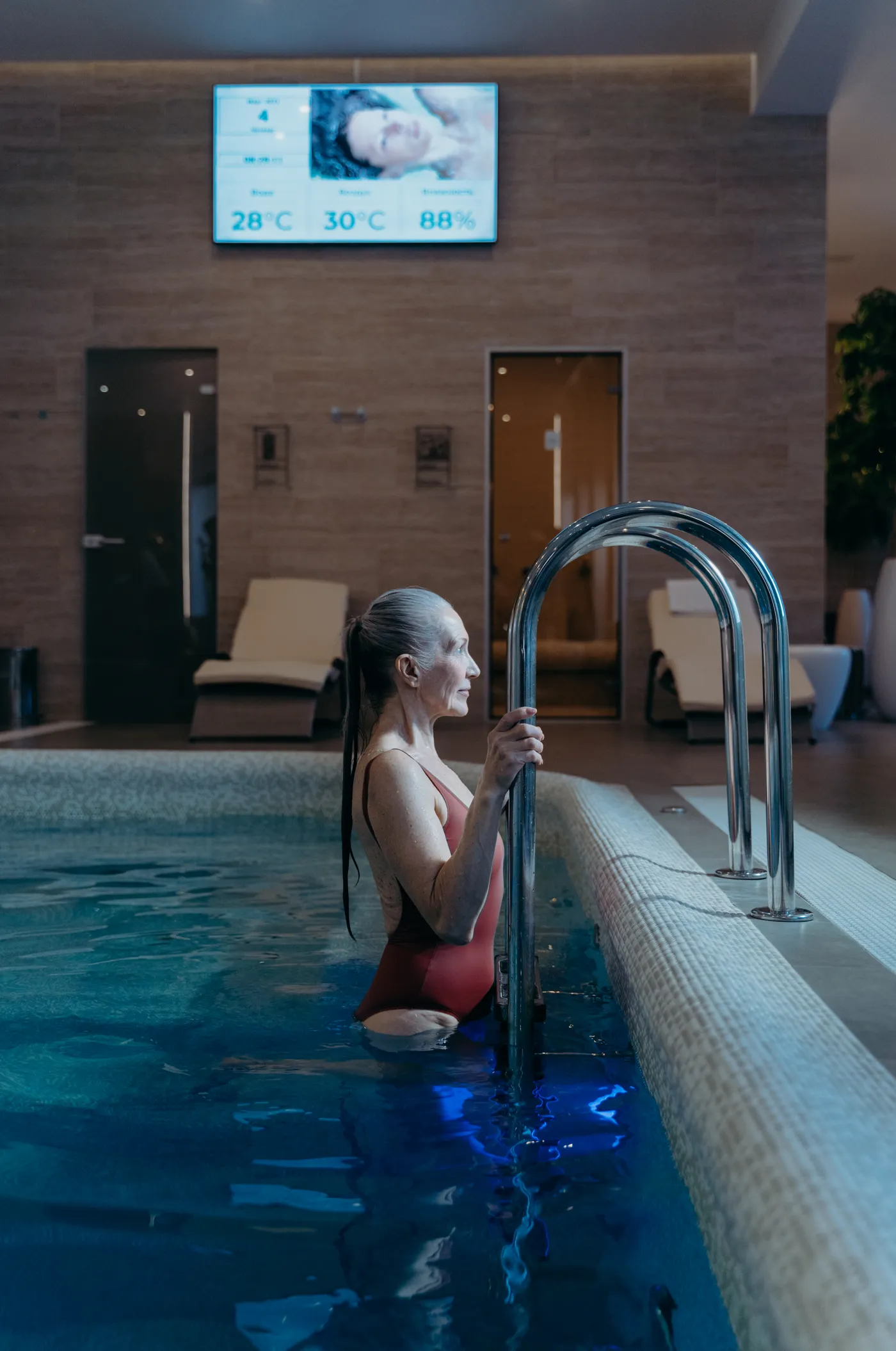
Water changes how exercise feels. Buoyancy supports part of the body, often making movements more comfortable for people who struggle with painful or heavily loaded joints. At the same time, water pushes back against a moving arm or leg. Move faster, present a larger surface to the water or use a specialized resistance paddle, and the effort can rise substantially. The resistance is generated by fluid drag rather than by a plate-loaded machine.
This distinction explains why the specific intervention matters. A relaxed pool walk may help activity tolerance and confidence, but it is not mechanically identical to forceful resisted hip extension, knee movement or upper-body pushes against a paddle. Likewise, doing more minutes is not automatically progressive overload. Progress can come from movement range, resistance surface, purposeful speed, repetitions, sets and shorter rest periods — changed gradually and safely rather than all at once.
Other controlled-trial evidence supports aquatic exercise as a way to improve strength in older adults. A pooled analysis of 13 randomized trials involving 531 people found a moderate average improvement in muscle strength, although the studies varied considerably and the estimates showed substantial heterogeneity. Another review of 19 trials reported improvements in strength, flexibility and functional mobility. Neither result proves that water training is universally superior to conventional lifting, or that every aquatic class delivers an identical stimulus.
For a practical session, distinguish an easy warm-up from working sets. After five to ten minutes of comfortable movement, select a few movements that can be performed with stable footing and deliberate control. Progress only when technique, breathing and balance remain reliable. Avoid breath-holding contests, uncontrolled twisting or maximum-speed movements in a crowded pool. People with cardiovascular, balance or mobility conditions should use an appropriately supervised setting and follow medical guidance.

Cardio Shirts & Workout Gear
Cardio and conditioning gym gear for runners, endurance athletes and anyone who earns the sweat.


– Swimming Sharks Motivation Meme Decal for Water Bottl Sticker
Give your everyday gear a playful “Swimming Sharks Motivation Meme” twist.

Anti Swimming Club Shirt Meme & Top T-Shirt
Make gym days more fun with “Anti Swimming Club” style.

Iron Man Triathlon Decal for Water Bottles Laptops Swim Sticker
Bring “Iron Man Triathlon” attitude to your water bottle or laptop.

Shirt – Sometimes Motivation Finds You – , Swimming T-Shirt
Bring “Sometimes Motivation Finds You” humor to your next gym day.

Jigsaw'S Killer Cardio Session Spin Bike Horror Vest Tank Top
Bring “Jigsaw's Killer Cardio Session” humor to your next lifting session.

Chucky's Spin Class Horror | Funny Scary Cardio Workout Hoodie
Keep it laid-back with a little “Chucky's Spin Class Horror” attitude.

I Did Not Have Cardio With That Woman – Bill Clinton Me Tank Top
Show some personality between sets with “I Did Not Have Cardio With That Woman”.

We Don't Need No Cardio – Pink Floyd Meme Decal for Gym Sticker
Bring “We Don't Need No Cardio” attitude to your water bottle or laptop.

The Flasher Superhero Cardio Meme Muscle Shirt Workout Tank Top
Bring “The Flasher” humor to your next lifting session.
Why Land-Based Lifting Still Belongs in a Bone-Health Plan
The pool’s advantage is also its limitation: buoyancy reduces the normal weight-bearing forces that bones experience on land. Bone responds to mechanical loading, and the direction, magnitude and location of those loads matter. Progressive resistance exercise, walking, stair climbing and suitable impact activities can complement water training by applying forces that a buoyant environment may not reproduce. The exact choices should reflect an individual’s fracture risk, strength and balance.
For healthy older adults, land-based strength work can involve a sit-to-stand, supported split squat, hip hinge, row, press and calf raise. These are not prescriptions to lift heavy immediately. They are movement categories that can be scaled from a sturdy chair and light resistance band to dumbbells or machines. Gradual progression matters more than impressive starting weights, and controlled repetitions are preferable to straining through painful joints.
People with diagnosed osteoporosis or previous fragility fractures need extra care. Some loaded spinal flexion and twisting positions may be inappropriate, and high-impact work may need modification. A clinician or appropriately trained physical therapist can assess movement restrictions and fall risk. Pool training may provide a valuable entry point, but it should not be presented as a replacement for every other bone-health intervention, including nutrition, medication when indicated and fall-prevention measures.
Think in terms of complementary outcomes rather than a contest between environments. Water can offer an accessible place to build muscular effort and confidence. Land training offers weight-bearing exposure and familiar everyday movement patterns. Walking and balance drills help connect gym improvements to ordinary life. A good program can use all three without pretending that a single workout type solves every problem of aging.
A Practical Six-Week Pool-and-Land Strength Plan
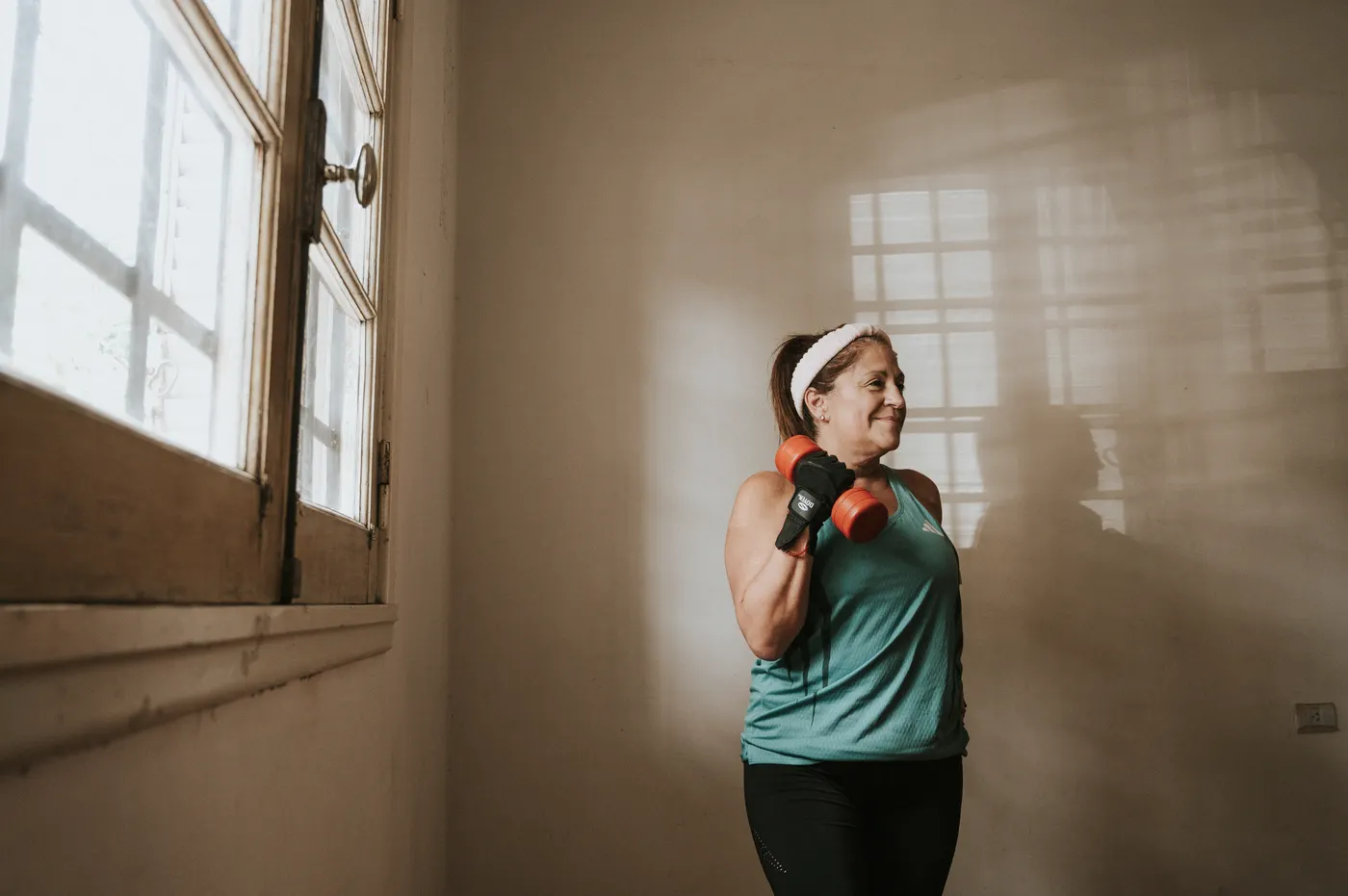
The research intervention lasted 32 weeks; the following six-week example is a conservative way to begin, not a reproduction of the study or a promise of measurable bone-density change. It is intended for medically cleared older adults who can exercise safely. People with major balance limitations, recent fractures or significant heart or lung disease should first seek individual professional guidance.
Pool session, once weekly: begin with five to eight minutes of easy water walking and shoulder movements. Then perform supported marching or knee drives, hip extension, sideways steps, controlled arm pushes and pulls through the water, and gentle calf raises. Start with one or two sets of eight to twelve deliberate repetitions per movement, allowing enough rest to recover breathing. Use the pool wall or a rail when balance is uncertain. Resistance paddles or flotation equipment should be introduced only with suitable instruction.
Land session, once weekly: warm up with five minutes of easy walking. Perform chair sit-to-stands, supported step-ups or split squats, band or cable rows, a light hip hinge, wall or incline push-ups, and supported calf raises. Start with one or two sets of eight to twelve repetitions, stopping while several technically sound repetitions remain. Choose a load that feels challenging but controllable. A chair, rail, light dumbbell or resistance band can provide the necessary starting support.
Weeks 1–2: learn the movements and note discomfort, effort and balance. Weeks 3–4: add a few repetitions or a second set only where technique stays consistent. Weeks 5–6: progress one variable at a time — a slightly firmer band, a larger water-resistance surface or a modest load increase — while retaining at least a day of recovery between demanding sessions. If joint pain or dizziness appears, stop and reassess rather than pushing through.
On other days, include tolerable walking, gentle balance practice and regular daily movement. Track functional markers such as chair rises, ease of stairs, perceived exertion and confidence, not daily scale weight as a proxy for bone health. A DXA scan is a clinical test interpreted over a much longer period. If a person can safely train twice on land or twice in water instead, that may be reasonable; consistency and individual tolerance outrank a rigid split.
Equipment Worth Exploring
Explore equipment, accessories and gear from our carefully selected range.


FID Bench MAX
Adjustable bench offering flat, incline, and decline positions + adjustable headrest.


HUSLA Leg Extension Pad
Pad attachment designed to increase usable range of motion on compatible leg-extension machines.

Safety Squat Handles
Barbell squat handles that reduce shoulder positioning demands during high-bar squats.


GymPin Ergo Handles
Pair of ergonomic cable handles shaped for comfortable triceps and pulling exercises.
Who Should Choose the Pool, the Gym or Both?
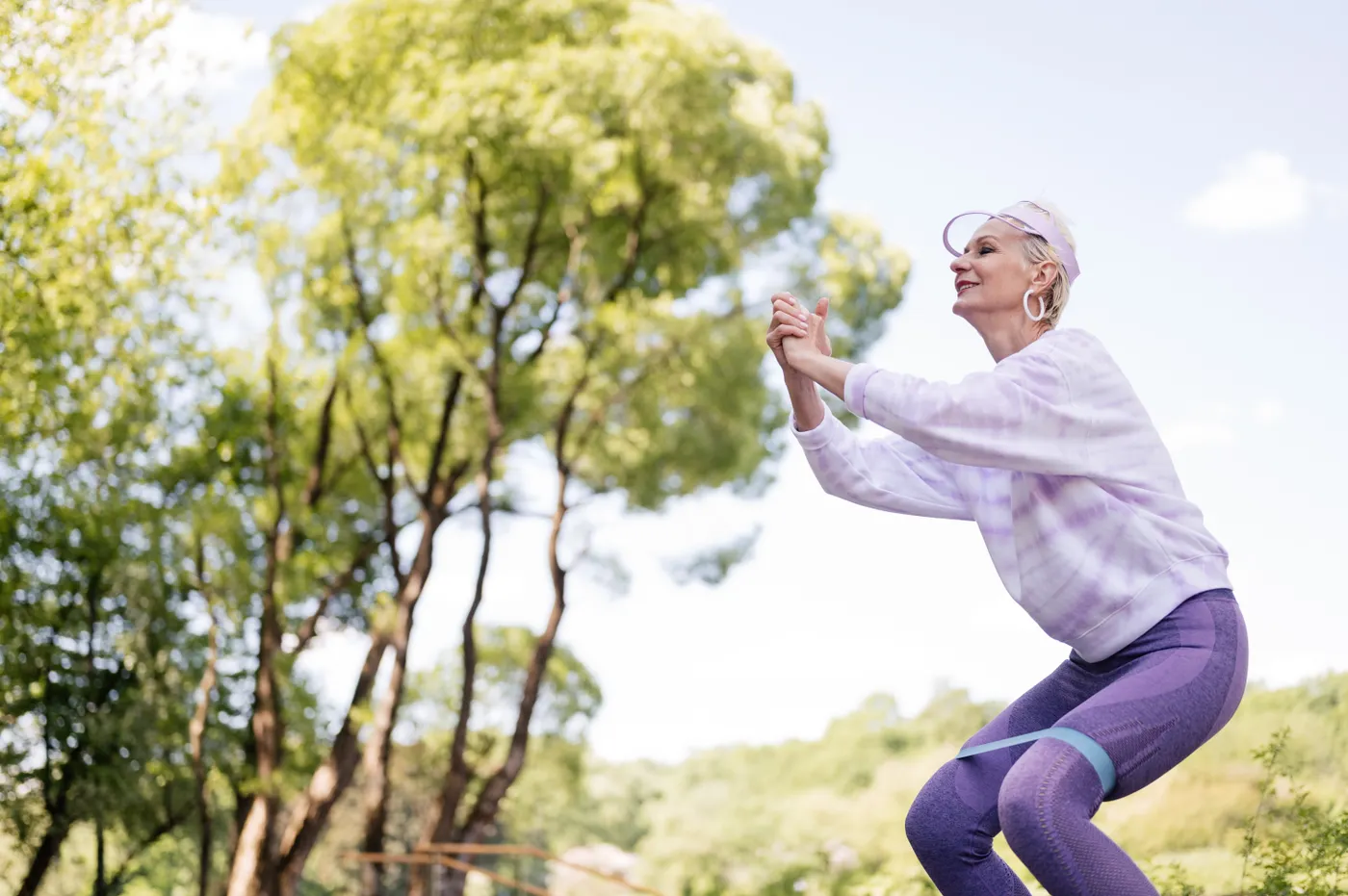
For an older adult with joint discomfort, fear of falling or difficulty handling heavy external loads, a supervised aquatic strength class may make the first weeks of training more approachable. For someone who already walks comfortably and can perform basic resistance exercises, land training may be the simpler way to progress strength while preserving weight-bearing activity. For many people, the most practical choice is a combination rather than a permanent either-or decision.
Match the setting to the actual goal. If the goal is to improve the ability to rise from a chair, practice a progressively harder chair-rise pattern. If the goal is confidence moving through water, train in the pool. If the goal is better hip bone health, consider the full plan: progressive muscular loading, appropriate weight-bearing activity, balance, nutrition and clinical management when indicated. A regional DXA result from one trial is not enough to prescribe a universal exercise environment.
The biggest mistake would be to read the 2026 result as a reason to abandon weight training or to assume that recreational swimming automatically builds bone. The experimental water group trained against meaningful resistance, with progression and supervision, for eight months. The measured advantage was limited to specific hip indicators, and fracture prevention remains unproven. Those constraints should shape expectations, not erase the encouraging signal.
The useful takeaway is straightforward: water can be a legitimate resistance-training environment, including for people who need a gentler entry point. Land-based strength and weight-bearing movement still provide complementary benefits. Build a plan that can be repeated, gradually challenged and adjusted to the person’s health rather than chasing a headline about which environment won one measurement.
Leg Day Shirts & Workout Gear
Leg-day gym shirts and workout gear for lifters who never skip squats, lunges and lower-body punishment.

Muscle Mommy Gym – Peach Booty Training Crewneck for Fi T-Shirt
Show some gym-day personality with “Muscle Mommy”.

Skeleton Deadlift Decal Water Bottles & Equipment Sticker
Put “Skeleton Deadlift” gym humor on your laptop, bottle, or gym gear.

Booty Building Mode Leg Day & Squat Meme Fans Tank Top
Bring “Booty Building Mode” humor to your next lifting session.

We Don'T Need No Leg Day Pink Floyd Meme & Gymbros T-Shirt
Heavy lifts, good laughs, and a little “We Don't Need No Leg Day” energy.

Funny Squat Game Gym | Squid Game Parody Muscle Shirt F Tank Top
Your gym-day look, with a playful “Squat Game” twist.

Hippo Thrust Meme Leg Day Hooded Booty Day & Glute Hoodie
Keep it laid-back with a little “Hippo Thrust Gym Meme” attitude.

The Walking Deadlift | Zombie Muscle Shirt For Leg Day Tank Top
Show some personality between sets with “The Walking Deadlift”.

Minecraft Deadlift Gym | Funny Pick Up Heavy Blocks Wor Hoodie
Make your off-duty look more fun with “Minecraft Deadlift”.

Legertha Leg Day Vikings Gym Shirt | Funny Shieldmaiden T-Shirt
Heavy lifts, good laughs, and a little “Legertha Leg Day Vikings” energy.