Can a light leg press feel demanding enough to challenge muscle without using a heavy stack? A randomized 2026 experiment tested a deliberately unusual answer: hold a contraction, then perform a short burst of lighter dynamic repetitions. The researchers found distinctive electrical and oxygenation responses, but that is not the same as proving faster muscle growth.
For home-gym lifters, the important question is not whether this protocol replaces heavy squats. It is what the experiment actually measured, why fatigue changes how a light weight feels, and how to borrow the useful programming ideas without confusing a laboratory result with a long-term training guarantee.
The 2026 trial: three very different leg-press sets
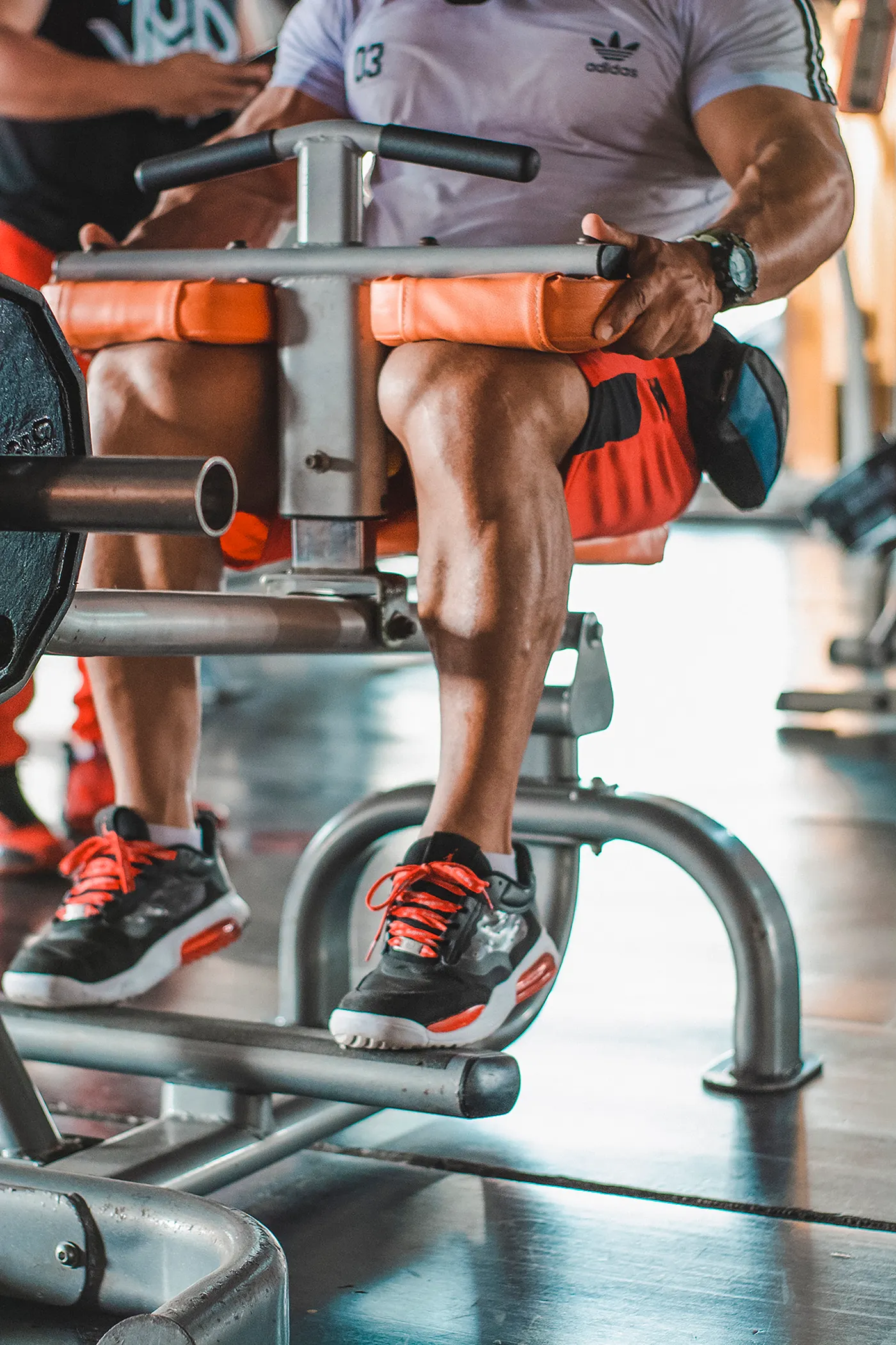
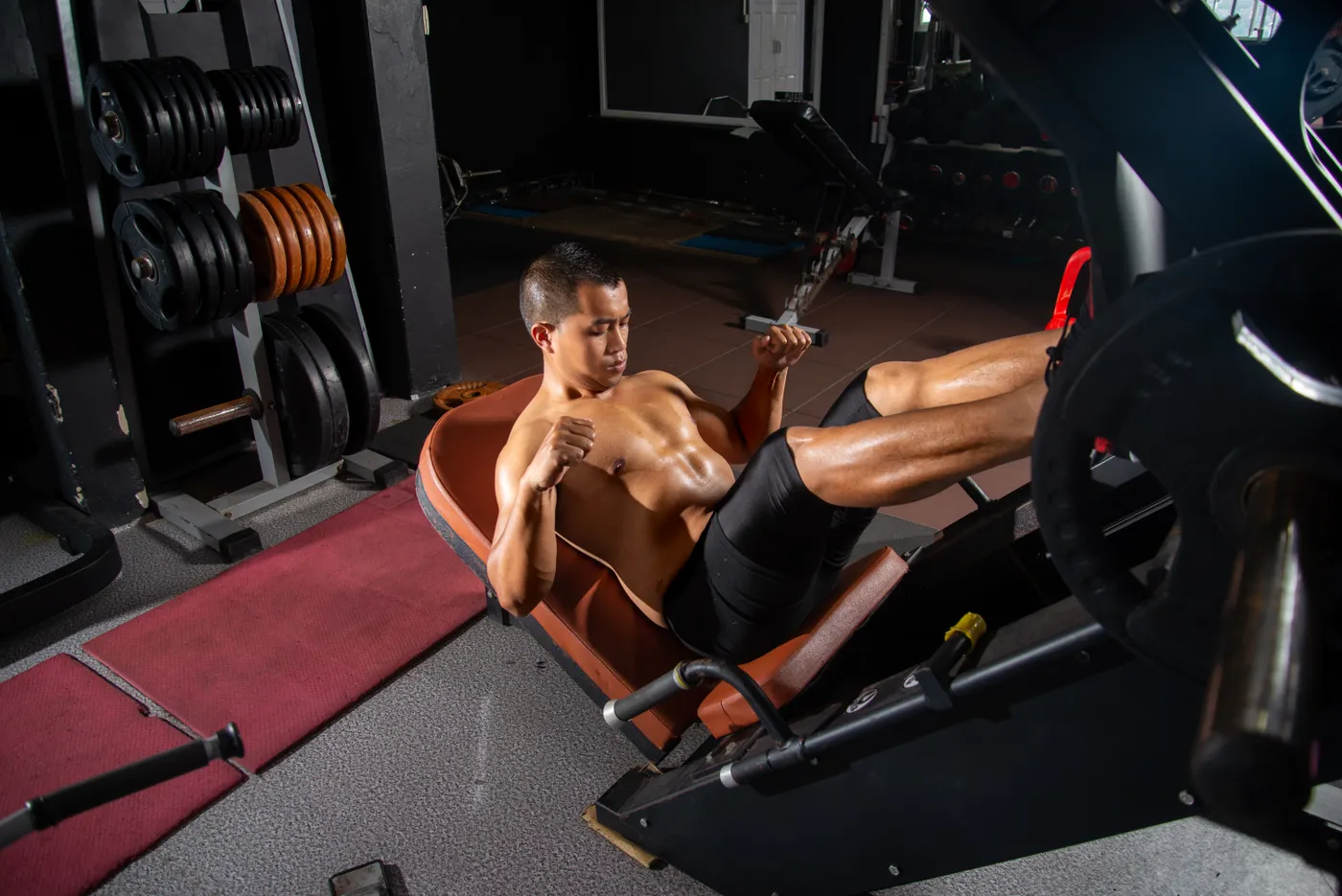
The trial assigned 48 healthy men to one of three leg-press conditions. One group used a relatively light 50% of one-repetition maximum with slow repetitions. Another used 80% of maximum with a conventional tempo. The experimental group used only 40% of maximum, but began each set with a 20-second isometric contraction and immediately followed it with eight high-velocity repetitions through a short movement arc. Each group completed three sets.
That design matters. It was not a comparison between three complete training programs followed for months. It was a comparison of immediate physiological responses during and after a single exercise session. The team recorded surface electrical activity from the vastus lateralis, a quadriceps muscle, and used near-infrared spectroscopy to estimate local muscle oxygenation. Blood measurements also tracked a short-term change in circulating IGF-1.
The experimental sequence combined three stressors: holding tension without movement, repeating contractions after local fatigue had accumulated, and using a deliberately restricted range for the dynamic portion. Those features are not interchangeable with an ordinary full-range leg press at 40% of maximum. Nor should the study be described as proof that a light load is always kinder to a painful joint; joint forces, symptoms and injury rates were not the outcomes tested.
For anyone reading the results, the clean comparison is between the exact three protocols in this sample of healthy men. The design helps explain a physiological mechanism. It does not establish an optimal hypertrophy method for women, older adults, injured lifters or experienced powerlifters.
Electrical activity and oxygenation are not muscle growth
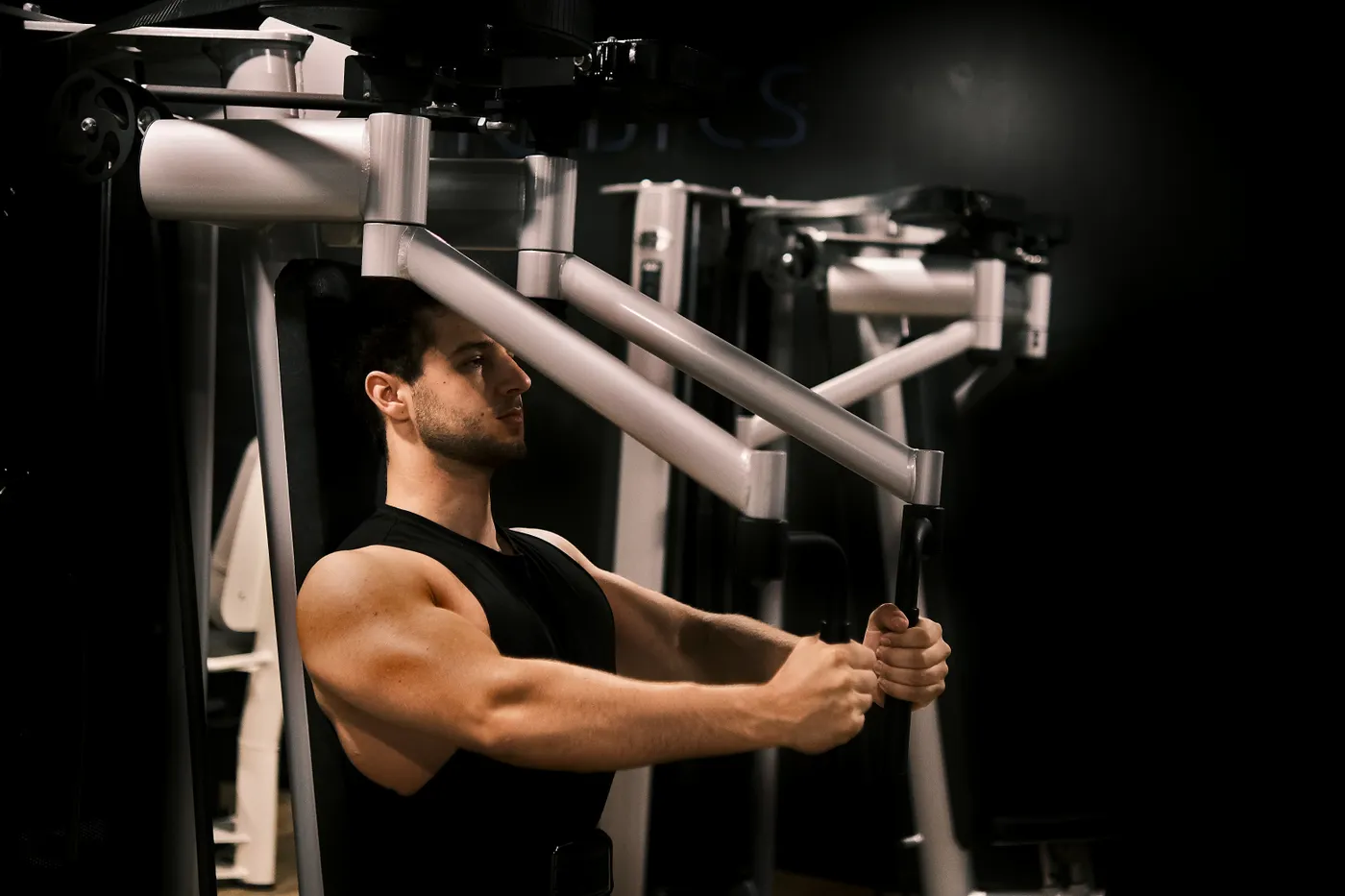
In the final set, the combined protocol produced a higher average surface EMG amplitude than the slow, low-load condition. Its integrated EMG in set three was also higher than both comparison conditions. The oxygenation measure fell more sharply than in the heavy-load condition from the first set onward. These findings are consistent with a demanding local muscular effort even though the external weight was modest.
EMG is a measurement of electrical activity near the recording electrodes, not a direct counter of activated muscle fibers and not a muscle-growth scan. Electrode placement, fatigue, contraction speed and the mechanics of the movement can influence the signal. A larger reading under one set of conditions does not establish that the same person will gain more quadriceps tissue after twelve weeks.
Similarly, lower tissue oxygen saturation suggests that oxygen delivery and use were temporarily out of balance in the sampled area. It is not a measurement of how much muscle protein was built. Short-term metabolite accumulation can make a set feel punishing, but the sensation of burning is not a validated substitute for tracking training outcomes.
Circulating IGF-1 increased after exercise across all three groups. Because that response was not unique to the experimental group, it cannot explain a special long-term advantage. The practical interpretation is narrower and more useful: a low external load can still create substantial local demand when contraction order, duration and fatigue are manipulated. That observation deserves further testing, not an automatic promotion to the best way to grow legs.

Equipment Worth Exploring
Explore equipment, accessories and gear from our carefully selected range.

HUSLA Leg Extension Pad
Pad attachment designed to increase usable range of motion on compatible leg-extension machines.


GymPin Squat Wedges
Non-slip 15-degree squat wedges help elevate the heels for deeper quad-focused squats.

Safety Squat Handles
Barbell squat handles that reduce shoulder positioning demands during high-bar squats.

Belt Squat Collar
Heavy-duty collar adapter for compatible belt-squat and landmine bar setups.

Squat Harness
Wearable harness for hands-free cable squats, sled work, and lower-body training.


What previous hypertrophy research adds to the picture
The distinction between a promising acute response and proven adaptation is the central lesson. Muscle size changes over repeated weeks of sufficiently challenging training. Strength also depends on coordination, technique and the ability to produce force against a particular load. The 2026 experiment did not include a follow-up period with ultrasound or MRI measurements of growth, nor did it compare changes in one-repetition maximum after a training block.
Broader resistance-training evidence gives context. Studies comparing lighter and heavier loads often find that both can build muscle when sets are hard enough and sustained over time. Heavy loads tend to have an advantage when the outcome is maximal strength in a heavy test. This is why a person can benefit from controlled light-load sets without expecting them to substitute perfectly for every heavy barbell exposure.
Research on pre-exhaustion is also mixed and highly protocol-dependent. Performing a single-joint movement before a compound lift can reduce the load or repetitions available on the second exercise. In some training studies, it has still produced meaningful strength and muscle-thickness changes, but it has not consistently outperformed straightforward training when compared fairly. The new isometric-first sequence is different from doing leg extensions to failure before a leg press, so older findings cannot simply be transferred across.
Ask what outcome you are optimizing. If the goal is to become stronger at a heavy squat, practice and progress that movement. If the goal is to train a muscle with limited available weight, a longer contraction or additional controlled repetitions may make a lighter setup useful. If the goal is rehabilitation, exercise selection and loading should follow the person’s clinical situation, not an assumption that a lower number on the stack is inherently safe.

Leg Day Shirts & Workout Gear
Leg-day gym shirts and workout gear for lifters who never skip squats, lunges and lower-body punishment.

I Love Squats | Leg Day Pink Heart Plate Graphic T-Shirt
Show some leg-day attitude with a playful “I Love Squats” tee.

Never Skip Leg Day – NSLD Fried Chicken Meme Hooded Pul Hoodie
Stay casual and show some leg-day attitude with “Never Skip Leg Day”.

Leg Day Gains Gym | LEGO Workout Decal For Water Bottle Sticker
Put “Leg Day Gains” gym humor on your laptop, bottle, or gym gear.

Leg Day The Day That Never Comes Metallica — Muscle Shi Tank Top
Your gym-day look, with a playful “Leg Day The Day That Never Comes Metallica” twist.

Squatbucks Gym Coffee Funny | Starbucks Parody Workout T-Shirt
Keep things casual with a little “Squatbucks Gym Coffee” attitude.

Heavy Squatter Harry Potter Leg Day Squat Meme Tank Top
Bring “Heavy Squatter” humor to your next lifting session.

Don't Skip Leg Day Sticker
Put “Dont Skip Leg Day” gym humor on your laptop, bottle, or gym gear.

I Can’t Get No Squat-isfaction Rolling Stones — Leg Day Tank Top
Add some leg-day attitude to training with “I Can’t Get No Squat-isfaction Rolling”.

Wonder Squats & Leg Day Gains Superhero Hooded Hoodie
Show off your superhero humor in a laid-back “Wonder Lifter” hoodie.

SwoleBob Squatpants Meme – Leg Day, & Gains – Top T-Shirt
Rep “SwoleBob Squatpants Gym Meme” humor in and out of the gym.
Why a pause can make light resistance feel heavy
An isometric contraction produces force without an obvious change in joint angle. In a wall sit, the legs work while the body remains nearly still. In a paused squat, the lifter briefly holds position before standing. Dynamic repetitions add movement and repeatedly change leverage. Combining them can increase the difficulty of a set without increasing the weight in the same proportion.
But the details decide whether the technique is useful. Holding for twenty seconds near a demanding position can accumulate fatigue quickly. Following it with fast, short-range repetitions creates a different experience from full-range, moderate-tempo training. The experimental group used specialized testing conditions; a person training alone should not imitate high-velocity movements after fatigue if the load path, balance or joint control is uncertain.
A more conservative home-gym translation is to use an optional five- to ten-second pause in a stable position, followed by six to ten smooth full-range repetitions with a comfortable load. That is a coaching illustration, not a replication of the study or a protocol proven to generate the same EMG and oxygenation results. Keep one or two repetitions in reserve when learning the sequence, and stop if form deteriorates.
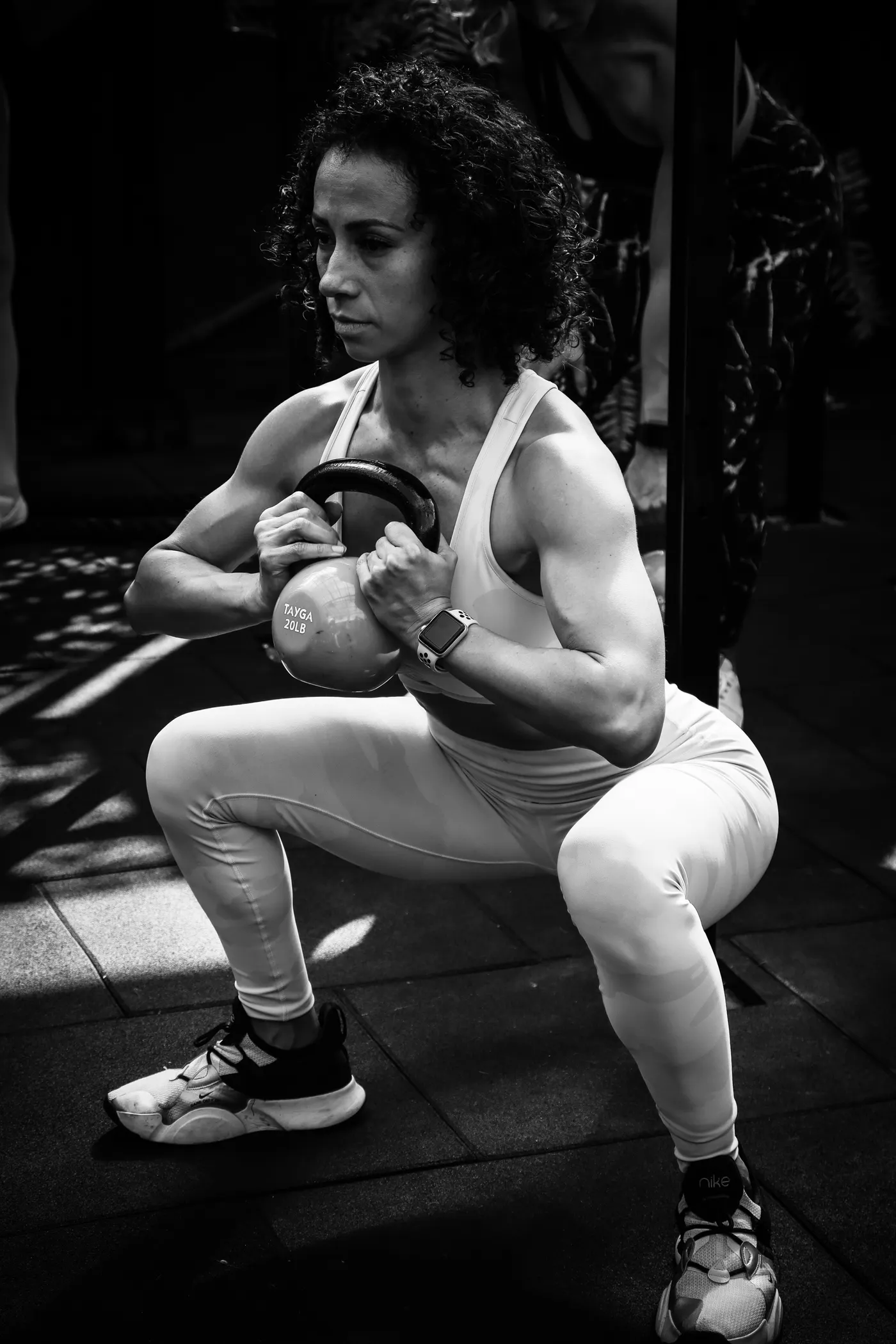
Stable equipment makes experimentation easier. A leg extension attachment can target knee extension; a cable or squat harness can provide a different resistance path; a goblet squat can use a single dumbbell. None of these is mechanically identical to the research leg press. Match the movement to the available equipment and your current capacity instead of chasing an exact percentage that has not been tested for that exercise.
A two-day lower-body plan for a compact home gym
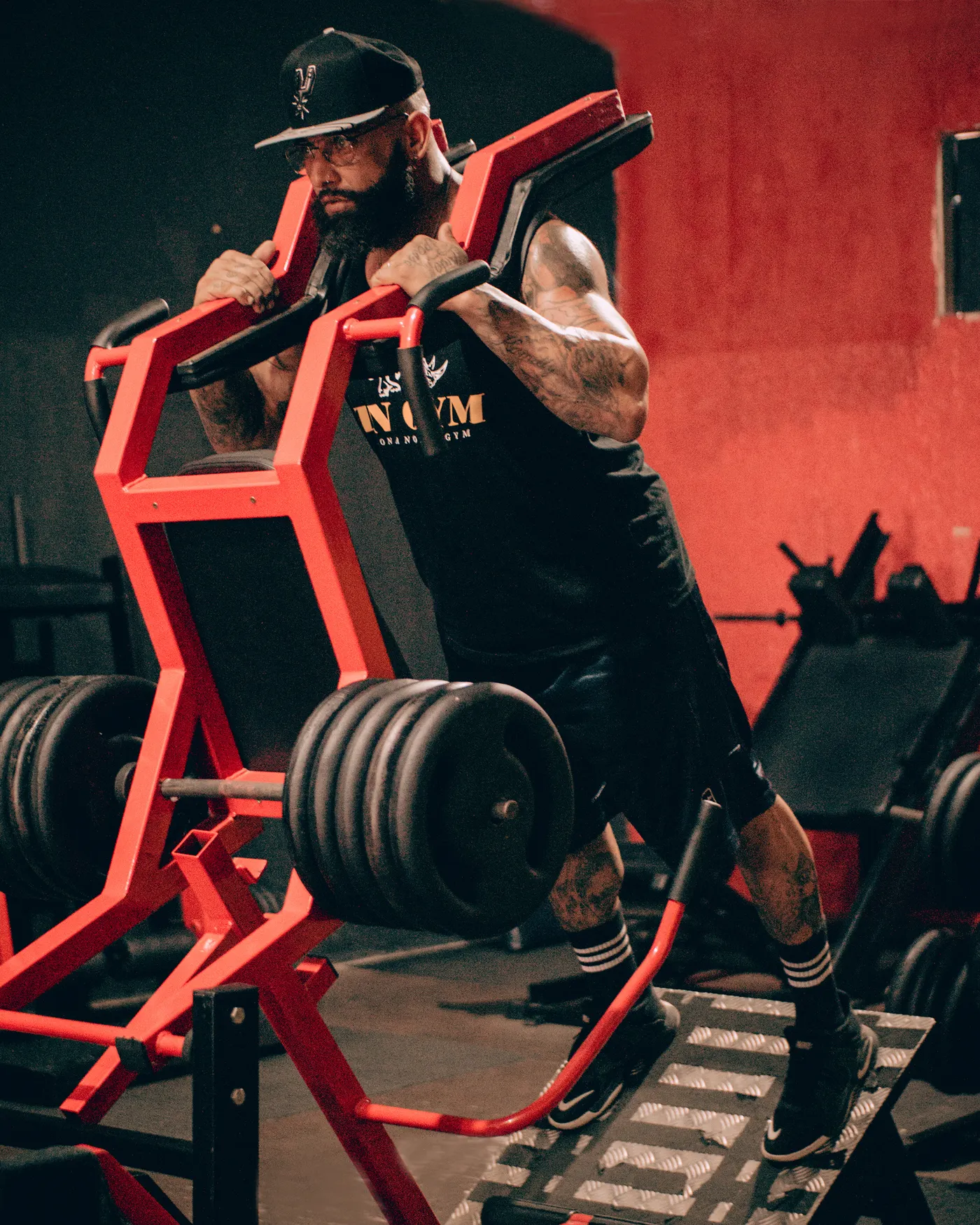
Here is a practical two-day lower-body template for a healthy lifter who already tolerates basic resistance exercise. It preserves full-range strength work and treats the isometric-plus-repetition idea as an optional accessory, not a replacement for a complete program. Begin with a brief warm-up, a few easy practice repetitions and a load you can control without breath-holding for an extended period.
Day A, strength emphasis: perform a squat variation for three sets of five to eight controlled repetitions, then a hip hinge for three sets of six to ten. Add two sets of calf raises and a simple trunk exercise. Rest long enough to repeat clean technique. If the squat feels unfamiliar, start with a goblet squat or a supported split squat instead of immediately loading a barbell.
Day B, controlled accessory emphasis: perform a split squat or step-up for three sets of eight to twelve per leg, then a Romanian deadlift for three sets of eight to twelve. Finish with one or two sets of a stable knee-dominant exercise. On that last exercise only, experiment with a short stationary hold followed by six to ten smooth repetitions. Leave at least a day between demanding leg sessions.
For a cable setup, check that the anchor and attachment are approved for the chosen loading direction and that the cable does not rub against the rack. For a leg-extension attachment, make sure the pad position and range suit your knees. A slow, stable movement is more important than recreating the laboratory’s rapid short-arc repetitions.
Record the load, repetitions, perceived effort and next-day tolerance. If a new variation causes joint pain, dizziness or an unusual symptom, stop and choose a more appropriate option. People with current injuries or cardiovascular conditions should obtain individualized guidance before experimenting with sustained strenuous holds.
Equipment Worth Exploring
Explore equipment, accessories and gear from our carefully selected range.


FID Bench MAX
Adjustable bench offering flat, incline, and decline positions + adjustable headrest.


VOLTRA
Compact digital cable trainer with smooth, adjustable resistance.

Go-Tone Pro
Portable digital cable trainer with up to 66 lb (30 kg) of adjustable resistance.
How to test the method without fooling yourself
When you test a new method, compare it with something real rather than with a memory of how hard your last workout felt. Choose one accessory movement and keep the rest of your training reasonably consistent for four to six weeks. Use a comparable range of motion, session frequency and total hard sets. Otherwise, an apparent improvement could simply reflect more work or a new exercise you were previously unaccustomed to performing.
On the conventional side, try two or three controlled sets in a moderate repetition range, ending with one to three repetitions in reserve. On the experimental side, use a lighter load with a brief pause before the dynamic work, while maintaining safe technique. Do not compare a single easy conventional set with five exhausting experimental sets and conclude that the special method is superior.
Look for repeatable progress: more clean repetitions at the same load, slightly more resistance for the same repetitions, improved control, or better tolerance of a previously awkward movement. Track soreness and session duration, too. If the technique adds fatigue that compromises the following squat workout, it may be a poor fit even if it creates an impressive burn.
Progression should remain modest. Add repetitions before adding weight when equipment increments are large. Retain a full-range movement as the main strength benchmark. If your goal is maximal strength, continue to include appropriately heavy work that you can perform safely. If your goal is muscle size, focus on consistent challenging sets over time, sufficient food and protein, and recoverable weekly volume rather than chasing the highest electrical activity in a single workout.
Bodybuilding Shirts & Workout Gear
Bodybuilding shirts, tanks and gym gear for lifters chasing muscle, size, symmetry and the pump.

Shredonomics Shirt Bro Science Muscle Graph & Meme T-Shirt
Show some lifting attitude with a playful “Shredonomics” tee.

Duty Gains Stoic Muscle : Meme Shirt & Greek God T-Shirt
Heavy lifts, good laughs, and a little “Duty Gains Stoic” energy.


Hallowed Be Thy Gains Tank
Bring “Hallowed Be Thy Gains” humor to your next lifting session.

Gainz & Glory Viking – Norse Workout Vest Muscle Shirt Tank Top
Add some Viking attitude to training with “Gainz & Glory Viking”.

I Want You To Lift Heavy – Patriotic Uncle Sam 4th of J Hoodie
Stay casual and show some powerlifting attitude with “I Want You To Lift”.

Let the Gainz Begin Bane Inspired Workout and Gym Bros Hoodie
Bring “Let the Gainz Begin” gym humor to lazy days and post-workout plans.

Funny Viking Game Of Gains Gym – Norse Fitness Meme Pul T-Shirt
Show some gym-day personality with “Viking Game Of Gains”.

Chasing Gains Nevermind Sweatshirt
Show some gym-day personality with “Chasing Gains Nevermind”.

Gains Stone Decal for Water Bottles Laptops Gym Gear Do Sticker
Stick a little “Gains Stone” humor on your favorite gear.
Who might benefit, and what the study cannot tell us
The strongest use case for this idea is not that everyone should abandon heavy training. It is that resistance can be manipulated through time, fatigue and movement sequencing, potentially offering another option when available weights are limited. The study suggests an acute physiological stimulus under a low-load condition, which is scientifically interesting and practically relevant to compact gyms.
Several questions remain unanswered. Would this sequence increase muscle size over eight or twelve weeks? Would experienced lifters respond differently? Would women, older adults or people recovering from injury show the same electrical and oxygenation patterns? Would a full-range version produce similar results? And would the extra fatigue interfere with later sets or other training days? Those are future research questions, not conclusions from the current trial.
It is especially important not to equate lower external load with a clinical guarantee of joint safety. Joint stress depends on movement geometry, speed, tissue condition and technique. Isometric holds can also raise cardiovascular demand, particularly when people brace or hold their breath. A technique that feels manageable for a healthy participant may not suit someone with uncontrolled blood pressure, recent surgery or active knee symptoms.
The bottom line: a 2026 experiment found that an isometric hold followed by short-arc light-load repetitions could create high quadriceps electrical activity and substantial local oxygenation changes. It did not prove superior muscle growth, injury prevention or rehabilitation outcomes. Keep conventional progressive resistance training as the foundation, and treat carefully controlled isometric-plus-dynamic work as an optional accessory worth evaluating against your own results.