Push-ups and bench presses are often treated as two different worlds: one is bodyweight training, the other is a barbell staple. Yet both ask the chest, triceps and front shoulders to push against resistance. For building muscle, the more useful question is not which exercise looks more serious. It is whether each exercise supplies enough tension, challenging repetitions and progression for the person doing it.
An eight-week experiment in young men compared push-ups adjusted to a relatively light pressing load with bench presses at a similar intensity. Both groups improved chest and triceps muscle thickness, with no clear difference between the training methods. That is interesting evidence, but not proof that push-ups and heavy bench presses are interchangeable for every lifter. Here is how to use the finding without overselling it.
1. What the Eight-Week Push-Up Experiment Actually Tested
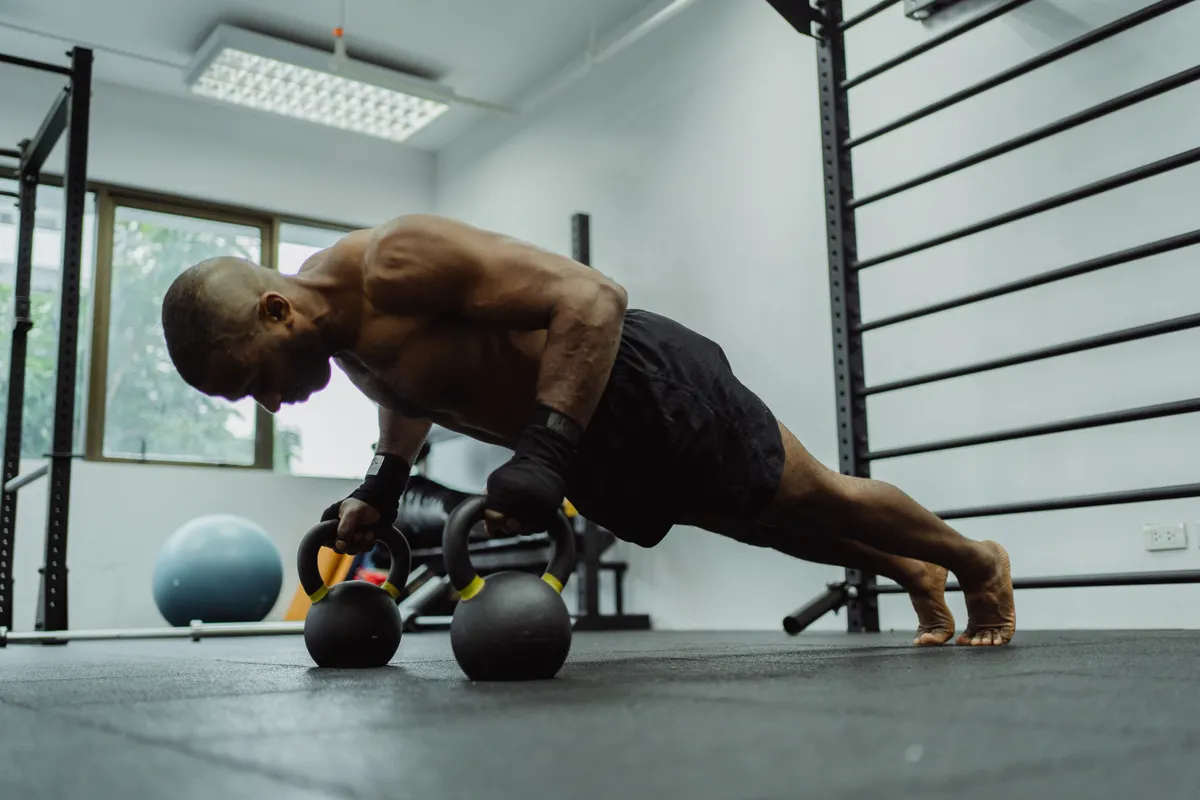
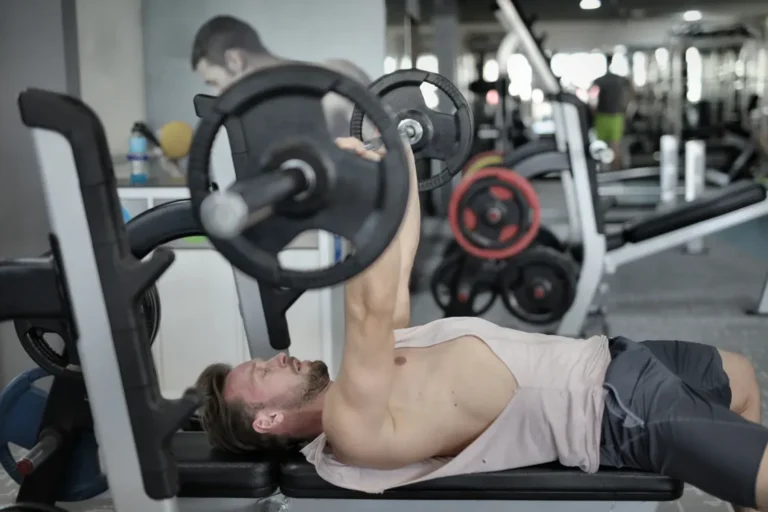
Eighteen young men were divided into two training groups of nine. One performed bench presses at about 40% of its one-repetition maximum; the other used adjusted push-up positions to create a broadly comparable load. Both trained twice weekly for eight weeks. The researchers measured muscle thickness in the chest, triceps and biceps, along with bench-press strength and other performance outcomes.
Chest thickness increased in both groups, from roughly 17.0 mm to 20.8 mm on average. Triceps thickness also increased. Bench-press one-repetition maximum rose in both groups: approximately 60.0 to 65.0 kg in the bench group and 61.1 to 64.2 kg in the push-up group. The small study did not find a statistically clear difference between the groups for the main chest and triceps changes.
The details matter. These were not advanced powerlifters chasing maximal singles. The bench group trained with a relatively light percentage of its maximum, and the push-up difficulty was deliberately adjusted. Participants also performed sets with substantial effort. A trial of 18 people cannot establish that every variation of either movement produces identical results, or that a beginner and an elite lifter will respond the same way.
The useful conclusion is narrower and more practical: when a push-up is made sufficiently demanding, it can be a genuine resistance exercise for chest and triceps development rather than merely a warm-up or endurance test.
2. Why Push-Up Difficulty Changes With Your Body Position
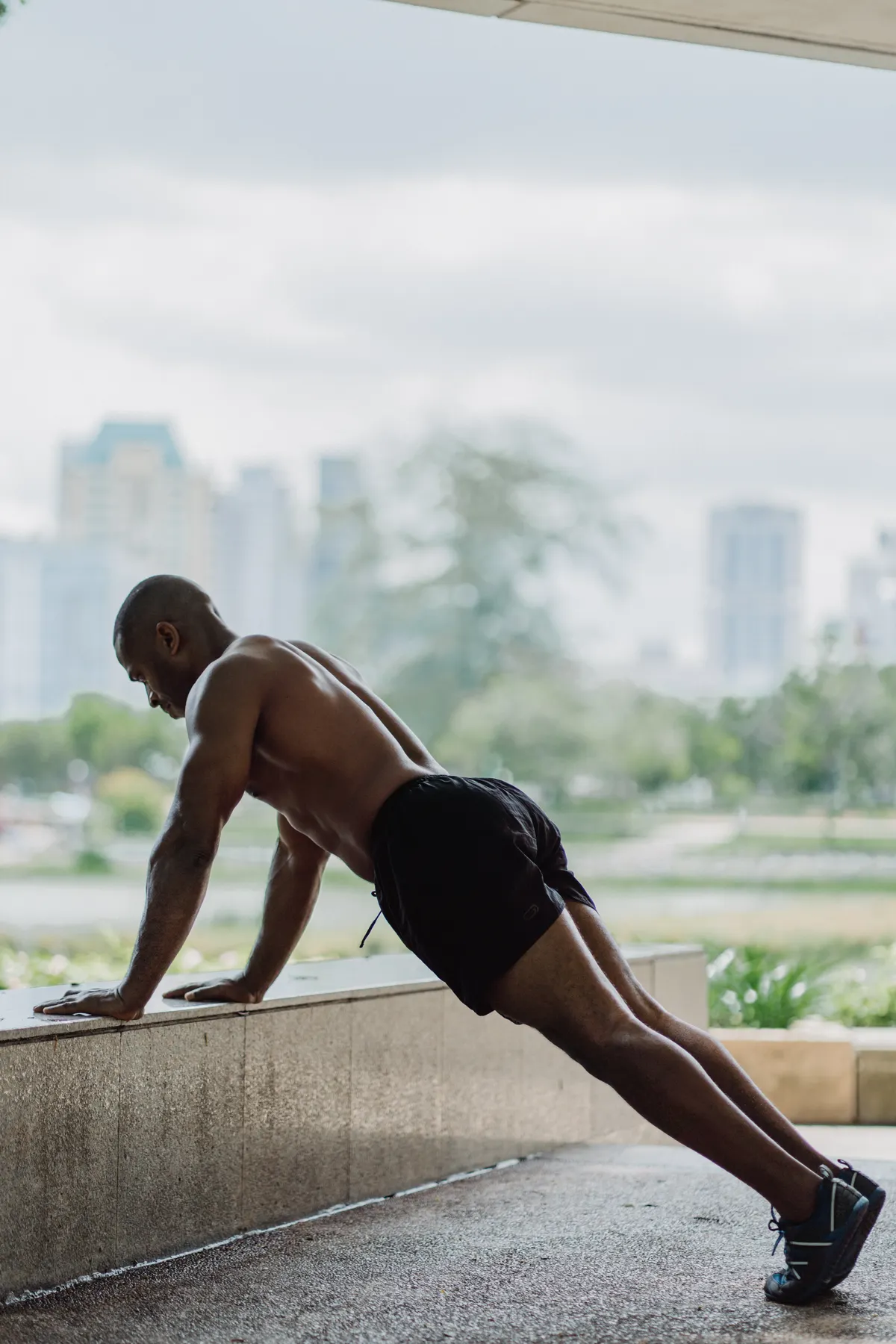
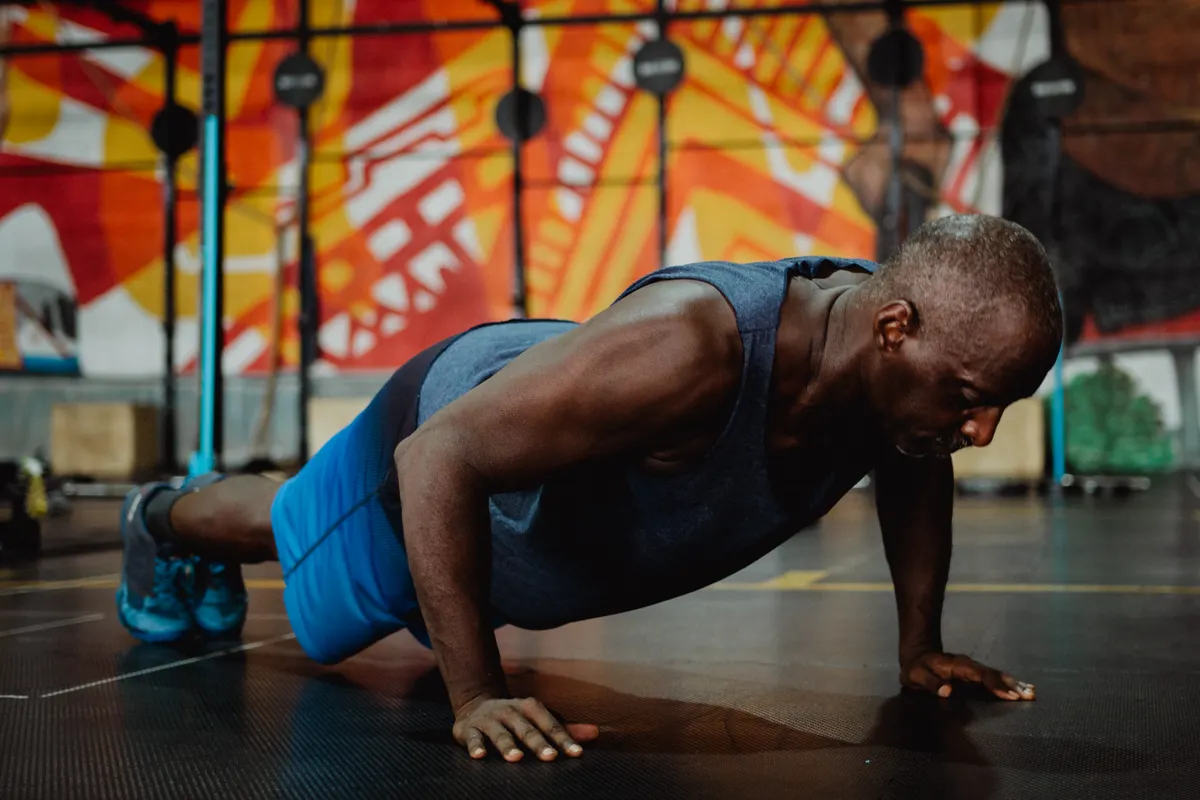
Unlike a barbell, a push-up does not load the hands with your entire body mass. The feet support part of the weight, and the percentage borne by the arms changes with body angle, limb proportions and technique. That is why a push-up from a high countertop can feel easy while a feet-elevated variation can become brutally difficult, even though your bodyweight has not changed.
Force measurements of several push-up variations found that elevating the hands or using a bent-knee position reduced the force under the hands, whereas elevating the feet increased it. A commonly cited approximation for a standard push-up is around two-thirds of bodyweight supported through the upper body, but that is not an exact load prescription for every individual or every phase of the repetition.
For progression, think in a sequence rather than a single magical version: high incline, lower incline, floor push-up, feet elevated, and then added external resistance when appropriate. Keep the torso organized and move through a consistent depth. A lower hand support changes leverage and makes the movement harder without requiring a new piece of equipment.
Difficulty should be judged by controlled repetitions and how close the set comes to technical failure, not by the appearance of the exercise. If you can perform thirty fast repetitions while your hips sag and your shoulders roll forward, that is not a superior hypertrophy stimulus to twelve controlled repetitions in a harder variation. Likewise, a person doing five solid incline repetitions may be training closer to their current capacity than someone doing twenty floor push-ups.
Use a stable, non-slip support for incline work. Avoid unstable furniture and do not elevate your feet so high that the exercise becomes more of a shoulder-dominant pike press than the chest movement you intended.

Equipment Worth Exploring
Explore equipment, accessories and gear from our carefully selected range.


Power Tower
Freestanding pull-up and dip station with adjustable handles for bodyweight training.


VOLTRA
Compact digital cable trainer with smooth, adjustable resistance.
3. Progressive Overload Still Applies When You Do Not Add Plates
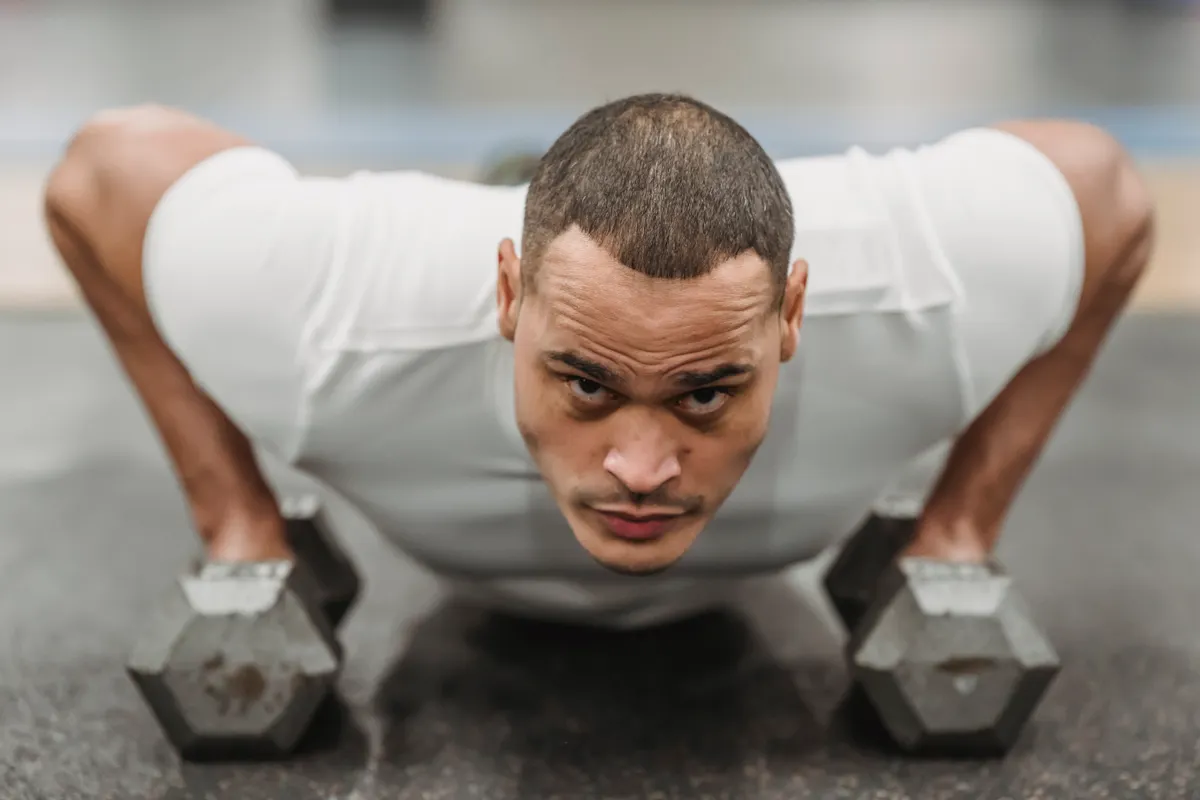
The most common mistake in bodyweight training is repeating the same comfortable set forever. Muscles adapt to repeated demands. If your push-up program never changes in leverage, repetition quality, range of motion or added resistance, it may eventually become more of a maintenance routine than a productive muscle-building plan.
There are several ways to progress without chasing a hundred repetitions. First, add repetitions within a defined range, such as three sets of eight to fifteen. When you can reach the upper end with clean technique and one or two good repetitions left, make the next session slightly harder. Second, use a lower incline or modest feet elevation. Third, add a resistance band or a well-secured weighted vest. Fourth, improve depth with appropriate handles or parallettes if your shoulders tolerate it.
Each change has tradeoffs. Bands become more resistant as they stretch, so the hardest portion may shift toward lockout. A vest changes the total load more uniformly but can be cumbersome. Parallettes can allow a deeper bottom position, which may increase the demand on the chest but also requires sensible shoulder tolerance. Rings introduce instability and coordination demands; they are not automatically better for hypertrophy simply because they wobble.
Another small experiment involving twenty-three moderately trained men found that a four-week progressive push-up program improved upper-body strength measures, although muscle-thickness changes were not clearly established over that short period. The broader lesson is to program push-ups as resistance training: repeatable sets, measurable difficulty and planned progression.
Record your version, elevation, added load, set count and repetition quality. “Three sets of twelve with feet on a low step” is useful training data. “Did some push-ups” is not. If an increase in difficulty makes repetitions collapse or your shoulders hurt, step back one progression and rebuild control.

Calisthenics Shirts & Street Workout Gear
Calisthenics and bodyweight-training gear for pull-ups, dips, handstands and street-workout athletes.

T-Rex Hates Push Ups Hooded for Calisthenics Workout Fa Hoodie
Keep it laid-back with a little “T-Rex Hates Push Ups” attitude.

Big Dip Energy Crewneck Pullover Sweater for Calistheni T-Shirt
Show some gym-day personality with “Big Dip Energy”.

Calisthenics Evolution Hooded Pullover for Bodyweight W Hoodie
Keep it laid-back with a little “Calisthenics Evolution” attitude.

Calisthenics Heartbeat Muscle Shirt Athletic Vest Human Tank Top
Bring “Calisthenics Heartbeat” humor to your next lifting session.

Funny Calisthenics Gym Muscle Shirt Athletic Vest for B Tank Top
Your gym-day look, with a playful “Calisthenics” twist.

Funny Calisthenics Gym Decal for Water Bottles Laptops Sticker
Bring “Calisthenics” attitude to your water bottle or laptop.

Funny Calisthenics Gym Muscle Shirt Athletic Vest for B Tank Top
Train hard, laugh a little, and rep “Calisthenics”.

Funny Calisthenics Gym Crewneck Pullover Sweater for Bo T-Shirt
Add a playful “Calisthenics” touch to your casual rotation.

Funny Calisthenics Gym Crewneck Pullover Sweater for Bo T-Shirt
Keep things casual with a little “Calisthenics” attitude.

4. Where the Bench Press Still Has a Real Advantage
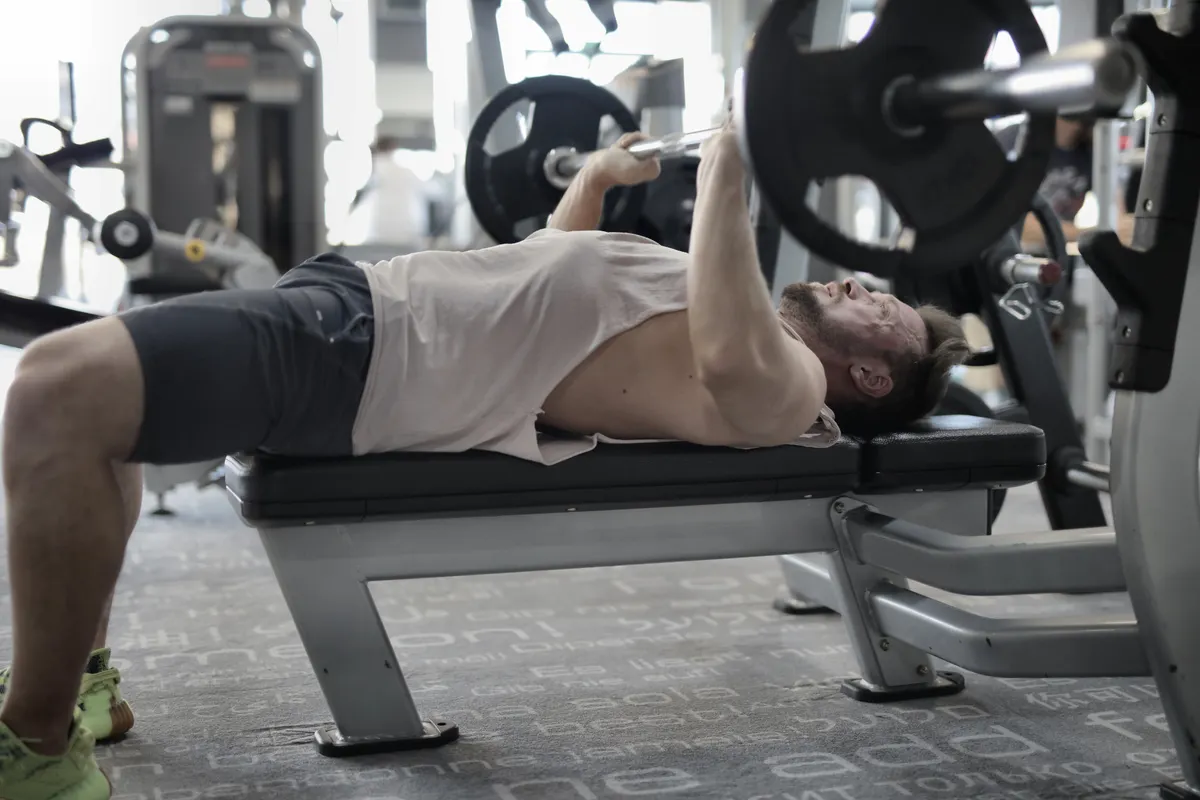
Push-ups can grow muscle, but the bench press remains an exceptionally convenient way to quantify and progressively increase external resistance. Add a small plate, keep the movement broadly consistent and the load changes in a known increment. For someone specifically training a heavy barbell bench press, practicing the lift also develops skill in that exact movement.
Strength is partly task-specific. Better coordination under a bar, improved bracing on a bench, stable foot pressure and repeated exposure to heavier loads can raise a one-repetition maximum independently of muscle-size changes. Larger reviews comparing light and heavy resistance training generally find that a wide range of loads can build muscle when sets are sufficiently demanding, while heavier loads tend to produce larger improvements in maximal-load strength tests.
That distinction explains why the eight-week push-up comparison should not be used to claim that weighted push-ups will produce the same elite bench-press performance as dedicated heavy bench training. Its bench condition was approximately 40% of maximum, not a cycle of challenging doubles, triples or singles. The trial also did not test decades of progression or lifters with exceptionally high pressing strength.
The barbell is not compulsory for chest development, either. Dumbbell presses, cable presses and well-loaded push-ups can all provide a demanding horizontal press. Exercise selection should reflect your goal, equipment, comfort and ability to progress. If the barbell bothers your shoulders but neutral-grip dumbbells feel better, there is little reason to treat the straight bar as mandatory for general hypertrophy.
Use a spotter or appropriate safeties when benching heavy. A bench press offers a precise loading tool, not immunity from poor setup, rushed repetitions or excessive weekly fatigue.
5. Chest Growth Is Not the Same Outcome as a Bigger One-Rep Max
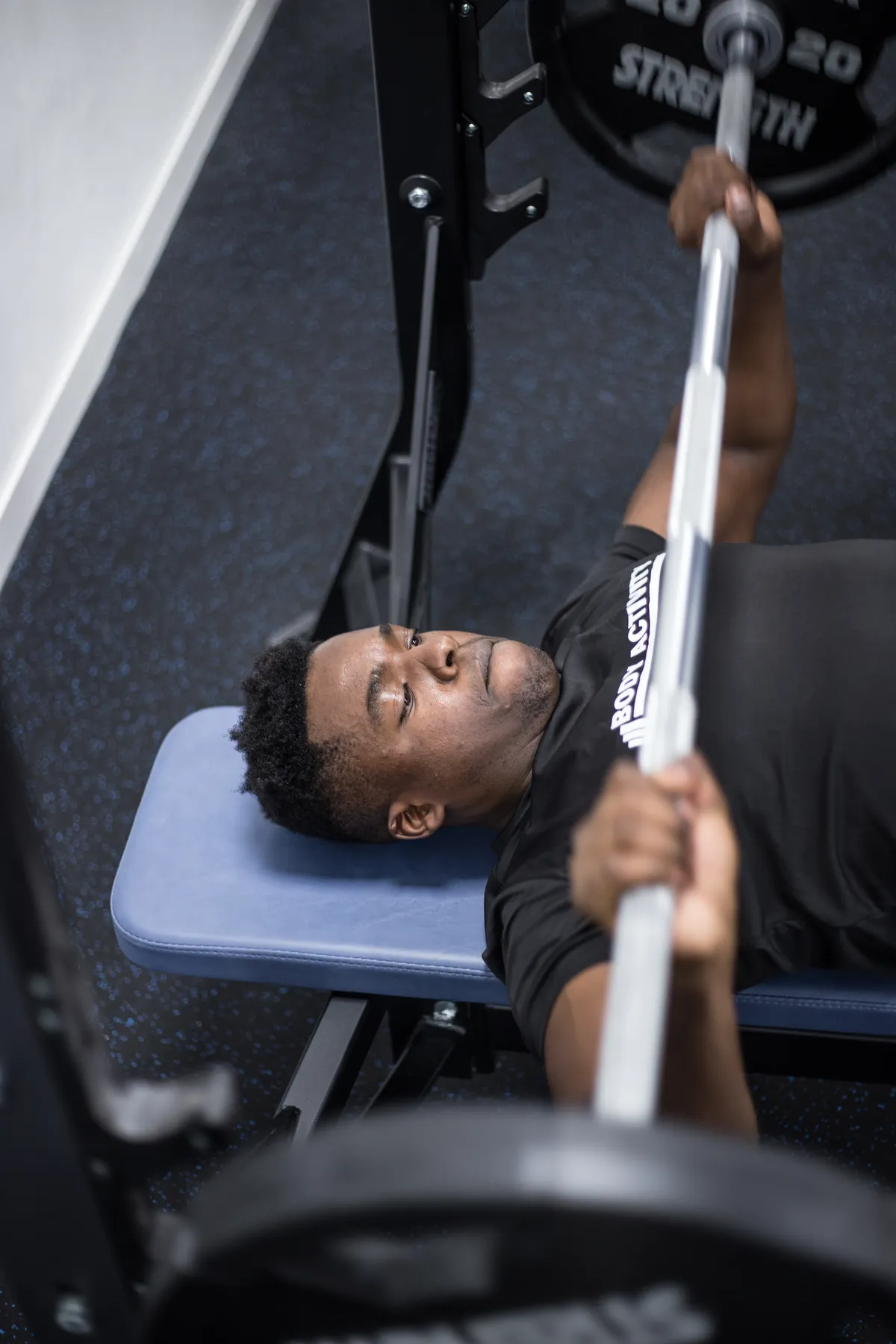
Muscle thickness, maximal strength, repetition endurance and explosive power are related but separate outcomes. A lifter may add chest size while improving their bench press only modestly, especially if they rarely practice heavy barbell repetitions. Another lifter can increase their one-rep maximum through technical practice and neural adaptation without an equally dramatic change in measured muscle size.
In the push-up comparison, chest and triceps thickness improved under both conditions, but the study was small and short. Ultrasound thickness is a useful indirect marker of local muscle growth, not a complete measure of whole-body hypertrophy. Nutrition and outside physical activity were not tightly controlled. It would be misleading to turn those measurements into a universal claim that push-ups are “better than” bench presses.
Effort and load also interact. Very easy repetitions that stop far from muscular fatigue may provide too little stimulus, while taking every set to absolute failure can create unnecessary fatigue. A practical middle ground for most hypertrophy sessions is to end hard sets when only about one to three technically sound repetitions remain, with occasional closer efforts on safe variations.
For a chest-focused session, compare like with like: similar hard-set volume, a controlled movement range and a progression that remains challenging. Do not compare a half-hearted set of fifteen floor push-ups against four heavy bench sets and then declare the barbell superior. Conversely, do not compare weighted push-ups taken near failure with a bench warm-up at an easy load.
Track at least two outcomes: the number of clean repetitions or external load you can handle, and a slower-moving marker such as consistent chest measurements or photos taken under similar conditions. Neither a single workout pump nor next-day soreness proves growth.
Equipment Worth Exploring
Explore equipment, accessories and gear from our carefully selected range.

FID Bench MAX
Adjustable bench offering flat, incline, and decline positions + adjustable headrest.


Go-Tone Pro
Portable digital cable trainer with up to 66 lb (30 kg) of adjustable resistance.


6. A Two-Day Push-Up and Bench-Press Progression
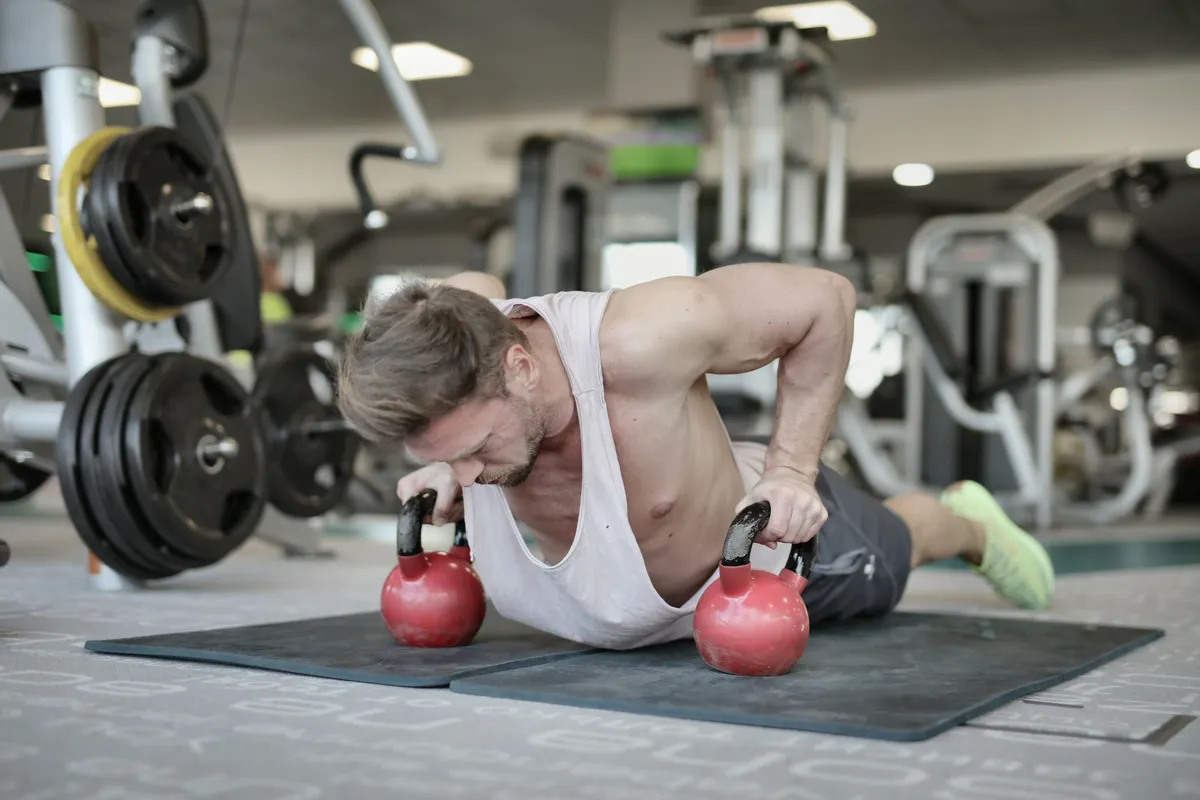
You do not have to choose a permanent winner. The simplest approach is to use one movement as your primary press and the other as a complementary pattern. The following example suits a healthy recreational lifter who can perform at least a few controlled push-ups and has access to a bench or dumbbells. Adjust the starting variation and total sets to your training history.
Day A: controlled strength emphasis
- Bench press or dumbbell press: three sets of six to ten repetitions, leaving roughly two clean reps in reserve.
- Push-up variation: three sets of eight to fifteen, using an incline or added resistance to stay in range.
- Row or other upper-back pull: three sets of eight to twelve for balanced upper-body work.
Day B: push-up progression emphasis
- Progressive push-up: four sets of six to twelve with consistent depth and stable body position.
- Incline dumbbell press or machine chest press: two or three sets of eight to twelve.
- Triceps accessory: two sets of ten to fifteen, only if elbows and recovery permit.
Leave at least forty-eight hours between these two sessions if you are not already accustomed to the workload. Rest roughly two to three minutes between challenging compound sets; a shorter rest is acceptable when performance remains stable. If you already perform a large amount of pressing elsewhere, remove sets rather than stacking this template on top of everything.
For weeks one and two, establish reliable repetitions and an honest effort level. In weeks three and four, add a rep or two across sets when technique permits. In weeks five and six, increase bench load modestly or choose a harder push-up leverage, then rebuild the lower end of the rep range. That is a framework, not a guarantee of a particular percentage gain.
Do not force a deep stretch through painful shoulders or wrists. Push-up handles may improve wrist comfort for some lifters, while a slightly different grip or dumbbell press may suit others. Persistent pain deserves an individualized assessment rather than a more aggressive progression.
Bodybuilding Shirts & Workout Gear
Bodybuilding shirts, tanks and gym gear for lifters chasing muscle, size, symmetry and the pump.

I Love Bench Press Hooded | for Bench & Chest Day Lifti Hoodie
Keep it laid-back with a little “I Love Bench Press Hooded” attitude.

Shirt for Chest Day | I Love Bench Press with Pink Weig T-Shirt
Show some gym-girl attitude with a playful “for Chest Day” tee.

My Bench Press Is Stuck Horror Movie Meme Sweater T-Shirt
Show some gym-day personality with “My Bench Press Is Stuck”.

Chest Day Sweater Bench Press & Meme T-Shirt
Add a playful “Chest Day” touch to your casual rotation.


I Love Bench Press Gym Decal | Heart Weight Plate Funny Sticker
Put “I Love Bench Press” gym humor on your laptop, bottle, or gym gear.

Chest Day Decal Water Bottles & Equipment Meme Sticker
Bring “Chest Day” attitude to your water bottle or laptop.


Gym Sir Swole of Benchalot Medieval Knight Bench Press T-Shirt
Make gym days more fun with “Sir Swole of Benchalot Medieval Knight” style.
7. Which Press Should You Prioritize for Your Goal?
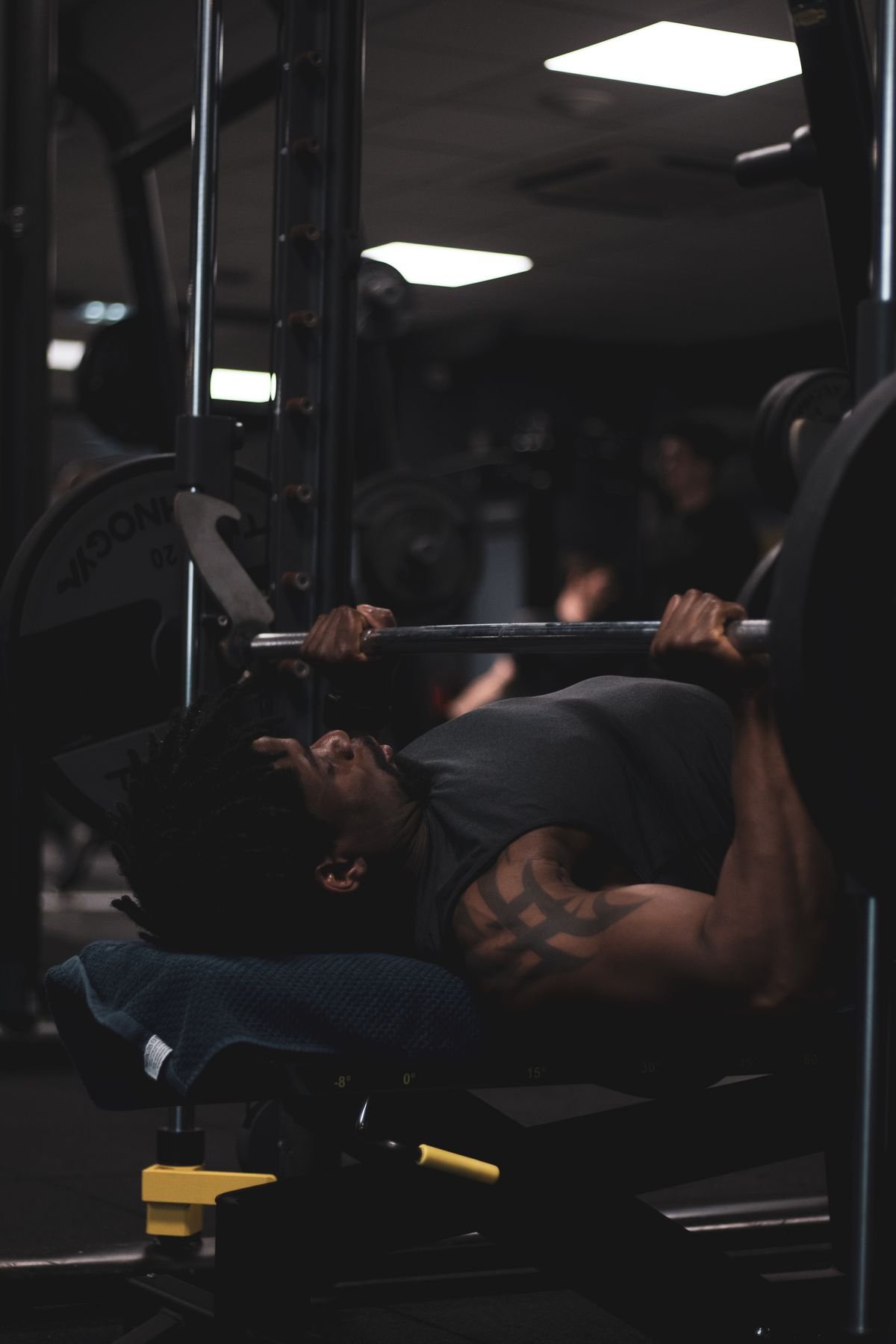
If your goal is general chest and triceps hypertrophy, prioritize the press you can perform hard, consistently and progressively without aggravating your joints. That could be a weighted push-up, a barbell bench press, dumbbells or a combination. The body does not award extra muscle because the exercise requires a rack, nor does it award extra muscle because the exercise is minimalist.
If your goal is a higher barbell bench-press maximum, keep regular bench practice. Heavy lifting skill, bar path and familiarity with progressively heavier weights matter. Push-ups can remain useful accessory volume, particularly when you want extra pressing work without setting up another barbell exercise.
If you travel frequently or have limited equipment, push-ups become particularly valuable. Begin with a version that challenges you in roughly six to twenty controlled repetitions, then manipulate leverage or resistance before you simply chase ever-higher totals. A stable incline works for beginners; weighted vests or bands can extend the exercise for stronger trainees.
If you are managing fatigue, choose the movement that lets you train productively without excessive setup or recovery cost. A push-up session is not inherently “easy,” and a moderate bench session is not inherently “hard.” The relevant variables are load, proximity to failure, total work and individual tolerance.
The evidence supports a useful middle position. In a small matched-load experiment, push-ups built chest and triceps thickness comparably to light bench presses over eight weeks. Larger resistance-training evidence shows that muscle growth can occur across a broad load spectrum, while maximal strength benefits more from practicing heavier loads. Use that distinction to build a program around your actual objective, then measure progress rather than defending an exercise identity.