Advertising disclosure: This page includes affiliate links that may earn us a commission at no additional cost to you.
On a full-body strength day, the bench press and back squat can each demand several minutes of recovery before the next hard set. Do all your bench work first and then your squats, and those recovery periods can make the session feel like a long series of appointments with a timer. Alternating the lifts offers another option: train one movement while allowing more time to elapse before repeating the other. The catch is that the work in between still creates fatigue.
A small experiment published in 2025 put that idea to the test using heavy bench presses and back squats. The results suggest a way to preserve training volume without simply doubling the idle time between sets. They also show why an alternating format should not be confused with rushing through a superset.
What happens when you alternate two heavy lifts?
Imagine doing five sets of bench presses followed by five sets of squats. With four minutes between sets, you have four recovery intervals within each movement, or 32 minutes of rest across those eight intervals alone. That excludes warm-ups, the actual lifting, equipment adjustments and the change from bench to squat. Extend the same eight breaks to eight minutes each and the scheduled recovery time becomes 64 minutes.
Alternating changes the structure rather than removing recovery. You bench, rest, squat, rest and return to the bench. If each break lasts four minutes, the bench gets roughly eight minutes plus the time spent performing the intervening squat set. The squat enjoys a similar interval before its next turn. There are nine transitions across ten alternating work sets, so at four minutes per transition there would be 36 minutes of scheduled rest. These are illustrative calculations, not measured workout durations from the experiment.
The important distinction is between recovery for a particular movement and recovery for the whole person. Your chest and triceps may not be the limiting muscles in a squat, but the same nervous system, breathing, trunk and attention are still involved. A difficult squat set can make the subsequent bench setup feel less stable even if your pressing muscles have been resting. That is why the intensity and order of these lifts matter.
For a lifter who needs adequate recovery but is pressed for time, the goal is to find a productive rhythm. It is not to turn ten heavy sets into a conditioning circuit.
What 13 lifters actually achieved
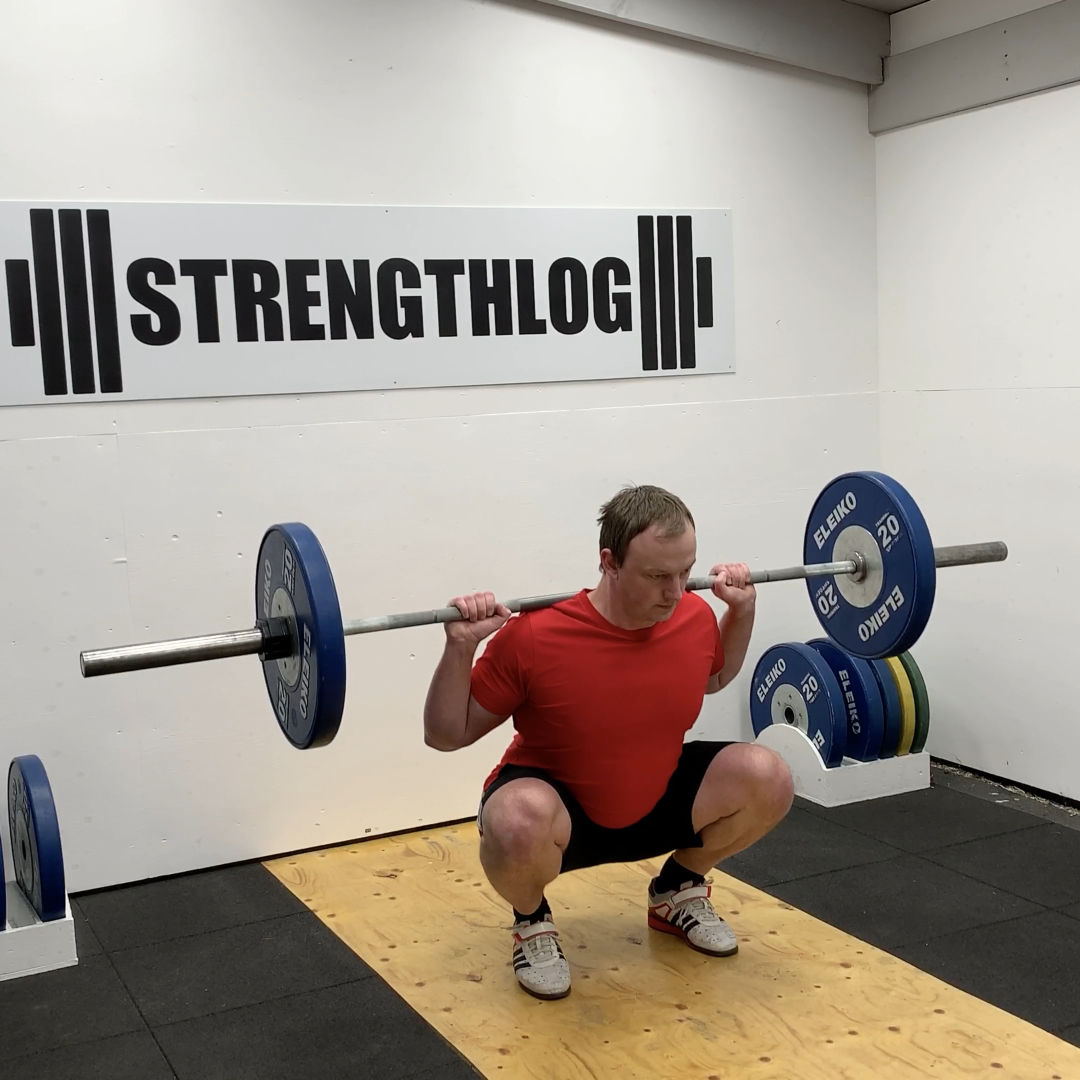
The experiment involved 13 recreationally resistance-trained men. They completed three conditions in randomized order, performing five sets of each lift at 85% of their one-repetition maximum and continuing sets until momentary muscular failure. Two conditions used consecutive sets with either four or eight minutes of rest. The third alternated the bench press and back squat, allowing four minutes between movements.
The main outcome was volume load, calculated by multiplying repetitions by the weight lifted and adding the results across sets. Bench press volume load averaged about 1,668 kg with four-minute conventional breaks, 2,164 kg with eight-minute breaks and 1,911 kg with the alternating approach. Eight minutes produced significantly more bench volume than four minutes. The alternating condition fell between them numerically and did not differ significantly from either.
Squat volume load averaged approximately 2,337 kg with four minutes, 2,899 kg with eight minutes and 2,778 kg with alternating sets. Both the eight-minute and alternating conditions produced significantly higher squat volume than the four-minute condition. The alternating strategy therefore looked particularly promising for maintaining squat work in this specific session.
The numerical bench results are worth taking seriously. They do not prove that alternating is equivalent to eight minutes of uninterrupted recovery, nor that it outperforms the conventional four-minute format for bench pressing. With only 13 participants, uncertainty remains considerable. The experiment tested one demanding session format rather than several months of training, and it cannot establish the ideal rest interval for every lifter.
Another practical limitation is that repeated failure sets at 85% of maximum are demanding. You do not need to duplicate that protocol to explore the scheduling idea. For most everyday strength work, deliberately leaving repetitions available is a better starting point.
Why more rest can matter without guaranteeing more growth
Rest duration has been examined in other training experiments, and the broader findings help explain why the alternating schedule might work. In a trial involving trained men performing repeated sets with one, three or five minutes of rest, bench press repetition performance was better with the longer intervals than with one minute. That does not mean every increase from three to five minutes is automatically useful; the difference between those two intervals for bench performance was not significant in that trial.
A separate 16-week training experiment involving 36 resistance-trained men compared one-, three- and five-minute intervals. Longer breaks supported better strength outcomes in some comparisons, including bench press strength with five minutes versus one minute. Another eight-week experiment in experienced lifters found that three-minute breaks improved strength and some muscle-size outcomes compared with one-minute breaks. Taken together, these findings support preserving the quality of your working sets rather than treating short rest as an achievement in itself.
However, kilograms moved are not a direct measurement of muscle growth. Suppose two lifters both bench 100 kg. One completes 25 total repetitions and the other completes 20. Their volume loads differ by 500 kg, but that number alone cannot predict the eventual difference in chest development. Range of motion, technique, effort, frequency, recovery and progression over many weeks all influence the result. The extra repetitions are valuable only if they fit a recoverable training dose.
There is also a distinction between a heavy strength session and moderate accessory work. When a set requires precise bracing, a controlled descent and an explosive concentric effort, being ready for the next set matters more than squeezing another task into the interval. A smaller isolation exercise may tolerate a faster schedule. The principle is to preserve the performance you intend to train, not to give every exercise the same rest prescription.
If bench press strength is your main priority, conventional straight sets may be preferable on the days when you want the least possible interference. If squat volume is the main goal and your press work is compatible with it, alternating may be worth testing. Neither choice is inherently superior across an entire training program.

Powerlifting Shirts & Lifting Gear
Powerlifting shirts and gym gear for squat, bench and deadlift lifters who live for heavy numbers.

Squat Bench Deads Shirt – Gains & Meme Top T-Shirt
Bring “Squat Bench Deads” humor to your next gym day.

Bench Press and Chill Funny Gym T
Make gym days more fun with “Bench Press and Chill” style.

Heavy Squatter Harry Potter Leg Day Squat Meme Tank Top
Bring “Heavy Squatter” humor to your next lifting session.

Funny Squat Inspector Gym | Edgy Workout Sweater For Le T-Shirt
Bring “Squat Inspector” humor to your everyday gym style.
Lift Heavy – Hardcore Heavy Metal Gym Shirt for Powerli T-Shirt
A t-shirt featuring the Lift Heavy – Hardcore Heavy Metal Gym Shirt for Powerlifting and Bodybuilding artwork, bringing lifting-inspired humor and distinctive gym graphics to your everyday gear.


Squat You Must Star Wars Leg Day Meme Decal Water Sticker
Give your everyday gear a playful “Squat You Must” twist.

Squatbucks Gym Coffee Funny | Starbucks Parody Workout T-Shirt
Keep things casual with a little “Squatbucks Gym Coffee” attitude.

Squat Game Gym | Funny Squid Game Parody Workout Decal Sticker
Bring “Squat Game” attitude to your water bottle or laptop.

Heavy Barbell – Meme Shirt & Top T-Shirt
Make gym days more fun with “Heavy Barbell Powerlifting Graphic” style.
How to organize the bench and squat stations
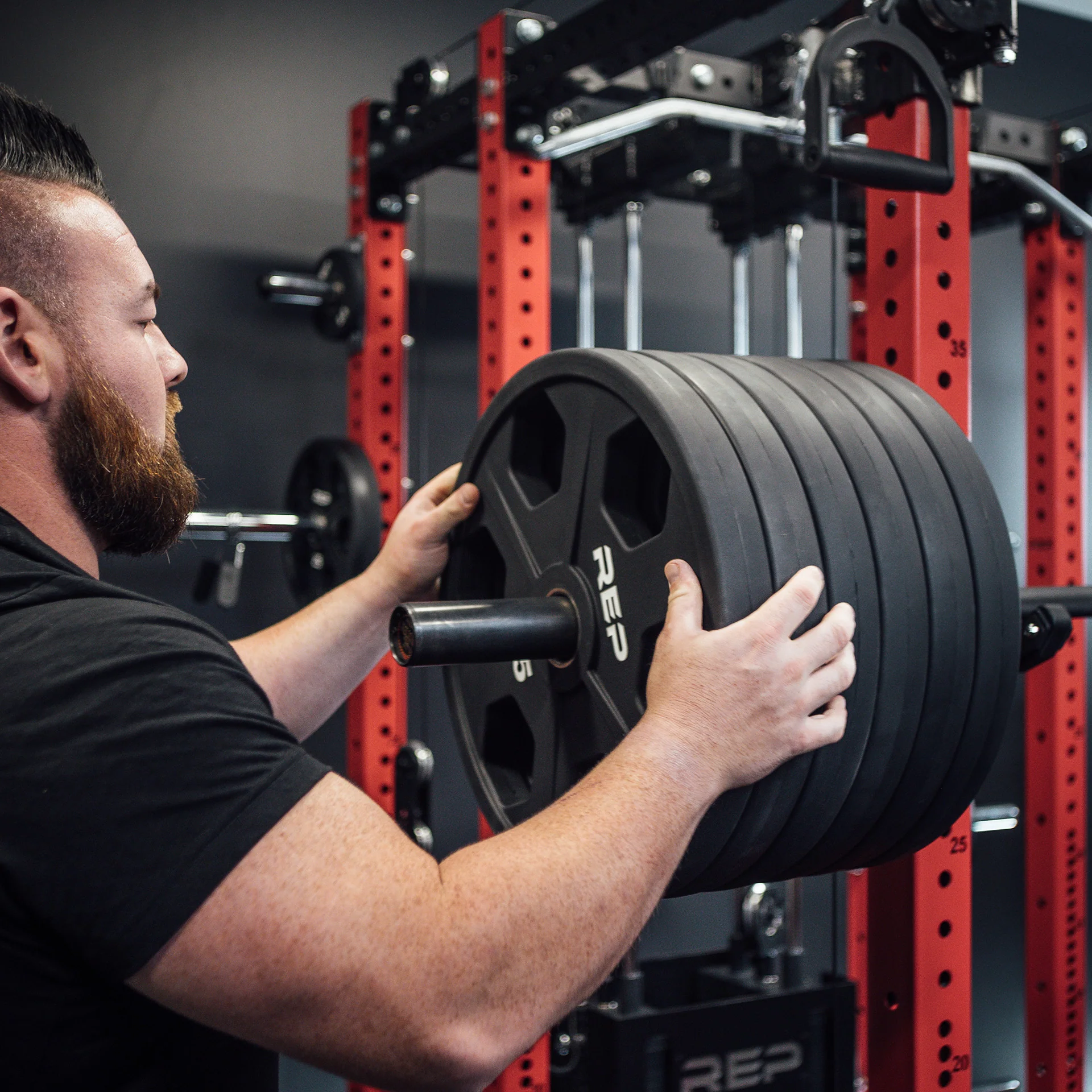
Set up both movements safely before beginning any timed work. The squat station needs a suitable rack, correctly positioned safeties, sufficient clearance and securely loaded plates. The bench must be stable and aligned with a barbell setup that permits a safe unrack and rerack. If you bench alone, use appropriately positioned safety arms or pins; otherwise arrange a capable spotter. Test safety heights with an unloaded bar before working sets.
A single rack can serve both lifts, but moving the bench, adjusting the hooks and changing the safety positions after every set may erase the scheduling benefit. It also creates repeated opportunities for setup errors. If two appropriate stations are available and gym rules permit it, separate setups make alternating easier. At a crowded commercial gym, finish one lift at a time rather than claiming two busy stations. Sharing a rack with another lifter can sometimes provide a natural recovery interval without monopolizing equipment.
Use the same definition of rest throughout the workout. For example, start the timer after the final repetition is safely reracked, take four minutes, then begin the next movement only when ready. If a weight change or spotter arrangement takes longer, record the actual interval rather than rushing to beat the timer. Keep a log of both movements so the total time between successive squat sets and successive bench sets is visible.
Choose your starting movement according to the session priority. A challenging squat set may raise breathing and general fatigue, so do not begin benching until your breathing and bracing are controlled. Conversely, fatigued shoulders and upper back after benching can make the squat bar position less comfortable. If either lift becomes unstable, lengthen the break or return to straight sets. The equipment and timer should support good training, not dictate it.

Equipment Worth Exploring
Explore equipment, accessories and gear from our carefully selected range.



Foldable Wall Rack
Wall-mounted folding squat rack designed to save floor space between workouts.

FID Bench MAX
Adjustable bench offering flat, incline, and decline positions + adjustable headrest.

Competition Plates
Competition-style bumper plates for Olympic lifts and loaded strength training.

Grip Plates
Rubber-coated weight plates with handholds for loading barbells and machines.
A practical four-week test for your own training
A useful personal trial does not require five sets of each lift to failure. Start with a manageable amount of work and compare the two arrangements over several repeatable sessions. For example, on one weekly full-body day, perform three work sets of bench press and three work sets of squat, using the same loads and repetition goals across both formats. Keep one to three repetitions in reserve and warm up both lifts progressively before challenging work.
During weeks one and two, establish a conventional baseline. Complete your first movement with four-minute breaks, then switch to the second and use the same interval. Write down the load, repetitions, estimated effort, any technical problems and the actual duration of the work portion. In weeks three and four, keep the exercise order, load and target repetitions as similar as practical, but alternate the work sets with four minutes between movements.
Here is a simple alternating sequence after warm-ups: bench set one, four minutes of rest, squat set one, four minutes of rest, bench set two, and so forth. After squat set three, you are finished with the paired work. With six total sets, the five transitions represent 20 minutes of planned recovery. Each movement nevertheless receives roughly eight minutes plus the intervening set duration before its next repetition of the exercise.
Compare the sessions using more than one number. Did you maintain your intended repetition count? Was the final squat set as controlled as the first? Did the bench setup feel secure after a squat? Was the session actually shorter after accounting for equipment changes? If the alternating arrangement preserves performance and fits the gym environment, retain it on suitable days. If the same weights feel harder or technique deteriorates, add recovery time or separate the lifts.
Do not interpret four weeks of logging as a controlled scientific experiment. Strength and recovery can change over time, and factors such as sleep, previous training and food intake are difficult to hold constant. It is simply a practical comparison that can guide your own programming. Alternating heavy lifts is most useful when it creates additional recovery for each movement without introducing more fatigue than that recovery is worth.