Advertising disclosure: This page includes affiliate product links that may earn us a commission, as well as products from our own store.
A barbell pullover looks simple until the bar travels behind your head and your shoulders become the limiting factor. You need a stable bench, a predictable elbow position and a range that does not turn into a competition to touch the floor. The movement can load chest, back and arm structures, but the exact muscle emphasis is more complicated than the familiar claim that pullovers are automatically a lat exercise.
This guide focuses on the barbell version, not the commonly used one-dumbbell variation. It explains the bench setup, the overhead arc and how to keep the reps reproducible. It also puts the muscle-activation data in context: electrodes record activity during a test, not muscle gained months later. The useful question is whether this exercise fills a role in your program after your presses, rows and pulldowns are already covered.
Build a stable bench-and-bar setup before the first repetition
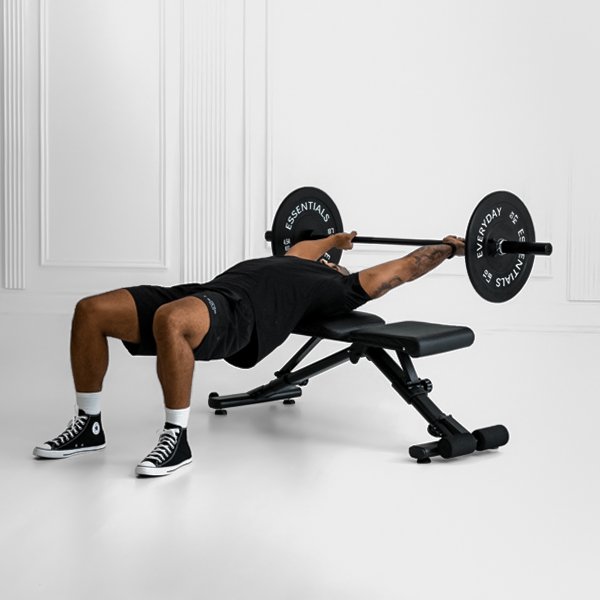
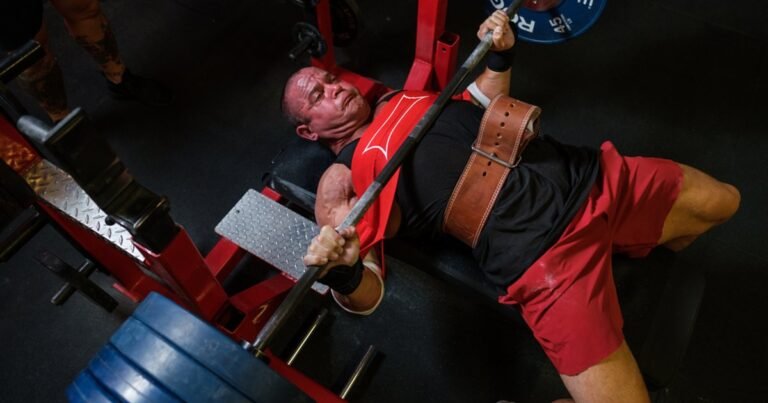
Start with a firm flat bench that will not slide as you reach overhead. Lie lengthwise with your head, upper back and pelvis supported, then plant both feet so you can resist the bar pulling you toward the end of the bench. You may see lifters drape only their shoulders across a bench and suspend their hips. That cross-bench position is a separate, more demanding variation; the full-bench setup is easier to standardize while learning the movement. Check that there is clear floor space behind your head for the plates and sleeves.
Begin with an empty or very lightly loaded bar whose weight you can handle through the full motion. A full Olympic bar can be unnecessarily heavy for a first attempt; a light training bar or appropriately rated fixed bar is fine if the grip and sleeve arrangement are secure. Install collars on any loaded sleeves. A narrow room that forces the plates against a wall, rack post or passing gym member is not a safe pullover station. A second person can assist with a handoff and retrieval if your load or setup makes getting into position awkward.
Take a comfortable symmetrical overhand grip at roughly shoulder width, rather than forcing the hands together. Hold the bar above the upper chest with arms long but elbows not aggressively jammed straight. Set a mild abdominal brace, keep your ribs from flaring dramatically, and feel both shoulder blades supported by the bench. There is no advantage in making the lower back arch further just to create apparent motion at the shoulder. Your spine and bench contact should be recognizably similar at the beginning and end of a repetition.
Hold a slight elbow bend and repeat the same overhead arc
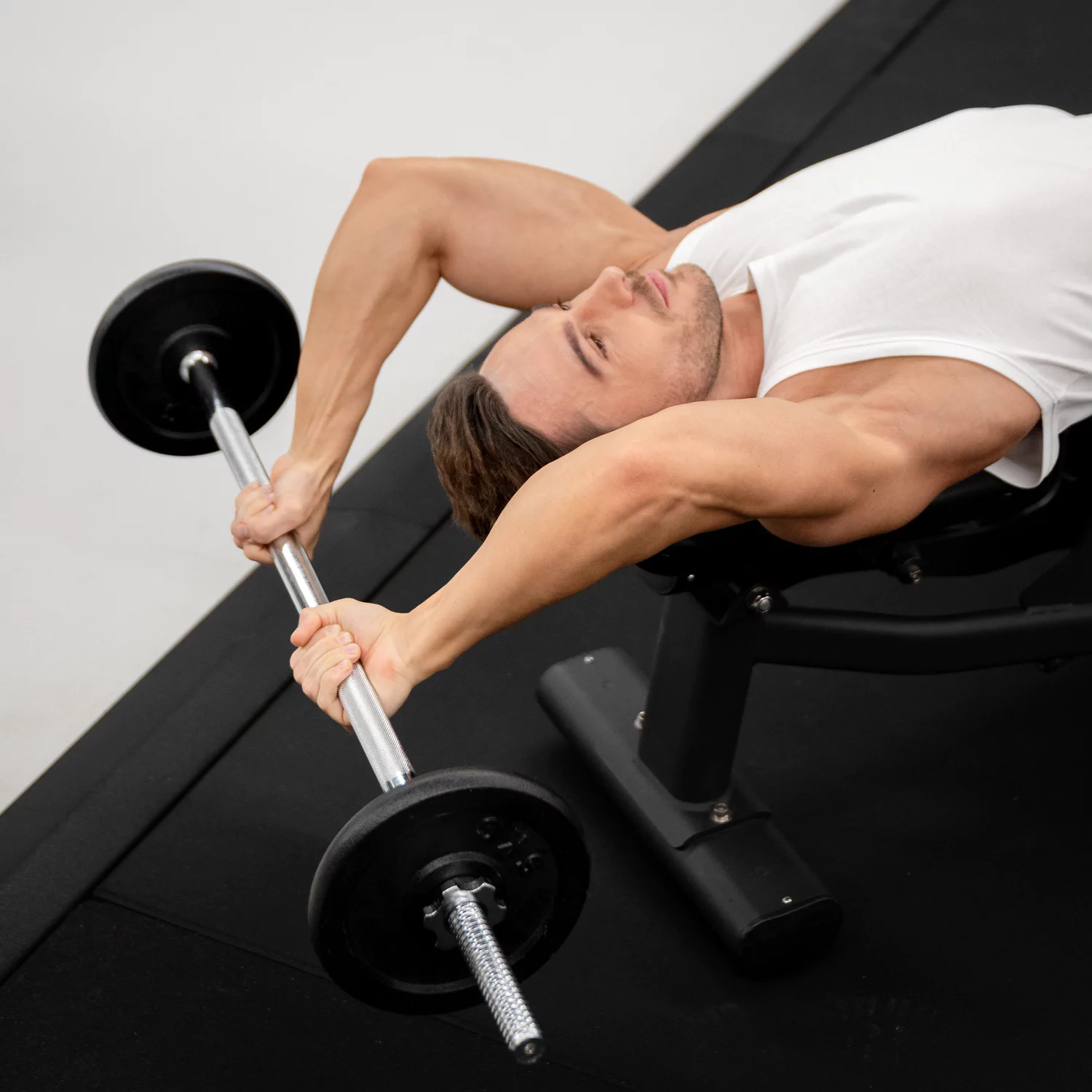
Before lowering the bar, settle on a small elbow bend. Keep that bend approximately the same as you move through the set. Think of the hands and bar traveling together on a broad arc from above your chest toward the space behind your head, rather than bending at the elbows to lower the bar near your face. The shoulders should be doing the main movement. If the elbows fold deeply as the weight moves backward and then extend on the return, you have mixed a pullover with a triceps extension. That is not inherently forbidden, but it changes the exercise you are testing.
Use a deliberate lowering phase, roughly two to three seconds as a starting reference. Stop at the deepest position that lets you maintain control of the bar, comfortable shoulders and approximately the same ribcage position. Some lifters can reach until the upper arms approach the line of the torso. Others need to reverse well before that position. The correct depth is an individual, repeatable range, not the lowest bar position visible in a demonstration photograph. A greater stretch is not automatically a better rep.
Exhale smoothly as you bring the bar back over the chest, while preserving the elbow angle and avoiding a sudden kick with the legs or a bounce from the bottom. You do not need to move the bar toward the stomach or tuck the chin to finish. End where the arms are stable above the upper torso and immediately confirm the bar is balanced before starting another descent. The first and last repetition should have similar speed, depth and joint positions. If they do not, the weight or set length needs adjustment.
A practical initial test is five slow repetitions with the light bar. Video from the side and compare the paths. When you can make five copies without shoulder pinching or changing elbow bend, you have a better foundation than someone who adds weight before learning the arc.

Equipment Worth Exploring
Explore equipment, accessories and gear from our carefully selected range.


FID Bench MAX
Adjustable bench offering flat, incline, and decline positions + adjustable headrest.



VForce Wall Trainer
Space-saving wall-mounted functional trainer with pivoting cable arms and variable resistance ratios.

VForce Lat Tower
Wall-mounted cable tower with pivot arms and adjustable 1:1 or 2:1 pulley ratios.

Pec Fly/Rear Delt PEC-650
Combination machine with adjustable movement limits for chest fly and rear-delt exercises.
Interpret chest-versus-lat muscle activity carefully
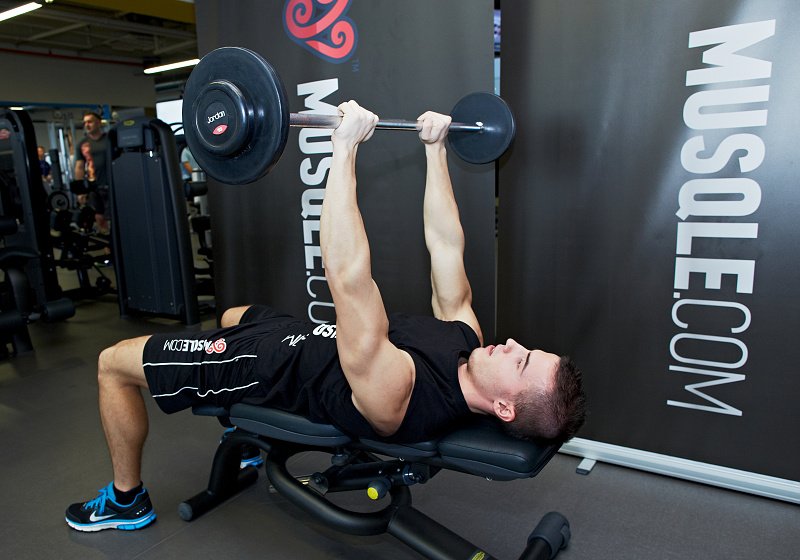
The pullover earns its reputation as a combined chest-and-back exercise because both sets of muscles participate in moving and stabilizing the upper arm. That does not mean both are equally challenged, or that one activation reading dictates how much muscle will grow. In a 2011 barbell-pullover experiment involving eight healthy men, electrical recordings during one loaded set showed higher pectoralis major activity than latissimus dorsi activity. That experiment was very small and tested immediate activation, not a long training block.
Another laboratory comparison in 2014 included twelve resistance-trained men. In that specific protocol, the bench press produced more chest and front-deltoid activation, while the pullover produced more lat and long-head triceps activation than the bench press. These are not contradictory results: the comparator matters. In the first test, the pullover was compared between muscles. In the second, the same muscles were compared between two different exercises.
A later controlled EMG comparison examined twenty physically active adults performing barbell pullovers and straight-arm cable pulldowns. Each exercise was performed for eight repetitions against a load calculated from body mass. The pullover generated greater activity in several evaluated muscles, but the cable pulldown produced higher activation of the lats and triceps in the conditions tested. Those findings make the pullover a reasonable chest-and-shoulder-related accessory in some programs, while reminding us that the cable movement can remain a very direct lat option.
There are major boundaries to these findings. Electromyography reflects electrical muscle activity under the recorded conditions; it is not an interchangeable measure of mechanical tension, hypertrophy or long-term strength gain. The samples were small, loads were standardized rather than individually optimized, and the studies did not establish which exercise grows more muscle over months. The safe interpretation is modest: use these results to question oversimplified labels, then choose exercises by comfort, available equipment and measurable progress.
Select the bar and variation for your actual training goal
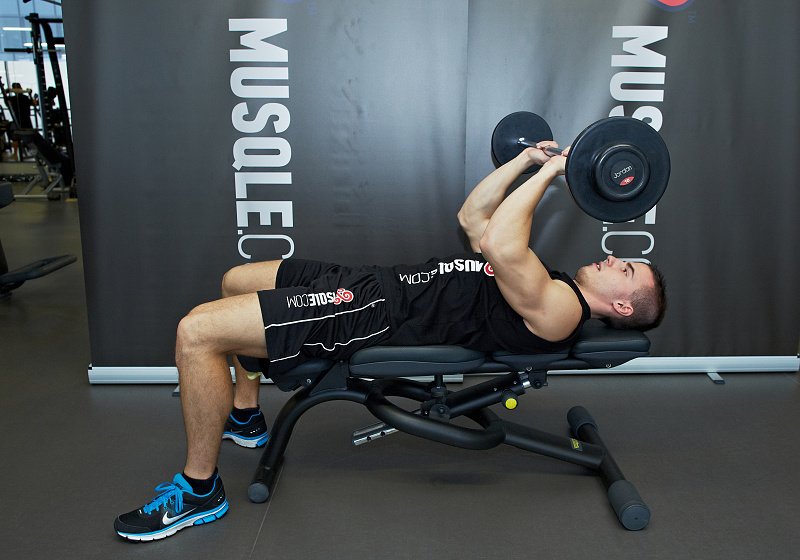
A straight bar forces both hands to share a fixed line, so it is usually more constrained than a single dumbbell. An EZ-style bar can offer a different wrist position if the straight bar feels awkward, provided its sleeves and load are appropriate for the movement. Neither implement should make you ignore a shoulder pinch. The important constant is that the bar moves in a controlled arc while the elbows stay at an agreed angle.
You may also see a bent-arm barbell pullover. That variation starts with more elbow flexion and often involves a shorter apparent moment arm. It is not identical to a long-arm pullover, so do not compare their loads as though they were the same lift. If you choose to use both, label them separately in your log and standardize elbow angle, bench support and range for each. When the elbows start opening and closing significantly within each rep, the movement becomes a hybrid that is harder to track consistently.
For most trainees, a fully supported flat bench is the most practical default. The cross-bench setup can offer freedom of torso movement but also demands more control from the hips and trunk, without guaranteeing better muscle development. A decline bench changes the angle further and requires secure leg anchoring; it belongs in the optional-variation category, not as a shortcut to a better stretch. If your goal is a lat-focused movement with less overhead shoulder loading, a straight-arm cable pulldown may be the cleaner choice. If the barbell feels too rigid for wrists or shoulders, a dumbbell or cable alternative may be easier to fit.
Program progression without forcing shoulder range
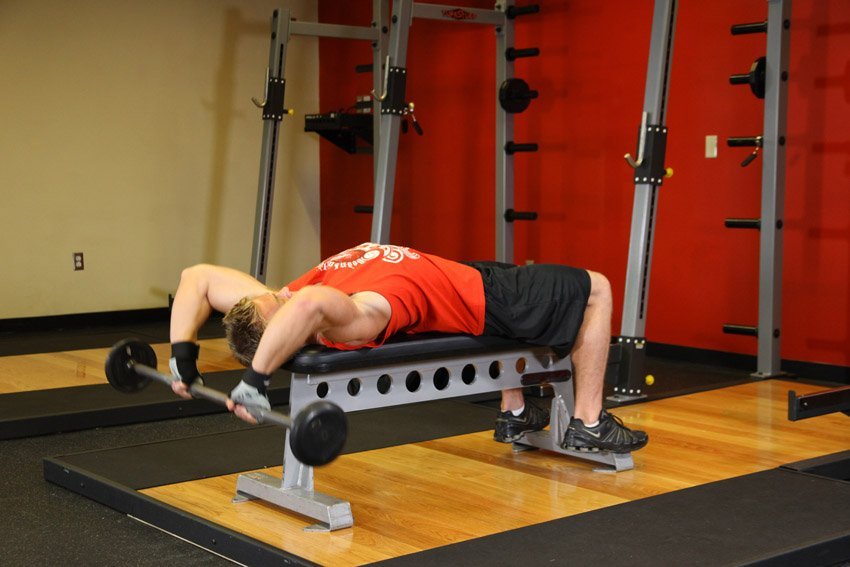
Treat the barbell pullover as a controlled accessory, not a maximum-load test. A starting prescription is two or three sets of eight to twelve repetitions, performed after your main pressing or pulling movements. Use a load that leaves roughly two or three technically clean repetitions in reserve. The goal is to learn what a consistent, shoulder-comfortable range feels like and repeat it. Take enough rest to restore control, often around ninety seconds to two minutes, and increase it if fatigue makes the bar path unstable.
In week one, set a light weight and record the handle width, support position, elbow bend and deepest comfortable point. In week two, try to add a repetition to each set without changing those conditions. In week three, when all sets reach the top of your target range cleanly, consider a small weight increase and return to the lower end of the repetition range. In week four, evaluate whether this exercise is still comfortable and useful alongside your rows, presses and pulldowns. If the quality falls, hold or reduce the load rather than chasing a predetermined progression.
Do not assume the same range should be available on every training day. A hard pressing session can leave the shoulders and triceps fatigued, and a long-arm overhead movement may feel different after a demanding pull workout. If your shoulders are uncomfortable at the bottom, reduce the range or switch exercises. Sharp pain, catching or persistent soreness should end the attempt and may warrant evaluation by a qualified clinician. The exercise has no unique benefit that justifies forcing an intolerable joint position.
You can also alternate blocks: a short pullover block for chest-and-upper-body variety, followed by a block where cable pullovers or a lat-focused pulldown fill that slot. The measure of success is a stable training stimulus with recoverable fatigue, not whether you can keep a single accessory in every program forever.
Fix the mistakes that turn a pullover into an arm exercise
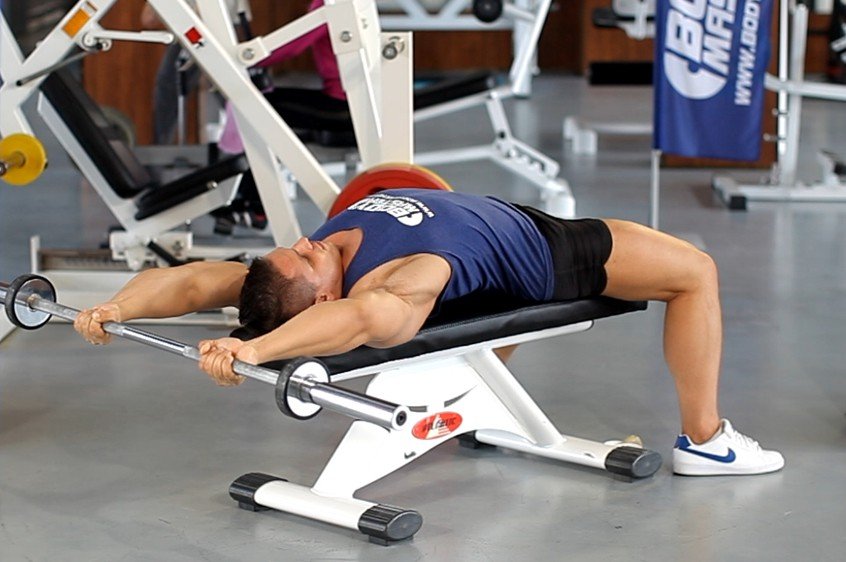
The most common error is changing the shape of the repetition as the load rises. A bar that starts with a small elbow bend but ends near your forehead with deeply folded elbows is no longer testing the same shoulder arc. A bar that accelerates downward into the stretch can be difficult to arrest safely. A torso that suddenly bridges hard off the bench is often trying to compensate for a range or weight the shoulders do not control. Fix one factor at a time: lighten the bar, shorten the range, slow the lowering and film the next set.
Unstable loading is another avoidable problem. Use properly fitted collars, check the plates, and plan how you will get the bar up and down without having to perform a surprise heavy rep near your face. A secure handoff or appropriately positioned helper is sensible when you are uncertain about the entry or exit. An exercise bench is not a catch system; do not deliberately drop an unfamiliar loaded bar behind your head. Make sure that the bar and sleeves clear any rack uprights or accessories through the entire arc.
Question claims that pullovers will literally expand your rib cage or replace all vertical pulling. Normal breathing and rib positioning are useful for control, but changing adult skeletal dimensions is not a credible promise of this exercise. Nor does the fact that your lats feel stretched prove they will outperform pulldowns in growth. If your main goal is back size, the pullover is one optional tool among rows, pull-ups and pulldowns; if your priority is chest training, it is not a substitute for pressing.
Run a simple decision check at the end of a training block. Can you show the same arc at the same load for multiple sessions? Do your shoulders tolerate it? Does it add a productive stimulus rather than unnecessary fatigue or equipment hassle? If yes, keep the pullover as a carefully selected accessory. If no, choose a dumbbell or cable variation that lets you train well. Good exercise selection is not loyalty to a famous movement: it is a reliable match between biomechanics, your goals and what you can actually perform.

Bodybuilding Shirts & Workout Gear
Bodybuilding shirts, tanks and gym gear for lifters chasing muscle, size, symmetry and the pump.


Barbell Heartbeat Hooded Pullover for Powerlifting Lift Hoodie
Bring “Barbell Heartbeat” gym humor to lazy days and post-workout plans.

Lifting Is My Therapy – Lifting Bodybuilding Powerlifti T-Shirt
Rep “Lifting Is My Therapy” humor in and out of the gym.

Funny Gains O'Clock Gym | Workout & Gym Bros | Fitness Hoodie
Make your off-duty look more fun with “Gains O'Clock”.

Funny Gains Time Gym | Workout Sweater & Gym Bros | Fit T-Shirt
Show some gym-day personality with “Gains Time”.

Weight Plate Heartbeat Muscle Shirt Athletic Vest Worko Tank Top
Bring “Weight Plate Heartbeat” humor to your next lifting session.

Pump Hub Decal Water Bottles & Equipment Meme Sticker
A fun “Pump Hub” touch for bottles, laptops, and lockers.

Muscle Mommy Lifting Club for Gym Girls, Bodybuilding & T-Shirt
Heavy lifts, good laughs, and a little “Muscle Mommy Lifting Club” energy.