Advertising disclosure: This page includes affiliate links that may earn us a commission at no additional cost to you.
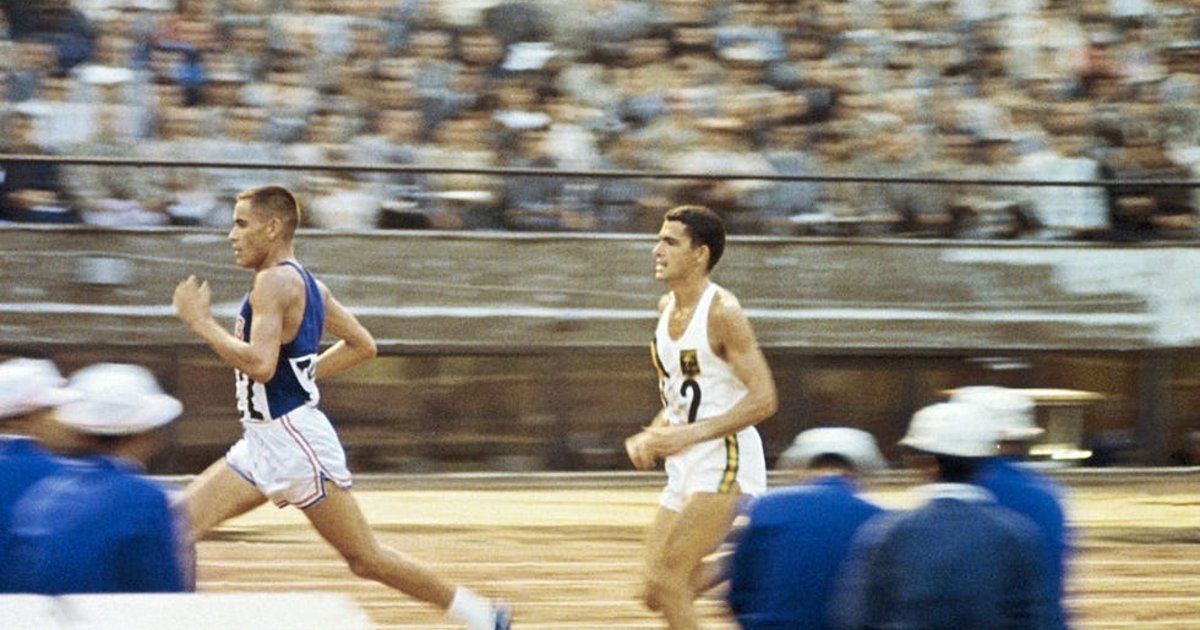
Billy Mills won the Tokyo 1964 Olympic 10,000 metres in 28:24.4. The number records the result; the last straight explains why people still watch it. An American outside the pre-race spotlight found a way past two leading contenders and reached the line first.
There is more here than a clip about believing in yourself. Mills had an established running background, the race presented a specific tactical problem, and his life continued far beyond the medal. Looking at those parts separately gives the performance its scale without turning one extraordinary finish into a workout everyone should copy.
The surprise winner already had a running foundation
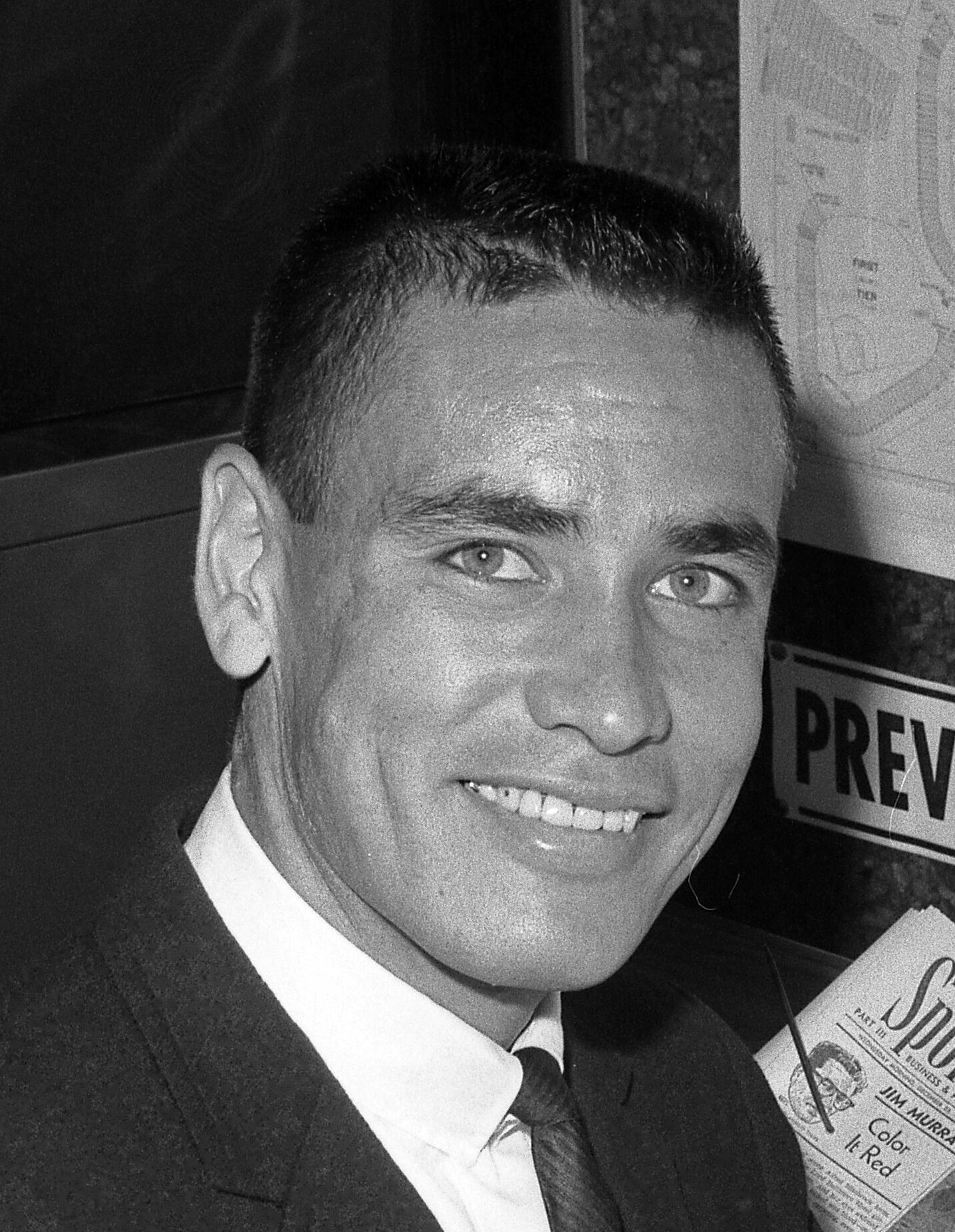
The 1964 portrait accompanying this section shows Mills after his Olympic breakthrough. His running began much earlier: he attended Haskell, competed at the University of Kansas and became a three-time All-American in cross-country. He later trained while serving in the Marine Corps. Being an unexpected Olympic winner did not mean arriving without years in the sport.
That distinction changes the appeal of an underdog story. A viewer who meets an athlete in the final hundred metres sees the breakthrough but misses the preparation. A reputation is a public measurement of what people expect; a training history is the work that happened before the audience arrived. Those two things can be very different.
Mills was also an Oglala Lakota athlete from Pine Ridge. His background belongs in the account as part of his identity and experience, rather than being reduced to a decorative detail around the finish. An athlete’s life deserves more space than the few seconds in which a result becomes famous.
For a recreational runner, the useful comparison is with your own previous work. A result can surprise other people while still resting on a foundation you know well. Record the training you can repeat and the progress you can measure. Public recognition may arrive late, and sometimes never arrives at all; it is an unreliable substitute for that record.
The final lap required a route through a crowded race
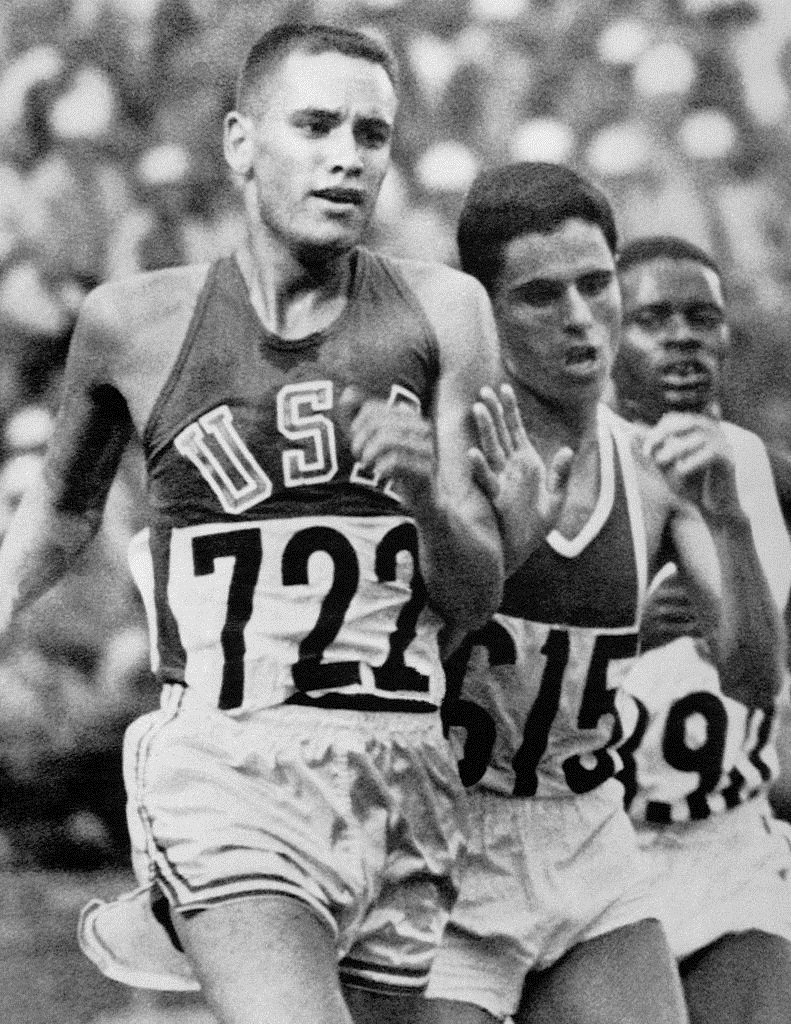
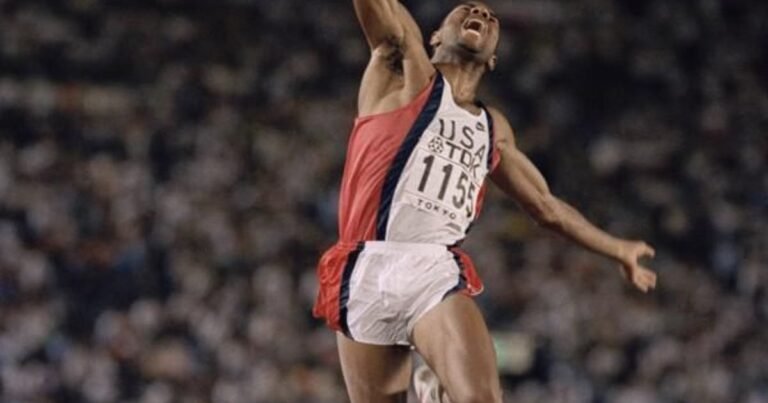
Australia’s Ron Clarke entered as the world-record holder. Tunisia’s Mohamed Gammoudi was another major contender. On the final lap, Mills was displaced outward during contact, while Gammoudi moved ahead. Lapped runners complicated the available routes. Mills eventually came past the leaders on the home straight.
Watch the positions as well as the speed. A finishing kick happens in space: there must be somewhere to run, and the shortest-looking line is not always the clearest available line. From a broadcast camera, gaps can look obvious after they have opened. That does not show exactly what an athlete could see a few strides earlier.
The visible change in order is enough to make the finish remarkable. It does not require assigning motives to contact, deciding what every runner was thinking, or claiming that one choice guaranteed victory. Those extra explanations often make a sports story tidier while making it less accurate.
A useful companion is MMP’s account of Lasse Virén recovering from his Munich fall. The incidents were different, but both races show why a setback inside a race and the finishing result need separate descriptions. Restoring the remaining distance helps explain the recovery; a single still image cannot supply that sequence.
Four-tenths of a second separated gold and silver
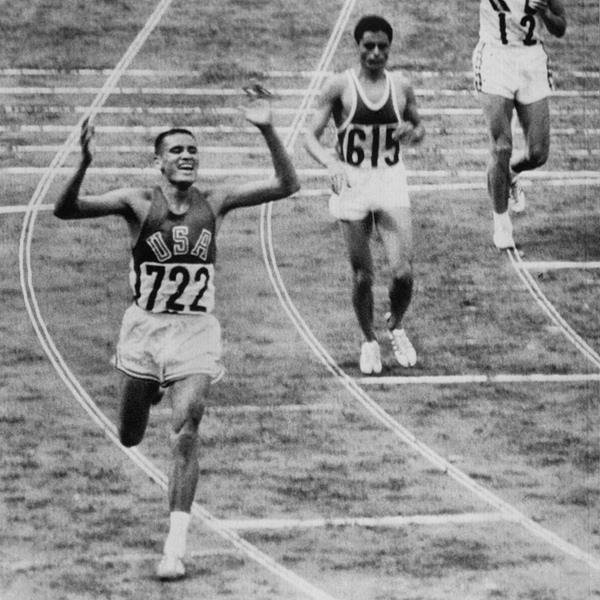
Mills’s winning 28:24.4 was an Olympic record. Gammoudi finished in 28:24.8, with Clarke third in 28:25.8. The recorded margins were therefore 0.4 seconds from first to second and 1.4 seconds from first to third. These are the listed hand-timed results, not newly reconstructed electronic splits.
| Place | Runner | Recorded time | Behind winner |
|---|---|---|---|
| 1 | Billy Mills | 28:24.4 | — |
| 2 | Mohamed Gammoudi | 28:24.8 | 0.4 seconds |
| 3 | Ron Clarke | 28:25.8 | 1.4 seconds |
The race covered 25 laps. Dividing 1,704.4 seconds by 25 gives an average of 68.176 seconds per 400 metres, or about 2:50.44 per kilometre. These calculations describe the whole performance. They do not mean Mills ran each lap at that speed or that his final lap matched the average.
The distinction matters when a short clip circulates without its clock. A dramatic pass tells you that the order changed; the finishing table tells you how close the result remained. Neither provides a complete account of the distribution of effort over the previous kilometres. Enjoying the finish and reading the numbers are complementary ways to understand it.
Keep any comparison consistent. A ten-kilometre average, a single lap and a short sprint are different measurements. Converting them into common units can clarify scale, but it cannot recreate an athlete’s fatigue or the exact conditions under which the time was run.
A famous kick does not provide a complete training programme
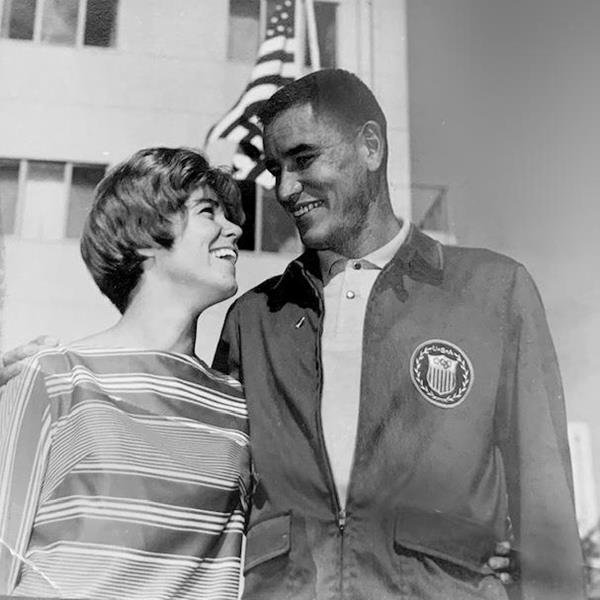
The photograph here shows Mills with his wife Patricia at the Olympic village after the victory. It belongs to the wider story around the race, rather than serving as evidence of a particular workout. Likewise, a recollection of preparation supplies context without revealing every session, progression and recovery decision.
Mills later described adding speed work to his preparation. That detail helps explain why his finish should not be treated as an unexplained gift appearing on race day. It still leaves many unanswered programming questions: how much fast running, how often, what surrounded it, and how the workload changed over time?
If you want to examine your own training through this story, start with a question rather than an imitation. Are you trying to improve your overall race time, practise finishing strongly, or simply make regular running fit your week? Those aims can overlap, but a session chosen for one purpose should not quietly become a test of all three.
MMP’s guide to Kipchoge’s easy-running effort and the limits of copying elite mileage develops the same distinction between a professional example and a personal starting point. A historical champion can give you an interesting question to investigate without supplying the answer for your own schedule.

Cardio Shirts & Workout Gear
Cardio and conditioning gym gear for runners, endurance athletes and anyone who earns the sweat.

Don't Quit Do It – Motivational Jumper Pullover For Wor T-Shirt
Show some gym-day personality with “Don't Quit Do It”.


Cardio Is Hardio – Workout Meme Vest Muscle Shirt For S Tank Top
Add some cardio attitude to training with “Cardio Is Hardio”.

Everything Hurts And I'M Tired Motivation Hooded Hoodie
Stay casual and show some cardio attitude with “Everything Hurts And I'm Tired”.

Exercise Your Demons Gym | Funny Workout From Hell Hood Hoodie
Keep it laid-back with a little “Exercise Your Demons” attitude.

Straight Outta Shape – Out Of Shape Meme T-Shirt
Add a playful “Straight Outta Shape” touch to your casual rotation.

Negative Cardio Review Cardio Sucks 1 Star Decal Sticker
Give your everyday gear a playful “Negative Cardio Review” twist.

Anti Running Club Tee
Heavy lifts, good laughs, and a little “Anti Running Running Club” energy.

Death By Cardio Shirt Meme & Top T-Shirt
Bring “Death By Cardio” humor to your next gym day.

Cardio Is Calling Decline Decal Water Bottles Meme Sticker
A fun “Cardio Is Calling” touch for bottles, laptops, and lockers.
Mills’s legacy continued beyond the finishing tape
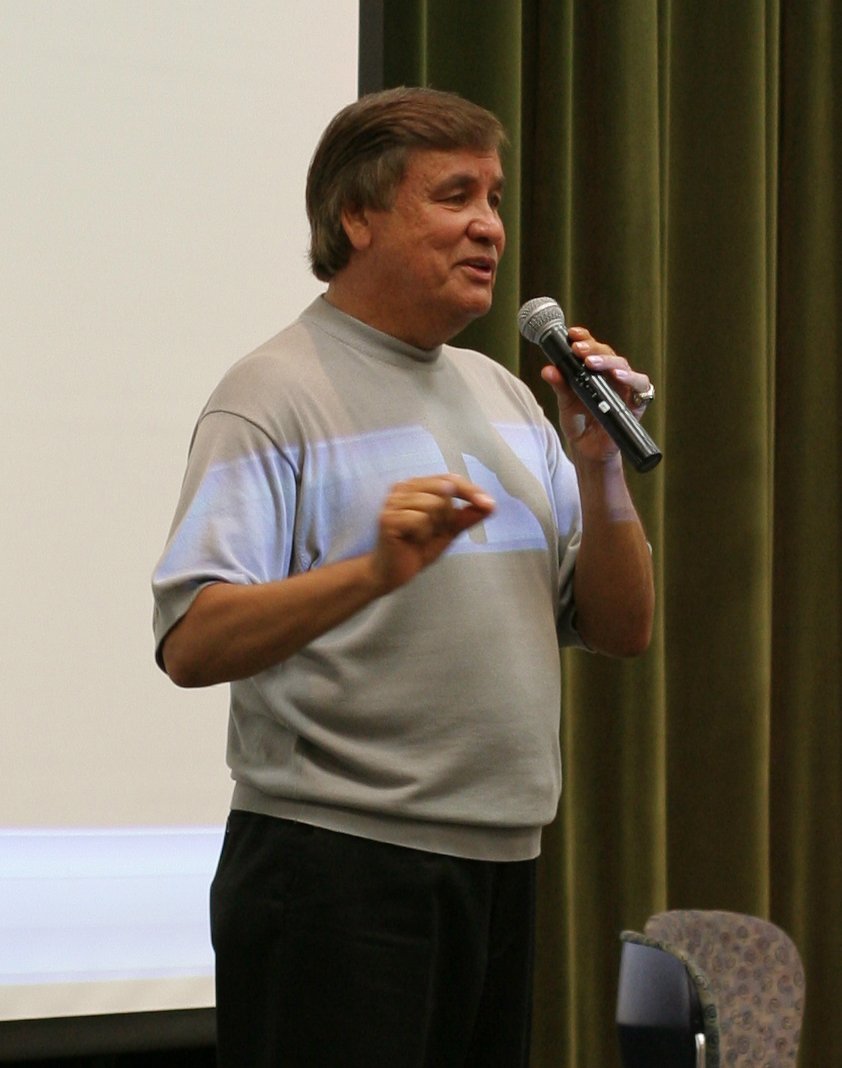
Mills later co-founded Running Strong for American Indian Youth with Gene Krizek in 1986. The organisation’s work includes support for Native communities and young people. His later speaking and advocacy are a different kind of achievement from an Olympic placing, and deserve to be considered alongside it.
That longer view changes the familiar sports ending. Winning is often presented as the final resolution, after which the athlete disappears from the story. In Mills’s case, the visibility created by the race became part of a much larger public life. The medal supplied a platform; it did not contain everything he would do with it.
For fitness readers, that is an invitation to give achievement more than one timescale. There is the moment of a result, the preparation that made participation possible, and what you choose to do afterwards. A personal best can matter deeply without being the only worthwhile thing your involvement in sport produces.
The finish remains worth watching for its speed, uncertainty and sudden change of order. It becomes more meaningful when the athlete is allowed to remain a person before and after those seconds. Mills’s Tokyo victory is a remarkable race in its own right, with a life around it that no highlight reel can hold.