Swimming and cycling can both raise your heart rate without adding another pounding run. But they are not interchangeable workouts, and neither should automatically replace the running that prepares your legs for the road. The useful question is not which sport wins a generic fitness contest. It is which one supplies the training effect you need while leaving you able to recover for your next important run.
That choice changes with your experience, your injury history, your swimming skill and the purpose of the day. A confident swimmer may find 30 minutes in the pool genuinely restorative; a beginner may spend the same time gasping between lengths. A gentle spin can preserve aerobic routine, while a hard hill ride can leave your quadriceps too tired for tomorrow’s intervals. Here is a practical way to make those tradeoffs deliberately.
What carries over from other cardio to running?

Your heart and circulation respond to sustained aerobic demand whether you create it by running, pedaling or swimming. That is why cross-training can help preserve general endurance when you want fewer running impacts. The transfer is not complete, however. Running also depends on elastic energy storage, foot and ankle stiffness, stride coordination, and the ability of muscles and bones to tolerate repeated landings. A swimmer can be extremely fit and still feel surprisingly sore after a long run.
A 2026 review pooled seven controlled trials comparing running and cycling training. It found no clear between-group difference in measured aerobic capacity or running time-trial outcomes, but the confidence intervals were wide and the underlying protocols varied. The sensible reading is uncertainty, not proof that cyclists can replace all runs without consequence. Earlier experiments have also shown that adding swimming can improve running performance, although running-specific training tended to provide stronger gains in some measures.
Think of fitness as two overlapping capacities: the engine that supplies oxygen and the chassis that survives running. Cross-training is particularly good at feeding the engine while reducing repetitive foot strikes. It does much less for the chassis. That distinction explains why you can preserve cardiovascular confidence on a bike during a temporary running reduction yet still need a measured return to pavement.
Swimming: high aerobic potential, very low leg impact
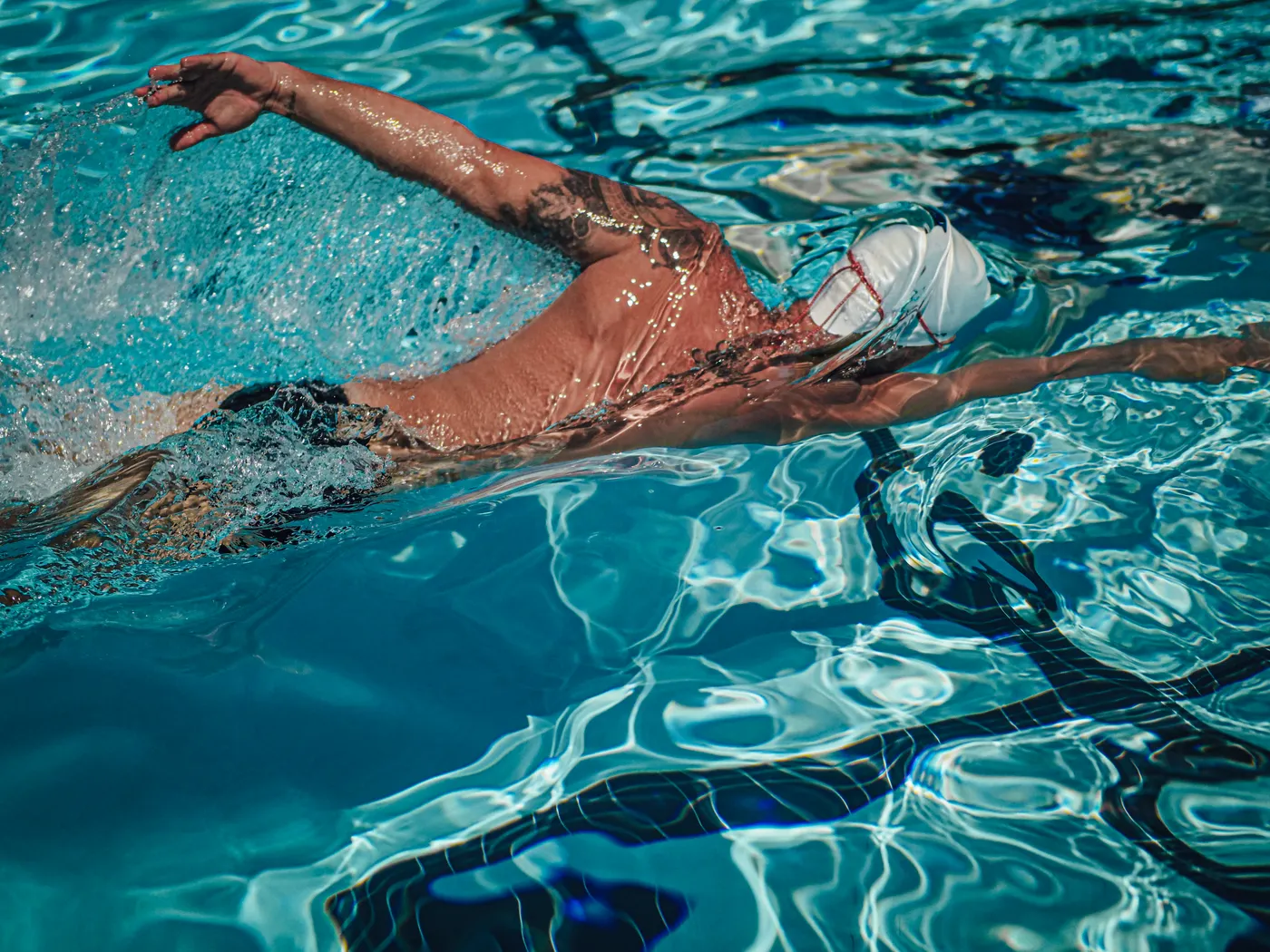
Swimming unloads the lower body and distributes work through the shoulders, trunk and legs. It is useful when your running week already contains enough impact, and it offers a change of movement that some athletes find mentally refreshing. Because the water supports your body, an easy pool session can be an attractive alternative to another recovery jog when your calves and feet need a break.
The limitation is technique. Breathing rhythm, body position and stroke efficiency can become the bottleneck long before your cardiovascular system reaches the intended training intensity. If you can barely complete two lengths, an ambitious continuous swim is not the same as a steady aerobic run. Use short repeats with generous rests and gradually increase uninterrupted time as your stroke improves. Exhaling into the water and turning to breathe should feel controlled, not frantic.
For an easy aerobic replacement, try five minutes of comfortable warm-up swimming, then eight to twelve rounds of one or two relaxed lengths separated by 20 to 40 seconds of rest. Build toward 20 to 35 minutes of smooth swimming as technique permits. A practiced swimmer can instead use continuous easy laps or sets such as six rounds of three minutes comfortable and one minute easy. The goal is steady breathing and manageable effort, not chasing a pace that forces poor form.
Swimming is not automatically safe for every injury. Repeated overhead strokes can aggravate some shoulder problems, and a painful leg kick may still matter for certain conditions. Choose a pain-free stroke and seek individual clinical guidance when an injury is the reason you stopped running. A pool session should solve a load-management problem, not create a new one.

Equipment Worth Exploring
Explore equipment, accessories and gear from our carefully selected range.


Apple Watch Ultra 3
Rugged 49 mm smartwatch with cellular connectivity, GPS and fitness tracking.

Powerbeats Fit
Secure-fit wireless workout earbuds with active noise cancellation and a charging case.


VOLTRA
Compact digital cable trainer with smooth, adjustable resistance.

Go-Tone Pro
Portable digital cable trainer with up to 66 lb (30 kg) of adjustable resistance.

Cycling: easy-to-dose aerobic work with more leg involvement
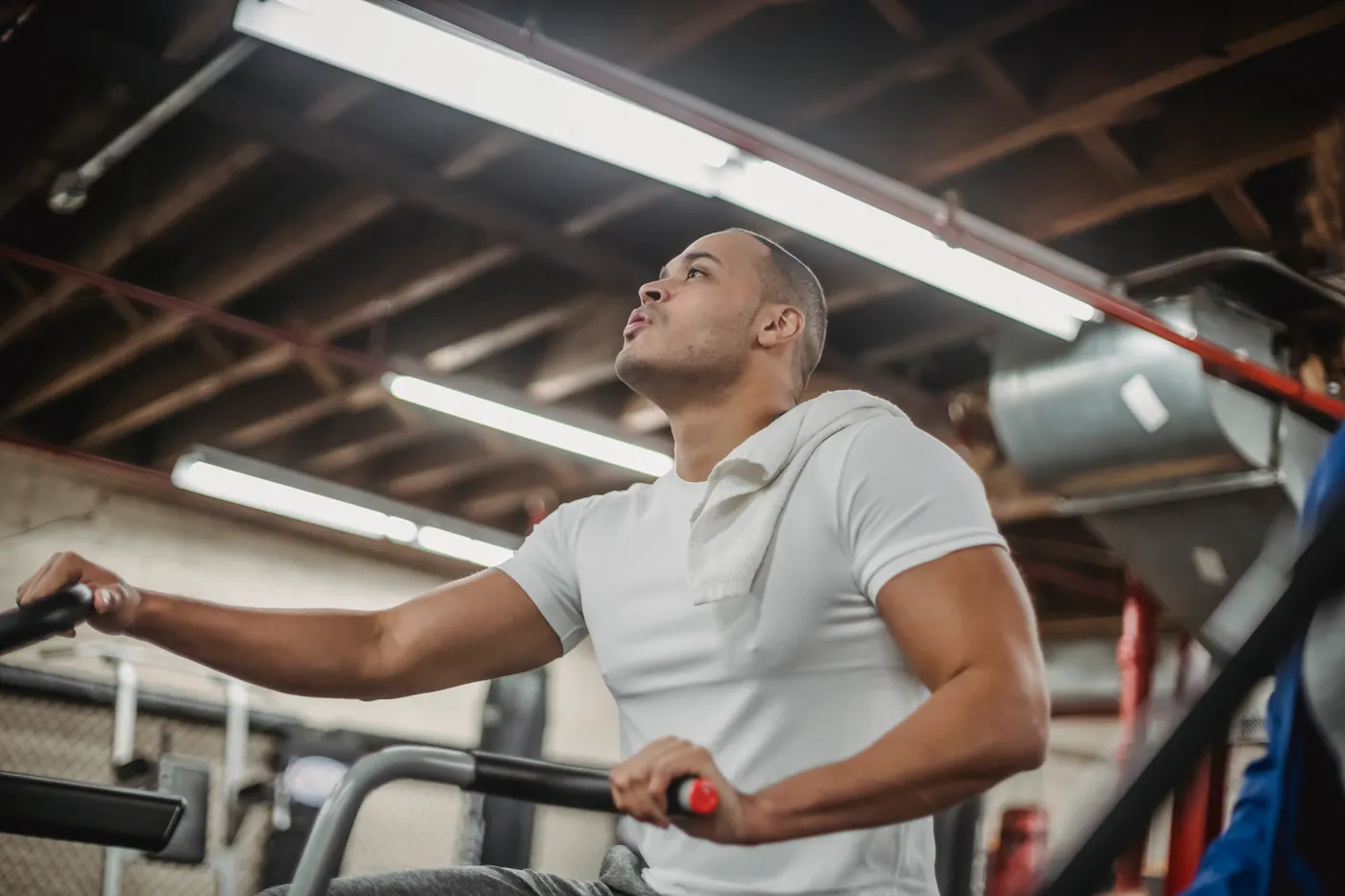
Cycling usually has a gentler learning curve than lap swimming. A stationary bike makes duration, cadence and resistance straightforward to control, while outdoor cycling adds route, traffic and weather variables. The quadriceps, glutes and calves contribute to pedaling, so it can feel more familiar to runners than moving through water. Yet the joint angles, muscle timing and lack of landing forces are different from running.
The most useful cycling session is often the one you finish without residual leg fatigue. Try 30 to 50 minutes at a conversational effort, using a gear that lets you pedal smoothly rather than grind against heavy resistance. On a stationary bike, moderate cadence and a comfortable saddle position generally make the workout easier to repeat. If your goal is to protect a quality run tomorrow, avoid turning a supposedly easy ride into an unplanned threshold session.
Hard cycling has a place too. Four to six controlled efforts of two to four minutes, with easy pedaling between, can challenge the cardiovascular system without the landing forces of running intervals. But low impact is not low stress. Hard bike work still consumes recovery capacity, and a steep climb can leave the same muscles you need for hill repeats tired. Count it as a demanding session, not as free extra fitness.
For an injured runner, cycling may preserve routine and conditioning when permitted, but pain-free pedaling is not proof that the injured tissue is ready for running. The progression back should depend on symptoms, function and medical guidance, not on a watch reporting an impressive aerobic score. For healthy runners, the bike is best viewed as an adjustable supplement that can increase total aerobic minutes without requiring every minute to be run.

Cardio Shirts & Workout Gear
Cardio and conditioning gym gear for runners, endurance athletes and anyone who earns the sweat.

Triathlon – Iron Man Medieval Knight Swim Bike Run Shir T-Shirt
Make gym days more fun with “Triathlon” style.

Hybrid Athlete – Iron Man Medieval Triathlon Muscle Shi Tank Top
Bring “Hybrid Athlete” humor to your next lifting session.

Iron Man Triathlon Crewneck Pullover Sweater for Swim B T-Shirt
Add a playful “Iron Man Triathlon” touch to your casual rotation.

Cardio Heartbeat for Runners, Cyclists, Rowers and Fitn Sticker
Give your everyday gear a playful “Cardio Heartbeat” twist.

Rowing – Dost Thou Even Row Medieval Knight Pullover fo Hoodie
Show off your medieval humor in a laid-back “Rowing” hoodie.

Running Dost Thou Even Trot Medieval Knight Treadmill D Sticker
Give your everyday gear a playful “Running” twist.

Dost Thou Even Pedal Medieval Air Bike CrossFit Parody Sticker
Give your everyday gear a playful “Dost Thou Even Pedal” twist.

Anti Swimming Club Shirt Meme & Top T-Shirt
Make gym days more fun with “Anti Swimming Club” style.

Shirt Cardio Kills Meme Top T-Shirt
Show some cardio attitude with a playful “Cardio Kills Meme” tee.

Death By Cardio Shirt Meme & Top T-Shirt
Bring “Death By Cardio” humor to your next gym day.
Why running-specific tolerance still matters
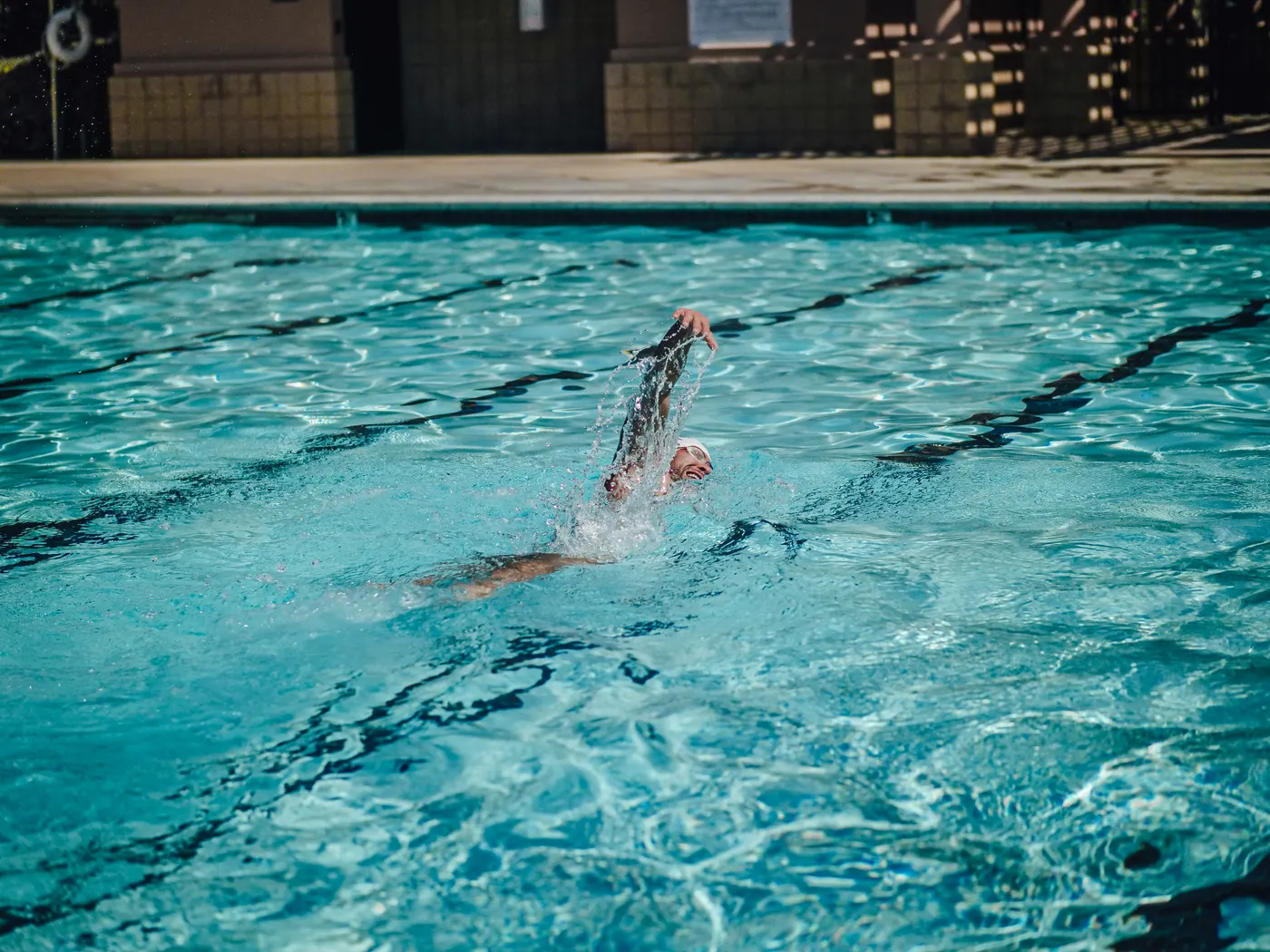
The danger of relying entirely on low-impact exercise is a mismatch between your cardiovascular readiness and your legs’ tolerance for repeated impacts. You may feel capable of a long fast run because swimming or cycling kept your breathing comfortable, yet your feet, calves and connective tissues have not practiced that much landing. Fitness can return faster than tissue tolerance, especially after a break.
That is why replacing two runs with two swims is not an exact one-to-one exchange. For an athlete managing a minor running-volume reduction, cross-training can help preserve aerobic workload. For an athlete rebuilding after injury, the next step is usually a gradual exposure to running itself when cleared, not an abrupt return to the previous mileage. Begin with manageable bouts, monitor the next-day response and increase only one demanding variable at a time.
A small experiment involving competitive female distance runners compared five weeks of running-only training with a schedule that replaced about half the running with cycling. Neither group showed an important decline in estimated aerobic capacity; the study was far too small to establish universal equivalence. Its value is showing that a temporary substitution can be plausible, not providing a permanent formula for everyone.
Keep at least some easy running in a healthy runner’s week if race performance is the goal. If you are unable to run because of pain, follow a suitable rehabilitation plan and use approved cross-training to stay active. Do not force painful landings simply to satisfy a mileage target. A sensible return is measured by what you can repeat comfortably, not by a single heroic workout.
Match the cross-training session to the purpose of the day

Start with the question: what was this session supposed to accomplish? If it was an easy recovery day, the replacement should be easy enough to support recovery. If it was an aerobic-volume day, aim for sustainable continuous work. If it was a hard interval day, a demanding swim or ride may substitute for some cardiovascular stimulus, but it still counts as a hard day in your weekly stress budget.
Easy-day option: 20 to 40 minutes of relaxed cycling or a technique-focused swim with breaks. Keep breathing comfortable and finish feeling as though you could have continued. Steady aerobic option: 35 to 60 minutes of smooth cycling or 20 to 40 minutes of competent continuous swimming, adjusted to your current skill and conditioning. Hard-day option: a short warm-up, four to six intervals of two to four minutes hard but controlled, generous recovery, then a cool-down. Beginners should start with fewer repetitions.
Do not copy running pace or heart-rate zones mechanically into the pool. Water temperature, body position and stroke skill can change the relationship between heart rate and effort. Cycling also produces different sensations at a given heart rate. Use talk test and perceived exertion alongside any device data. A repeatable moderate session should feel controlled, while hard intervals should be clearly demanding but not a sprint to exhaustion.
For general health, a useful reference point is roughly 150 minutes of moderate aerobic activity per week, or 75 minutes of vigorous activity, plus at least two days of muscle strengthening. These are population health targets, not a personalized marathon plan. A competitive runner may need more specific training, while someone returning from illness or injury may need less at first. The best choice is the one that fits your actual recovery capacity.
Equipment Worth Exploring
Explore equipment, accessories and gear from our carefully selected range.

FID Bench MAX
Adjustable bench offering flat, incline, and decline positions + adjustable headrest.


Leather Lifting Straps
Padded leather straps support grip during heavy rows, deadlifts and pulling exercises.

Keep strength work in the plan without stacking hard days
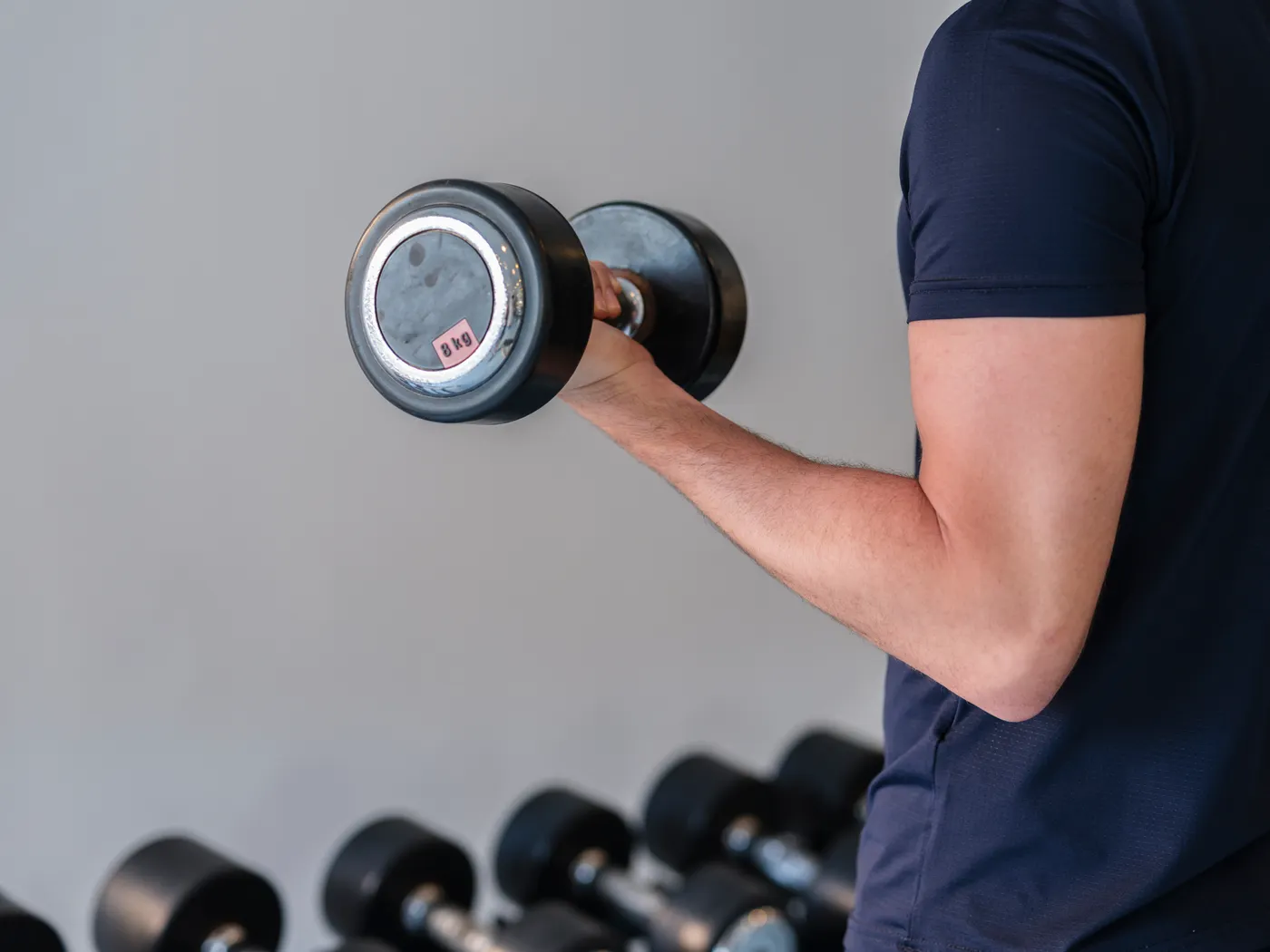
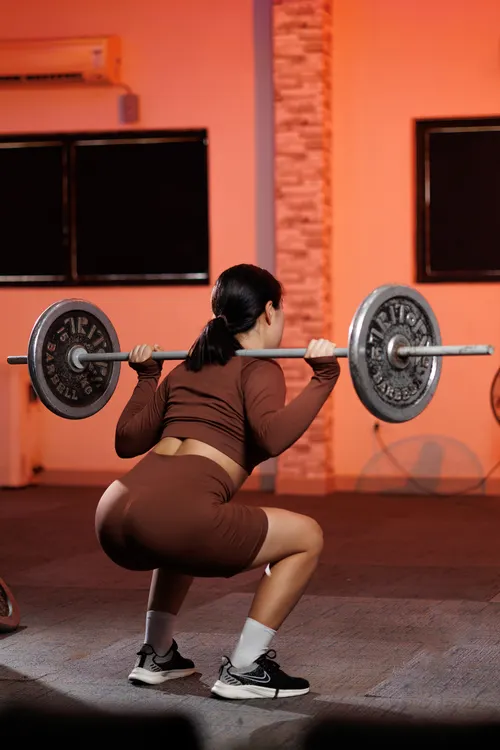
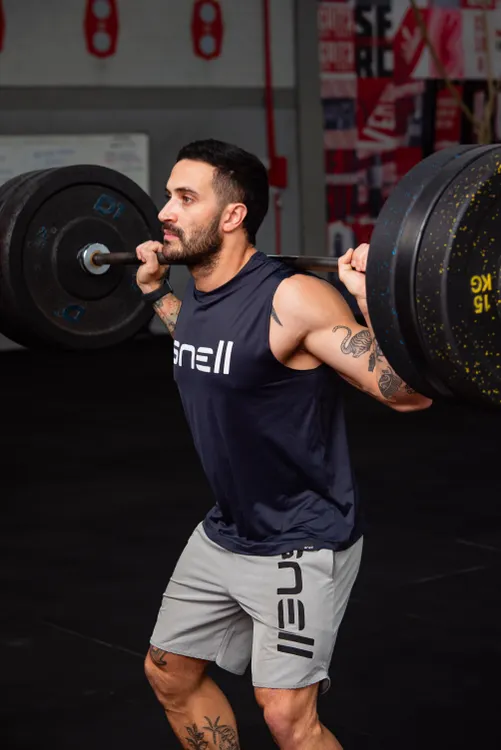
Neither cycling nor swimming fully replaces resistance training. Runners benefit from having enough leg, hip and trunk strength to control forces when fatigue rises, while swimmers and cyclists also use their upper bodies and postural muscles. Two concise strength sessions can support the week without demanding a bodybuilder’s training volume. The aim is consistent useful work, not maximal soreness.
One straightforward session could include a squat or split squat, a hip hinge, a calf raise, a row and a carry. Perform two or three controlled sets per movement, using a load that leaves one to three good repetitions in reserve. On another day, vary the movements with step-ups, a bridge or deadlift variation, a press and a side-plank hold. Begin with modest volume if strength work is new; running, cycling and swimming already place meaningful demands on the body.
Position the heavier lower-body session away from your most important running workout where possible. If you combine lifting with a hard run on the same day, decide which performance matters more and put it first. An easy swim may be pleasant after strength work, but a hard spin class is not automatically recovery just because it has no foot strikes. Look at the total week rather than assigning every exercise to a separate category that somehow does not count.
Equipment can be simple: dumbbells, a resistance band, a stable step and enough space to move well. Calf raises and split squats do not require elaborate machines. Progress by adding a little load, range or control when repetitions remain technically sound. If a movement provokes persistent pain, substitute a tolerable pattern and address the cause rather than pushing through it for the sake of completing a checklist.
Functional Fitness Shirts & Workout Gear
Functional-fitness shirts, tanks and workout gear for athletes who train strength, conditioning and everything in between.


Hybrid Athlete – Strength & Endurance Gym Decal for Run Sticker
Put “Hybrid Athlete” gym humor on your laptop, bottle, or gym gear.

Vive La Resistance Bands – Resistance Bands Warmup Mobi T-Shirt
Rep “Vive La Resistance Bands” humor in and out of the gym.

Gym Is My Happy Place Happy Kettlebell Emoji Hoodie
Show off your gym-girl humor in a laid-back “Gym Is My Happy Place” hoodie.

Kettlebell Heart X-Ray Meme Top T-Shirt
Show some lifting attitude with a playful “Kettlebell Heart X-Ray” tee.

Muscle Mommy Pink Kettlebell Gym Graphic for Women & Fe T-Shirt
Show some gym-girl attitude with a playful “Muscle Mommy” tee.

I Like Because I Love Eating Foodie Meme T-Shirt
Heavy lifts, good laughs, and a little “I Like Exercise Because I Love Eating” energy.

Atlas Kettlebell Earth Meme Greek God Top T-Shirt
Make gym days more fun with “Atlas Kettlebell Earth Lifter” style.

Kettlebell Heartbeat Decal for Water Bottles Laptops Wo Sticker
Put “Kettlebell Heartbeat” gym humor on your laptop, bottle, or gym gear.

Gym Equation Kettlebell Makes Me Happy Meme Crewneck an T-Shirt
Bring “Gym Equation” humor to your everyday gym style.
Two sample weeks—and how to know which is working

Runner prioritizing a faster 5K: Monday easy run and short strength session; Tuesday quality running intervals; Wednesday 35 minutes easy cycling; Thursday easy run with a few relaxed strides; Friday strength plus an optional short easy swim; Saturday longer easy run; Sunday rest or gentle walking. The cycling session adds aerobic practice without crowding the two important run sessions. The swim is optional, not an obligation to collect every available workout.
Runner temporarily reducing impact: Monday 35 minutes comfortable cycling; Tuesday strength adapted to current tolerance; Wednesday a technique-focused 25-minute swim; Thursday 40 minutes cycling with a few moderate efforts if cleared; Friday rest or mobility; Saturday longer easy cycling; Sunday light strength or recovery. This is a general illustration, not an injury rehabilitation prescription. If you have an active injury, your permitted activities and return-to-run schedule should come from an appropriate clinician.
Track three things for four to six weeks: whether you can complete the planned sessions, whether your key runs feel more controlled, and whether fatigue or pain is accumulating. A good cross-training choice leaves you better prepared for the next meaningful workout. A bad one creates extra exhaustion or replaces so much running that your legs are no longer prepared for the event you care about. Make adjustments from those trends, not from one unusually strong day.
The decision rule is simple. Choose swimming when you want minimal leg impact, enjoy the water and can swim efficiently enough to reach the intended effort. Choose cycling when you want convenient, easily dosed aerobic minutes with some lower-body involvement. Use both if you enjoy them, but preserve running-specific exposure when healthy and preparing to race. Cross-training should make the plan more sustainable, not turn every recovery opportunity into another competition.