Advertising disclosure: This page includes affiliate links that may earn us a commission at no additional cost to you.
Teff can turn breakfast into something warmer, nuttier and more substantial than another rushed piece of toast. Its tiny grains cook into a spoonable base, while the flour belongs in a different set of recipes. For someone who trains, the useful questions are ordinary ones: what did you buy, how much went into the pot, what else makes the meal satisfying, and will you enjoy eating it again?
There is no need to replace a familiar staple simply because teff is less familiar. It is an option for changing the texture and flavour of a meal. Start with a small amount and a recipe suited to the form in the bag, then decide whether it deserves a regular place in your kitchen.
Read the portion before comparing the protein
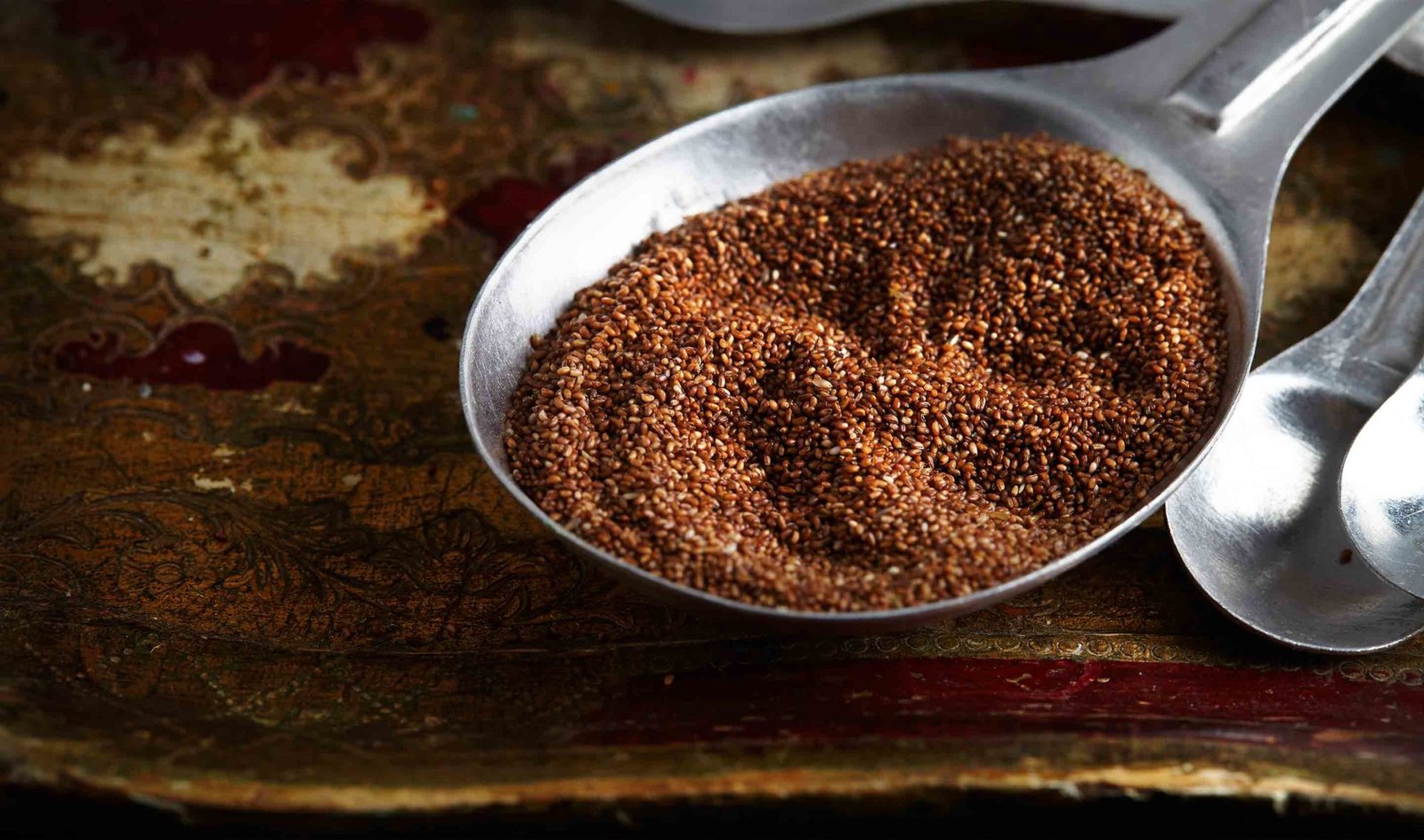
Teff is a very small cereal grain associated with the food traditions of Ethiopia and Eritrea. It comes in colours ranging from pale ivory to reddish and dark brown. Its size makes the dry grains look almost like seeds, but a spoonful of dry teff and a spoonful of cooked porridge are different portions of food.
For one reference point, half a cup of uncooked teff provides approximately 354 calories, 12.8 grams of protein, 70.6 grams of carbohydrate and 7.7 grams of fibre. Those numbers describe an uncooked quantity. They do not mean that every half-cup scoop from a finished saucepan contains the same nutrition. Water changes the cooked weight and volume without adding protein or calories.
If you record meals, use an entry matching what you measured. Weighing the dry grain and dividing the completed batch is often simpler than looking for a cooked entry that may assume a different amount of water. Include milk, oil, nuts, sweetener or other ingredients separately. A grain-only number cannot describe a finished bowl with several additions.
The same distinction applies to other staples. Our guide to barley forms and batch portions explains why the product in the bag matters before comparing meals. Keep the comparison fair: dry against dry, or clearly defined cooked portions against each other, with the rest of the plate accounted for.
Cook the grain for the texture you want
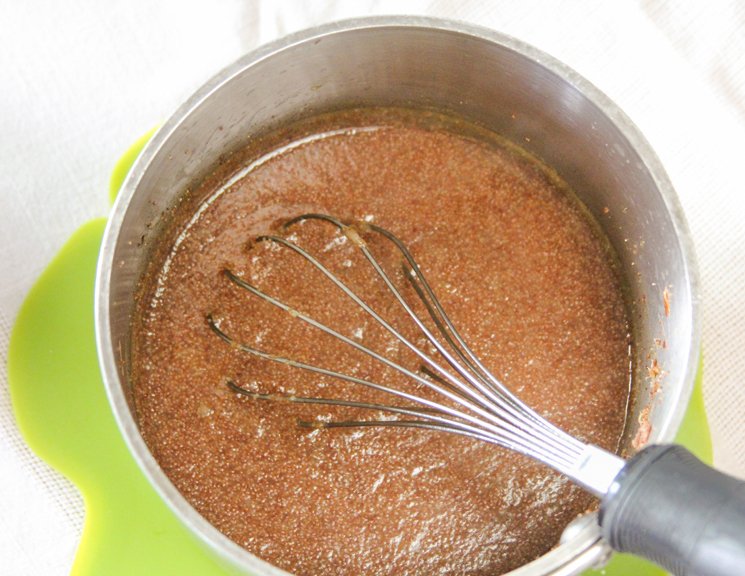
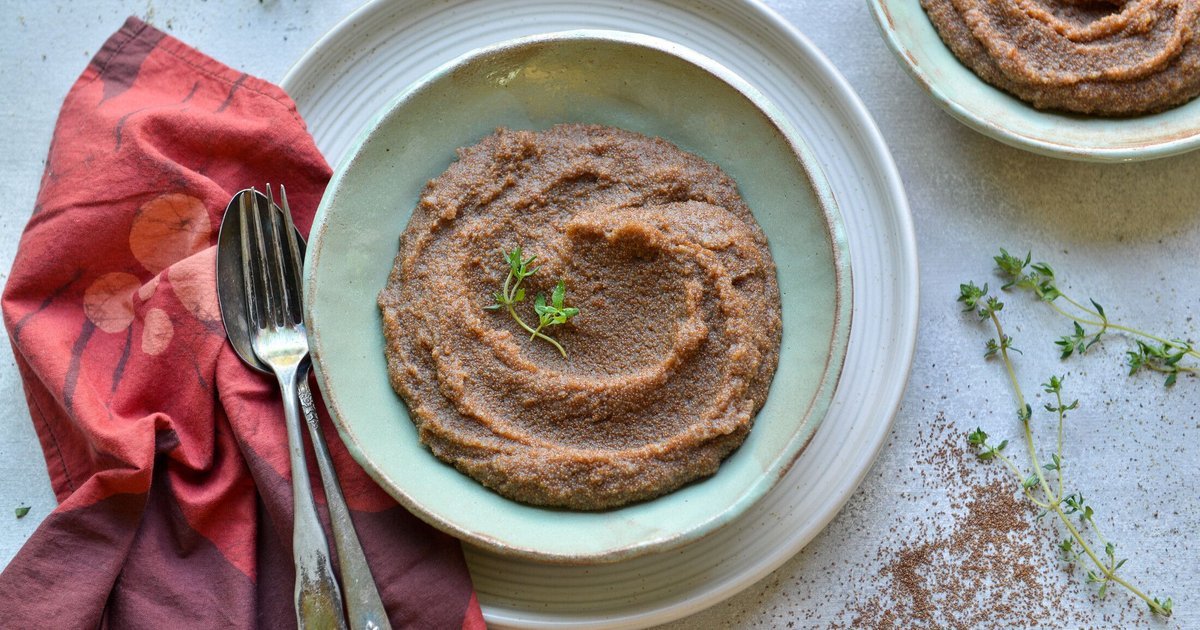
Whole teff can make a soft porridge, thicken a soup or become a firmer base for savoury food. These are different eating experiences. Decide which one you want before treating a saucepan of thickened grain as a failed attempt at fluffy rice. A spoonable result may be the point.
Begin with the directions on your packet or a tested whole-grain teff recipe. Use the specified liquid and heat, stir as instructed and check the texture as it cooks. A small trial batch is more useful than filling your largest pot before you know whether you like the result. Note the grain amount and the liquid you used so the next attempt is repeatable.
For breakfast, a soft base works with fruit and something creamy. For a savoury bowl, season the grain to suit the vegetables, beans, eggs or meat you plan to serve. An unfamiliar grain does not require an unfamiliar flavour combination. You can keep a favourite sauce or seasoning and change just the base.
If you enjoy tiny grains with a softer texture, our amaranth portion and cooking guide offers another option to compare. They are different ingredients, so transfer the idea of testing a small batch rather than assuming the same liquid ratio or cooking time will work for both.
Build the bowl around the whole meal
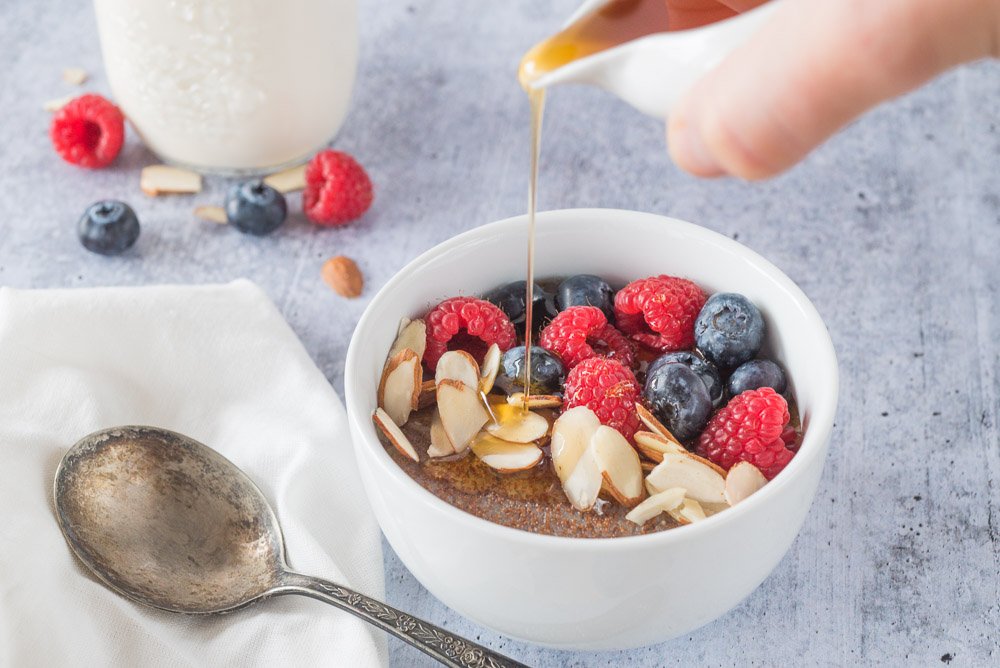
Teff contributes protein, but the finished meal still needs to suit your appetite and training day. A large-looking bowl of porridge may contain plenty of water. Adding a deliberate protein component is more useful than relying on the grain’s reputation to tell you that breakfast is complete.
For a sweet version, consider a serving of yogurt alongside the porridge, or milk or a suitable higher-protein alternative in a recipe designed for it. Fruit adds a different texture and flavour; nuts or seeds can add crunch. These are meal-building options, not a requirement to pile every topping into one bowl. Pick the additions you want and count the actual quantities when that matters to your plan.
For savoury food, teff can sit beside lentils, beans, tofu, eggs, fish or meat and vegetables. The portion of each component determines the meal. A photograph of an attractive bowl cannot establish its protein content, and adding the word “fitness” to a recipe does not change the ingredients.
Make changes with a purpose. If breakfast leaves you hungry, consider the whole serving and its protein component. If it feels too heavy before training, a smaller portion or a different time may be more comfortable. You do not have to force a new food into the meal closest to your workout just because you bought it for a training-focused diet.

Bodybuilding Shirts & Workout Gear
Bodybuilding shirts, tanks and gym gear for lifters chasing muscle, size, symmetry and the pump.

I So I Can Eat Cookies Hooded Hoodie
Bring “I Workout So I Can Eat Cookies Hooded” gym humor to lazy days and post-workout plans.

Protein Monster Decal Protein Lovers, & Bros Sticker
Stick a little “Protein Monster” humor on your favorite gear.

Chicken Broccoli Rice Breaking Bad Meme Sweater & T-Shirt
Show some gym-day personality with “Chicken Broccoli Rice”.

Broccolift Eat Broccoli Lift Gains Meme Vest Tank Top
Add some meal-prep attitude to training with “Broccolift”.

Bear Protein : Hilarious Meme T-Shirt
Add a playful “Gym Bear Protein” touch to your casual rotation.

Protein Shake Hooded & Meme Fans Hoodie
Show off your lifting humor in a laid-back “Protein Shake” hoodie.

Lift Eat Repeat – Weightlifting & – Meme Bros & T-Shirt
Make gym days more fun with “Lift Eat Repeat” style.

Protein Power Cereal Tee
Heavy lifts, good laughs, and a little “Protein Power Cereal” energy.

This Is Your Body On Protein Shirt – Meme & Top T-Shirt
Bring “This Is Your Body On Protein” humor to your next gym day.

Shirt Protein Addicts – , Meme , Top Gymbros T-Shirt
Heavy lifts, good laughs, and a little “for Protein Addicts” energy.
Teff flour needs its own recipe
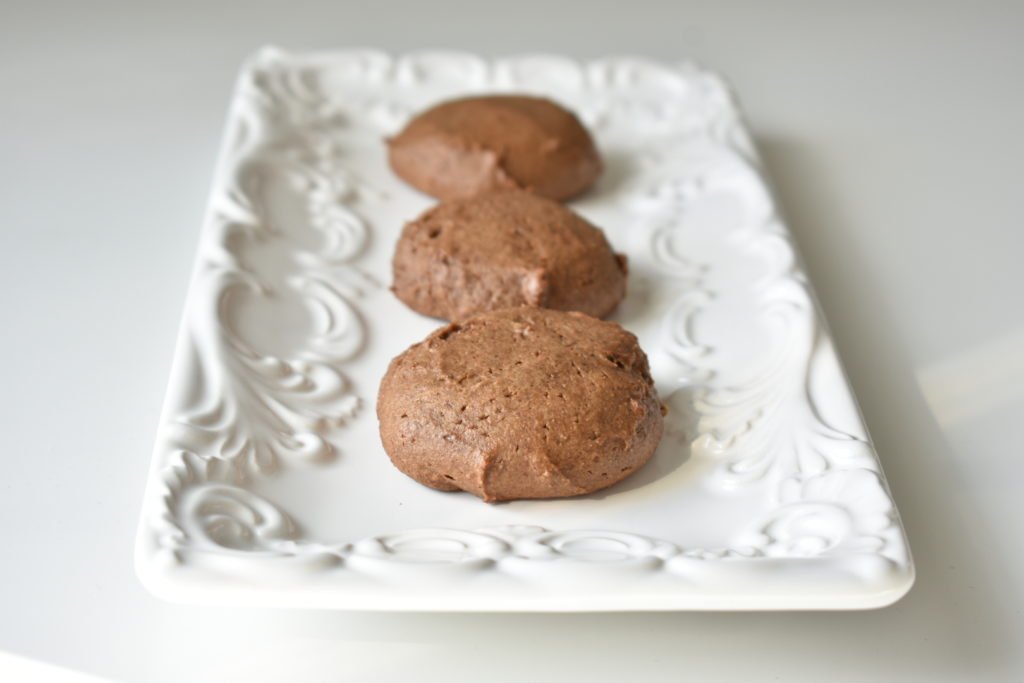
Grinding the grain into flour changes how it behaves in the kitchen. Flour can become part of pancakes, bread, biscuits and other baked foods. It is not interchangeable with whole grains in a porridge recipe simply because the starting crop is the same. Follow a recipe written for the form you have.
Teff does not contain the gluten that gives wheat dough much of its structure. Replacing all the wheat flour in a favourite loaf with teff therefore changes more than the colour or flavour. Begin with a tested teff or gluten-free baking recipe rather than assuming a direct swap will produce the same result. Other ingredients may be doing important structural work.
Keep nutrition claims attached to the finished food. A biscuit made with teff flour may also include sugar, butter, oil or nut butter. Its ingredients and serving size determine what it adds to your day. Using a different flour does not remove those components or turn a baked snack into the equivalent of plain cooked grain.
You can still enjoy those foods without dressing them up as a training necessity. Choose a recipe because you like the result, portion it sensibly and let ordinary meals do their job. The same approach works whether you are trying a breakfast pancake or baking something to share: start with flavour and texture, then assess the actual recipe.
Check injera ingredients and plan the next serving
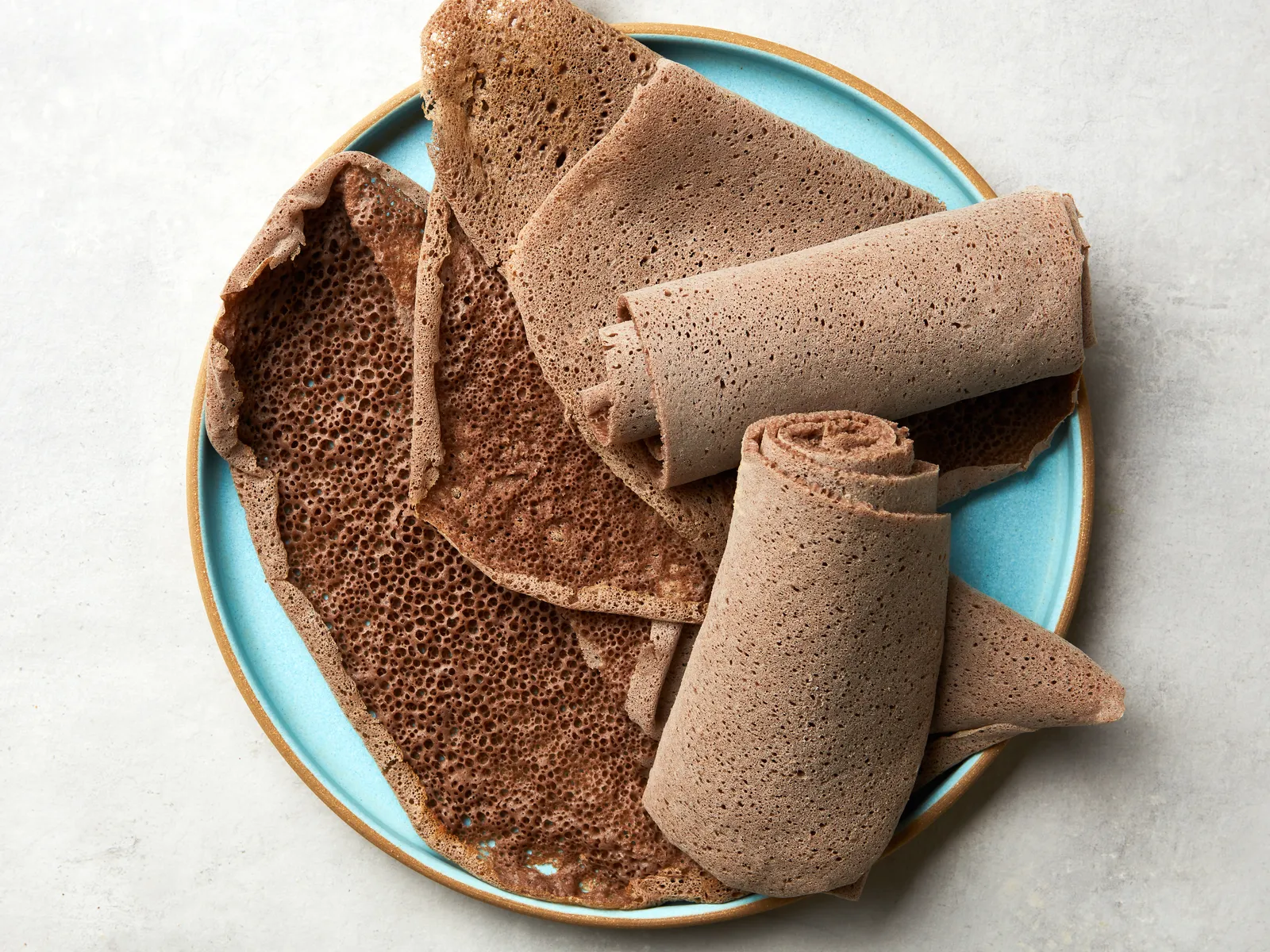
Teff is closely associated with injera, the soft, porous flatbread made through a fermented preparation. It is a different food from a saucepan of cooked grain. The flour, fermentation process and finished serving all matter. Treat injera as a recipe or purchased product with its own ingredients rather than assigning it the numbers from a dry-grain entry.
Teff itself is naturally gluten-free, but that does not establish the ingredients of every bread or packaged mix carrying its name. Read the full ingredient list and relevant gluten-free information if avoiding gluten is necessary for you. A blend containing wheat or barley has a different profile from pure teff. The name of one ingredient on the front of a packet is only part of the information.
For batch meals, keep dry grain sealed in a cool, dry place and plan cooked food for prompt refrigeration. Use clean, covered containers and keep the refrigerator at 4°C or below. For a conservative household routine, plan refrigerated cooked meals within three to four days and freeze portions you will need later. Follow a shorter limit when another ingredient or its instructions require it.
Label the batch with its date and contents. If you are dividing a recipe, record the total ingredients before portioning so you can repeat it without guessing. That small piece of organisation is often more useful than debating which grain is best. Teff earns a place when it gives you a meal you like, can prepare reliably and are happy to eat again.