Advertising disclosure: This page includes affiliate links that may earn us a commission at no additional cost to you.
MonkeyFeet puts a dumbbell at your foot instead of in your hand. That opens up a different way to arrange lower-body accessories in a small training space, but the useful buying question comes before the exercise list: will the clamp, dumbbell and shoe work together?
The current MonkeyFeet 2.0 has changes to its padding, heel platform and straps. This guide looks at fit and practical use, rather than reporting a hands-on test. Start with the equipment you already own and the movement you want to train. A compact attachment earns its place when those two things line up.
Understand what a foot-mounted dumbbell changes
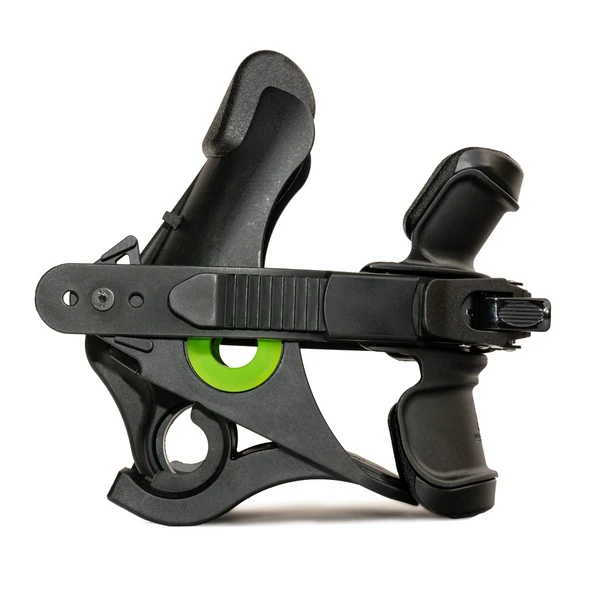
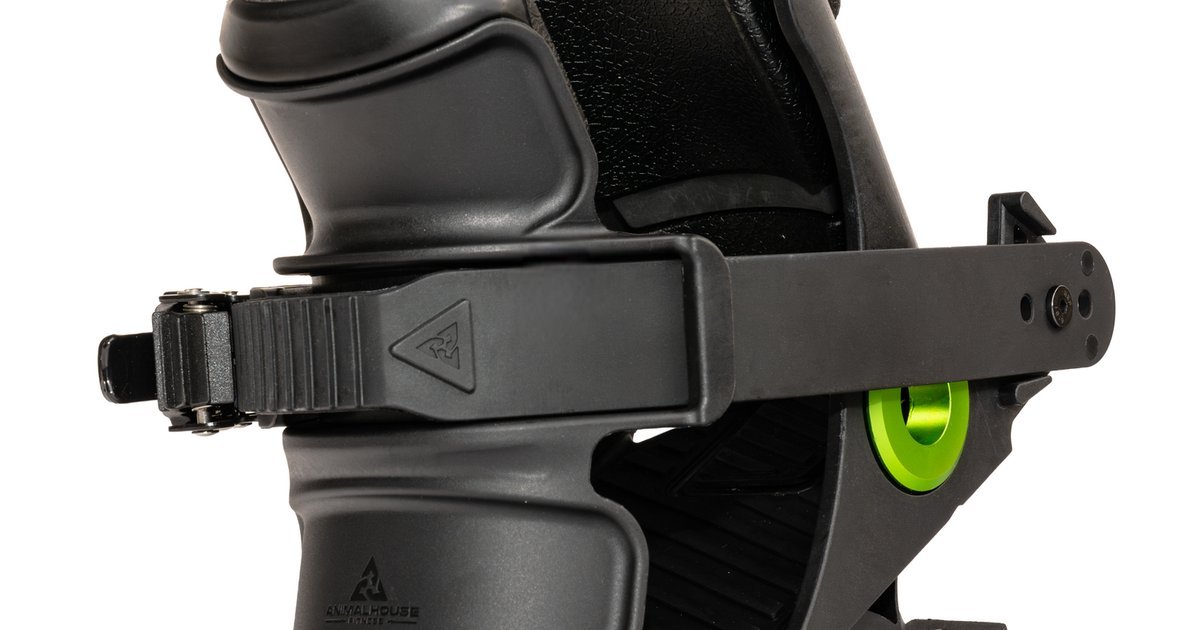
MonkeyFeet secures a dumbbell to a foot through a clamping frame and adjustable straps. The unit works on either foot and is sold individually, with a pair option also listed. Check the selected package instead of assuming that a product photograph means two units are included.
Think of it as a way to position a free weight. It does not supply a seat, backrest or machine arm that guides your leg. You still have to arrange your body support, find clearance for the dumbbell and finish the exercise without losing control of the load. Those practical details matter more than the number of exercises an attachment can appear in.
The difference is easy to picture with a curl. Bending your knee moves the foot and its attached weight through an arc. A cable cuff connects your leg to a separate line of pull, while a machine has its own lever and support. All three can involve knee flexion, but their setup and loading are different. The same number on a dumbbell and a weight stack does not make them equivalent.
Choose the task first: an extra knee-flexion exercise, a way to load a controlled leg lift, or a compact alternative when there is no room for another station. That gives you something specific to evaluate. Buying an attachment because it can appear in many demonstrations leaves the more important question unanswered: which exercise will actually stay in your routine?
Measure the dumbbell handle before buying
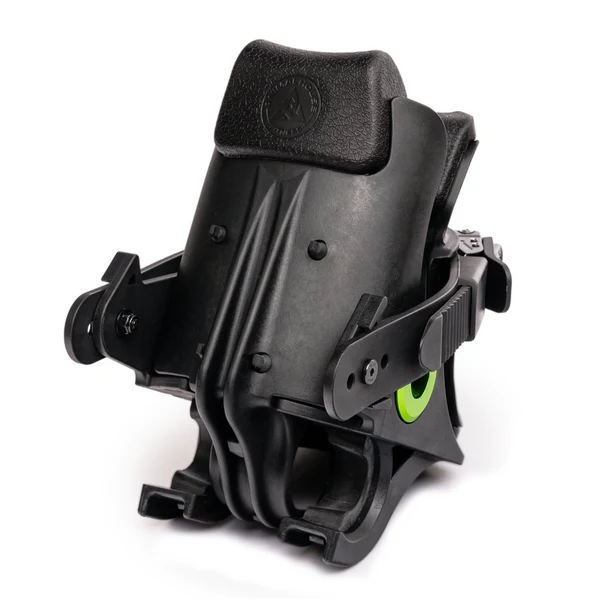
The listed handle requirements are at least 5 inches of width and no more than 1.45 inches in diameter, approximately 127 mm and 37 mm. The manufacturer specifically excludes PowerBlock dumbbells because the clamp cannot access their enclosed handle.
Measure the usable handle space between the dumbbell heads, rather than its total length. Then look at the shape around that space. A dimension that sounds suitable on paper does not establish that the clamp can approach, close and sit correctly around a particular adjustable mechanism. Do not treat a familiar brand name as a compatibility check.
Adjustable dumbbells deserve an extra look at every configuration you intend to use. Plates, selectors and removable components may change the available space. Our guide to QuickDraw handle space and load changes shows why usable dimensions can vary with the setup. It does not establish MonkeyFeet compatibility for that dumbbell; use the actual attachment instructions and confirm the combination.
Check the complete dumbbell as well as the handle. Its ends need room to move without catching the floor, bench or your other leg. A compact handle can still be attached to wide heads. Before adding substantial resistance, rehearse the intended movement lightly and check the entire path. A purchase that saves storage space can still demand a surprisingly large working area.
Check the shoe, heel and current 2.0 parts
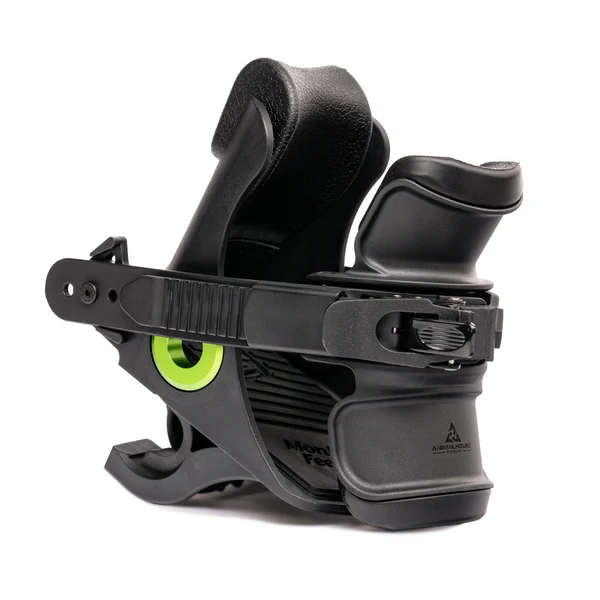
The stated shoe fit covers most US men’s sizes up to 14, with a maximum shoe width of 3.5 inches, or 89 mm. Smaller heels are preferred. These are fit limits, not a promise that every shoe carrying the same size label will sit equally well.
Use the footwear you intend to train in when considering the fit. A bulky heel, wide sole or unusual upper changes the shape that has to sit inside the frame. Comfort while standing beside the equipment also tells you little about how securely the shoe will feel when the weight changes direction. Check for movement within the binding during a light rehearsal.
The listed 2.0 changes include a replaceable rear foam pad, thicker padding, a wider heel platform, strap limiters and two sets of clamp pads for flat or curved handles. Treat those as construction details. They do not demonstrate a particular improvement in muscle growth, joint health or your own comfort under load.
Keep the exact model in mind when ordering replacement parts or following a setup demonstration. MonkeyFeet and MonkeyFeet Pro are separate listings. An older accessory, a similarly named pad kit or a photograph of another version is not enough to establish compatibility. Follow the instructions for the unit in front of you, and ask the manufacturer about any uncertain combination before improvising a fastening arrangement.
Make the movement repeatable before adding weight
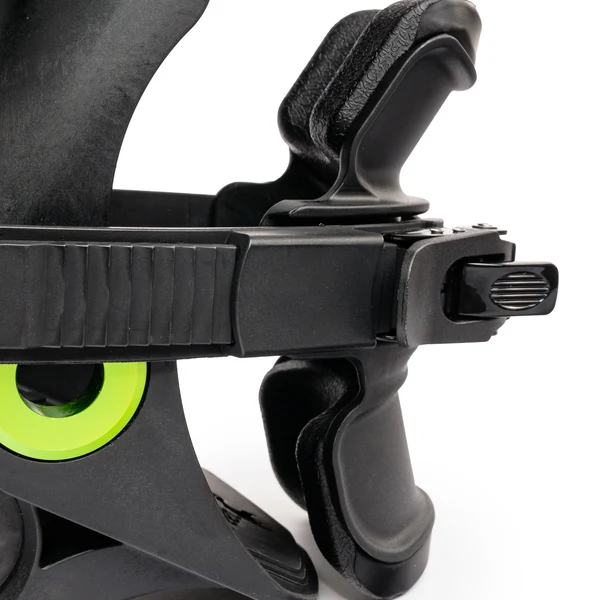
For a standing hamstring curl, use a stable support, keep the standing foot planted and bend the working knee without turning the movement into a whole-leg swing. Return under control. Start with a manageable load that lets you practise the setup, rather than borrowing the dumbbell you use for an unrelated exercise.
A seated knee extension creates a different clearance problem. You need a stable seat and room for the lower leg and dumbbell to travel. Rehearse the movement without a challenging load first. Do not balance a bench on loose objects to gain height, and do not assume that a chair which is comfortable for sitting is suitable for loaded exercise.
Record the variation, support, shoe and dumbbell alongside your repetitions. Changing the seat height or the way you hold a support can change the experience even when the weight stays the same. If you are comparing another setup, our lying cable hamstring-curl guide explains the separate cuff, support and cable-path decisions involved.
Keep lower-body accessories in proportion to the rest of leg day. A useful exercise is one you can enter, perform and finish reliably. Add repetitions or resistance gradually while maintaining the chosen movement. If a fastening shifts, the weight catches something or discomfort changes your technique, stop and resolve the setup instead of trying to force the next rep.

Leg Day Shirts & Workout Gear
Leg-day gym shirts and workout gear for lifters who never skip squats, lunges and lower-body punishment.

Quadzilla Massive Quads Leg Day Squatting Meme Tank Top
Train hard, laugh a little, and rep “Quadzilla”.

My Leg Hurts Leg Day Squat Lovers & Meme Fans Hoodie
Bring “My Leg Hurts” gym humor to lazy days and post-workout plans.

Anti Leg Day Leg Day Club Decal Water Bottles & Sticker
Give your everyday gear a playful “Anti Leg Day Leg Day Club” twist.

Leg Day Is Calling You Decal Water Bottles & Sticker
Bring “Leg Day Is Calling You” attitude to your water bottle or laptop.


Never Skip Leg Day Chicken Legs Meme Sweater & Bros T-Shirt
Show some gym-day personality with “Never Skip Leg Day”.

Negative Leg Day Review 1 Star Not Recommended Decal Sticker
Stick a little “Negative Leg Day Review” humor on your favorite gear.

Everyday Is Leg Day Octopus Meme & Top T-Shirt
Show some leg-day attitude with a playful “Everyday Is Leg Day Funny Octopus” tee.

Thick Thighs Crush Guys Shirt – Leg Day Meme & T-Shirt
Bring “Thick Thighs Crush Guys” humor to your next gym day.

Decide which job it should do in your gym
Compare equipment around the job you need done. A foot clamp is small and uses dumbbells you may already own. A cable station requires more equipment but offers a different line of pull. A dedicated leg-extension or leg-curl machine supplies its own support and adjustment system. None of these differences establishes a universal winner.
If you already have a suitable cable station and ankle cuff, ask whether another attachment solves a distinct problem. If you lack both, include them in the comparison cost. If you want a seated machine experience, consider whether arranging a free-weight version every session would feel practical. Storage footprint and convenience during a working set are separate advantages.
For a home-gym shopping shortlist, separate dumbbells, benches, cuffs and dedicated lower-body stations into their actual roles. A bench is support equipment; a Nordic station trains a different arrangement of knee flexion; a leg developer is an attachment for its specified bench. The products below are comparison options, not a claim that every item connects to MonkeyFeet or replaces the same exercise.

Equipment Worth Exploring
Explore equipment, accessories and gear from our carefully selected range.

Leg Extension/Curl BCO-780
Leg extension and lying leg curl combo with plate loading, band pegs and a cable-loading option.

Seated Leg Combo BCO-680
Adjustable seated leg extension and leg curl machine with band pegs for added resistance.


Glute Ham Developer GHD-820
Adjustable glute-ham developer with contoured pads and a fold-out knee support.

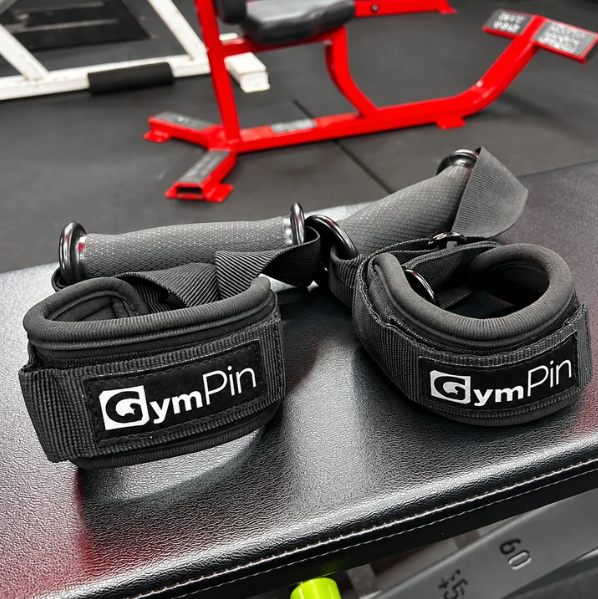
GymPin D Cuffs
Adjustable wrist cuffs with textured grips for supported cable-machine exercises.

Rubber Hex Dumbbells
Rubber-coated hex dumbbell pairs with a stable shape for home and commercial strength training.

Before ordering, answer four questions: does your exact dumbbell fit, does your shoe sit securely, can you arrange the intended movement safely, and will you use it often enough to justify another piece of equipment? Clear answers make a much stronger buying case than a long list of possible exercises. Leave the decision open when an essential fit detail is still uncertain.