Advertising disclosure: This page includes affiliate links that may earn us a commission at no additional cost to you.
Barley gives a training meal something different from another serving of rice: a chewy grain that works in bowls, salads and soups. The useful choice starts before you turn on the hob. Hulled barley, pearl barley and quick-cooking barley are different products, with different preparation times and a different claim to the whole-grain label.
For lifters, the question is how to make the grain fit a complete meal you will actually eat. Choose the form, match your portion to the way you record it, add a deliberate protein source and prepare a batch you can store safely. None of that requires treating barley as a muscle-building superfood or a shortcut to fat loss.
Choose the barley that fits your cooking time
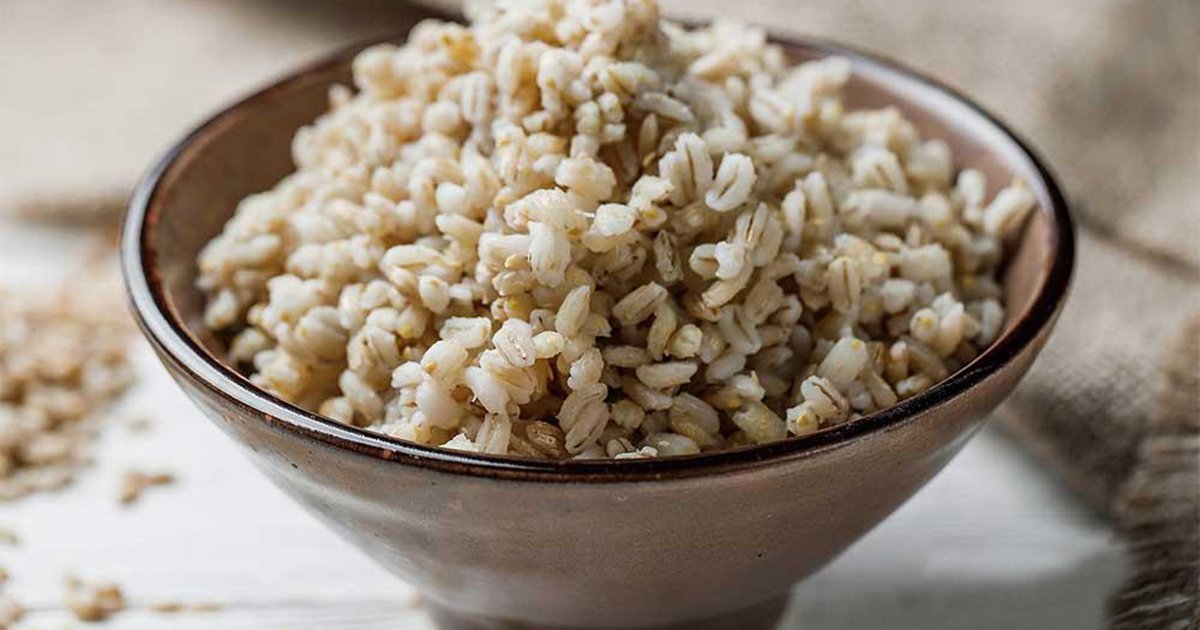
Hulled barley has its tough, inedible outer hull removed while retaining the bran and germ needed for the whole-grain designation. Hulless barley comes from a type whose outer covering separates readily during harvesting. The similar names describe different starting points, but both can provide whole-grain barley. Read the package rather than assuming every bag with barley on the front has the same processing history.
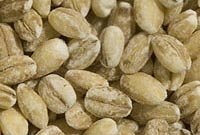
Pearl barley has been polished to remove some or all of the bran along with the hull. It is therefore not classified as a whole grain. That does not make it an empty ingredient: barley’s fibre is distributed through the kernel, and pearl barley still has a useful place in ordinary meals. Choose based on the food you want to cook rather than treating the whole-grain distinction as a reason to reject every other option.
Hulled barley generally needs more time and produces a chewier result. Pearl barley is a practical option for soups and grain bowls when you prefer a shorter cooking session. Quick-cooking products have undergone additional preparation and can be faster again. The instructions for your exact bag should determine the method and timing, especially when a recipe simply says barley without identifying the form.
If a long simmer means you never make the meal, a quicker product may be the more useful purchase. Conversely, someone already cooking several portions can let a longer batch run while preparing other ingredients. Compare the full routine, including how much attention the pan needs and whether you enjoy the texture after reheating.
Keep dry weights and cooked portions on the same basis
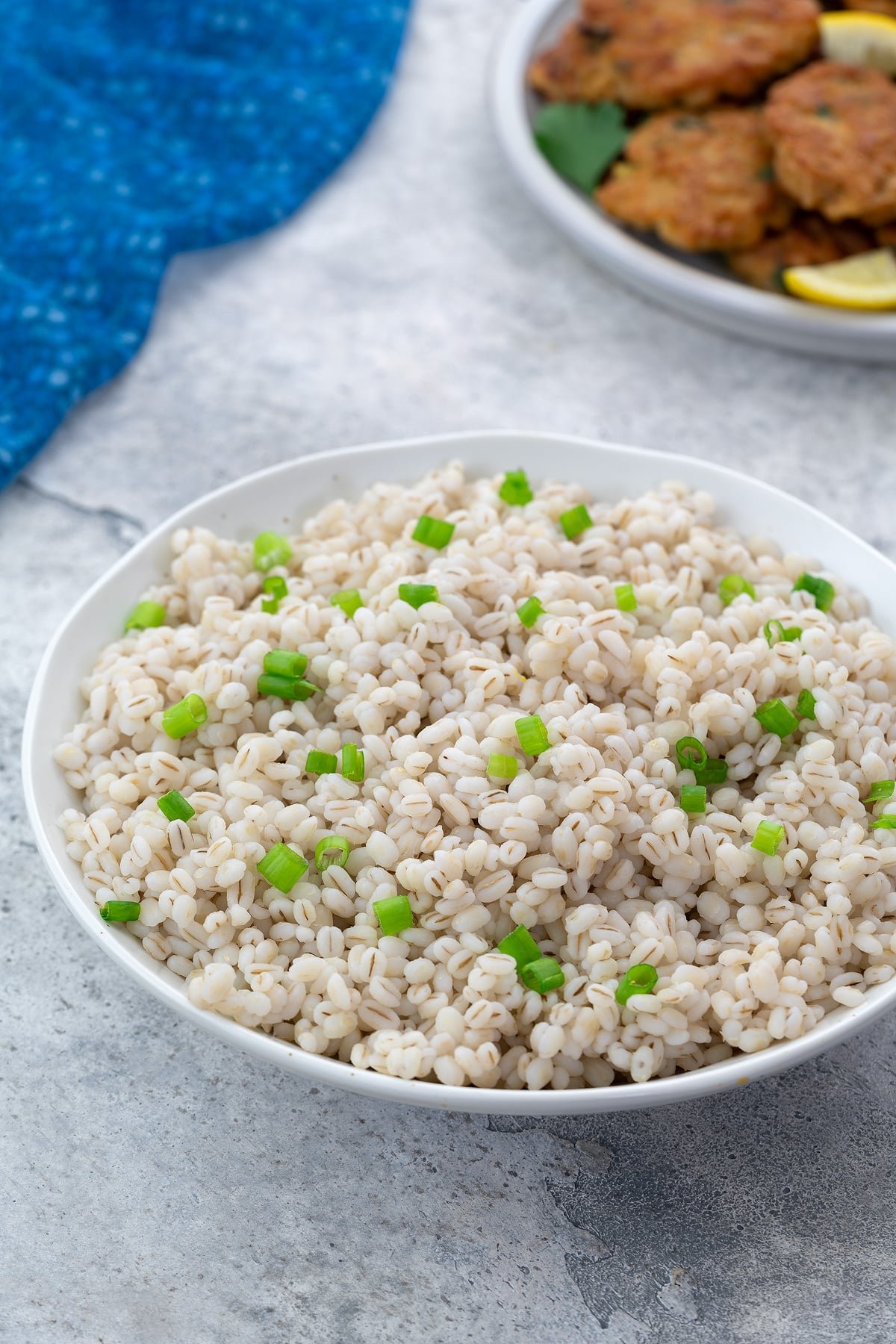
Barley absorbs water as it cooks. The cooked grain therefore weighs more than the dry ingredient, without that water supplying additional calories or protein. A nutrition entry for dry barley cannot be applied directly to the same numerical weight of cooked barley. First identify whether the label or food-log entry describes the grain as sold or prepared.
For a batch, the simplest method is often to record the dry amount and any other ingredients, then divide the finished food into the intended portions. If you cook 240g dry barley for four equal portions, each represents 60g of the dry ingredient. That arithmetic does not depend on predicting an exact cooked weight in advance. Different water absorption or draining changes the finished weight without changing the original dry allocation.
Suppose the finished batch weighs 720g. An evenly divided quarter would then weigh 180g. These are hypothetical kitchen numbers, not a measured yield for every variety. If your batch finishes at a different weight, recalculate from what you actually cooked rather than forcing it to match an online conversion.
Oil, broth, cheese and sauces belong in the meal calculation too. Our food-label guide to serving sizes and portion maths explains the underlying method. Use that method to resolve a repeated logging error, rather than turning an ordinary bowl into an exercise in false precision. Label values and household portions remain estimates.
Cook for the texture you want in the finished meal
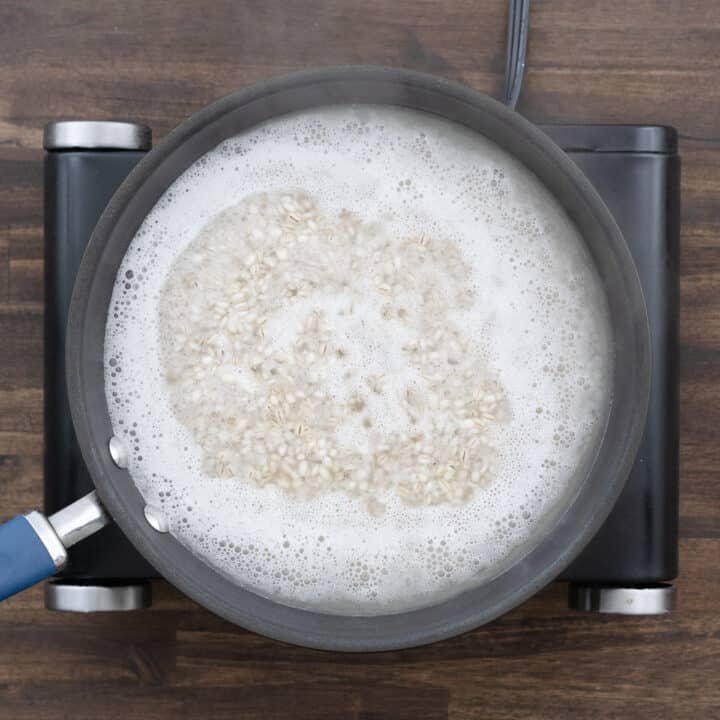
Begin with the package method for your barley. Rinse when directed, use a pan with enough room for expansion and allow the specified cooking time. A general stovetop approach is to simmer the grain in water or stock until tender, but liquid requirements and timing vary with the product. A quick-cooking bag and an intact whole grain should not be expected to finish together.
Taste a few grains toward the end. You are checking for a texture you enjoy in the planned dish, not trying to reproduce a fixed photograph. For a grain salad, you might prefer distinct, chewy kernels. In soup, barley shares the pan with liquid and other ingredients, so account for the recipe’s cooking sequence rather than adding every component at once.
Keep the first batch simple enough to learn from. Note the product, liquid, cooking time and result. If the grain is still too firm, follow the package guidance for continuing the cook rather than assuming that every recipe’s stated minute is exact. Once the method works, changing seasonings is easier than trying to troubleshoot five unfamiliar ingredients together.
Stock can add flavour, but check its label if sodium or other ingredients matter to your meal plan. Water gives you a neutral base for several different meals. Prepare the grain once, then add lemon, herbs, vegetables or another sauce to individual portions. That allows variety without needing a separate saucepan for every lunch.
Build a complete meal around the grain
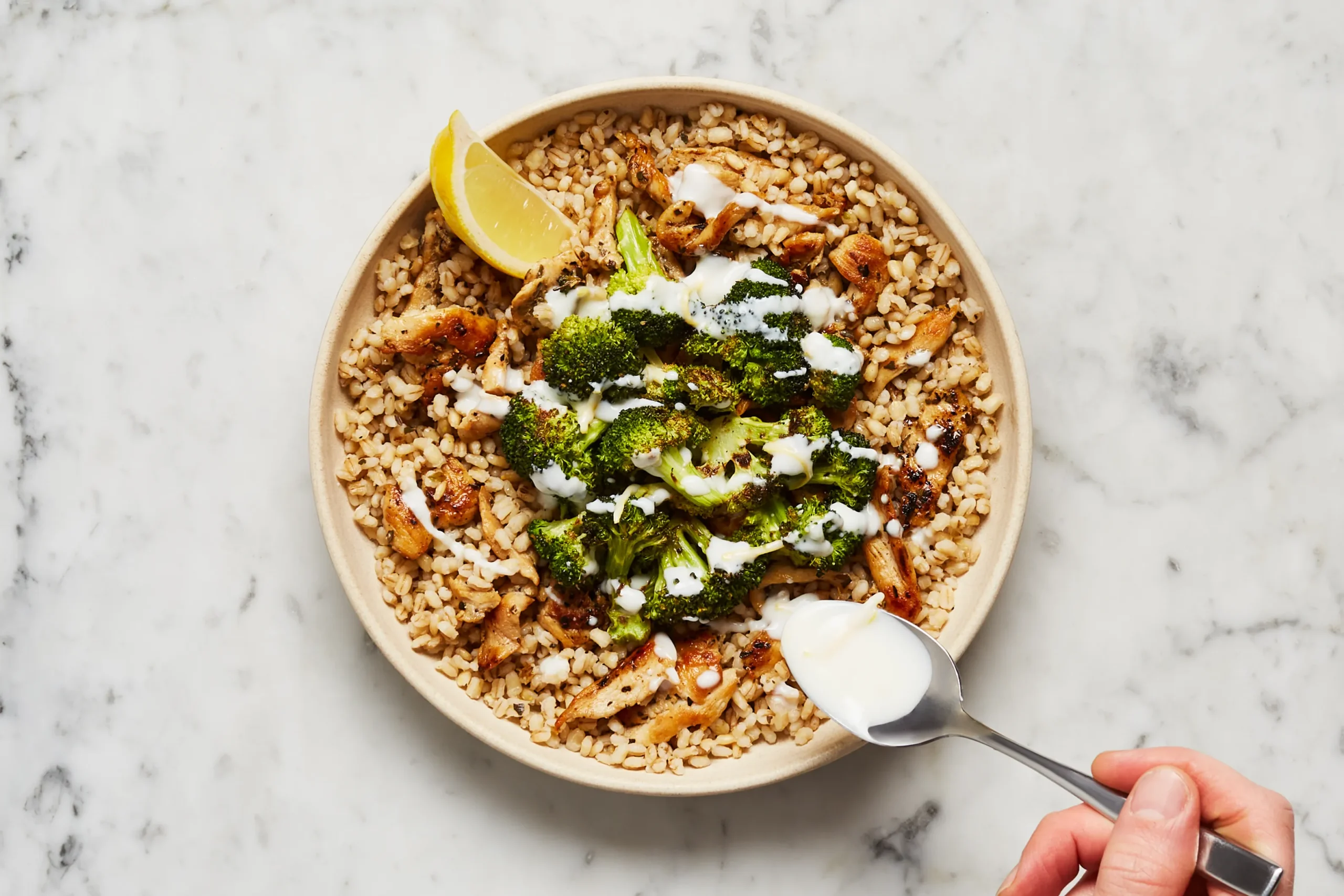
Barley is useful as the grain component of a meal. Do not assume that a large bowl of it supplies the same protein as a meal built around chicken, fish, tofu or another deliberate protein source. Decide what will supply that part of the meal, then add barley and vegetables in amounts that fit your appetite and overall eating plan.
A straightforward bowl combines cooked barley, chicken and broccoli, with a lemony yogurt dressing if you enjoy dairy. The photograph illustrates that kind of combination; it is not a verified macro calculation for your kitchen. The amount of chicken, cooking fat and dressing determines a substantial part of the meal total. Two bowls that look similar can contain quite different quantities.
A plant-based option could combine barley, roasted vegetables and tofu or beans. Our guide to tofu, tempeh and edamame helps distinguish those protein ingredients. Choose the actual food and portion you want rather than treating all plant-based additions as nutritionally interchangeable.
For a larger-energy meal during a planned gaining phase, adjust the grain portion and additions deliberately. For a smaller meal, change the portion without removing the protein source by accident. There is no universal bodybuilding serving of barley, and its presence does not automatically make a meal suitable for a particular calorie target. The repeatable whole meal matters more than giving one grain a special reputation.

Bodybuilding Shirts & Workout Gear
Bodybuilding shirts, tanks and gym gear for lifters chasing muscle, size, symmetry and the pump.

Work Hard Eat Hard Bulk Tank Top
Your gym-day look, with a playful “Work Hard Eat Hard” twist.


Everything Hurts And I'M Hungry Motivation T-Shirt
Keep things casual with a little “Everything Hurts And I'm Hungry” attitude.

Protein Monster Humorous Vest & Tank Top
Train hard, laugh a little, and rep “Protein Monster”.

Lift Eat Repeat Weightlifting & Hooded Hoodie
Keep it laid-back with a little “Lift Eat Repeat” attitude.

– I'M Just Here Because I Like To Eat & Foodies Tank Top
Bring “I'm Just Here Because I Like To Eat” humor to your next lifting session.

Bear Protein : Hilarious Meme Decal & Bros Sticker
Bring “Gym Bear Protein” attitude to your water bottle or laptop.

Broccolift – Eat Broccoli & Lift , & Gains – Meme Top T-Shirt
Show some meal-prep attitude with a playful “Broccolift” tee.

Eat Your Chicken – Protein Meme Decal for Water Bottles Sticker
A fun “Eat Your Chicken” touch for bottles, laptops, and lockers.

Shirt Protein Addicts – , Meme , Top Gymbros T-Shirt
Heavy lifts, good laughs, and a little “for Protein Addicts” energy.
Make the batch useful after the first dinner
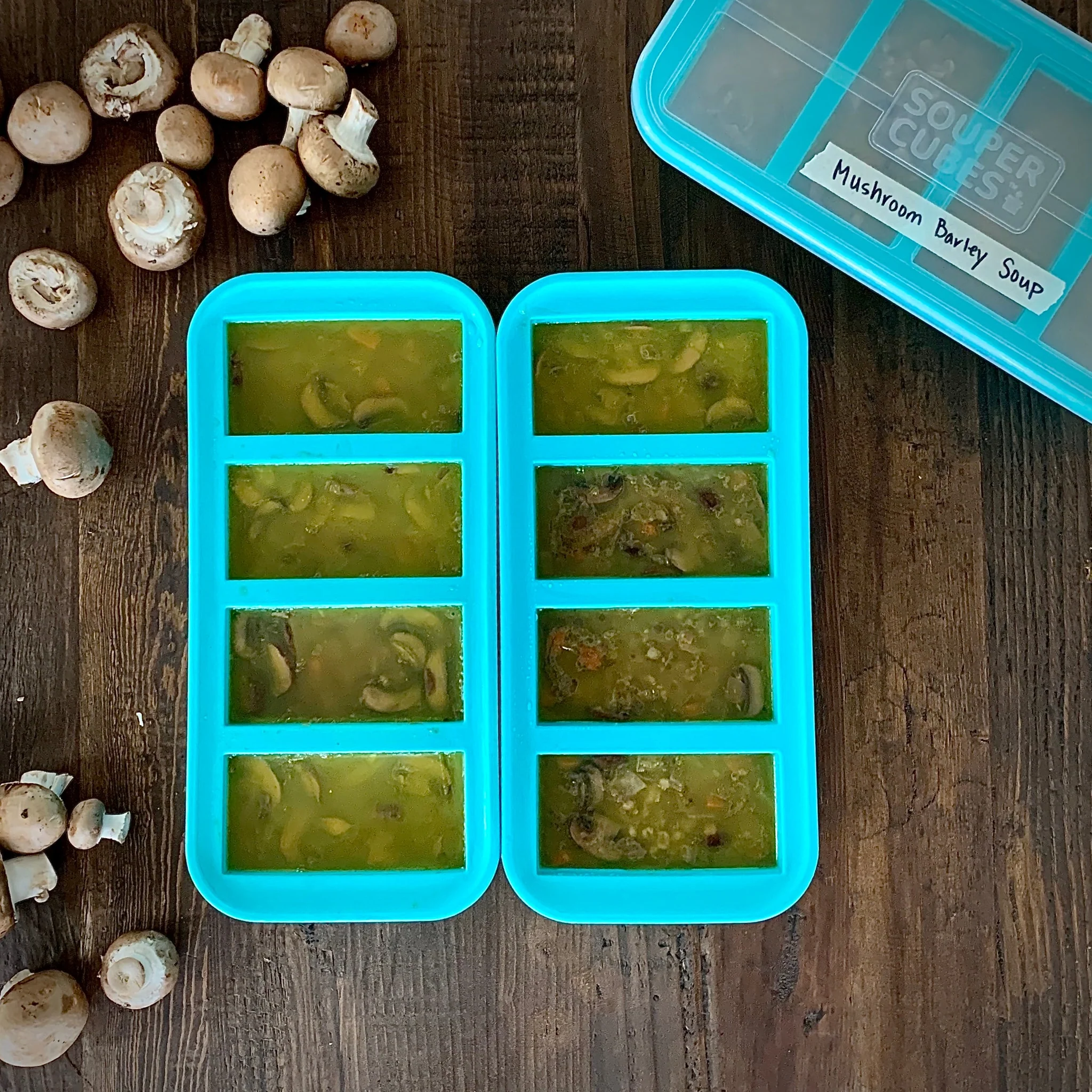
Before cooking extra portions, decide when you will eat them and what you will freeze. Divide leftovers into shallow containers and refrigerate promptly. Perishable food should be refrigerated within two hours, or within one hour when exposed to temperatures above 32°C. Keep the refrigerator at 4°C or below and the freezer at -18°C or below.
A barley soup can be divided into practical portions for later meals. For vegetable or meat soups and stews, the usual refrigerated storage guidance is three to four days. Freeze portions intended for later rather than assuming that a whole week’s lunches can sit in the fridge unchanged. Follow the storage requirements of all the ingredients in a mixed meal.
Label portions so you know what they contain and when they were prepared. Store crunchy toppings or a fresh dressing separately if that improves the meal you want to eat. Reheat thoroughly; when microwaving, stir where appropriate and follow standing-time instructions so the centre is heated as well as the edges. The general microwave reheating guidance is 74°C throughout.
Barley contains gluten, so it is unsuitable for a gluten-free diet that requires avoiding it. For everyone choosing it as an ordinary grain, start with a manageable batch and a flavour combination you already like. Keep the product and portion clear, prepare it safely and judge whether it makes your meals easier to repeat. That is a more useful test than expecting a single food to transform your training.