Advertising disclosure: This page includes affiliate links that may earn us a commission at no additional cost to you.
Jordan Burroughs’s training offers a practical lesson for athletes who want their strength and explosive power to remain useful late in a match. Here is how to turn the principles behind a documented 2020 session into a manageable gym programme without pretending to follow an Olympic champion’s exact routine.
1. What Burroughs’s filmed session actually reveals
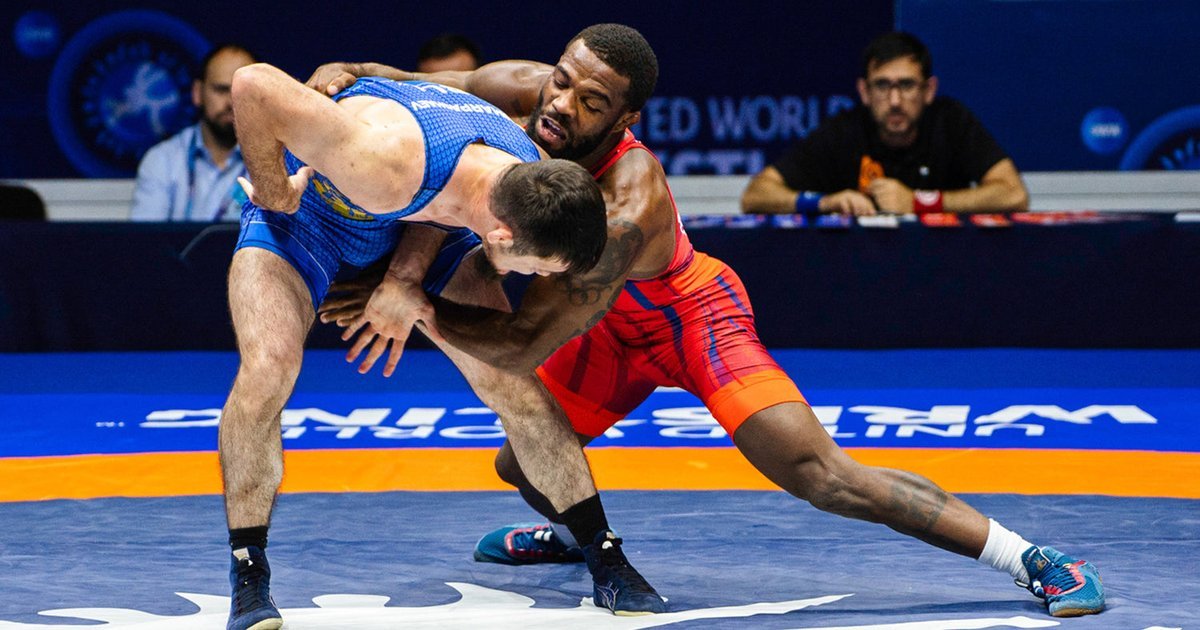
Jordan Burroughs is known for his explosive double-leg attacks, but the impressive part of high-level wrestling is not simply the speed of a single movement. It is the ability to create a useful attack after spending minutes moving, defending, changing levels and fighting for position. An athlete who can produce one spectacular effort but cannot repeat it has a very different competitive problem from an athlete who lacks first-step speed.
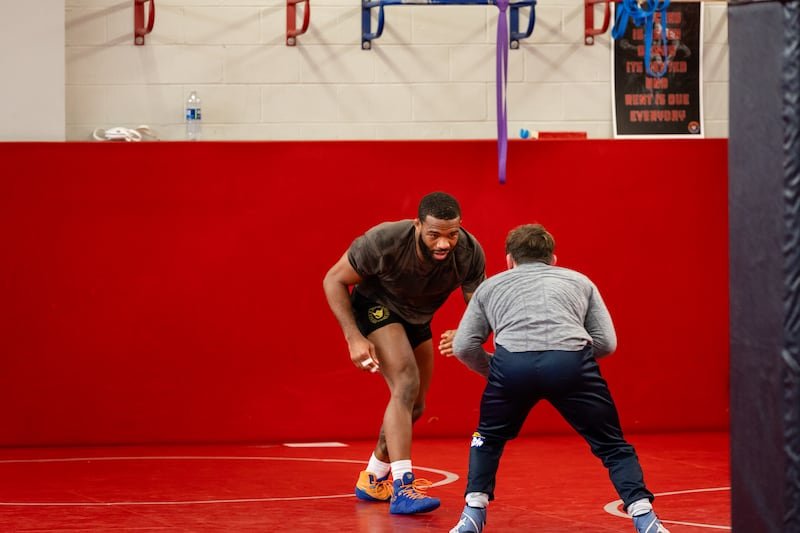
Burroughs won Olympic gold in 2012 and collected his sixth senior world freestyle title in 2022. A training session filmed before the pandemic and published in July 2020 offers a particularly useful look at how a successful wrestler approaches physical preparation. It was one session, not a complete annual training plan. In it, he worked through brief fan-bike efforts, upper-body pulling, resistance-band exercises, battle ropes and wrestling movements under the guidance of longtime coach Mark Manning.
The variety matters less than the reason for each exercise. There was a way to produce hard efforts without another live wrestling opponent, a way to develop the upper body, and a way to return to the movements that actually determine performance on the mat. Those are separate jobs. A hard gym circuit does not automatically improve wrestling technique, just as thousands of technical repetitions do not necessarily provide the best dose of resistance training for every muscle group.
For recreational wrestlers, grapplers and strength athletes, the useful lesson is to make those jobs complement one another. Put the sport first, then develop the physical qualities that allow you to express the skills you practise. Do not measure the value of every workout by how tired you feel walking out of the building.
2. Develop power that survives repeated efforts
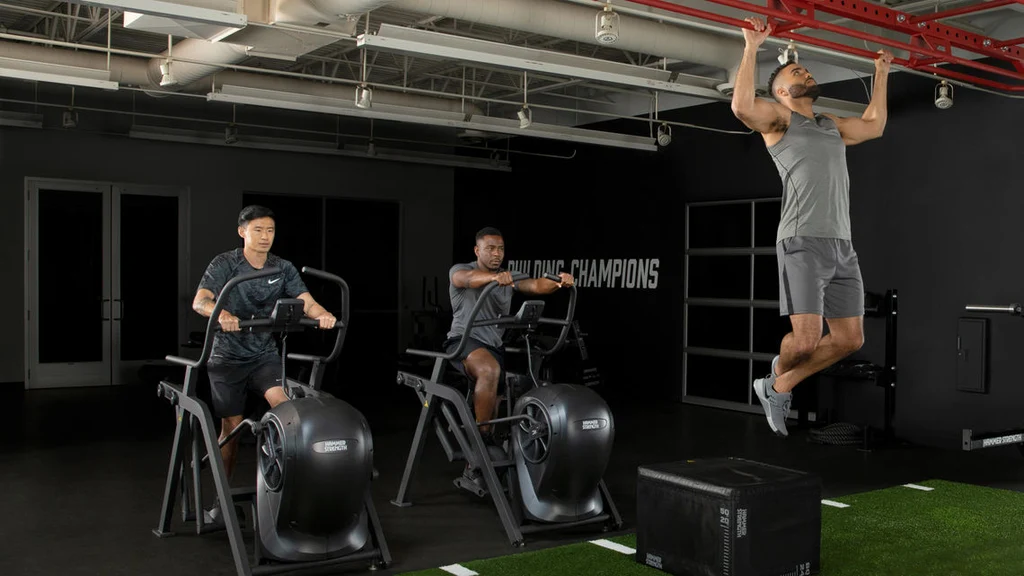
Repeated high-power efforts demand more than a large aerobic capacity or a strong squat. During an intense exchange, the muscles must rapidly supply energy, create force and coordinate movement. Between exchanges, aerobic metabolism contributes to restoring the capacity to work again. Wrestling research describes substantial aerobic and anaerobic demands in trained competitors; a single fitness score cannot capture all the qualities required to wrestle well.
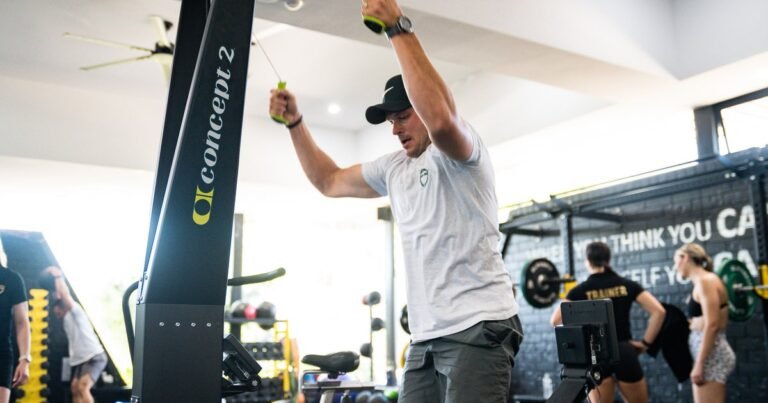
In the filmed session, Burroughs used ten short, 20-second bike bouts. That is a useful example of a conditioning tool, not a prescription to copy at maximum effort. A fan bike allows the arms and legs to contribute and offers a repeatable setup: the athlete can control the duration and compare power or distance across efforts. Its low-impact cycling pattern also avoids adding more collisions or landing volume to an already demanding wrestling week.
Begin with a five-minute progressive warm-up. For someone new to intervals, try four to six efforts of 12–15 seconds at a challenging but controlled pace, with 60–90 seconds of very easy cycling between them. Finish with a few easy minutes. If every effort remains technically smooth and the next training session feels normal, add a repetition or a few seconds of work the following week. Keep the recovery period unchanged while making the comparison.
Recording the best interval alone tells you little about repeatability. Record each interval’s average power, distance or calories on the same machine, then compare the first two efforts with the last two. For example, if a cyclist averages 400 watts in the early efforts and 340 watts late in the session, that is a 15% reduction. The figures are an illustrative calculation, not Burroughs’s data or a universal pass mark. A smaller decline at the same starting output over several weeks is one useful sign of progress.
A rower is another option if cycling is uncomfortable, although rowing adds more local grip and back fatigue. Pick the modality that leaves enough capacity for technical practice.
3. Build pulling strength without exhausting your hands
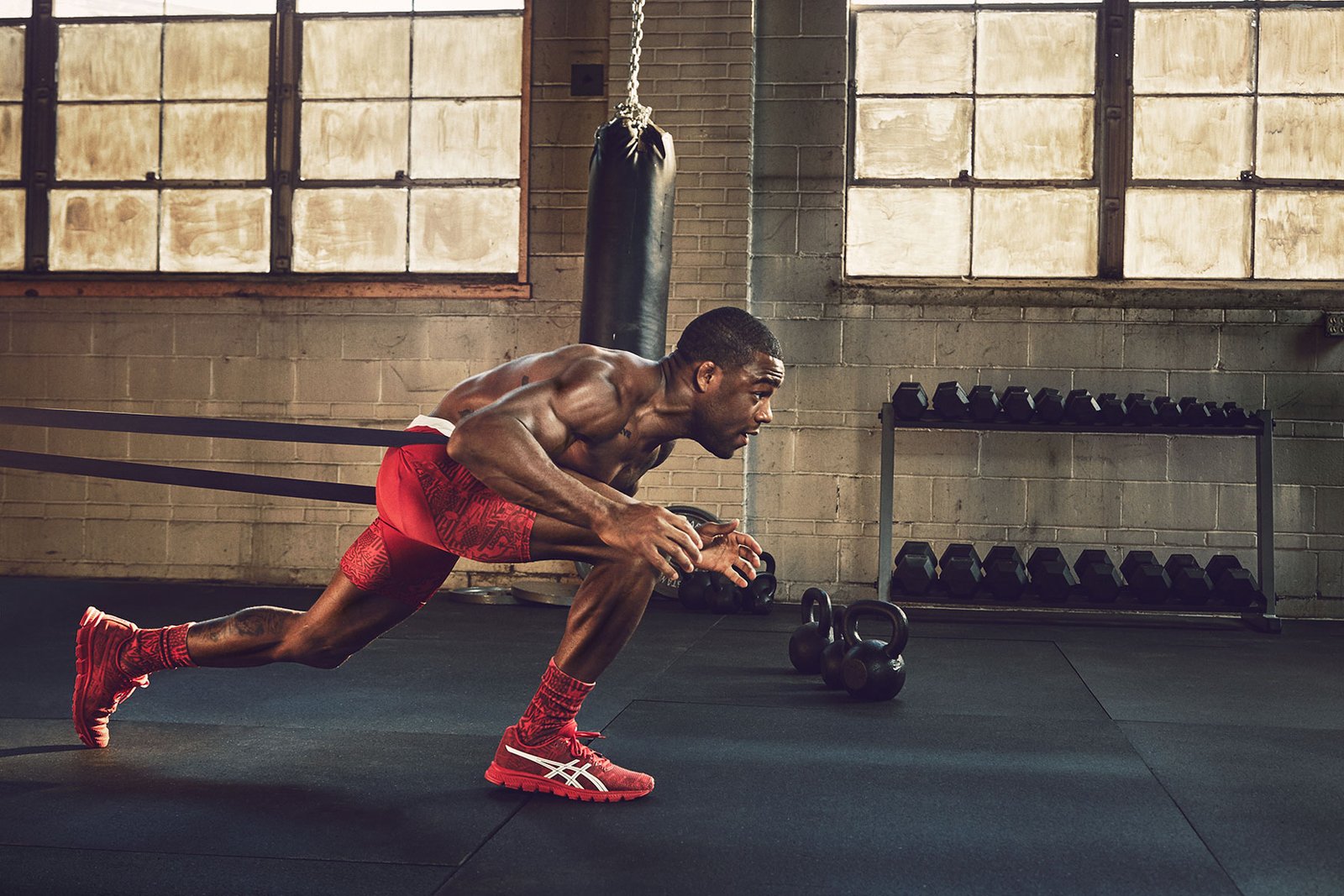
Pull-ups and chin-ups featured in the filmed session. Their relevance is easy to understand: a wrestler must frequently manage another person’s resistance through the hands, arms, shoulders and trunk. But pulling strength is not interchangeable with successful hand fighting. The skill of controlling a moving opponent still needs practice with a partner.
For gym training, choose one main vertical pulling movement and one horizontal movement. A strict pull-up or assisted pull-up can be paired with a chest-supported dumbbell row or a cable row. Aim for controlled repetitions through a comfortable range, rather than kicking to finish a set. For an athlete who can already complete several clean pull-ups, three sets of four to eight repetitions, leaving roughly two repetitions in reserve, are a reasonable starting point. Progress by adding repetitions before adding weight.
Rows provide an opportunity to train upper-back strength while choosing a grip and body position that suit the athlete. A cable tower offers repeatable resistance and a stable path; angled handles can provide a more comfortable wrist position for some people. A thick grip can be introduced for a small amount of dedicated grip work, but it need not make every pulling exercise a grip endurance test.
Resistance-band work can be useful for lower-load warm-ups, shoulder control and lateral movement. Secure the band to a rated anchor, inspect it before use and choose tension that permits good control. The objective is not to turn a preparatory exercise into another exhausting circuit.
Schedule hard pulling and grip work away from particularly demanding live sessions when possible. If fingers, elbows or shoulders are already irritated, reduce the pulling dose and seek appropriate assessment if symptoms persist. There is no advantage to winning a gym grip test at the cost of losing several days of useful wrestling practice.

Equipment Worth Exploring
Explore equipment, accessories and gear from our carefully selected range.


Power Tower
Freestanding pull-up and dip station with adjustable handles for bodyweight training.


Angles 90 Grips
Flexible grip attachments that allow natural wrist movement during pulling exercises.


4. Use conditioning tools to support mat performance
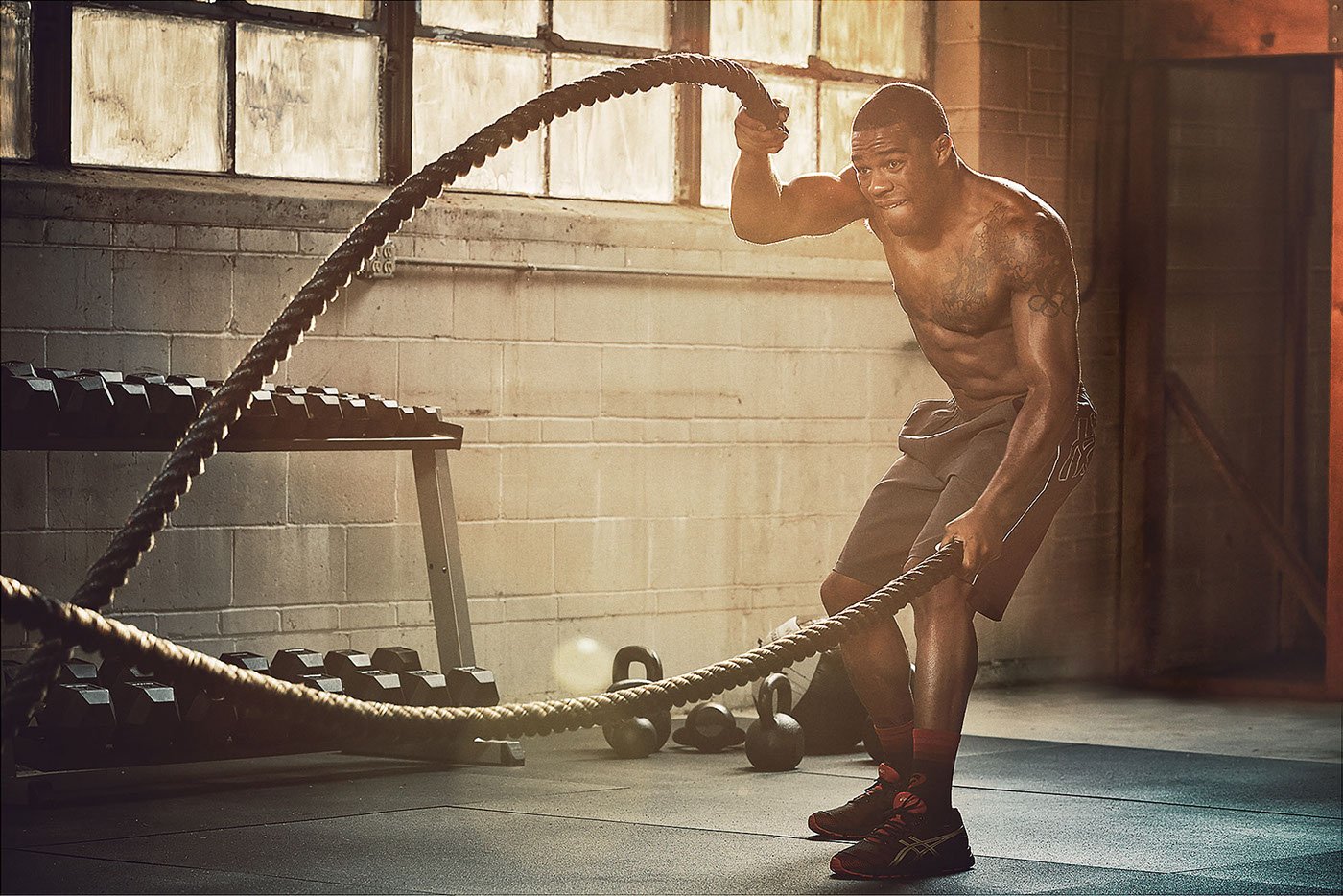
Battle ropes appeared in the original session in short bouts. They can raise the demands on the shoulders, trunk and cardiovascular system without requiring heavy external loading. However, ropes are a training tool rather than a wrestling simulator. The appearance of a fast movement does not establish that it improves the speed of a takedown.
Consider a short rope block as an alternative to the bike intervals, rather than automatically stacking both on the same day. Start with four bouts of 15–20 seconds of alternating waves and a minute of easy movement between bouts. Stop when the waves become markedly smaller or the athlete can no longer hold a comfortable stance. A light jump rope can provide a general warm-up; a heavier rope creates greater upper-body demands, and is not essential for conditioning. Burpees, box jumps and kettlebell circuits can also be useful in selected programmes, but they are not mandatory and should not be piled onto an already fatiguing week just because they look athletic.
One distinction worth protecting is the difference between general conditioning and sport-specific endurance. General conditioning is easier to quantify and adjust in isolation. Sport-specific work teaches the athlete to manage breathing and effort in the positions they actually encounter, including the technical and perceptual demands of a partner who responds. Both have value. Neither completely replaces the other.
Where possible, keep speed and high-skill drilling early in the session, while the athlete can pay attention to movement quality. Reserve intentionally fatigued drills for situations where a coach has a specific reason to practise under fatigue. For example, maintaining the quality of a familiar movement late in a round is a different goal from learning a new movement for the first time.
Training partners are valuable for accountability and feedback, not simply for turning every conditioning session into a competition. If the goal is to improve repeated output, resist the urge to race the first interval so hard that the remaining ones become slow survival efforts.
5. A two-day gym programme for repeatable wrestling power
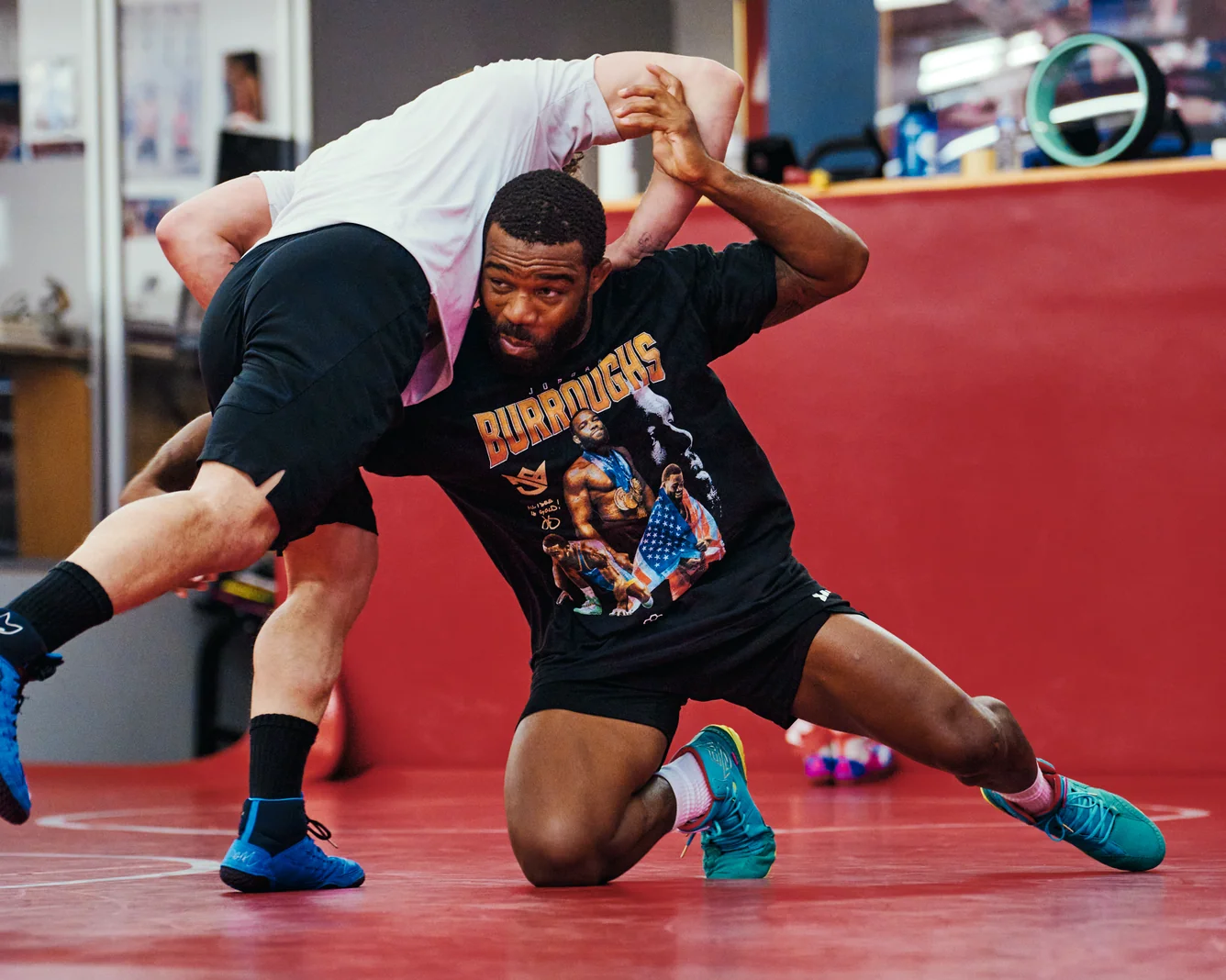
The following example is an independent adaptation for a healthy recreational wrestler or grappler who already has regular sport practice. It is not Burroughs’s documented weekly routine. Adjust the total work to experience, competition schedule and recovery, and avoid adding it wholesale to a full existing gym programme.
Day A: Strength and short intervals
- Five to eight minutes of easy cycling and dynamic movement.
- Squat variation: three sets of five to six controlled repetitions.
- Pull-up or assisted pull-up: three sets of four to eight.
- Chest-supported or cable row: two sets of eight to twelve.
- Fan bike: four to six controlled 15-second intervals, separated by 60–90 seconds of easy cycling.
Day B: Hip strength and conditioning
- Warm-up: easy rope skipping or rowing, followed by comfortable movement drills.
- Romanian deadlift or kettlebell deadlift: three sets of six to eight.
- Split squat: two sets of six to eight on each leg.
- Band or cable anti-rotation press: two sets of eight to twelve on each side.
- Battle ropes: four short bouts with generous recovery, or omit them if practice volume is high.
Use moderate loads at first. Leave two or three repetitions in reserve on most strength sets, take sufficient rest to maintain form and keep the two gym days apart. A Monday and Thursday gym schedule might suit some athletes, but the right arrangement depends on when their most demanding wrestling sessions occur. If possible, avoid hard intervals immediately before intense practice or competition.
Over four weeks, establish repeatable baseline efforts in week one, add a small amount of work in week two and progress only one variable in week three. In week four, reduce volume and repeat a familiar interval session at a controlled effort. Compare the average output across the entire session, not a one-off record. Also track how technical practice feels, whether pulling repetitions remain clean, and how well you recover between days.
If your performance on the mat deteriorates, reassess the extra training before increasing it. Good conditioning should expand the number of useful efforts you can perform, while strength work should give you more options without consuming all your recovery. Burroughs’s filmed session provides an excellent illustration of combining different tools. The enduring takeaway is to develop the physical capacity to repeat quality work, then express that capacity through skilled practice.

Functional Fitness Shirts & Workout Gear
Functional-fitness shirts, tanks and workout gear for athletes who train strength, conditioning and everything in between.

Dost Thou Even Pedal Medieval Air Bike CrossFit Parody Sticker
Give your everyday gear a playful “Dost Thou Even Pedal” twist.

Wonder Woman Battle Ropes | Superhero HIIT Workout Pull Hoodie
Keep it laid-back with a little “Wonder Woman Battle Ropes” attitude.

Vive La Resistance Bands Painting Meme – Resistance Ban Sticker
Bring “Vive La Resistance Bands” attitude to your water bottle or laptop.

Hybrid Athlete – Strength & Endurance Crewneck for Func T-Shirt
For laid-back days and lifting humor: “Hybrid Athlete”.


Lift Together Grow Stronger for Gym Buddies and Lifting Tank Top
Bring “Lift Together Grow Stronger” humor to your next lifting session.

Dumb And Dumber Gymbro Meme Top Cardio & Lifting T-Shirt
Bring “Gym T” humor to your next gym day.

Burpees Bad Breaking Bad Shirt – Meme & Cardio Haters T-Shirt
Show some cardio attitude with a playful “Burpees Bad Breaking Bad” tee.

Live Love Lift Hooded Pullover Gymbro Workout Fans Hoodie
Bring “Live Love Lift” gym humor to lazy days and post-workout plans.