Advertising disclosure: This page includes affiliate links that may earn us a commission at no additional cost to you.
Most lifters train their forearms by squeezing a bar or curling a weight with the palms facing up. Those are useful tasks, but they do not describe everything your wrists and forearms have to do. A wrist that can produce force in one direction is not automatically equally capable in the opposite direction. Holding a dumbbell steady, rotating a handle and controlling the position of a bar each involve different demands.
A small controlled experiment published in April 2018 offers a particularly useful way to think about that distinction. It tested resistance training across six directions rather than treating the wrist as a single movement. The most interesting result was that an improvement in the accuracy of force control appeared before the reported improvement in strength. That is not a guarantee that your deadlift will increase in a fortnight. It is a reason to approach direct wrist work as a skill as well as a strength exercise.
What the six-week experiment actually measured
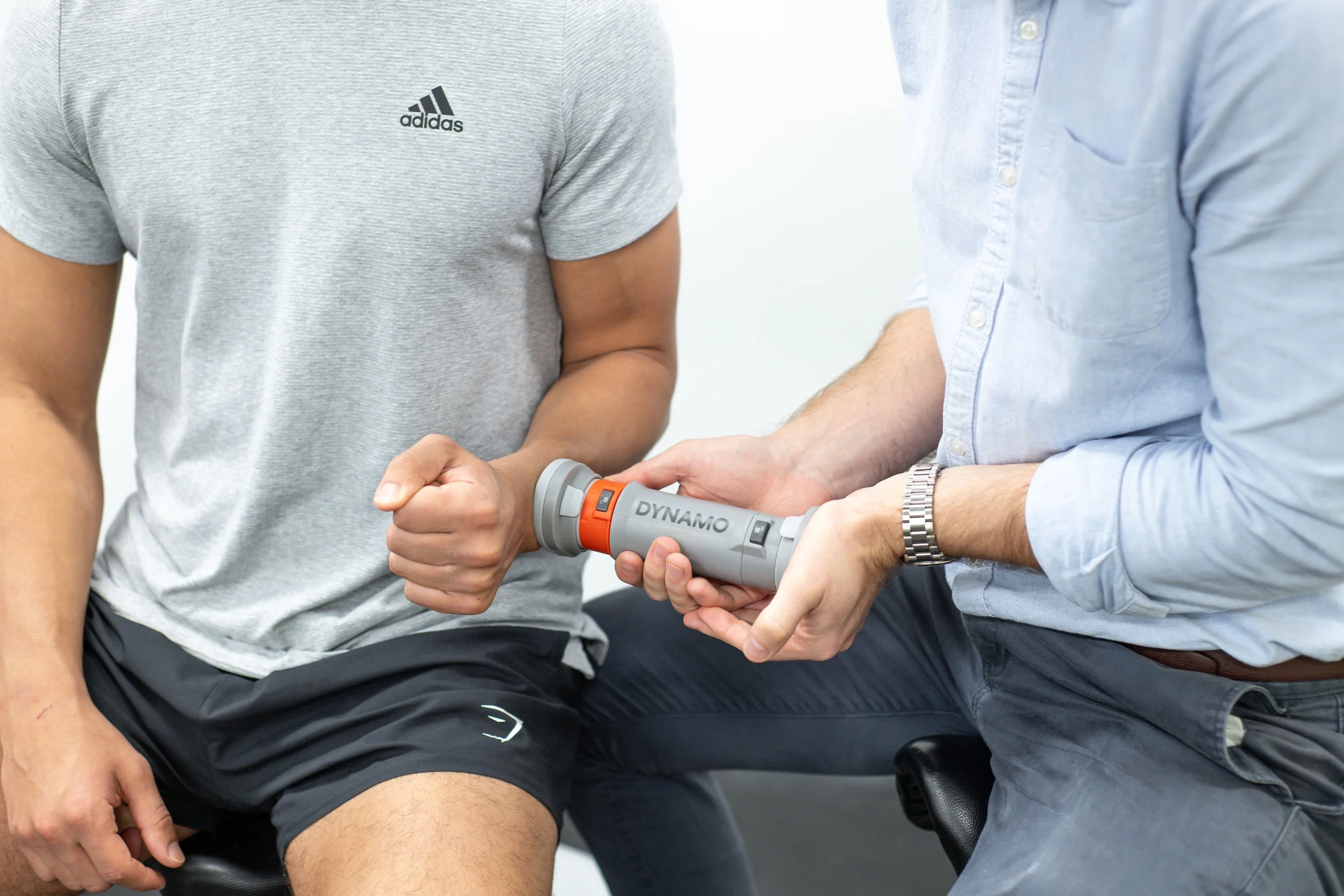
The experiment included 19 participants, with nine assigned to a resistance-training group and ten to a control group. The intervention lasted six weeks, with assessments every two weeks. The researchers investigated wrist flexion, extension, forearm pronation and supination, and radial and ulnar deviation. Although the last two motions happen at the wrist and the rotation pair involves the forearm, all six are relevant to the way the hand changes position relative to the arm.
Two types of outcome matter here. One was the ability to reproduce a target torque at a fixed joint position. Torque is the turning effect of a force around an axis. If you produce much more or much less than the intended torque, the error is larger. Another outcome was strength, assessed using one-repetition maximum and isokinetic tests at a specified speed of 60 degrees per second.
The training group showed improved torque control at the two-week assessment. Significant strength improvements across all six directions were reported by four weeks, while the control group did not show significant changes. These are group-level findings from a small sample, not personal deadlines. The data do not establish that every person improved equally, that one particular direction was the most valuable for bodybuilding, or that a given percentage of strength improvement transfers to a heavy deadlift.
It is also important not to confuse the laboratory tests with gym prescriptions. A controlled torque task and the ability to keep a heavy bar from rolling out of your fingers are related aspects of upper-limb function, but they are not identical. For a lifter, the reasonable takeaway is to give unfamiliar movement patterns time to become comfortable and repeatable before trying to load them aggressively.
Flexion and extension: the wrist curl pair
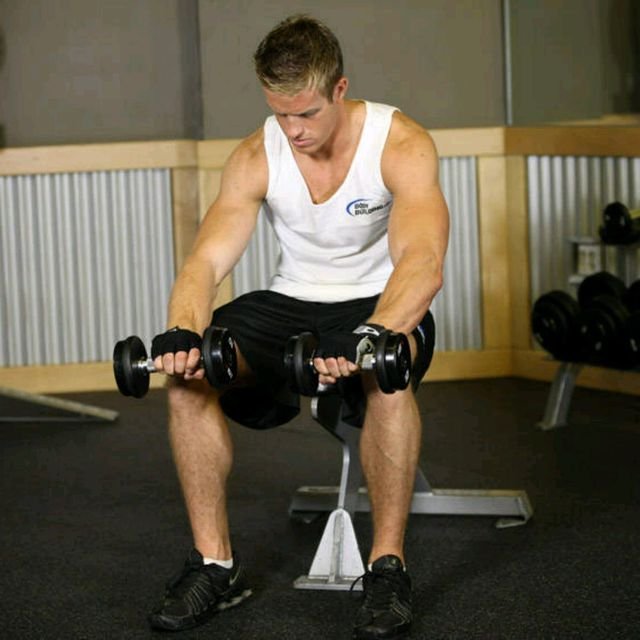
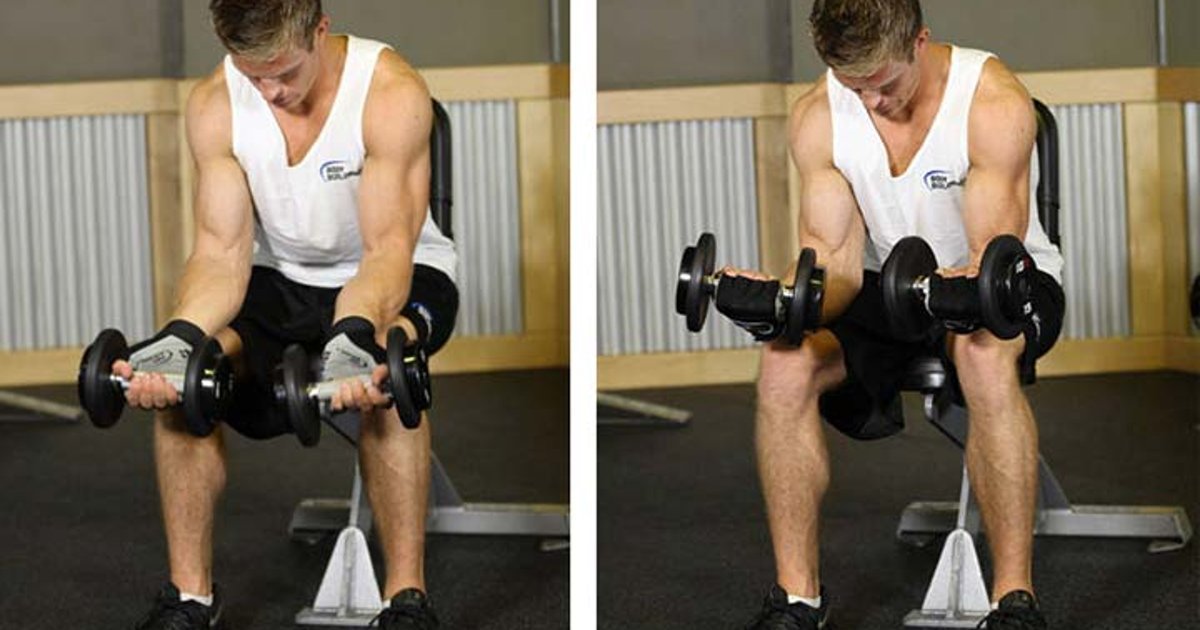
Wrist flexion is the familiar palm-up curl action. With your forearm supported and your hand free to move, bend the wrist so the palm moves toward the underside of the forearm. Extension goes the other way: the back of the hand moves toward the upper side of the forearm. A supported palm-down dumbbell wrist curl is a convenient way to train the latter.
Set a bench at a comfortable height or sit with your forearm resting on your thigh. Allow the hand to extend beyond the support without putting the edge of the bench directly against a sensitive part of the wrist. Use a load light enough that you can keep the elbow and forearm still. Keep the fingers securely wrapped around the handle rather than deliberately dropping the weight into the fingertips. Lower slowly and use the range you can control without discomfort. For the extension variation, you will often need less weight than you use for flexion. That is not a problem to solve by swinging the elbow.
Separate evidence gives a limited reason to consider extension work even if your main goal is a stronger grip. In an eight-week study involving 13 healthy participants, training wrist extension was associated with increased grip strength on the trained side. That result came from a different protocol and population from the six-direction experiment. It suggests an interaction between the wrist extensors and gripping rather than proving that wrist extensions are the best possible grip exercise.
During a heavy row or carry, the muscles around the wrist have to maintain a suitable position against the load produced by the hand and fingers. Direct work can supplement that task. It should not replace progressively harder holds if holding strength is the outcome you actually want to improve.

Equipment Worth Exploring
Explore equipment, accessories and gear from our carefully selected range.

Rubber Hex Dumbbells
Rubber-coated hex dumbbell pairs with a stable shape for home and commercial strength training.





FID Bench MAX
Adjustable bench offering flat, incline, and decline positions + adjustable headrest.

Multi Bench MBX-650 2.0
Adjustable multi-bench with roller adjustment, 15 backrest positions and accessory mounts.
Pronation and supination: train the turn
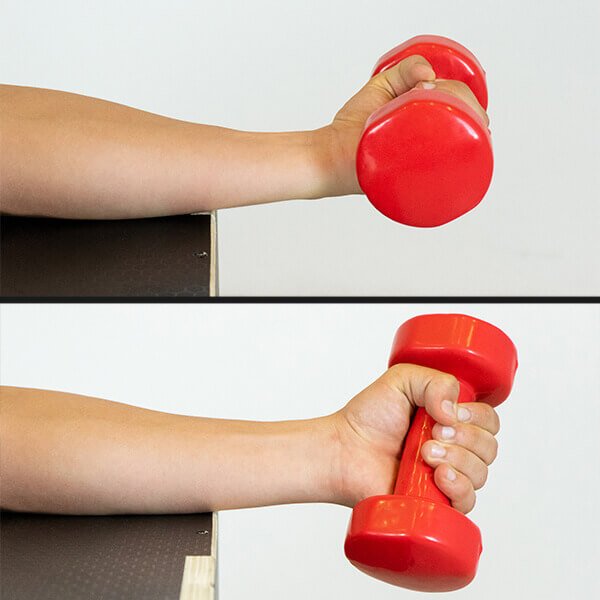
Pronation and supination are rotations of the forearm. With the elbow bent at roughly 90 degrees and tucked near your side, turning your palm toward the floor is pronation; turning it toward the ceiling is supination. The motion occurs through the forearm joints, not by bending the wrist sideways. If your upper arm swings or your elbow drifts, you may be moving the implement without training the intended action.
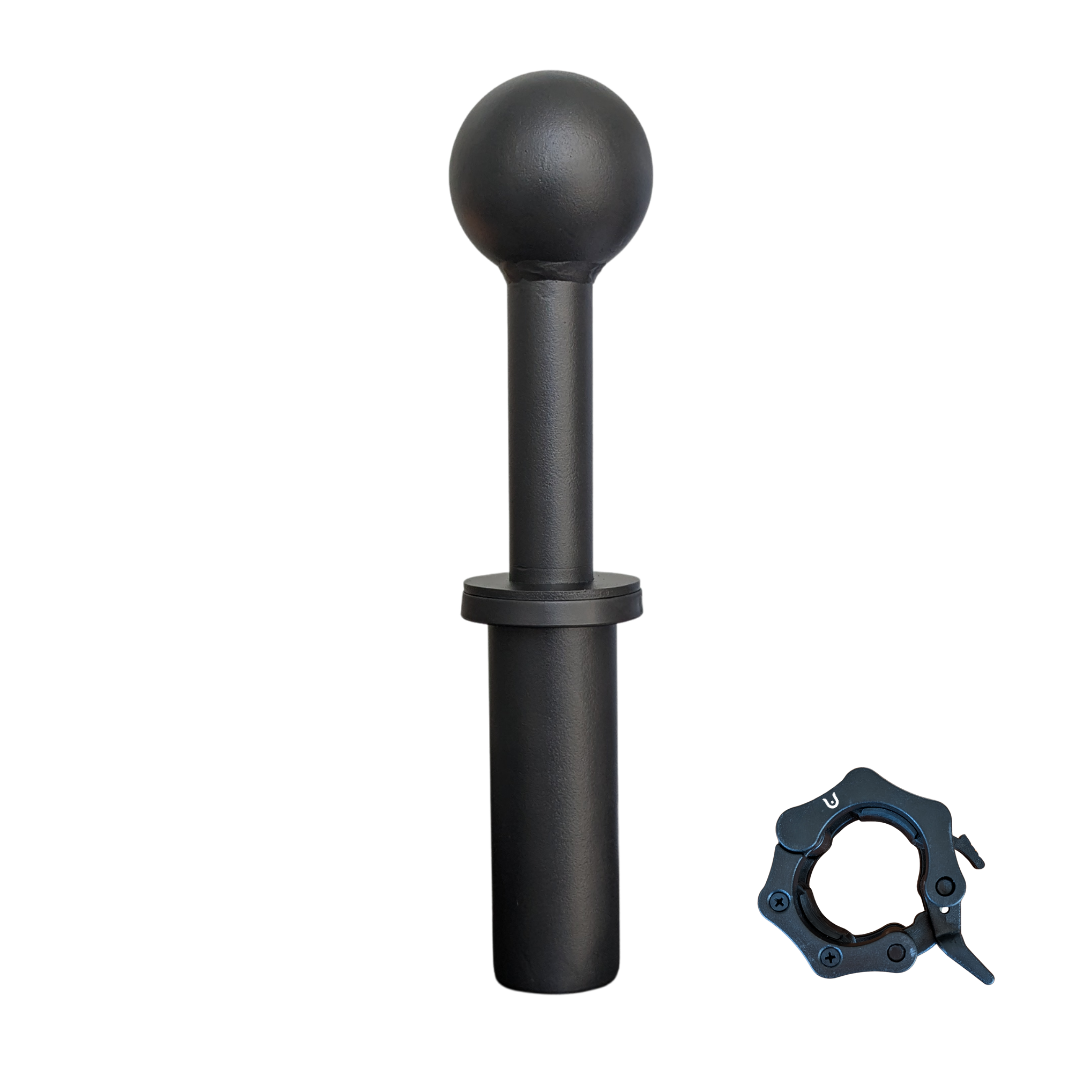
A very light hammer-style implement or a short lever with a small weight at one end is enough to get started. Support the forearm on a bench, grasp the handle closer to the weighted end and rotate slowly through a comfortable range. A longer lever can make a small weight surprisingly demanding. Doubling the perpendicular distance between the weight and the axis of rotation doubles its external turning effect at the same angle. Moving your grip a little farther from the weight may therefore be a more sensible progression than jumping to a much heavier implement.
A symmetrical dumbbell held through its centre will not provide the same rotational challenge as a deliberately offset weight. It can still be useful for learning the action. For more meaningful resistance, a suitable cable setup or offset implement allows the load to oppose the direction you intend to train. If the load assists a movement, that portion of the exercise may not train the same action concentrically.
Grip testing in another small study of healthy adults also varied with forearm rotation; the men in that sample produced their highest grip measurements in the neutral position. This does not mean a neutral grip is always the strongest option for every exercise or every person. Handle size, elbow position, task demands and individual anatomy matter. Choose a grip that suits the lift, and develop direct rotational control separately if that movement is neglected in your program.
Radial and ulnar deviation: train the side-to-side motion
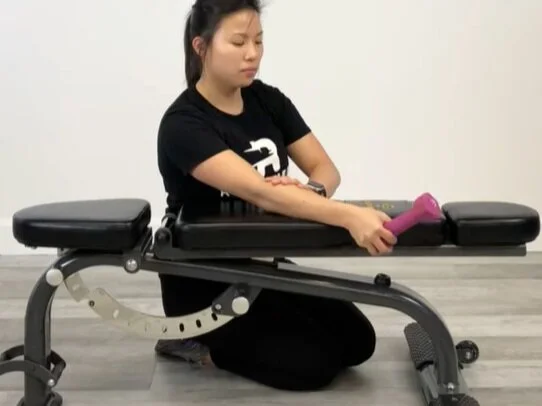
The side-to-side pair is easy to overlook. With your hand in a thumbs-up position, moving the hand toward the thumb side is radial deviation. Moving toward the little-finger side is ulnar deviation. Try both unloaded before adding resistance. You should see the hand move relative to the forearm without having to twist the whole arm or lean your torso.
One starting variation for radial deviation uses a light dumbbell with the forearm supported and the thumb pointing upward. Lift the thumb side of the hand gently against gravity while keeping the forearm fixed. To load the opposite direction appropriately, adjust the direction of pull with a light band or cable, or change the orientation of a suitable lever. Simply lowering a radial-deviation exercise is not necessarily the same as performing resisted ulnar deviation. The direction of the external resistance is what matters.
Choose an attachment you can grip comfortably, and keep the resistance line clear of the body. A small controlled motion is more useful than trying to create extra range by rotating the arm. There is no reason to force either end position. If you find yourself squeezing so hard that you cannot distinguish the wrist movement from finger fatigue, reduce the load.
Position also matters when comparing grip results. In a separate study involving 38 healthy right-handed participants, a wrist orthosis reduced measured grip strength. That finding is not advice to abandon prescribed braces or other supports. It is a reminder that a different wrist constraint can change the outcome of a strength test. Compare your own training under similar conditions if you want the numbers to mean something.

Bodybuilding Shirts & Workout Gear
Bodybuilding shirts, tanks and gym gear for lifters chasing muscle, size, symmetry and the pump.

Pumpeye Forearm Gains Grip Training Popeye Meme Vest Tank Top
Add some lifting attitude to training with “Pumpeye”.

Slip Not Grip Training – Heavy Metal Workout Decal for Sticker
A fun “Slip Not Grip Training” touch for bottles, laptops, and lockers.

Huh Huh Let'S Train Grip Beavis And Butt-Head T-Shirt
Make gym days more fun with “Huh Huh Let's Train Grip” style.

Mind Muscle Perfection Brain and Biceps Gym for Science Tank Top
Bring “Mind Muscle Perfection Brain and Biceps” humor to your next lifting session.

Gym If You're Reading This It's Arm Day Drake Parody & T-Shirt
Keep things casual with a little “If You're Reading This It's Arm Day Drake” attitude.

Every Day Is Arm Day
Make gym days more fun with “Every Day is Arm Day Octopus Gym Meme” style.

Welcome To The Gun Show Bro Meme Gains T-Shirt
Keep things casual with a little “Welcome to the Gun Show” attitude.

– Flex Armstrong Astronaut Moon Huge Arms Workout Decal Sticker
Give your everyday gear a playful “Flex Armstrong Astronaut Moon Huge Arms” twist.

Gym Dost Thou Even Curl Medieval Knight Bicep Hoodie
Show off your medieval humor in a laid-back “Dost Thou Even Curl Medieval Knight Bicep” hoodie.

Big Biceps Theory & Meme Fans Bro Science Vest Tank Top
Your gym-day look, with a playful “Big Biceps Theory” twist.
A practical six-week plan that respects your main lifts
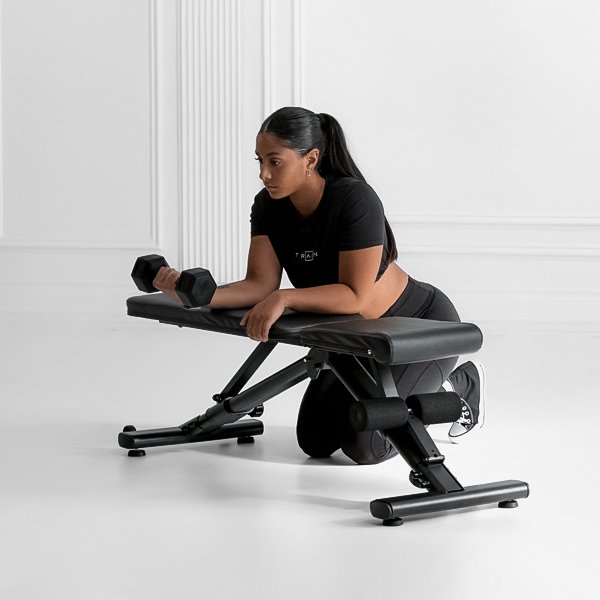
The following is a gym-friendly progression inspired by the movement categories, not a reproduction of the research protocol. It is intended for healthy lifters who already tolerate ordinary resistance exercise. You do not need to test a wrist one-repetition maximum to make it work.
Weeks 1–2: Train twice a week, preferably after your main lifts. Perform one easy set of 10–15 controlled repetitions in each direction, per side, using a very light load. Keep several repetitions in reserve. Prioritize an identical starting position, smooth movement and no assistance from the shoulder. Use the first sessions to discover which setup actually loads each action.
Weeks 3–4: If your wrists and elbows tolerate the work and your main sessions are unaffected, add a second set to the directions that need the most practice. You need not double all six movements at once. A modest increase in resistance or a slightly longer lever is appropriate once you can reproduce the same technique across the entire set. Keep at least two or three repetitions in reserve.
Weeks 5–6: Maintain the two weekly sessions and progress the movements individually. Add repetitions within the chosen range before adding resistance. If a particular movement is already well covered by your sport or lifting, maintain it rather than chasing equal loading across the six directions.
Keep a short log of the implement, lever length or grip position, repetitions and perceived effort. Film one set from the side or front if it helps you detect unwanted elbow movement. Avoid interpreting soreness as proof that the work is effective. If grip fatigue starts limiting your back training, move the direct work to a different day or reduce its volume. Straps can be useful on selected pulling sets when the target is the back rather than the hands, but they do not replace direct grip training.
Another small experiment observed greater wrist stiffness and muscle co-contraction when ten men gripped harder during a sudden perturbation task. That illustrates how gripping and wrist control interact, but it does not establish injury prevention or a hypertrophy advantage. Do not train through sharp pain, numbness, tingling or persistent worsening symptoms. Seek appropriate assessment if those appear.
The strongest practical message from the six-direction study is not that everyone needs six heavy isolation exercises. It is that strength and force control are related but distinguishable, and that the wrist and forearm deserve more than a single movement pattern. Start with deliberate technique, choose the directions that matter to you, and let your ability to repeat the movement determine when you increase the challenge.