Why a motionless bench press is a different lift
The bench press is a familiar test of upper-body strength, yet two lifters can move the same weight using very different standards. One touches the bar to the shirt and reverses direction immediately. Another brings it to a complete stop on the chest, stays tight and presses without a bounce. Both can train the pectorals, triceps and front delts. Only the second directly prepares you for a properly paused powerlifting attempt.
A pause removes much of the momentum available from a rapid reversal. It makes the lifter demonstrate control and produce force from a stationary bar. That does not prove paused reps automatically produce more muscle growth than well-controlled touch-and-go reps. The strongest reason to train a pause is specificity: if you want to improve a paused bench, practice the skill of pausing.
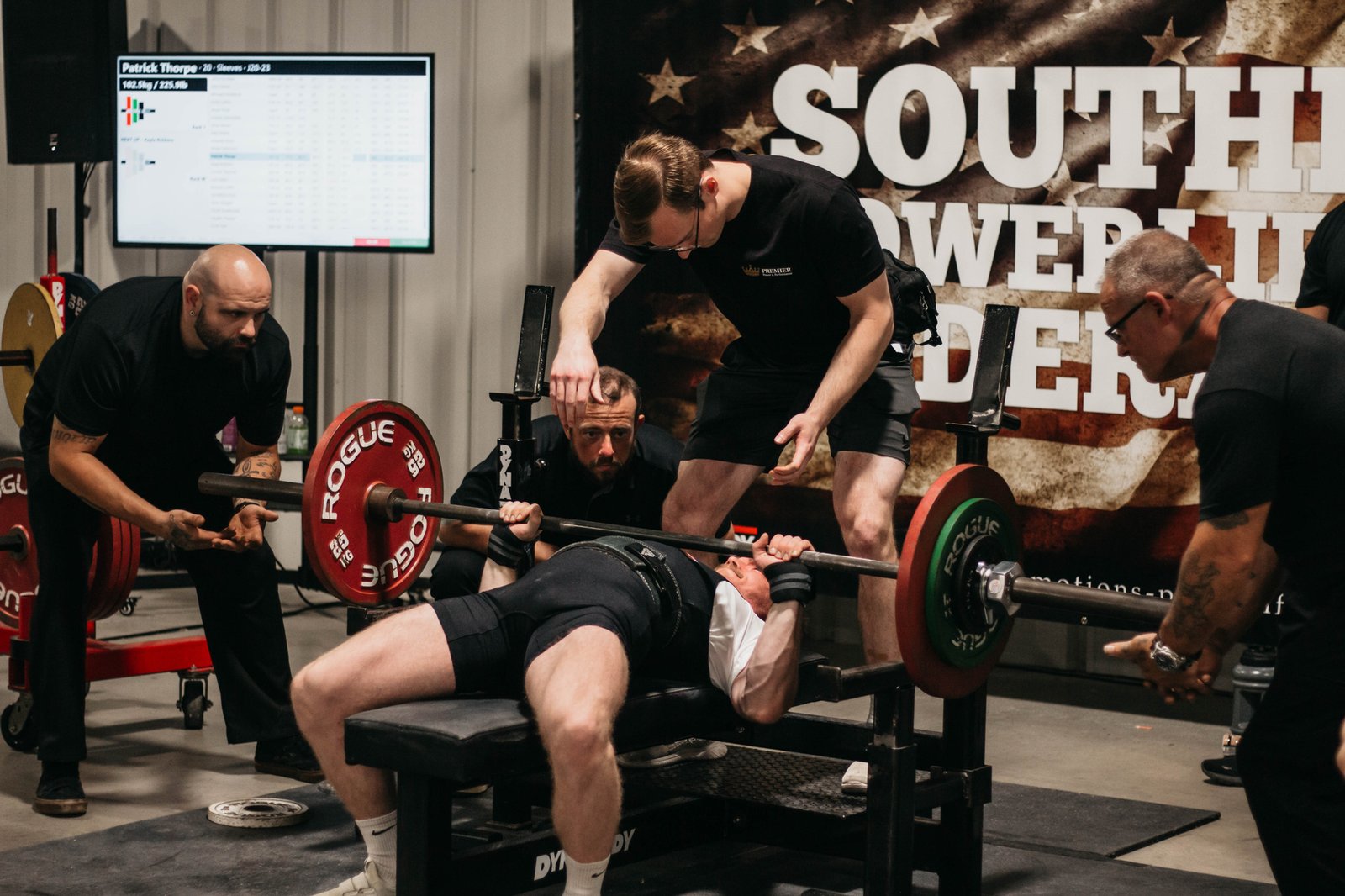
Under the international competition rules effective March 1, 2026, the bar must be motionless on the chest or abdominal area before the referee gives the press command. There is no universal one-second or two-second rule. A referee judges when the bar is still. That distinction matters if you practice a memorized countdown but begin pressing before the signal.
Even if you never compete, paused reps are a useful technical check. They expose an inconsistent touch point, hips lifting off the pad and a loss of upper-back position. Use them to standardize training, not as a magical shortcut to a bigger one-rep max.
Set up the feet, grip, bench and bar before you press
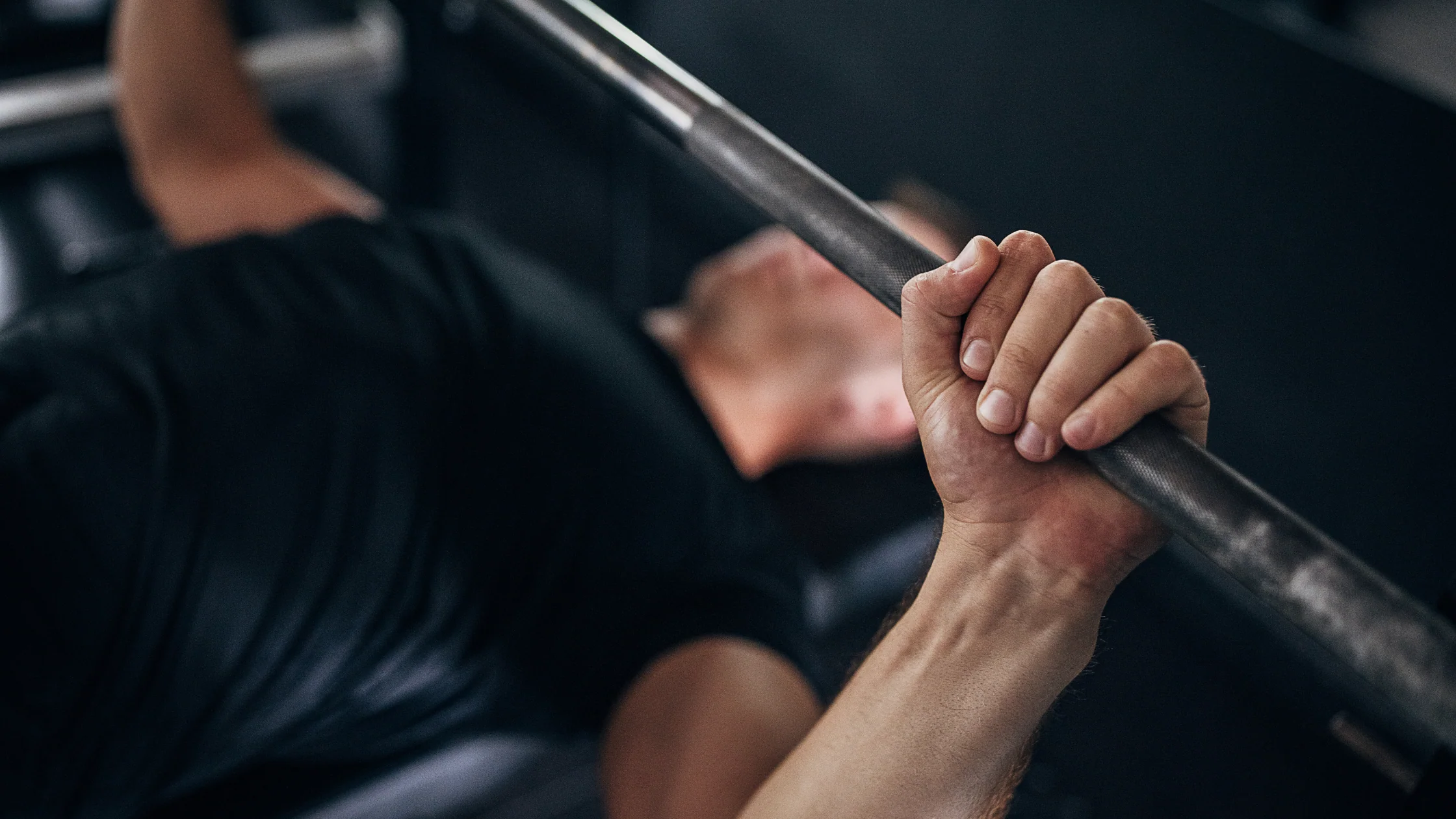
Start with a stable flat bench inside a secure rack, ideally with correctly positioned safeties or competent spotters. Lie with your eyes roughly below the racked bar. Plant both feet firmly, pull the shoulder blades back and down into a comfortable upper-back position and establish a manageable arch. You should feel supported rather than forced into an extreme spinal shape.
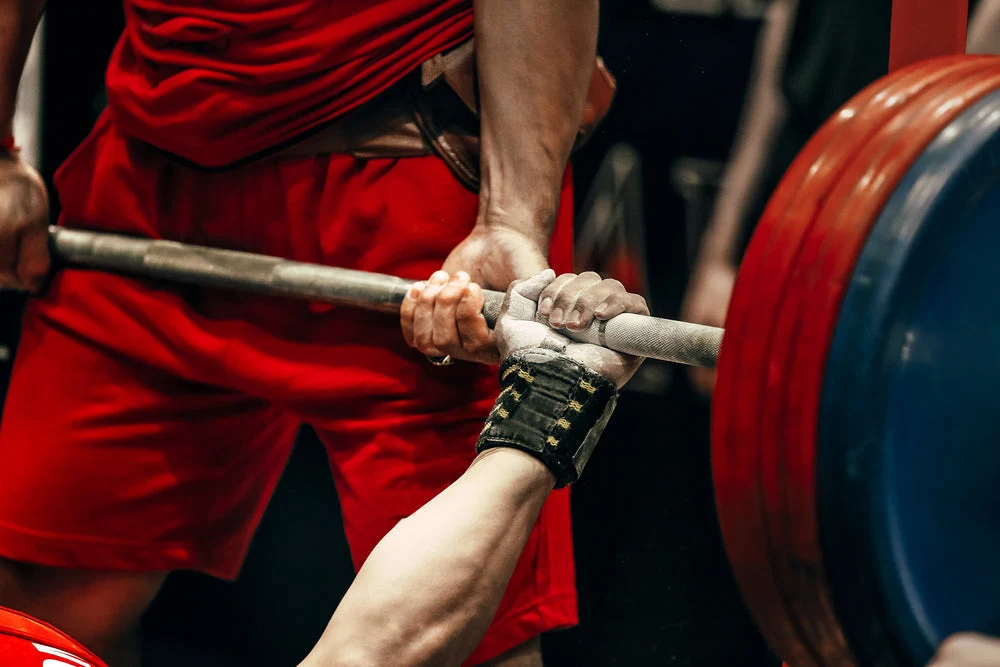
Grip the bar symmetrically using the knurling or markings as references. Wrap the thumbs around the bar and position it securely in the palms with wrists reasonably stacked above the forearms. The exact grip width depends on your build and comfort. In international competition, the maximum spacing is 81 centimeters between forefingers. The current rules also require the head, shoulders and buttocks to maintain bench contact and feet to remain flat as permitted by the shoes.
Competition standards include a depth requirement: the underside of each elbow joint must reach the level of, or below, the top of its corresponding shoulder joint. That is different from simply touching the bar somewhere on the torso. Rules can vary across federations, so check the requirements of the meet you intend to enter.
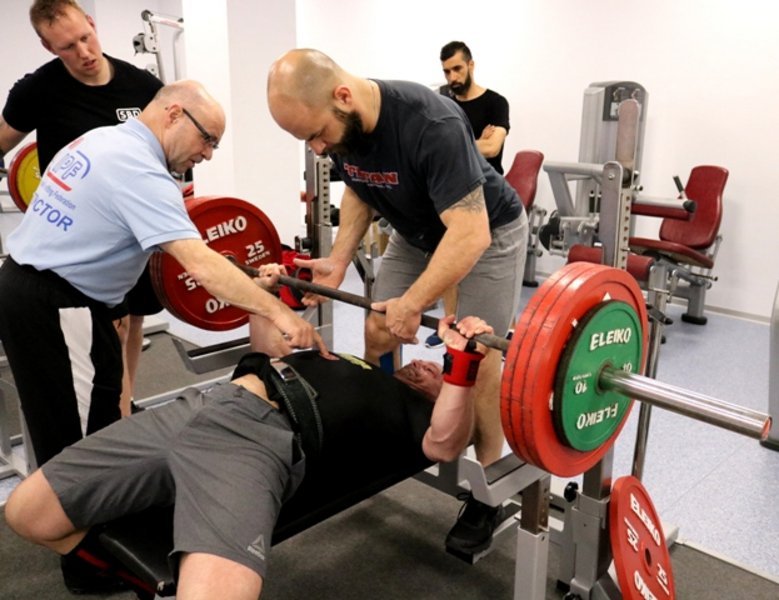
Ask a spotter for a handoff when the weight is challenging. Let the bar settle above the shoulders at locked elbows before descending. Record your rack height, grip reference, foot placement and handoff method. A different handoff or slipping foot can make the pause feel harder for reasons unrelated to chest strength.

Equipment Worth Exploring
Explore equipment, accessories and gear from our carefully selected range.


FID Bench MAX
Adjustable bench offering flat, incline, and decline positions + adjustable headrest.


Master the start, press and rack commands
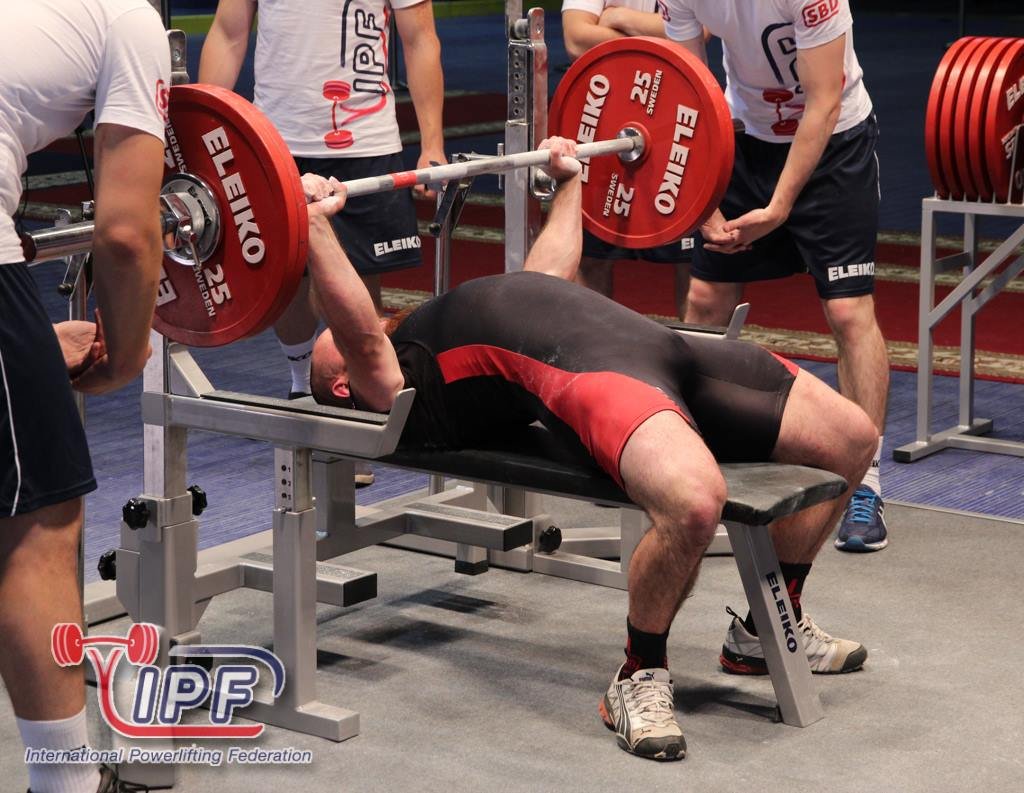
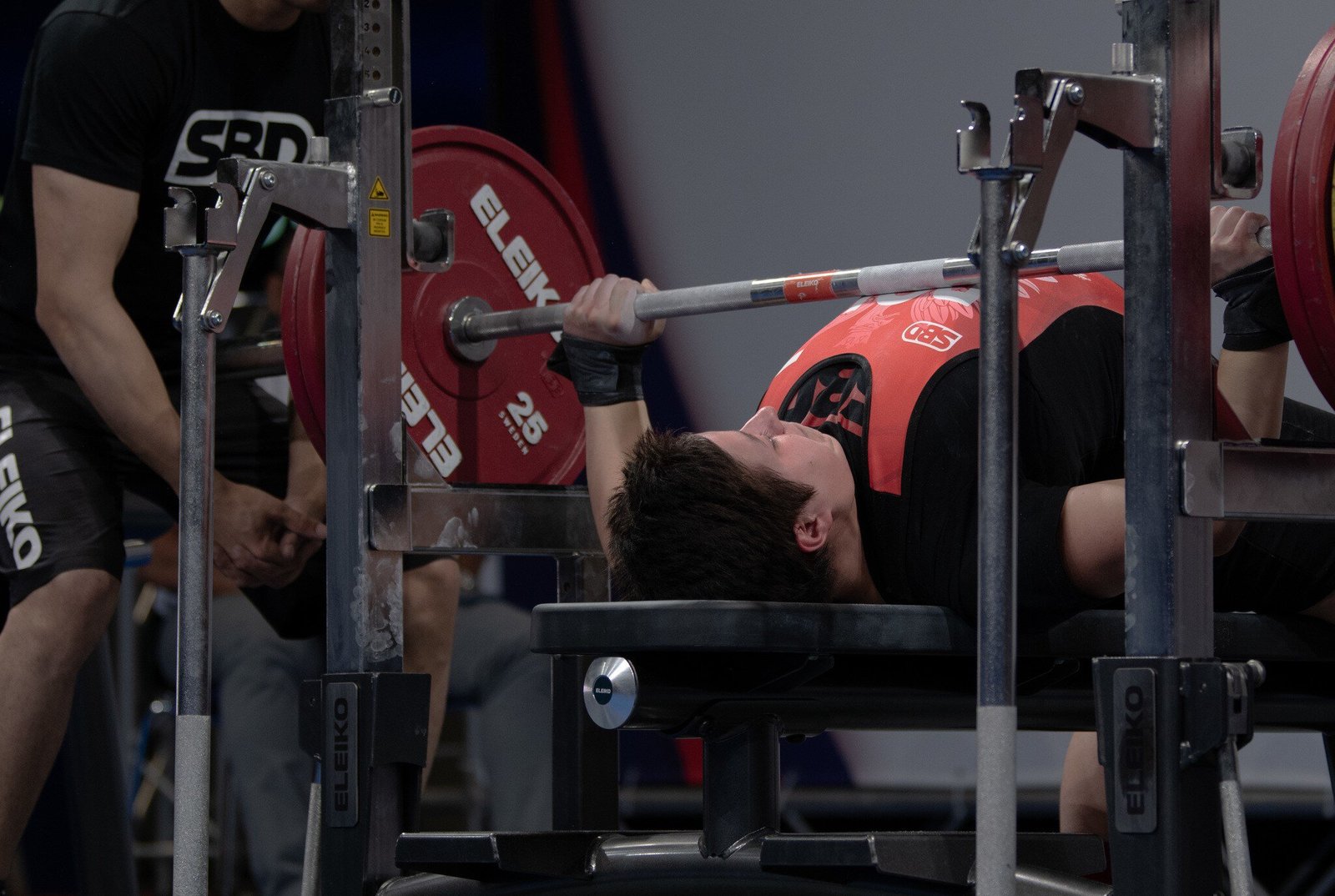
A competition-style repetition has three checkpoints. Hold the unracked bar still at locked elbows and wait for the start command. Lower it under control to a consistent chest or abdominal touch point, keep it motionless and wait for the press command. Press to locked elbows, settle the bar and wait for the rack command before returning it to the hooks.
The pause is a position, not a rest. Keep the upper back tight, shoulders stable, trunk braced and feet pushing firmly into the floor. Do not relax the bar onto your ribs, sink it farther after becoming motionless or bounce it back up. A clean pause looks quiet from the side. The weight touches, stops and moves upward only when you intentionally press.
Have a training partner vary the time before saying press. This prevents you from anticipating a predictable count. When training alone, a deliberate one- or two-second motionless hold can teach control, but it is not a substitute for reacting to a referee. Film a few repetitions from the side and look for a genuine stop rather than a quick dip.
Start lighter than your usual touch-and-go working weight and count only reps that meet your chosen standard. If the first rep pauses cleanly but the last two rebound, the set is too heavy or too fatiguing for skill practice. Consistency is the point.

Powerlifting Shirts & Lifting Gear
Powerlifting shirts and gym gear for squat, bench and deadlift lifters who live for heavy numbers.

Platehead Powerlifting Tee
Heavy lifts, good laughs, and a little “Platehead Gym Skull” energy.


Bench Press and Chill Funny Gym T
Make gym days more fun with “Bench Press and Chill” style.

Shirt: Good Argument But I Bench More Than You – T-Shirt
Make gym days more fun with “: Good Argument But I Bench More Than You” style.

9 Plates Bench Club : Exclusive Meme & Gymbro T-Shirt
Show some powerlifting attitude with a playful “9 Plates Bench Club” tee.

Squat Bench Deadlift Read Shirt Literary Bookworm Top T-Shirt
Bring “Squat Bench Deadlift Read” humor to your next gym day.

Gym Sir Swole of Benchalot Medieval Knight Bench Press Hoodie
Show off your medieval humor in a laid-back “Sir Swole of Benchalot Medieval Knight” hoodie.

Barbell Heartbeat Muscle Shirt Athletic Vest for Powerl Tank Top
Train hard, laugh a little, and rep “Barbell Heartbeat”.

Gym Hardcore Skull Crewneck for Powerlifting Bodybuildi T-Shirt
Keep things casual with a little “Hardcore Skull” attitude.
Drive the bar upward without losing position
After the press signal, drive the bar upward while maintaining pressure through the upper back and feet. Many lifters use a slight backward bar path as the bar travels from a lower-chest touch point toward a position above the shoulders. The exact path varies with arm length, grip width and arch. Avoid forcing a perfectly vertical line if it puts the shoulders in an awkward position.
Leg drive is a source of stability, not permission to bridge the hips off the bench. Push through the feet while keeping the buttocks in contact with the pad. Keep wrists aligned and elbows moving in a coordinated pattern. If one side repeatedly rises first, lower the weight and review grip symmetry, handoff and touch point before loading more plates.
Heavy benching needs an exit plan. Use correctly set rack safeties where available and a competent spotter for difficult attempts. A spotter should not touch the bar during a valid lift unless assistance is needed. If a lifter becomes trapped or loses control, safety matters more than finishing a repetition. Never attempt a true maximal paused bench alone without effective protection.
A paused rep may feel substantially harder than a fast touch-and-go rep. That is expected when you remove the rebound. Compare your paused performance with your previous paused sessions rather than using a different movement standard to judge progress.
Pick variations that address your actual weakness
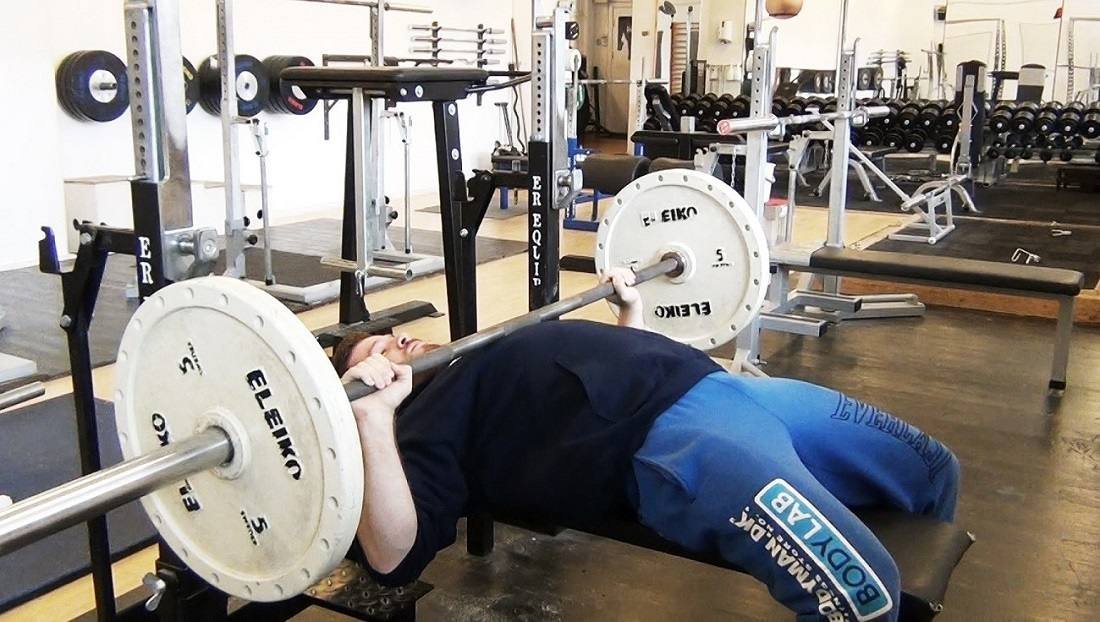
A normal competition-style pause is the most specific exercise for a lifter preparing for a meet. It rehearses the exact chest contact, motionless position and patient start required under a press command. A longer pause can help someone who habitually rushes the bottom, but reduce the load enough to maintain full-body tension. A five-second hold is a training drill, not a meet requirement.
Close-grip paused pressing provides a different emphasis on elbow extension while still requiring control at the bottom. A pin press begins from rack pins and changes the mechanics; it is not identical to a bar resting on the chest. A hover or Spoto-style press stops just above the torso, training deceleration and positional awareness without chest contact. It is an accessory, not a legal competition repetition.
Dumbbell pressing can provide extra chest work without turning every session into heavy competition practice. Rows and pulldowns build the upper back that supports a stable bench setup. Cable fly variations can add chest volume at relatively low absolute loads. Pick accessories to solve a real programming problem rather than collecting variations for novelty.
Do not use pain as a progression goal. If a grip, range of motion or arch repeatedly provokes sharp shoulder, elbow or wrist discomfort, adjust the load or variation. Persistent symptoms warrant professional assessment. Training should be challenging and repeatable, not dependent on ignoring warning signs.
Equipment Worth Exploring
Explore equipment, accessories and gear from our carefully selected range.


Leather Lifting Straps
Padded leather straps support grip during heavy rows, deadlifts and pulling exercises.

Leather Wrist Grips
Padded leather lifting grips help support the hands and wrists on heavy pulling exercises.

VOLTRA
Compact digital cable trainer with smooth, adjustable resistance.
A practical six-week paused-bench progression
Train the bench twice weekly with at least two days between demanding pressing sessions. On Day A, perform paused bench first: three or four sets of four to six controlled reps, leaving approximately two reps in reserve. Rest two to four minutes between hard sets. Add two or three sets of rows and two or three sets of comfortable triceps work. Every bench repetition should include the same deliberate pause.
On Day B, use a lighter paused bench for three sets of six to eight reps, or a close-grip variation if your standard paused technique is already consistent. Follow with two or three sets of incline dumbbell presses and two to four sets of rows or pulldowns. If pressing from other sessions is already high, reduce accessory volume instead of forcing a preset menu.
Weeks one and two establish your baseline. Film a few reps, record the load and check whether the pause is truly motionless. In weeks three and four, try to add one clean repetition within the target range before increasing weight. When every set reaches the top of the range at comparable effort, add the smallest practical load increment. Weeks five and six continue the progression while keeping the same setup and touch point.
If fatigue rises or technique deteriorates, remove one working set or take a lighter week. Do not max out after every session. Meet-bound lifters can rehearse occasional single reps with all three commands and a spotter. Recreational lifters can use a clean five-rep personal best as a useful benchmark without ever attempting a risky solo maximum.
Bodybuilding Shirts & Workout Gear
Bodybuilding shirts, tanks and gym gear for lifters chasing muscle, size, symmetry and the pump.

Work on His Pecks Tee
Show some bodybuilding attitude with a playful “Why Did The Chicken Go To The Gym? To Work” tee.


My Bench Press Is Stuck Tee
Heavy lifts, good laughs, and a little “My Bench Press is Stuck Funny Horror” energy.

I Love Bench Press Shirt | Red Heart Weight Plate Graph T-Shirt
Show some gym-girl attitude with a playful “I Love Bench Press” tee.

I Want You To Bench Press Uncle Sam – 4th of July Patri Sticker
Stick a little “I Want You To Bench Press Uncle Sam” humor on your favorite gear.

Ultimate Meme : The Essential Bench Press Shirt T-Shirt
Show some powerlifting attitude with a playful “Ultimate” tee.

Bending Bars Meme – Barbell Squat Bench Deadlift, & T-Shirt
Heavy lifts, good laughs, and a little “Bending Bars Gym Meme” energy.
Heavy Metal Lift Heavy – Hardcore Powerlifting Gym Shir T-Shirt
A t-shirt featuring the Heavy Metal Lift Heavy – Hardcore Powerlifting Gym Shirt for Bodybuilders and Lifters artwork, bringing lifting-inspired humor and distinctive gym graphics to your everyday gear.

Barbells and Suffering – Demonic Heavy Metal Gym Vest f Tank Top
Bring “Barbells and Suffering” humor to your next lifting session.

Gold Skull Uplift Iron Club Gym Decal Powerlifting Body Sticker
Put “Gold Skull” gym humor on your laptop, bottle, or gym gear.
Fix common mistakes and measure the right progress
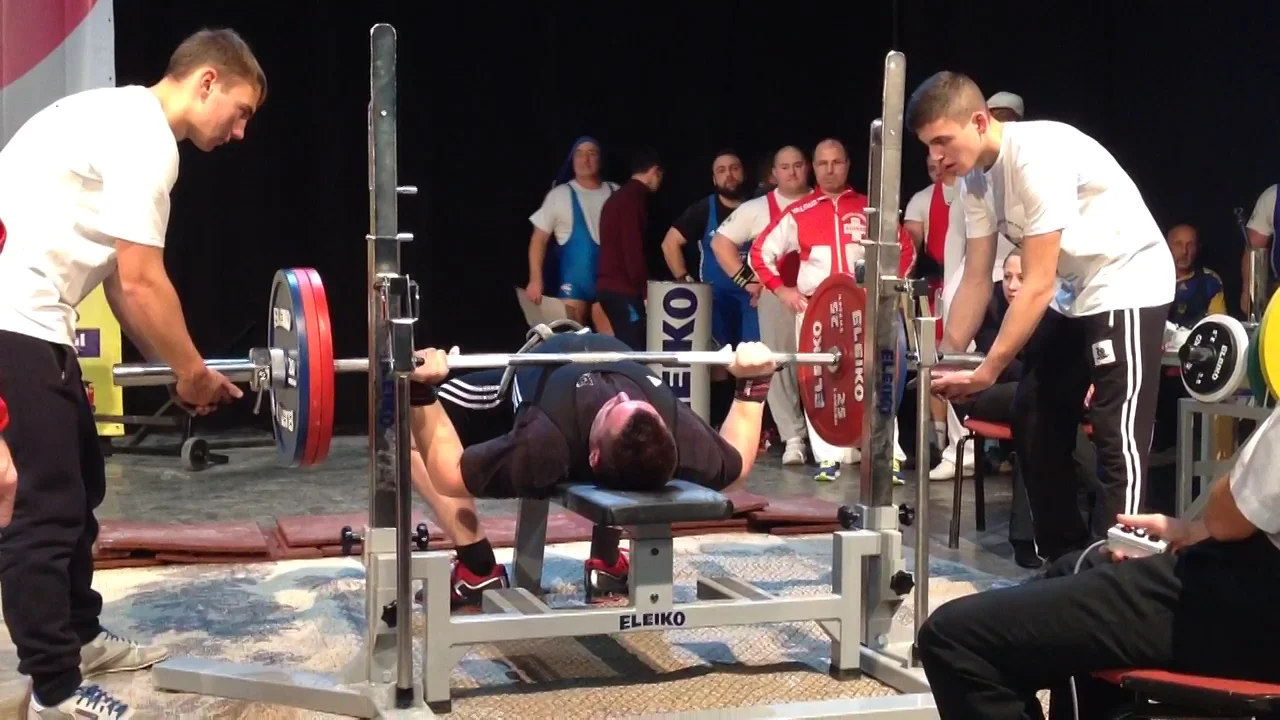
If the bar bounces, reduce the load and have a partner delay the press command until the bar is visibly still. If the hips lift, adjust foot placement and learn to push through the floor without bridging. If wrists collapse backward, position the bar deeper in the palm and check grip symmetry. If the touch point changes every repetition, film the descent and simplify your setup.
If you repeatedly fail just off the chest, more controlled pause practice may help, but the sticking point can also reflect fatigue, technique, load selection or general strength. If the bar slows near lockout, review triceps work and bar path. Treat these as hypotheses to test across several sessions, not diagnoses based on one missed rep.
Log load, repetitions, pause quality, estimated reps in reserve and rest duration. Comparing a two-second paused triple with a bounced triple is not a fair strength comparison. Very short rests can also reduce repetition consistency during demanding bench sets, so allow sufficient recovery when measuring strength.
The useful result is a bench that looks the same under progressively heavier loads. For powerlifting, the pause and commands are part of the actual performance. For bodybuilding, they are an optional technique constraint that can improve consistency without replacing sensible weekly volume. Keep your standards clear, train the version you want to improve and let the logbook measure progress.