Advertising disclosure: This page includes affiliate product links that may earn us a commission, as well as products from our own store.
Does changing the surface under a prone Y raise change what your shoulder-blade muscles do? A 2025 study of 15 healthy men measured three support conditions. Its foam-roller result is interesting, but it says much less about long-term gains than a flashy headline might suggest.
The experiment changed the support, not the lifting goal
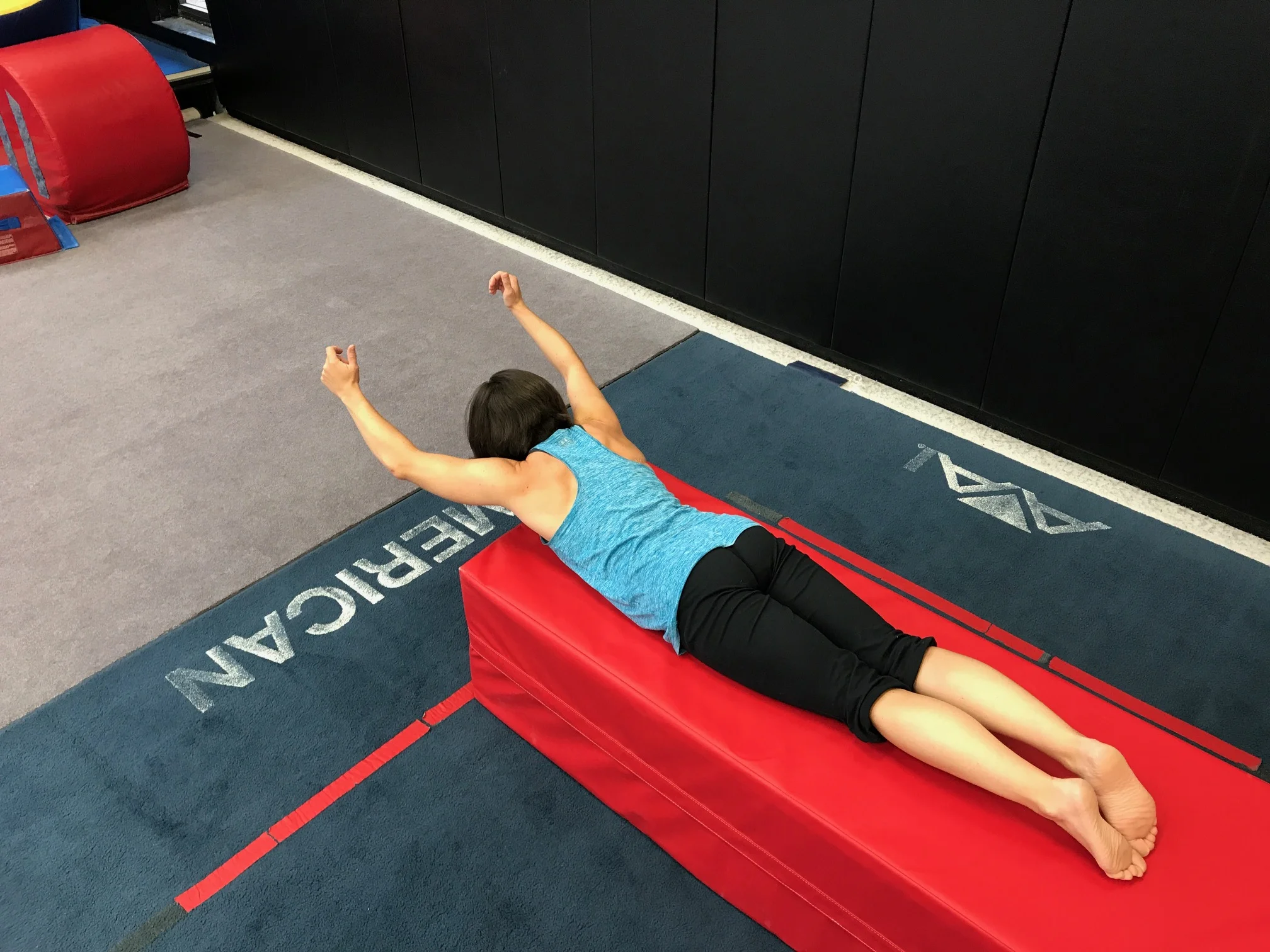
A Y raise looks almost too small to deserve serious analysis. You lie face-down, reach your arms diagonally overhead and lift them a little while your shoulder blades move around your rib cage. Yet altering what supports your body may change the muscle-activity signal even if the arm movement sounds identical on paper.
In a March 2025 laboratory experiment, researchers tested 15 healthy men using three prone Y-raise conditions in random order. One used the conventional prone setup, one used a Togu jumper and one used a foam roller as the base of support. Surface electrodes recorded upper- and lower-trapezius activity during each condition. The study was not a training programme and did not follow changes in muscle size, strength or pain.
The important distinction is support. A foam roller here was part of the experimental support arrangement, not a recommendation to massage your back between repetitions. The Togu jumper was another support condition, not a brand of weight or a synonym for the roller. The paper’s abstract does not provide enough detail to recreate every contact point and roller orientation; do not invent a laboratory setup from a headline.
Why care? The lower trapezius helps control the shoulder blade during arm elevation, alongside the upper trapezius and other scapular muscles. A Y raise gives a practical way to practice that overhead-diagonal movement with very light resistance. Changing how you brace against the floor or equipment can change the demands of keeping the torso and shoulder girdle organised.
Where the foam roller condition stood out
The notable result was specific. Lower-trapezius electromyographic activity was higher in the foam-roller condition than in both the standard prone Y raise and the Togu-jumper condition. The lower-to-upper-trapezius activity ratio was also higher with the roller than in the conventional condition. The comparisons passed the study’s adjusted significance threshold, which was stricter than an ordinary 0.05 cut-off.
That does not mean the upper trapezius should be switched off. The shoulder blade needs coordinated activity from several muscles as the arm travels overhead. The ratio is simply a way of comparing electrical activity between two recording sites under these laboratory conditions. A relatively higher lower-trap signal may be useful information when choosing an exercise, but it is not a score of perfect movement.
Nor does the result establish that every person will respond identically. Fifteen healthy male volunteers are a small, specific sample; the findings do not automatically extend to people recovering from shoulder surgery, competitive lifters using heavier dumbbells or anyone with an irritated shoulder. Electrodes also measure signals affected by placement, normalisation and the task itself. They do not directly measure force produced by each muscle.
Consider the practical interpretation: if you have several comfortable ways to perform a light Y raise, the support surface is one variable worth testing. Record whether the range, neck position and controlled arm path remain repeatable. You cannot feel a published EMG ratio with precision, and a stronger sensation between the shoulder blades does not confirm that your muscle signals match the volunteers’.
An EMG advantage is not a muscle-growth guarantee
It is tempting to turn the experiment into the claim that a foam roller builds the lower traps faster. That would jump across a missing step. The researchers recorded muscle activity in acute conditions. They did not randomise people to months of foam-roller Y raises versus bench Y raises and compare hypertrophy, tendon outcomes or performance.
Two related laboratory studies reinforce the need for precision. A 2024 comparison in 21 healthy men tested prone Y raises with and without isometric band adduction and found different trapezius and serratus electrical-activity patterns. A separate 2025 study in 20 men with scapular dyskinesis compared intended shoulder-blade depression and other strategies during prone Y raises. Neither study makes its specific strategy interchangeable with the foam-roller support used in the 15-person trial.
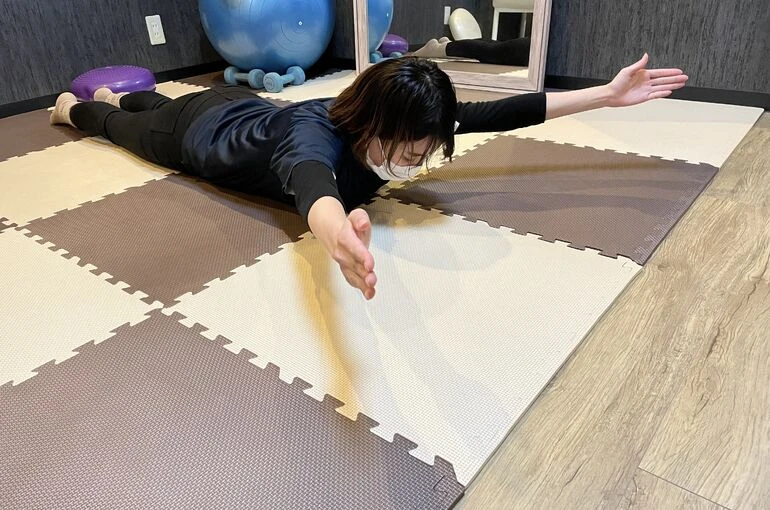
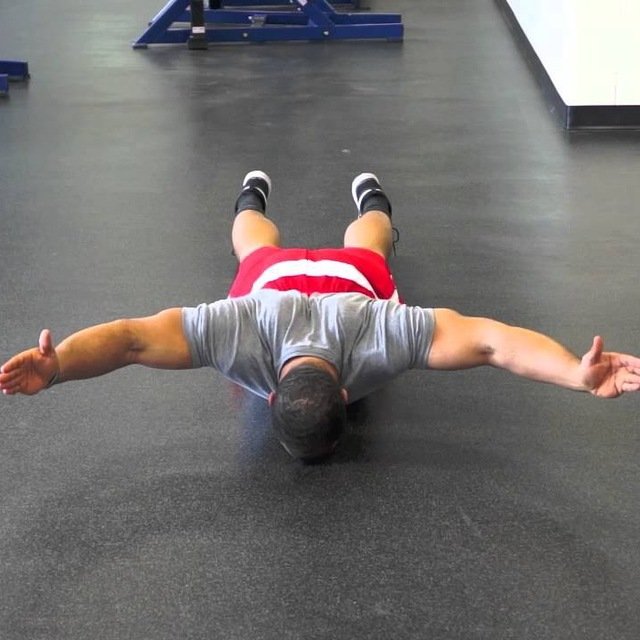
The photograph beside this section shows a different prone arm position: a T, with the arms extended out to the sides. A T and a Y are not the same exercise angle. The image helps make the distinction visible, not illustrate an unmeasured effect in the research. Changing arm angle can change which muscles assist; label the variation rather than quietly treating the positions as equivalent.
Most importantly, the evidence does not justify promises that this one drill prevents shoulder injuries, corrects everyone’s posture or replaces progressive training for the back and shoulders. It may be a useful accessory or motor-control exercise for somebody who tolerates it. The decision belongs within their larger programme, and symptoms or medical restrictions can change what is appropriate.
Set up a prone Y raise you can actually repeat
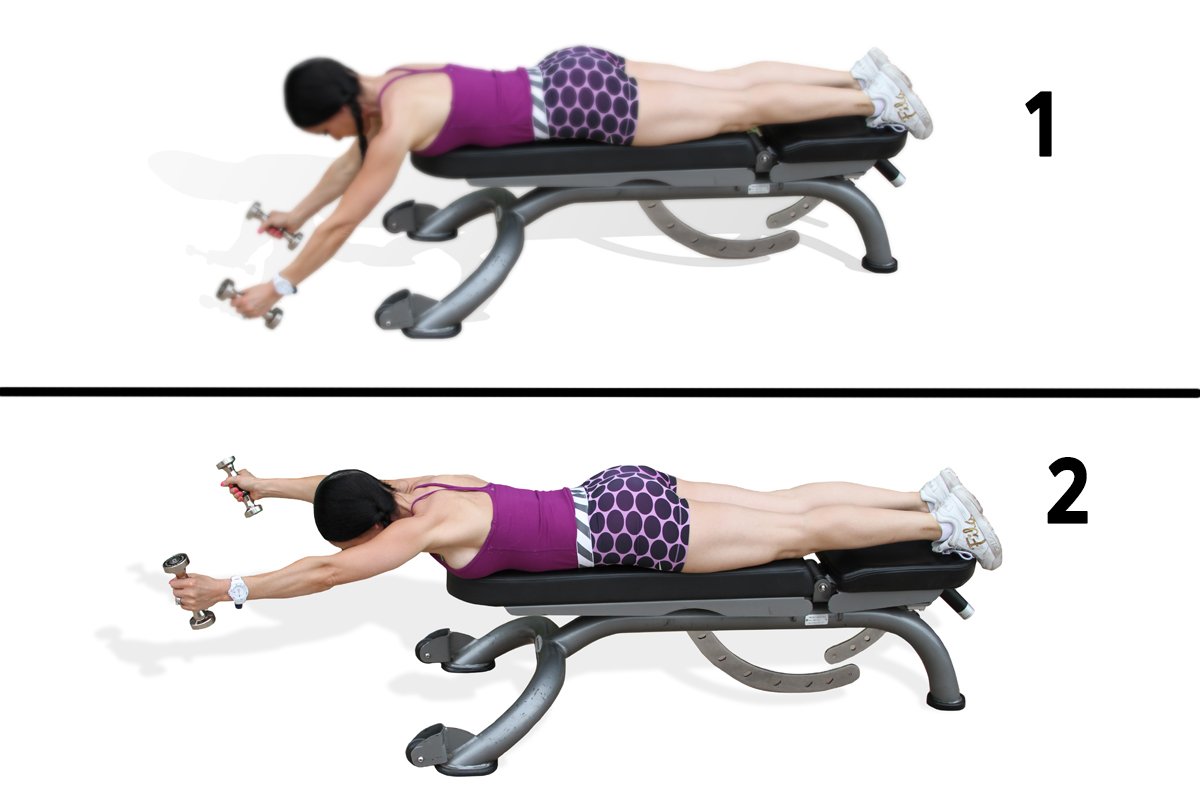
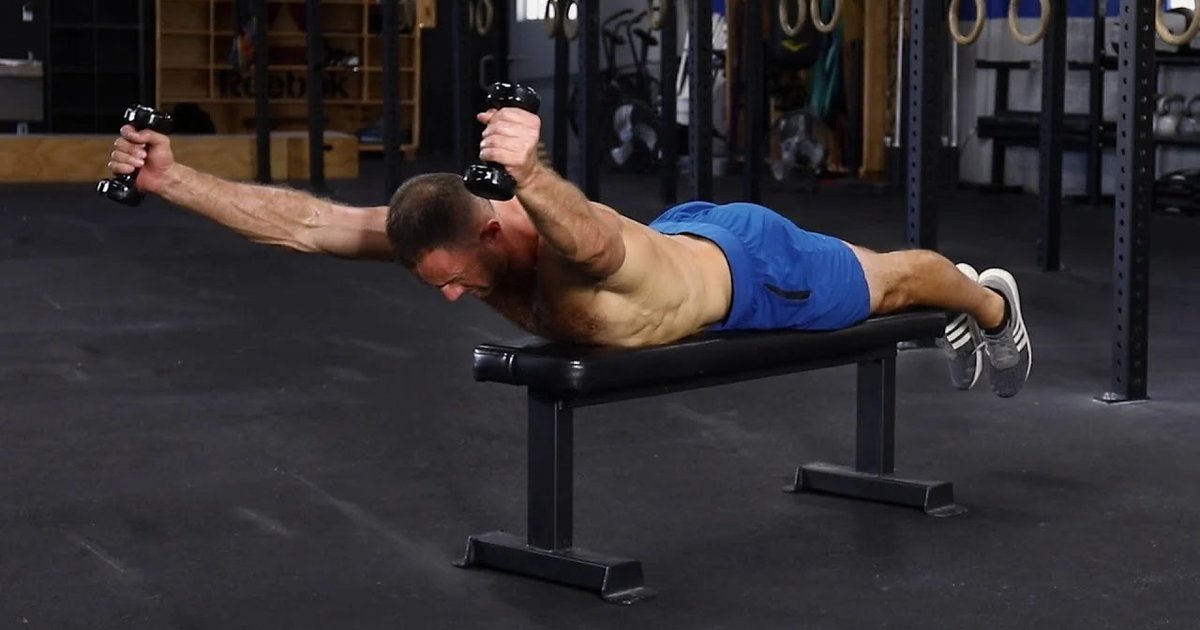
Begin without load or with very light dumbbells. Lie face-down on a stable mat, a secure bench or another surface that supports your torso without allowing you to slide. Keep the neck aligned with the trunk rather than looking at a mirror in front of you. Reach the arms diagonally ahead so the body and arms form a wide Y, with thumbs broadly facing upward.
Lift the arms only as far as you can while keeping the ribs, pelvis and head quiet. A small clean range counts. Pause briefly and lower slowly instead of letting the hands drop. The lift should not become a dramatic chest extension or a shrug that hides the arm movement. If a bench presses uncomfortably on the ribs or shoulders, try a different support or return to the floor.
Do not try to clamp the shoulder blades rigidly down for the entire repetition. They naturally move during overhead reaching. Think about a long neck and a controlled reach; adjust the shoulder position without creating a hard pinch. If the arms cannot comfortably travel overhead, a shorter pain-free movement or another exercise is a better choice than forcing a textbook shape.
For ordinary strength training, treat technique as a repeatability test. Could you reproduce the same Y angle on all repetitions? Does the second set still look like the first? Can you keep the weight genuinely light rather than kicking the arms upward? If the answer is no, remove the dumbbells, reduce range or shorten the set. Sharp pain, new tingling or unusual weakness warrants stopping and seeking individual professional advice.

Equipment Worth Exploring
Explore equipment, accessories and gear from our carefully selected range.


FID Bench MAX
Adjustable bench offering flat, incline, and decline positions + adjustable headrest.

Multi Bench MBX-650 2.0
Adjustable multi-bench with roller adjustment, 15 backrest positions and accessory mounts.


Rubber Hex Dumbbells
Rubber-coated hex dumbbell pairs with a stable shape for home and commercial strength training.


GymPin D Cuffs
Adjustable wrist cuffs with textured grips for supported cable-machine exercises.

GymPin Ergo Handles
Pair of ergonomic cable handles shaped for comfortable triceps and pulling exercises.
The bench, floor, bands and cables answer different questions
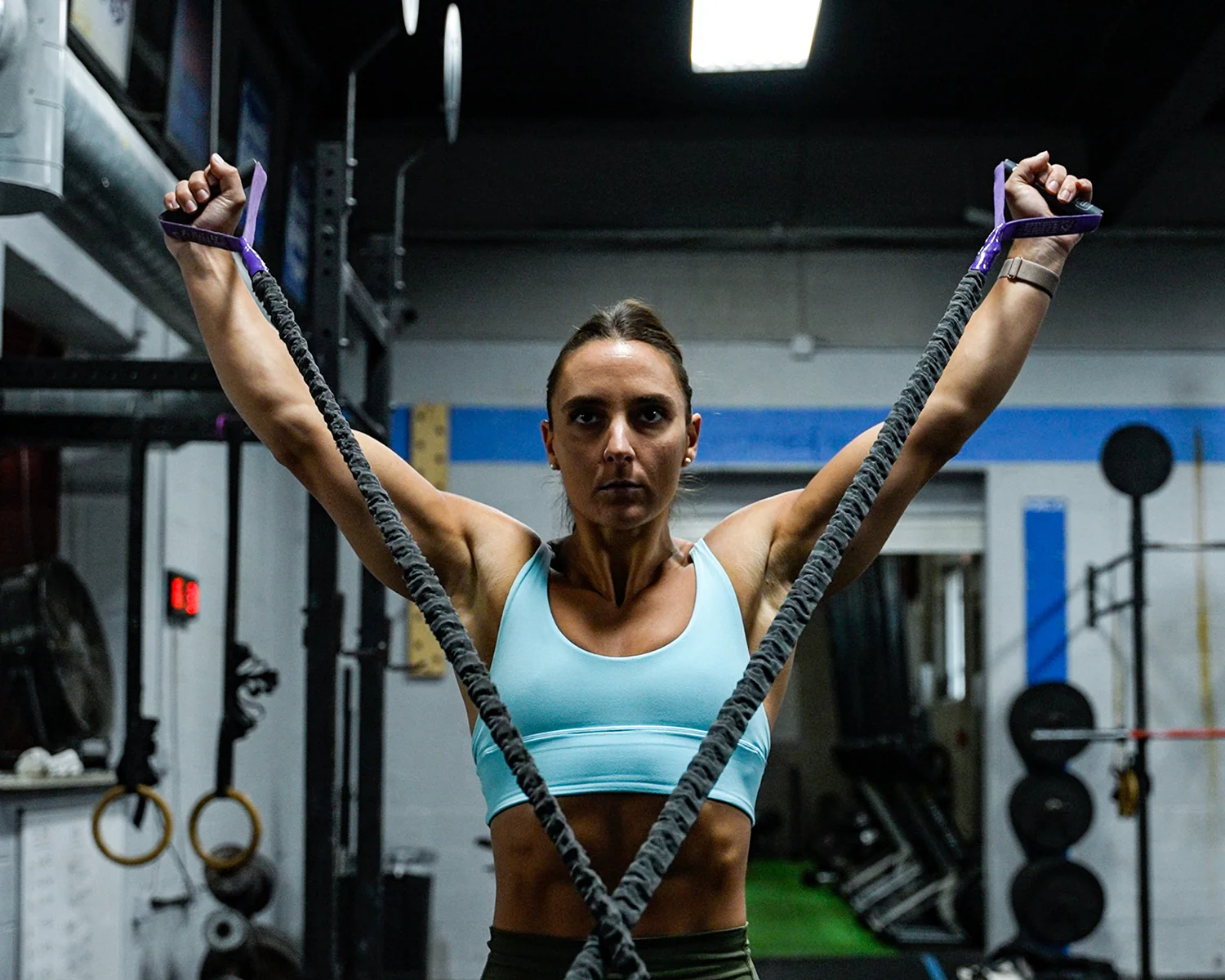
The photograph here shows a standing band Y-fly rather than a prone laboratory Y raise. A band pulls along its own line of tension, which changes as it stretches, while gravity resists a prone arm raise differently. That does not make one version automatically superior; it means the loads and joint demands are not interchangeable. The same caution applies to the crossed-cable Y raise shown later.
A flat mat removes extra equipment and can help you notice whether the trunk is compensating. An incline bench offers chest support and room for the hands to travel below the shoulders, but its angle changes the direction of gravitational resistance. A foam roller can be an additional support choice only when the arrangement is stable and controlled; do not improvise precarious balancing on a rolling cylinder to imitate the study.
The Togu-jumper condition in the study is yet another specific base of support. Unstable equipment is not a free upgrade. If the task becomes mostly about preventing a slip or keeping the torso from rocking, you may no longer be training the arm movement you meant to practise.
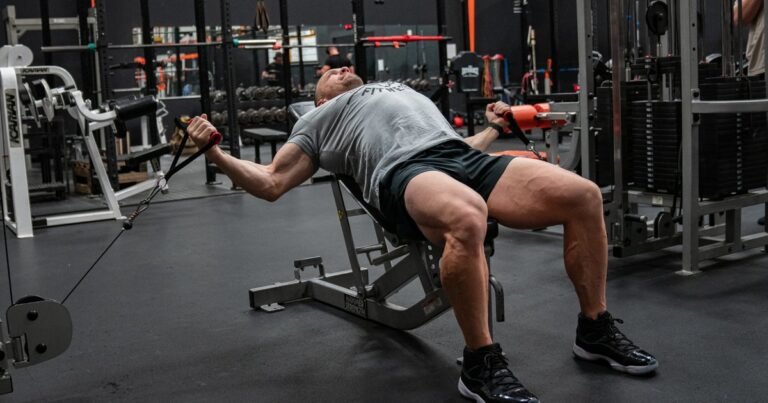
Likewise, cable Y raises are more naturally used as a standing resistance exercise and are not a direct replication of the prone support comparison. They can still train a diagonally upward arm path if you have low pulleys and sufficient space. Choose the variant for the goal and equipment you actually have. There is no basis in these data for translating a light bench Y-raise load into an equivalent cable-stack setting.
Equipment Worth Exploring
Explore equipment, accessories and gear from our carefully selected range.
VOLTRA
Compact digital cable trainer with smooth, adjustable resistance.

Go-Tone Pro
Portable digital cable trainer with up to 66 lb (30 kg) of adjustable resistance.

VForce Wall Trainer
Space-saving wall-mounted functional trainer with pivoting cable arms and variable resistance ratios.

Multi Pull Smith Rack MPHR-780
All-in-one rack with a Smith machine, functional trainer, lat pulldown and low row.

VForce 2IN1
Half rack and pivot-arm functional trainer with switchable 1:1 and 2:1 pulley ratios.

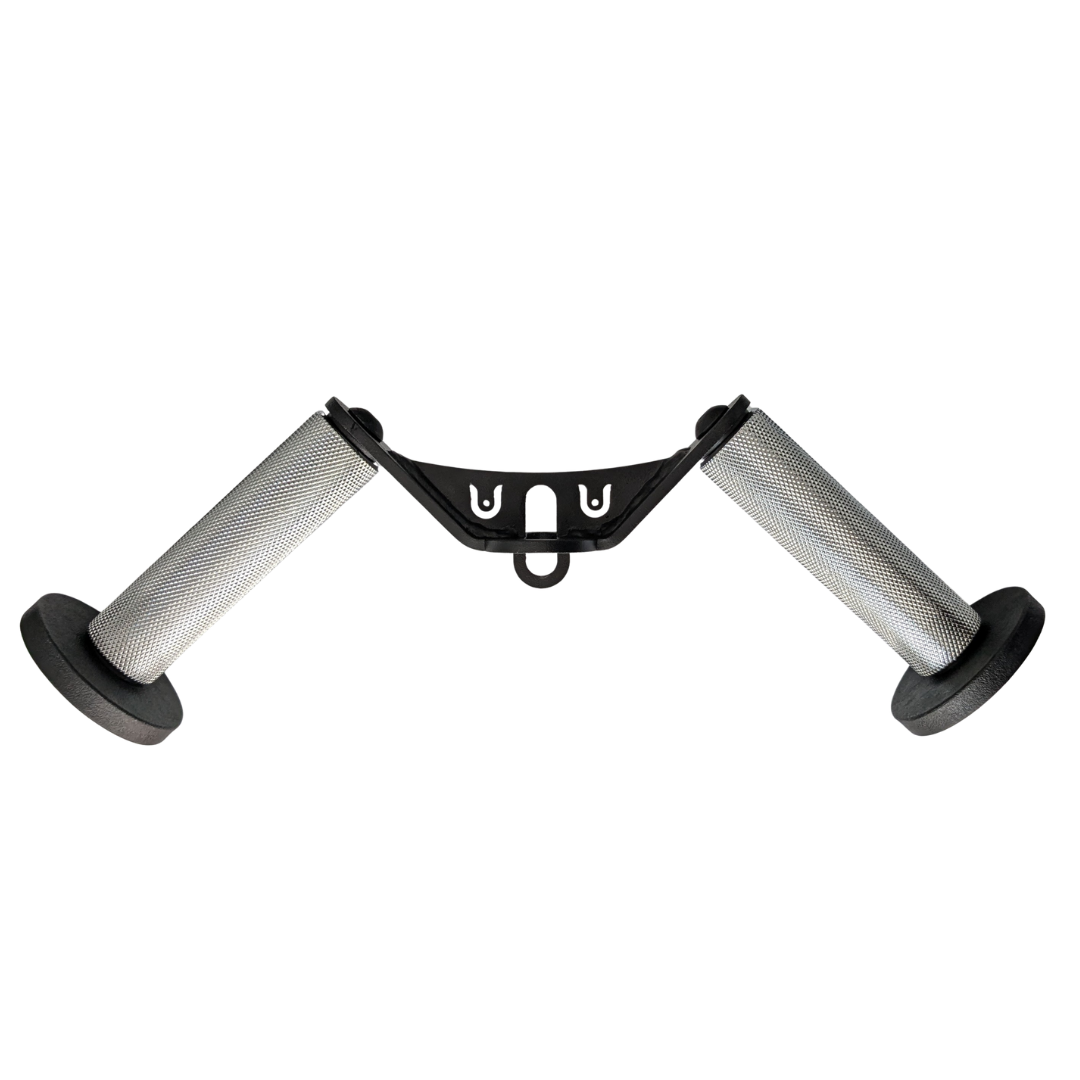
W Grip
Angled cable grip for comfortable rows, pushdowns, and curls.

Angles 90 Grips
Flexible grip attachments that allow natural wrist movement during pulling exercises.
Premium Carabiner
Durable carabiner for connecting cable attachments and training accessories.
A four-week practice plan without chasing a heavy number
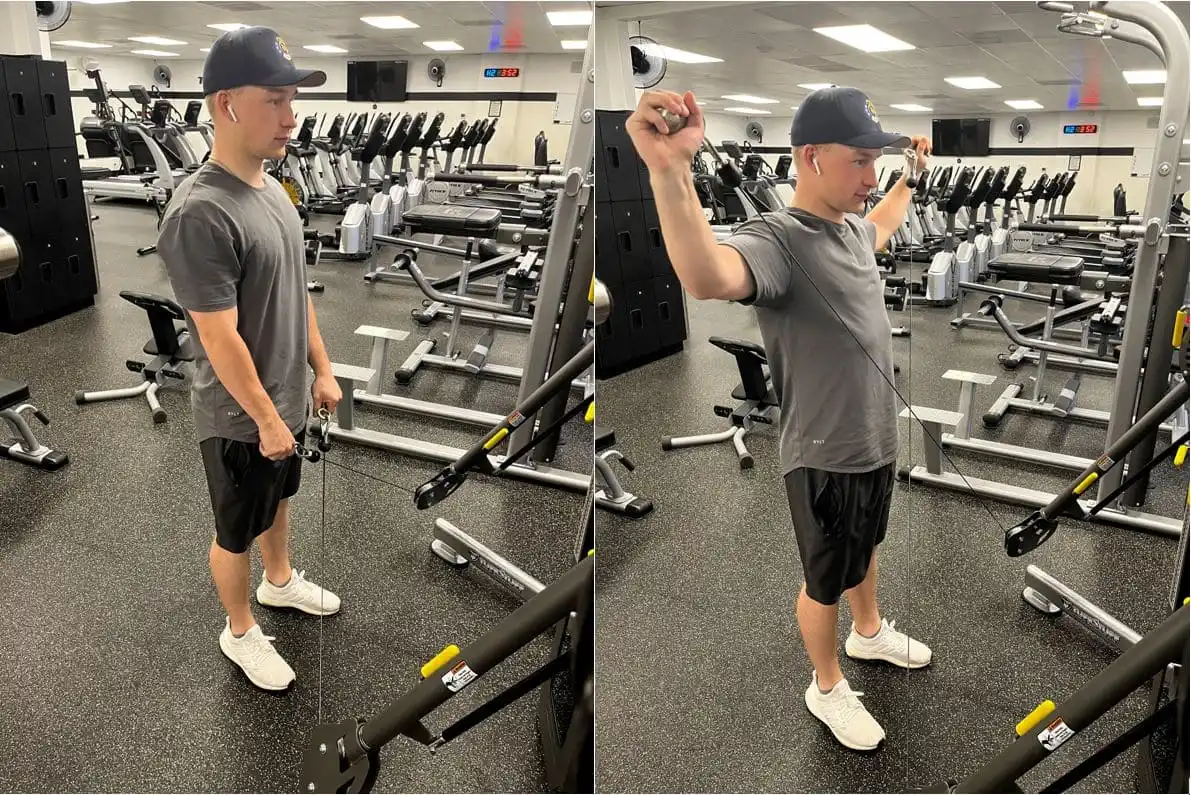
Use this four-week example as a way to learn and observe the drill, not as a protocol demonstrated by the 15-person experiment. In week one, try two short sessions separated by a day or more. Perform one or two sets of six to ten careful bodyweight prone Y raises, ending as soon as the shoulders or neck change position. Keep each repetition deliberate.
In week two, keep the same surface and add a few repetitions only if the motion stays consistent. For example, two sets of eight to twelve is enough practice for many lifters. Make a brief note of the surface, arm angle and any symptom response. Changing those variables on every workout makes it harder to tell why a set felt different.
In week three, consider a very light pair of dumbbells on a secure incline bench, or continue unloaded if the existing version is challenging. The test is the movement quality, not the number on the dumbbell. If a support change makes the set awkward, return to the previous option. The 2025 study does not establish that everyone should progress to a roller.
In week four, pick the variation that is comfortable, repeatable and easiest to fit around your existing pressing and pulling sessions. Two or three modest sets once or twice a week may be a reasonable accessory starting point for a healthy lifter, adjusted to recovery and the rest of the plan. A band or cable Y raise can serve as an alternative movement, but record it separately rather than pretending the resistance is identical.
Use the exercise as one small element in a balanced shoulder programme. It does not replace rows, full-range presses, appropriate external-rotation work or professional rehabilitation when that is needed. The most useful lesson from the experiment is narrower and more interesting: the support under your body may change a measured lower-trapezius signal, even when the visible arm raise looks similar.

Bodybuilding Shirts & Workout Gear
Bodybuilding shirts, tanks and gym gear for lifters chasing muscle, size, symmetry and the pump.


Nice Traps Big Back Tee
Heavy lifts, good laughs, and a little “Nice Traps Big Back” energy.

Swole Jesus Lateral Raises Tank
Bring “Swole Jesus Lateral Raises” humor to your next lifting session.

Dost Thou Even Press Hoodie
Show off your medieval humor in a laid-back “Shoulder Press” hoodie.

Strong Back Bodybuilder Gym | Funny Workout Decal | The Sticker
Stick a little “Strong Back Bodybuilder” humor on your favorite gear.

Unbreakable Gains Back Tee
Make gym days more fun with “Unbreakable Gains: Strong Back Greek God” style.

Hardcore Gains Gym | Funny No Pain No Gain Muscle Shirt Tank Top
Add some lifting attitude to training with “Hardcore Gains”.

Iron Is My Therapy – Lifting Bodybuilding Powerlifting T-Shirt
Add a playful “Iron Is My Therapy” touch to your casual rotation.

Anti Social Lifting Club Powerlifters & Fans Vest Tank Top
Your gym-day look, with a playful “Anti Social Lifting Club” twist.

I’m Strong Barbell Heartbeat Crewneck Pullover for Powe T-Shirt
Bring “I’m Strong Barbell Heartbeat” humor to your everyday gym style.