Advertising disclosure: This page includes affiliate product links that may earn us a commission, as well as products from our own store.
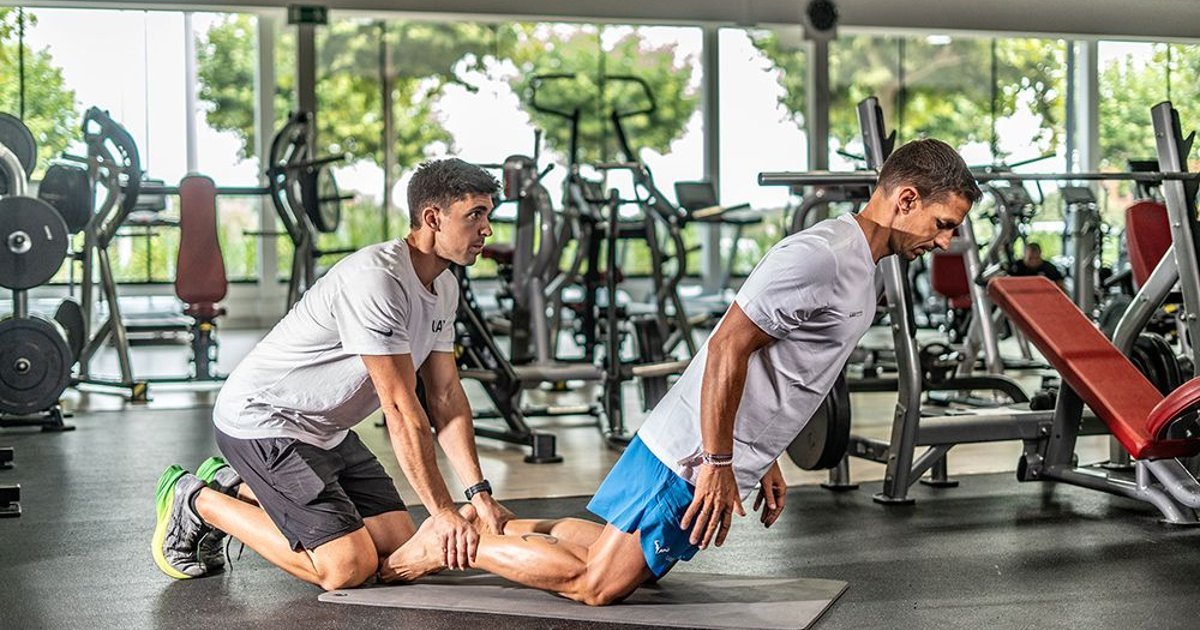
A Nordic hamstring curl looks simple: kneel, secure your ankles, and resist falling forward. The exercise is demanding enough that even a handful of carefully performed repetitions can change how your hamstrings feel. But does a modest six-week progression actually improve measured strength? A randomized study of 18 recreationally active adults compared a low-volume Nordic addition with continuing usual activity. Its results are more interesting than a simple before-and-after success story: isometric strength shifted modestly, eccentric strength fell just short of statistical significance, and flexibility did not improve in the Nordic group.
1. What the 18-person Nordic trial actually tested
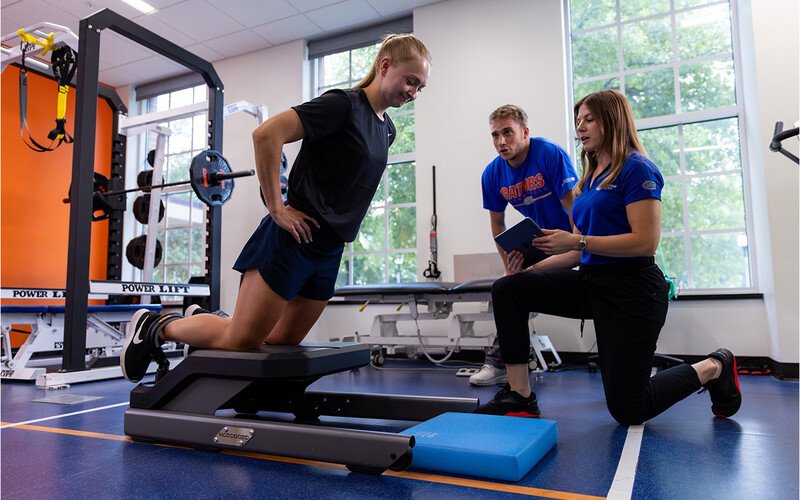
The researchers recruited physically active adults who had been participating in moderate-to-high-intensity recreational activities regularly. Eighteen eligible volunteers were randomized to two groups of nine. One group added a progressive Nordic hamstring exercise program to its usual activity; the other continued its normal exercise without the added program. This was not a comparison of Nordics against Romanian deadlifts, seated leg curls or sprint training, and participants were not competitive football players recruited for an injury-prevention season.
Three participants subsequently withdrew because of injuries occurring outside the study, leaving fewer people available for follow-up measurement. That detail matters: an eighteen-person randomized trial is already small, and outcomes based on completers are more sensitive to individual changes. The paper reported no adverse events attributable to the Nordic training itself, but that observation is too limited to establish risk for everyone or every loading progression.
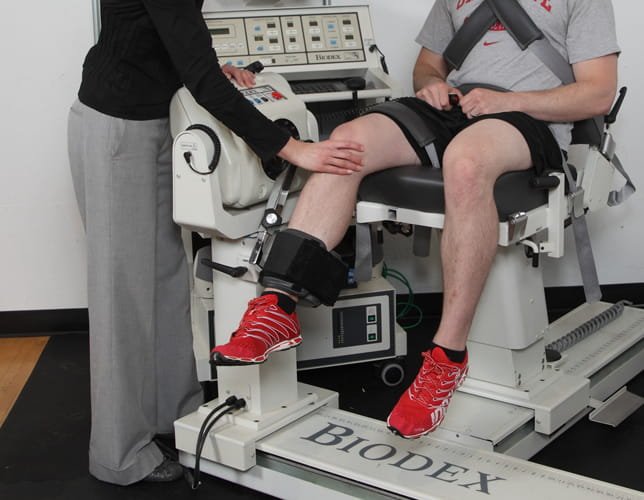
The team assessed knee-flexor strength with dynamometry, hamstring flexibility with goniometry and muscle mechanical properties with a separate testing method. The tests were made before the intervention and again several days after the end of the six-week period. The study therefore focused on measurable performance and physical characteristics, not on changes in hamstring muscle size, sprint speed, real-world injury rates or whether participants suddenly felt better after a workout.
Nordic curls mainly challenge the hamstrings while the muscle-tendon system lengthens under load as the torso tips forward from the knees. You do not have to lift your entire body back up using only the hamstrings to make the eccentric phase useful. For beginners, the hand-assisted return was part of the research procedure. This makes the exercise accessible in principle, though good anchoring and a controlled descent remain essential.
2. The six-week dose started smaller than you might think
The training prescription increased gradually rather than starting with heroic sets to complete failure. Week one used one session of three sets of five repetitions, for fifteen total weekly Nordics. Week two increased that single session to three sets of six, or eighteen repetitions. In week three the program moved to two sessions, each with two sets of five, for twenty weekly repetitions. This shift spreads the work across days instead of trying to cram every hard descent into one session.
In week four, the two sessions used two sets of six. In week five, they progressed to three sets of five per session. Week six reached three sets of six across two sessions, or thirty-six total weekly repetitions. There is a useful distinction here between weekly repetitions and repetitions in an individual session: the highest total was not thirty-six performed in one workout. Anyone copying the plan should maintain that difference.
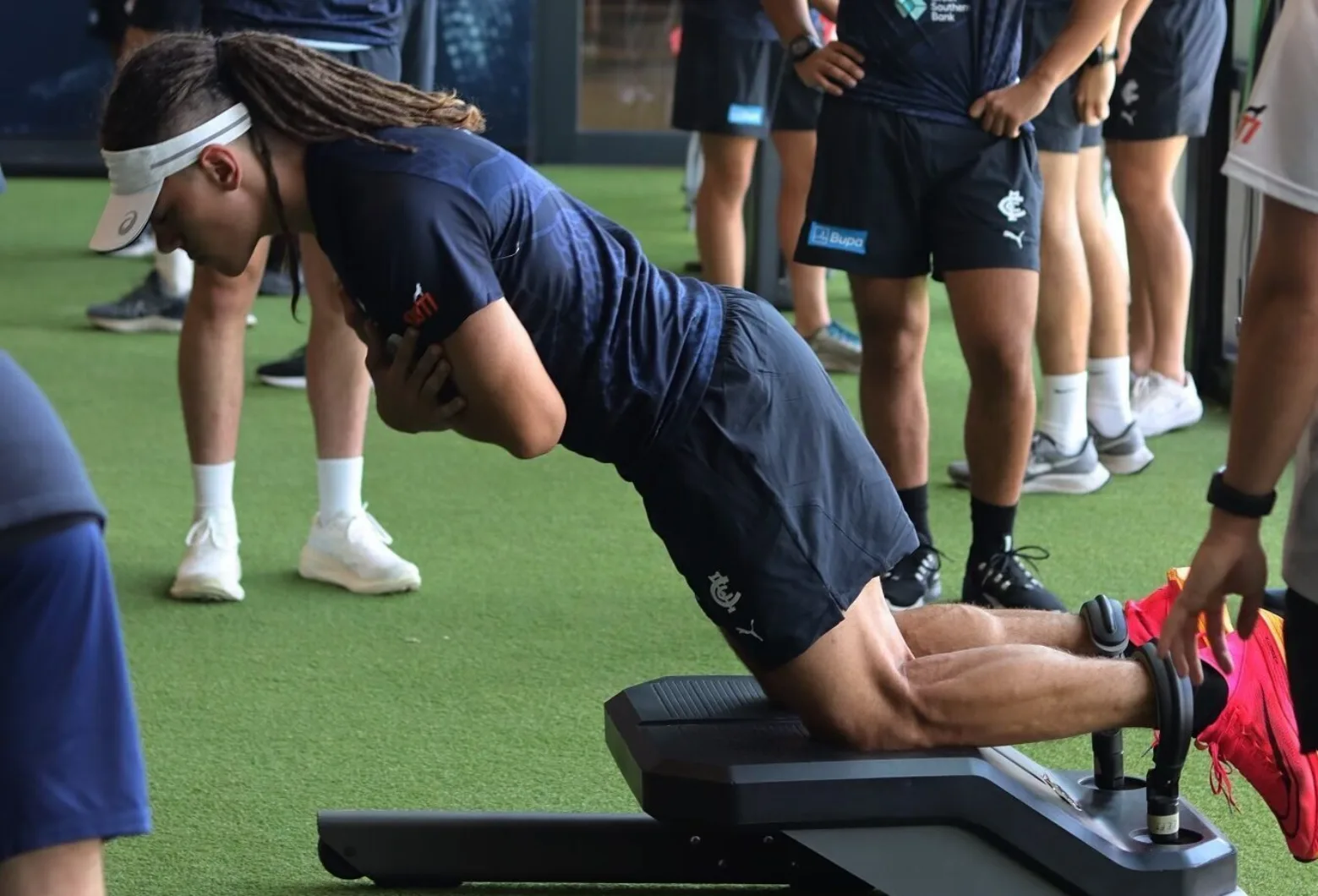
Sessions required a secure ankle anchor and a controlled forward lean from a padded kneeling position. The torso and hips stayed relatively extended, and participants caught the descent with the hands as control diminished. The use of hand assistance reduced the need to perform the very difficult concentric return. The exercise supervisor observed the quality of lowering and the session’s repetition control, so the protocol involved coaching rather than a purely unattended home experiment.
Why start low? Unaccustomed eccentric work can cause considerable delayed soreness, and a difficult Nordic often turns into a fast uncontrolled fall long before the planned set is over. More total repetitions are not helpful if the athlete only controls the first few. A conservative start offers time to learn ankle stabilization, set distance to the landing surface, and manage recovery around running or heavy lower-body training. If the first session is unexpectedly punishing, the next progression should reflect the quality of control rather than blind loyalty to a calendar.
3. Strength changed; flexibility and tissue stiffness did not
The strongest reported group-by-time result concerned isometric knee-flexor torque. The Nordic group improved by roughly five percent, whereas the control group declined by approximately twelve percent across the measurement period. The between-group change over time reached the study’s statistical threshold. These values are not evidence of a massive strength transformation; they suggest a modest, directionally favorable outcome compared with what happened in the small control group.
Peak eccentric knee-flexor torque improved by approximately seven percent in the Nordic group, while the control group decreased by about seven percent. The interaction p-value was 0.053, narrowly above the customary 0.05 cutoff. Calling this a proven statistically significant eccentric-strength gain would misrepresent the result. A directional difference worth investigating is not the same as a reliably demonstrated between-group effect in this sample.
Flexibility is where the simplistic sales pitch gets particularly shaky. Hamstring range of motion did not improve significantly in the Nordic group. The control group showed a larger improvement, producing a statistically detectable difference in the groups’ change over time. The headline is not that Nordics made everyone more flexible: the people doing the extra Nordics did not see the expected flexibility benefit in this trial. The paper also found no meaningful intervention-related changes in the muscle’s measured mechanical properties, including measures related to stiffness.
That does not mean Nordic work is useless for mobility in every context. It means the exercise, dosage, duration and specific testing used here failed to demonstrate a flexibility improvement. An individual working toward deeper hip flexion or a more comfortable hamstring stretch should assess that goal directly rather than assuming eccentric training automatically increases range of motion. Likewise, no measurement in this small six-week test shows that injury risk itself fell; that question comes from different, much larger lines of research.

Equipment Worth Exploring
Explore equipment, accessories and gear from our carefully selected range.

Leg Extension/Curl BCO-780
Leg extension and lying leg curl combo with plate loading, band pegs and a cable-loading option.



FID Bench MAX
Adjustable bench offering flat, incline, and decline positions + adjustable headrest.


Rubber Hex Dumbbells
Rubber-coated hex dumbbell pairs with a stable shape for home and commercial strength training.


Foldable Wall Rack
Wall-mounted folding squat rack designed to save floor space between workouts.
4. Set up a Nordic safely before adding weekly volume
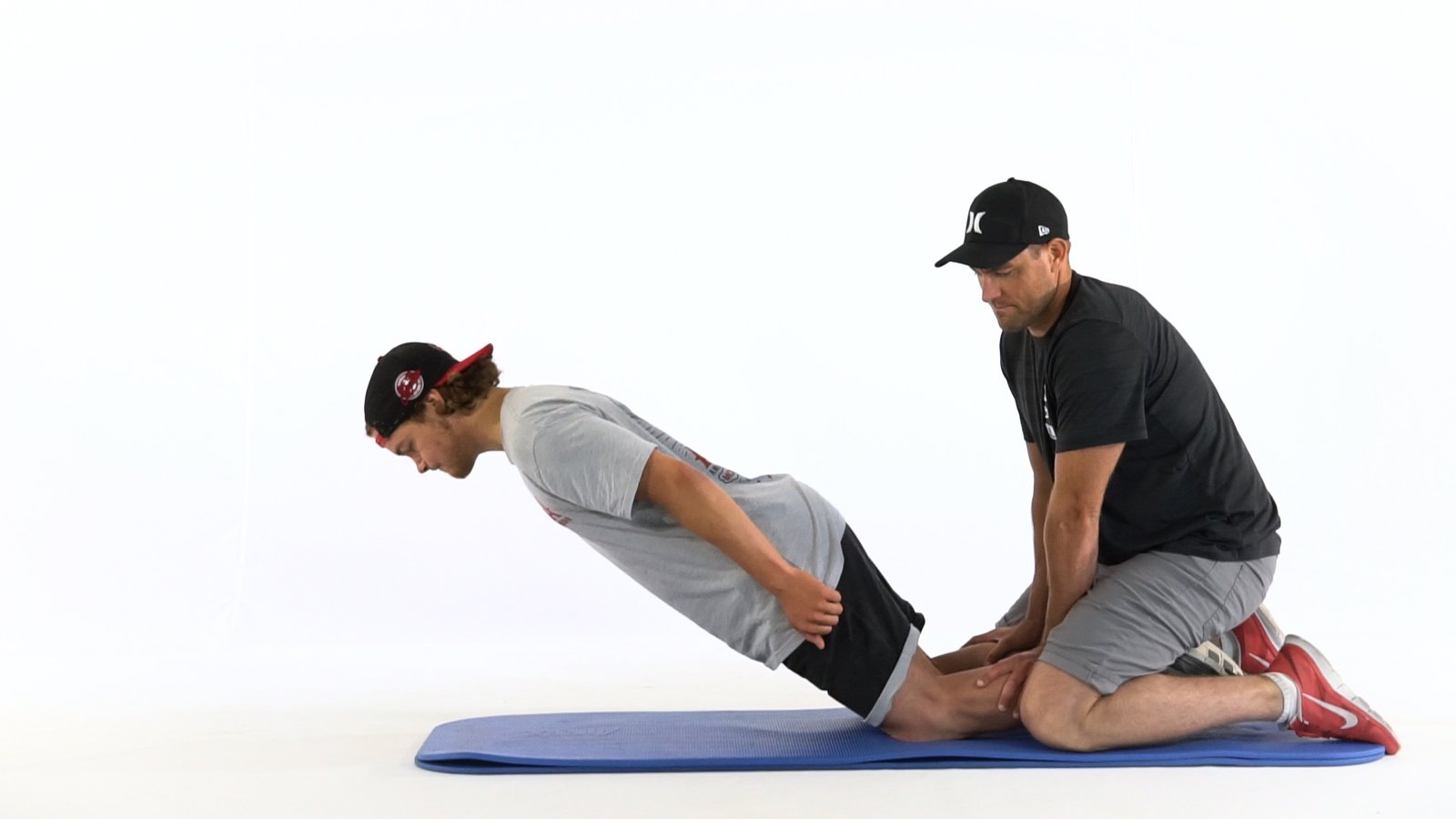
The first requirement is a reliable ankle anchor. A training partner can hold the ankles firmly, or a purpose-built Nordic platform or suitable rack attachment can keep the lower legs from lifting. Put enough padding under the knees to tolerate pressure, remove obstacles from the fall zone and test the anchor with a short, easy lean before the first full repetition. A rolling barbell, unsecured bench or movable furniture is not a substitute for a stable anchor.
Start tall on the knees with the body organized approximately in one line from knee through hip and shoulder. Brace the trunk, then lean forward primarily by opening at the knee. Try to resist the descent smoothly rather than simply folding at the hips. Once the hamstrings cannot control the remaining movement, put your hands down and catch your body. Return to the kneeling start with your arms; it is not necessary to perform an unassisted Nordic curl on the way back up.
Assistance can make the stimulus more repeatable. A securely attached elastic band or another appropriate support can reduce the effective load during descent. Stop the rep when you can no longer maintain the agreed technique, not after your torso drops uncontrolled. Progress may look like a longer controlled arc, a more consistent four-second lowering phase, slightly less assistance or an extra quality repetition. It need not mean adding several full sets at every session.
Nordics can complement hip-dominant hamstring work rather than replace it. A Romanian deadlift trains the posterior chain with greater hip movement; seated or lying leg curls provide adjustable knee-flexion resistance without asking the athlete to control a forward fall. The combination can cover different tasks, but each exercise adds fatigue. Keep an eye on how hard lower-body sessions, sprinting, and Nordics interact in the next forty-eight hours. Pain, acute hamstring symptoms or recent injury are reasons to seek individualized clinical guidance rather than pushing through an internet program.
5. How to use the evidence without overclaiming it

An approachable starting point is one controlled Nordic session per week, with a small number of repetitions that genuinely remain under control. If technique and soreness are manageable, you can gradually increase weekly work or distribute it over two sessions. The research program progressed from fifteen to thirty-six weekly reps, but that schedule is a description of this intervention, not a universal minimum effective dose. A first-time exerciser may reasonably require more assistance and fewer repetitions.
Keep a simple record: number of sessions, sets, controlled descents, whether your hands caught the same portion of the movement, soreness the following day, and whether other leg training suffered. These observations are more informative than saying you completed three sets when the final repetitions were free falls. If you can increase controlled range with the same assistance and manage recovery, that is a useful practical sign. Testing real knee-flexor torque, however, requires equipment a normal training log cannot replicate.
The broader injury-prevention literature includes much larger trials and pooled estimates suggesting that prevention programs containing Nordics can reduce hamstring injury rates in sport. Those findings cannot be attributed solely to this six-week trial, which did not track injuries during a season. They also should not become a promise that a particular lifter or runner will avoid strains. Adherence, sport demands, previous injury, total workload and program design all affect the picture.
Importantly, the small controlled study included both women and men and a recreationally active group, not elite athletes or sedentary beginners. Three post-randomization dropouts reduced its already modest sample, and a six-week window cannot answer how the same progression behaves over six months. The eccentric-strength result was suggestive rather than statistically conclusive, and muscle mechanical properties did not change. Those limitations deserve equal space next to the favorable isometric comparison.
The practical lesson is modest and useful. A few well-controlled Nordic descents added consistently may help knee-flexor strength without requiring a large weekly time commitment. They did not reliably boost flexibility in this experiment, and they were not tested as a stand-alone injury guarantee. Build a setup that lets you control the fall, increase dose gradually, and judge progress by repeatable training quality rather than by how impressive the exercise looks in a short video.

Leg Day Shirts & Workout Gear
Leg-day gym shirts and workout gear for lifters who never skip squats, lunges and lower-body punishment.

Shirt – Legday Of Legends Gymbros, & Meme Lovers T-Shirt
Show some gaming attitude with a playful “Legday of Legends” tee.

Booty Out Of This World Gym | Funny Alien Meme Workout Hoodie
Bring “Booty Out Of This World” gym humor to lazy days and post-workout plans.

Hippo Thrust Meme Leg Day Decal Water Bottles, Sticker
Put “Hippo Thrust Gym Meme” gym humor on your laptop, bottle, or gym gear.

Leg Day Gains | LEGO Inspired Muscle Shirt For Squats & Tank Top
Your gym-day look, with a playful “Leg Day Gains” twist.

SIUUU Deadlift – Meme Soccer & Football Fans – & T-Shirt
Bring “SIUUU Deadlift” humor to your next gym day.

Motivation – Barbell Meme Strong , Leg Day Squats & T-Shirt
Make gym days more fun with “Gym Motivation” style.

Muscle Mommy Princess – Jumper T-Shirt
Add a playful “Muscle Mommy Gym Princess” touch to your casual rotation.

Shirt Squat Queen Leg Day Bros & Meme Gains T-Shirt
Bring “for Squat Queen” humor to your next gym day.

Heavy Squatter Wizards Leg Day Meme , & Gains T-Shirt
Make gym days more fun with “Heavy Squatter Gym Wizards” style.

Motivation – Mermaid Leg Day Meme Strong , & Lovers T-Shirt
Show some leg-day attitude with a playful “Gym Motivation” tee.