Advertising disclosure: This page includes affiliate links that may earn us a commission at no additional cost to you.
Lupini beans are the sort of snack that can disappear from a bowl long before you notice how much you have eaten. They are firm, slightly nutty legumes often sold in jars of brine. For someone trying to increase protein intake without building every meal around meat or a protein shake, they offer a useful alternative.
The interesting part is not just the protein figure. The way the beans are prepared, the amount of salt in the jar and the other ingredients on your plate can substantially change what a serving contributes. They also have two safety considerations that deserve attention before you buy them.
How much protein is actually in a portion?
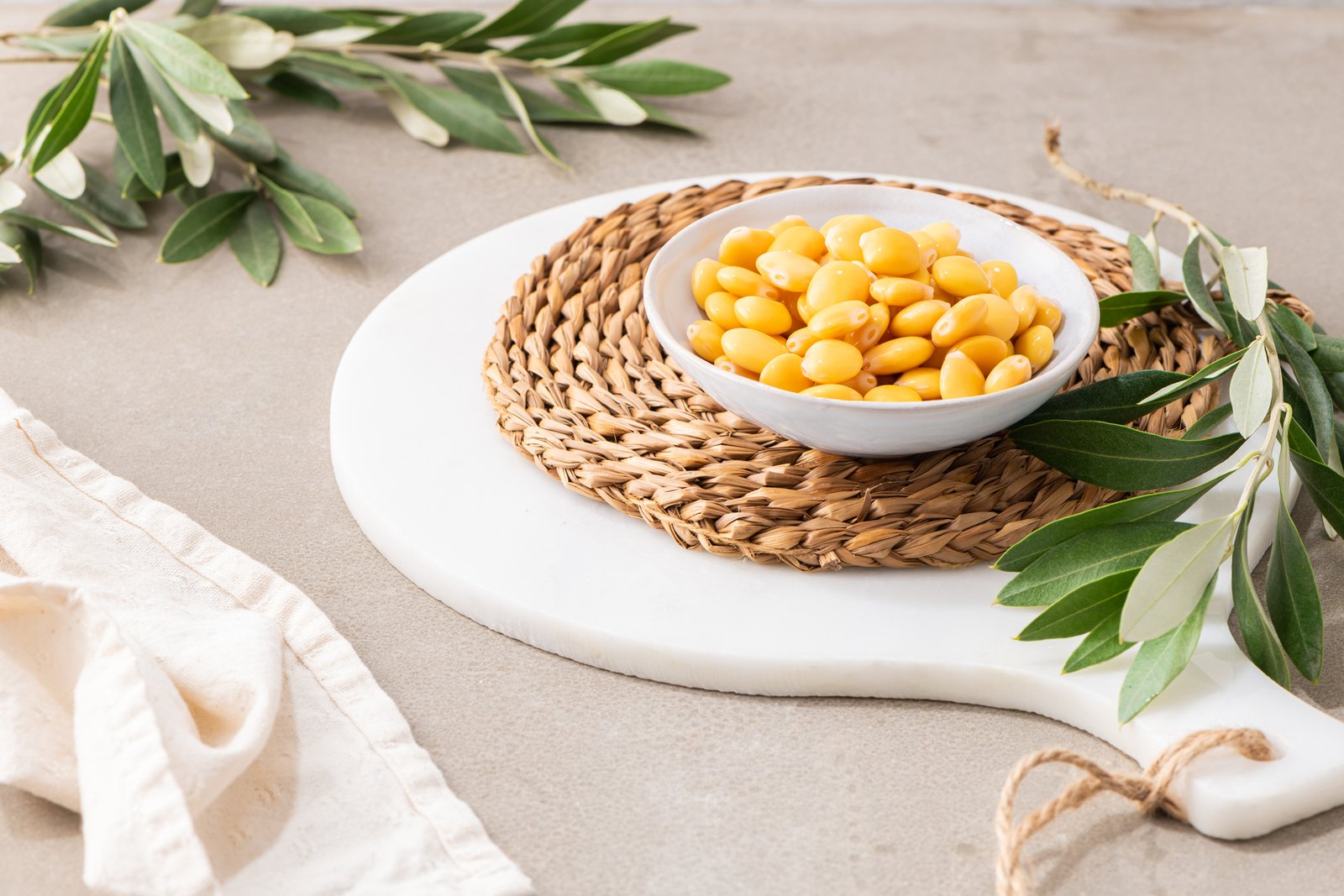
A cup of mature lupin beans, boiled without added salt, supplies approximately 198 calories, 26 grams of protein, 16 grams of carbohydrate and 5 grams of fat. It also provides around 4.7 grams of fibre. Those are figures for a specific cooked food, not a promise that every brand of pickled lupini beans has the same nutritional profile.
A half cup of that reference food contains about 99 calories and 13 grams of protein. That is a more realistic starting portion if you are serving the beans as a side dish or snack. Three quarters of a cup would supply about 19 grams of protein. You can adjust the serving to suit the rest of your meal instead of treating a full cup as compulsory.
Here is the distinction that matters for strength training: protein in an ingredient is not the same thing as protein across an entire day. A healthy exercising adult weighing 80 kilograms might use a daily range of 112 to 160 grams as a general planning reference, based on 1.4 to 2 grams per kilogram. A cup of lupins can contribute a meaningful fraction of that amount, but the remaining meals still count. Individual needs vary with training, energy intake and health.
There is no need to make lupins the exclusive protein source in your diet. Other legumes, soy foods, dairy, eggs, fish or meat can provide variety according to your preferences. A varied plant-based diet can also combine legumes and grains across meals. Do not confuse a high total protein number with evidence that one food is superior for muscle growth.
Read the jar, not just the nutrition headline
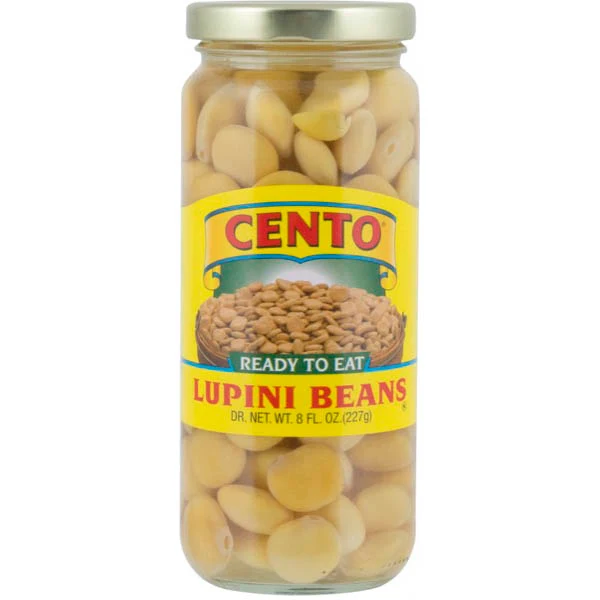
Most people encounter these beans already prepared in a jar or a sealed pack. The packaging may list nutrition per 100 grams, per serving, or per portion including the surrounding liquid. Check what the numbers actually refer to. A dry seed, a cooked bean and a jar containing brine are not interchangeable for food tracking.
For example, suppose the label of a drained product states 14 grams of protein per 100 grams. A 150-gram drained portion gives you 21 grams of protein. That is a straightforward calculation, and it is more useful than borrowing the value from a different product on a tracking app. If the label instead states 10 grams per 100 grams, the same portion gives you 15 grams. These are illustrative label examples, not claims about specific brands.
Pay particular attention to sodium. The unsalted reference food contains very little, but brined lupini beans can be considerably saltier. Compare the sodium or salt on the actual label, especially if you regularly eat other salty foods. If you rinse a ready-to-eat product, you may remove some surface brine and reduce the salty taste. You cannot accurately calculate the amount removed without testing, so use the label as the conservative tracking reference.
The price is worth checking on the same basis. A larger jar may look like a better deal until you compare its drained weight. Divide the price by the usable weight, then consider the amount you genuinely enjoy eating. A cheap food that you repeatedly leave in the fridge is not a particularly efficient source of protein.
Ready-to-eat matters: bitterness and allergies
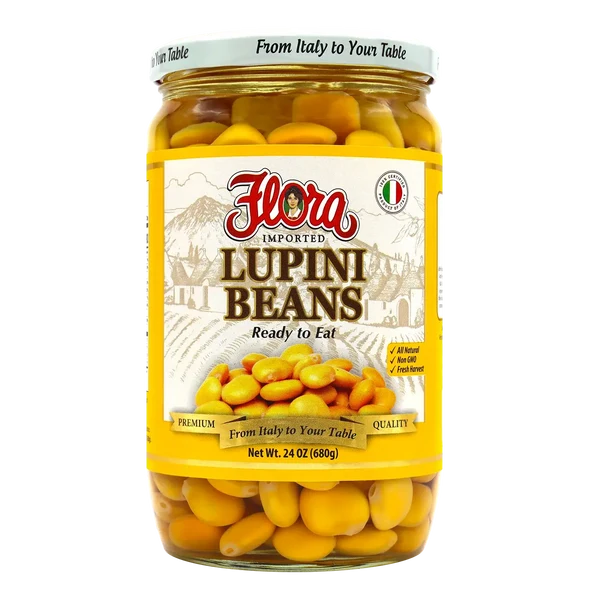
Buy food-grade lupini beans explicitly prepared for eating, rather than assuming that any dry lupin seed can be cooked like a lentil. Some lupin varieties contain potentially harmful quinolizidine alkaloids, particularly bitter varieties. Incorrectly processed seeds can cause poisoning. Ordinary cooking, a casual rinse or a marinade should not be treated as a reliable safety procedure.
If you are unfamiliar with lupins, commercially prepared ready-to-eat beans are the practical choice. Follow the package instructions. If a product tastes unexpectedly bitter, stop eating it; do not try to hide the taste with lemon, salt or seasoning. Do not use ornamental lupin seeds or unidentified bulk seeds for food.
There is also a separate allergy concern. Lupin is a legume, and people with peanut allergy may be at increased risk of reacting to it. Lupin itself can cause severe allergic reactions, including in people without a known peanut allergy. Anyone with a known or suspected relevant allergy should obtain individualized medical guidance before trying the food. Check ingredient lists for lupin flour and lupin protein as well as whole beans.
These precautions matter because a high-protein ingredient is only useful if it is safe for the person eating it. A food with an attractive macronutrient profile is not a reason to experiment with an unknown seed or ignore an allergy warning.

Funny Gym Shirts & Workout Gear
Funny gym shirts, tanks, hoodies and workout gear for lifters who like training hard.

with Pink Protein Shaker Design | Workout Jumper T-Shirt
Keep things casual with a little “with Pink Protein Shaker Design” attitude.

Swole DiCaprio Gym | Funny Great Gatsby Parody Cheersin Hoodie
Stay casual and show some bodybuilding attitude with “Swole DiCaprio”.

Beavis And Butt-Head Shirt – Huh Huh Want Some T-Shirt
Make gym days more fun with “Beavis and Butt-head” style.

Funny Free Protein Gym | Sarcastic Workout Sweater & Gy T-Shirt
Add a playful “Free Protein” touch to your casual rotation.

Cheat Day Donut Meme – Shirt & Gains T-Shirt
Bring “Cheat Day Donut Gym Meme” humor to your next gym day.

Cheat Day Everyday Shirt – Fast Food Burger Top Bros T-Shirt
Make gym days more fun with “Cheat Day Everyday” style.

Bulking Season Anime Fast Food Meme Decal Water Sticker
A fun “Bulking Season” touch for bottles, laptops, and lockers.

Pizza Cheat Day Bulking Season Hooded & Meme Fans Hoodie
Show off your pizza-loving humor in a laid-back “Pizza Cheat Day” hoodie.

Cheat Day Pizza Weight Plate Sweater Bulk & Fans T-Shirt
Keep things casual with a little “Cheat Day Pizza Weight Plate” attitude.

Snack Panther – Bulking Superhero & Bros – Meme Top T-Shirt
Heavy lifts, good laughs, and a little “Snack Panther” energy.
Build a meal around lupini beans
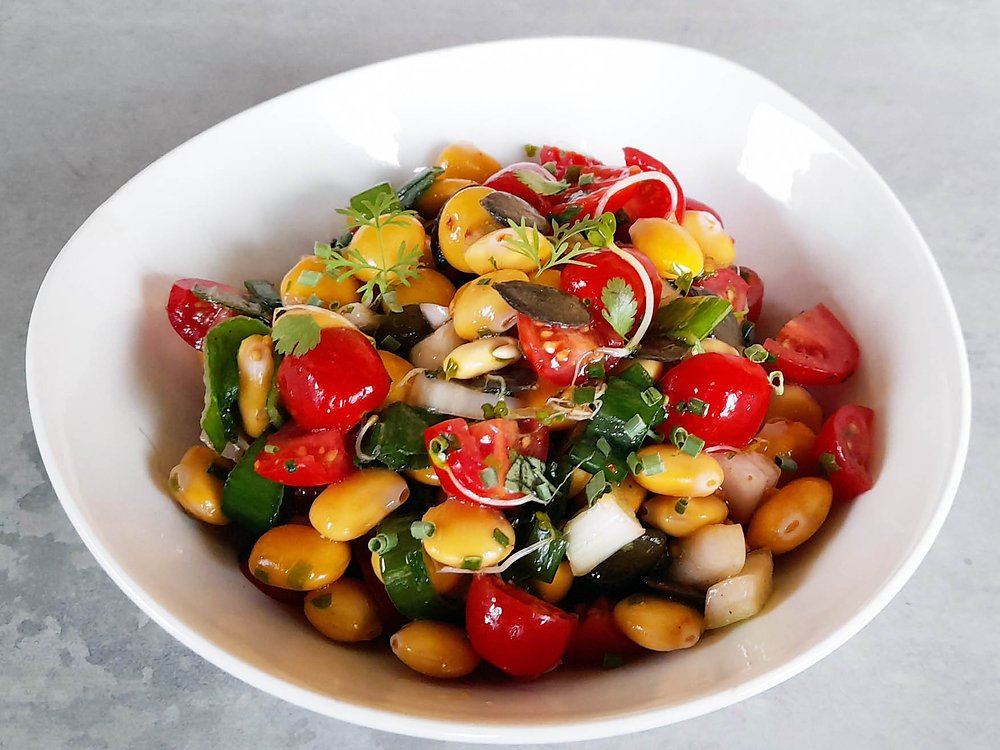
Because lupini beans hold their shape and have a distinctive bite, they work particularly well in meals where a softer protein would make the texture monotonous. Start with a prepared, drained portion and use it as one element of the plate. You can increase the quantity after you learn what tastes good and how comfortably you digest it.
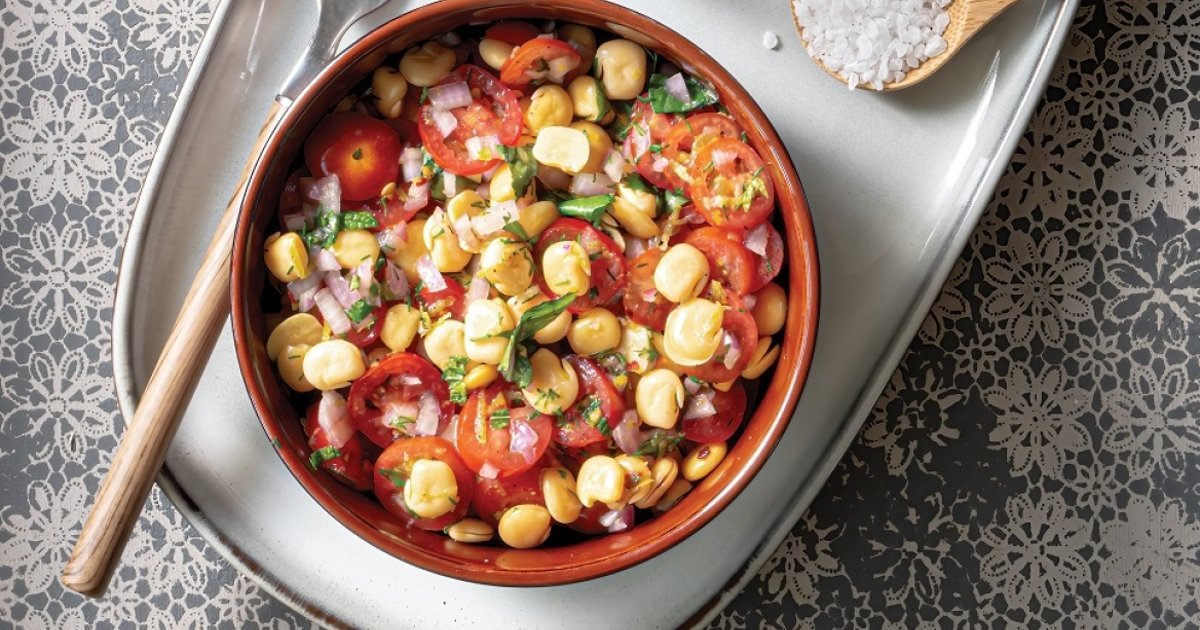
For a lunch bowl, mix the beans with chopped cucumber, tomatoes, herbs and a cooked grain. Lemon juice and pepper can brighten the flavour without necessarily requiring more salt. Add a second protein ingredient if your meal target is higher than the beans alone supply. Keep oil and dressing amounts in mind if you are monitoring calories.
For a portable snack, pack a drained serving alongside fruit or vegetables. The beans provide protein and texture; the other food can add carbohydrate or variety. If you train soon afterwards, experiment with a moderate serving rather than introducing a very large portion of legumes immediately before a demanding workout. Individual digestive tolerance matters more than a theoretical ideal snack.
A spread is another option. Blend prepared beans with lemon, garlic, a little olive oil and enough water to reach the consistency you like. Serve it with bread or vegetables, or use it in a wrap. Count the oil and accompaniments as separate ingredients. The resulting meal can be substantially higher in calories than the beans alone, which might be useful during a gaining phase but less useful if you assumed the spread was a low-calorie snack.
Make the next batch easy to repeat
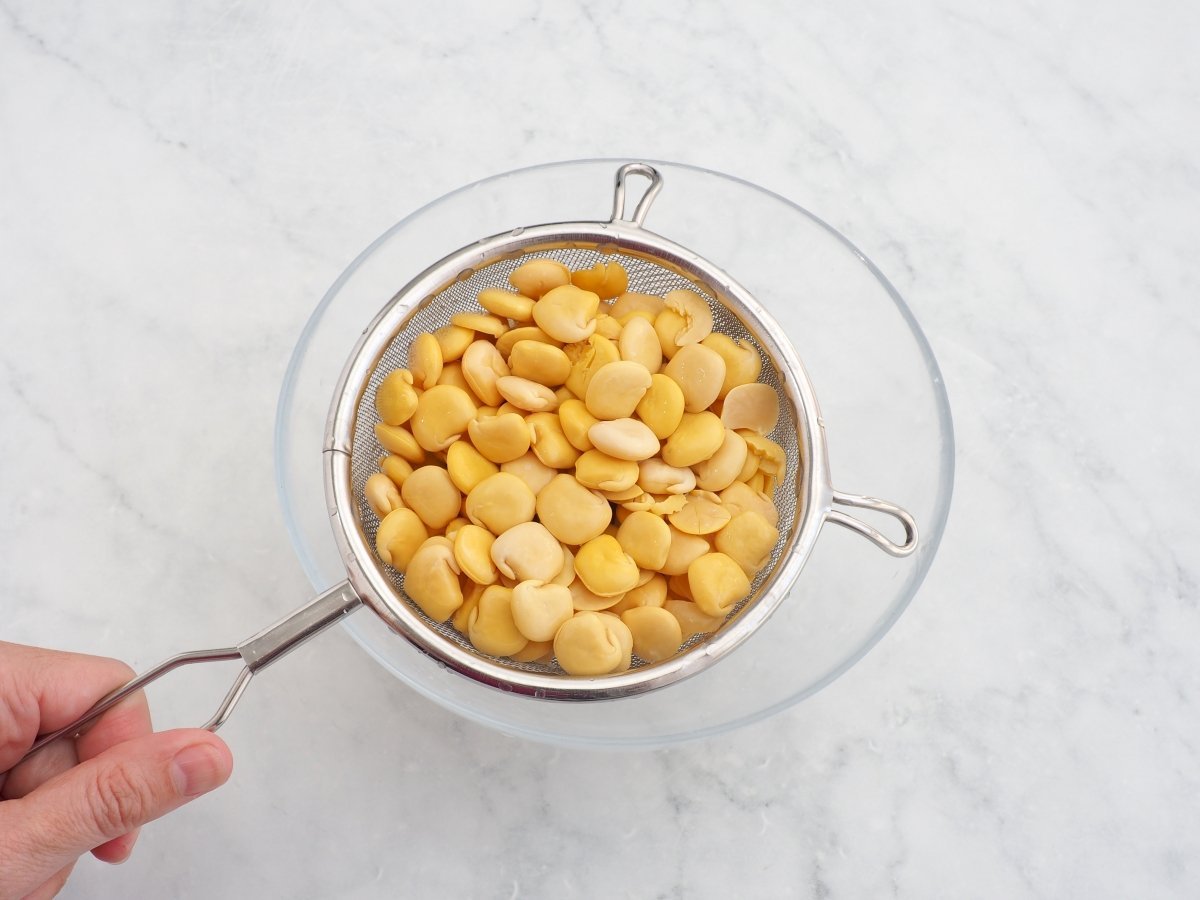
When opening a jar, drain only what you need or transfer the remaining product to a suitable covered container if the label directs you to. Refrigerate opened products and follow their stated storage instructions. Do not assume that a jar which was shelf-stable before opening remains safe indefinitely afterwards. The preparation and packaging determine the appropriate storage period.
To build an easy weekly routine, choose one serving size you can remember and weigh it once or twice. Prepare a small salad, a sandwich filling or a snack portion before the next busy day. If you make several meals at once, keep the beans, dressing and crisp vegetables separate until needed so the texture stays appealing.
Evaluate the routine using three questions: did the portion fit your protein target, did the meal taste good enough to repeat, and did it sit comfortably with your digestion? If the answer to one is no, adjust the quantity or pairing. You can also alternate lupini beans with other protein-rich foods rather than forcing them into every lunch.
The attraction of lupini beans is that they make a different kind of protein-rich snack or side dish possible. The most useful version is a commercially prepared product with clear nutrition and storage instructions, an enjoyable serving size, and a meal that fits the rest of your day.