Advertising disclosure: This page includes affiliate product links that may earn us a commission, as well as products from our own store.
Two lifters can use the same weight, perform the same exercise and record very different bar-speed numbers without either one becoming stronger. The difference may begin before the upward movement: one pauses and starts from stillness; the other lowers the load quickly and reverses direction. A 2026 experiment with eighteen men put that distinction under a microscope using loaded jump squats and bench press throws. The results are useful for athletes who test explosiveness or use bar velocity to guide training, but they are easy to misread as proof of instant strength gains. They are not. This guide separates what was actually measured from what a sensible training plan can take away.
What the eighteen-man experiment actually measured
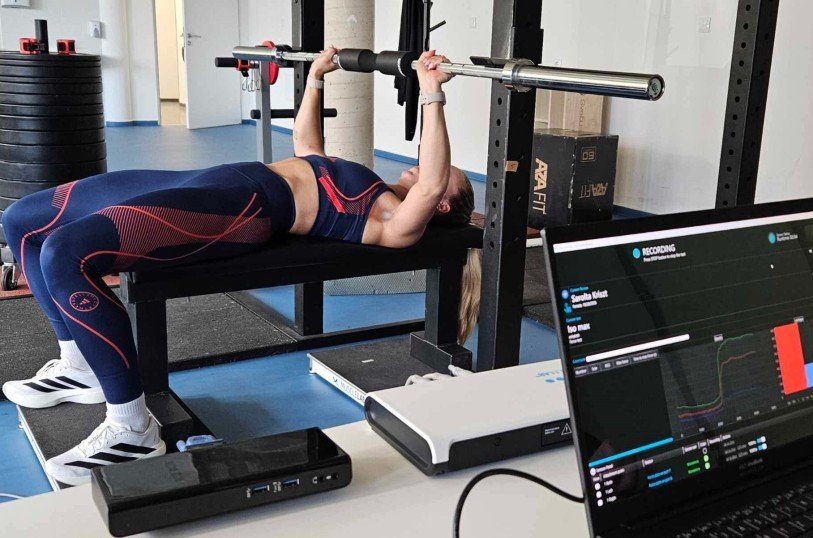
Eighteen men performed two different load–velocity assessments for a jump squat and a bench press throw. The investigators sampled four relative loads—20, 40, 60 and 80 percent of one-repetition maximum—and repeated testing on two separate days. The goal was not to compare two months of training. It was to see whether the instructions given before the upward phase changed the measured relationship between load and bar speed, and whether those measurements were repeatable.
In the concentric-only condition, the upward drive started without a rapid preceding descent. In the fast-eccentric condition, participants were instructed to lower with maximal intended velocity before changing direction and driving upward. In both conditions the intended upward effort was maximal. That distinction matters: the study isolated how an athlete prepared for the push, rather than comparing people who were simply trying harder with people who were coasting.
The researchers reported mean propulsive velocity, a measure of average bar speed during the portion of the movement in which the athlete is propelling the load. They also fitted individual load–velocity relationships to estimate two theoretical intercepts, often called L0 and V0, plus squat and bench press one-rep maximum values derived mathematically from those profiles. An estimated maximum is a model output. It is not an extra heavy single completed under a bar.
Both testing methods demonstrated usable repeatability. The fast-descent condition produced intraclass correlation coefficients between 0.70 and 0.87, with coefficients of variation from 4.2 to 11.2 percent. The concentric-only condition ranged from 0.61 to 0.86 and 4.8 to 10.4 percent, respectively. Neither range means each athlete’s every repetition will be identical. It means the method can be repeatable enough for structured assessment when its instructions and equipment stay consistent.
Why a fast descent is a different movement, not just a different cue
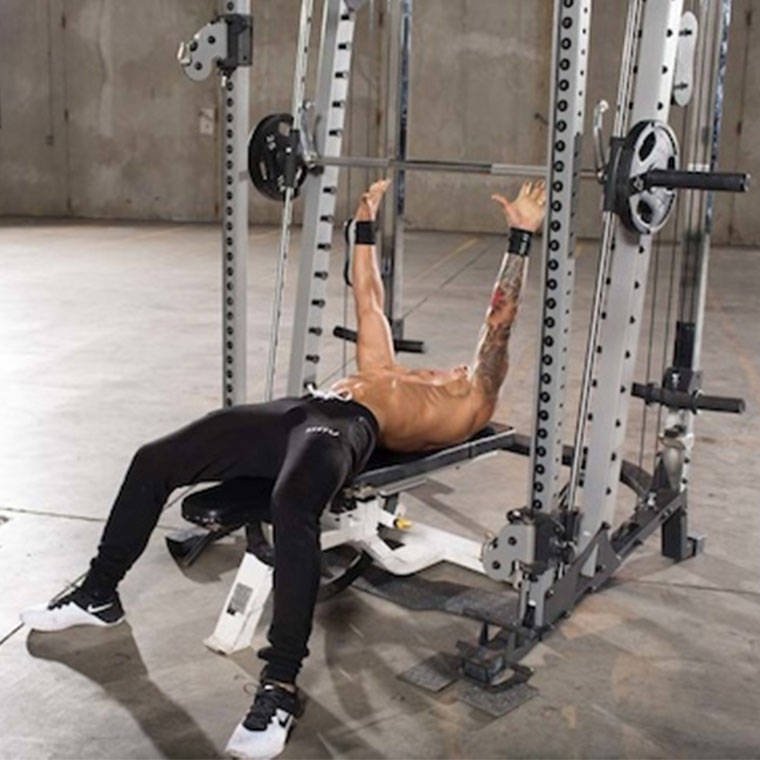
A muscle can absorb force while lengthening and then generate force while shortening. When an eccentric action flows quickly into a concentric one, the transition can alter force production through a combination of stored elastic energy, muscle activation and the timing of the reversal. A concentric-only start minimizes that preceding sequence. Put simply, an athlete may move the load faster after a rapid descent because the entire movement has changed, not because their baseline strength has suddenly increased.
Think about a pause squat compared with a squat performed with a controlled but continuous reversal. In a pause, momentum is deliberately interrupted and the lifter must rebuild force from a still position. In a continuous rep, there is a transition to exploit. That everyday example is not identical to the study’s ballistic jump-squat testing, but it helps explain why testing instructions should describe what happens on the way down as carefully as what happens on the way up.
There is an important safety boundary. “Maximal intended eccentric velocity” is a defined laboratory condition, not a command to dive under a heavy bar or crash a barbell onto the chest. A ballistic bench press throw must be performed in an appropriate controlled apparatus with trained supervision and a reliable means of catching the bar. Free-weight throws without specialized equipment are not a sensible way to imitate a study. For ordinary pressing and squatting, use a lowering speed you can control while keeping a secure position, especially under heavier loads.
An athlete comparing sessions should record the rep style: dead-stop, prescribed pause, ordinary continuous descent or deliberately fast eccentric. Even the duration of a pause and the depth of the bottom position matter. When these details drift, a faster number may reflect a different task. Standardization is not fussy bookkeeping; it is how you keep the measurement attached to the performance you actually want to track.
Jump squats: the faster-descent condition changed speed at every load
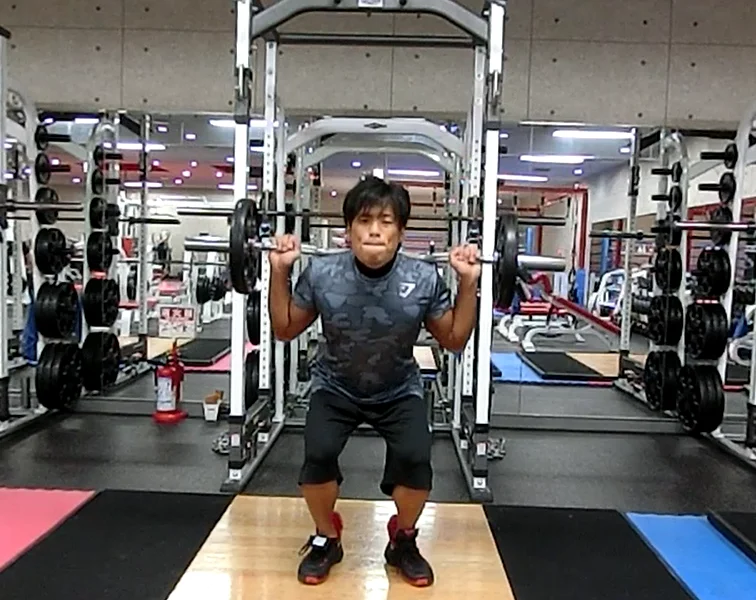
Across all four load levels tested in the jump squat, mean propulsive velocity was higher with the fast preceding descent. The difference ranged from 8.9 to 10.9 percent. That is a meaningful shift for anyone using a velocity profile to sort loads into power-training zones or to check whether an athlete is moving a given weight as quickly as usual. If yesterday’s test used a pause and today’s test used a quick reversal, the percentage difference cannot be treated automatically as a training adaptation.
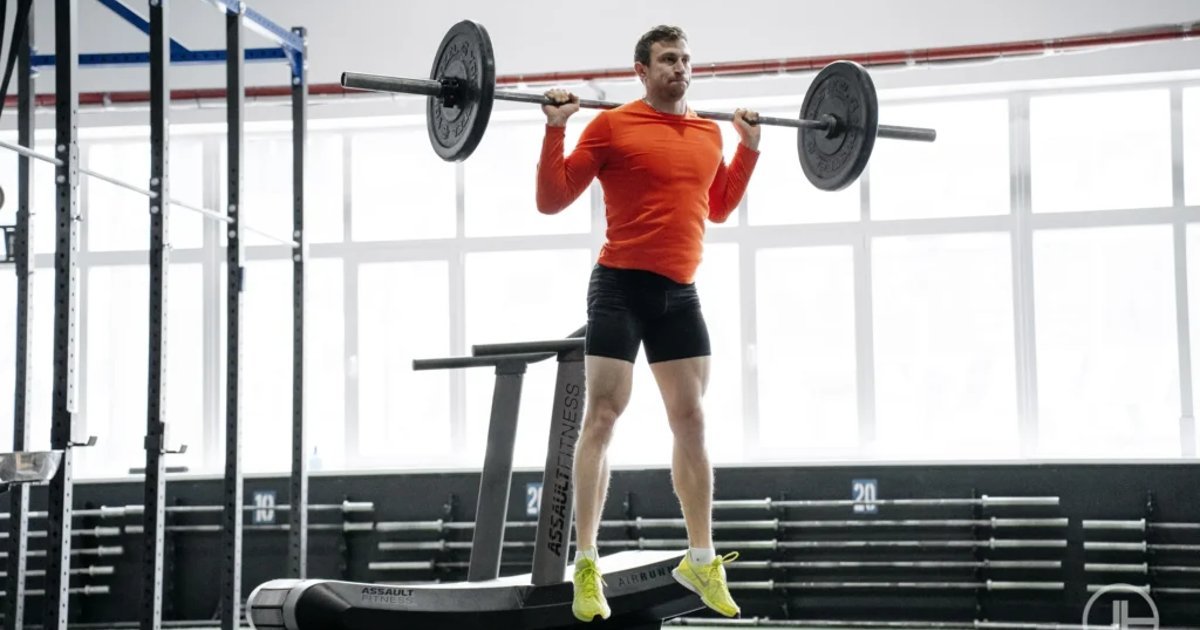
The jump squat is not an ordinary heavy back squat with an exaggerated finishing movement. It is a ballistic exercise in which the athlete attempts to continue accelerating through takeoff, typically with carefully selected submaximal loading. The landing and re-racking are part of the skill, and fatigue changes them. When people compare velocity in jump squats with a traditional back squat, they should expect different curves because the exercise objective and the ability to accelerate through the end range differ.
The experiment also reported a higher theoretical velocity intercept, V0, for the jump squat with fast descent—approximately nine percent higher. V0 describes the zero-load end of a fitted mathematical relationship. It is not a directly measured zero-weight jump speed, and it should not be sold as a nine-percent improvement in athletic sprinting or vertical-jump height. A model parameter helps describe a profile; it does not magically translate into another sport’s performance.
For a usable gym comparison, choose the same machine or bar path, warm-up, squat depth, stance, relative load and descent cue each time. If the goal is to assess a specific dead-stop ability, keep that pause. If the goal is repeatable fast-reversal power, use a safe standardized version of that task.

Equipment Worth Exploring
Explore equipment, accessories and gear from our carefully selected range.


Competition Plates
Competition-style bumper plates for Olympic lifts and loaded strength training.


Multi Pull Smith Rack MPHR-780
All-in-one rack with a Smith machine, functional trainer, lat pulldown and low row.


Multi Bench MBX-650 2.0
Adjustable multi-bench with roller adjustment, 15 backrest positions and accessory mounts.

FID Bench MAX
Adjustable bench offering flat, incline, and decline positions + adjustable headrest.


Grip Plates
Rubber-coated weight plates with handholds for loading barbells and machines.
Equipment choices can support consistent loading, but a different barbell or rack setup is not a substitute for repeating the movement under similar conditions.
Bench press throws: the speed advantage depended on load
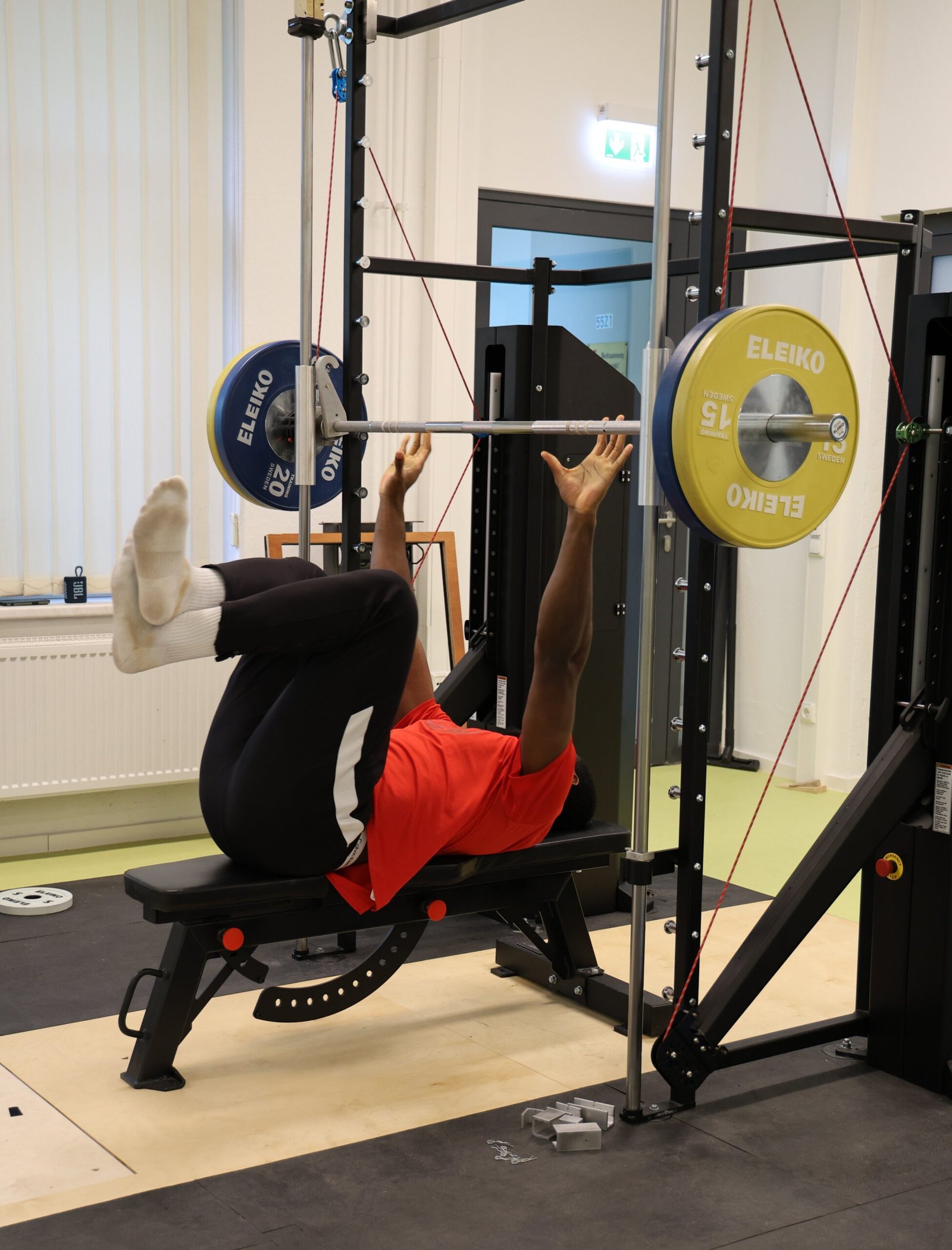
The bench press throw showed a more load-sensitive result. Mean propulsive velocity with fast descent was significantly higher at all tested loads except the lightest, 20 percent of one-rep maximum. At the remaining loads the reported differences ranged from 6.1 to 23.3 percent. It would be misleading to compress that result into the claim that faster lowering always produces the same percentage boost at every weight. It did not.
A throw differs from a conventional bench press because the apparatus allows continued acceleration and a release or catch rather than requiring the lifter to decelerate the bar to a stop at lockout. That change explains why the experiment speaks most directly to ballistic upper-body testing, not to how much a person should bench press for a five-rep hypertrophy set. The researchers also reported a roughly five-percent higher theoretical load intercept, L0, and about a 3.4-percent higher velocity intercept, V0, in the fast-descent bench throw condition.
The largest-looking speed difference should not become a risky training challenge. Especially near the chest, the upper arms, wrists and shoulders need control and a repeatable bar path. The whole point of a ballistically accelerated bench throw is that its release is managed by a suitable training or testing setup. In a commercial gym without such equipment, speed-oriented push-ups, chest passes with an appropriate medicine ball or conventional explosive presses with safe loads can be alternatives; none is an exact replication of this experiment.
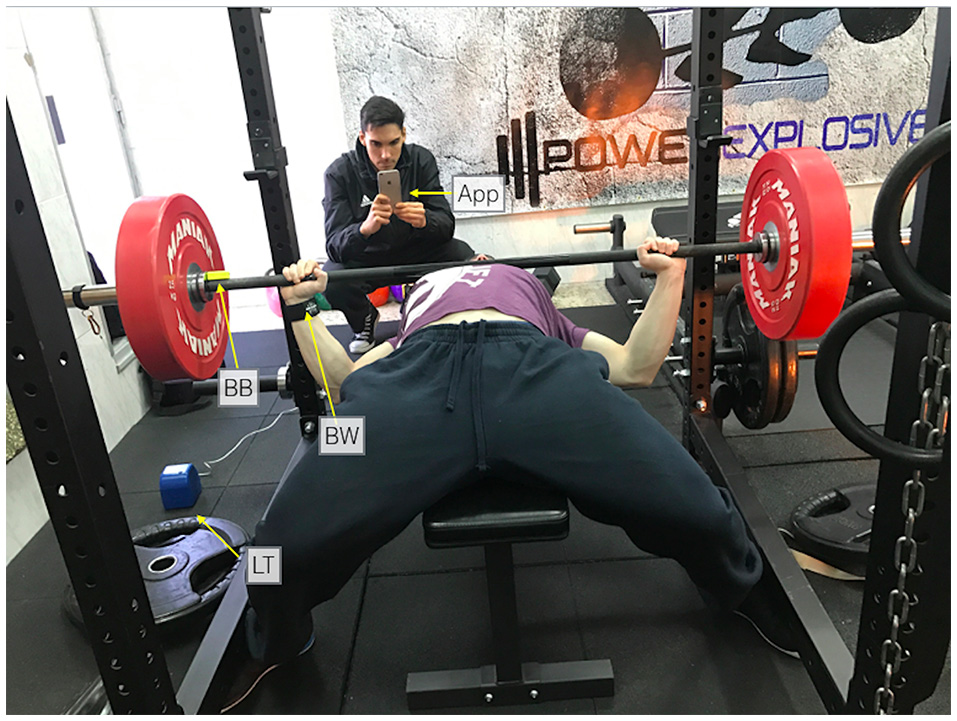
Athletes recording bar speed in regular bench presses should separate raw velocity from technique. A longer pause, a bigger arch, a higher touch point or a different effort cue can move the number. A useful log has four pieces of context: load, rep protocol, range of motion and device. Those details make trend lines much more interpretable than screenshots of a single impressive speed reading.
The estimated one-rep max rose without proof of new strength
Here is the number most likely to cause confusion. With concentric-only testing, the average estimated squat maximum was 117.8 kilograms; under the fast-descent condition it was 124.1 kilograms. The estimated bench maximum moved from 83.9 to 89.2 kilograms. Those are differences of 6.3 and 5.3 kilograms, respectively, obtained from the two velocity-testing protocols. They were not six-week strength gains or new verified personal records. They were different estimates from different ways of executing a test.
A load–velocity model tries to infer performance at a heavier load using measurements collected with several submaximal loads. That can be practical when a maximal test is inconvenient, but every estimate depends on the measured data, the exercise, the movement standard and the fitting method. If faster reversal changes the observed velocities, the fitted line changes too. The predicted weight can then rise even though the athlete has not spent a day getting physically stronger.
Other comparisons of commercial bar-speed measuring systems have found that velocity readings and estimated maxima can vary across hardware and software, particularly when loads become heavy. That reinforces a simple rule: a performance number is only as comparable as the test used to generate it. Switching devices, moving a sensor or changing the definition of velocity adds another variable. Two datasets that both say “bench press velocity” may not be interchangeable.
Use a velocity-derived maximum as one piece of evidence, not as permission to load a new all-time record without readiness and safe progression. If your training prescription depends on one-rep maximum, check the model against an established submaximal or supervised maximum assessment and against your recent lifting history. An unexplained five-kilogram jump in a prediction should prompt you to inspect the protocol before celebrating a breakthrough.

Powerlifting Shirts & Lifting Gear
Powerlifting shirts and gym gear for squat, bench and deadlift lifters who live for heavy numbers.
E=mclift Albert Einstein Science Based Lifting Bro Scie T-Shirt
A t-shirt featuring the E=mclift Albert Einstein Science Based Lifting Bro Science Workout Graphic Gym Shirt artwork, bringing lifting-inspired humor and distinctive gym graphics to your everyday gear.

Squat Bench Deads Shirt – Gains & Meme Top T-Shirt
Bring “Squat Bench Deads” humor to your next gym day.

Meme – Shhh I'm Doing Math Plate Math Weightlifting T-Shirt
Heavy lifts, good laughs, and a little “Shhh I'm Doing Math Plate Math” energy.

Bending Bars Meme – Barbell Squat Bench Deadlift, & T-Shirt
Heavy lifts, good laughs, and a little “Bending Bars Gym Meme” energy.

Nice Try Gravity Astronaut Gym | Funny Space Workout & T-Shirt
Heavy lifts, good laughs, and a little “Nice Try Gravity Astronaut” energy.

Gym Is My Religion Barbell Cross Hooded Pullover Hoodie
Bring “Gym Is My Religion Barbell Cross” gym humor to lazy days and post-workout plans.

Hardcore Lifting Skull Gym | Heavy Metal Workout Vest & Tank Top
Train hard, laugh a little, and rep “Hardcore Lifting Skull”.

Gym Sworn to the Iron Oath Medieval Knight Lifting Deca Sticker
Give your everyday gear a playful “Sworn to the Iron Oath Medieval Knight” twist.

I Want You To Lift Weights Uncle Sam – Patriotic 4th of T-Shirt
Show some gym-day personality with “I Want You To Lift Weights Uncle Sam”.

Lift Thing Is My Thing Superhero Hooded Workout Pullove Hoodie
Make your off-duty look more fun with “Lift Thing Is My Thing”.
Powerlifting culture is built around progress, but honest progress tracking is more valuable than the most flattering calculator output.
How to apply the finding to power sessions and repeatable testing
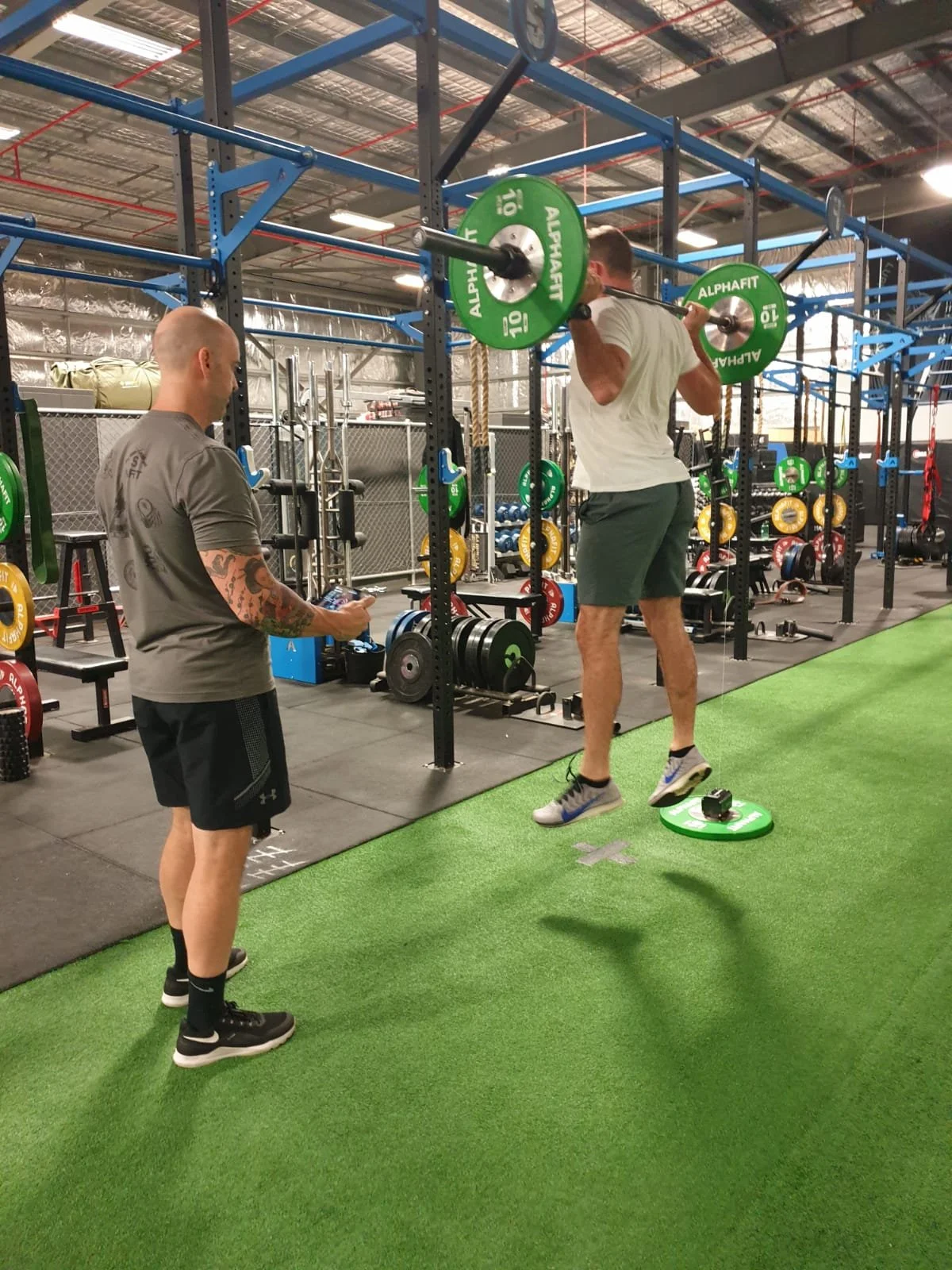
First decide what you are actually trying to assess. A speed test from a dead stop can be useful when you want to minimize the contribution of an immediately preceding descent. A test with a continuous, fast but controlled eccentric phase can be useful when an athlete’s event depends on quickly reversing movement. Neither is universally “better.” The strongest choice is the one tied to the performance question and applied consistently.
Second, keep a practical testing checklist: use the same exercise and apparatus; repeat the same warm-up; set load relative to a verified reference; document squat depth or bench contact point; standardize the lowering cue and any pause; attach the measuring device in the same place; and allow sufficient recovery between maximal-effort attempts. Compare the same metric each time—mean propulsive velocity is not interchangeable with peak velocity or average velocity across the whole repetition.
Third, use a sustainable training arrangement. When explosive power is the priority, perform technical ballistic work early in a session while coordination and movement quality are high. Keep repetitions crisp, stop when speed or landing control obviously deteriorates and save heavy muscular-fatigue work for a later segment. The study did not establish a magical set–rep recipe, so a sensible starting point is a small number of technically clean efforts, suitable rest and loads selected by a qualified coach rather than copying its assessment percentages as a workout prescription.
Finally, recognize the limits. The sample contained eighteen men, used two specific ballistic movements and examined short-term testing repeatability, not long-term muscle gain, injury rates or athletic outcomes. Its findings should not be generalized automatically to everyone, every velocity device or every standard squat and bench technique. What it strongly illustrates is a lasting training principle: if you change the task, you change the number. Stable measurement lets you notice real improvements instead of mistaking a different rep for a better athlete.