Advertising disclosure: This page includes affiliate product links that may earn us a commission, as well as products from our own store.
Pull-ups seem simple until you try to make them better. A climber who cannot hold a bent-arm position on a steep wall has a different problem from someone who can hold that position but cannot accelerate toward the next hold. Both may perform ten strict pull-ups. Their training should not necessarily look identical.
A five-week experiment published in January 2024 compared three ways of emphasizing muscular contractions in trained climbers. The interesting result was not that one exercise defeated every other exercise. It was that the methods produced different changes in pulling performance, even when all involved the same basic movement. That distinction matters to anyone training for climbing, weighted pull-ups or better bodyweight strength.
What the five-week trial actually tested
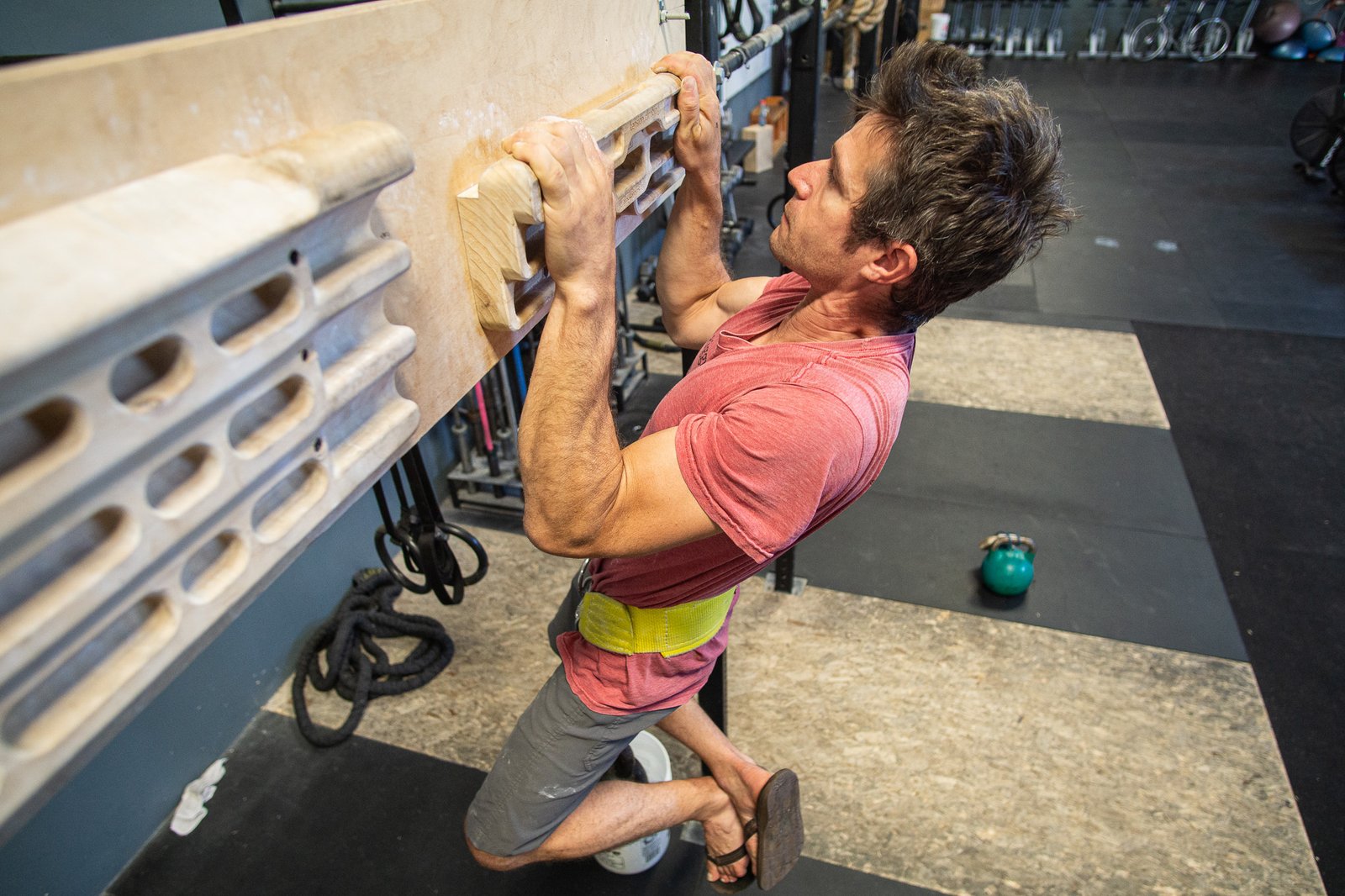
Forty-one male climbers entered the experiment, and thirty completed it. They were already advanced climbers, not people trying to achieve their first repetition. They continued their usual climbing while the intervention groups added two pulling sessions each week. The control group did not add those sessions. Testing used a force-measuring hangboard with large, comfortable holds, deliberately reducing the chance that finger strength rather than arm strength would determine the result.
The researchers tested strict pulls, pulls allowing coordination of the legs and hips, and pulls initiated with a preparatory downward movement. They also used progressively loaded strict repetitions and a repeated explosive pulling test. These are different measurements: a maximum load tells you about force capacity, while acceleration and repeatable mechanical work describe other elements of performance. A higher maximum load does not automatically mean you will move more efficiently between climbing holds.
All three intervention groups improved maximum weighted pulling strength relative to the control group. The average improvement ranged from roughly two to five percent. The negative-focused group also improved several measures of strict explosive pulling, while the fast-repetition group improved mean strict pulling velocity and the amount of work completed in the exhaustion task. The static-hold group improved maximum strength but did not show the same clear strict-jump changes.
The small groups, short duration and participant experience matter. Eleven people did not finish; the final groups contained only six to nine athletes each. No result tells us what would happen in a large beginner population, and the study did not establish that any method improved an actual climbing grade. Treat the findings as a useful way to select a training emphasis rather than a promise of a particular percentage improvement. A different short-term study of experienced climbers also found that heavy weighted pulls could temporarily improve a subsequent explosive climbing test; that acute effect should not be confused with five weeks of adaptation.
Slow negatives: build force without chasing fatigue
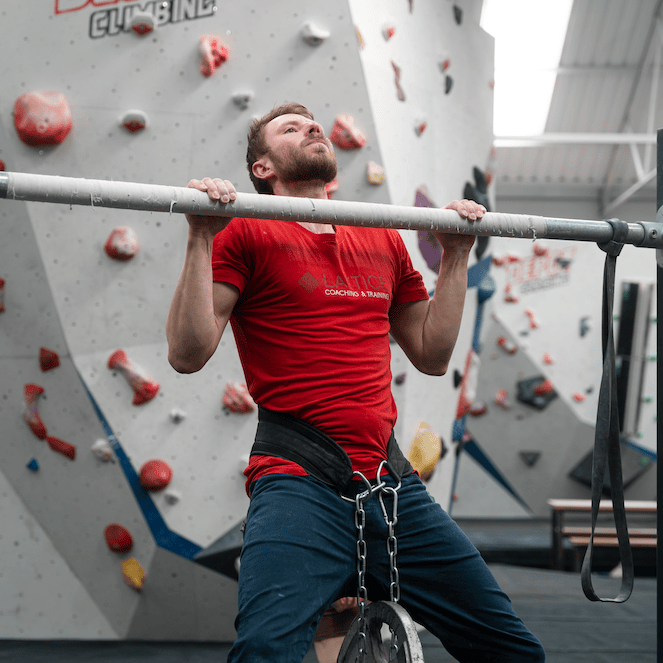
During the lowering portion of a pull-up, your elbow flexors and shoulder muscles resist gravity as your body descends. A controlled negative is not simply dropping more slowly after a difficult rep. It is a deliberate task with a consistent starting position, a predictable descent, and enough muscular control to maintain a repeatable range.
The experimental negative group used demanding loaded descents combined with separate upward efforts. This was a program for skilled climbers with established strength, not a sensible first session for a novice. The important idea is to practice producing force throughout the descent and to preserve the quality of the upward movement. A recreational athlete can do this at a much lower volume and loading level.
For example, a lifter who can perform six strict bodyweight repetitions could use sets of three with a controlled three-second lowering phase. Rest until you can repeat the first rep without a large drop in quality. A lifter who cannot pull up yet can use a stable step to start from the top, then lower through a comfortable range with assistance if needed. Do not jump onto a high bar and discover halfway down that the load exceeds your capacity. Stop before the movement becomes an uncontrolled fall.
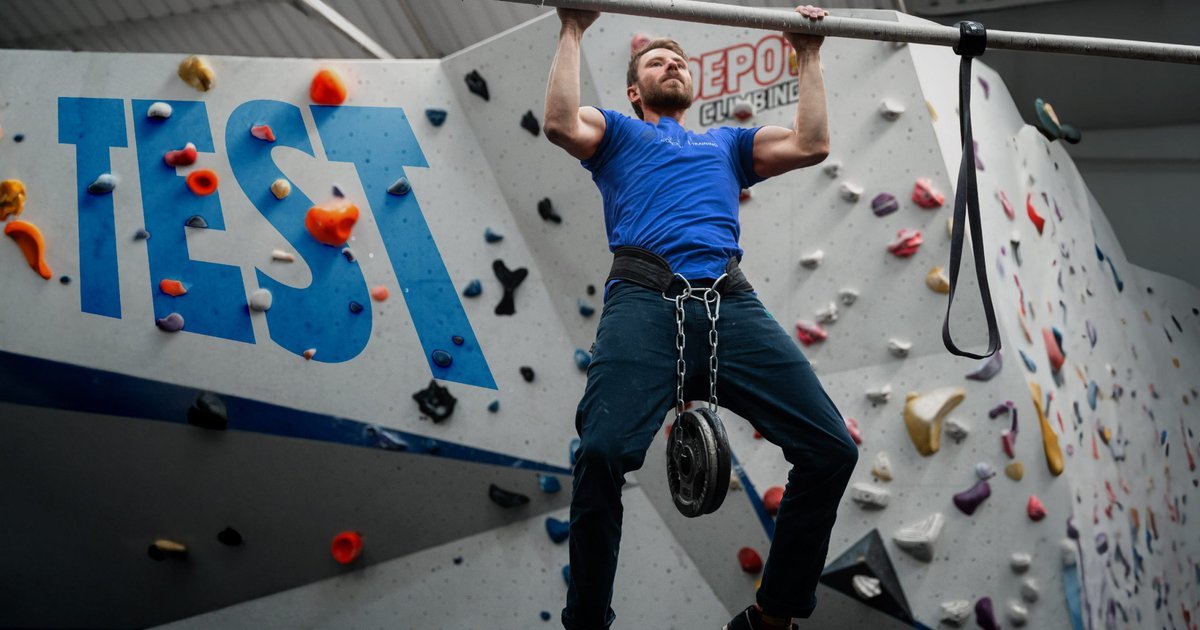
Loading a negative progressively is especially useful when bodyweight is becoming easy, but the total load includes your body mass. If an athlete weighing 75 kilograms adds five kilograms, the resistance is approximately 80 kilograms, not five. Small increases can therefore be meaningful. Keep the external load still, ensure the attachment and bar are rated for the combined weight, and leave clear space under the feet. Eccentric work can also cause substantial soreness when introduced suddenly. Start with less than you think you can recover from, especially if climbing hard later in the week.

Equipment Worth Exploring
Explore equipment, accessories and gear from our carefully selected range.

Power Tower
Freestanding pull-up and dip station with adjustable handles for bodyweight training.


Angles 90 Grips
Flexible grip attachments that allow natural wrist movement during pulling exercises.


Foldable Wall Rack
Wall-mounted folding squat rack designed to save floor space between workouts.

Lock-offs: strong positions rather than a magic angle
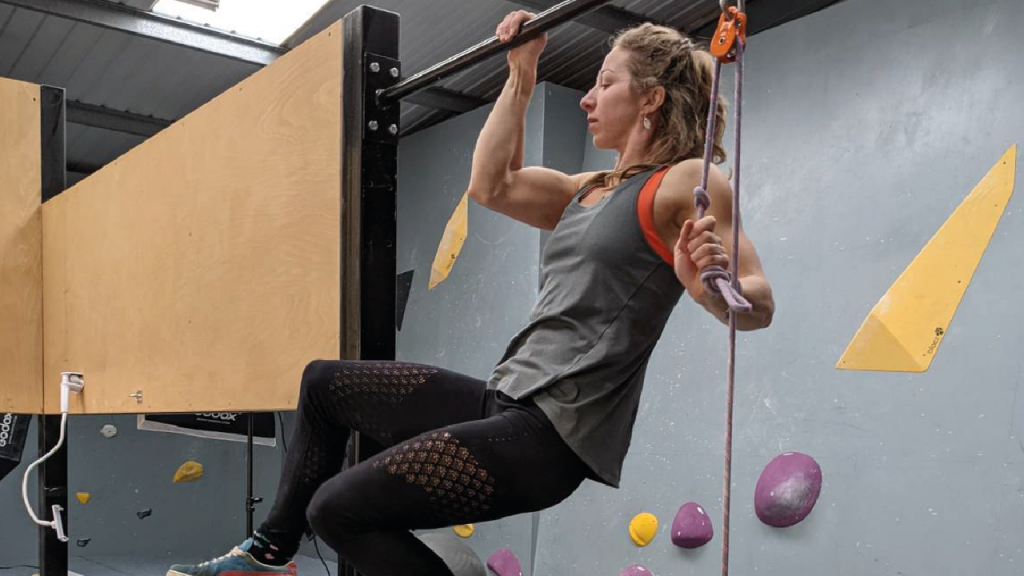
A lock-off holds the arm in a bent position while the athlete reaches, stabilizes or adjusts the feet. Unlike a negative, the joint position is relatively stationary. This makes the method attractive for climbers who notice that a particular section of the movement feels weak even though they can complete repetitions on a bar.
There is no universal best elbow angle. On the wall, the next hold may require a fairly open elbow or a deeply bent arm. The experimental static-hold program included different elbow positions and upward efforts, rather than simply holding the same pose for the entire session. The method improved maximum strength but did not clearly outperform the other approaches for strict acceleration. This makes sense: holding a position is a different task from moving rapidly out of it.
Use assisted bilateral holds first. Select an angle that you can maintain with both shoulders controlled, and time a short, repeatable hold. A few five-second efforts are a more informative starting point than trying to survive a single maximum-duration hold. Use a stable foot support to reduce load if necessary. Change one thing at a time: lengthen the hold, reduce assistance, or move to a slightly different angle, rather than changing all three at once.
Grip choice also changes comfort and the demands on the shoulder and elbow. A separate experiment comparing several hand orientations found broadly similar overall activation across the measured upper-body muscles, with some differences in specific muscles and phases of the movement. Another biomechanical investigation showed that pulling style can influence shoulder muscle loading. Neither establishes that one grip is universally safe. Use the position that allows smooth, comfortable repetitions. If you are working around an injury, ask a qualified clinician rather than trying to force an extreme grip or hold.
Fast pull-ups: train acceleration, not uncontrolled swinging
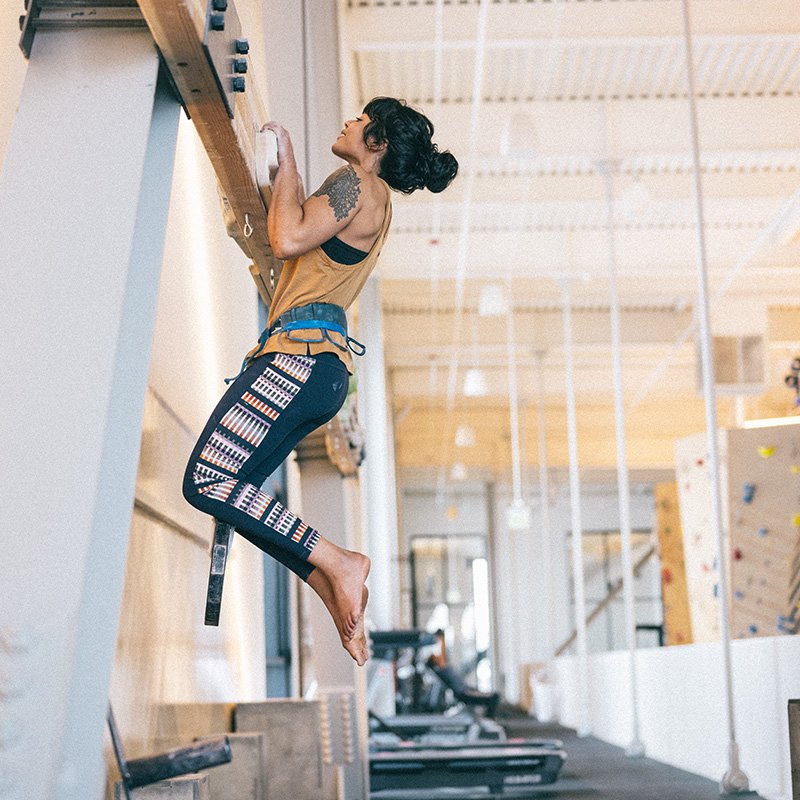
Fast pulling is useful when the next hold is too far away to reach from a stationary position. For a gym lifter, it also provides a way to practice generating force quickly. But a quick repetition and a sloppy repetition are not the same thing. A rapid ascent still requires a controlled start, a consistent grip, and enough reserve to avoid losing position as fatigue rises.
The experiment’s dynamic group used specialized explosive pulling, including brief hand releases, on climbing equipment. That is not a recommendation to let go of an ordinary pull-up bar. Such drills demand appropriate coaching, a suitable training area and substantial pulling capacity. For most lifters, the safer adaptation is to accelerate upward while retaining both hands, then lower under control and reset before the next repetition.
Use a comfortable bar or large holds rather than small edges. If your fingers are the first limiting factor, your pull-up session may become a grip workout instead of the upper-arm power session you intended. Train finger-specific strength separately and account for the stress of hard climbing. The most useful set might contain only two or three fast repetitions. If the final repetition takes twice as long as the first, you have moved away from the initial aim, even if the set looks impressive.
For tracking, record a side-on video with the same camera position, body position and bar each week. Compare the time between the beginning of the ascent and a consistent top position. A phone video is not a force platform, so do not interpret it as a precise measurement of mechanical power. It can nevertheless show obvious changes in movement speed or technique. If your hips start kicking more as the weeks progress, you may be measuring a different movement rather than an improvement in the original one.
A five-week plan that fits around climbing
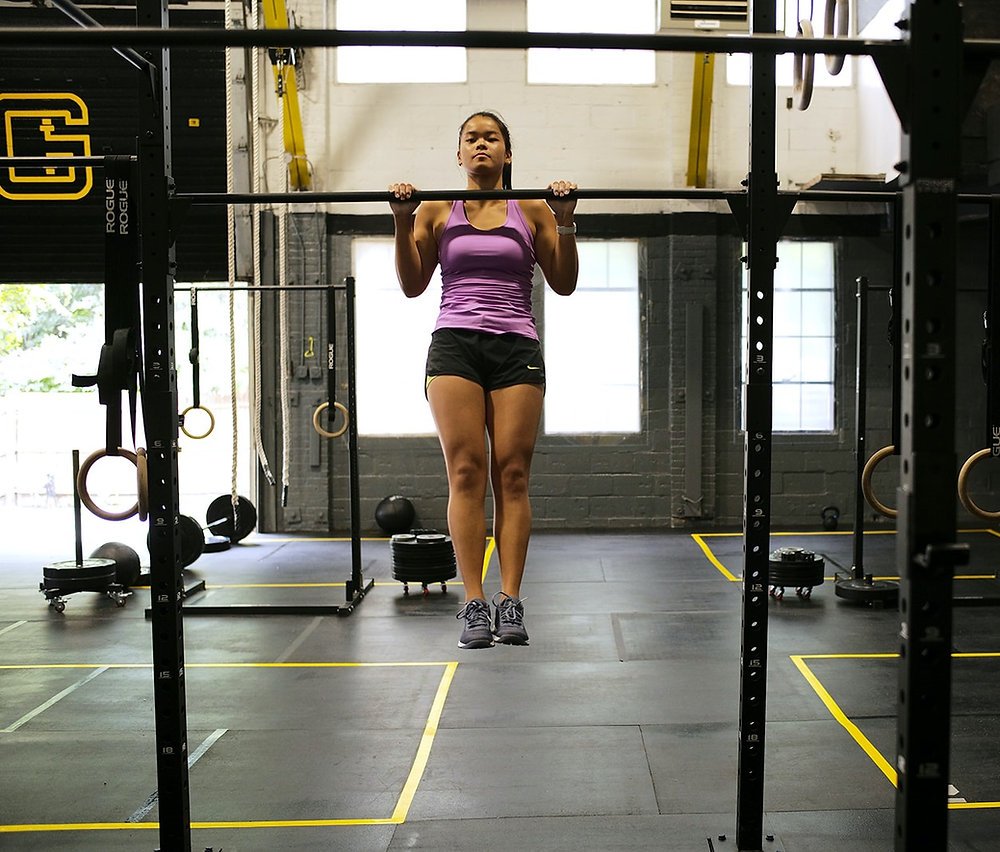
The following is an editorial training example, not the experimental protocol or a guaranteed result. It is intended for healthy adults already able to complete several strict pull-ups. If you cannot perform a strict repetition yet, use assistance for every session and delay added load until you have comfortable, controlled bodyweight strength.
Schedule two nonconsecutive pulling sessions, ideally away from the hardest bouldering or lead sessions. If the training calendar only has room for one, begin with that instead of stacking more work on tired elbows. Warm up with comfortable shoulder movement, easy pulling and progressively harder practice repetitions. Keep a consistent grip and range for the main movement.
- Weeks one and two: Session A, three sets of three controlled pulls, lowering for about three seconds. Session B, three sets of two or three brisk pulls with a controlled reset. Rest roughly two to three minutes between sets. If static weakness is the primary limitation, substitute two or three assisted five-second holds for one fast set.
- Weeks three and four: Add one repetition to a controlled set, a small amount of external resistance, or one additional set if recovery is good. On the fast day, prioritize equally fast repetitions rather than adding fatigue. Maintain the same comfortable range and avoid repeated failure.
- Week five: Reduce hard pulling before a repeatable performance check. After a recovery day or two, compare the same three-repetition set at the same load and grip with your starting record. If strength is the goal, check whether a modest increase in load is now manageable with the same form rather than forcing a maximum attempt.
Track body mass, external load, number of clean repetitions, rest time, and any elbow or shoulder discomfort. These details matter more than a single dramatic session. If your pulling numbers improve but your climbing quality deteriorates, reduce the supplemental workload; your main sport determines the priority. Persistent or worsening pain is a reason to stop the aggravating exercise and seek appropriate evaluation.
For a lifter interested mainly in weighted pull-ups, put the controlled strength session first in the week. For a climber who already has plenty of maximum strength but struggles to reach holds dynamically, use the fresh session for fast pulling and keep the second session brief. For a person struggling to stay in a bent-arm position, make static work a small, deliberate part of the schedule. The common thread is specificity: choose a measurable weakness, give it a recoverable dose of training and evaluate it before changing everything again.

Calisthenics Shirts & Street Workout Gear
Calisthenics and bodyweight-training gear for pull-ups, dips, handstands and street-workout athletes.


Always Pull Yourself Up Hoodie
Make your off-duty look more fun with “Always Pull Yourself Up”.

Calisthenics Heartbeat Crewneck Pullover Sweater for Pu T-Shirt
For laid-back days and lifting humor: “Calisthenics Heartbeat”.

Calisthenics Evolution Crewneck
For laid-back days and lifting humor: “Calisthenics Evolution”.


Be Stronger Than Your Excuses – Motivational T-Shirt
Rep “Be Stronger Than Your Excuses” humor in and out of the gym.

Calisthenics – Meme & Lovers – Top & Gains T-Shirt
Heavy lifts, good laughs, and a little “Calisthenics” energy.

Pullups Heartbeat Sticker
Stick a little “Calisthenics Pullups Heartbeat” humor on your favorite gear.
Slow negatives, lock-offs and faster pulls are not competing religions. They are tools for different jobs. The best choice is the one that addresses your current limitation without compromising the other training that matters to you.