Advertising disclosure: This page includes affiliate product links that may earn us a commission, as well as products from our own store.
The cable serratus punch is a small-looking exercise with one important job: practice reaching through the shoulder blade while the rib cage and elbow stay controlled. It belongs neither in the category of heavy chest presses nor in a list of magical shoulder fixes. With a correctly positioned pulley, light resistance and repeatable setup, it offers a useful way to train scapular protraction in a compact gym. Here is how to make the movement measurable without turning it into a body twist.
Set the cable height, stance and handle before loading
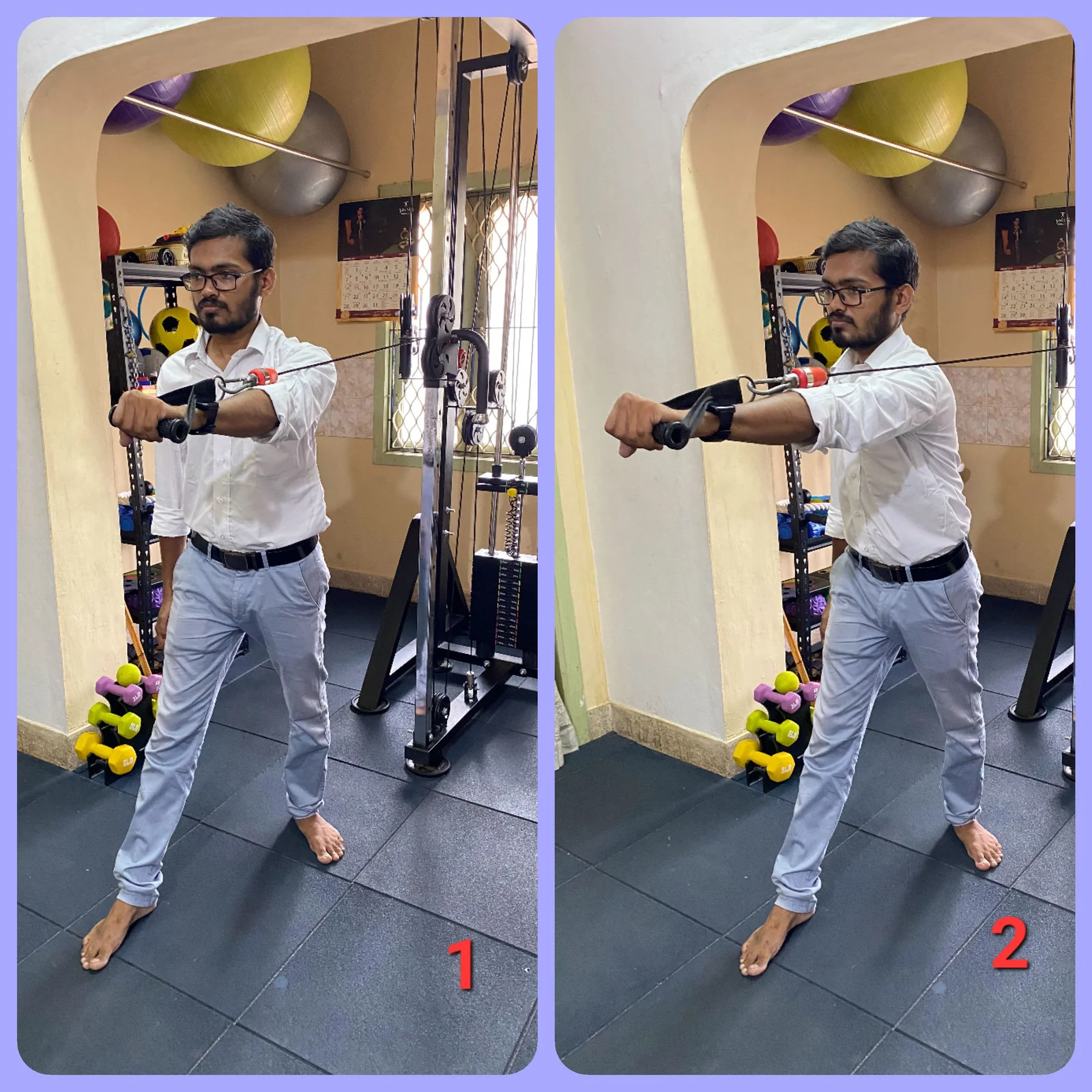
Use a single freely moving cable handle and put the pulley approximately at the height of the working shoulder or upper chest. A low cable with an upward punch is a legitimate variation, but its angle and the muscles helping change; do not compare its numbers directly with a chest-height punch. Start with the stack close to the minimum workable resistance. The goal of the first set is not fatigue but finding a line of pull that lets the arm reach forward without the shoulder hiking toward the ear.
Face away from the cable’s anchor so the line of resistance approaches from behind the hand. Step into a staggered stance and square the pelvis and ribs toward the direction of travel. The working hand begins in front of the shoulder with the elbow nearly straight and soft, not hyperextended. Keep your wrist in line with the forearm and the free hand relaxed at the ribs or lightly bracing against the trunk. Stand far enough from the stack to maintain tension at the start without yanking the arm backward.
Check the entire cable route before the first repetition. A rack upright must not rub the cable; a portable pulley must be locked securely; carabiners and handle attachment points must be closed. If a pulley slides during the set, stop and reset instead of compensating with the torso. On a digital cable unit, match the direction of pull and starting cable length to this movement, and start with a low load. Record which cable, attachment and height you used, because changing any of them changes the comparison.
A useful first drill is to stand still and perform three tiny unweighted reaches with the working arm at shoulder height. Then hold the light cable handle and repeat the same reach. If the stack begins moving but the shoulder blade seems frozen, shorten the range and decrease the load before adding repetitions.

Equipment Worth Exploring
Explore equipment, accessories and gear from our carefully selected range.
VOLTRA
Compact digital cable trainer with smooth, adjustable resistance.

Go-Tone Pro
Portable digital cable trainer with up to 66 lb (30 kg) of adjustable resistance.

VForce Wall Trainer
Space-saving wall-mounted functional trainer with pivoting cable arms and variable resistance ratios.

VForce 2IN1
Half rack and pivot-arm functional trainer with switchable 1:1 and 2:1 pulley ratios.

Multi Pull Smith Rack MPHR-780
All-in-one rack with a Smith machine, functional trainer, lat pulldown and low row.

VForce Lat Tower
Wall-mounted cable tower with pivot arms and adjustable 1:1 or 2:1 pulley ratios.

GymPin Ergo Handles
Pair of ergonomic cable handles shaped for comfortable triceps and pulling exercises.



GymPin D Handle Bar
Multi-use steel D-handle bar for cable rows, pulldowns and other cable exercises.
Let the shoulder blade move instead of pressing with the elbow
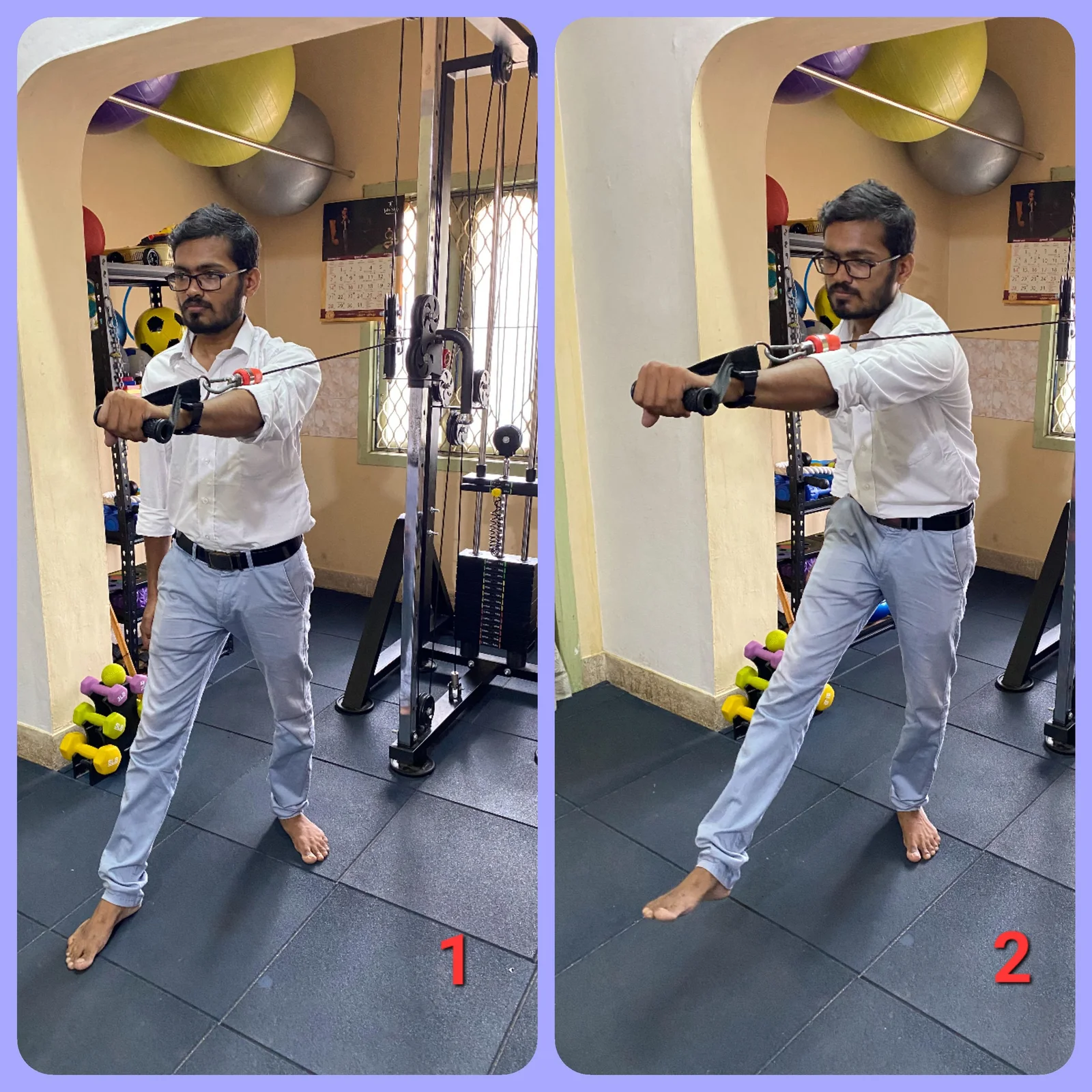
The serratus anterior connects the rib cage to the shoulder blade and participates in moving that blade around the ribs. In a controlled punch, the last part of the reach can come from scapular protraction: the shoulder blade glides forward rather than the arm needing to travel through a large additional elbow extension. That distinction is easy to miss because a fast chest press can look like a punch from the side.
Imagine a straight line from the shoulder through the knuckles. First position the arm in front of the body, then slowly reach the fist a little farther into that line without opening the ribs, shrugging, or turning the hips. The movement may look small in the mirror. Pause for roughly one count at a comfortable end range and return with the same control until the shoulder blade is near its starting position. Avoid aggressively squeezing the shoulder blades together between repetitions: that can turn the exercise into a separate retraction drill.
A slight elbow bend is fine if it is stable across the repetition. A large elbow bend followed by forceful straightening, however, shifts more work to the pressing muscles. This is not inherently a bad exercise; it is simply no longer a clean test of the intended scapular reach. Conversely, demanding a locked-out elbow in someone whose joint does not tolerate it is unnecessary. Repeatability and a pain-free comfortable range matter more than an aesthetic ideal.
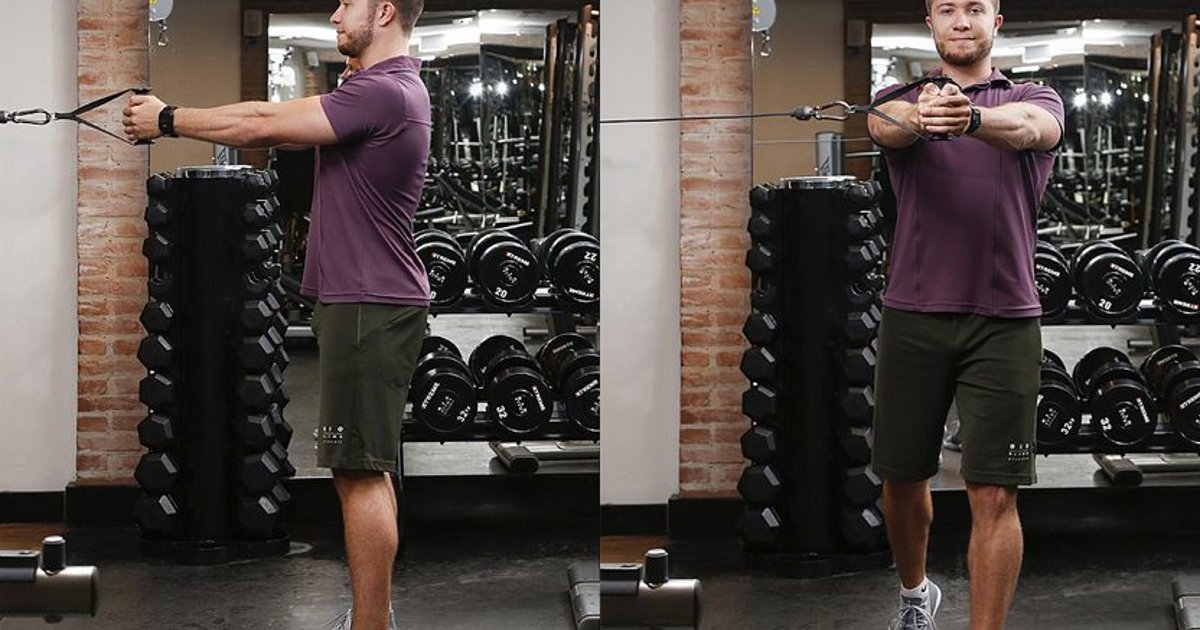
Some bilateral cable photographs show a double-handed reach. That can teach the same shoulder-blade concept but reduces the need to resist rotation compared with using one cable. Do not conclude from a visible muscle pump or an EMG demonstration that this specific variation will build more muscle than a conventional press. Useful scapular practice and greater long-term hypertrophy are different claims.
Keep the ribs, pelvis and return path quiet
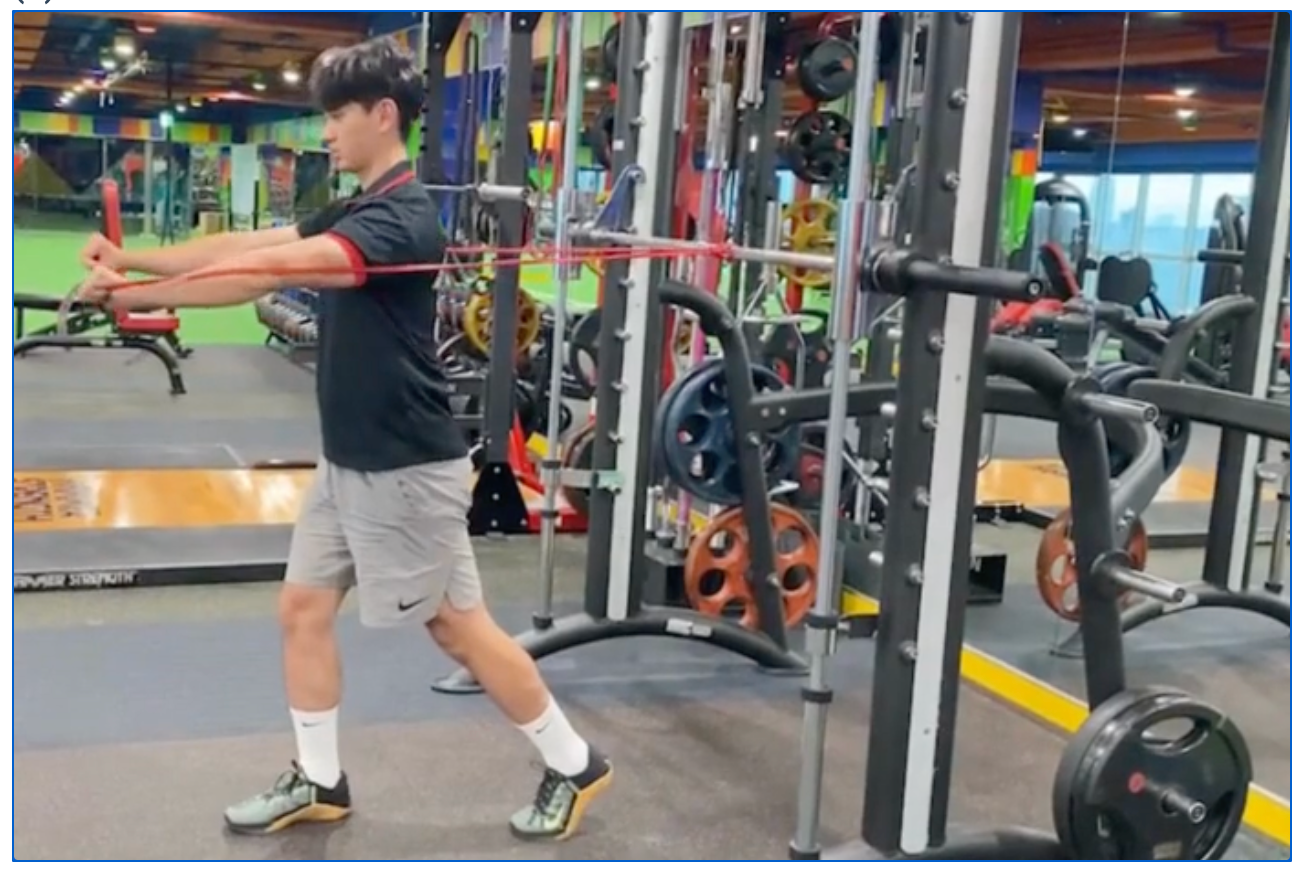
The cable tries to pull the arm backward. With one handle, it can also encourage the trunk to rotate. A steady staggered stance gives you room to reach without letting the weight move you around. Keep your sternum generally facing forward, exhale gently near the final reach and maintain the pelvis beneath the ribs. An aggressive forward lean or hip twist makes the handle travel farther but no longer tells you how much movement came from the shoulder blade.
Watch the finish from the side and from the front, ideally for one light filmed set. The wrist should not collapse into extension. The shoulder should not visibly elevate to gain another centimeter. The elbow should not pump back and forth. Finally, the stack should not slam down as the arm returns. A two-second return is a useful coaching cue, not a precisely validated optimum tempo. Use it to make each repetition recognizable.
When the last few repetitions become different from the first few, end the set. A short-range motion performed honestly is more useful here than an exaggerated punch that forces a shrug. If you feel a sharp pinch, tingling, radiating symptoms or unusual shoulder pain, stop the exercise and seek appropriate professional advice rather than adding resistance to push through it.
Do not confuse the serratus with an isolated six-pack muscle. It helps manage shoulder-blade motion, and its appearance depends on anatomy and body composition as well as training. Its function cannot be judged from how many muscle outlines are visible under the skin. Treat the punch as one accessory within a broader shoulder program, not a diagnostic test or rehabilitation prescription.

Bodybuilding Shirts & Workout Gear
Bodybuilding shirts, tanks and gym gear for lifters chasing muscle, size, symmetry and the pump.


Flexonomics Tee
Show some lifting attitude with a playful “: Flexonomics Muscle Graph” tee.

Progressive Overload Milo Tee
Bring “Progressive Overload Milo Bull” humor to your next gym day.


Yeah Buddy Ronnie Tank
Add some lifting attitude to training with “Yeah Buddy Lightweight”.

Buff Smiley Grunge Hoodie
Stay casual and show some metalhead attitude with “Buff Smiley Face”.

Doctor Delts Gym Villain Funny Gym Hoodie
Show off your superhero humor in a laid-back “Doctor Delts Gym Villain” hoodie.

Shoulder Press Dost Thou Even Press Medieval Knight Cre T-Shirt
Show some gym-day personality with “Shoulder Press”.

Always Pull Yourself Up Tank
Show some personality between sets with “Always Pull Yourself Up”.

Choose one arm, two arms or a band for different constraints
A single cable and a D-handle let you adjust height, distance and working side independently. It is a practical choice when you want to observe whether one arm reaches farther or loses control earlier. Those observations are useful for adjusting training, not evidence that an underlying shoulder condition has been diagnosed. Match both sides for stance, cable height, tension and repetitions before drawing any comparison.
Dual cables or a rope can provide a simultaneous forward reach. The torso may find this easier because the pulling forces are more symmetrical, but a rope can also tempt you to press with the elbows rather than move the shoulder blades. Use a light setting, set both cables to comparable heights, and consider whether the extra attachment is actually helping. A fixed bar or narrow paired handle can constrain the wrists, so choose a setup that permits your natural arm path.
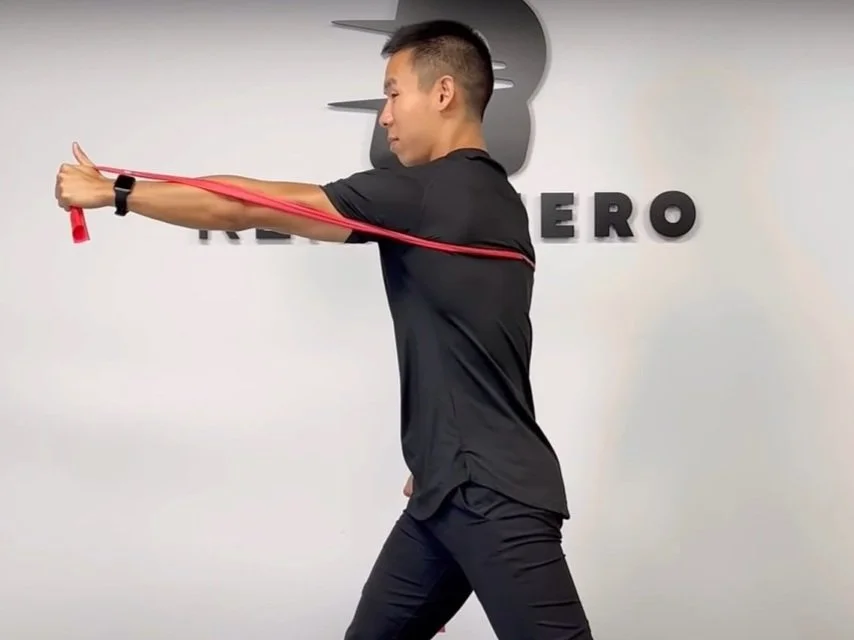
When there is no suitable cable machine, a band secured to a genuinely stable anchor at upper-chest height can reproduce the idea of reaching forward against resistance. The band usually changes tension throughout the movement more than a weight-stack cable does. Record band color, anchor height and standing distance rather than treating it as kilogram-for-kilogram equivalent. Never use a door, hinge or furniture edge unless the anchor is designed and positioned safely for pulling.
The band photograph for this section illustrates a band-resisted one-arm punch, not a cable machine. That distinction matters when comparing setups. A cable can offer convenient incremental resistance; a band is easy to pack; neither automatically fixes shoulder pain or replaces heavy pressing. Choose based on the goal of the session and the equipment you can secure.
Equipment Worth Exploring
Explore equipment, accessories and gear from our carefully selected range.

VForce 3IN1
All-in-one rack combining an adjustable Smith machine, functional trainer, and free-weight station.

VForce 3IN1 Max
Six-post all-in-one rack with Smith machine, functional trainer, and variable-force cables.

Trinity Lat Machine LSW-850
Weight-stack pulldown tower offering three cable directions and adjustable seated support.


Foldable Wall Rack
Wall-mounted folding squat rack designed to save floor space between workouts.
Premium Carabiner
Durable carabiner for connecting cable attachments and training accessories.

GymPin D Cuffs
Adjustable wrist cuffs with textured grips for supported cable-machine exercises.


Multi-Length Tricep Strap
Adjustable-length cable strap for triceps, biceps and upper-body cable exercises.

Lat Pulldown Set
Multi-grip cable attachment set for pulldowns, rows, and varied upper-body training.
Compare wall slides and push-up plus without mixing exercises
The cable punch is an open-chain movement: the hand travels while resistance acts through a handle. A push-up plus is closed-chain: the hands support the body and the trunk moves relative to them as the shoulder blades spread around the rib cage. Both involve scapular protraction but the demands on wrists, trunk, shoulder loading and balance differ. One does not automatically replace the other in every person’s program.
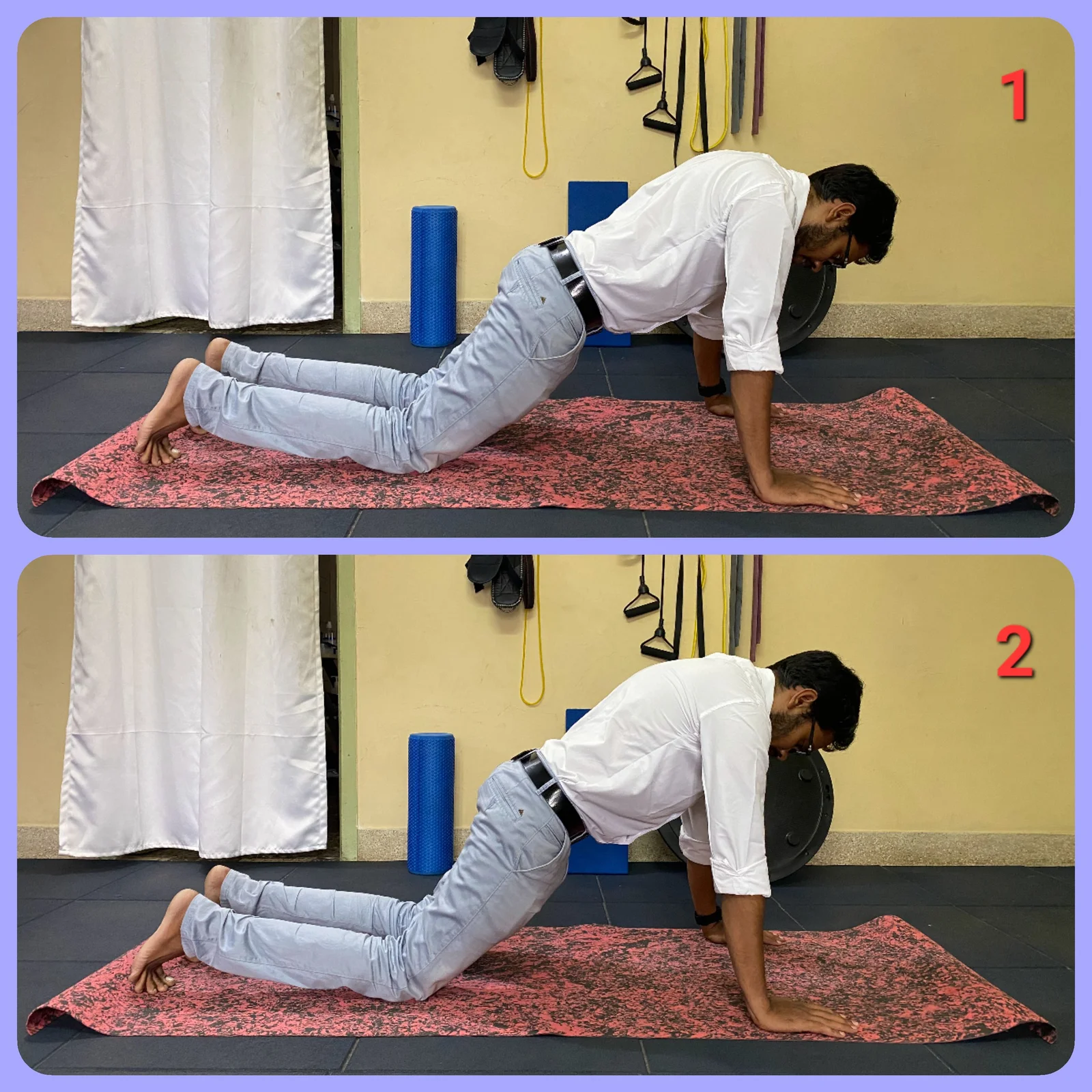
For a simple push-up plus, use a wall or elevated bench if the floor version is too hard. Set the arms long, brace the torso, allow the shoulder blades to approach one another slightly without collapsing the back, then push the support away by spreading the shoulder blades. The plus is the extra reach after the arms have already straightened. Avoid turning each repetition into a standard elbow-bending push-up if your intended drill is scapular motion.
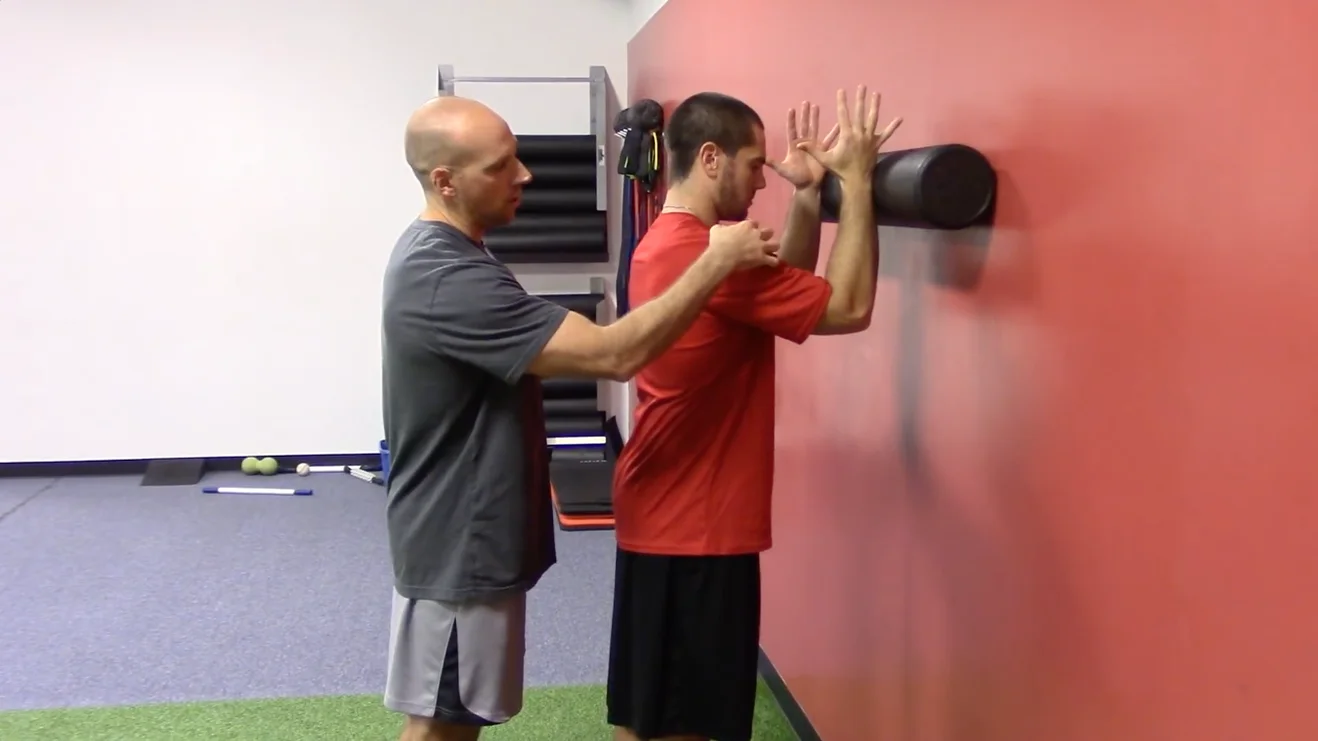
A foam-roller wall slide uses forearm pressure and an upward arm path. It can be helpful for practicing coordinated scapular upward rotation while the arms rise, whereas the standard chest-height cable punch emphasizes a forward reach. The wall-slide photograph shows a coach cueing a trainee at a roller; it is an alternate serratus-focused drill and should not be mistaken for the cable version. Keep an easy comfortable range instead of chasing an overhead position you cannot control.
In practical training you might use a few unloaded wall slides as a warm-up, a light cable reach as a controlled accessory, and a separate push-up or press for bigger pressing volume. That is a programming option rather than a proven hierarchy. If overhead motion or supported bodyweight exercise reproduces discomfort, use a tolerable variation or seek clinical guidance rather than forcing a progression.
Functional Fitness Shirts & Workout Gear
Functional-fitness shirts, tanks and workout gear for athletes who train strength, conditioning and everything in between.


Handstand Walk Tee
Bring “: The Handstand Walk Beatles Graphic” humor to your next gym day.


Kettlebell Skull Tee
Heavy lifts, good laughs, and a little “Kettlebell Skull Gym Meme” energy.

OnlyGains Kettlebell Meme Hooded Jumper Hoodie
Bring “OnlyGains” gym humor to lazy days and post-workout plans.


Gym Equation Kettlebell Makes Me Happy Design Workout a Hoodie
Make your off-duty look more fun with “Gym Equation”.

Lift Together Grow Stronger for Gym Buddies Who Train T T-Shirt
Show some gym-day personality with “Lift Together Grow Stronger”.

Vive La Resistance Bands – Resistance Bands Warmup Mobi T-Shirt
Rep “Vive La Resistance Bands” humor in and out of the gym.

Vitruvian Kettlebell Tee
Heavy lifts, good laughs, and a little “Vitruvian Man With Kettlebells” energy.
Run a four-week practice ladder and record honest progress
Because the cable punch is a coordination-focused accessory, progression should first improve control and only later increase load. Place it after general warm-up work or alongside light shoulder accessories; avoid exhausting the shoulders before your heaviest lifts if those lifts are a priority. Two sessions per week with at least a day between is a reasonable trial schedule, but not a scientific requirement for every lifter.
| Week | Working prescription | Progress criterion |
|---|---|---|
| 1 | 2 sets of 8–10 light reaches each side | Stable stance, still ribs, smooth cable travel |
| 2 | 2–3 sets of 10–12 each side | Same arm angle and return path throughout |
| 3 | 3 sets of 10–12 each side | Pause briefly at end range without shrugging |
| 4 | 3 sets of 12–15 each side | Only consider one small load increase after clean sets |
Rest long enough between sets to control breathing and shoulder position. Log the pulley height, hand used, body position, attachment, sets, reps, load setting and a brief note on technical quality. If increasing resistance shortens the reach or turns it into an elbow press, return to the previous setting. The movement is not a competition, and a larger number on a cable stack is not the main outcome.
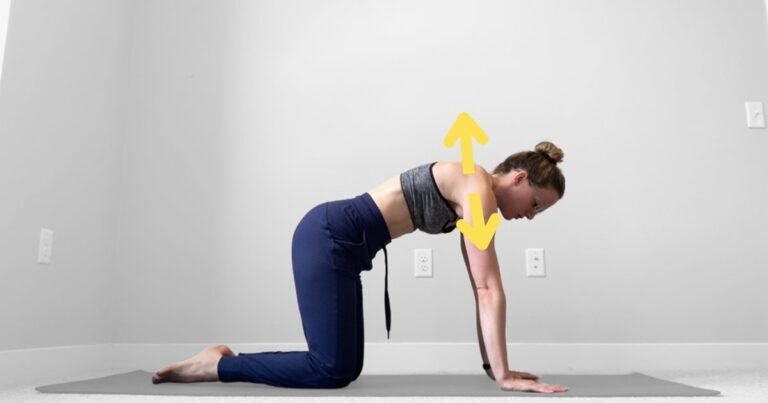
The knee-supported push-up plus shown here is another low-equipment progression option for people who prefer a closed-chain drill. It is not an illustration of the cable punch, nor are its repetitions interchangeable with cable repetitions. You can use it for variety, but record it separately. At the end of the four weeks, judge the trial by cleaner, more repeatable reaches and whether the exercise fits comfortably beside your main pressing and pulling work. Stronger shoulders come from an overall program; this is one small, trainable piece of it.