Advertising disclosure: This page includes affiliate links that may earn us a commission at no additional cost to you.
A Bulgarian bag looks like a curved sandbag, but the handles and the way the load moves make it a different training problem. A lifter who can comfortably squat a much heavier weight may still find a light bag surprisingly demanding when it travels around the body. The challenge is not simply picking it up: it is controlling where it goes next.
For a first session, forget the impressive combinations you may have seen from experienced wrestlers. Learn which grip you are using, make room for the bag to move and choose a weight you can decelerate deliberately. A good beginner programme develops repeatable movement before demanding speed or fatigue.
Why a wrestling coach wanted a crescent-shaped training bag
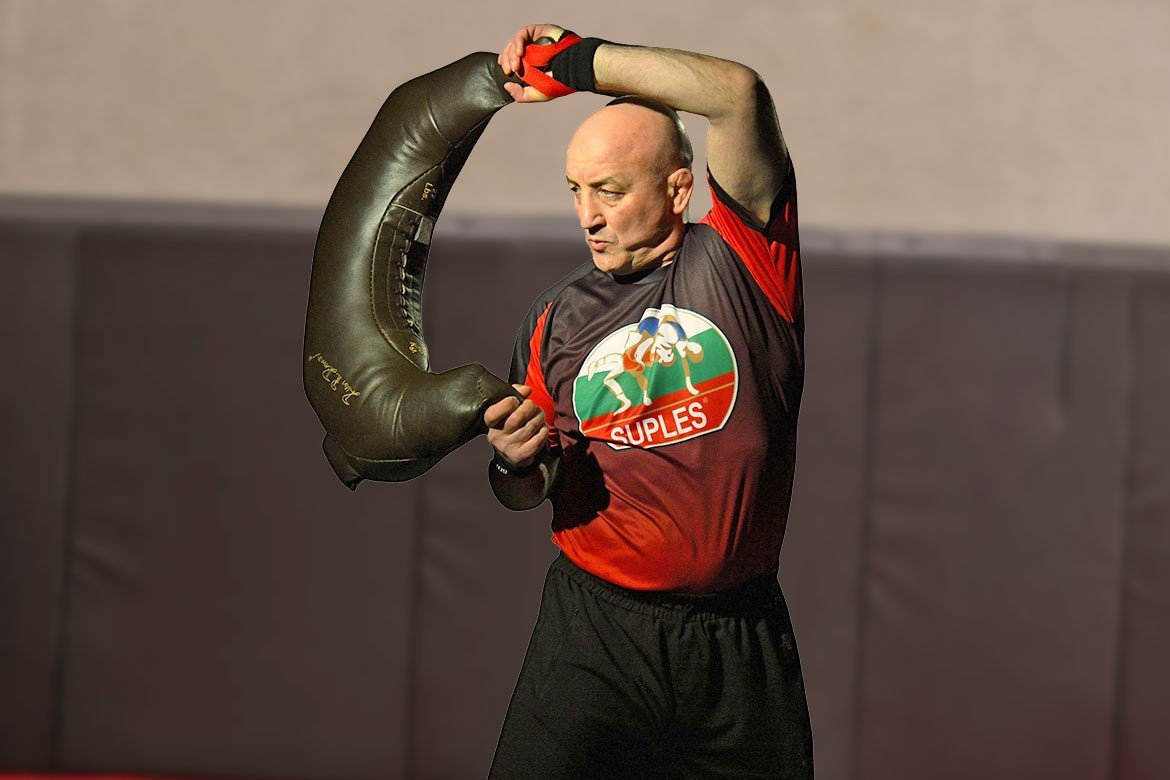
The Bulgarian bag was developed in 2005 by Ivan Ivanov, a former wrestler and wrestling coach. Its shape was inspired by the tradition of wrestlers in Bulgaria carrying and swinging livestock. The modern version turns that idea into a piece of exercise equipment with a curved body and several grip options.
The original Suples range spans roughly 3–38 kg, depending on the model and size. Other versions may use different filling materials and weight ranges. This matters when comparing equipment: two bags of the same nominal weight can have different lengths, handle spacing and how much the filler moves. The printed weight is only one characteristic of the object you will be training with.
A conventional sandbag is often useful for picking up, shouldering and carrying a heavy object. A Bulgarian bag instead offers a particularly convenient shape for moving a moderate load around the head and torso or across the hips. You can still use it for ordinary strength exercises, but its distinctive value becomes clearer when you start practicing controlled changes of direction.
That does not make it inherently superior to dumbbells, barbells or kettlebells. Each tool makes some exercises easier to set up than others. Choose a Bulgarian bag because you have a use for its shape, not because every workout must be performed with an unusual implement.
Three handle positions change how the load behaves
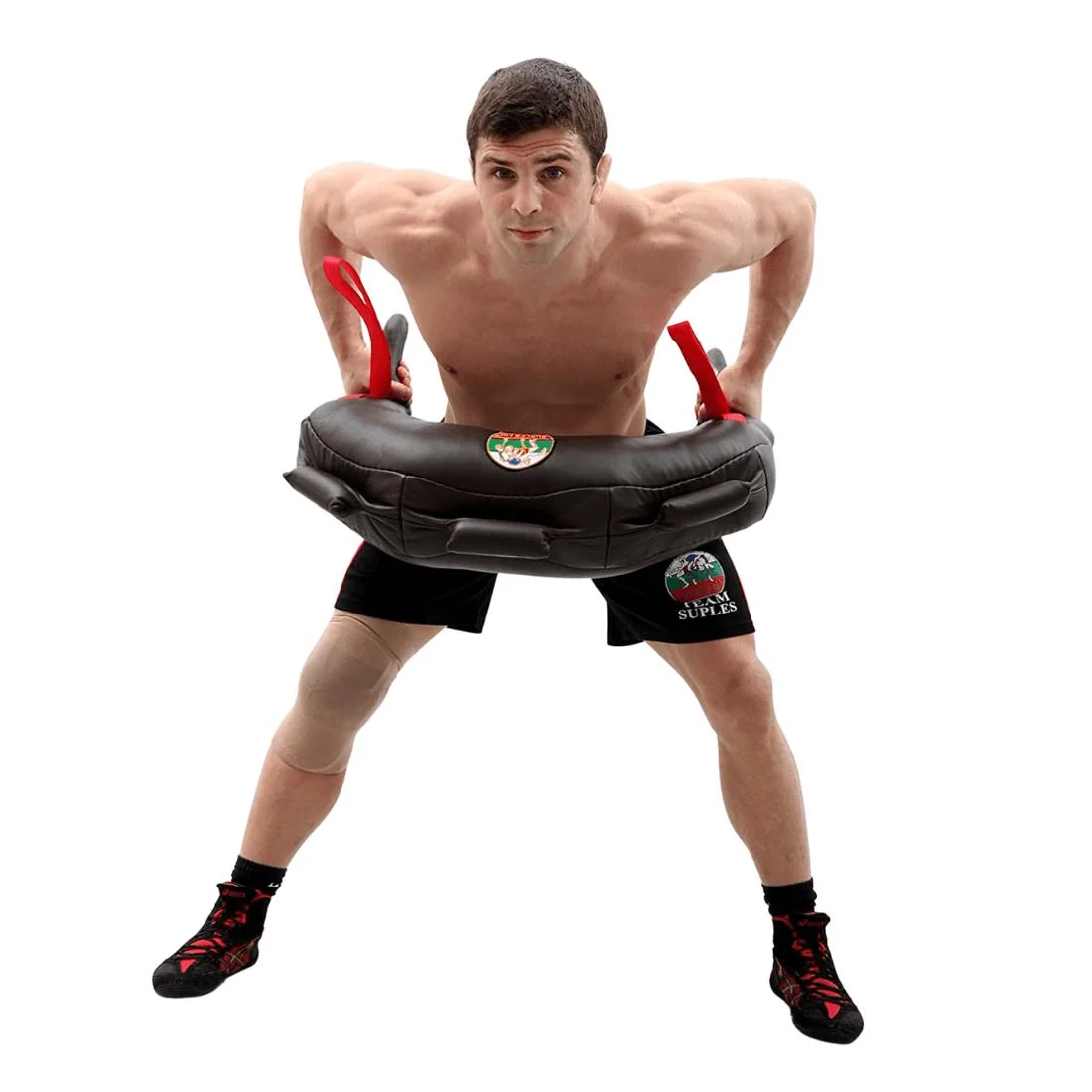
Look at the bag before deciding what exercise to perform. The main handles are usually extensions at the two ends of the crescent. Holding them allows the body of the bag to travel away from the hands, which is particularly useful for circular movements. A firm grasp is important, but the wrists should not be forced into an uncomfortable angle just to imitate another lifter’s grip.
Many designs also have short handles attached along the outside of the bag and separate straps near the ends. Those options can help with rows, curls, presses or exercises in which the bag is held close. Exact handle layouts vary, so use the manufacturer’s directions for the specific bag rather than assuming that every model has identical attachment points.
Notice how far the weight sits from your grip. A bag held tightly against the chest can feel relatively manageable because the mass is close to the body. When it is moved farther away during a circular exercise, the same load can be much harder to redirect. Moving more quickly also raises the challenge of slowing it down. This is why weight selection based purely on a deadlift or squat number is not particularly useful.
Before buying, inspect the handles for enough room for your hands and enough flexibility for a comfortable grip. Check stitching and filling instructions, and consider the dimensions of the room where you intend to train. At home, a bag that travels beyond your elbows needs more clear space than a set of curls performed next to a rack.
Learn to guide the spin rather than chase speed
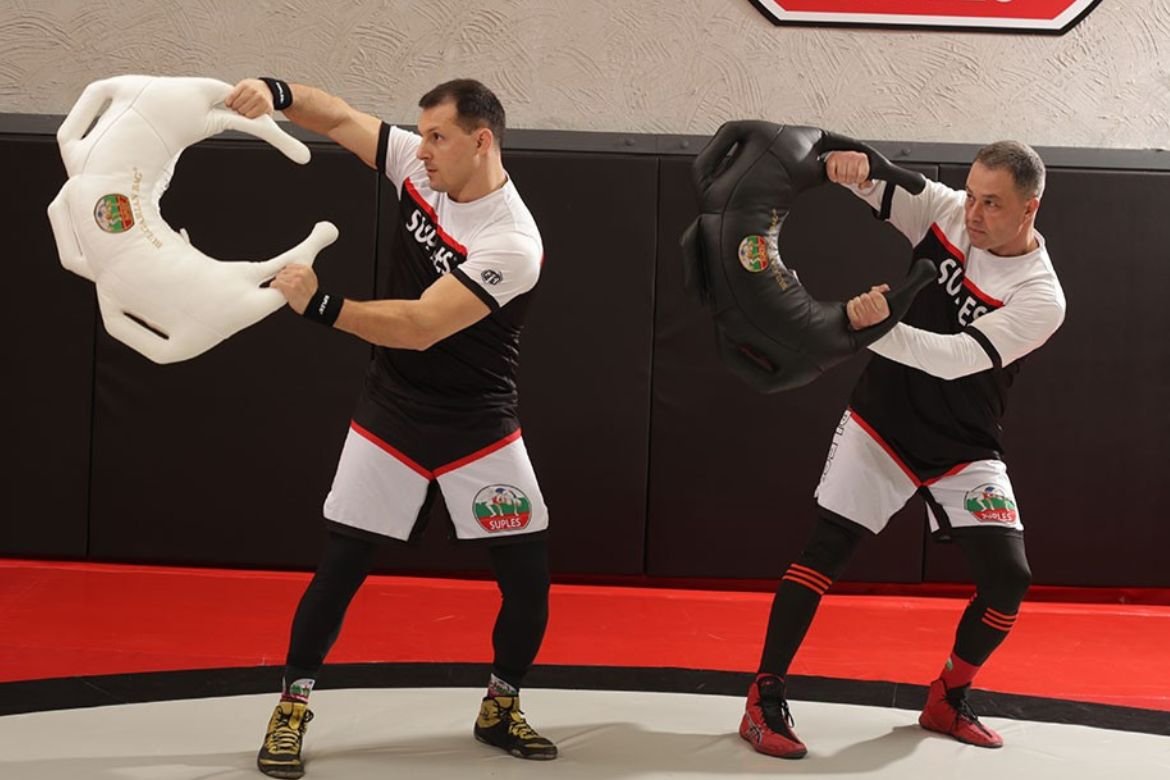
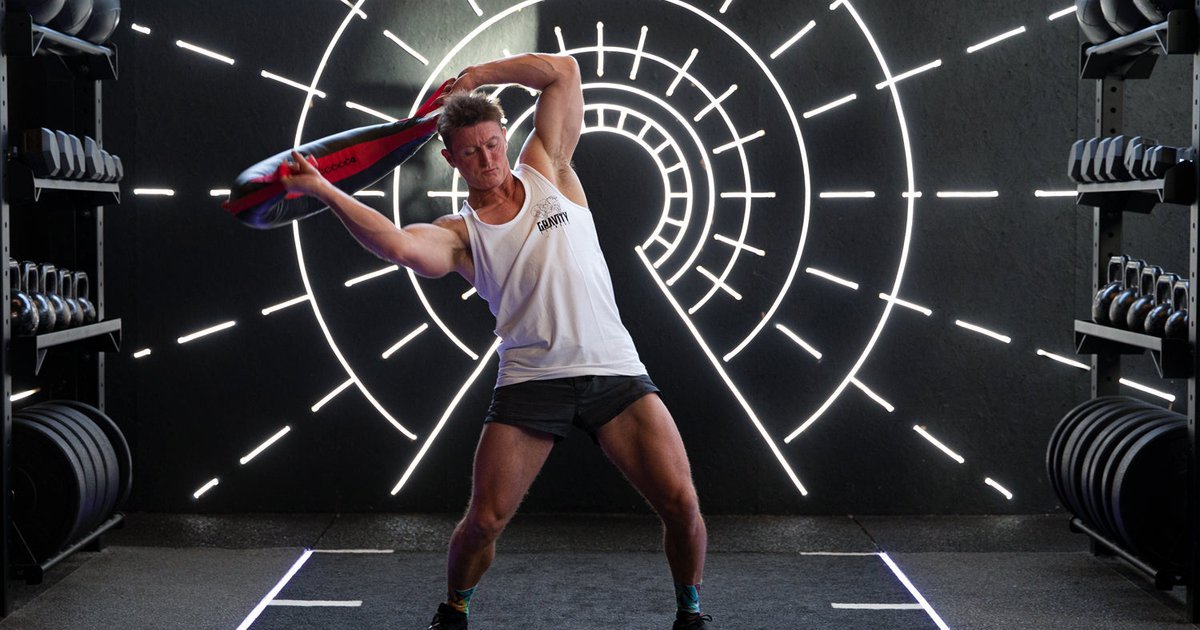
The spin is a characteristic Bulgarian bag exercise. It sends the crescent around the upper body through a coordinated movement involving the hips, trunk, shoulders and arms. Experienced athletes can make the path look effortless, but there is a substantial difference between a fluent spin and an uncontrolled swing that you catch at the last moment.
Start with a light implement and learn the movement under appropriate instruction. Begin from a stable stance with clearance around you. Practise the movement slowly enough that you can stop when you choose. Pay attention to whether both directions feel comfortable; there is no benefit to forcing the less familiar side to match your stronger direction at full speed on the first day.
The hands maintain the connection to the load, while the rest of the body contributes to its movement and deceleration. Trying to make the arms do everything can turn the exercise into a frantic shoulder workout. Equally, allowing the bag to pull you into an awkward position is not a useful display of rotational strength. The aim is to move with the load without surrendering control of it.
There are other dynamic exercises, including swings, swing snatches and arm throws. They are not prerequisites for an effective workout. A bag clean or a straightforward squat can be practised separately before combining them. If a movement causes joint pain, repeatedly contacts your head or takes you out of balance, stop and change the exercise, load or instruction rather than increasing the pace.
A beginner session that leaves room for technical practice
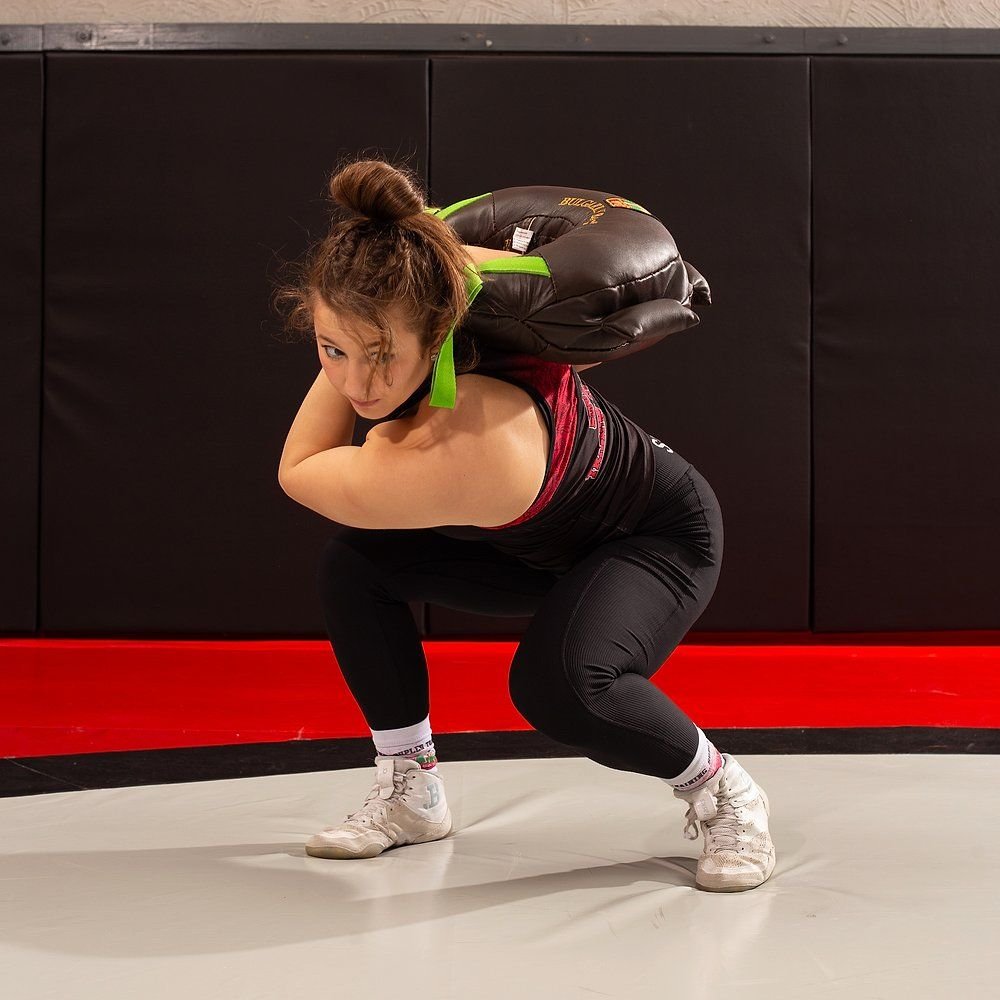
A first workout should be simple enough that you can tell whether the bag is helping you learn. Begin with a few minutes of general warm-up and gentle rehearsal of the movements. Choose a bag that lets you complete the following work with several repetitions in reserve. The session below is an example, not a competition standard or an individual prescription.
- Front-held squat: two sets of six to eight controlled repetitions.
- Two-handed bent-over row: two sets of eight repetitions, with the load close enough to maintain your position.
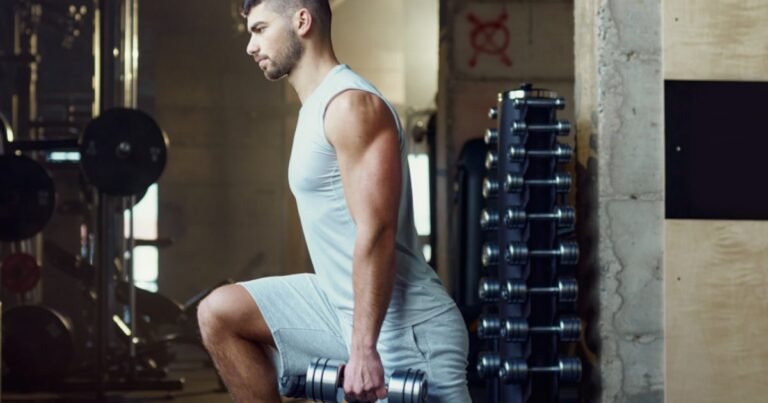
- Reverse lunge with the bag held securely: two sets of five repetitions on each leg.
- Low-speed spin practice, if already instructed in the movement: two sets of three to five repetitions in each direction.
- Rest approximately 60–90 seconds between sets, or longer until you can perform the next set with control.
For the first couple of weeks, one or two short sessions may be enough alongside your existing routine. Track the weight, repetitions, perceived effort and whether the bag path remained consistent. When the work is comfortable, increase either the number of quality repetitions or the load, rather than changing several variables in the same session.
There is no need to turn the first workout into a timed circuit. The extra challenge of working against the clock makes more sense once the movements are familiar. In a small home gym, kettlebell swings, simple loaded carries, jump rope intervals and rotational landmine drills can also be useful conditioning options, provided there is suitable space and you have learned each movement. These are alternatives and complementary exercises, not identical replacements for the bag spin.

Equipment Worth Exploring
Explore equipment, accessories and gear from our carefully selected range.

Cast Iron Kettlebells
Textured cast-iron kettlebells for swings, squats, carries, and full-body training.


Slam Ball
Low-bounce weighted slam ball for explosive throws and high-intensity conditioning.


Where bag training fits alongside strength and conditioning
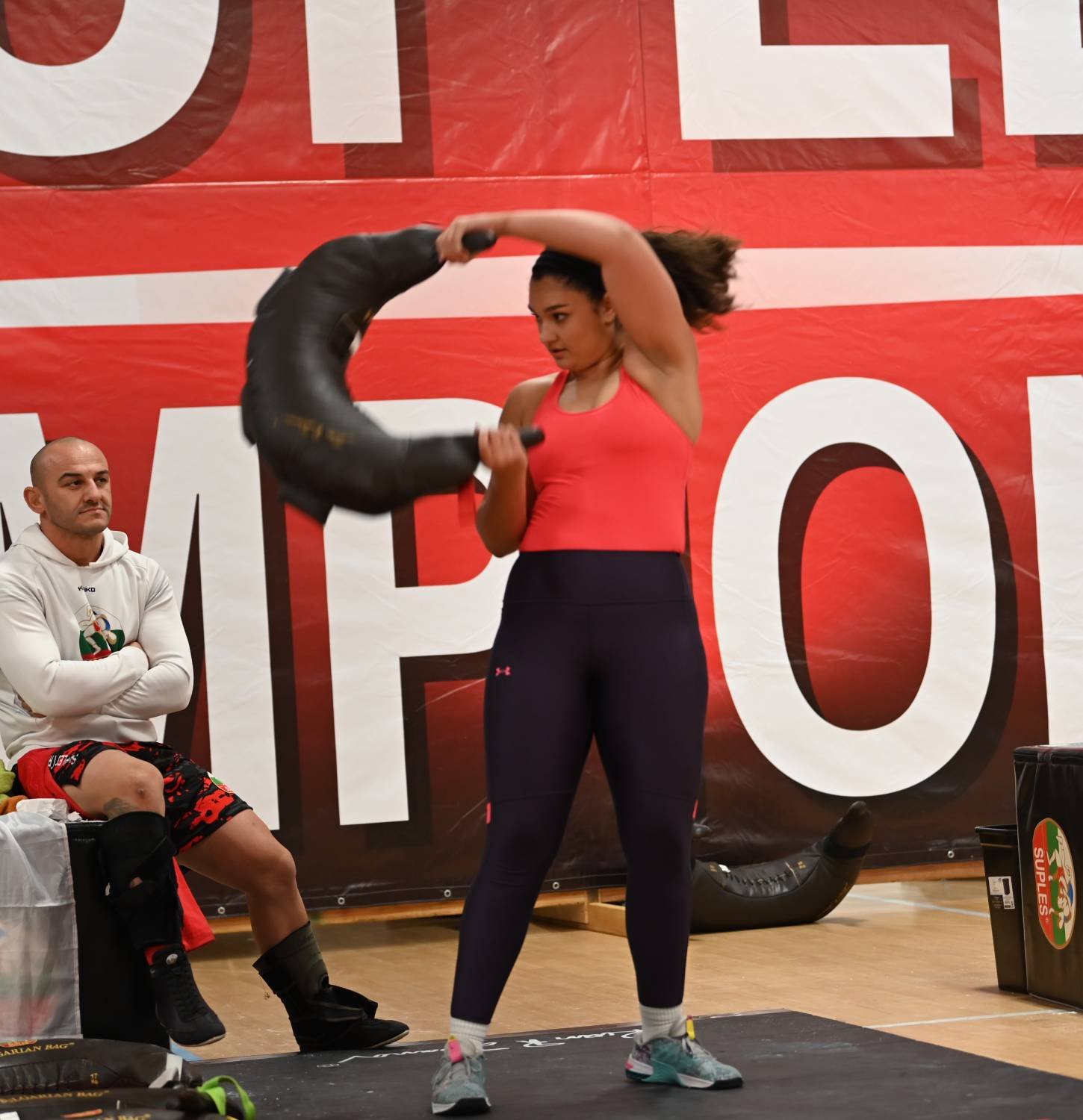
Bulgarian bag training has particular appeal for wrestlers because it combines holding a load with changing direction repeatedly. A 2021 controlled study involved just ten male wrestling athletes and assessed upper-body performance using push-ups and a dynamic grip endurance test. It reported improvements after bag training. That is encouraging, but such a small sample does not establish that the bag is better than other strength equipment for every athlete or that a particular exercise transfers directly to competition results.
For a grappler, sport practice still needs to take priority. If extra bag work leaves the hands so fatigued that technical training suffers, the conditioning session is poorly placed. Consider putting demanding bag work after skill practice or in a separate session. For someone who primarily lifts weights, the bag can provide short accessory work without replacing the progressive heavy exercises that are central to the programme.
Specialist bag competitions demonstrate how far technique and conditioning can be developed, but competition combinations are not the right starting target for everyone. Your first useful milestone is a set in which the last repetition looks as controlled as the first. After that, you can progressively test longer sets, more demanding movements or slightly heavier bags.
Choose equipment that supports the training you actually want to do. A well-made bag that fits your hands, space and current skill level is more valuable than a heavier one that spends most of its time on the floor. Learn the movement, keep the load manageable and give yourself enough time to build both grip and coordination.