Advertising disclosure: This page includes affiliate product links that may earn us a commission, as well as products from our own store.
A machine that promises walking, sled-style pushing and loaded handles has an obvious appeal when your gym has no room for a turf lane. The Bells of Steel Dreadmill combines those tasks around a manually driven incline belt. The buying question is whether those particular tasks suit your training—and whether the room still works when the machine is open.
This is a guide to the Dreadmill’s documented design and ownership requirements, not a hands-on MMP review. Its folding deck deserves attention, but so do the clearance behind it, the separate loading limits and the difference between holding attached handles and carrying free weights across a floor.
A manual belt changes what you control
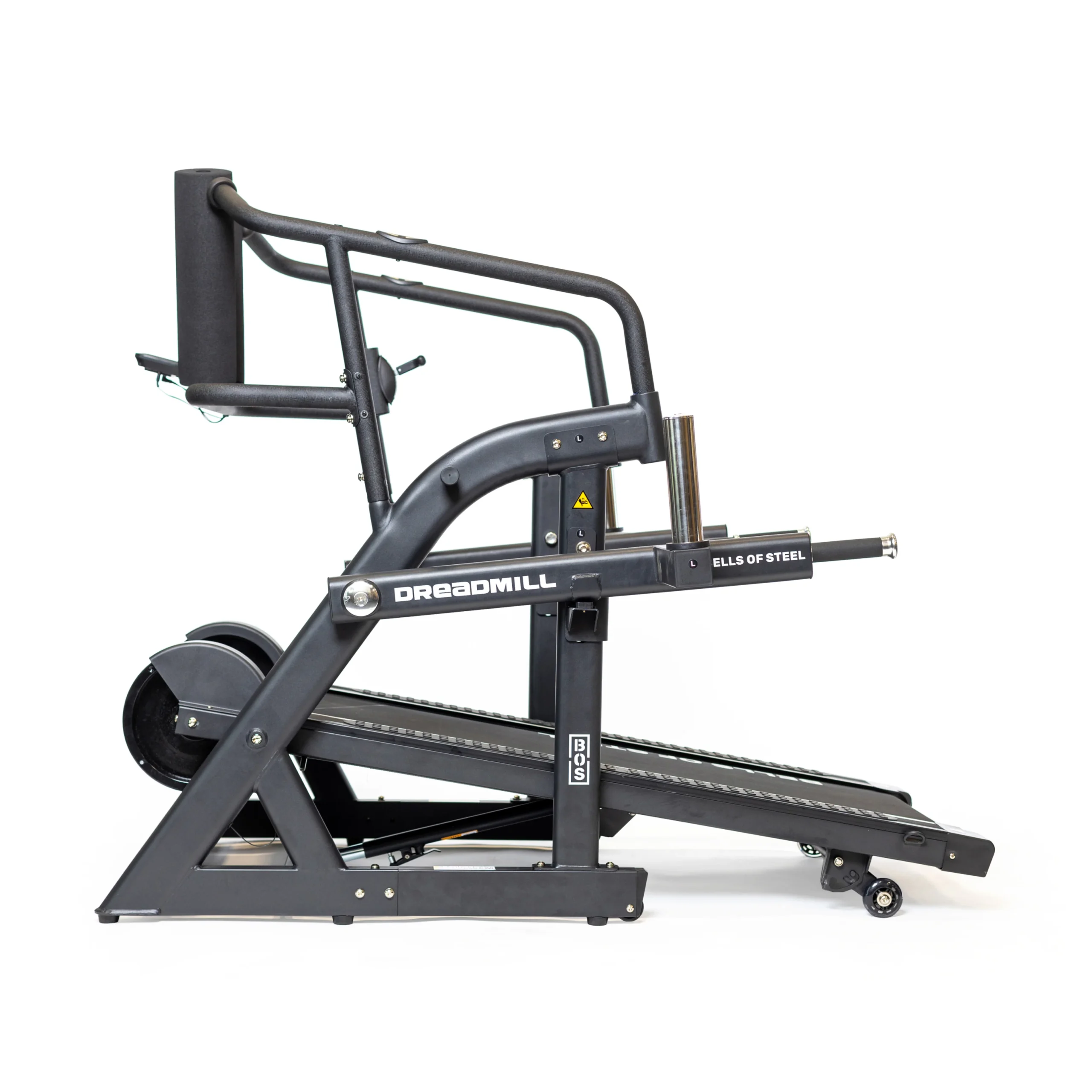
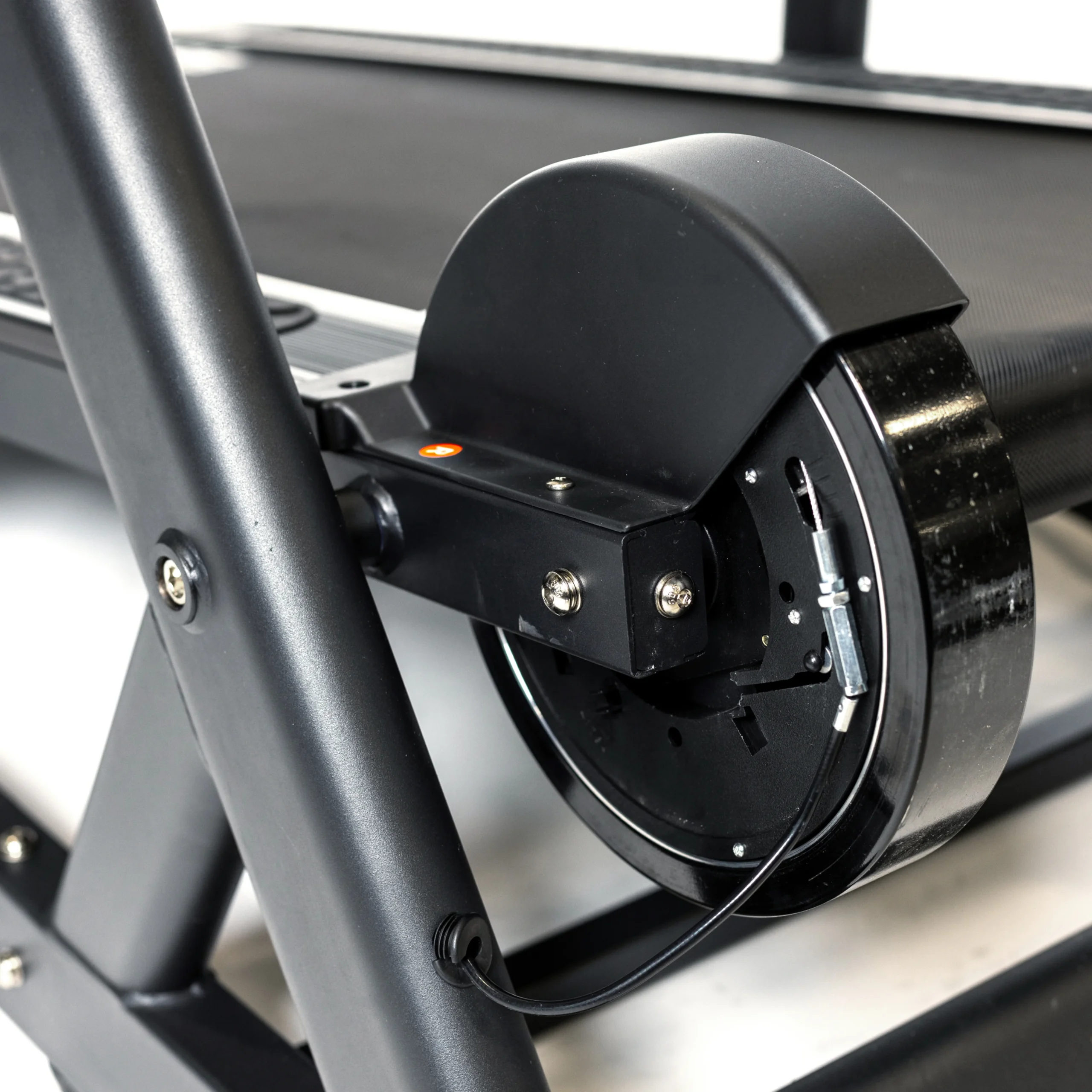
On a motorized treadmill, selecting a speed asks the machine to move the belt at that setting. The Dreadmill is self-powered: you provide the movement. Its incline belt and magnetic resistance adjustment create a different buying proposition from a treadmill chosen mainly for steady, automatically controlled running pace. Decide which experience you actually want before comparing the number of advertised exercises.
For someone who enjoys short bouts of resisted walking between strength exercises, a manual machine may make sense. Someone who wants to select a familiar pace, settle into a long run and leave the controls alone has a different priority. Neither preference requires a claim that one design burns a special number of calories or produces superior results.
A demonstration should answer practical questions. Can you reach the controls without an awkward change of position? Is the available belt area comfortable for your stride? Can you transition from moving to stopping in the way the instructions describe? Try the task you expect to repeat most often, rather than judging the machine from one impressive sprint clip.
If several people will share it, take each user’s requirements to that demonstration. One person may primarily walk while another wants the pushing position or loaded handles. Make a short list for each user and ask which adjustments are available between them. A good fit for one person is useful evidence about that person; it does not settle the fit question for everyone in the household.
Also separate speed from effort. A slow, heavily resisted bout can feel demanding without resembling a brisk, lightly resisted walk. When comparing your own sessions, record the mode and settings alongside time. A faster display number means little if you have changed the resistance, the way you hold the machine or the task itself.
Sled-style pushing needs its own training log
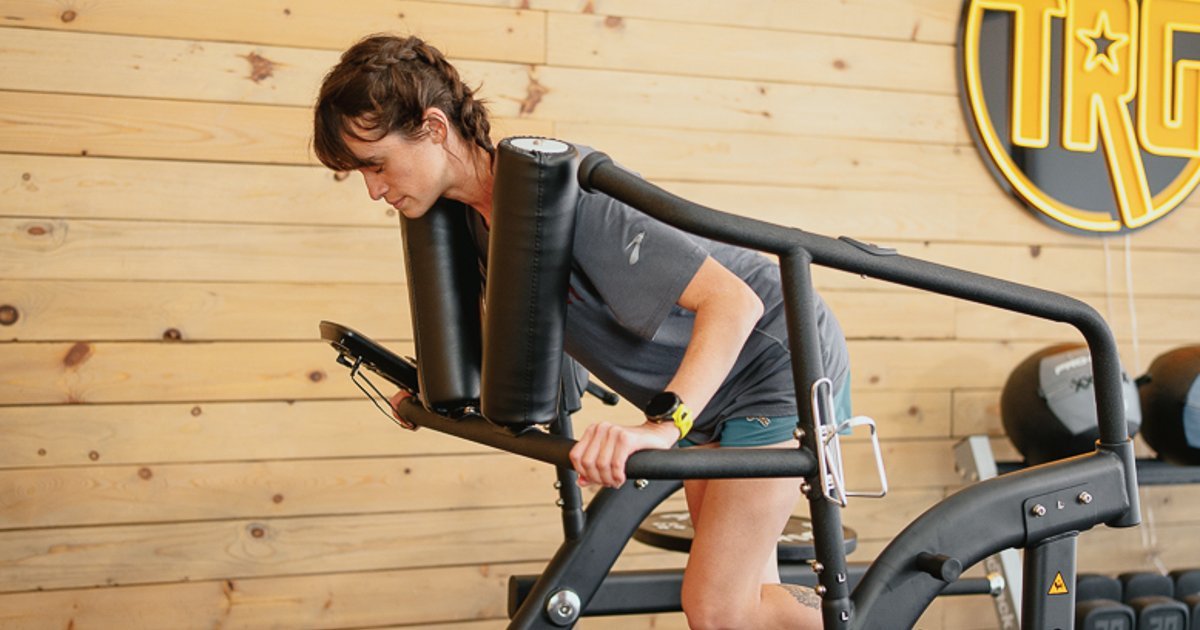
The shoulder pads and front handles give the Dreadmill a pushing station without a sled travelling down your room. That solves a particular space problem. It does not establish a conversion between a resistance setting and the kilograms on a turf sled. The mechanisms and movement environments differ, so keep their results in separate columns.
For comparison, HYROX’s 2026/27 singles sled push covers 50 metres in four 12.5-metre lengths. Completing those lanes includes getting the entire sled across each line before changing direction. A stationary belt session cannot reproduce that whole task just because it uses a forward lean and feels hard. It may be useful general preparation, while actual lane practice addresses the race-specific details.
Our guide to sled lanes, skis and loading explores what changes when equipment moves across a surface. That distinction also helps non-racers: choose a travelling sled when you want that experience and have an appropriate route; consider a stationary option when avoiding a route is part of the point.
For a repeatable Dreadmill entry, write down pushing position, resistance setting, work duration and rest duration. Keep those details stable before judging whether a later effort improved. You could compare completion of the same short interval with a similar movement pattern, rather than treating every exhausted finish as a new benchmark. This is a logging example, not a validated performance test or a prescribed conditioning program.
Attached farmer handles are a different carrying task
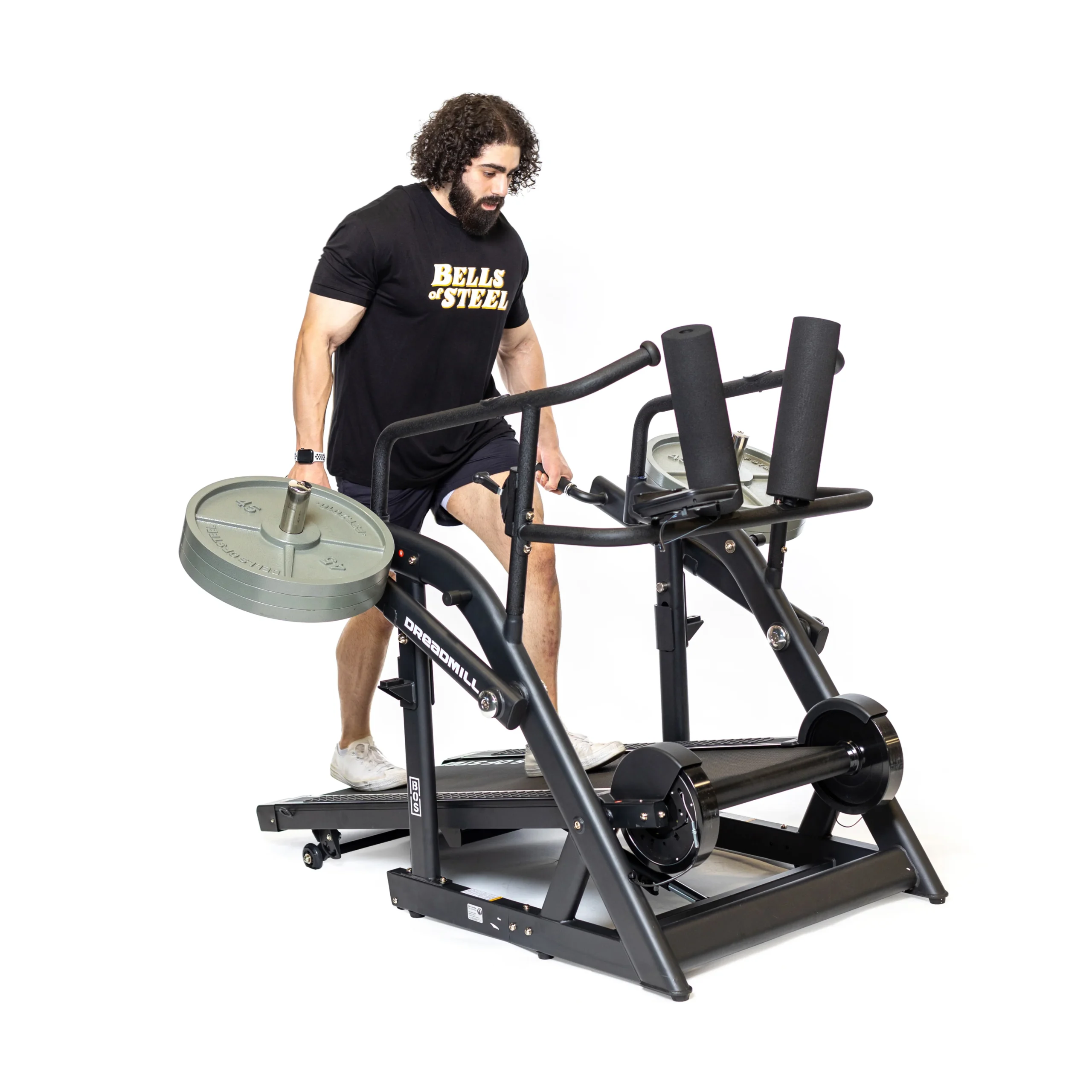
The Dreadmill’s plate-loaded side handles offer another reason to consider the machine. They let you hold load while moving on the belt, with the handles connected to the frame. Compare that with free farmer’s handles: independent implements must be picked up, carried along a route, managed through any turns and put down. Shared grip demands do not make the experiences identical.
That matters when choosing equipment for a specific goal. A lifter who wants to practise navigating a narrow lane with separate implements should retain access to that task. A lifter seeking loaded walking without sending equipment across the room may value the attached arrangement. Our comparison of full-length and compact farmer’s handles adds context about the free-carry alternative.
Keep the two published limits distinct: the current Dreadmill listing specifies a 330 lb user limit and 165 lb per weight horn. These describe different things. Adding the horn figures together does not create permission for a heavier user, and neither number tells you the exact force felt at the hands. Confirm the current specifications and approved loading arrangement for the unit you would receive.
For everyday cardio, the useful question is often simpler: will this be a mode you willingly repeat? Someone who dislikes running may enjoy loaded walking or pushing; someone else may prefer a plain walking session. Let that preference guide a demonstration. A machine’s exercise list has little value if its main activity is one you consistently avoid.

Cardio Shirts & Workout Gear
Cardio and conditioning gym gear for runners, endurance athletes and anyone who earns the sweat.

Cardio Is Hardio – Workout Meme Pullover Jumper T-Shirt
For laid-back days and cardio humor: “Cardio Is Hardio”.

Cardio Heartbeat for Runners, Cyclists, Rowers and Fitn Sticker
Give your everyday gear a playful “Cardio Heartbeat” twist.

Cardio Is Calling You , Meme Top Answer Or Decline? T-Shirt
Make gym days more fun with “Cardio Is Calling You” style.

Anti Running Club Tee
Heavy lifts, good laughs, and a little “Anti Running Running Club” energy.

Anti Jogging Jogging Club Shirt – & Meme Top T-Shirt
Bring “Anti Jogging Jogging Club” humor to your next gym day.

Meme Shirt – Two Things I Like Lifting Weights Not T-Shirt
Make gym days more fun with “Two Things I Like Lifting Weights Not” style.

Negative Cardio Review 1 Star Sweater Cardio Sucks T-Shirt
Show some gym-day personality with “Negative Cardio Review”.

Exercise Your Demons Gym | Funny Workout From Hell Hood Hoodie
Keep it laid-back with a little “Exercise Your Demons” attitude.


Death By Cardio Shirt Meme & Top T-Shirt
Bring “Death By Cardio” humor to your next gym day.
Measure the open machine and the clear space behind it
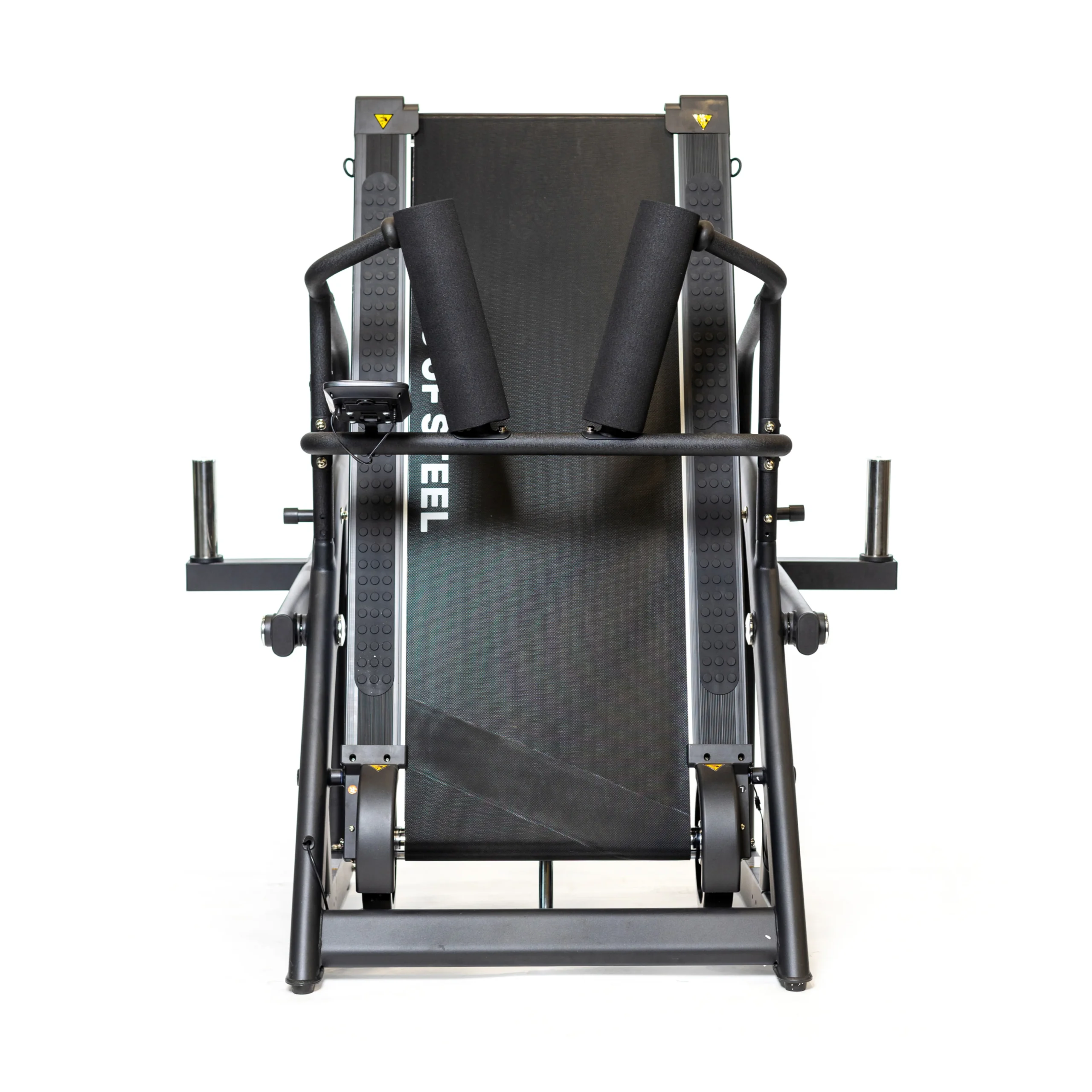
The listed assembled dimensions are 61.7 inches long, 58 inches wide and 52.1 inches high. Those figures describe the equipment, not a complete working rectangle. The current manual calls for a hard, level surface and two metres of clearance behind the treadmill. Its general safety section also specifies free space around the equipment. Plan around both instructions rather than fitting the frame tightly between stored objects.
Mark the equipment outline on the floor, then mark the required clear area separately. Add the route you use to approach it and the space needed to load the handles. Does an open door enter that area? Would a bench normally occupy it? Would stored plates migrate into the rear zone after other workouts? An arrangement that works only after moving several heavy objects may become inconvenient quickly.
The location guidance deserves particular attention for home-gym buyers. The manual excludes garage placement, patios and outdoor locations, and specifies a cool, low-humidity environment away from direct sunlight. If your planned location conflicts with that wording, get written clarification from the manufacturer for the exact installation. A familiar home-gym setting in a photograph does not override the instructions supplied with a machine.
Delivery deserves a separate plan as well. Check doors, stairs, corners and the route to the assembly area before ordering. Ask about the delivery service and what assistance assembly requires. A folding deck does not tell you whether a boxed shipment will fit through a stairwell, or whether the assembled machine can negotiate the same route.
Folding is useful only if the ownership routine works
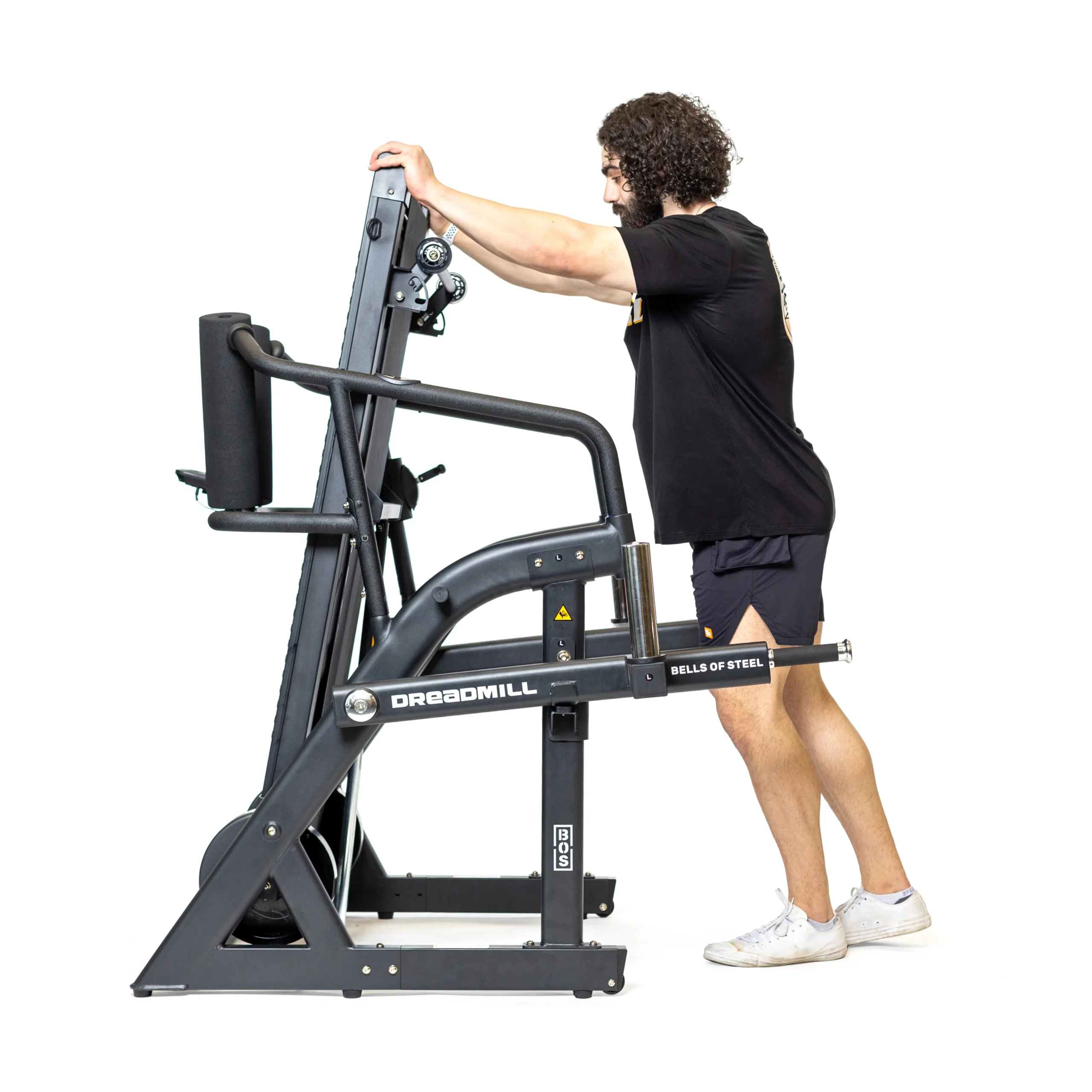
Folding changes how the Dreadmill occupies the room between sessions. Before assigning a permanent storage spot, ask for its folded dimensions and a demonstration of the securing mechanism. Check the instructions for plate removal, folding and moving; do not infer a loaded storage procedure from the presence of transport wheels. Keep access to the controls and inspection points in mind.
Manual power also does not mean maintenance disappears. The Dreadmill instructions cover belt centring, tension and lubrication, as well as cleaning. Read those procedures before deciding whether the machine suits your ownership habits. If the belt begins behaving differently, investigate using the instructions or manufacturer support instead of compensating with a different resistance setting and calling it training progress.
Compare alternatives by the job you need done. A rower or ski trainer offers a different movement; an air bike changes the experience again. A runner, stepper or vertical climber emphasizes another pattern. A jump rope needs suitable overhead and floor space, while a wheeled or dragging sled needs an appropriate route. Compare their working areas and preferred tasks before comparing feature counts.
The Dreadmill becomes a stronger candidate when its main modes are activities you want, its open and stored arrangements both fit, and its care requirements are acceptable. If one of those answers is uncertain, resolve it with measurements and a demonstration before buying. The most useful space-saving feature is equipment that fits the room and earns regular use.

Equipment Worth Exploring
Explore equipment, accessories and gear from our carefully selected range.