Advertising disclosure: This page includes affiliate product links that may earn us a commission, as well as products from our own store.
There is a tempting logic to stretching your pecs between sets of chest flyes. You are already training the muscle in a lengthened position, so why not use the downtime to extend that stimulus? But a controlled experiment in trained men suggests that a hard passive stretch in the middle of your workout can change the session in ways you might not want. The question is not whether stretching has value. It is whether the benefit is worth the repetitions you surrender when your main goal is productive resistance training.
What happened when 17 lifters stretched between chest sets
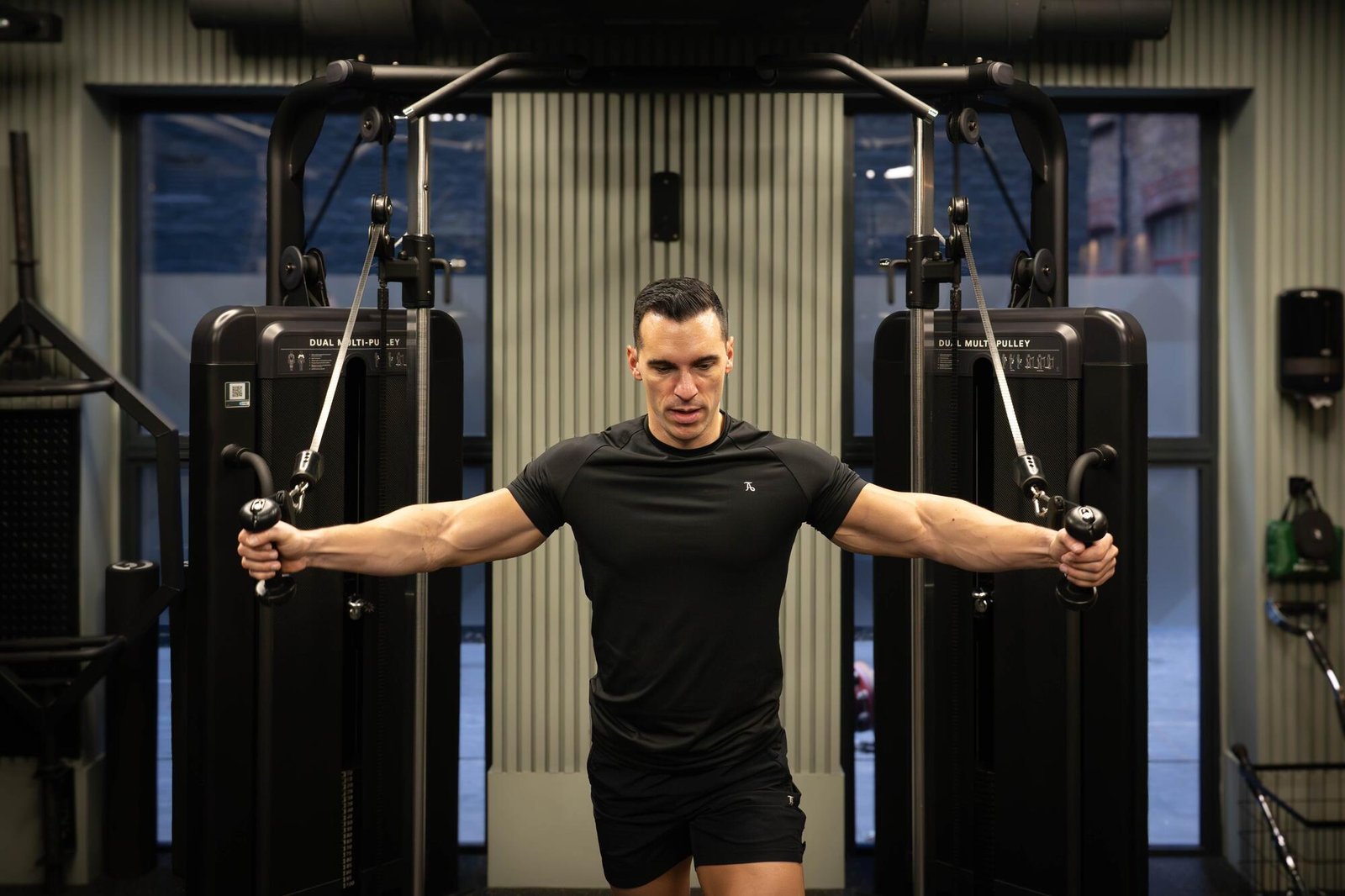
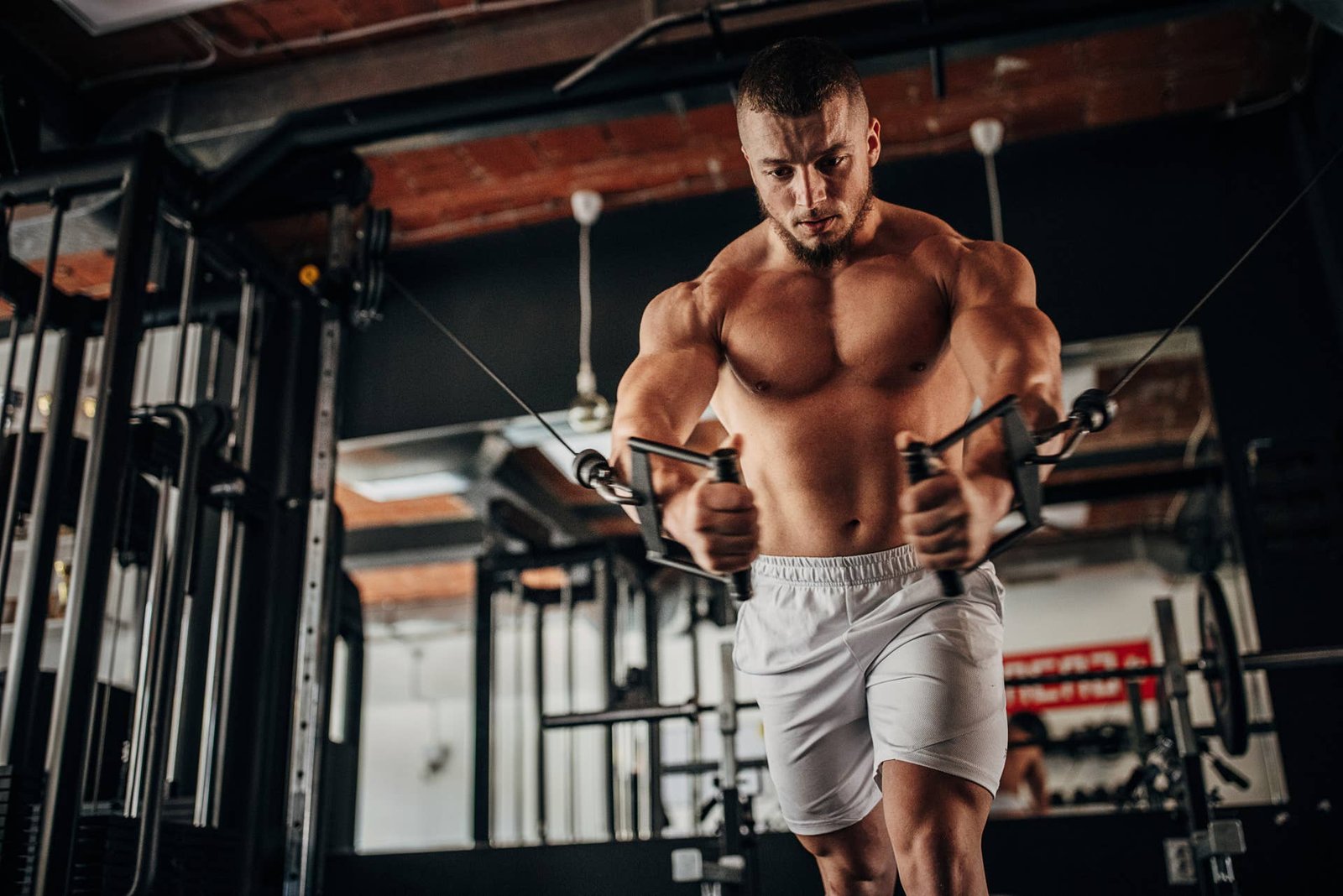
In a 2022 crossover experiment, 17 men with resistance training experience completed two chest workouts in randomized order, separated by seven days. The average participant was about 30 years old and had roughly four and a half years of training behind him. This was not a study of people picking up a cable handle for the first time. Each participant experienced both conditions, making the comparison more informative than comparing two unrelated groups with potentially different strength levels.
Both sessions involved seven sets of seated cable flyes using a load established at the participant’s ten-repetition maximum. The difference was what happened between sets. In one session, participants rested passively for 45 seconds. In the other, they spent that same interval undergoing a passive static stretch of the muscles they had just trained. The stretch was deliberately intense, rather than a casual movement to loosen up. Repetitions were performed with controlled timing and counted only if the prescribed movement was completed.
Across the seven sets, the passive-rest condition produced an average of 32.8 repetitions, compared with 21.9 in the stretching condition. That is a striking difference for sessions with the same exercise, load and nominal rest duration. Total load lifted was also lower with stretching, by roughly 30 percent. Participants found the stretching condition demanding even though they completed less lifting work.
Notice what the result actually compares: hard stretching against doing nothing during a very short rest interval. It does not compare normal chest training with a separate mobility session, nor does it show that a few seconds of gentle movement will reproduce the same effect. The distinction matters when turning a laboratory protocol into a real workout.
The difference between a rest period and another training stress
Most lifters think of a rest interval as empty time. In reality, it is part of the training prescription. It allows some restoration of the capacity to generate force, gives your breathing a chance to settle and lets you approach the next set without the fatigue of the previous one dominating every repetition. The more demanding the set, the more valuable that recovery can become.
A forceful static chest stretch is not the same activity as sitting quietly. The muscle is held under tension at an extended length while you are already fatigued from the set. A stretch may also alter how readily you can produce force immediately afterward. Several possible mechanisms can contribute, but this experiment cannot identify precisely which one explains the difference in repetitions. The useful practical finding is that replacing the rest interval with another demanding activity impaired subsequent performance under those conditions.
For a bodybuilder, the cost can accumulate quickly. Imagine beginning your cable flyes at ten controlled repetitions, then losing several repetitions on later sets because you never really recover. You might respond by reducing the stack, shortening your range or moving your torso to finish the arc. Each of those changes makes it harder to compare the session with last week’s performance.
Short rests themselves are not automatically superior for building muscle. A 2024 synthesis of nine resistance-training studies found a modest potential advantage for rest intervals longer than a minute, with less certainty about further benefits once intervals exceeded roughly 90 seconds. Individual exercises and training goals still matter. For a challenging press, two or three minutes may be sensible. For a moderate cable fly, 90 seconds to two minutes may be a useful starting point. Choose the interval that lets you repeat the intended movement at an appropriate effort, rather than forcing every set into an arbitrary clock.
A smaller pump does not automatically mean less muscle growth
The same experiment measured immediate changes in pectoral muscle thickness using ultrasound. The resting condition produced more acute swelling than the inter-set stretching condition, approximately 5.5 versus 2.6 millimetres. It also found no statistically significant difference between conditions in the change in maximal bench press strength measured after the workout.
Those outcomes answer narrow questions. The ultrasound reading was taken around a single training session. A temporary increase in thickness can reflect fluid shifts and other immediate responses to exercise. It is not a measurement of newly built muscle tissue. Likewise, a lack of a detectable difference in the post-workout bench test does not establish that the two approaches are equally effective for improving bench strength over several months.
The results therefore do not justify a claim that stretching between sets prevents hypertrophy. Nor do they establish that producing a larger pump is the most important aim of chest training. The stronger practical reason to favor ordinary rest is that you can maintain more lifting work under comparable conditions. If your programming depends on gradually adding repetitions, progressing resistance and keeping a consistent range of motion, sacrificing performance for an unproven extra stimulus deserves scrutiny.
Longer-term research adds context. An eight-week experiment involving 29 previously sedentary adults compared conventional training with a protocol that included a shorter stretch within a longer rest period. Both groups improved strength. That is a different population and a different schedule, so it cannot establish what seven sets of aggressive pec stretching will do for experienced lifters. In another eight-week comparison, sustained stretching sessions and resistance training both improved measured outcomes in active adults, but the stretching prescription was much longer and performed separately. That is another reason not to treat all forms of stretching as interchangeable.

Equipment Worth Exploring
Explore equipment, accessories and gear from our carefully selected range.


Pec Fly/Rear Delt PEC-650
Combination machine with adjustable movement limits for chest fly and rear-delt exercises.

Standing Chest Press SCP-760
Standing chest-press machine with adjustable handle positions for chest and close-grip pressing.

GymPin Ergo Handles
Pair of ergonomic cable handles shaped for comfortable triceps and pulling exercises.



Multi Bench MBX-650 2.0
Adjustable multi-bench with roller adjustment, 15 backrest positions and accessory mounts.

Rubber Hex Dumbbells
Rubber-coated hex dumbbell pairs with a stable shape for home and commercial strength training.
Where chest stretching actually belongs in your session
There are good reasons to train your ability to move comfortably through the shoulder positions involved in chest exercises. A lifter who struggles to find a comfortable fly setup may benefit from dedicated mobility work, an adjustment to bench angle or a different cable path. But improving that capacity does not require turning every recovery interval into a painful challenge.
Start the workout with a few minutes of easy movement and increasingly specific warm-up sets. Use a light chest press or fly to rehearse the range you intend to train. Let your upper arms move back only as far as you can control without sharp pain or a sense that the joint is being forced. A cable fly performed through a controlled, comfortable range already exposes the chest to tension in relatively lengthened positions. For more detail on the equipment setup, see our incline cable fly technique guide.
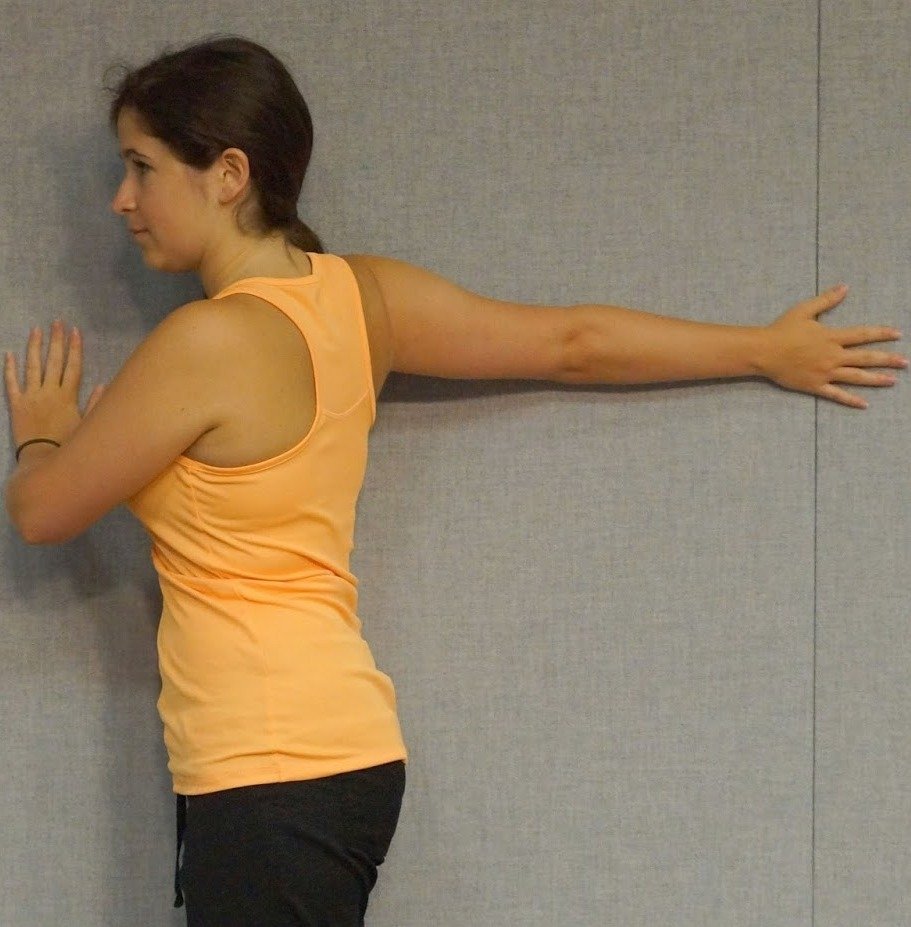
If flexibility is a separate goal, reserve a little time after lifting or on another day. A gentle doorway stretch is one option: place the forearm against a stable surface and turn the torso gradually until you feel a tolerable pull across the chest. Do not push the shoulder into pinching or numbness. A mild stretch held for 20 to 30 seconds, repeated as tolerated, is a more conservative starting point than the high-discomfort protocol used in the experiment.
Evidence from a different muscle group points to the importance of deciding what you want from the session. A crossover study of trained men examining hamstring stretching during rest found that the intervention improved range of motion while impairing repetition performance. It is possible to value the mobility outcome without pretending the performance cost does not exist. If a joint is painful or you have a recent injury, seek individualized advice rather than forcing a stretch based on a generic routine.
A four-week experiment for your own chest training
Here is a simple way to make chest training more repeatable for the next four weeks. It is a practical progression, not a recreation of the experiment or a promise of a particular amount of muscle growth. Use two chest exposures per week if that fits your existing split, and keep your total weekly volume within a range you already tolerate.
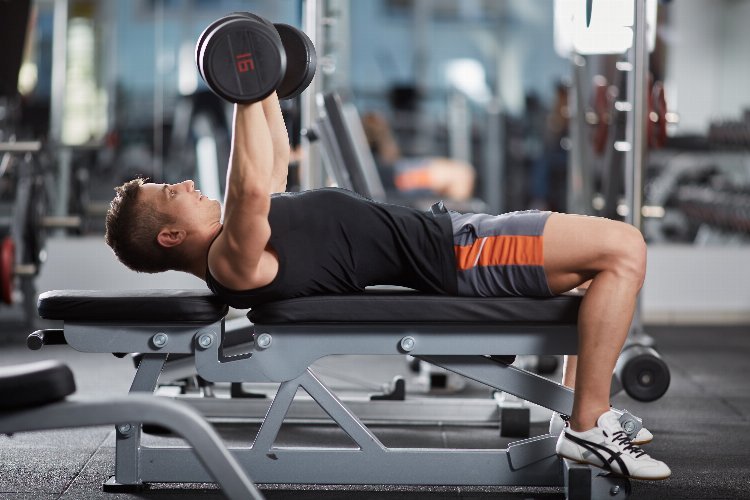
- Week 1: Perform three controlled working sets of a chest press in the six-to-ten-repetition range, followed by two sets of cable flyes in the ten-to-fifteen range. Leave about two repetitions in reserve on most sets. Rest two to three minutes after presses and 90 to 120 seconds after flyes. Record the load, reps and approximate effort.
- Week 2: Keep the same exercises, setup and rest periods. Add a repetition where you can without compromising technique. If all sets reach the upper end of the target range with the planned effort, increase resistance slightly next time.
- Week 3: Continue the same progression. If you have a separate mobility goal, introduce gentle chest stretching after the workout rather than changing your inter-set rest. Note how comfortable your shoulders feel during the next session.
- Week 4: Compare the first and final weeks under similar conditions. Look at the quality of your repetitions, resistance, range of motion and fatigue. If performance has declined across multiple sessions, consider reducing weekly volume or extending your recovery rather than adding more intensity techniques.
If you are curious about inter-set stretching anyway, trial it on a low-priority accessory session rather than immediately applying it to every heavy press. Keep the comparison fair by holding exercise selection, resistance and rest duration steady, and never use painful stretching. Track whether you actually preserve repetitions and whether any improvement in comfortable range is worth the change in performance. Stop if the technique aggravates your shoulder.
The bottom line is straightforward: use your resistance training sets to train your chest, and use your rest periods to make the next set productive. If stretching serves an independent mobility goal, give it a deliberate place in the schedule. It need not compete with the repetitions you are trying to improve.

Bodybuilding Shirts & Workout Gear
Bodybuilding shirts, tanks and gym gear for lifters chasing muscle, size, symmetry and the pump.

Jabba The Pump – Meme , Fanatics & Gymbro Gains T-Shirt
Make gym days more fun with “Jabba The Pump” style.


Huh Huh I Gotta Massive Pump – Beavis And Butt-Head T-Shirt
Show some bodybuilding attitude with a playful “Huh Huh I Gotta Massive Pump” tee.

Pump Fiction Vintage Pulp Fiction Parody – Meme Shirt T-Shirt
Heavy lifts, good laughs, and a little “Pump Fiction Vintage Pulp Fiction Parody” energy.

Optimus Pump Gym | Funny Transformers Workout | Robot J Hoodie
Stay casual and show some bodybuilding attitude with “Optimus Pump”.

Pump Vader Gym Villain | Star Wars Gym Meme Hooded | Sc Hoodie
Show off your powerlifting humor in a laid-back “Pump Vader Gym Villain” hoodie.

Pump Patrol Gym | Funny Paw Patrol Meme Workout Decal | Sticker
Bring “Pump Patrol” attitude to your water bottle or laptop.

Big Pump Kanye Gym Parody | I Love It Funny Workout Mus Tank Top
Train hard, laugh a little, and rep “Big Pump Kanye Gym Parody”.

Pumped & Furious – Vin Diesel Workout Hooded Pullover Hoodie
Keep it laid-back with a little “Pumped & Furious” attitude.

Master of Pumps Master of Puppets Parody Metallica Heav T-Shirt
Show some gym-day personality with “Master of Pumps”.