Advertising disclosure: This page includes affiliate product links that may earn us a commission, as well as products from our own store.
Finding forty uninterrupted minutes for cardio can feel harder than the workout itself. But what if the most useful place to start was the staircase outside your office, and you only needed a few short opportunities to move throughout the day? A six-week experiment in healthy, inactive young adults offers a particularly interesting test of that idea: three hard stair-climbing efforts of thirty seconds each, separated by substantial breaks, versus a conventional continuous cycling session.
The result is worth examining for anyone who lifts weights, works at a desk or struggles to establish a conditioning routine. The study does not establish that a minute and a half of exercise can replace everything else you do. It does show why the way we distribute effort may matter as much as finding a single large block of time.
What the six-week stair-climbing trial actually tested
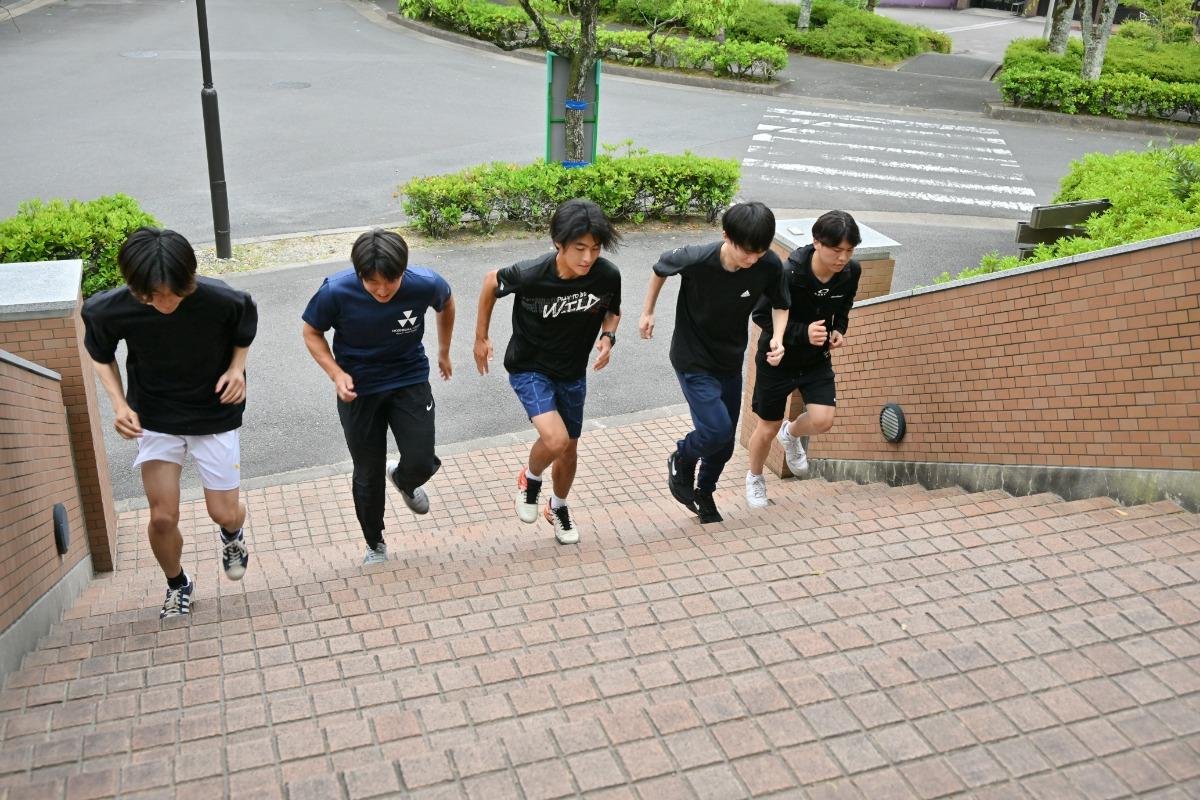
In the 2024 randomized trial, researchers assigned 42 healthy, previously inactive young adults to three groups. Fourteen performed brief stair-climbing bouts, thirteen completed moderate-intensity continuous cycling and fifteen served as a control group. The intervention lasted six weeks, with training on three days each week. It was a comparison of two very different ways to introduce aerobic exercise, not a comparison of stair sprints against an advanced cycling program for competitive athletes.
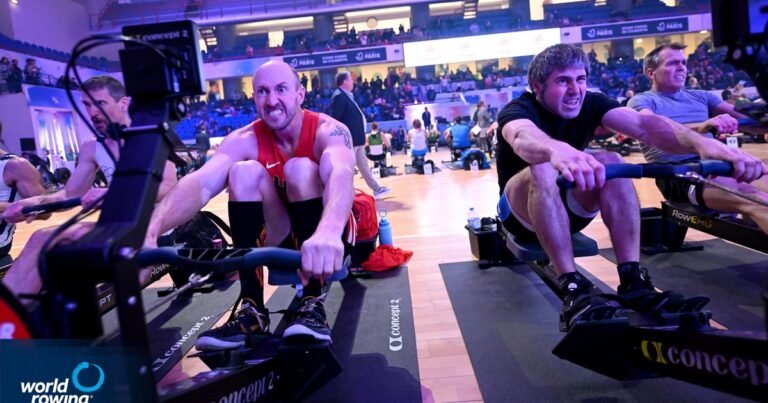
The stair group completed three thirty-second maximal-effort ascents per training day, with more than an hour between bouts. That adds up to ninety seconds of prescribed hard climbing on each training day. The cycling group performed forty minutes at approximately 60–70% of maximum heart rate. The difference in accumulated exercise time was striking, but so was the difference in intensity. One intervention relied on brief, strenuous efforts; the other relied on sustained moderate work.
Both interventions were intended to challenge the cardiovascular system. Stair climbing demands repeated elevation of body mass against gravity, making it relatively easy to raise the effort level without travelling very far. Cycling allows you to maintain a more controlled workload for an extended period, and is easier to scale for many people who are uncomfortable with stairs. Neither approach is inherently superior for every trainee.
Most importantly, the ninety-second figure refers to the hard efforts, not the full time needed to prepare, recover, walk to the stairs or safely return to the starting point. Those distinctions matter when deciding how to adapt the idea to everyday training.
Why the results were interesting but not a shortcut to every fitness goal
After six weeks, peak oxygen uptake increased by approximately seven percent in the stair group. The estimated improvement was 2.5 millilitres of oxygen per kilogram of body mass per minute, with a confidence interval of 1.2 to 3.7. That is a meaningful signal in a group that was previously inactive. Peak oxygen uptake is one measure of cardiorespiratory fitness: it reflects how much oxygen the body can use during increasingly demanding exercise.
The estimated change in the cycling group was 1.0 millilitres per kilogram per minute, with a confidence interval extending from minus 1.1 to plus 3.2. This change was not statistically significant. The control group’s estimated change was negative. These numbers should not be translated into a claim that ninety seconds of stair climbing is definitively better than forty minutes of cycling. Each group was small, the intervals around the estimates were wide, and a six-week study cannot establish long-term superiority or equivalence across populations.
There was no significant group-by-time interaction for maximal fat oxidation. That outcome is a measure of fat use during an exercise test, not a direct measurement of changes in body fat. You cannot infer from these results that brief stairs cause greater weight loss, or that the approach has no value for weight management. The trial simply did not establish a reliable difference in that particular physiological measure.
A separate six-week experiment involving 24 sedentary young adults also reported a modest improvement in peak oxygen uptake following brief stair-climbing bouts distributed throughout the day. Together, these findings suggest a promising low-time entry point, particularly for people starting from limited aerobic activity.
How brief stair intervals fit around strength training

Strength trainees sometimes treat conditioning as a completely separate activity that has to occupy its own hour. Distributed stair climbing offers another option: add small, manageable doses without automatically turning an entire rest day into a second demanding training session. For someone who is inactive outside the gym, even establishing a habit of getting away from the desk and climbing a few flights may be a worthwhile change.
Remember that the participants in the experiment were inactive, not experienced powerlifters, bodybuilders or endurance athletes. A person who already runs, cycles or competes in fitness events might need considerably more training to improve peak oxygen uptake. The same ninety seconds may be a novel stimulus for one person and barely register as additional conditioning for another. The starting point determines the likely response.
There is also a local muscular cost. Repeatedly climbing stairs challenges the quadriceps, glutes and calves. If you take every flight at maximum effort immediately before a heavy squat session, the fatigue could interfere with your planned strength work. Rather than assuming that brief exercise has no recovery cost, monitor how your legs feel, whether your lifting performance changes and whether the added activity leaves you more tired than expected.
A practical approach is to schedule short climbing bouts earlier in the day when your strength workout is later, or to place them on days without demanding lower-body training. The evidence does not show that these exact scheduling choices maximize hypertrophy; they are sensible adjustments to keep conditioning manageable. A workplace pilot study suggested that some participants preferred distributed high-intensity sessions to grouped ones, although its sample was too small to establish a general preference. The best schedule is ultimately the one you can repeat without compromising your other training goals.
A four-week progression for building a stair habit
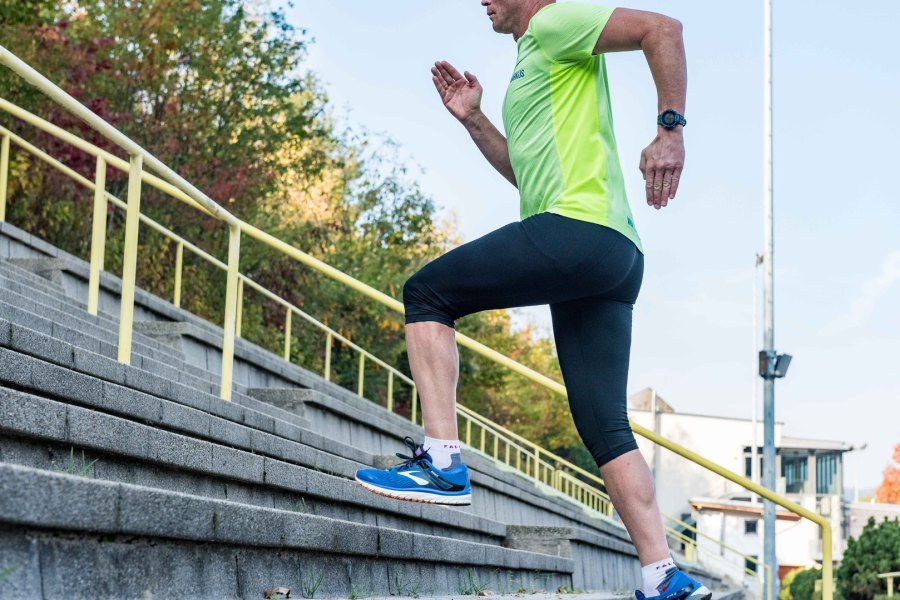
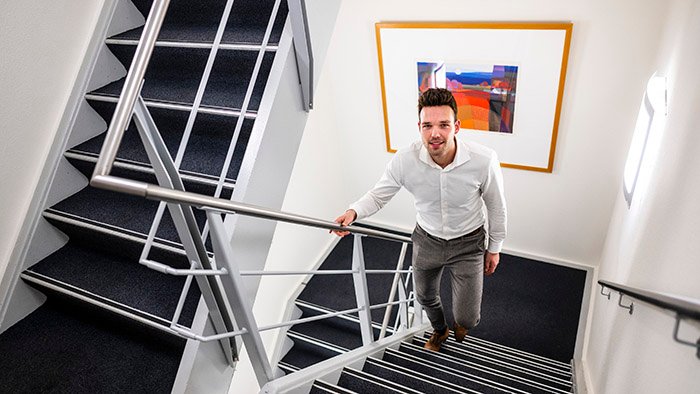
You do not need to reproduce the all-out experimental protocol on day one. If you have not been doing regular aerobic exercise, your first objective is to become comfortable with the movement. Select a well-lit staircase with consistent steps, a usable handrail and enough space to avoid other people. Start with an easy walk and use the handrail when needed. Descend carefully rather than racing back down. If the stairs are wet, congested or unfamiliar, select a different location or a more controllable exercise.
During week one, try one or two comfortable ascents on three nonconsecutive days, each lasting approximately twenty to thirty seconds. Keep the effort moderate and finish feeling capable of continuing. In week two, add a third opportunity on each training day if the initial workload felt comfortable. Leave plenty of time between bouts and do not count your recovery as another sprint.
In week three, you can increase the pace slightly while keeping the same number and duration of ascents. Aim for a brisk, controlled effort, not a desperate race against the clock. In week four, retain three short opportunities on each of three days and adjust the intensity according to how you recover. You can remain at a lower effort if that is the level you can safely sustain. This is an illustrative progression, not the tested research protocol and not a guarantee of its results.
Use a simple log: date, approximate duration, perceived effort and how the legs felt afterward. If you want a repeatable performance marker, compare a familiar ascent at the same moderate effort rather than making every attempt maximal. Stop if you experience chest pain, unusual breathlessness, dizziness or other concerning symptoms. People with known cardiovascular conditions, balance difficulties or other limitations should seek individualized guidance before strenuous exercise. The purpose is sustainable activity, not risking a fall to achieve an arbitrary time.
When to choose stairs, a cardio machine or a longer workout
Stairs work well when access is convenient, but they are not the only way to build conditioning. A vertical climber offers a related stepping pattern in a controlled environment. Treadmill walking at an appropriate incline, cycling, rowing or using a ski trainer can also make aerobic work more accessible. A jump rope provides another compact option if your joints, coordination and available space are suited to it. These are alternative activities, not interventions that were directly compared with the stair protocol in this experiment.
If you are building a balanced home gym, consider the kind of cardio you will actually use. A stationary bike may be easier to integrate on days when the legs are tired, while a rowing machine adds an upper-body component. Dumbbells and kettlebells remain useful for your separate resistance-training work. You do not need to buy equipment to try distributed exercise, and adding more equipment does not automatically improve the program.

Equipment Worth Exploring
Explore equipment, accessories and gear from our carefully selected range.


Rubber Hex Dumbbells
Rubber-coated hex dumbbell pairs with a stable shape for home and commercial strength training.

For general health, the usual adult physical activity recommendations still provide a useful longer-term framework: at least 150 minutes of moderate aerobic activity or 75 minutes of vigorous activity each week, or an equivalent combination, plus muscle-strengthening work on at least two days. A few brief stair intervals can be an entry point, a supplement or a practical option on busy days. They should not automatically displace longer sessions if those sessions help you achieve the amount of activity and endurance you need.
Brief movement breaks can also interrupt extended sitting, although different short-duration experiments have produced mixed results for glucose and insulin responses. Avoid interpreting a single physiological outcome as proof of every potential health benefit. Focus instead on what the stair study actually measured: improvement in aerobic fitness in a small inactive sample. If you can begin with a modest effort, keep the habit going and gradually expand your activity, ninety seconds of climbing may be a useful first step rather than the finish line.

Cardio Shirts & Workout Gear
Cardio and conditioning gym gear for runners, endurance athletes and anyone who earns the sweat.

Anti Walking Walking Club Shirt Gymbro Meme Lifting T-Shirt
Bring “Anti Walking Walking Club” humor to your next gym day.


Running Dost Thou Even Trot Medieval Treadmill Pullover Hoodie
Show off your medieval humor in a laid-back “Running” hoodie.

Cardio Is Hardio – Workout Meme Vest Muscle Shirt For S Tank Top
Add some cardio attitude to training with “Cardio Is Hardio”.

Negative Cardio Review 1 Star Sweater Cardio Sucks T-Shirt
Show some gym-day personality with “Negative Cardio Review”.

Cardio Is Calling Decline Bros Meme Hooded Hoodie
Make your off-duty look more fun with “Cardio Is Calling”.

Skip Cardio Exit Cardio Meme Decal Water Bottles & Sticker
Put “Skip Cardio” gym humor on your laptop, bottle, or gym gear.

Anti Cycling Cycling Club – Ironic Cardio Meme & T-Shirt
Show some cardio attitude with a playful “Anti Cycling Cycling Club” tee.

Meme Shirt – Two Things I Like Lifting Weights Not T-Shirt
Make gym days more fun with “Two Things I Like Lifting Weights Not” style.

Anti Cardio Cardio Club Shirt Meme & Top T-Shirt
Bring “Anti Cardio Cardio Club” humor to your next gym day.