Advertising disclosure: This page includes affiliate product links that may earn us a commission, as well as products from our own store.
A fast 2,000-metre row looks like a straightforward measure of fitness. But two lifters can finish in exactly the same time and have very different engines. One can produce enormous power for ten seconds but fades whenever the effort lasts several minutes. The other can settle into a steady pace for half an hour but has little extra speed when asked to accelerate.
Rather than chasing a single personal best every week, build a small profile of your rowing performance. The goal is to discover which qualities are moving forward, which deserve more attention and how to fit conditioning around a serious lifting programme.
What a single 2,000-metre score hides
The 2,000-metre distance is a useful benchmark because it demands both power and the ability to sustain it. It is not, however, a direct measurement of maximum strength, aerobic capacity or any one energy system. Your technique, pacing decisions, familiarity with the machine and willingness to tolerate discomfort also influence the result. A strong deadlifter is not automatically a strong rower, even if the opening strokes look impressive.
One way to put different efforts in context is to compare their average power with your average power over 2,000 metres. Historical observations from world-champion rowers illustrate how dramatically the sustainable output changes with duration: roughly 76% over 60 minutes, 85% over 6,000 metres, 153% over 60 seconds and 173% over ten seconds. These are examples from elite athletes, not standards that recreational trainees must reach.
Imagine a hypothetical athlete averaging 200 watts over 2,000 metres. Applying those illustrative percentages produces 152 watts for an hour, 170 for 6,000 metres, 306 for a minute and 346 for ten seconds. Another athlete with the same 200-watt benchmark might have a completely different distribution. The ratios are useful for understanding the concept, not predicting an individual’s results. A new rower should not attempt to hit those numbers just because the arithmetic suggests them.
Use the data to ask better questions. Is your short effort improving while longer efforts remain unchanged? Is your easy pace becoming more comfortable without a faster sprint? Are both improving even though your body weight and squat performance are stable? Those patterns can inform your next block of training without pretending to diagnose the underlying physiology.
Separate short-burst power from sustained speed
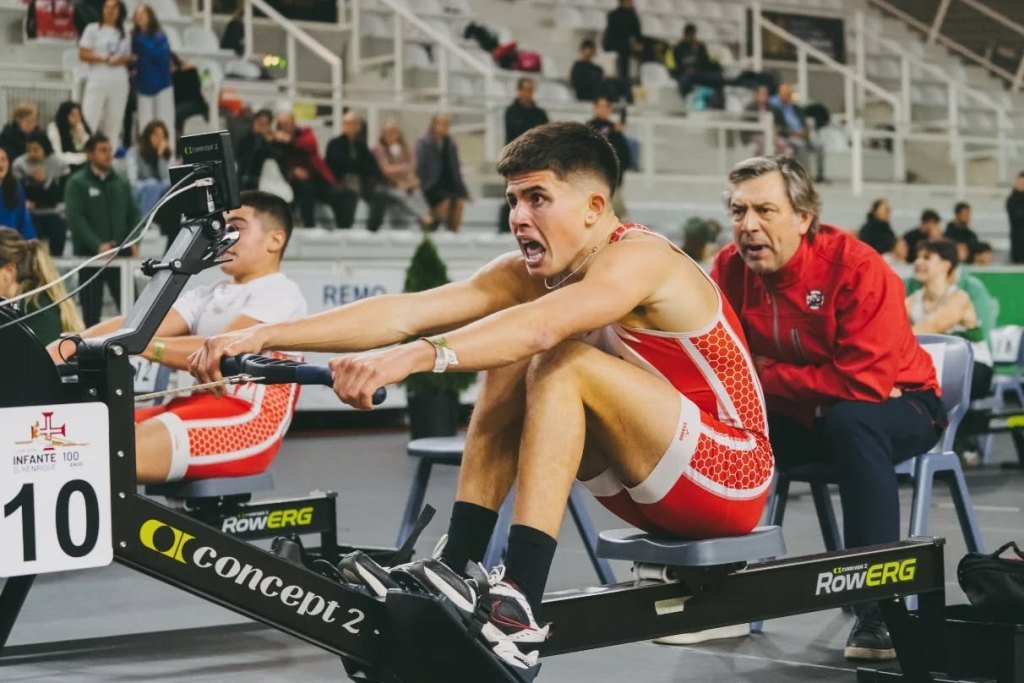
A ten-second effort puts a premium on accelerating the flywheel and coordinating a handful of powerful strokes. A 60-second effort is a different challenge: you must keep producing force as fatigue accumulates. Neither is simply a miniature version of a 2,000-metre race. Start with a thorough progressive warm-up and build speed gradually rather than launching immediately into maximal pulls.
If you already train hard on an indoor rower and are accustomed to vigorous exercise, a short test can provide useful information. Use the same programmed interval, starting flywheel condition and monitor metric each time. Record average watts, not just the biggest number flashed on the screen. For a newcomer, three ten-second bouts at a controlled, comfortably hard effort with generous easy recovery are a better starting point than an all-out test. Stop if technique breaks down or you feel unwell.
On another day, try a one-minute controlled effort after warming up. Choose an intensity you can maintain through the final strokes. Note whether the opening pace was too ambitious, whether stroke length shortened and whether your grip or lower back became the limiting sensation. These details help distinguish poor execution from an actual change in performance.
The important distinction is between generating power and repeating it. If the short bursts are easy to accelerate but your minute effort collapses, you might benefit from controlled longer intervals rather than more maximal sprints. If you struggle to accelerate but can maintain a reasonable pace, work on the connection between your feet, handle and trunk before assuming you need heavier deadlifts. Our 2,000-metre race preparation guide covers how to approach a longer benchmark without wasting your energy in the opening strokes.
Find the endurance gap without an hour-long test
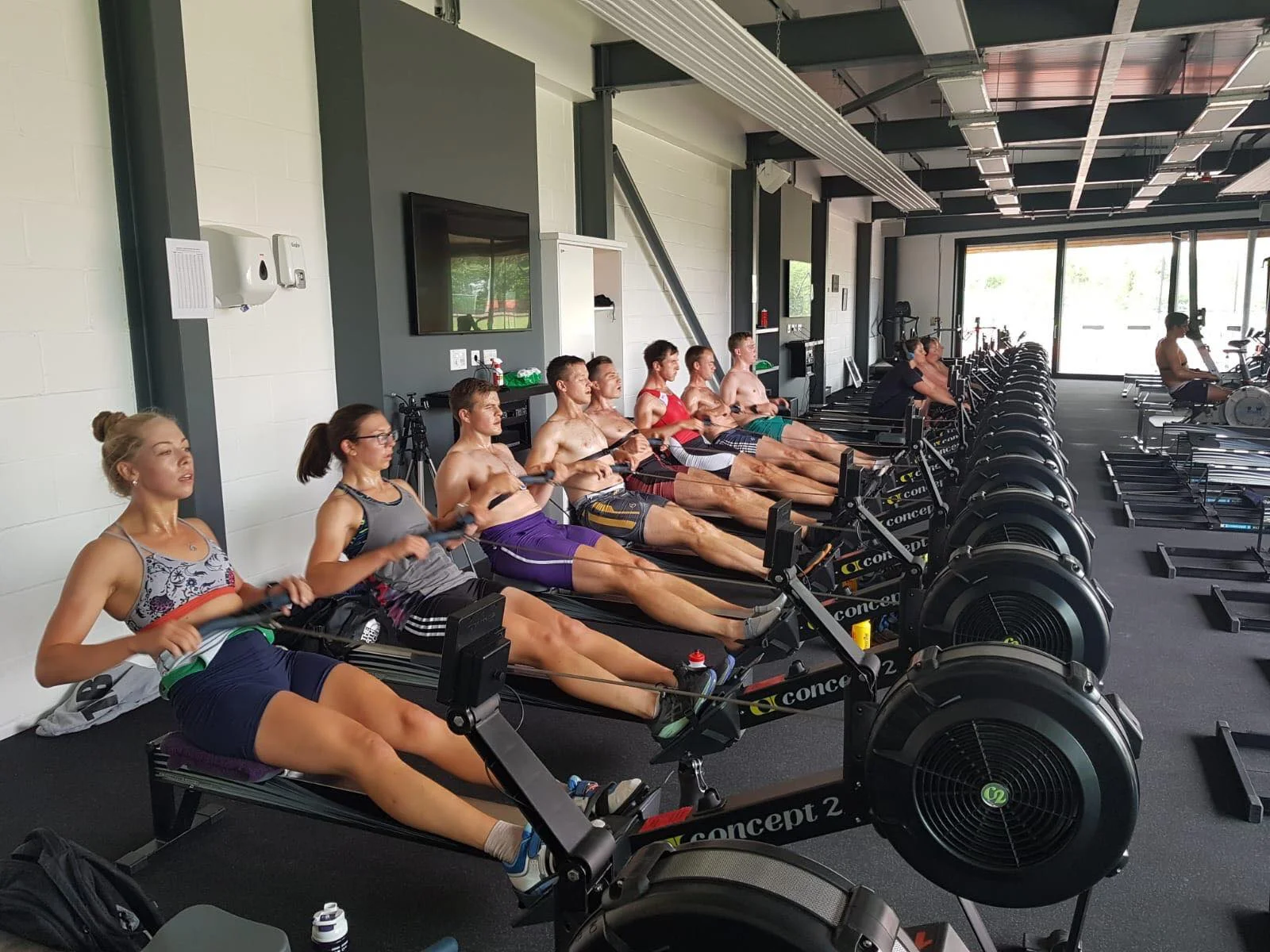
The other end of the profile matters just as much. Longer efforts expose whether you can settle into a sustainable rhythm without constantly changing stroke length, rate or breathing. A full 6,000-metre or 60-minute maximal assessment is unnecessary for most gym members. It also adds considerable fatigue if your primary goal is progressing on squats, presses and pulls.
Instead, choose a repeatable 15- to 20-minute session at conversational effort. Maintain a pace at which you can speak in sentences, with a relaxed recovery between strokes. Record elapsed time, average watts or pace, stroke rate and a simple perceived-exertion score. If you have a heart-rate monitor, record its reading as additional context rather than chasing a particular number. Heat, sleep, hydration and caffeine can all affect how a session feels.
For example, if you complete 20 minutes at 120 watts with an effort rating of six out of ten, do not immediately aim for 150 watts the following week. Try to reproduce the session and notice whether it feels easier, or whether you can sustain slightly more output at a similar effort. The controlled session is a practical tracking tool, not a substitute for a laboratory aerobic test.
You can also build general conditioning with an air bike, treadmill or other cardio equipment. Choose an option that you enjoy and can recover from, but keep rowing-specific assessments on the same type of rower. A watt displayed on one machine is not necessarily equivalent to a watt on another.

Equipment Worth Exploring
Explore equipment, accessories and gear from our carefully selected range.


Keep the test conditions repeatable
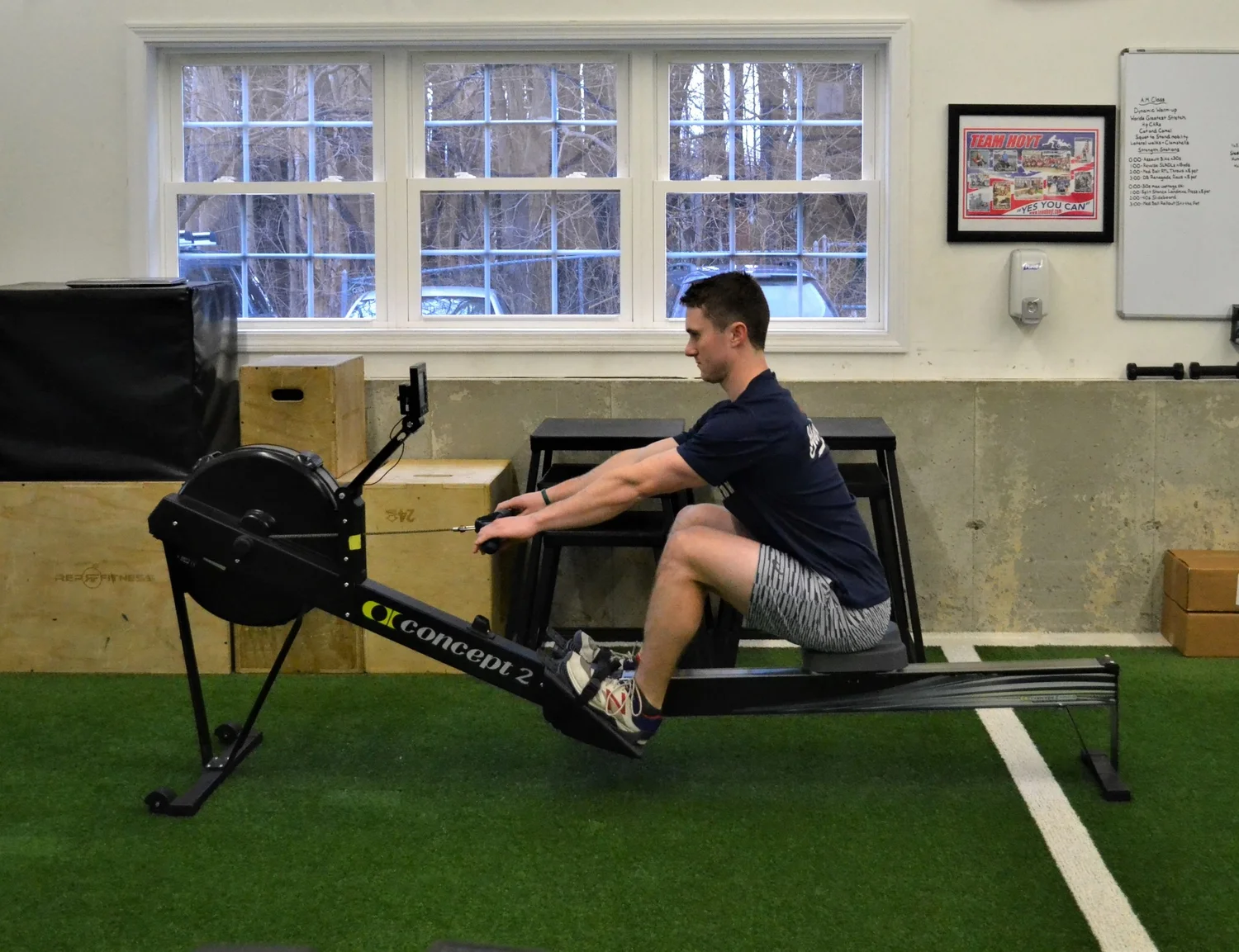
Numbers are only useful when the comparison is fair. Set up the same machine whenever possible and keep the foot straps, monitor programme and resistance configuration consistent. On an air-resistance rower, the damper lever controls airflow; it is not a simple weight selector. Dust, altitude and individual machines can affect the relationship between the lever position and actual drag. The guide to damper settings and drag factor explains why recording drag is more useful than simply moving the lever higher.
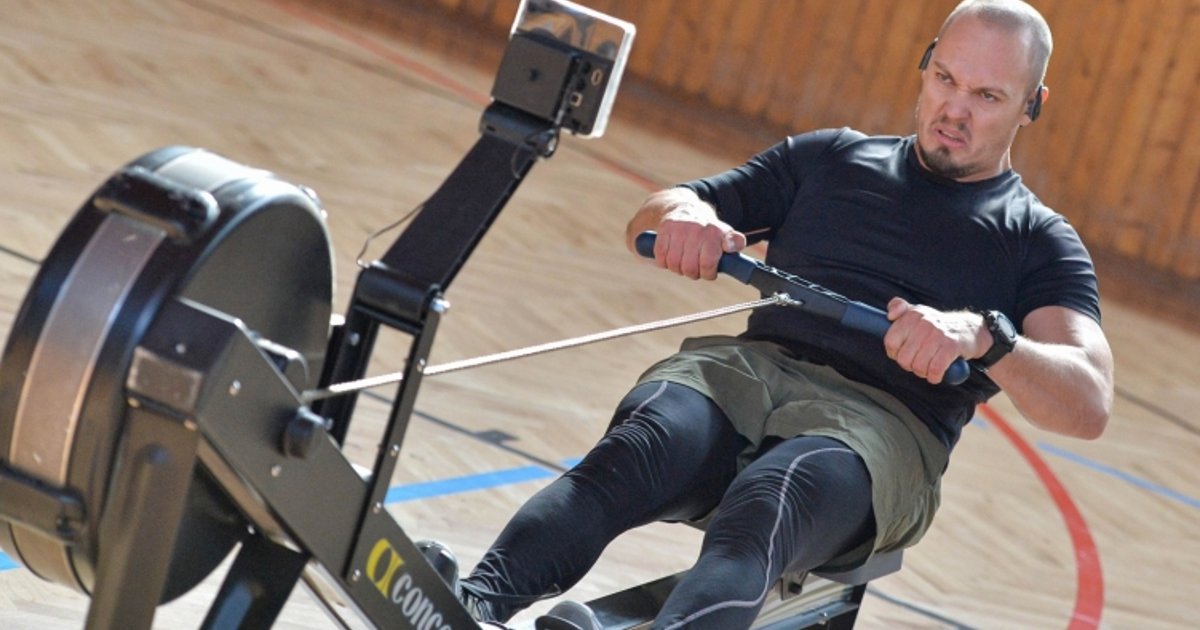
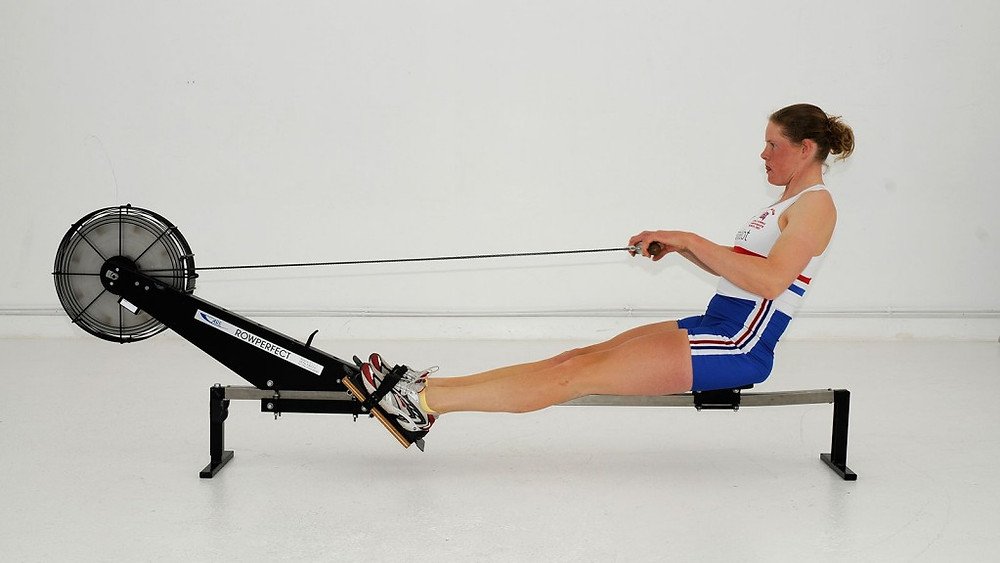
Technique is equally important. At the catch, start with the arms extended and a comfortable forward body angle. Drive through the legs before opening the hips and drawing the handle towards the lower ribs. Reverse that sequence on the recovery: arms away, body forwards, then bend the knees. Avoid wrenching the handle with bent arms early in the stroke or swinging excessively backwards at the finish. Seek individual coaching if you cannot find a comfortable movement pattern.
Keep the warm-up and rest intervals similar. Test at comparable times of day when possible, and avoid comparing a fresh performance with one performed immediately after a heavy leg workout. Keep a note of unusual fatigue, illness or changes in equipment. A result achieved with a rushed recovery and increasingly erratic form is not necessarily a better training outcome just because the average watts increased.
For beginners or anyone with symptoms or health conditions that affect exercise tolerance, avoid maximal efforts until appropriately cleared and accustomed to the activity. There is no requirement to test at exhaustion to establish a useful baseline.
Turn the profile into a four-week training block
Start with a schedule you can actually repeat. If you lift three or four times a week, two short conditioning sessions may be sufficient for a first block. Put the easier session after upper-body training or on a separate day. Place the harder intervals away from the most demanding lower-body session where practical, so that neither activity consistently undermines the other.
In week one, establish your baseline using the controlled short efforts and the easy endurance session on separate days. In weeks two and three, repeat the endurance session and add four one-minute intervals at a challenging but sustainable intensity, separated by two minutes of easy rowing. Progress only one variable at a time: an additional interval, a modestly higher sustainable pace or a few more minutes of easy work. Do not turn every session into a test. In week four, reduce accumulated fatigue and repeat the original assessments under comparable conditions.
Maintain your strength work with familiar lifts: a squat or trap-bar deadlift pattern, a horizontal pull, a press and appropriate assistance exercises. Dumbbells, kettlebells and barbells all work for this purpose. Leave enough repetitions in reserve to keep your technique stable, especially when your rowing sessions are demanding. A strong rowing stroke is not an invitation to train every gym exercise to failure.
Equipment Worth Exploring
Explore equipment, accessories and gear from our carefully selected range.


Rubber Hex Dumbbells
Rubber-coated hex dumbbell pairs with a stable shape for home and commercial strength training.


T-Bar Row Attachment
Welded barbell attachment that connects a D-handle bar for landmine and T-bar rows.

GymPin Barbell Row Handle
Heavy-duty handle attachment for barbell, landmine and T-bar rows.

Cast Iron Kettlebells
Textured cast-iron kettlebells for swings, squats, carries, and full-body training.

At the end of the block, compare your original and new logs. A steadier minute, smoother acceleration or easier 20-minute row can all be signs of progress. If all three stagnate and your lifting performance falls, examine recovery and total training load before adding more intervals. The best test battery is one that helps you make a better decision about the next month of training, not one that leaves you too exhausted to train tomorrow.

Cardio Shirts & Workout Gear
Cardio and conditioning gym gear for runners, endurance athletes and anyone who earns the sweat.

Anti Rowing Rowing Club Shirt – Meme & Top T-Shirt
Show some cardio attitude with a playful “Anti Rowing Rowing Club” tee.

Rowing – Dost Thou Even Row Medieval Knight Gym Decal f Sticker
Give your everyday gear a playful “Rowing” twist.


Cardio Is Hardio – Workout Meme Decal for Water Bottles Sticker
Put “Cardio Is Hardio” gym humor on your laptop, bottle, or gym gear.

Skip Cardio Exit Cardio Meme Sweater Top T-Shirt
For laid-back days and cardio humor: “Skip Cardio”.

Cardio Is Calling Decline Vest Meme Tank Top
Show some personality between sets with “Cardio Is Calling”.

Cardio Sucks Shirt Meme & Gymbros Top T-Shirt
Make gym days more fun with “Cardio Sucks” style.

Exercise Your Demons | Cardio Workout From Hell Pullove T-Shirt
For laid-back days and cardio humor: “Exercise Your Demons”.

Everything Hurts And I'M Tired Motivation Hooded Hoodie
Stay casual and show some cardio attitude with “Everything Hurts And I'm Tired”.