Advertising disclosure: This page includes affiliate product links that may earn us a commission, as well as products from our own store.
Two kettlebells can weigh the same and feel surprisingly different. The handle may crowd your fingers, the body may meet your forearm in another place, or the next weight up may be larger everywhere. Those differences matter when you buy a bell for repeated practice rather than simply adding another lump of iron to the floor.
Competition-style bells usually aim to keep their external size consistent as the load changes. Traditional cast-iron ranges often change dimensions with weight. But those labels are only a starting point: a competition bell can itself be made from iron, and two competition ranges need not share the same handle. Compare the actual model, weight and intended exercise.
Read the geometry before choosing a category
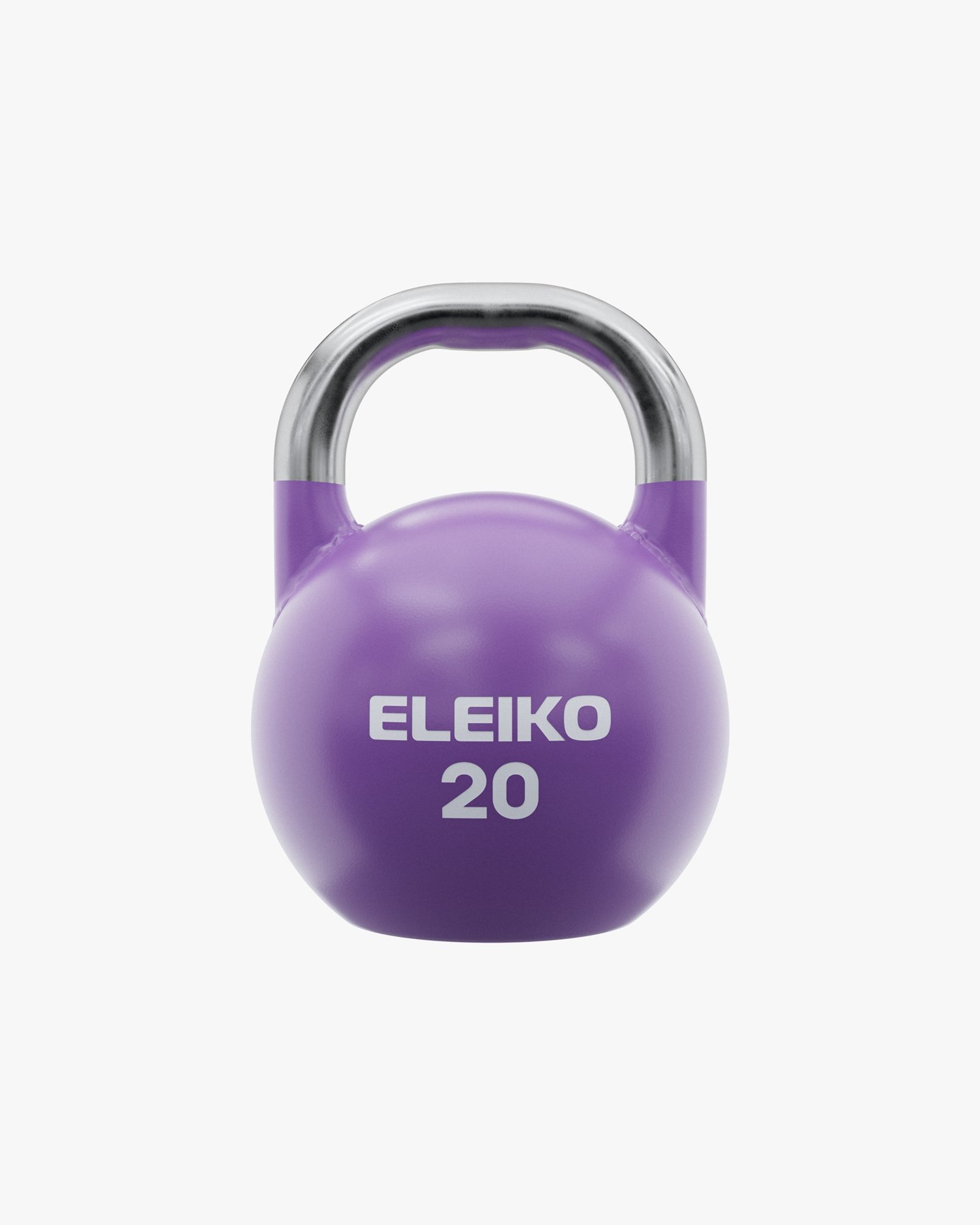
A consistent shell means that moving to a heavier bell does not necessarily introduce a larger body or a different handle window. That is useful if you want the equipment to stay familiar while the load changes. It does not mean the heavier weight requires no adjustment in effort, control or training volume.
Eleiko’s current competition range is an example of the same-size approach. Its 20 kg product listing describes moulded iron construction, a powder-coated finish and calibration to within 200 grams either side of the stated weight. The word competition therefore tells you more about the design’s purpose than it does about one compulsory material.
Compare the figures with the exact alternative you are considering. Rogue lists its competition range at 282 mm tall and 208 mm wide with a 33 mm handle diameter. Titan lists its competition bells at 11.4 inches tall and 8.3 inches across with a 35 mm handle measurement. Both offer consistent dimensions within their ranges; that does not make them identical to each other.
This is why a category-level promise cannot replace a model-level check. If your existing bell fits well and you want a second one, write down the brand, range and weight before shopping. A visually similar bell from another range may place its body differently relative to your hand.
For general training, changing dimensions is not automatically a problem. The question is whether the particular change interferes with your movements. Buy for the exercises you intend to practise, rather than assuming a competition label upgrades every session.
Handle thickness and hand clearance are separate questions
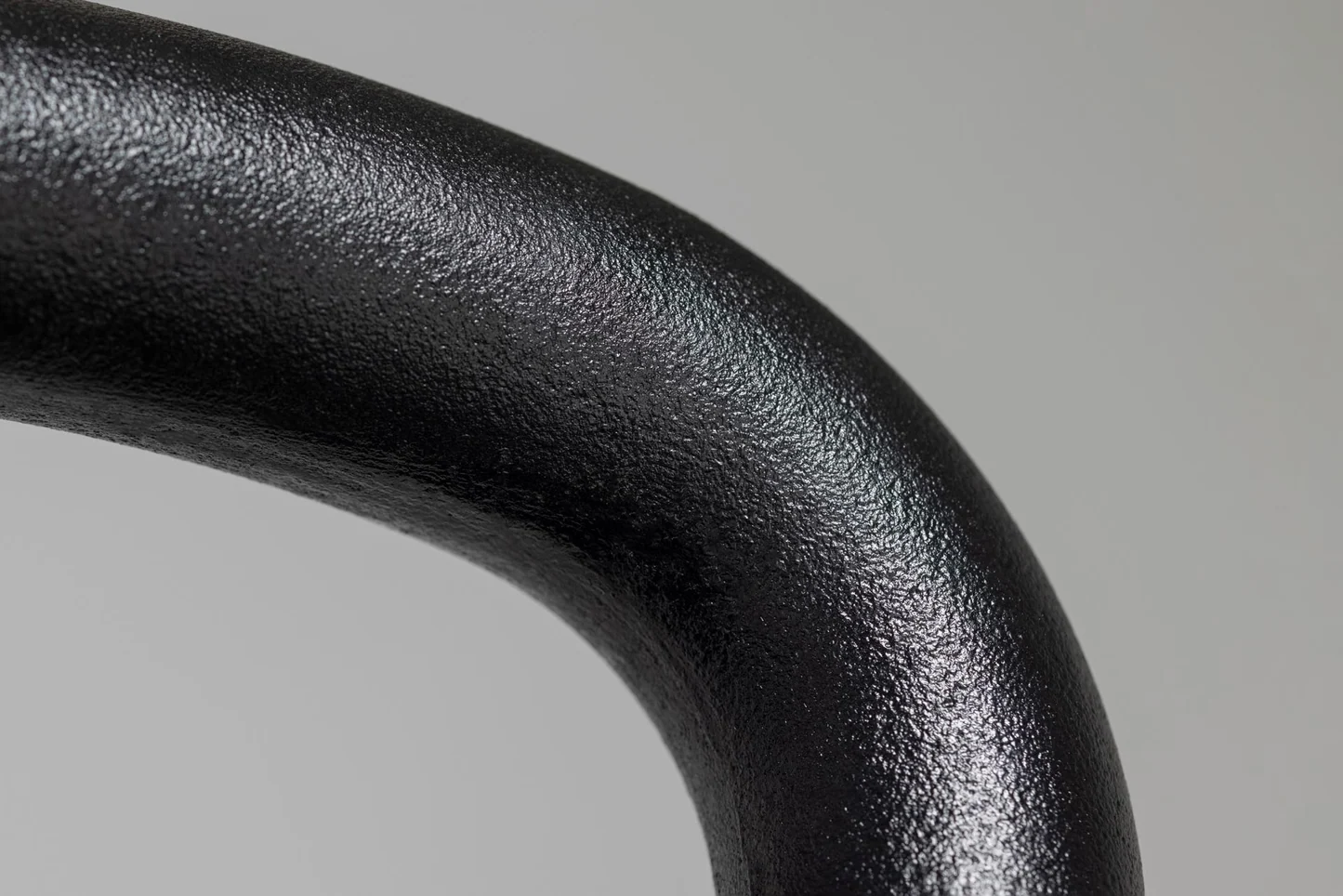
Handle diameter describes the thickness of the part you grip. The window is the space inside the handle. Two bells can share a diameter while leaving different amounts of room for your fingers, especially around the corners. A flattering side-on photograph rarely answers both questions.
Rogue’s listed competition handle is 33 mm, while Titan’s listed measurement is 35 mm. In REP’s cast-iron range, the published specification changes from a 33 mm handle at 16 kg to 38 mm at 20 kg. Those are examples from specific ranges, not universal measurements for every bell carrying the same weight.
If you can handle a sample, check the movements you actually need. A comfortable one-handed hold does not automatically establish enough room for two hands. Notice whether your fingers are forced against the corners, whether the handle can sit naturally across your palm, and whether the shape changes how you position your wrist.
There is no reliable rule here that converts your height, glove size or lifting numbers into one perfect diameter. Large hands may still dislike a thick grip. Someone who enjoys one-handed work may make a different compromise from someone buying mainly for two-handed swings.
When buying online, ask for the internal window dimensions and a clear front view if the listing does not provide them. Check the return terms before treating a measurement as a guarantee of comfort. It is easier to clarify the fit before a heavy parcel arrives than to discover that both hands only fit when squeezed together.
Check the rack position without blaming every problem on the bell
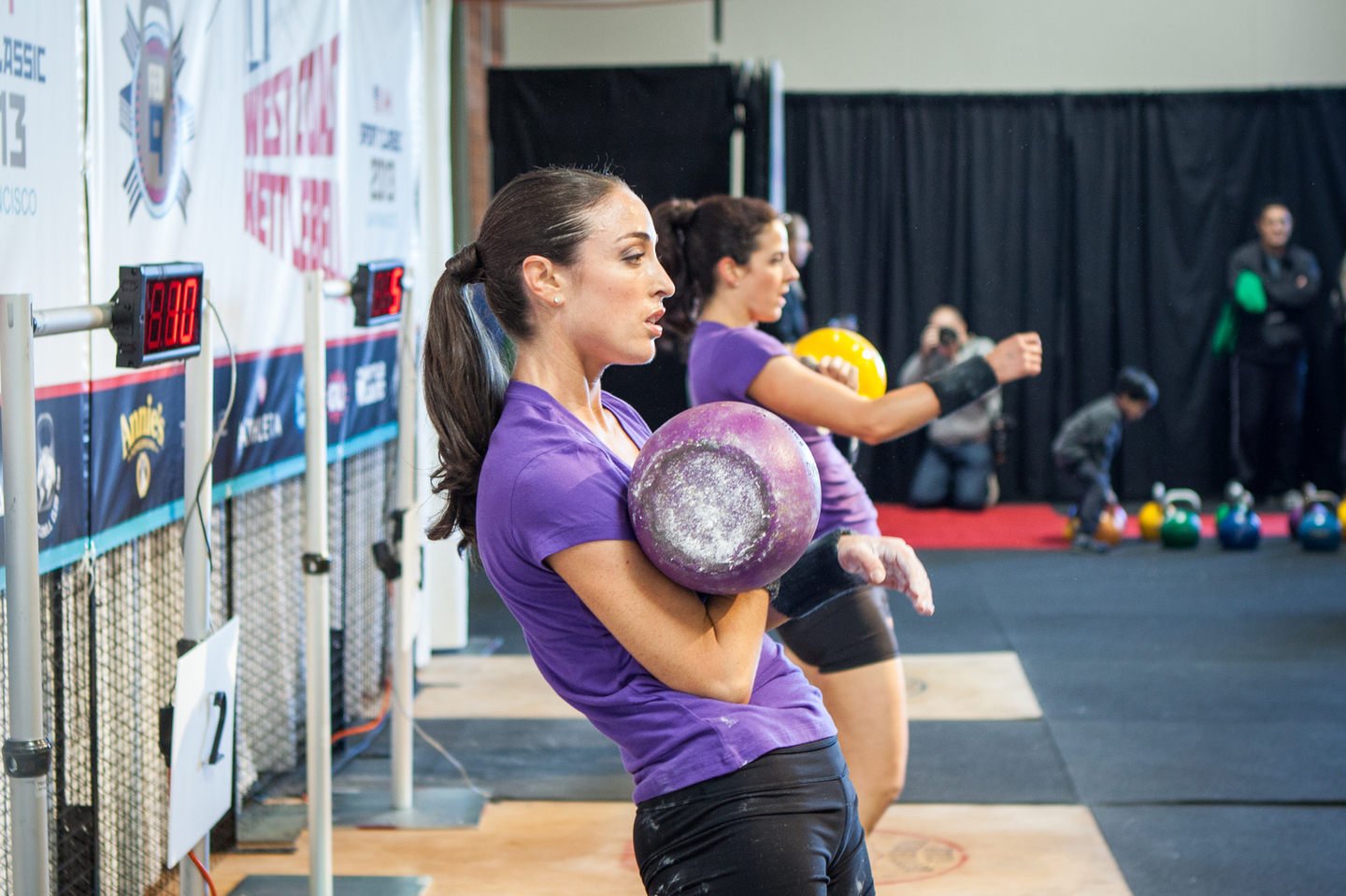
The rack is where geometry becomes personal. The bell’s body, the handle opening and your hand position all influence where the load contacts your arm. A bell that feels fine hanging beside your leg may feel very different when brought into the rack for a press or a clean.
That does not establish that discomfort is always an equipment defect. Technique and load choice matter too. If you are learning the movement, get qualified coaching and use an appropriate practice load before deciding that a different shell will solve everything. Do not repeatedly slam a bell onto your forearm to test its comfort.
A useful comparison keeps the task consistent. Try the same controlled position with two models at a manageable load, then note where the body rests and whether you can hold the handle without an awkward wrist adjustment. Comparing a light bell from one range with a much heavier bell from another mixes several variables at once.
Be careful with photographs of accomplished kettlebell-sport athletes. They show a position used within a particular discipline, with the athlete’s own proportions and preparation. A still image is not a complete tutorial or evidence that every viewer should reproduce the exact posture.
Choose equipment that supports the movements you want to learn, then learn those movements properly. A comfortable rack is worth checking; a manufacturer’s comfort claim is not a substitute for trying the bell or understanding the technique.
Inspect the finish as carefully as the weight marking
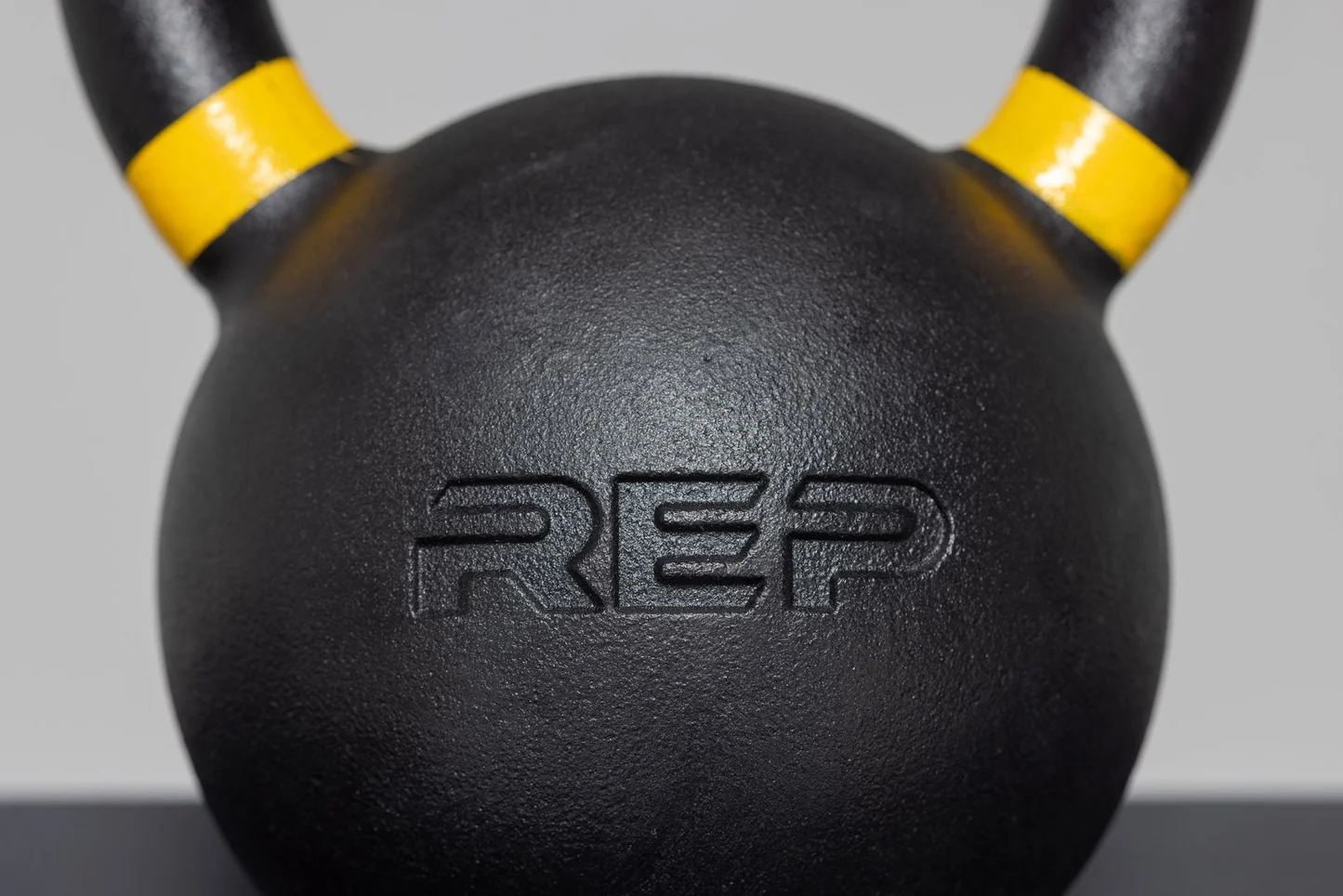
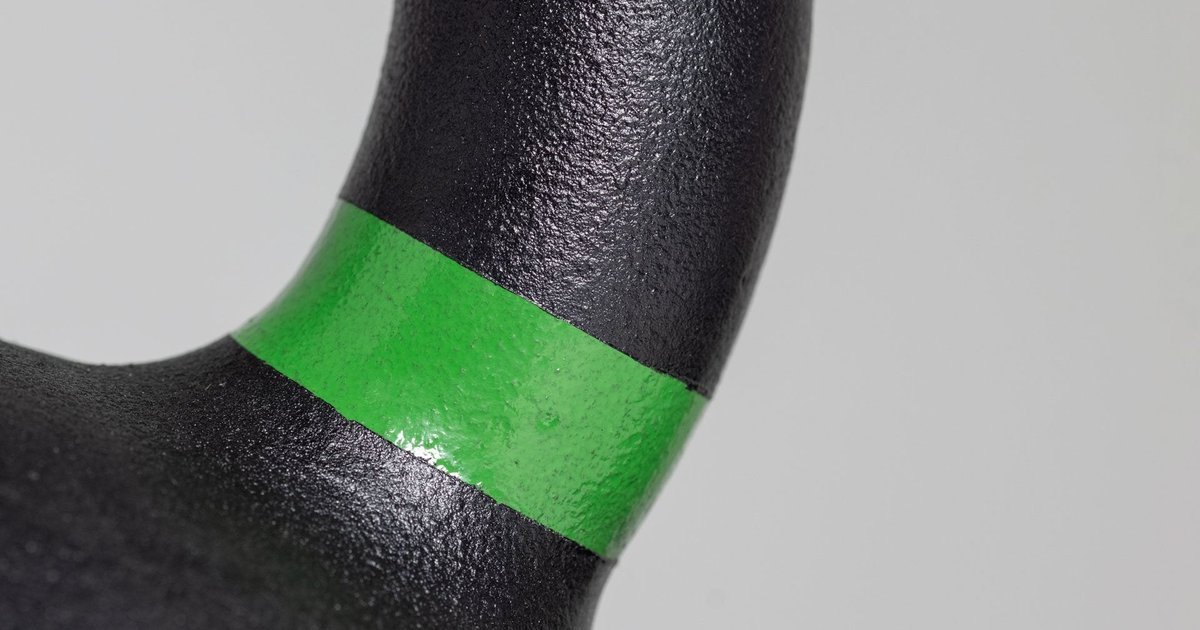
The surface under your fingers deserves attention. Look for rough seams, sharp patches, damage or an uneven coating where your hand will move. A textured finish can be deliberate, but that does not make every raised edge desirable. Inspect the actual item rather than assuming that a smooth-looking catalogue photo guarantees a flawless handle.
These products also demonstrate why material shortcuts are unreliable. Titan describes a hollow-core steel construction, while Eleiko describes iron and Rogue specifies solid-piece cast iron. Construction, shape and surface treatment are separate details. None of those descriptions alone proves that a bell will be comfortable for your hands or indestructible in your gym.
Keep maintenance appropriate to the finish. Do not take a file, abrasive brush or stripping chemical to a new handle simply because someone used it successfully on another product. Check the manufacturer’s care guidance and warranty terms first. A modification that suits one surface can damage a different coating.
Chalk introduces another choice, not a repair for the wrong fit. Before coating the bell or your hands, consider the product’s finish and your gym’s rules. Our guide to chalk formats, application and cleanup explains the practical trade-offs.
Check the base as well. Put the bell on a suitable level surface and inspect its contact with the floor. A photograph can show a broad base, but it cannot confirm that the delivered item sits properly or that a damaged edge has survived shipping intact.
Plan the next bell before buying the first pair
Start with a short list of tasks: perhaps a one-handed press, a two-handed swing and a goblet squat. These do not necessarily call for the same load. Decide which task the first purchase needs to serve, and resist buying a heavier pair just because it looks more complete on a rack.
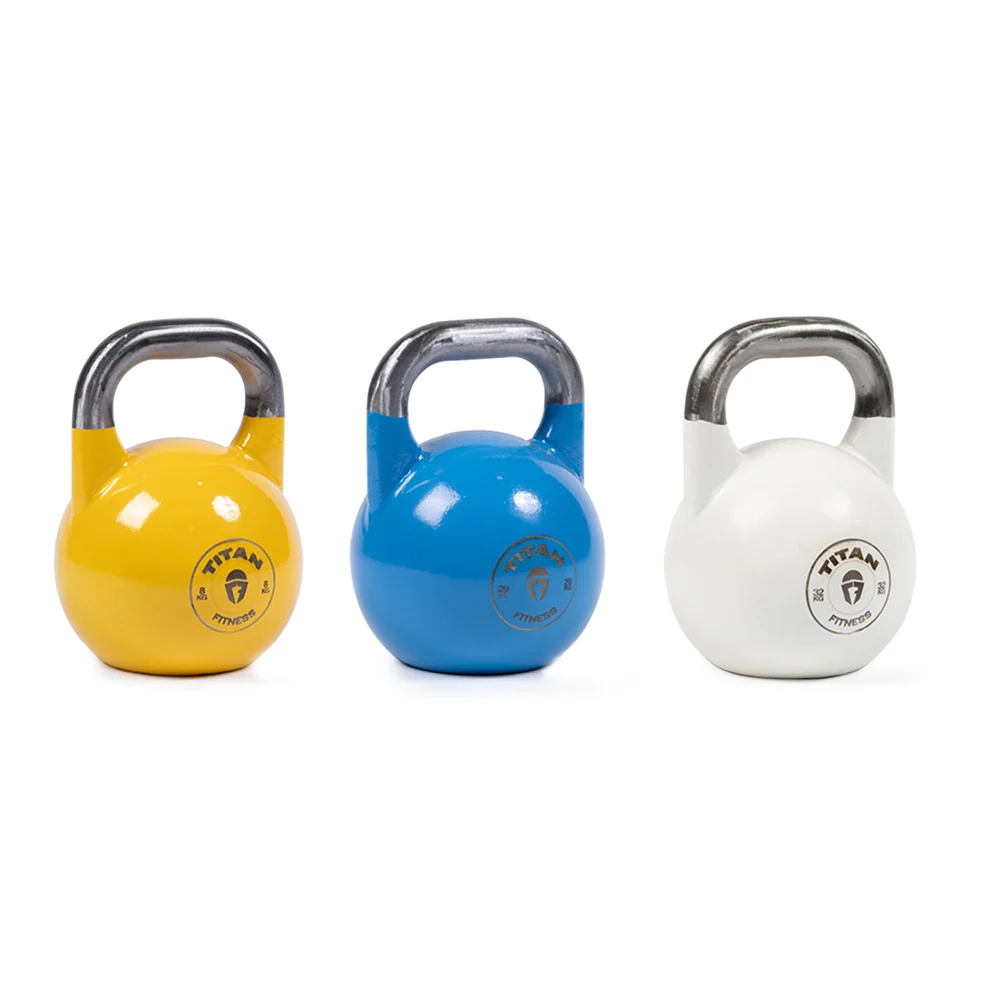
If double-bell work is part of the plan, matching the range helps keep the geometry predictable. Confirm whether a listing is for one bell or a pair. Colour can help identify weights within a system, but the printed mass and actual product specification are the details to verify when comparing brands.
Also consider the gap to your next useful weight. A large jump can be difficult for one exercise while remaining manageable for another. Adjustable equipment offers another way to handle those steps, with its own changeover process. MMP’s adjustable-kettlebell load-change guide explores that trade-off.
Before ordering, keep four things together: the intended exercise, the exact weight, the handle measurements and the total purchase cost including delivery. Add storage and return arrangements to the decision. A relatively inexpensive bell can become an awkward purchase if its fit is wrong and returning it is costly.
The strongest buying decision is specific. Choose the bell whose shape, surface and load suit your intended practice, with enough information to buy the next one sensibly. A competition label can explain a design choice; the dimensions tell you what you are actually bringing into the gym.

Funny Gym Shirts & Workout Gear
Funny gym shirts, tanks, hoodies and workout gear for lifters who like training hard.

OnlyGains Kettlebell Meme Hooded Jumper Hoodie
Bring “OnlyGains” gym humor to lazy days and post-workout plans.

Kettlebell Heartbeat Muscle Shirt Athletic Vest Workout Tank Top
Add some lifting attitude to training with “Kettlebell Heartbeat”.

Gym Equation Kettlebell Makes Me Happy Workout Decal Sticker
A fun “Gym Equation” touch for bottles, laptops, and lockers.

Gym Is My Happy Place Happy Kettlebell Smiley Face Emoj Tank Top
Bring “Gym Is My Happy Place” humor to your next lifting session.

Happy Kettlebell Emoji Smiley Kettlebell Meme T-Shirt
Show some gym-day personality with “Happy Kettlebell Emoji”.

Earth Kettlebell Meme Shirt – Lifting The Earth T-Shirt
Show some lifting attitude with a playful “Earth Kettlebell” tee.

Vitruvian Kettlebell Tee
Heavy lifts, good laughs, and a little “Vitruvian Man With Kettlebells” energy.

Heavy Metal Kettlebell | Lifting Skull Hooded Workout P Hoodie
Keep it laid-back with a little “Heavy Metal Kettlebell” attitude.

Kettlebell Heart X-Ray – Valentine's Workout Vest Muscl Tank Top
Train hard, laugh a little, and rep “Kettlebell Heart X-Ray”.

Heart Shaped Kettlebell Valentine’s Day for Kettlebell Sticker
Give your everyday gear a playful “Heart Shaped Kettlebell Valentine’s Day” twist.