Advertising disclosure: This page includes affiliate product links that may earn us a commission, as well as products from our own store.
George Hackenschmidt is remembered in gyms through an exercise name, yet the man behind it had a much broader career. The Estonian-born athlete known as the Russian Lion combined a striking physique with weightlifting, wrestling and an enduring interest in physical culture. His story is useful precisely because those pursuits overlapped without being the same thing.
A powerful body helped make him famous. It did not make competition predictable, settle every historical argument or turn every exercise he demonstrated into a good choice for a modern beginner. Looking at the athlete rather than just the legend offers a more interesting question: what should a lifter actually take from early strength culture?
1. A physique was part of the performance
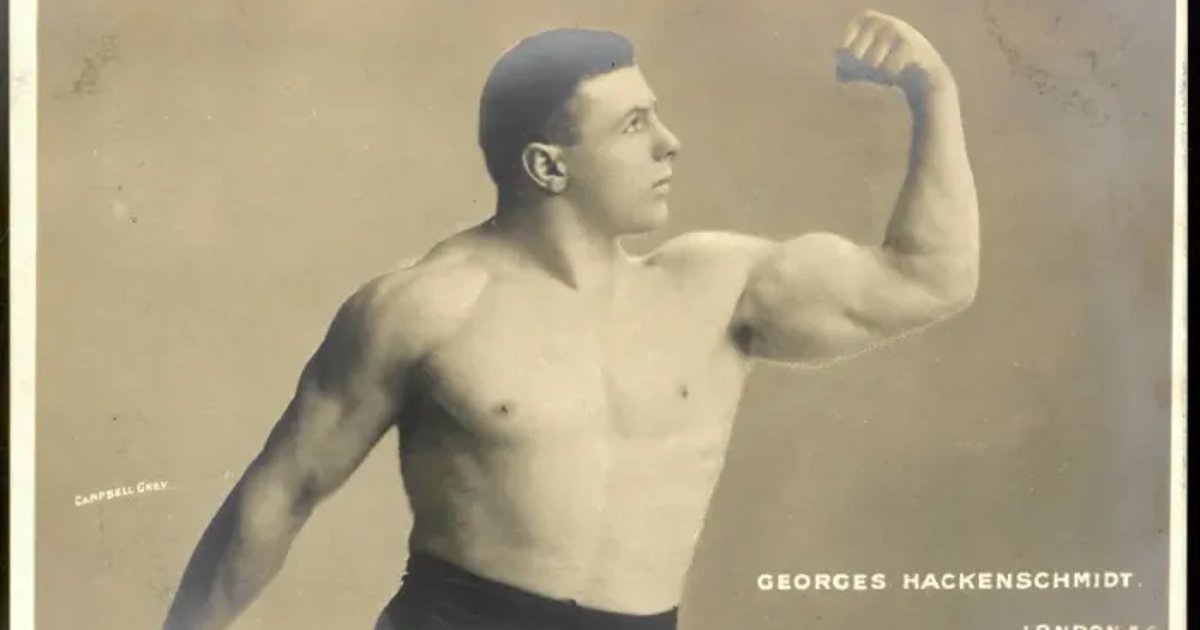
Hackenschmidt came from Tartu, historically known as Dorpat, in what is now Estonia. His nickname reflects the political geography of his era rather than a simple description of modern nationality. By the early twentieth century he was travelling internationally, and photographs helped turn an athlete whom most people would never meet into a recognisable public figure.
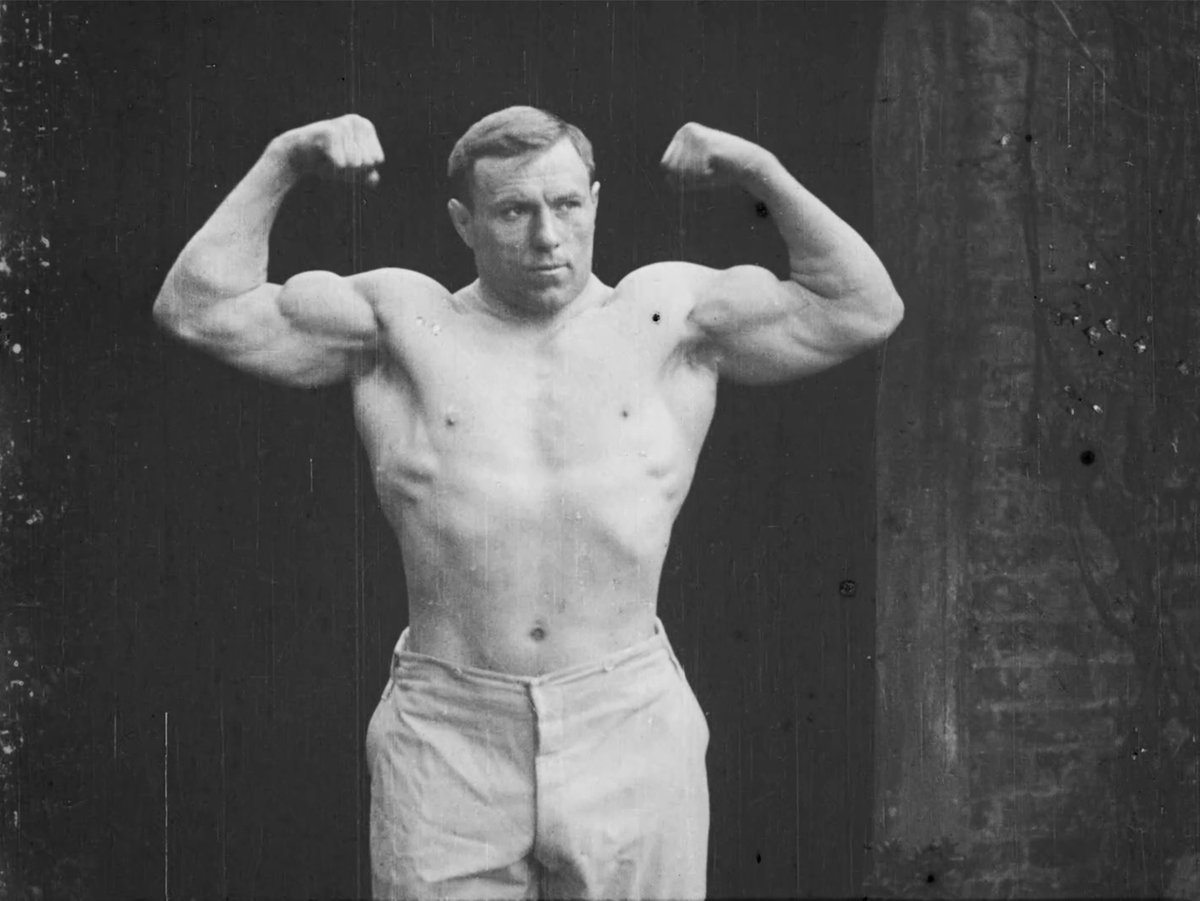
The studio poses deserve attention as historical objects. They show a muscular man arranging his body for a camera: choosing an angle, creating tension and presenting a particular image. They are evidence of appearance at that moment, not a complete training diary. Neither a dramatic pose nor an impressive upper body tells us the exact loading, exercise frequency or recovery that produced it.
That distinction still matters. A modern lifter can appreciate an older physique without converting a photograph into a promise. Copying the visible exercise or buying the associated equipment does not reproduce someone’s sporting background, body proportions or years of practice. The same caution applies when a present-day transformation is reduced to one workout.
Physical culture also joined appearance to public performance. Hackenschmidt could be discussed as a strongman, wrestler and model of bodily development. Modern training categories often separate those identities more sharply. Seeing their overlap helps explain his appeal, but it should not encourage us to pretend that muscle size, maximum strength and competitive technique are identical achievements.
2. Strength mattered, but wrestling had its own demands
A landmark victory over Tom Jenkins in New York in May 1905 helped establish Hackenschmidt’s championship standing in catch wrestling. Earlier successes under Greco-Roman rules formed another part of his reputation. Those styles matter because rules determine the problems an athlete must solve; success under one set does not remove the need to learn another.
For a lifter, this is an early example of a familiar distinction: having physical capacity and applying it efficiently. Grip strength, a powerful trunk and strong legs can support wrestling, but an opponent changes position, controls distance and makes decisions. More force is useful only when it can be expressed in the relevant situation.
The same principle holds outside combat sports. A stronger squat can be valuable to an athlete without automatically improving every sporting movement. Conditioning, timing and technical practice still need their own place. A program becomes less useful when every performance problem is treated as a reason to add another heavy set.
This is why athlete routines need context. Our look at Hunter McIntyre’s training habits uses a similar distinction between useful principles and copying an elite athlete’s workload. Hackenschmidt’s history gives that lesson a different setting: substantial strength was part of the foundation, while competition still demanded a particular skill.
3. The Gotch rivalry needs room for uncertainty
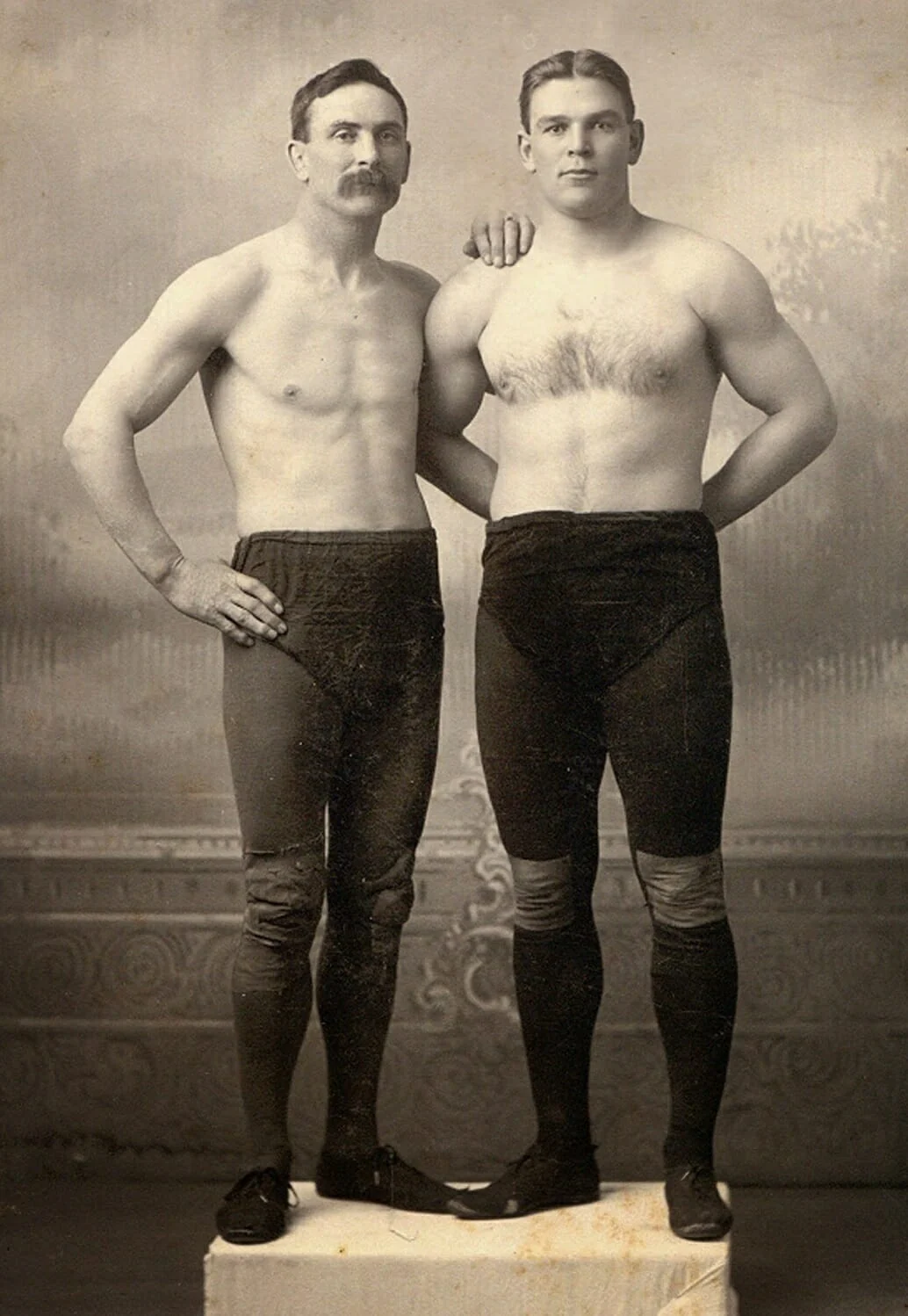
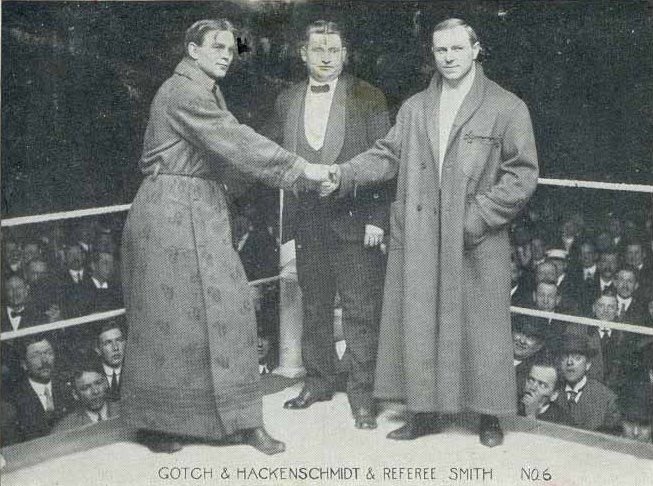
Frank Gotch defeated Hackenschmidt in Chicago in April 1908 and again in their September 1911 rematch at Comiskey Park. Those outcomes are the firm starting point. The surrounding stories are less tidy. Accounts discuss rough tactics, disputed conduct and an injured knee, but they do not all describe the circumstances in the same way.
It is tempting to turn the rivalry into a simple morality play: the stronger man robbed by tricks, or the clever technician exposing empty muscle. Either version makes a neat headline. Neither should replace the narrower conclusion that Gotch won two consequential encounters and Hackenschmidt’s physical advantages did not guarantee victory.
Even crowd and financial estimates vary across historical summaries. The rematch clearly attracted a large audience, but attaching unnecessary precision to every number can create false confidence. Where records disagree, a careful history can preserve the scale of an event without selecting the most dramatic figure and presenting it as unquestionable.
There is a practical habit here for anyone reading fitness claims. Separate an observed result from an explanation for it. A missed lift is an outcome; fatigue, technique and preparation are possible contributing factors that need evidence. An athlete’s injury can be relevant without proving what would have happened in a healthy rematch. Leaving a counterfactual unresolved is more honest than manufacturing certainty.
4. An archival exercise is not an instruction
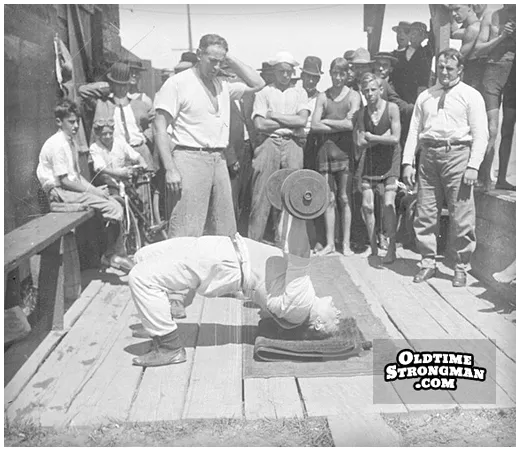
One surviving training photograph shows Hackenschmidt in a wrestler’s bridge, with spectators watching and a weight above his torso. It is a remarkable image of the physical culture surrounding wrestling. It is also an especially clear example of why historical documentation and exercise prescription must be kept separate.
A still image cannot tell you every force, the duration of a hold, the assistance outside the frame or the athlete’s preparation. It does not establish that an exercise is suitable for someone watching a century later. Recreating an impressive loaded neck position is not a necessary step toward becoming generally stronger.
If you are interested in wrestling, learn its physical preparation through appropriate coaching and progressions. If your goal is ordinary strength or muscle development, choose movements you can load, control and repeat for that purpose. There is no requirement to perform a historical feat merely because the athlete doing it was exceptional.
The lesson is broader than one bridge photograph. Old equipment and unusual techniques are interesting, but their age does not prove superiority. Equally, an exercise is not automatically worthless because it looks unfamiliar. Ask what task it trains, how the loading works, what preparation it requires and whether a simpler alternative serves your goal. That turns nostalgia into a useful investigation rather than an invitation to imitate a stunt.
5. Keep the principles; check the modern application
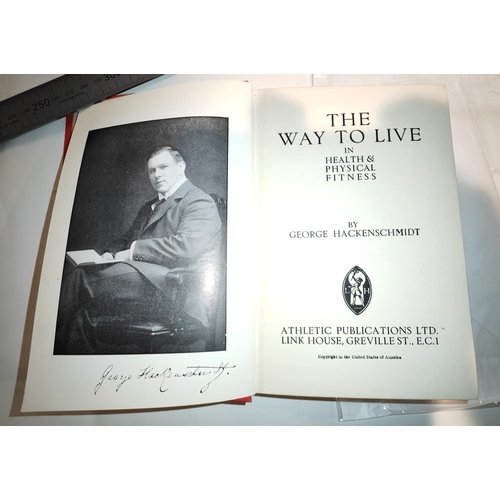
Hackenschmidt’s 1908 book The Way to Live in Health and Physical Fitness shows that his legacy extended beyond results and photographs. It belongs to the history of people trying to explain how training fits into life. Reading that history can be valuable without treating an early manual as a complete modern evidence base.
For a healthy recreational lifter, a sensible translation begins with a clear goal and a repeatable selection of movements. You might use a squat pattern, hinge, press and pull across the week, with appropriate conditioning and recovery. That is an editorial framework, not a reconstruction of Hackenschmidt’s exact routine or a claim that he endorsed a particular contemporary program.
Equipment should serve those choices. Dumbbells, a barbell, plates and a suitable bench offer different ways to organise resistance; none carries the athlete’s results inside it. Choose manageable increments, adequate space and a secure setup. If you already own the tools you need, improving consistency may be more useful than adding another item. For existing bars, our barbell-care guide explains how finish and storage affect maintenance.
Track enough detail to judge progress: the exercise version, load, repetitions and how controlled the work remained. Avoid changing every variable whenever you encounter an appealing historical method. Keep skill practice when the goal involves a sport, and leave recovery room rather than interpreting dedication as a demand for constant maximum effort.
Hackenschmidt remains compelling because he was more than an exercise label. His career connected muscular development, sporting ambition and a public image that survived long after his final major matches. The most useful way to honour that story is to study it carefully, keep uncertainty visible and make present-day training decisions for the person doing the work.
Some product links may be affiliate links, which can support Mind Muscle Perfection at no additional cost to you.

Equipment Worth Exploring
Explore equipment, accessories and gear from our carefully selected range.


Rubber Hex Dumbbells
Rubber-coated hex dumbbell pairs with a stable shape for home and commercial strength training.


Competition Plates
Competition-style bumper plates for Olympic lifts and loaded strength training.

Grip Plates
Rubber-coated weight plates with handholds for loading barbells and machines.


FID Bench MAX
Adjustable bench offering flat, incline, and decline positions + adjustable headrest.

Funny Gym Shirts & Workout Gear
Funny gym shirts, tanks, hoodies and workout gear for lifters who like training hard.

Defy Gravity Shirt Old School Weight Strongman Meme T-Shirt
Bring “Defy Gravity” humor to your next gym day.

Old School Weight Strongman – Meme Shirt & Top T-Shirt
Show some powerlifting attitude with a playful “Old School Weight Lifter Strongman Graphic” tee.

The Bronze Statue Meme Rodin Top T-Shirt
Bring “The Lifter Bronze Statue” humor to your next gym day.


Discipline Greek God Statue Stoic Sigma T-Shirt
Heavy lifts, good laughs, and a little “Discipline Greek God Statue Funny Stoic” energy.

Consistency Is Key Stoic Greek God Marble Sculpture T-Shirt
Make gym days more fun with “Consistency is Key Stoic Greek God Marble” style.

Be Stronger Than Your Excuses Motivational Workout Pull Hoodie
Make your off-duty look more fun with “Be Stronger Than Your Excuses”.

No Days Off for Daily Workouts, Lifting, and Fitness Di Hoodie
Keep it laid-back with a little “No Days Off” attitude.

Funny Calisthenics Gym Crewneck Pullover Sweater for Bo T-Shirt
Keep things casual with a little “Calisthenics” attitude.