Advertising disclosure: This page includes affiliate product links that may earn us a commission, as well as products from our own store.
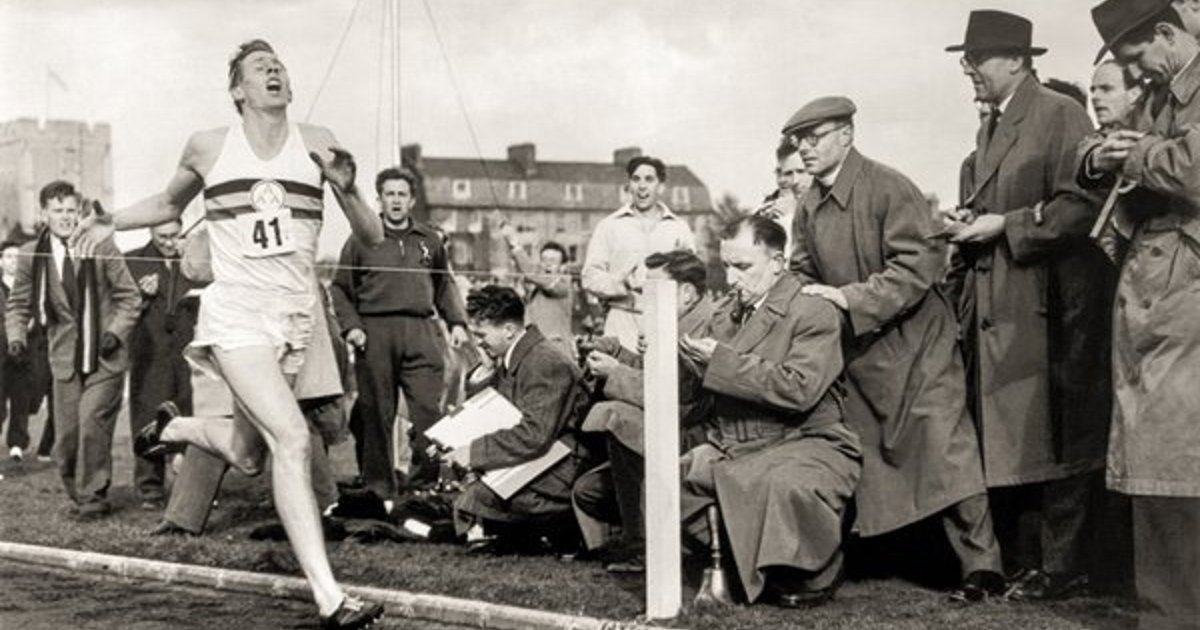
Three minutes, 59.4 seconds. Roger Bannister’s mile on May 6, 1954 remains one of sport’s most recognizable numbers. Yet reducing the achievement to a story about believing harder leaves out the measured distance, the collaborators and the difference between breaking a record and winning a race. The history is compelling enough without inventing a secret workout or treating an elite result as a training target for everyone. It also offers useful questions for anyone who records running times, lifts weights or wants a personal best to mean something.
The milestone belonged to a real race, not a motivational slogan
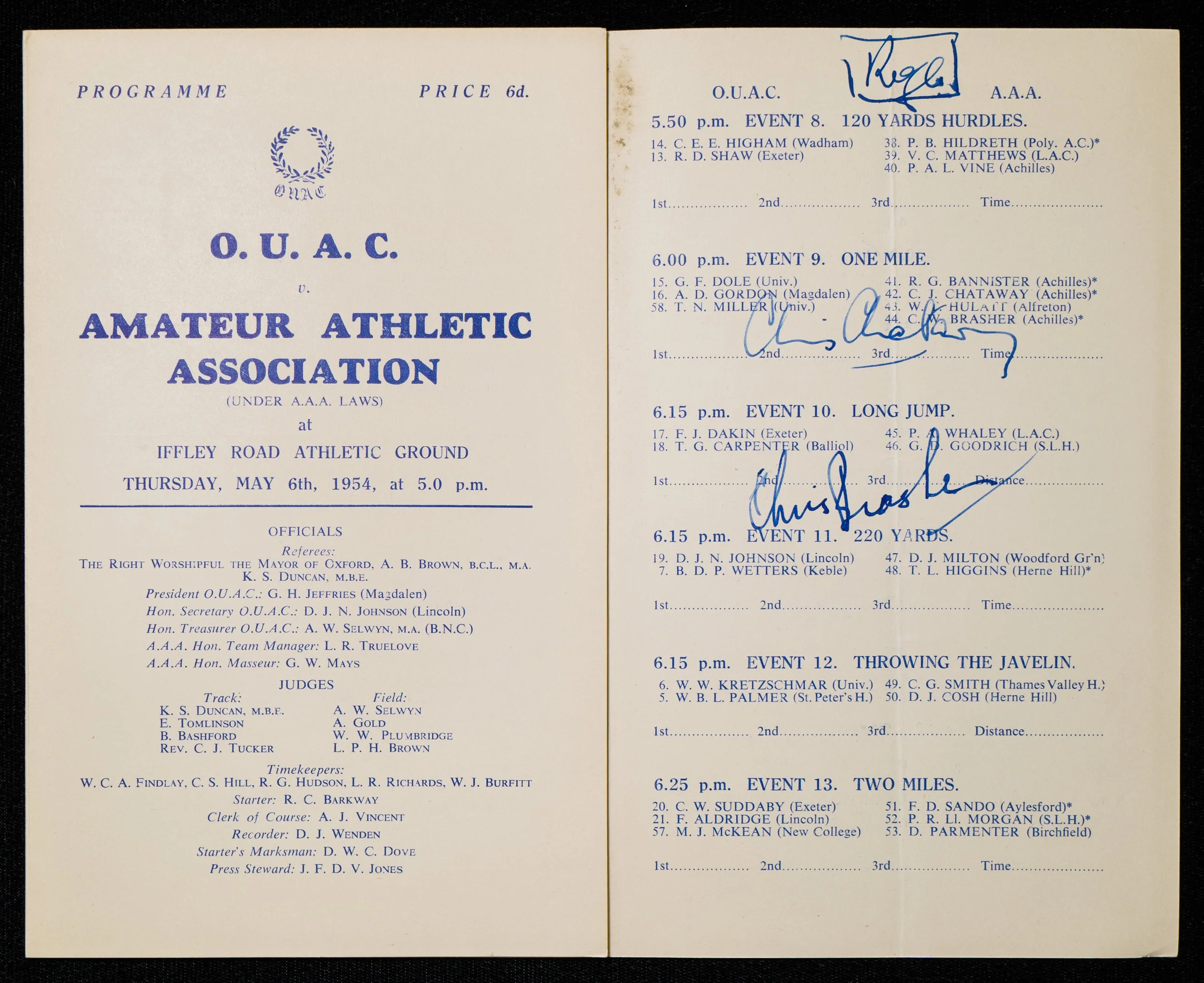
At Oxford’s Iffley Road track, Bannister became the first man to run a mile in less than four minutes. Chris Brasher and Chris Chataway helped pace the attempt. The signed meeting programme is a reminder that this happened within an organized athletics event, with named competitors and officials. It was a specific result under particular conditions, rather than an abstract demonstration that every apparent human limit disappears with confidence.
The previous stages of an athlete’s development are easy to lose when one finishing photograph becomes famous. A successful attempt can appear inevitable when viewed backward. The runner experiencing the preparation has no such certainty. That difference matters when we judge our own training: a disappointing result may identify something to work on, but it does not reveal how the entire story will end.
Nor does a breakthrough establish which single element of preparation caused it. Coaching, pacing, accumulated practice, competition and the day’s execution are entangled. The historical result verifies the performance. It does not isolate a universal psychological intervention or provide enough information to prescribe an exact weekly schedule for another person.
For a recreational runner, the useful adaptation is to make the next goal concrete. Decide what distance you mean, where it will be measured and what would count as improvement. A target can be ambitious without pretending your circumstances match a historic record attempt. You can admire the scale of the achievement while choosing a much more modest, meaningful objective of your own.
A mile is not four modern 400-metre laps
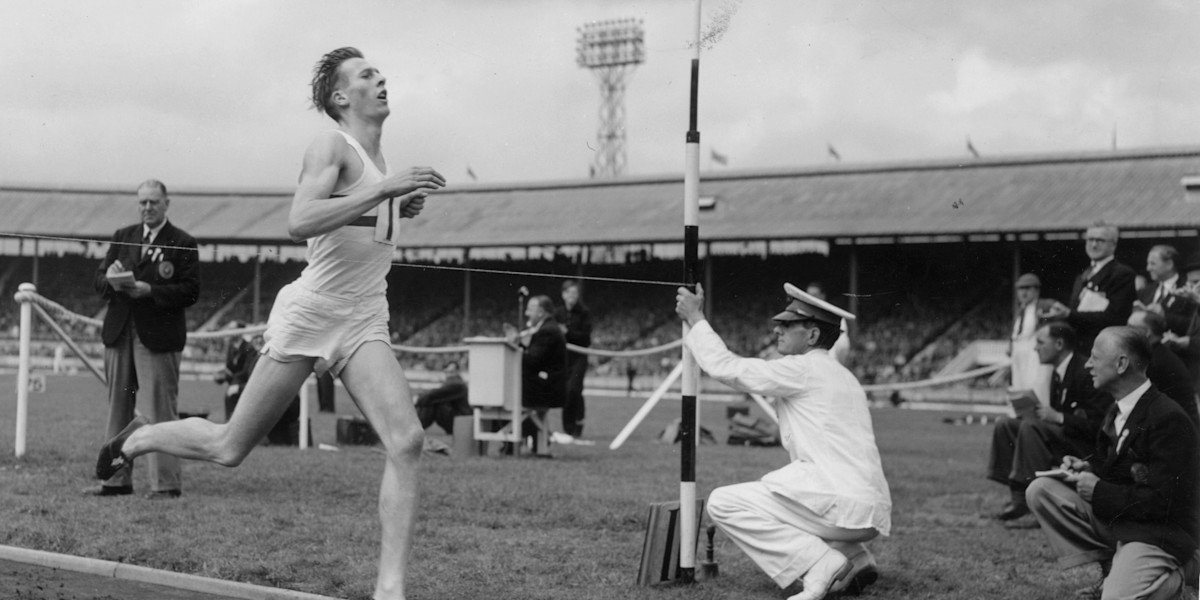
An international mile is exactly 1,609.344 metres. Four laps of a modern 400-metre track cover 1,600 metres, leaving 9.344 metres still to run. The difference sounds small until the goal is defined by a fraction of a second. A genuine mile and a 1,600-metre effort are different distances, even when both involve approximately four circuits.
Convert Bannister’s time into seconds and the arithmetic becomes clearer: three minutes is 180 seconds, plus 59.4 gives 239.4 seconds. Divide that by four and the average is 59.85 seconds per quarter-mile. That is a mathematical average across equal quarters of the full mile, not a claim that he ran four identical splits. A quarter-mile is 402.336 metres, not 400.
For a modern comparison, holding the same average speed for 400 metres would take about 59.50 seconds. This is an equivalent pace calculation, not a recovered historical lap split. The calculation uses 239.4 multiplied by 400 and divided by 1,609.344. Keeping the units visible prevents an apparently precise answer from describing the wrong task.
The same discipline helps in ordinary training. Record whether a distance came from a measured track, a treadmill display or a watch estimate. Those tools can be useful without providing interchangeable measurements. If you switch surfaces or machines, establish a new reference rather than assuming that a tiny difference proves a fitness change.
Pace and movement also answer different questions. A faster time does not identify which stride change helped, and a smoother-looking run does not prove a faster finish. Our guide to running form, cadence and stride length discusses how to examine those variables without forcing every runner toward one appearance. Keep a technique experiment separate from an all-out time trial when you want to understand the result.
Pacemakers and timing make the achievement more interesting
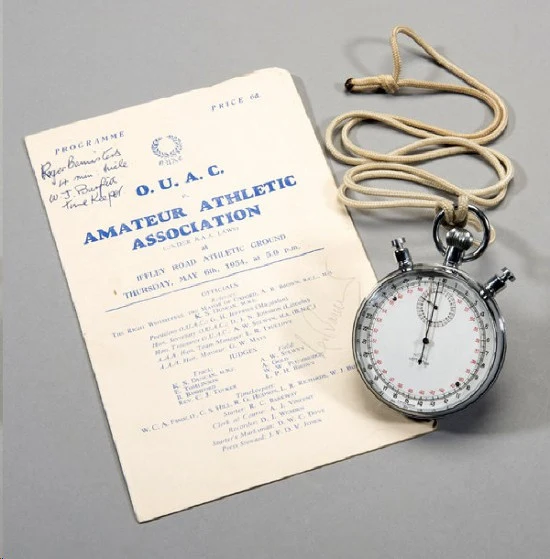
A stopwatch, a programme and trackside officials are less dramatic than the finishing athlete, but they help explain what makes a record credible. The number has meaning because it describes a defined task that other people can recognize. The pictured timing object is historical memorabilia; its photograph is not a modern calibration certificate or a new measurement of the race.
Likewise, assistance with pacing does not erase the runner’s work. It clarifies the conditions under which the result happened. Following a planned rhythm and producing the final effort remain demanding tasks. The important distinction is between openly described race support and pretending that the performance occurred in conditions different from those actually used.
In your own training, define assistance before comparing results. Running with a friend, following a treadmill speed or choosing a sheltered route may produce a different experience from a solo effort on an exposed course. Neither version is automatically worthless. Labeling them honestly gives you a better record than selecting whichever description makes the latest time sound most impressive.
Keep preparation consistent enough to make comparisons useful. Note the route, approximate conditions, timing method and whether the effort was a test or ordinary practice. Do not turn every session into an attempt to reproduce a famous finish. A training log should also include manageable days and inconclusive results, rather than only the entries that support a success story.
Equipment can serve a separate conditioning purpose without recreating a track mile. A runner, bike, rower, ski trainer or climber offers a particular task, while ropes may suit a short conditioning session. Compare a familiar setup against itself. The options below are general training equipment, not Bannister’s tools, a verified reconstruction of his programme or interchangeable tests of mile-running ability.

Equipment Worth Exploring
Explore equipment, accessories and gear from our carefully selected range.


The first breakthrough and the next race tell different stories
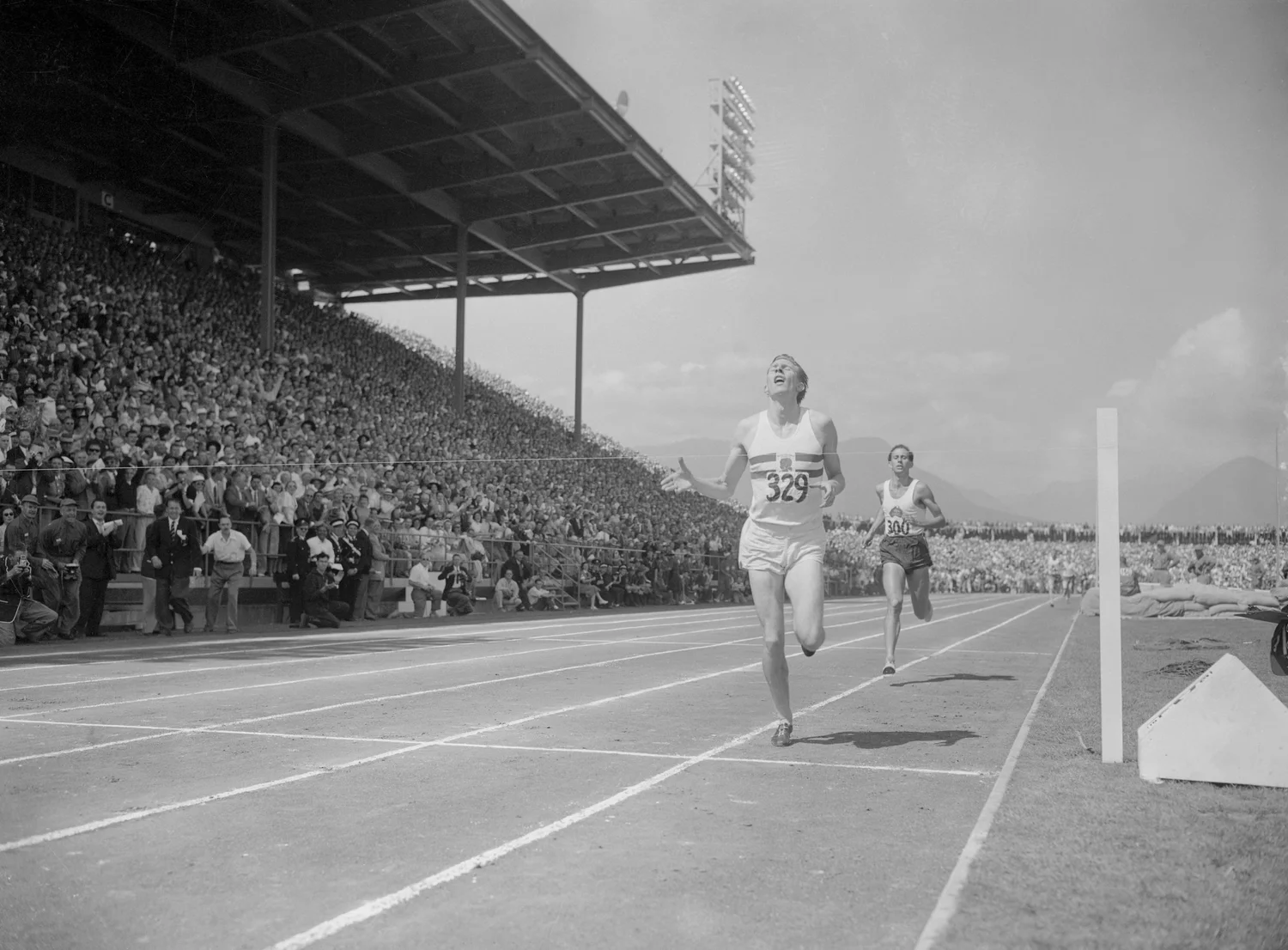
Bannister’s record lasted 46 days before John Landy ran faster. Later that year, Bannister beat Landy in Vancouver, finishing the mile in 3:58.8. The photograph here belongs to that later contest: Bannister wears 329 and Landy 300. It does not show the Oxford record attempt. Keeping the images and dates separate protects the significance of both performances.
A world-record attempt rewards the fastest eligible time; a head-to-head race also asks who reaches the finish first. The athlete must respond to competitors as well as the clock. A personal best and a competitive victory can overlap, but they are not the same objective. Decide which outcome matters before interpreting the tactics or judging whether a session succeeded.
The short life of the record does not make being first unimportant. It separates a lasting historical milestone from a temporary place at the top of a performance list. Fitness history contains several kinds of breakthrough. Our account of Dick Fosbury’s change to high-jump technique explores a different kind: changing how a task is performed. Neither story needs an inflated claim about rewriting every record to remain interesting.
For your own goals, keep the category explicit. Completing a distance continuously, improving a repeatable time and handling a race more intelligently are distinct achievements. A better-controlled lifting set is another, measured in a different way. Let the standard explain the result instead of using one impressive number to stand for every kind of progress.
Bannister’s milestone can still be inspiring. The useful lesson is to give ambition a clear task, acknowledge the support around the attempt and preserve the details that make the outcome intelligible. You do not need to copy an elite training schedule or promise a breakthrough on demand. You need a goal worth pursuing and a fair way to recognize what happened when you tried.

Cardio Shirts & Workout Gear
Cardio and conditioning gym gear for runners, endurance athletes and anyone who earns the sweat.


Anti Running Club Tee
Heavy lifts, good laughs, and a little “Anti Running Running Club” energy.


Don't Quit Do It – Motivational Workout Hooded Pullover Hoodie
Show off your cardio humor in a laid-back “Don't Quit Do It” hoodie.

Cardio Is Hardio – Workout Meme Pullover Jumper T-Shirt
For laid-back days and cardio humor: “Cardio Is Hardio”.

Cardio Is Calling Decline Decal Water Bottles Meme Sticker
A fun “Cardio Is Calling” touch for bottles, laptops, and lockers.

Negative Cardio Review Cardio Sucks 1 Star Vest Tank Top
Bring “Negative Cardio Review” humor to your next lifting session.

Death By Cardio Shirt Meme & Top T-Shirt
Bring “Death By Cardio” humor to your next gym day.

Straight Outta Shape Hoodie
Stay casual and show some cardio attitude with “Straight Outta Shape”.

Shirt Cardio Kills Meme Top T-Shirt
Show some cardio attitude with a playful “Cardio Kills Meme” tee.