Advertising disclosure: This page includes affiliate product links that may earn us a commission, as well as products from our own store.
Would adding a small amount of weight to your jumps make you faster, or merely turn an already demanding drill into a harder one? A November 2026 eight-week experiment tested that question in 23 experienced collegiate sprinters. The athletes wearing vests showed stronger improvements in certain hamstring and rapid-force measures, but the evidence for a clear advantage in measured sprint speed was less decisive.
The useful takeaway is more specific than “weighted jumps work.” Here’s what the groups actually did, which results separated them, and how ordinary lifters can borrow the principles without copying an elite sprint workload.
The eight-week test: 10% body-mass vests, not heavy jump squats
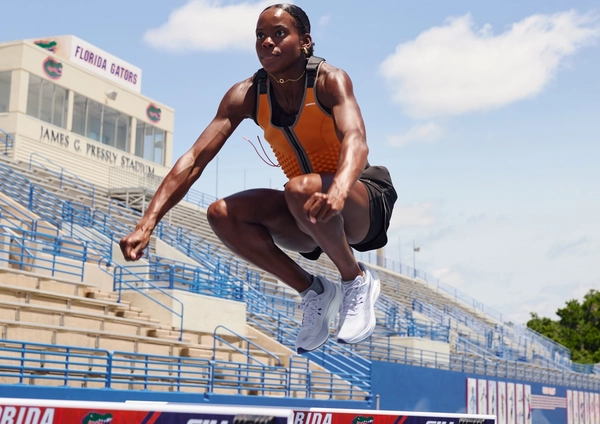
The experiment, published on November 12, 2026, followed 23 male collegiate sprinters who already had years of sprint training behind them. They were divided into three groups: eight added plyometrics wearing weighted vests, eight added the same types of jumps without a vest, and seven continued their regular training without additional jump sessions. All three groups still trained for sprinting five times a week. That detail matters: the comparison was not between exercise and a sedentary life.
Both jump groups trained twice weekly over eight weeks. The loaded group wore a custom vest carrying about 10% of each athlete’s body mass, distributed across the front and back of the torso. For a 75kg athlete, that would mean about 7.5kg of additional vest load, not a 75kg squat bar. The vest load stayed fixed during the intervention rather than being progressively increased week by week.
The sessions included bounds, standing long jumps, standing triple jumps and drop jumps. The protocol also used substantial contacts and long recoveries: at least 80 jumps in a session, with two to three minutes between sets and longer breaks between exercises. These are trained sprinters doing organized technical work, not beginners being told to perform 80 random box jumps in a crowded gym.
That is why the most useful question is not whether everyone should buy a weight vest. It is whether adding a modest external load to carefully planned explosive work changes something meaningful beyond the benefits of practicing the jumps themselves.
Hamstrings and rapid force production improved; speed claims need restraint
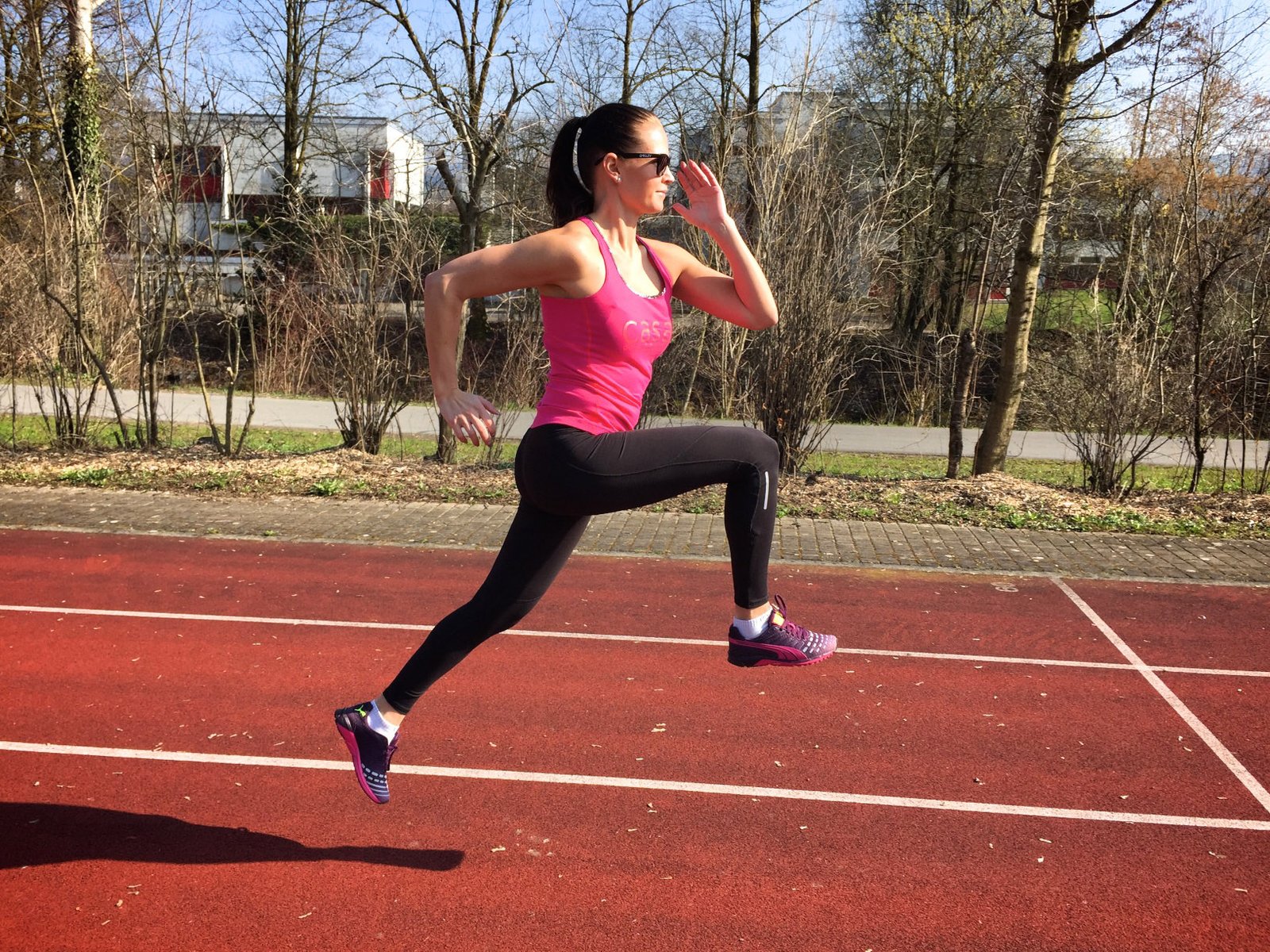
The clearest loaded-versus-unloaded differences appeared in some laboratory measures of neuromuscular function, hamstring torque and rate of force development. In plain language, the athletes using vests became better on several tests related to producing force quickly. Their responses in certain electrical measures of muscle activation also differed from the unloaded and control conditions. Those findings are interesting for coaches, but an improved laboratory signal is not the same thing as more speed automatically appearing on the track.
Both jump-training groups and the comparison group also showed improvements over time in various jumping, tendon, muscle or sprint measures. Because every group was still practicing sprinting, improvements shared by all groups cannot simply be credited to the extra vest. The research did not establish a large, unambiguous between-group advantage for the actual 30-metre sprint test. The authors treated sprint transfer as promising but in need of larger confirmation.
This is consistent with the wider picture that explosive exercises can improve jumping and acceleration without proving that one clever loading trick is always best. A large 2026 synthesis of randomized plyometric trials found useful average gains in sprinting and jumping, while also showing considerable differences between protocols and athletes. The choice of jumping drill, prior training and total work all matter.
For another comparison, MMP has examined heavy squats versus squat jumps and the problem of picking a training tool for a specific performance outcome. The lesson here is similar: decide whether your target is a faster first step, higher jump, stronger hamstrings or simply more conditioning before chasing whichever test produced the biggest percentage change.

Equipment Worth Exploring
Explore equipment, accessories and gear from our carefully selected range.


Pro Sled System
Heavy-duty push-pull training sled for loaded conditioning, speed, and strength work.


Bounding, drops and landing quality matter more than hype
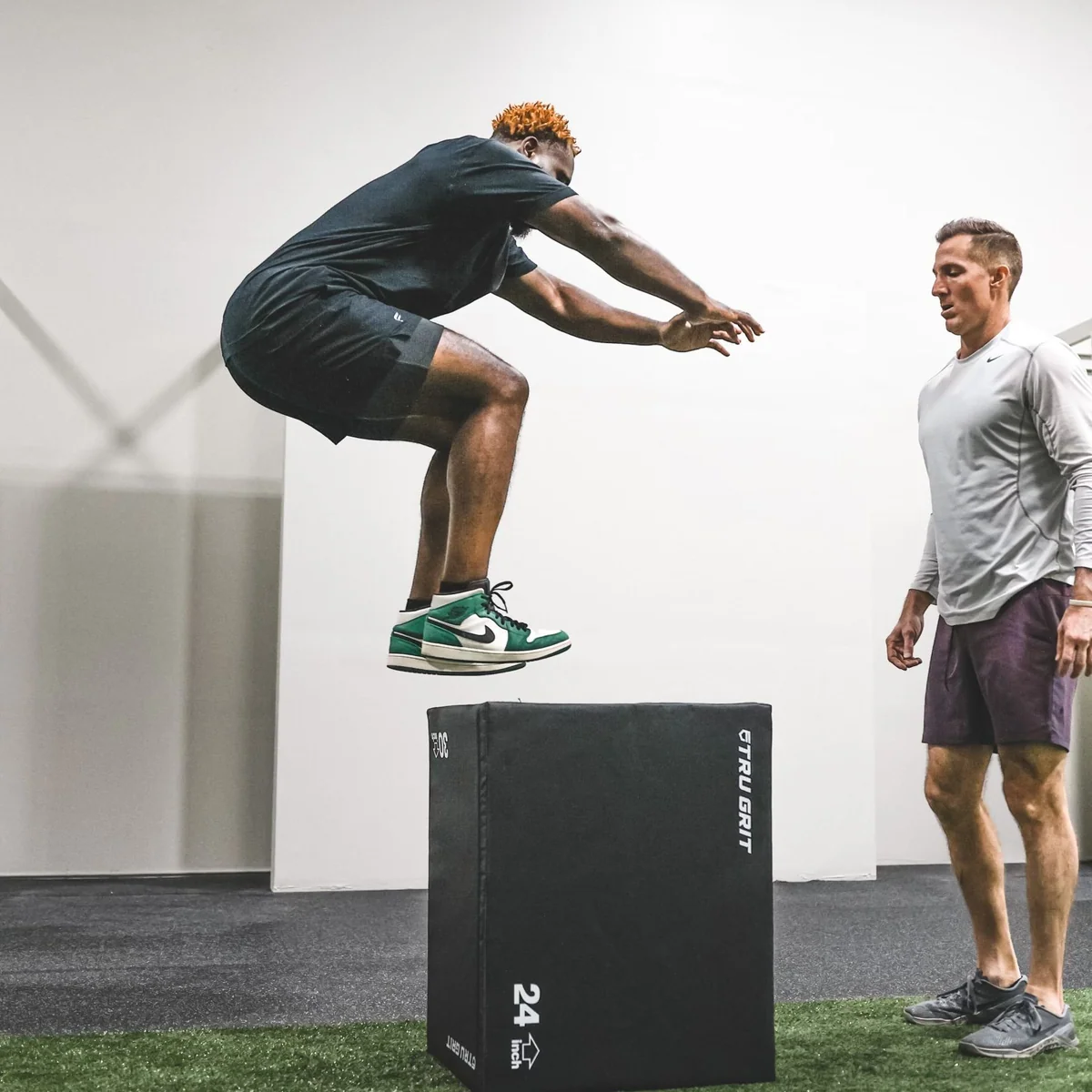
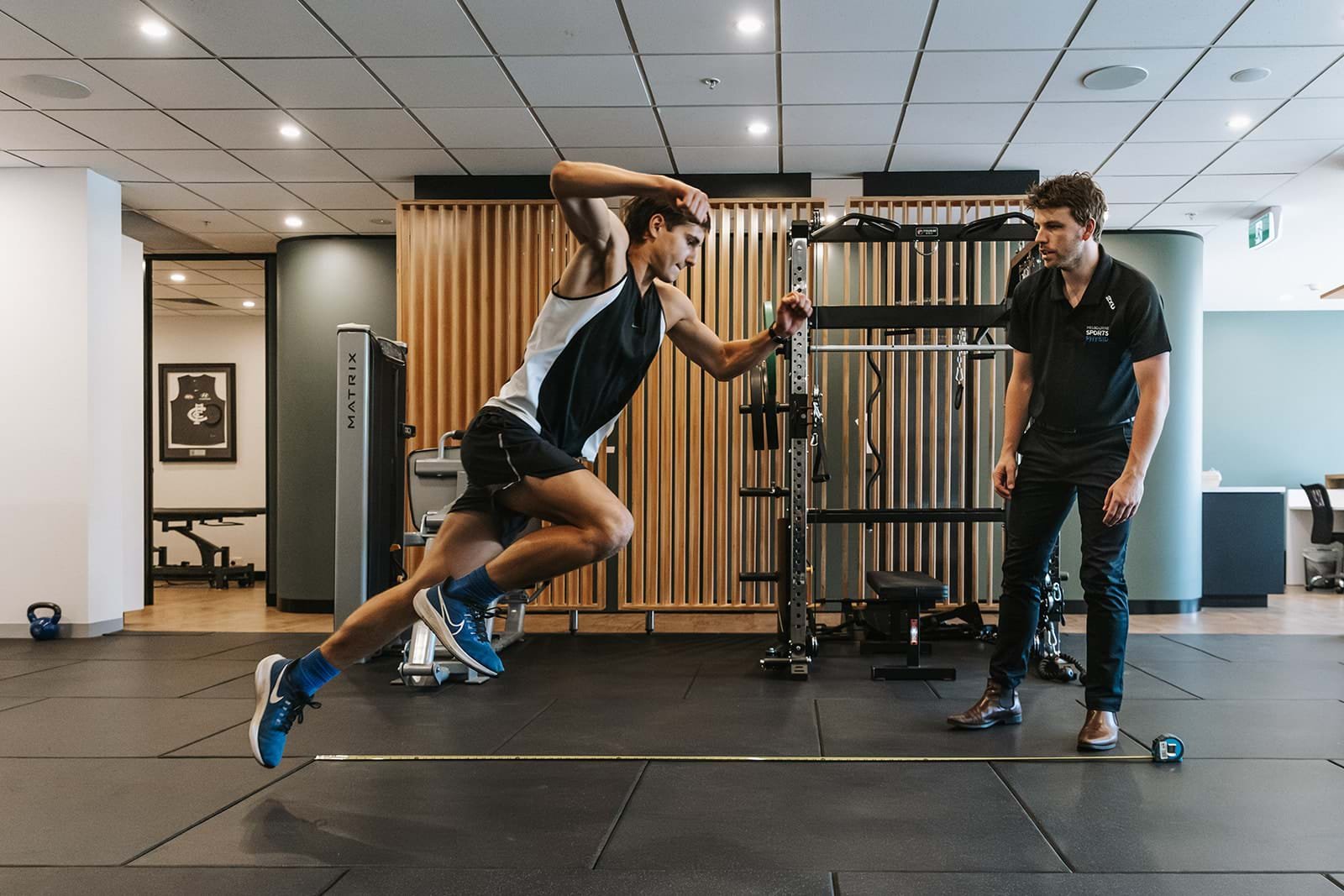
A bound is an exaggerated, forceful running step. The goal is to cover ground with rhythm and controlled stiffness rather than collapse into every landing. A standing long jump emphasizes horizontal takeoff and a stable finish. A drop jump deliberately introduces a landing from a raised surface, followed by a quick reaction. None of these is identical to jumping upward onto a high box; a box jump reduces some landing distance because the athlete finishes on an elevated platform. The photograph here shows a box-jump variation for context, not a reconstruction of the test protocol.
To understand why the distinction matters, think about where speed disappears. A long, wobbly landing or a knee that drifts inward is a different technical problem from an athlete who makes clean contacts but cannot produce enough horizontal force. Adding a vest might amplify loading, but it can also exaggerate a movement error. More resistance only helps when the athlete can still execute the intended movement well.
The study used trained men with a documented sprint background. A beginner copying the full jump count, the 45–60cm drop heights or the unchanged 10% loading scheme without supervision would be substituting a laboratory protocol for an assessment of personal readiness. Starting with low-amplitude hops, controlled low-box step-offs, and modest horizontal jumps is a more reasonable way to learn what a stable landing feels like.
Think of explosive training like a technical lift: stop a set when landing quality, speed or coordination fades. The last poor repetition does not become more valuable because you were wearing additional weight.
Tendon stiffness, measurement noise and the limits of 23 athletes
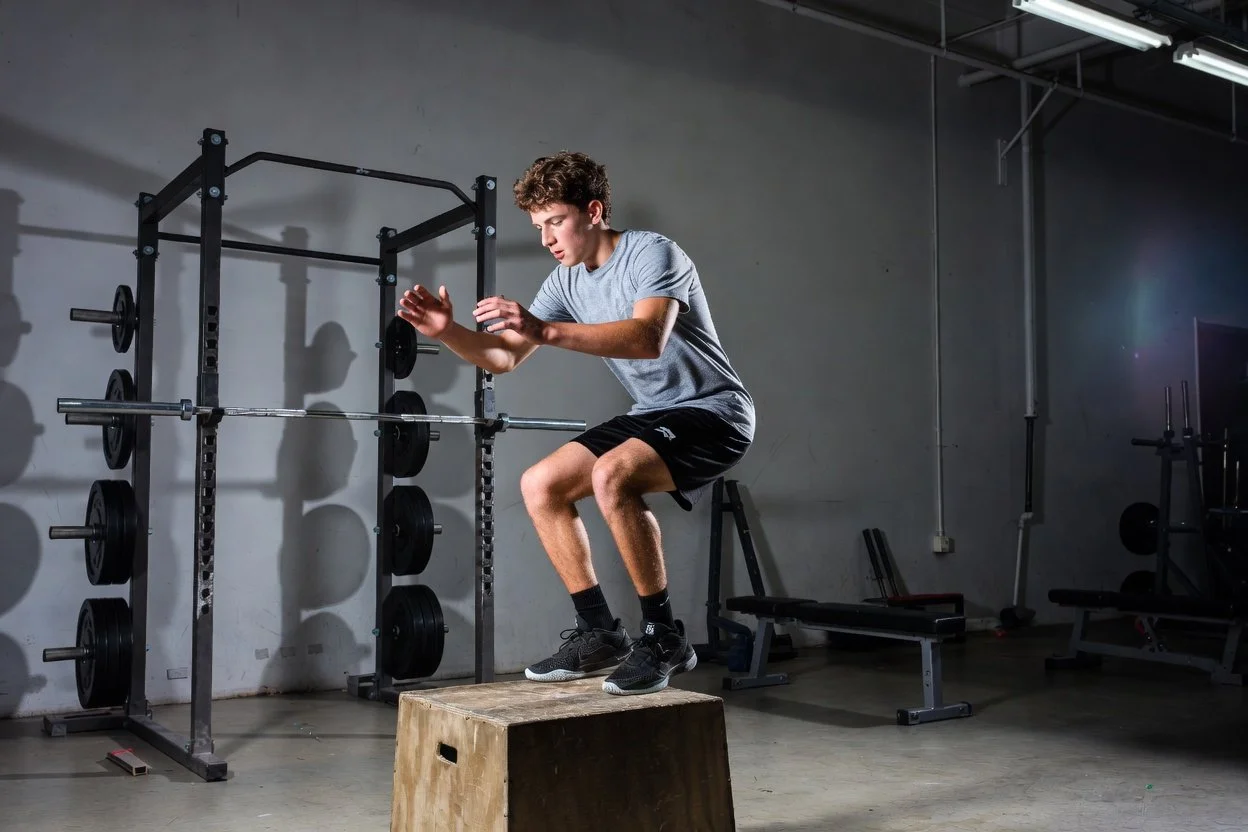
The researchers measured more than jump height. They also tested muscle strength, electrical signals of neuromuscular activity and mechanical properties of the patellar tendon. That sounds comprehensive, but each instrument answers a narrower question than the headline. A change in estimated tendon stiffness over eight weeks does not prove an individual’s tendon has become injury-proof, and it does not establish the ideal training load for someone with a painful knee.
Small sample sizes are the central limitation. With only eight athletes in each jump group and seven in the comparison group, a few unusually responsive or unresponsive participants could move the averages. Everyone was male, collegiate-level, relatively young and already accustomed to demanding sprint training. We cannot assume the same response in a 45-year-old lifter, a new runner, a field-sport player returning after injury or somebody who has never practiced a drop jump.
The intervention also layered jumps on top of five scheduled weekly sprint sessions, so the athletes’ complete training exposure is not directly comparable with an average recreational gym week. The study did not isolate whether modest vest weight itself or other changes in the mechanical demands explain every observed difference. Most importantly, a performance test and a clinical injury outcome are not interchangeable.
MMP’s existing reactive-strength comparison of lifting and plyometrics provides a related caution: a laboratory metric may improve with several methods, but the best choice depends on what the athlete must do outside the testing room. A sensible reader can find the loaded-jump results interesting without pretending that a single small experiment settled training programming.

Funny Gym Shirts & Workout Gear
Funny gym shirts, tanks, hoodies and workout gear for lifters who like training hard.


Cardio Speed Superhero Gym Funny Treadmill Running Musc Tank Top
Show some personality between sets with “Cardio Speed Superhero”.

Hybrid Athlete Strength Tee
Show some lifting attitude with a playful “Hybrid Athlete” tee.

Track Panther Pullover Hooded for Running Fitness Black Hoodie
Bring “Track Panther” gym humor to lazy days and post-workout plans.

Hero Jump Rope – Cardio Speed Flash Superhero T-Shirt
Show some superhero attitude with a playful “Gym Hero Jump Rope” tee.


Never Skip Leg Day Flamingo – Fitness Meme Pullover Jum T-Shirt
Keep things casual with a little “Never Skip Leg Day Flamingo” attitude.

Running Dost Thou Even Trot Medieval Knight Treadmill D Sticker
Give your everyday gear a playful “Running” twist.

Vive Le Resistance Bands – Resistance Bands Warmup Reha Tank Top
Your gym-day look, with a playful “Vive Le Resistance Bands” twist.

A realistic way to add explosive work without copying the experiment
If your main sport is lifting and you want a little more spring, first make room for the work. Two short jump exposures per week may be plenty to begin, and each should start while you are fresh. Choose one simple movement such as a controlled standing broad jump, low pogo hops or a small-box jump. Use a handful of crisp repetitions, rest enough to repeat their quality, and leave a clear margin before technique breaks down. This is a conservative illustration, not the researchers’ exact protocol.
For the first two weeks, keep the jumps unloaded and record just three things: the drill, the number of clean contacts and how the landings felt. In weeks three and four, consider progressing one dimension—slightly more distance, one additional short set or better control—not all of them at once. If you’re already sprinting, playing basketball or doing hard leg days, those sessions count toward the total impact on your lower body. You do not need a separate high-volume plyometric workout on top of everything.
Only experienced athletes with a strong landing base should even consider a vest for jump training, ideally with coaching that can judge whether the extra weight changes mechanics. The 10% figure is a feature of this particular experiment, not a universally safe starting prescription. People with current Achilles, patellar tendon or knee symptoms should choose an appropriate progression with a qualified clinician rather than using weighted jumps to self-test pain tolerance.
Keep ordinary resistance training in the program. Squats, split squats, hinges and calf work can build useful strength alongside skillful jumping; aerobic conditioning can remain separate. None of those tools has to be replaced by a vest. For a useful progress check, measure a standing long jump under repeatable conditions rather than guessing how explosive you felt after a tiring circuit.
Equipment Worth Exploring
Explore equipment, accessories and gear from our carefully selected range.


Leg Extension/Curl BCO-780
Leg extension and lying leg curl combo with plate loading, band pegs and a cable-loading option.

Seated Leg Combo BCO-680
Adjustable seated leg extension and leg curl machine with band pegs for added resistance.


Leg Press/Hack Squat BPR-790
Convertible 45-degree leg press and hack squat machine with a broad footplate and band pegs.

Studio V-Squat
Plate-loaded V-squat machine for supported lower-body strength training.

Rubber Hex Dumbbells
Rubber-coated hex dumbbell pairs with a stable shape for home and commercial strength training.

Cast Iron Kettlebells
Textured cast-iron kettlebells for swings, squats, carries, and full-body training.

Open Hex Bar
Open-frame trap bar with multiple handles for deadlifts, carries, and lower-body training.