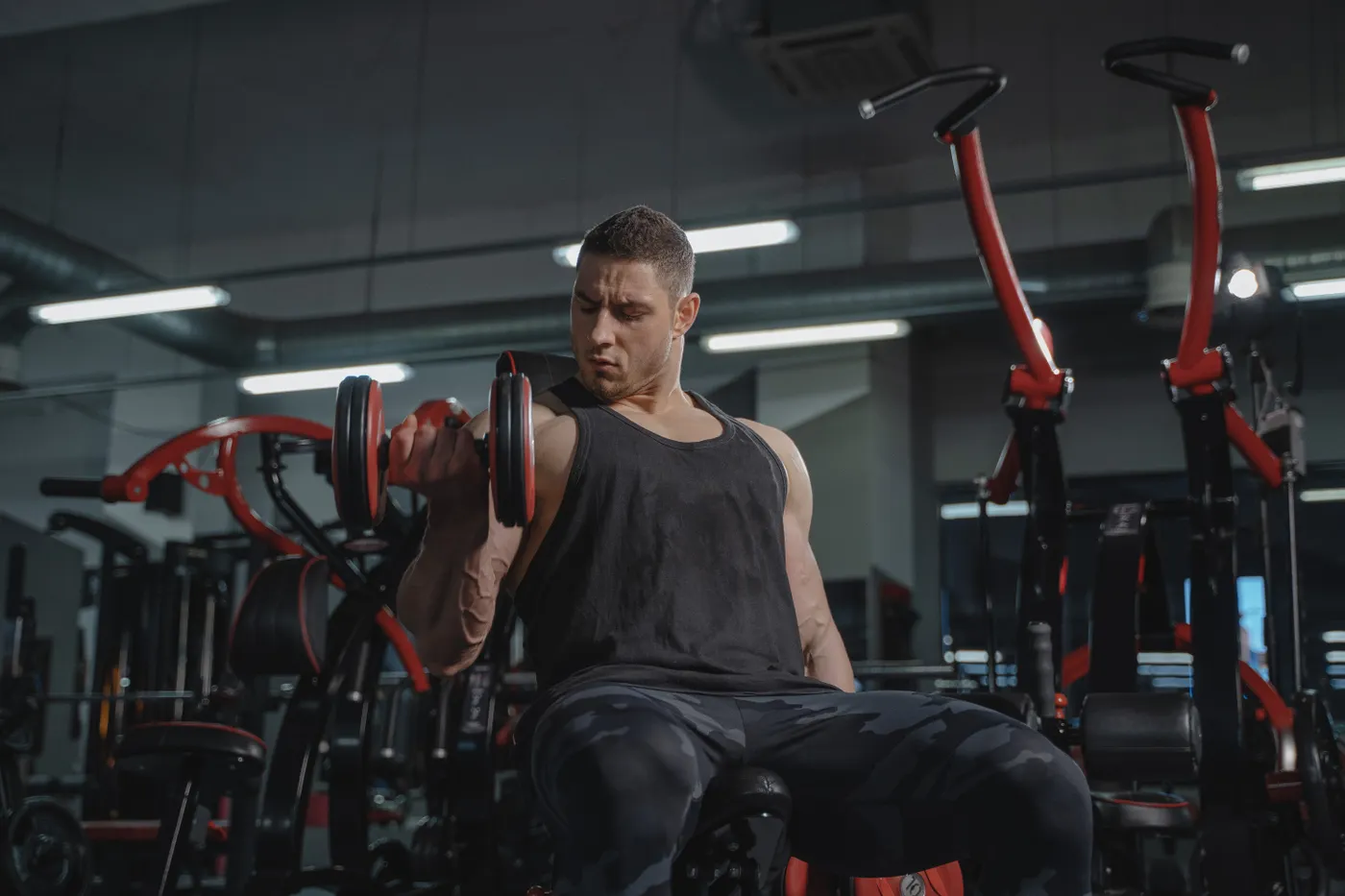
Does a set of rows count toward your biceps volume? What about a bench press toward your triceps? If you count every compound set as full credit for every involved muscle, your weekly totals can look much higher than the targeted work you actually perform. If you count only isolation exercises, you may overlook meaningful growth stimulus from compound lifts.
A major analysis of resistance-training studies suggests a useful middle ground: separate direct from indirect work and consider giving meaningful assisting sets partial credit. The result is not a magic formula, but it can make your training log more honest and your next programming decision more precise. Here is how to apply the idea without losing sight of the bigger goal—building muscle and getting stronger.
Why a row is not automatically a full biceps set
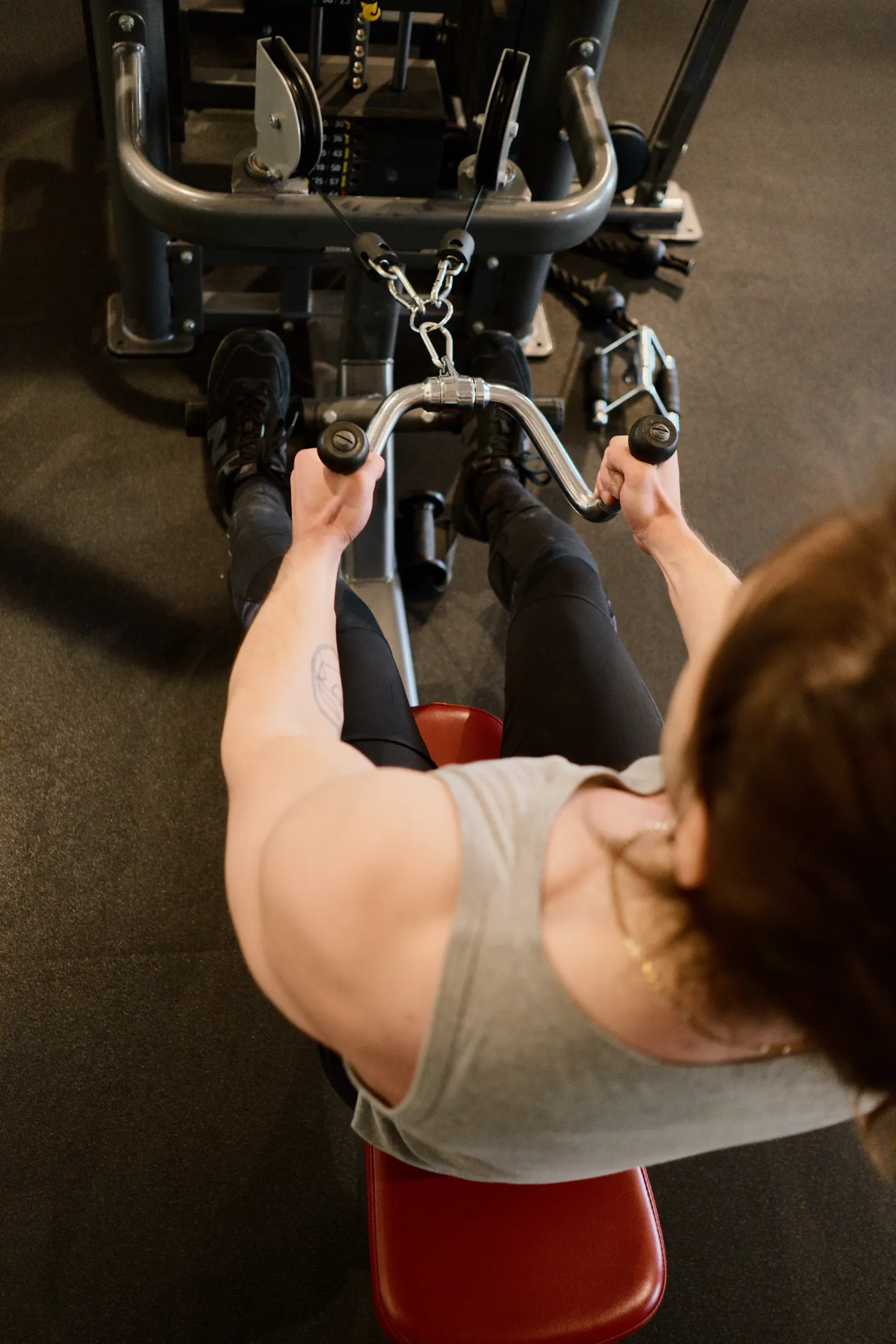
Imagine two lifters who both write “twelve biceps sets” in their training logs. One does twelve sets of curls. The other does six sets of rows and six sets of pulldowns, then assumes every pulling set counts fully for the biceps. Their arms are involved in both programs, but the stimulus is not necessarily equivalent. That distinction matters when people compare weekly volume, decide whether to add isolation work, or wonder why one muscle is lagging.
A large research synthesis published in late 2025 combined 67 resistance-training studies with 2,058 participants. Rather than treating every exercise that involves a muscle as a full set, the investigators classified work as direct or indirect. They tested three ways to count indirect work: give it full credit, give it no credit, or count it fractionally. The fractional approach provided the best statistical fit to the outcomes they studied.
The headline is not that a row literally equals half a curl. It is that counting every assisting-muscle set as one full set can exaggerate how much specific work that muscle receives. A set of heavy rows primarily challenges the back, with elbow flexors assisting; a curl makes elbow flexion the central task. Both can contribute to arm development, but they do not need identical accounting.
The synthesis also found that greater weekly volume was associated with more hypertrophy and strength, with diminishing returns as volume rose. The models were adjusted for study duration and training status, yet they remain statistical descriptions of different training programs—not a precise calculator for the growth of your next biceps session. Use the distinction to improve your log, not to turn training into fake mathematical certainty.
Direct, indirect and fractional sets: a practical counting method
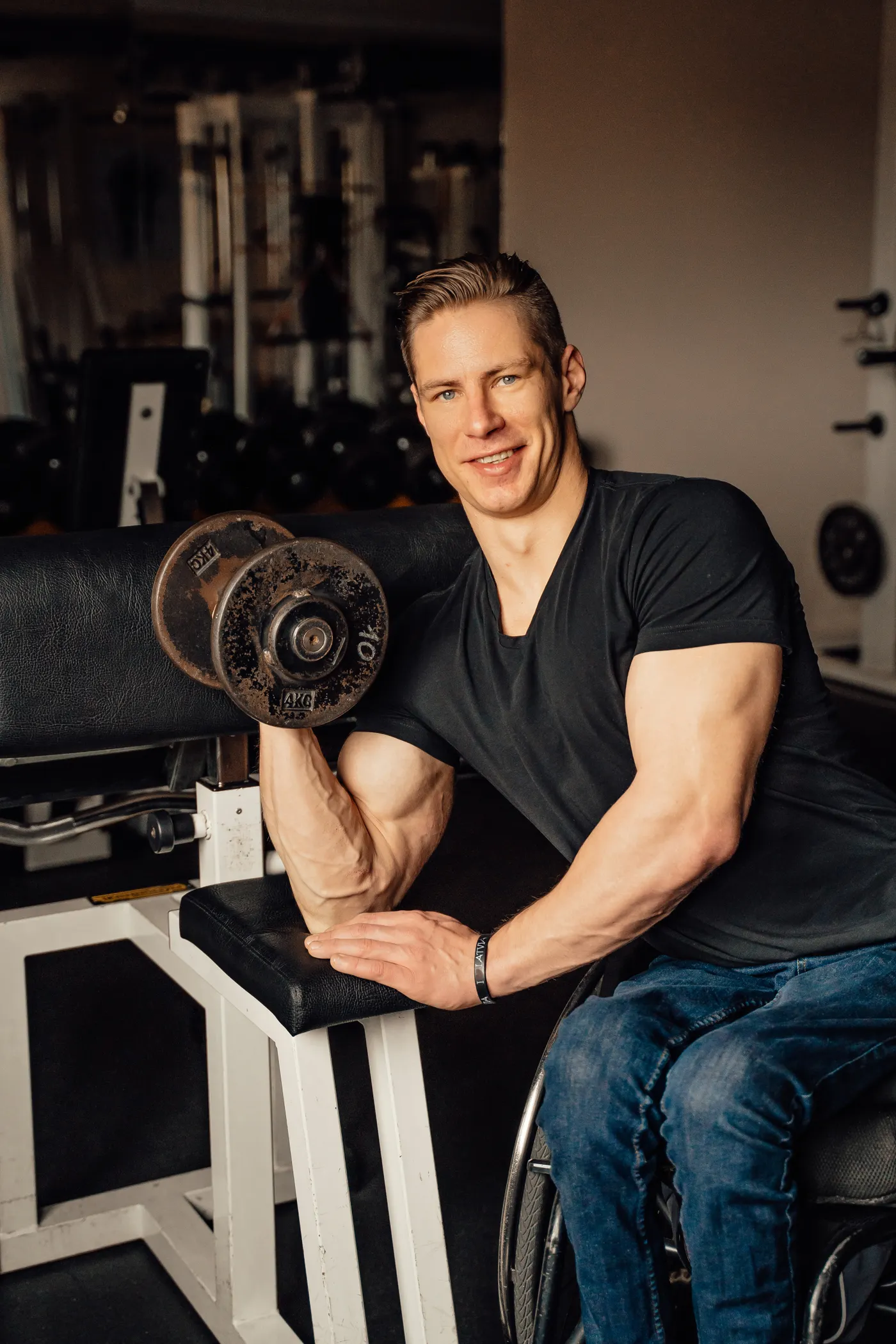
Start by naming the muscle you are tracking. A direct set is one where that muscle is a primary driver of the movement and receives a substantial targeted challenge. For biceps, curls are an obvious example. For the back, a properly performed row or pulldown can be direct work for relevant pulling muscles. For triceps, a pushdown is direct; for quads, a knee-extension exercise is direct.
Indirect work means the muscle contributes meaningfully but is not the main target. The elbow flexors help during rows and pulldowns. Triceps contribute during presses. Hamstrings participate in some lower-body movements, but their contribution varies greatly with hip and knee angles. You cannot label an exercise direct or indirect without first deciding which muscle and outcome you are counting.
A useful starting heuristic is to count a hard direct set as 1 and a meaningful indirect set as about 0.5. Then keep that method consistent for several weeks. For example, six curl sets plus eight challenging pulling sets would be recorded as roughly ten biceps-equivalent sets, not fourteen. The number is an estimate of programming exposure, not a claim that each row creates exactly fifty percent of a curl’s growth stimulus.
Quality matters as much as classification. A warm-up set that barely challenges the muscle should not receive the same credit as a hard working set. Neither should a rushed set stopped because of grip discomfort automatically be equated with one limited by the target muscle. Range of motion, technique, effort, exercise variation and fatigue can all change the effective stimulus.
For a simple log, keep two columns: direct sets and assisting sets. Record exercises, sets, reps and effort separately. The fractional total is a planning aid; the real test is whether the muscle progresses while your joints and recovery remain manageable.

Equipment Worth Exploring
Explore equipment, accessories and gear from our carefully selected range.

GymPin Ergo Handles
Pair of ergonomic cable handles shaped for comfortable triceps and pulling exercises.

GymPin Barbell Row Handle
Heavy-duty handle attachment for barbell, landmine and T-bar rows.

T-Bar Row Attachment
Welded barbell attachment that connects a D-handle bar for landmine and T-bar rows.
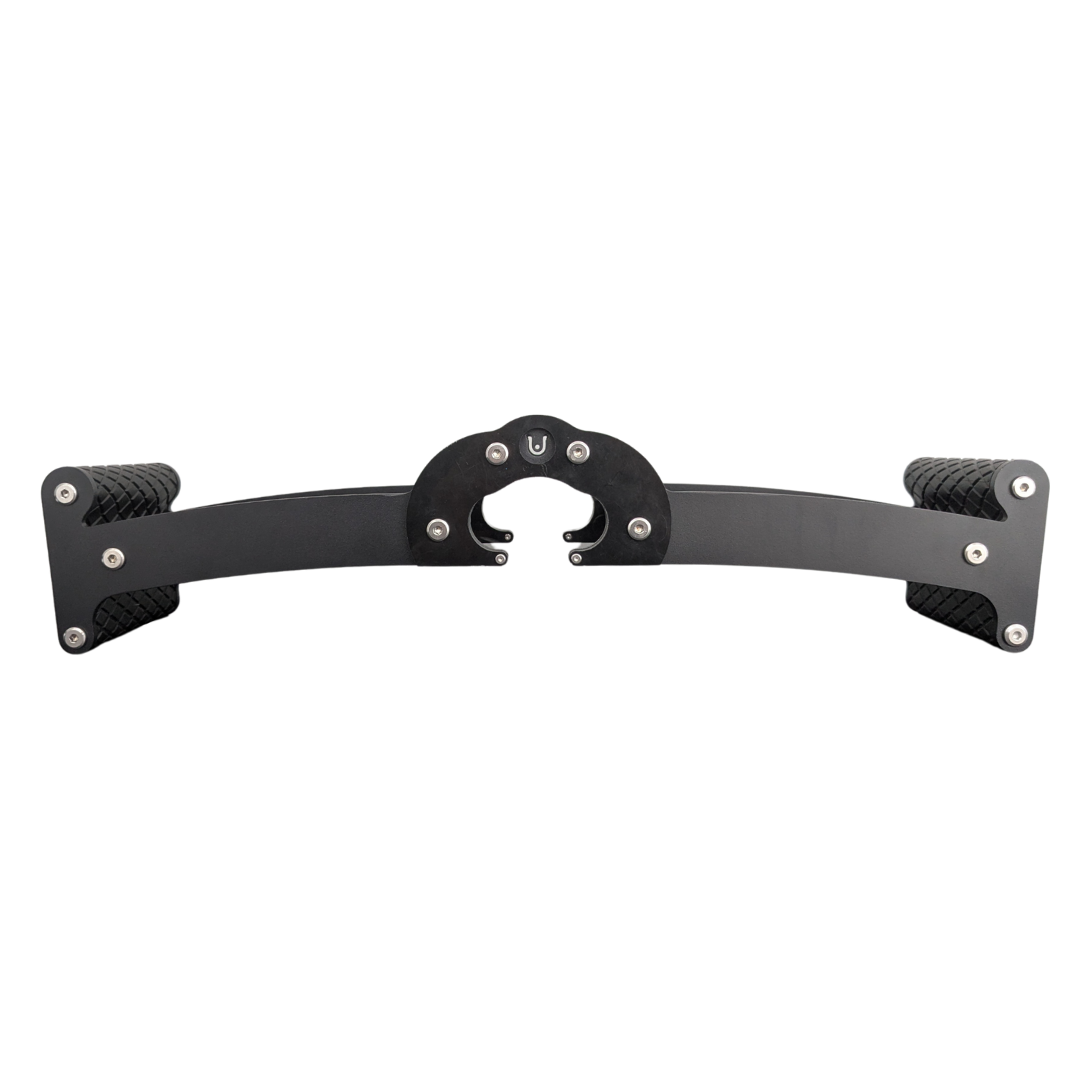
Back Bar
Multi-grip cable and landmine bar with a built-in deadlift jack.


Long Tricep ERGO Ropes
Extended triceps ropes with ergonomic grips for cable pressdowns and overhead extensions.
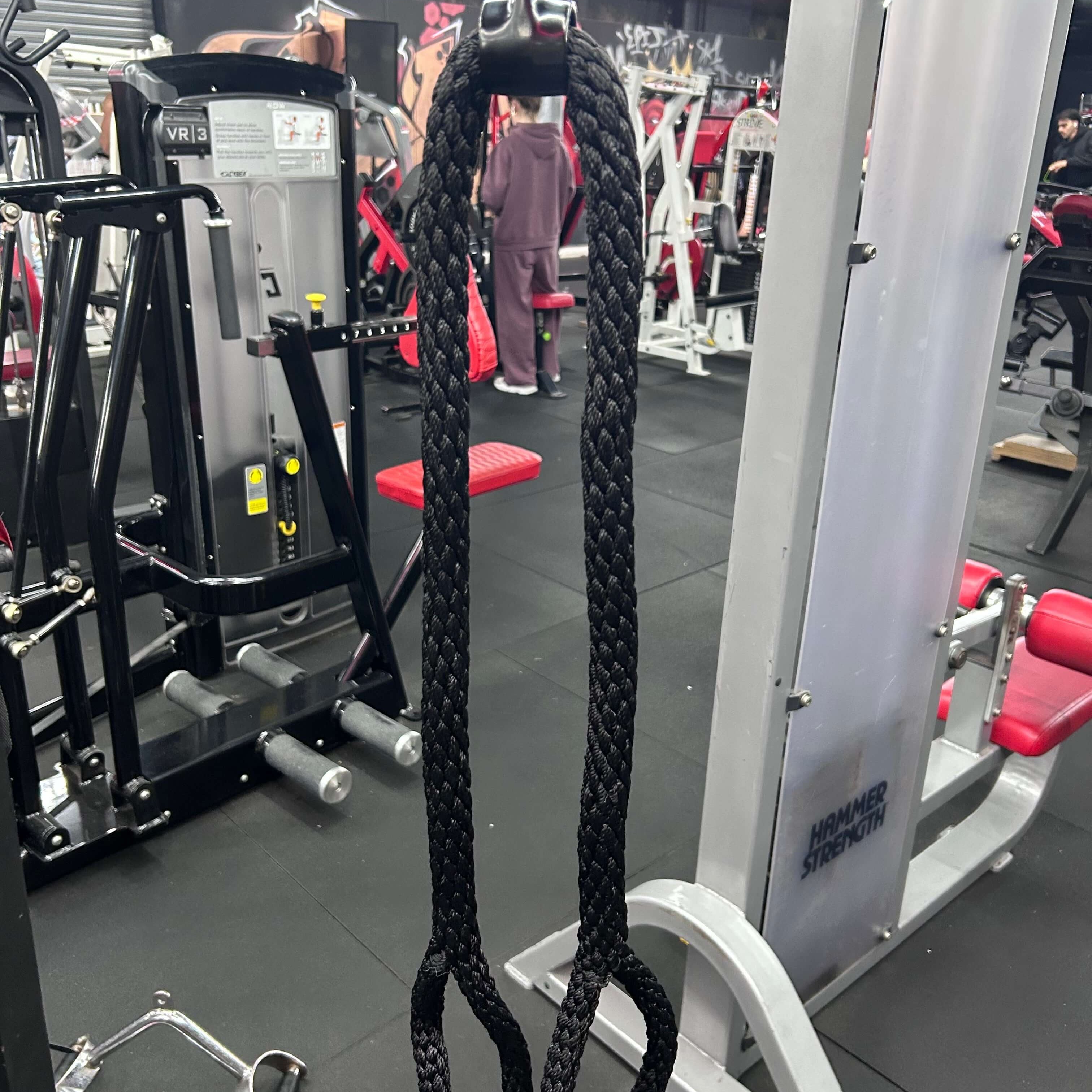
Super Long Tricep Rope
Extra-long looped cable rope for triceps pressdowns and overhead extensions.
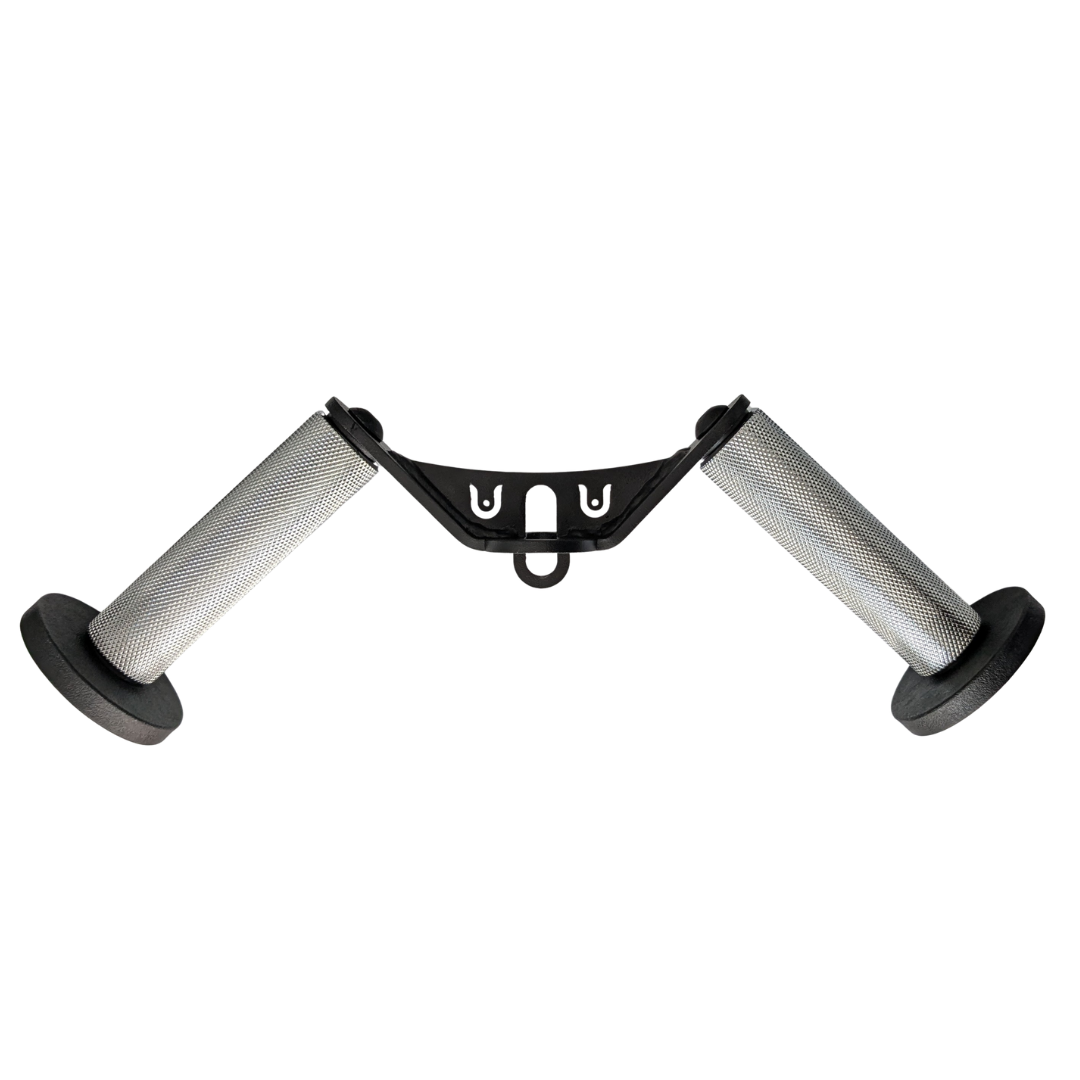
W Grip
Angled cable grip for comfortable rows, pushdowns, and curls.

Leather Wrist Grips
Padded leather lifting grips help support the hands and wrists on heavy pulling exercises.

What actual rows-versus-curls experiments found

Direct and indirect counting makes intuitive sense, but individual exercise comparisons show why rigid rules fail. In one eight-week experiment, ten previously untrained men trained one arm with unilateral dumbbell rows and the other with biceps curls. Elbow-flexor thickness increased in both arms, but the curl-trained arms showed a larger average increase: about 11.1% versus 5.2% in that small sample. Strength improvements favored the exercise participants had practiced.
That result supports the idea that a curl can provide a more targeted biceps stimulus than a row. It does not prove every curl is twice as effective as every row, nor that experienced lifters would respond identically. Ten participants and eight weeks are not enough to establish a universal conversion factor across exercises, loading styles or training histories.
Another ten-week experiment involving 29 untrained men compared lat pulldowns with biceps curls. Both groups increased elbow-flexor thickness, and the difference between groups was not statistically significant. A separate ten-week study with 29 untrained men compared a pulldown-and-bench-press program against the same compounds plus elbow-flexion and elbow-extension isolation work; the extra isolation work did not produce a clear additional advantage for the measured elbow-flexor outcomes.
These findings are not contradictions that require choosing a winner. They used different movements, participants, designs and measurements. They demonstrate that indirect work can absolutely grow an assisting muscle, while direct isolation work may be especially valuable when a muscle needs a more focused stimulus. The relative benefit depends on the program already in place.
For someone doing substantial hard pulling volume and seeing steady arm growth, extra curls may be optional. For someone whose back gets stronger but whose biceps stagnate, adding a modest amount of direct elbow-flexion work is a reasonable experiment. Neither choice should be dictated by a universal “rows count as zero” or “rows count as one” rule.

Bodybuilding Shirts & Workout Gear
Bodybuilding shirts, tanks and gym gear for lifters chasing muscle, size, symmetry and the pump.

Gym Dost Thou Even Curl Medieval Knight Bicep Shirt & B T-Shirt
Make gym days more fun with “Dost Thou Even Curl Medieval Knight Bicep” style.


Back Sabbath Back Day Funny Gym Hoodie
Bring “Back Sabbath Back Day” gym humor to lazy days and post-workout plans.

For Whom The Bell Curls Dumbbell Metallica Heavy Metal T-Shirt
Add a playful “For Whom The Bell Curls” touch to your casual rotation.

I Love Gym Bicep Heart Shirt | Swole Heart Graphic For T-Shirt
Bring “I Love Gym Bicep Heart” humor to your next gym day.


Every Day Is Arm Day
Make gym days more fun with “Every Day is Arm Day Octopus Gym Meme” style.

Micro Biceps Club President Gym | Funny Workout Decal | Sticker
Stick a little “Micro Biceps Club President” humor on your favorite gear.

Gym If You're Reading This It's Arm Day Drake Parody & T-Shirt
Keep things casual with a little “If You're Reading This It's Arm Day Drake” attitude.
Apply the same logic to triceps, chest and legs

Elbow flexors are only the easiest example. In a bench press, the pectorals, anterior shoulders and triceps all work. A chest-focused bench set may be direct chest work and meaningful indirect triceps work. If you already perform many hard presses, adding a large triceps-only block without considering that overlap can make your weekly plan harder to recover from than the raw isolation-set count suggests.
For shoulders, an overhead press can be direct for parts of the deltoids and indirect for triceps. A lateral raise targets a different movement and muscle emphasis. For legs, squats strongly involve quads and glutes, but the stimulus is not identical to a knee extension, hip thrust or leg curl. Hamstrings in particular should not be credited with a full direct set from every squat just because they cross the hip.
The classification also changes with execution. A row that emphasizes shoulder extension and keeps the elbows close may distribute work differently from a wide-elbow upper-back row. A close-grip press can shift the relative challenge toward the elbow extensors compared with a chest-biased variation. None of this means the exercises stop being compound lifts; it means the same exercise name can conceal meaningful differences.
Do not create a sprawling spreadsheet of arbitrary decimals for every muscle. Pick the major muscles you are actually trying to bring up. Count direct work precisely, estimate the most important indirect work, and leave ambiguous contributions as context rather than pretending you can calculate them to two decimal places.
The practical advantage is better decisions. If triceps are sore and pressing performance is falling, you can see that your “six triceps sets” might sit on top of ten demanding pressing sets. If quads are progressing from squats and leg presses, you do not need to chase an isolation quota simply because someone else’s plan lists more knee-extension work.
More weekly sets help—until the returns become small

The 67-study synthesis found a positive relationship between weekly set volume and muscle growth, but the curve flattened as volume increased. The diminishing returns were more pronounced for maximal strength than for hypertrophy. In practical terms, moving from very little challenging work to a sensible amount usually has a clearer payoff than adding another handful of sets to an already demanding program.
An earlier meta-analysis of 15 studies also found a graded association between weekly volume and increases in muscle size. But neither body of evidence provides a single set number that guarantees maximum growth for every muscle, exercise, training age and person. “Ten sets” can be a useful reference point in some discussions; it is not a universal physiological switch.
Volume is also not independent of effort. Ten low-effort sets, ten hard sets performed with stable technique, and ten sets driven to breakdown are different training experiences. Recovery between sessions, exercise selection, sleep, food intake and how many muscle groups are being trained all influence whether adding volume is productive.
Consider two scenarios. A beginner making progress from six focused weekly sets for a muscle may gain little by immediately doubling the workload. A trained lifter whose progress has stalled for several weeks, who is recovering well and whose technique is consistent, might benefit from a cautious increase. The sensible next step is usually a small change that can be evaluated, not an automatic leap to the highest set count seen online.
The most useful metric is not how impressive your weekly total looks. It is the trend in strength at comparable technique and effort, changes in muscle measurements over enough time, and whether you can repeat high-quality work without accumulating unmanageable fatigue.
Equipment Worth Exploring
Explore equipment, accessories and gear from our carefully selected range.
VOLTRA
Compact digital cable trainer with smooth, adjustable resistance.

Go-Tone Pro
Portable digital cable trainer with up to 66 lb (30 kg) of adjustable resistance.


FID Bench MAX
Adjustable bench offering flat, incline, and decline positions + adjustable headrest.


Angles 90 Grips
Flexible grip attachments that allow natural wrist movement during pulling exercises.
A two-day upper-body example you can actually audit
Suppose an upper-body plan includes two sessions each week. On Monday you do three hard sets of pulldowns, three sets of a chest-supported row and three sets of curls. On Thursday you do three more sets of rows, two sets of pulldowns and two sets of curls. The week contains eleven hard pulling sets and five direct curl sets.
Counting every pull as a full biceps set would give sixteen biceps sets. Counting only curls would give five. Using the fractional starting method—five direct sets plus half of eleven assisting sets—gives roughly 10.5 biceps-equivalent sets. None of those totals is a direct measure of muscle growth, but the middle estimate helps explain why five curl sets may not be a tiny amount of arm work in a pull-heavy program.
Now imagine that the lifter’s biceps are recovering well but have stopped progressing. Instead of adding six curls at once, they could add one or two direct curl sets across the week, keep pulling volume stable and reassess after several weeks. If elbows begin to ache or pulling performance falls, the new work may not be worth its cost. If arm performance and measurements improve, the experiment has useful personal evidence.
For chest and triceps, use the same two-column approach. If Monday includes four pressing sets and two pushdown sets, the triceps ledger contains two direct sets plus some indirect pressing exposure. Repeat the process for Thursday, while recognizing that a close-grip press and a wide-grip press need not place identical demands on the triceps.
Training frequency is a scheduling tool, not a magic multiplier. A separate analysis of 25 studies found little meaningful hypertrophy difference between higher and lower training frequencies when weekly volume was matched. Splitting work across two or three days can still improve set quality, convenience and fatigue management. Choose a split that lets you perform the planned work well rather than adding days merely to inflate the frequency number.
Funny Gym Shirts & Workout Gear
Funny gym shirts, tanks, hoodies and workout gear for lifters who like training hard.

Whole Lotta Reps AC/DC Heavy Metal Rock Music Workout W T-Shirt
Rep “Whole Lotta Reps” humor in and out of the gym.

Pull Up Or Shut Up Sticker
Put “Pull Up or Shut Up” gym humor on your laptop, bottle, or gym gear.

Supersets Shirt – Superman Hero & Gymbros – T-Shirt
Make gym days more fun with “Supersets” style.

: Dropsets Are Tough & Gymbros Meme T-Shirt
Show some powerlifting attitude with a playful “: Dropsets Are Tough” tee.

Reps Jesus Shirt – & Gymbros T-Shirt
Show some Easter attitude with a playful “Reps For Jesus” tee.

God’s Gym Crewneck Pullover Sweater Jesus Gold’s Gym Pa T-Shirt
Bring “God’s” humor to your everyday gym style.


Shirt – Biceps Of The Caribbean , Meme Gains & Bros T-Shirt
Heavy lifts, good laughs, and a little “Biceps of the Caribbean” energy.

Biceps And Roses Shirt Guns N' Roses Meme , Top T-Shirt
Rep “Biceps and Roses” humor in and out of the gym.
When to add isolation work—and when to leave the plan alone

Use your log to identify a real problem before prescribing more work. If your rows, pulldowns and curls are improving, your arms are growing and your elbows feel fine, there is no obligation to add sets. A program can be effective without maximizing every possible training variable. The goal is sustained progress, not perfect-looking arithmetic.
If a muscle is clearly lagging, first inspect the existing stimulus. Are the relevant sets hard enough to challenge it? Does another muscle or grip fatigue limit the movement? Are you using a repeatable range of motion? Are you giving the target muscle direct work at all? Sometimes a change in exercise selection or execution solves the problem more efficiently than increasing total volume.
Then adjust one variable at a time. Adding one or two direct sets per week, moving a lagging muscle earlier in the session, or swapping a poorly tolerated exercise for a better-fitting one are all testable changes. Keep the rest of the program reasonably stable so you can tell whether the change helped. Watch for persistent soreness, deteriorating performance, joint irritation and declining motivation.
Remember the limitations of the fractional method. A half-set is a model-based approximation that fit pooled data better than two simpler alternatives. It is not a proven conversion for every individual exercise, and it should not be applied mechanically to every assisting muscle. The underlying studies were relatively short and involved mostly young adults, so long-term responses in older or highly advanced lifters remain less certain.
Bottom line: rows and pulldowns can contribute to biceps growth, but counting each one as an entire curl set is usually too generous. Track direct and indirect work separately, use fractional counting as a rough planning aid, and make changes according to measurable progress and recovery. Better set accounting should simplify training decisions—not become another source of confusion.